Follow Us:
Follow Us:

In August 2025, Russia began testing the UTD-32T diesel for the BMP-3 IFV, an engine said to add both torque and horsepower while raising the vehicle’s weight by only about seven percent.
A month earlier, in July, Rostec had already delivered another batch of upgraded BMP-3s, this time with extra defensive systems, almost certainly a reaction to the growing threat from drones and precision-guided weapons.
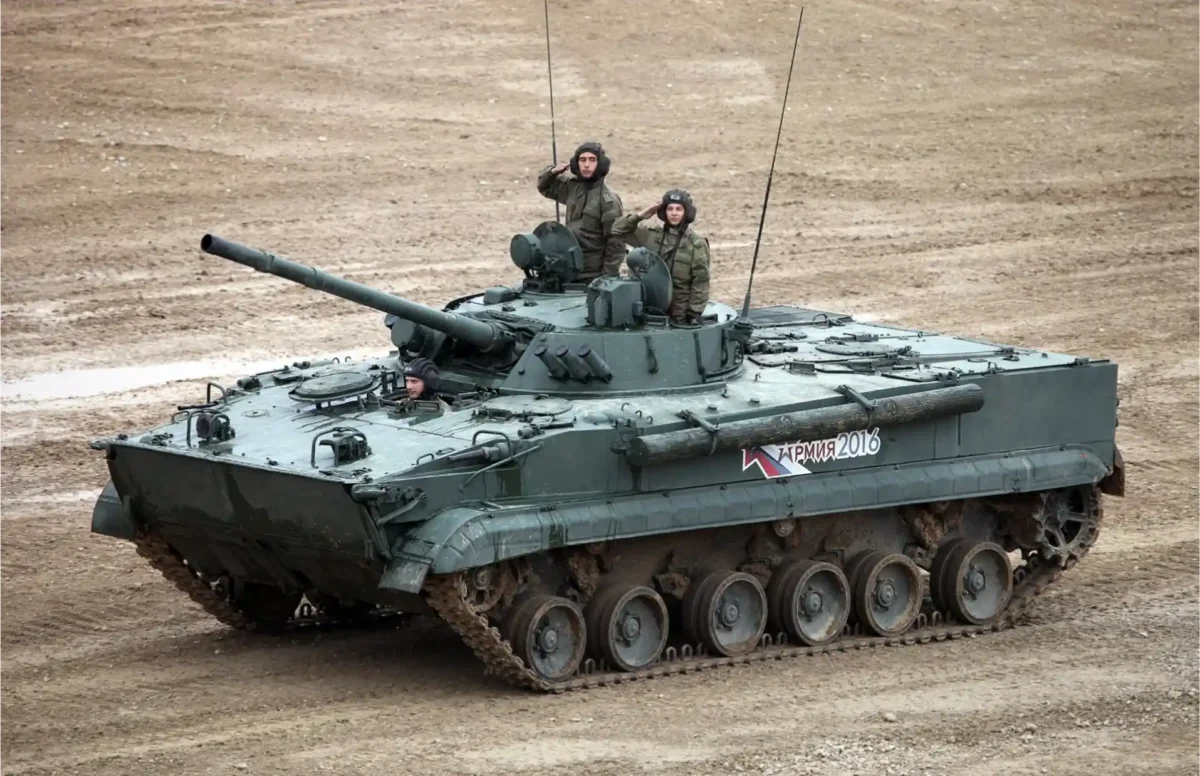
What’s striking is how much attention a vehicle from the late 1980s is still receiving. While many armies are betting on brand-new infantry fighting vehicles, Moscow keeps refining an old frame. More power, better optics, thicker armor—the layers keep piling on.
This could be read two ways: either the design still has enough untapped potential to justify upgrades, or Russia is simply stretching what it has because replacing it outright would be too costly.
| Category | Details |
| Origin | Russia (Kurganmashzavod) |
| Crew Capacity | 3 crew (commander, gunner, driver) + 7 infantry passengers |
| Weight | ~18.7 tons (combat weight, varies with upgrades) |
| Dimensions | Length: 7.14 m · Width: 3.2 m · Height: 2.3 m |
| Armor | Aluminum alloy hull with steel/ceramic appliqué armor (protects against 30 mm front, 12.7 mm sides/rear) |
| Armament (Main) | 100 mm 2A70 rifled gun (fires HE-FRAG shells and 9M117 ATGMs) |
| Secondary Armament | 30 mm 2A72 autocannon + 7.62 mm PKT machine guns (1 coaxial, 2 bow-mounted) |
| Engine | UTD-29M diesel engine, 500 hp (UTD-32T upgrade: 660 hp) |
| Power-to-Weight | ~26.7 hp/ton (standard engine) |
| Mobility | Road speed: 70 km/h · Range: 600 km · Amphibious speed: ~10 km/h |
| Amphibious | Fully amphibious, propelled by two waterjets |
| Survivability | Optional explosive reactive armor (ERA), active protection upgrades on some variants |
⚠️ Small note: specs can vary depending on the variant (like BMP-3M, Dragun, or those upgraded with ERA/APS).
One of the areas that has seen change is the engine. When the BMP-3 IFV first came out, it used the UTD-29M engine, a diesel that gave about 500 horsepower.
Back then, that was enough, since the vehicle was lighter and wasn’t carrying much extra protection. Once more, armor was added in later years, though, the engine started to show its limits, especially in rough ground or when trying to keep pace with tanks.
A newer engine, the UTD-32T, has been tested in 2025 and is reported to push power closer to 660 horsepower.
It doesn’t turn the BMP-3 into the quickest IFV out there, though it does bring its performance closer to Western machines such as the CV90, which have a reputation for mobility.
The added horsepower translates into better acceleration, a little more agility when crossing obstacles, as well as making it easier to keep pace with tanks.
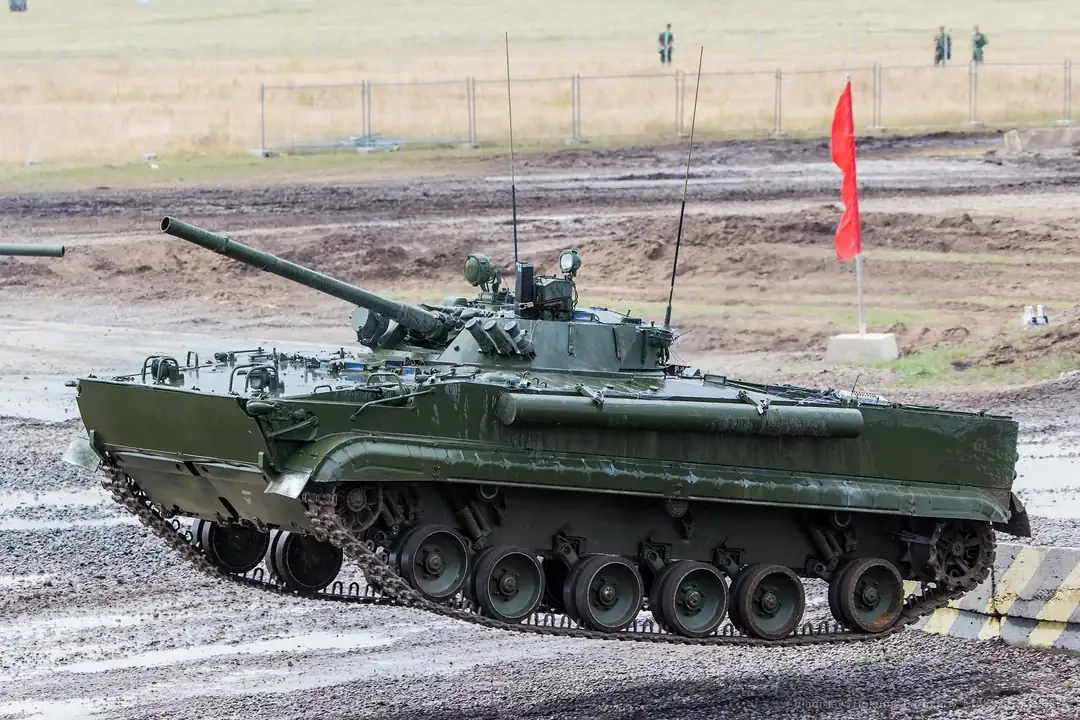
The downside is that the suspension and frame of the BMP-3 were not meant to carry too much extra weight. So while the new engine adds life, it may also be compensating for a design that has already reached its natural limits.
Protection is another area that has been gradually reinforced. Early BMP-3s were vulnerable even to heavy machine guns on the sides and rear. And this weakness is painfully exposed in conflicts like Chechnya. To address this, Russian designers introduced appliqué armor kits and, more recently, packages of explosive reactive armor (ERA).
In theory, this helps the vehicle survive against shaped-charge warheads and older anti-tank missiles. Compared to the original aluminum hull, this is a meaningful step forward. But ERA has its own problems. It is far less effective against modern tandem-charge missiles or top-attack munitions, which have become increasingly common. There is also the question of amphibious capability that can be compromised as more armor is bolted on.

Perhaps the most interesting additions are in the field of electronic warfare (EW). On the front in Ukraine, drones have become an everyday threat, dropping small bombs or directing artillery fire.
To deal with this, some BMP-3s are said to carry jammers that interfere with drone signals. This represents a new direction for the vehicle, which historically relied on mobility and armor rather than electronic countermeasures.
Even so, it would be a mistake to expect too much. If the systems work as advertised, they could make a meaningful difference in survival against low-cost threats. However, a jammer can sometimes confuse a small quadcopter. And, against groups of drones or hardened systems, it only goes so far without support from other assets.
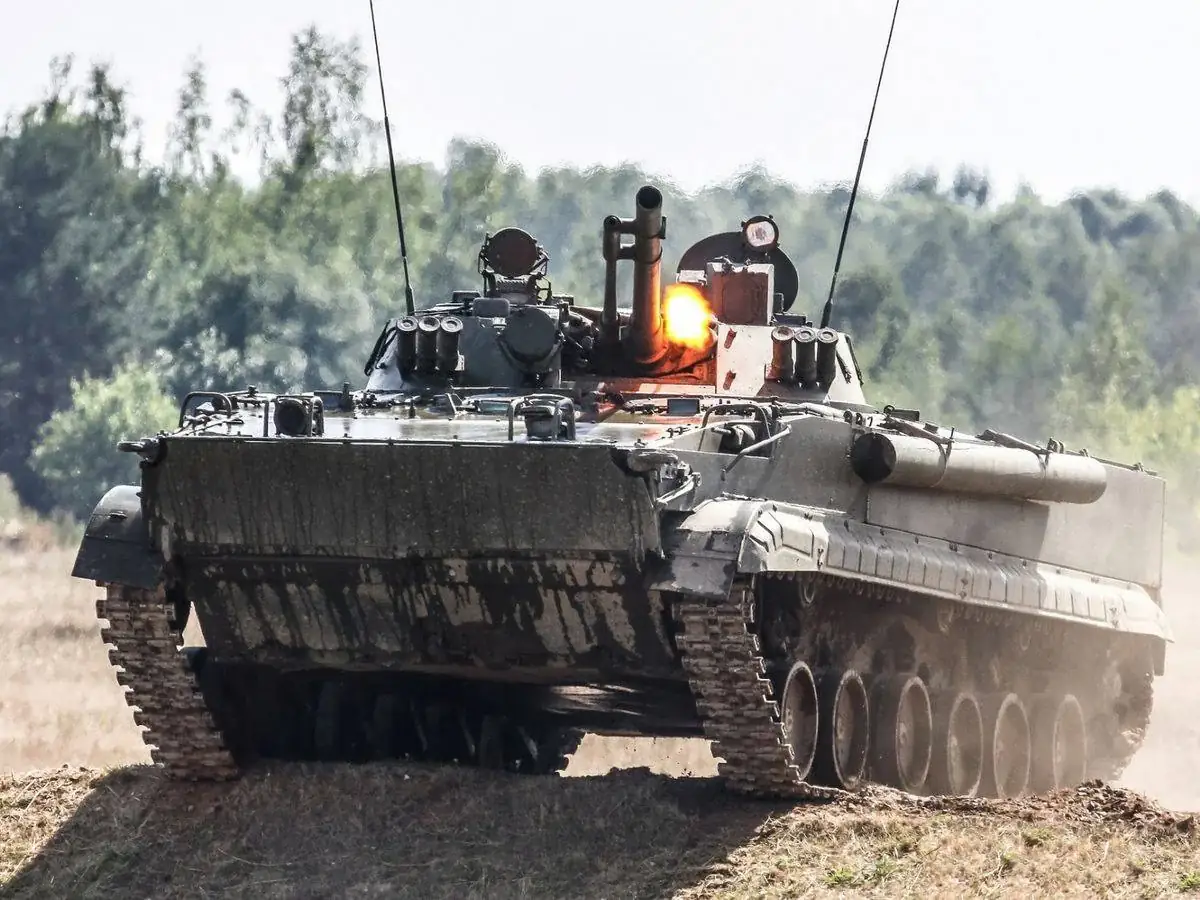
For many years, one of the BMP-3’s biggest weak spots was what the crew could see. At night or in bad weather, the older sights often left gunners guessing, and battles were usually decided by whoever spotted the enemy first. With recent upgrades, improved thermal imagers, laser rangefinders, and digital fire-control tools, the BMP-3 can now fight more like Western IFVs, which have long used advanced optics to gain the first shot.
This does not mean the BMP-3 suddenly has new weapons. The 100 mm gun and the 30 mm cannon remain the same, and they are still dangerous. But while the sights now match closer to NATO levels, Western vehicles are already moving toward bigger and smarter cannons, some firing 35 mm or even 50 mm programmable rounds. That leaves the BMP-3 in a middle ground: better at hitting what it sees, but still behind when it comes to raw firepower.
The real question is whether such upgrades are enough to keep the BMP-3 competitive against newer, purpose-built IFVs, or if they merely delay the inevitable need for a fresh design.
Why is the BMP-3 IFV still on the battlefield? And the answer usually comes down to its track record. It has not been left sitting in storage; instead, it has seen repeated combat, including in the current Russia-Ukraine war.
In early 2023, for instance, during the battles around Vuhledar, footage showed BMP-3s moving forward to give direct fire support, firing their 100 mm guns in a way that looked closer to a tank than a troop carrier. Other reports point to them being used in their original role of transporting infantry into contested areas.
Despite being a late-Soviet design, the combination of a 100 mm cannon, which can even fire guided anti-tank missiles, and a 30 mm autocannon still makes the vehicle dangerous when handled well.
There have been plenty of losses, but that in itself highlights something: the BMP-3 is not sitting idle. It is being pushed into the most demanding combat situations, which suggests that the Russian army still sees it as useful enough to risk on the frontline. That is a kind of relevance that no paper analysis can take away.
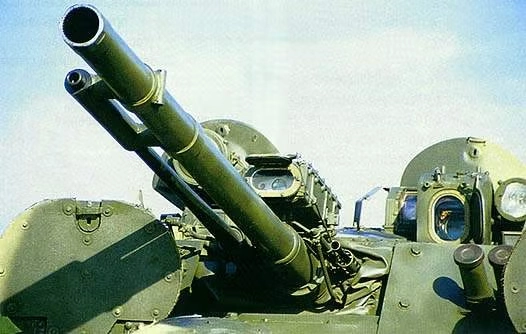
Beyond battlefield reports, there is the question of strategic importance. Russia fields a huge number of mechanized infantry units, and the BMP-3 remains a backbone vehicle for them. It can keep up with tanks, move troops under armor, and back them up with its own guns when fighting breaks out. Many Western armies have replaced or upgraded their Cold War-era IFVs, but Russia has chosen to stretch the BMP-3’s lifespan.
This decision may not be about prestige but about numbers: modern conflicts, as Ukraine has shown, eat through equipment at an incredible rate. Having a platform that is proven, adaptable, and still relatively cheap to build gives Russia a way to maintain mechanized strength without waiting for new designs to reach mass production.
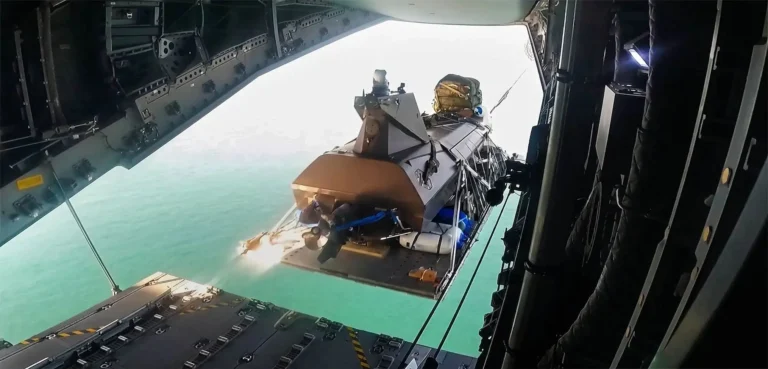
The versatility of the BMP-3 also helps explain why it is still around. Unlike some heavier Western IFVs, the BMP-3 was designed to swim rivers without engineering support. That amphibious capability may not win battles on its own, yet in a country full of rivers and wetlands, it can be very useful.
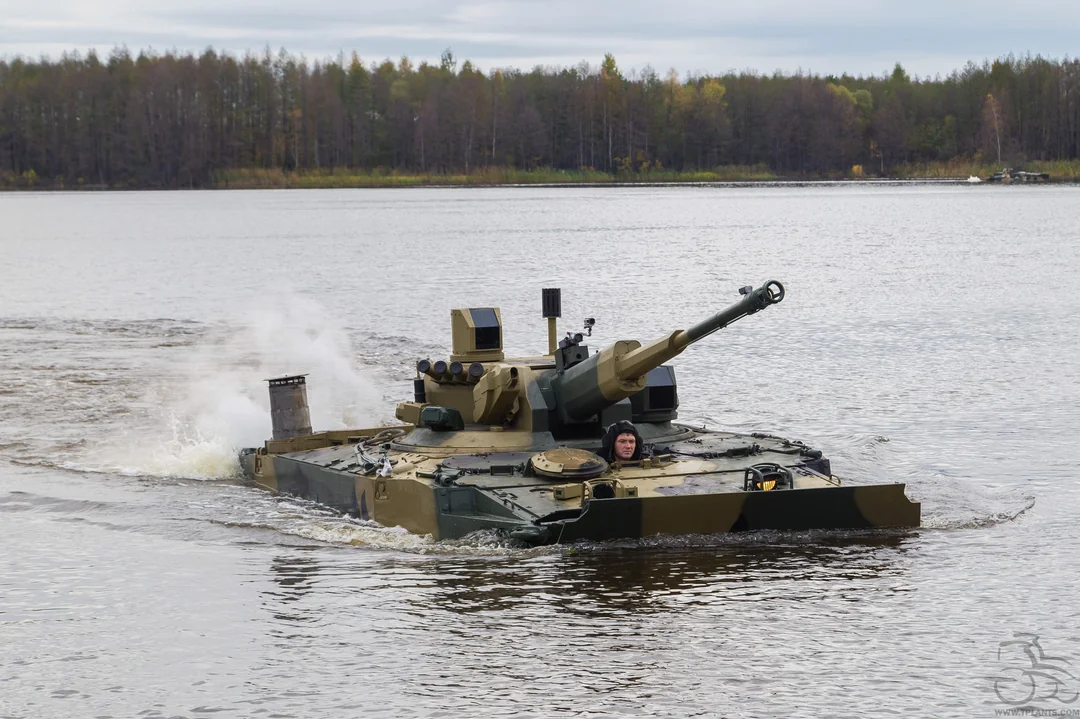
In urban fighting, the low silhouette and powerful armament also mean it can act as a kind of “pocket tank,” though at the cost of higher vulnerability. Critics are right to point out its weaknesses—thin armor compared to Western vehicles, and high losses in Ukraine—but the fact remains that a vehicle able to cross water, deliver troops, and bring heavy guns into a city fight all in one package is still valuable.
Put into perspective, the BMP-3 matters today less because it is flawless and more because it is “good enough” across many roles. It is not the best protected, nor the most modern, but it is available in numbers, familiar to Russian crews, and flexible in how it can be used.
Its relevance, then, goes beyond technology and ties into how it is used on the battlefield. It fills a gap that Russia cannot yet close with newer vehicles, and for that reason, it continues to play a central role in the country’s ground forces.
| Category | BMP-3 IFV (Russia) | M2 Bradley IFV (USA) |
| Armor & Protection | Light aluminum hull, optional appliqué/ERA kits; vulnerable to 30 mm+ and modern ATGMs. Amphibious capability preserved at the cost of protection. | Heavier steel armor with applique/ERA; resistant to 30 mm fire and some ATGMs. Proven to keep crews alive even after multiple hits. |
| Firepower & Armament | 100 mm rifled gun (HE-FRAG + ATGMs) + 30 mm autocannon + machine guns. Strong against infantry, bunkers, and light armor; can threaten tanks with guided missiles. | 25 mm Bushmaster autocannon + TOW ATGMs + machine guns. Reliable and accurate, but lacks the raw punch of BMP-3’s 100 mm gun. |
| Fire Control & Optics | Modernized versions with thermal imagers, laser rangefinders, and digital fire control; still trails NATO standards. | Advanced optics, thermal imaging, and digital fire control; generally superior situational awareness. |
| Mobility | Lighter (18–19 tons). Amphibious with waterjets. Good cross-country agility, but suspension strained with added armor. | Heavier (27–33 tons). Not amphibious. Good mobility on land, keeps pace with Abrams tanks. |
| Survivability | Lower crew survival in Ukraine; losses often total when struck. | Higher crew survival rates; crews often escape even if the vehicle is lost. |
| Crew & Capacity | 3 crew + 7 infantry | 3 crew + 6 infantry |
| Operational Use | Widely deployed in the Russia-Ukraine war; used for direct fire support and troop transport. The amphibious role suits Russian geography. | Extensively used in Iraq, Afghanistan, and Ukraine (aid to Kyiv). Valued for protection and reliability. |
When people compare the BMP-3 IFV to Western vehicles like the American M2 Bradley, the differences in philosophy become clear. The BMP-3 was built light, with aluminum armor that lets it swim across rivers, but that also means it doesn’t stand up well when hit by modern anti-tank missiles.
In Ukraine, crews often don’t make it out when a BMP-3 is struck. The Bradley is heavier, and in some cases has taken several missile hits with the crew surviving.
In Ukraine, Bradleys have at times survived multiple hits with crews escaping, whereas BMP-3s have often been destroyed outright.
The firepower and armament also tell a story. The BMP-3 carries a 100 mm cannon with missiles that fire through the barrel, plus a 30 mm autocannon on top. That’s unusual and makes it feel almost like a mini-tank, able to smash bunkers or light armor.
The Bradley takes a different route, with its 25 mm Bushmaster autocannon backed by TOW missiles. It’s reliable, accurate, and proven in combat, but lacking the raw punch of the BMP-3’s 100 mm gun.
On mobility and survivability, the trade-offs are just as sharp. The BMP-3 can swim, which makes sense in Russia, where rivers and marshes are common. The Bradley can’t, but it was designed to keep up with Abrams tanks across desert and open terrain.
Survivability is perhaps the biggest difference: in Ukraine, Bradley crews have often walked away from vehicles disabled by missiles, while BMP-3 crews have been far less fortunate.
If you step back, you can see three very different ideas at work. These three vehicles illustrate three very different answers to the same question: what should an infantry fighting vehicle be? The Russians wanted something that could cross rivers, hit hard, and carry troops. And that’s the BMP-3.