Follow Us:
Follow Us:

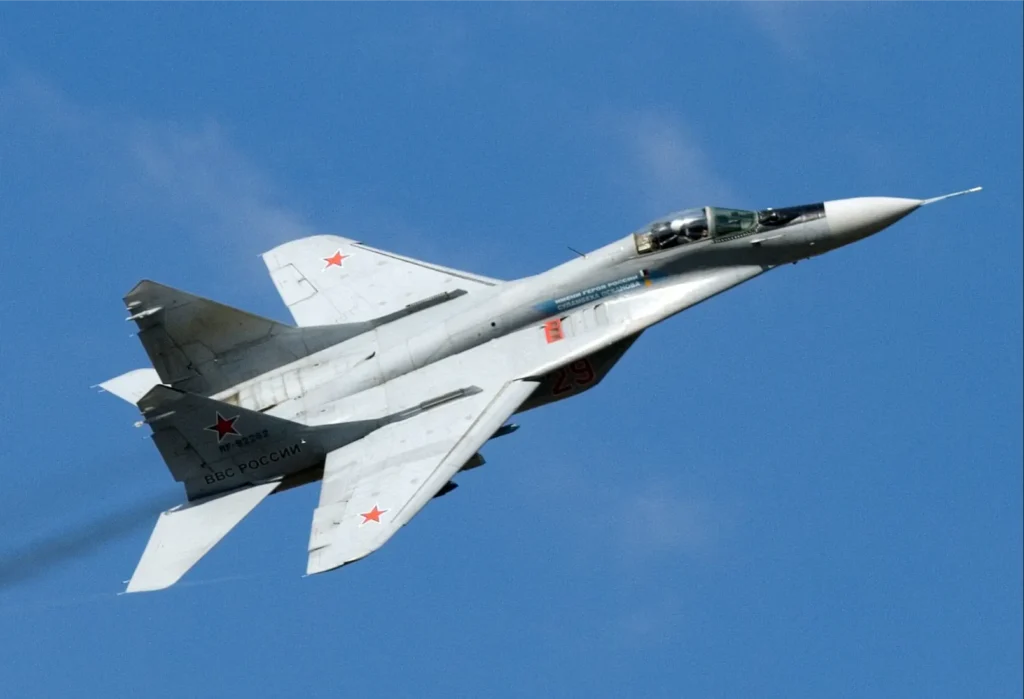
Fast, deadly, and built for the front lines, the Mikoyan MiG-29 Fulcrum was the Soviet Union’s answer to America’s F-15 and F-16 during the Cold War. It wasn’t just another fighter jet. It was a symbol of Soviet engineering, designed to dominate the skies with speed, agility, and firepower.
Introduced in 1983, the MiG-29 fighter jet quickly became one of the most recognizable warplanes of the fourth-generation era. With its sharp profile, twin vertical stabilizers, and massive RD-33 engines, it could reach a top speed of Mach 2.25 and climb over 65,000 feet per minute. It was built for close-in combat and could outmaneuver most Western jets of its time.
Unlike many Soviet aircraft, the MiG-29 was relatively compact and could operate from short, rugged runways. Its built-in infrared search and track (IRST) system allowed it to detect targets without radar, giving it a stealthy edge in dogfights.
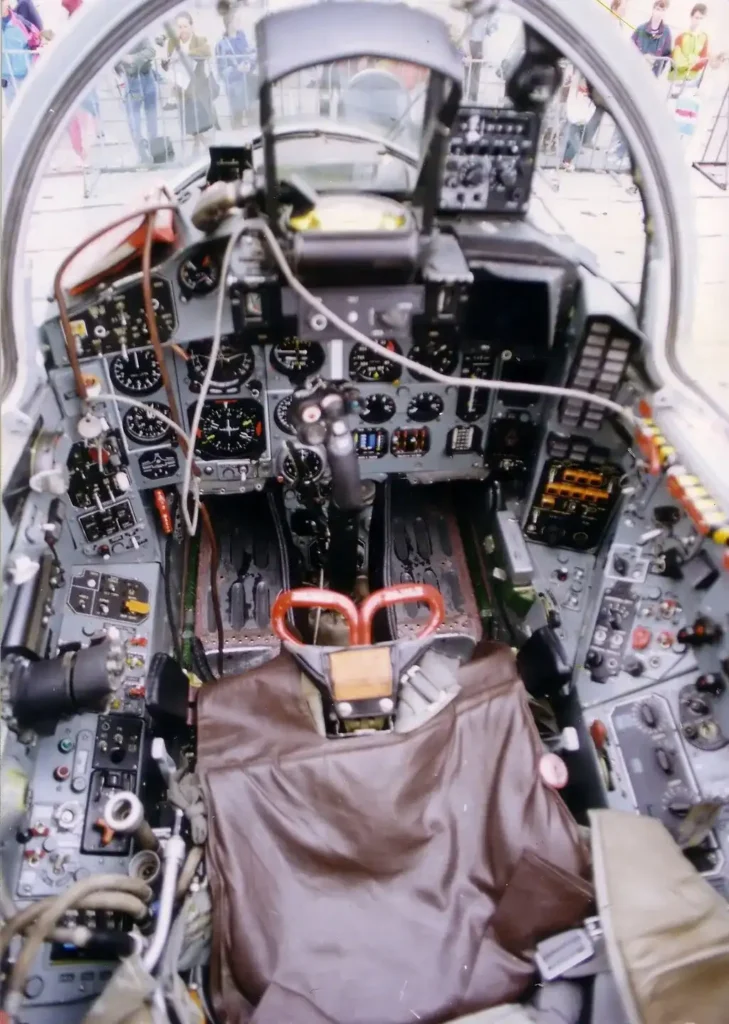
The pilot-friendly MiG-29 cockpit featured a helmet-mounted sight, allowing missiles to lock onto targets simply by looking at them, years before the U.S. adopted similar tech.
Despite its combat focus, the MiG-29 cost was relatively affordable for foreign buyers. With a unit price of around $25 million in the early 2000s, it became a popular export model. Over 1,600 have been built, serving in more than 25 countries.
From Eastern Europe and the Middle East to India and North Korea, the MiG-29 Fulcrum has fought in multiple conflicts and evolved through continuous upgrades. While older models are being retired, newer versions like the MiG-29M and MiG-35 are extending the fighter’s legacy well into the 21st century.
Even in today’s modern battlefield, the MiG-29 remains a potent platform, respected for its versatility, raw power, and combat pedigree.
The Mikoyan MiG-29 wasn’t just fast, it was engineered to push the boundaries of Soviet aviation design. Everything about this fighter jet was tailored for high-speed engagements, sharp maneuvers, and survivability in hostile airspace.
At the heart of the MiG-29’s performance are its twin Klimov RD-33 turbofan engines. These powerful engines generate a combined thrust of over 36,000 pounds, giving the jet a top speed of Mach 2.25 (approximately 2,400 km/h at altitude).
With an impressive thrust-to-weight ratio, the MiG-29 can perform extreme vertical climbs and rapid accelerations that made it a dangerous opponent in close-range air battles.
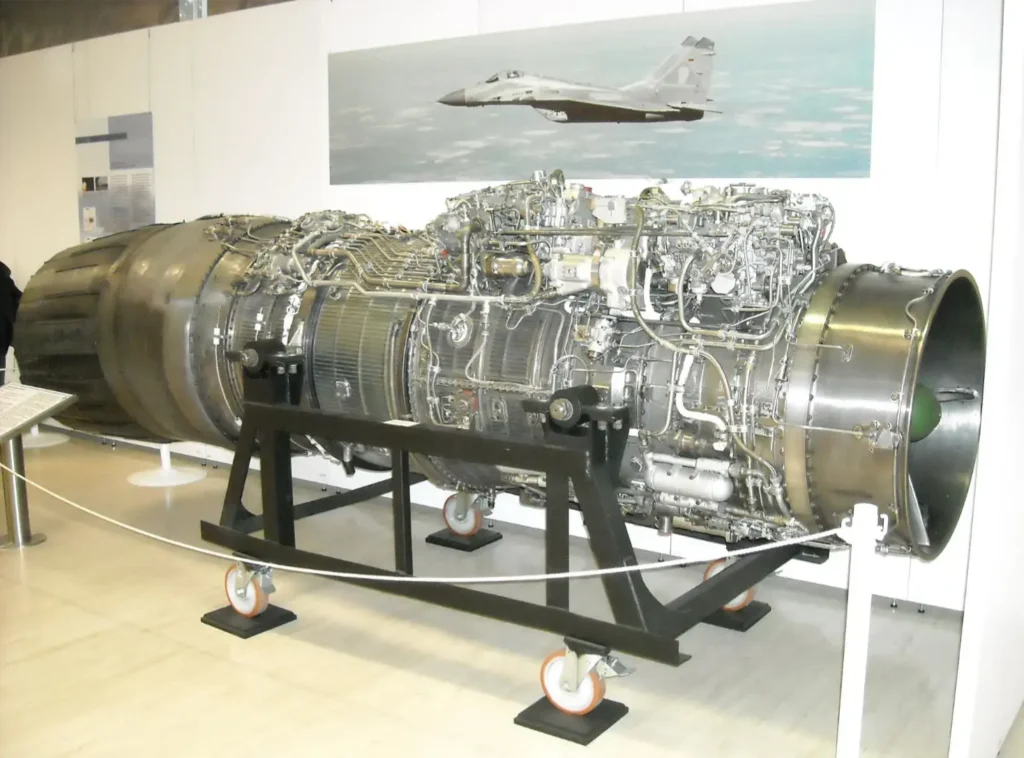
The aircraft has a service ceiling of 18,000 meters (59,000 feet) and a climb rate exceeding 65,000 feet per minute. Its combat radius is around 1,430 kilometers (890 miles), depending on loadout and flight profile.
Though not as long-ranged as some Western counterparts, its range was sufficient for the tactical missions it was designed for, especially when operating near frontlines or with aerial refueling on upgraded versions.
In terms of size, the MiG-29 Fulcrum measures about 17.3 meters in length with an 11.4-meter wingspan. Its wing design includes leading-edge root extensions (LERX), which increase lift and allow for high angles of attack. These features, combined with a fly-by-wire assisted control system, give the jet excellent handling in dogfight scenarios.
When it comes to firepower, the MiG-29 is no slouch. It’s equipped with a 30mm GSh-30-1 cannon and has seven hardpoints capable of carrying up to 4,000 kg of ordnance. This includes R-27 and R-73 air-to-air missiles, bombs, and rocket pods.
The radar system, initially the N019 Sapfir, is complemented by the IRST and laser rangefinder for passive tracking and engagement.
While early versions lacked advanced glass cockpits, later variants introduced digital displays, modern HUDs, and compatibility with GPS-guided munitions. These upgrades brought the MiG-29 cockpit closer to 21st-century standards, enhancing situational awareness and targeting capabilities.

Compact yet deadly, the MiG-29’s specifications reveal a design that prioritized agility, survivability, and offensive capability, all critical traits for air superiority.
Over its four decades of service, the Mikoyan MiG-29 has undergone extensive modifications, resulting in a wide array of variants tailored to different roles, export requirements, and technological advancements. While the original Fulcrum design served well in its time, evolving battlefield demands led to continual upgrades in avionics, weapon systems, and range capabilities.
The MiG-29A, the original production model, was the first to enter service in the early 1980s. It featured the standard RD-33 engines, IRST system, and the N019 radar. It was designed mainly for visual-range dogfighting, with limited beyond-visual-range (BVR) capabilities. Alongside it was the MiG-29UB, a two-seat trainer version, which lacked radar but retained the jet’s flight performance for pilot instruction.
Next came the MiG-29S (Fulcrum-C), an upgraded model with a dorsal fuel tank “spine” that increased range and provided improved avionics and fire control systems.
The MiG-29SM and SMT models built on this, integrating better radar (Zhuk-ME), multifunction displays, precision-guided weapon compatibility, and in-flight refueling capability, transforming the MiG-29 from a short-range interceptor into a capable multirole fighter.

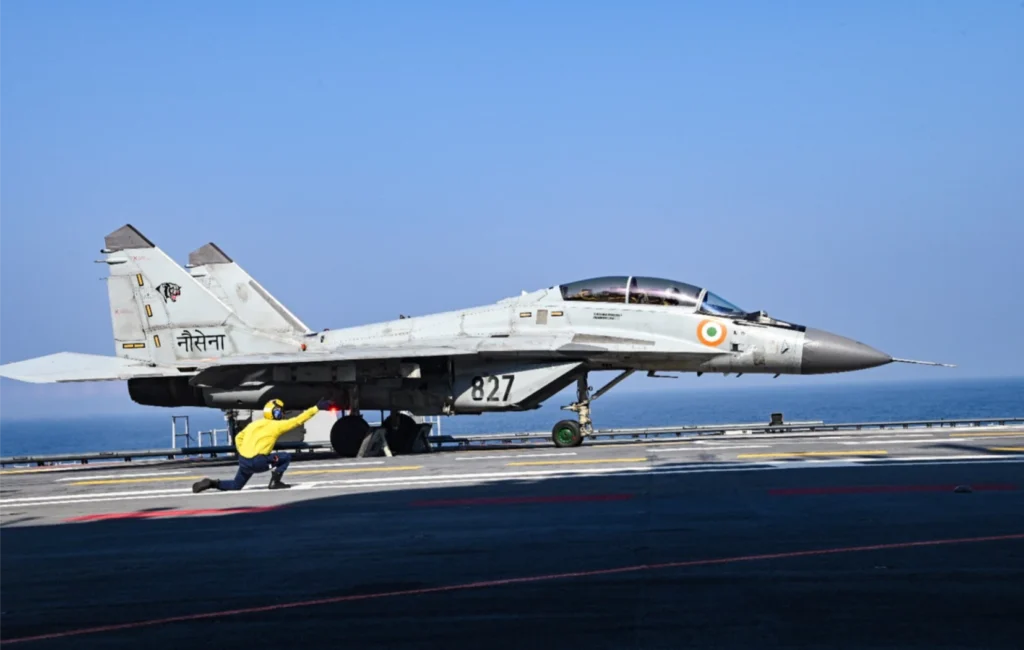
For naval operations, the MiG-29K and MiG-29KUB were developed for carrier use, notably by the Indian Navy. These variants featured reinforced landing gear, folding wings, and advanced avionics. The KUB version was a twin-seat trainer with full combat capability, a rarity in naval aviation.
One of the most significant leaps in capability came with the MiG-29M and MiG-29M2, sometimes considered the bridge between the classic Fulcrum and the modern MiG-35. These aircraft featured completely redesigned airframes with improved aerodynamics, digital fly-by-wire, expanded fuel capacity, and modern glass cockpits. The MiG-29M2 added a two-seat configuration without sacrificing combat performance.
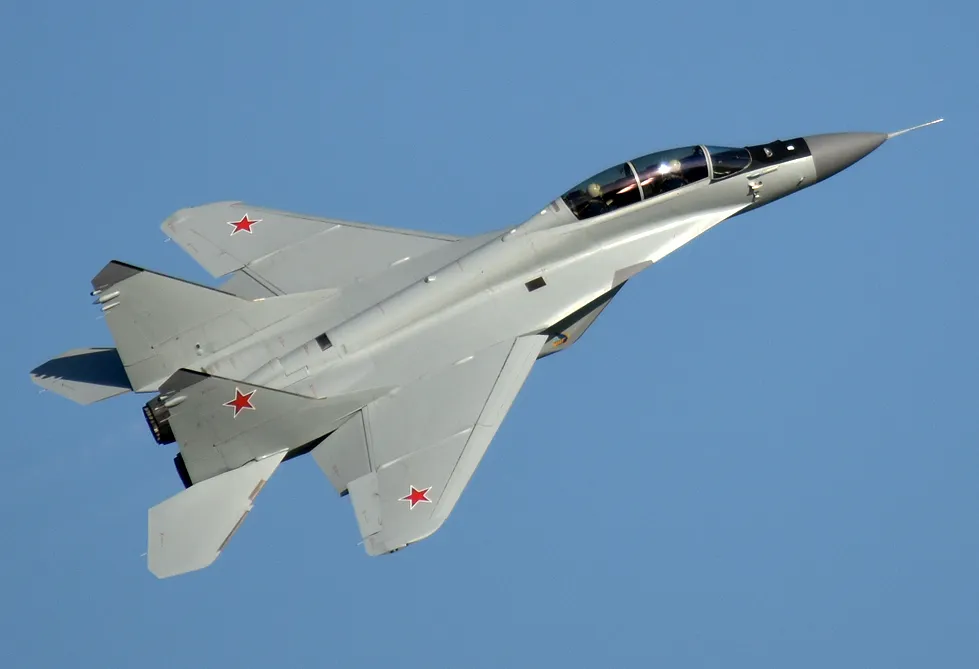
Finally, the MiG-35, often viewed as the MiG-29’s ultimate evolution, offers AESA radar, thrust-vectoring nozzles, upgraded engines, and compatibility with the latest Russian air-to-air and air-to-ground munitions. It’s intended for export and has been proposed to nations looking for a cost-effective 4++ generation fighter.
Each version of the MiG-29 fighter jet reflects Russia’s efforts to maintain relevance in an era of rapidly advancing aviation technology. Despite its aging airframe, the Fulcrum continues to adapt—remaining a formidable presence in global air forces.
Since its introduction in 1983, the Mikoyan MiG-29 has seen action in numerous conflicts across multiple continents, often flown by both state-of-the-art air forces and cash-strapped militaries. Its rugged design, ease of maintenance, and potent air-to-air capabilities made it a reliable tool of war for many of the countries that acquired it, especially those in the former Eastern Bloc, the Middle East, Africa, and Asia.
One of the first real combat tests of the MiG-29 Fulcrum came during the Gulf War in 1991, when Iraqi MiG-29s squared off against coalition aircraft. While most engagements ended in favor of the U.S. Air Force due to superior tactics, training, and avionics, the MiG-29 was noted for its high maneuverability.
However, its impact was limited due to outdated radar systems, lack of BVR missile integration, and poor pilot training on the Iraqi side.
The aircraft also saw action in the Yugoslav Wars, where Serbian MiG-29s engaged NATO fighters during the 1999 Kosovo conflict. Many of these jets were quickly neutralized, often on the ground or by superior AWACS-coordinated strikes.
Still, pilots who flew them described the aircraft as extremely agile, though hampered by poor maintenance and outdated systems at the time.
In the 2000s and 2010s, MiG-29 variants were involved in skirmishes between India and Pakistan, and in air patrols over disputed areas.
Indian Air Force MiG-29s performed well in joint exercises with NATO air forces, holding their own in simulated dogfights thanks to upgrades that included advanced avionics and precision weaponry.
Most recently, the MiG-29 has played a prominent role in the Russia–Ukraine conflict. Ukraine, having inherited a large number of Fulcrums from the Soviet Union, has used them to defend its airspace, intercept cruise missiles, and conduct precision strikes.
Despite being outclassed on paper by more modern aircraft, Ukrainian MiG-29s have remained effective due to stealthy tactics, terrain-hugging flight paths, and ongoing upgrades, some involving Western-supplied munitions adapted to Soviet platforms.
The MiG-29 fighter jet may not have the flash or stealth of a fifth-generation platform, but its combat record proves one thing, it can take a beating, fly in nearly any condition, and still come out swinging.
The Mikoyan MiG-29 has become one of the most widely exported fighter jets in modern military aviation history. With over 1,600 aircraft built, the MiG-29 family has served in more than 25 countries, a testament to its reliability, affordability, and combat versatility. From the cold tundra of Russia to the deserts of the Middle East, the MiG-29 Fulcrum has made its mark across nearly every continent.
Russia, the original developer and largest operator, continues to field a mix of older MiG-29s and upgraded variants like the MiG-29SMT and MiG-29K for carrier operations. These jets are stationed in both front-line airbases and on aircraft carriers like the Admiral Kuznetsov.
While Russia has shifted its focus to the Su-35 and Su-57 for next-gen air dominance, the MiG-29 still holds critical roles, especially in naval and regional defense missions.
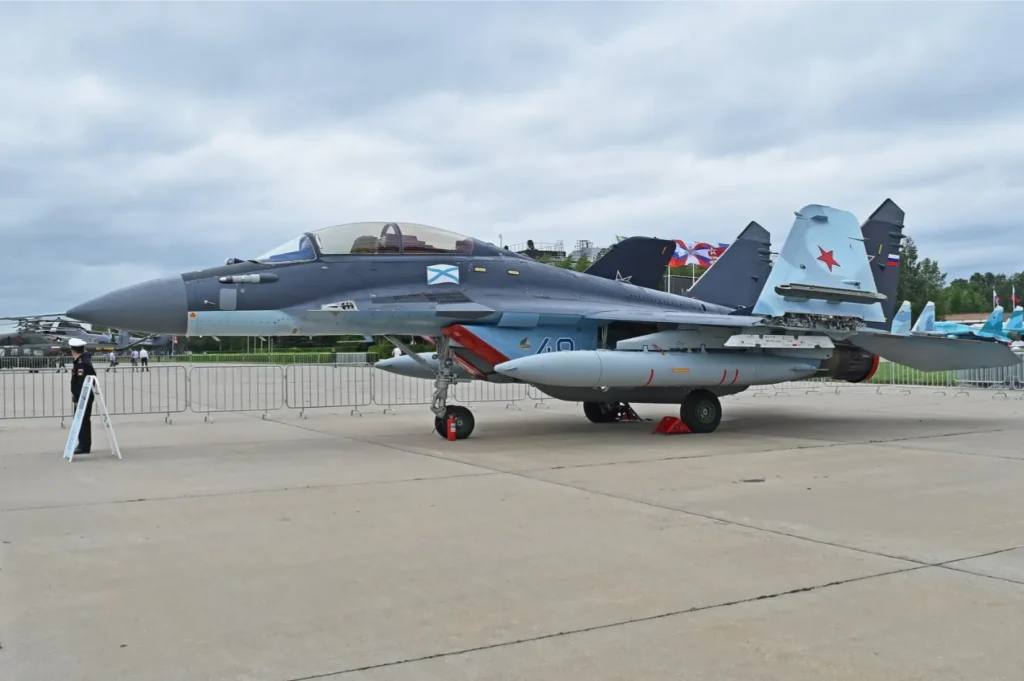
India was one of the earliest export customers and continues to operate MiG-29s in both the air force and the navy. Indian MiG-29s have undergone significant modernization programs, including digital cockpits, upgraded radar systems, and mid-air refueling capability.
Read also: Mikoyan MiG-35 Super Fulcrum: Russia’s Advanced Fighter Jet
The Indian Navy operates the MiG-29K, specifically tailored for carrier-based missions aboard the INS Vikramaditya and the indigenous INS Vikrant.
In Eastern Europe, countries like Poland, Slovakia, Bulgaria, and Serbia inherited MiG-29 fleets after the Cold War. Many of these nations kept their Fulcrums in service well into the 2020s, with some upgrading the avionics to NATO-compatible standards.
Notably, several NATO countries have donated their remaining MiG-29s to Ukraine to support its defense against Russian aggression.
Ukraine, one of the largest non-Russian operators, uses the MiG-29 extensively in air defense, ground attack, and patrol roles. Some Ukrainian Fulcrums have been adapted to fire Western-supplied weapons, such as AGM-88 HARM anti-radiation missiles, demonstrating the platform’s surprising adaptability despite its age.
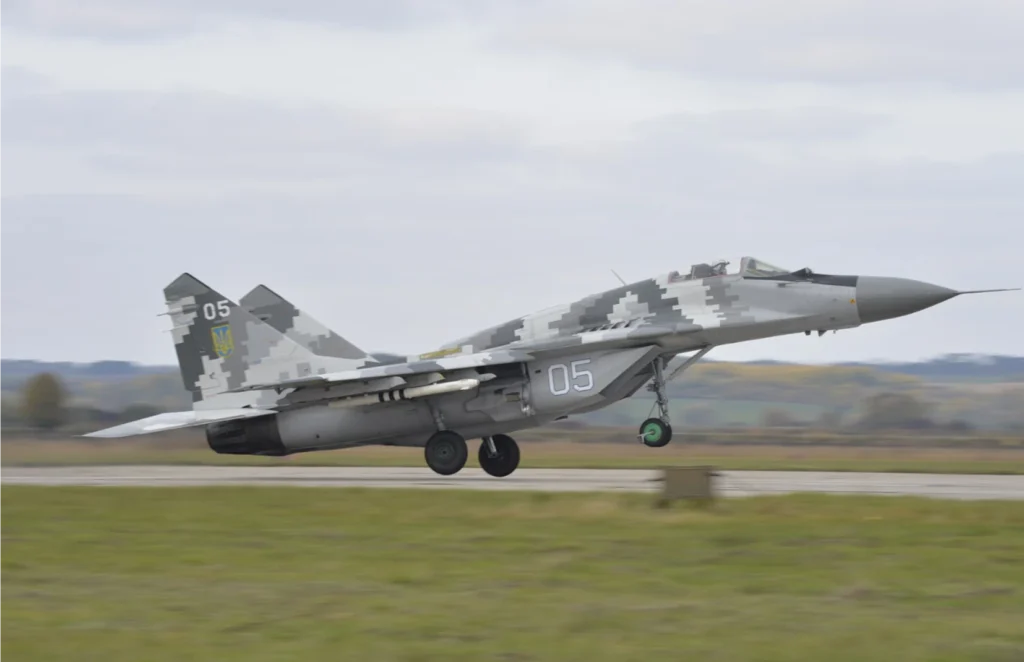
Other long-time operators include North Korea, Syria, Cuba, Peru, and several African nations, such as Eritrea and Sudan, which still fly earlier models of the MiG-29.
While some countries are phasing the aircraft out, others are doubling down on upgrades. Whether flying legacy models or advanced versions like the MiG-29M, the Fulcrum remains a vital piece of many air defense networks around the world.
When comparing the Mikoyan MiG-29 to contemporary fighter jets, it’s important to recognize both its historic strengths and the challenges it faces against newer aircraft.
Designed in the late 1970s and introduced in the early 1980s, the MiG-29 was built to counter fighters like the F-15 and F-16.
However, over four decades later, aviation technology has evolved dramatically, pushing the Fulcrum into a different competitive landscape.
In terms of raw speed and agility, the MiG-29 remains formidable. Its top speed of Mach 2.25 and superior thrust-to-weight ratio allow it to excel in close-range dogfights. This gives it an advantage over older generation fighters such as the early F-16 variants or Mirage 2000, which were not designed with the same emphasis on high-angle-of-attack maneuvering.
The MiG-29’s engine power and aerodynamic design support quick accelerations and tight turns that remain respected by pilots worldwide.
However, in avionics, radar, and missile systems, the Fulcrum struggles to keep pace with modern jets like the F-35 Lightning II, F-22 Raptor, or even upgraded Su-30/35 variants.
These aircraft incorporate stealth features, advanced active electronically scanned array (AESA) radars, and networked sensor fusion that significantly enhance situational awareness and beyond-visual-range (BVR) engagement capabilities. Early MiG-29s lack these advanced features, limiting their effectiveness in modern contested airspaces.
Upgraded MiG-29 variants, including the MiG-29M and MiG-35, address some of these gaps with modern glass cockpits, AESA radar, better electronic warfare suites, and compatibility with precision-guided munitions. Even so, their stealth and sensor capabilities remain behind fifth-generation fighters.
Compared to other Russian aircraft, the MiG-29 fits between lightweight fighters like the MiG-21 and heavier multirole jets like the Su-30 or Su-35. It offers superior agility but with a shorter range and payload compared to these heavier platforms.
Many air forces are transitioning to multirole fighters with longer reach and versatile strike capabilities, yet the MiG-29 remains a reliable, cost-effective solution for countries with limited budgets.
In summary, while the MiG-29 fighter jet might no longer be the cutting-edge fighter it once was, its combination of speed, agility, and upgrade potential continues to make it a respected and widely used combat aircraft. It bridges the gap between older legacy jets and the expensive new generation, carving out a niche that keeps it relevant in many air forces worldwide.