Follow Us:
Follow Us:

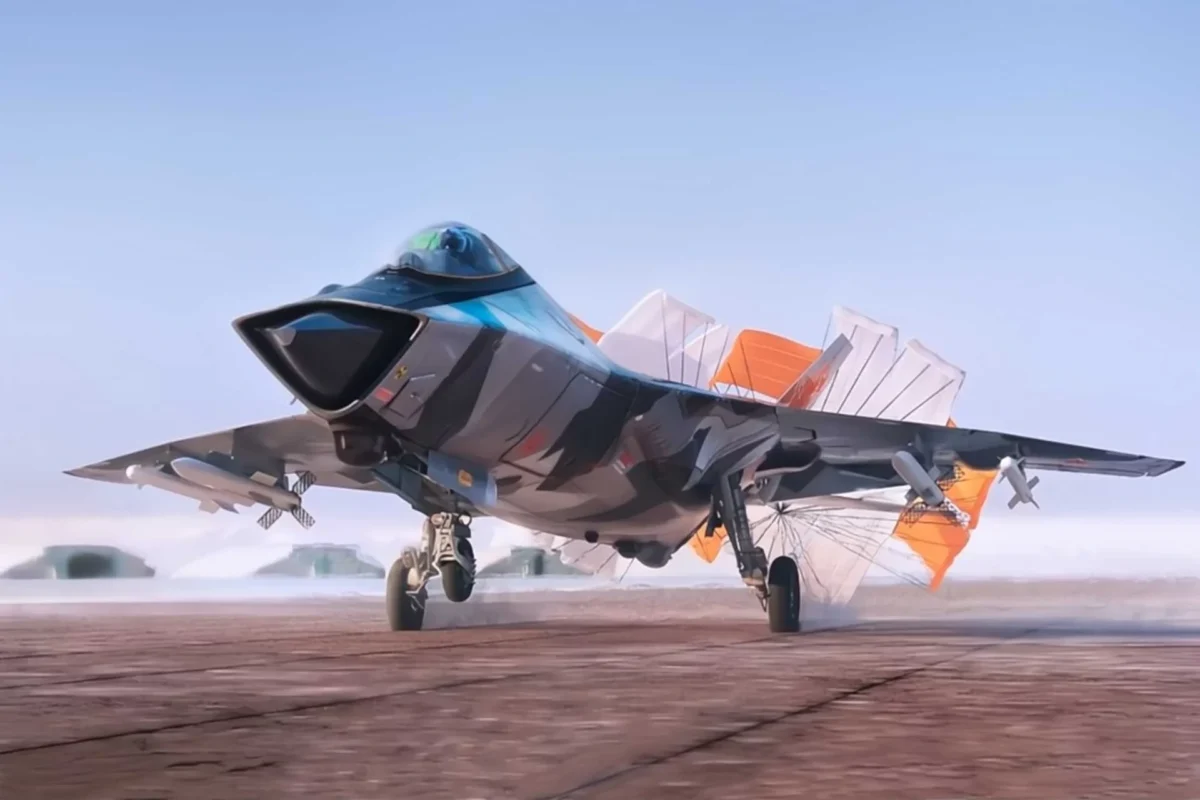
Russia has once again stirred the aerospace world with talk of a new MiG-41 fighter. It’s a hypersonic interceptor that, if real, could rewrite the rules of air defense.
In early October 2025, reports emerged claiming that the MiG-41’s external design is now “finalized,” and a prototype flight is expected in the coming years.
That’s surprising, because until very recently, much of the MiG-41 fighter program, also called PAK DP, seemed little more than a high-concept poster child: Mach 4+ speeds, near-space operations, anti-missile lasers, stealth features, all the bells and whistles.
But there is a puzzle here. Russia’s defense sector has struggled to deliver even on its fifth-generation ambitions (take the Su-57, for example), so skepticism is high about whether the MiG-41 fighter jet will ever move beyond renderings and press releases.
What does today’s hype tell us? could this be a serious leap forward, or are the MiG-41 fighter program delays, technical gaps, and political showmanship all part of a bigger narrative? Let’s dig into what we actually know and what looks doubtful about the MiG-41 concept.
If you follow Russian aviation news, you’ve probably heard whispers about something called the MiG-41; a project that’s been floating around for years. Officially or not, it’s often described as a replacement for the MiG-31.
Read also: MiG-31 Foxhound: The Supersonic Russian Interceptor
That older interceptor was made to protect Russia’s wide airspace. It was quick, could fly high, and carried powerful missiles. Even now, it remains capable, but it’s reaching the end of its service life. Even the upgraded MiG-31BM models are pushing forty years of service.
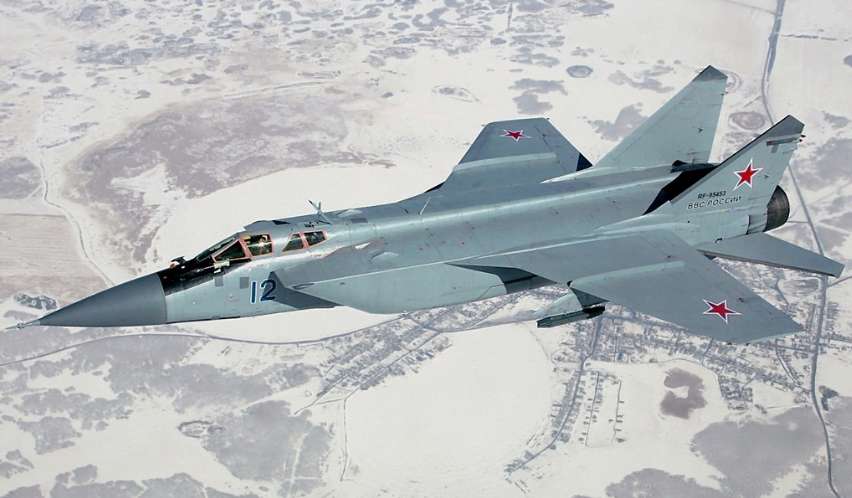
So, the logic behind a MiG-31 replacement does make some sense. Russia’s geography hasn’t changed. It still has vast Arctic borders and remote regions that need fast-response defense.
And with more advanced threats in the air, like stealth bombers or even hypersonic glide vehicles, it’s not hard to see why Moscow would want something even faster, tougher, and smarter than its old interceptor.
The MiG-41, also known by its development name PAK DP, is said to be that next step. The project reportedly started sometime in the early 2010s, not long after the Su-57 began taking shape.
At first, it sounded like one of those futuristic concepts that would never leave the drawing board. Words like “Mach 4+” and “near-space flight” were tossed around a bit too casually. Still, Russian officials kept hinting that work was ongoing, and Mikoyan’s design bureau began dropping small updates every few years.
Whether those fragments point to steady progress or just a way of keeping the project in the conversation is difficult to tell. Some insiders claim early studies were more about exploring hypersonic interceptor aircraft technology in general rather than building an actual fighter jet.
Others believe the MiG-41 fighter program was a political signal. Now, over a decade later, talk of the MiG-41 PAK DP interceptor keeps resurfacing, sometimes with confident promises, sometimes with silence.
If you’ve been following defense chatter, the MiG-41 fighter often sounds like a half-myth. Officially, the project is usually referred to as PAK-DP or by a product code Izdeliye-41, and not everyone calls it “MiG-41” as a formal name. That label has stuck in media and conversation, but it isn’t an official service name the way “MiG-31” once was.
People throw around big performance numbers. You’ll read claims of Mach 4 or more, service ceilings reaching near-space, and ranges in the many thousands of kilometers. Those figures appear in Russian statements and in a steady stream of articles, but they’re reported numbers, not independently verified flight data.
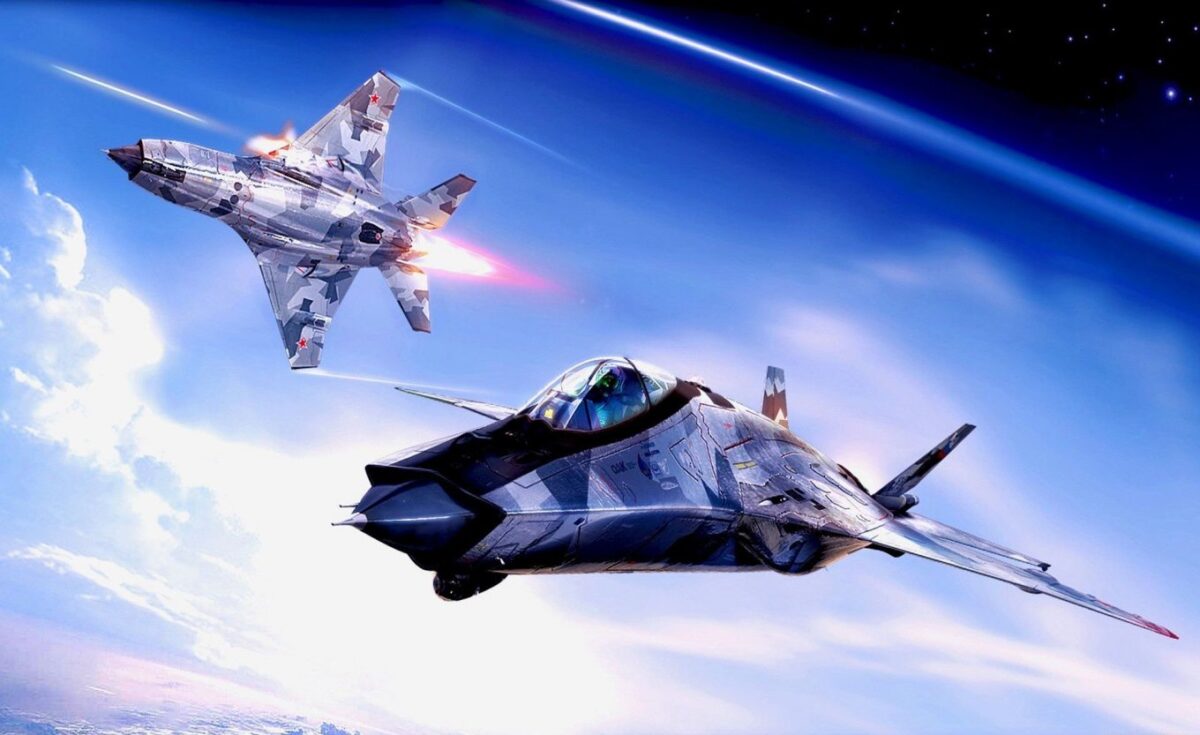
Some defense writers think the speeds and ceilings being touted strain credibility, while others say they’re within the realm of what advanced ramjet or turboramjet concepts could allow. In this context, it’s possible on paper, but we don’t have hard proof yet.
The wish list of technologies is where the MiG-41 story gets cinematic; stealth shaping, anti-missile lasers, the ability to operate in “near-space,” and even acting as a mothership for drones or carrying anti-satellite weapons have all been mentioned.
Some of these things are plausible separately; combining them all on a single airframe that must also survive sustained hypersonic flight is a much taller order. A lot depends on materials, cooling, sensor hardening, and how weapons are carried and guided at extreme speeds and those engineering steps are rarely quick.
Engines are a real sticking point. To hit Mach 3–4+ you likely need either a turboramjet / ramjet arrangement or a new variable-cycle engine that can behave like a turbojet at low speeds and a ramjet at high speeds.

Some reports link the project to future variants of engines like the AL-51 family or to ideas around the Izdeliye-30 family, but again those are proposals and development would be difficult and expensive.
In plain terms, the engines alone could eat years from the schedule and millions (or billions) in testing before a reliable prototype flies.
So what should you take away? There’s a mix of fact, aspiration, and messaging here. The PAK-DP / Izdeliye-41 label, the public claims about very high speed and altitude, and mentions of exotic tech are real; they’ve been said by officials and analysts. But independent verification is thin, and many experts warn that putting all those features together is technically very hard.
When asked, “What’s the case that makes the Mig-41 fighter program feasible?” People point to history first and it’s easy to see why. Russia already built a pair of very fast interceptors in the Cold War.
The MiG-31, one of the fastest operational combat aircraft ever built, for example, still holds a special place among fighter jets. It can fly at blistering speed while carrying serious weapons. That shouldn’t surprise anyone, though, because it came from the same line of thinking that produced the MiG-25 fighter back in the Cold War. Both were built to sprint across huge distances and intercept threats high in the sky.
Read also: What Made the MiG-25 Foxbat One of the Fastest Jets Ever
So when Russian designers started floating the idea of another high-speed interceptor (or what they now call the MiG-41 or PAK-DP), it wasn’t a random leap. It’s more like a return to an old habit: chasing the horizon faster than anyone else.

It’s easy to call the MiG-41 a fantasy project, but a few real clues suggest there’s more to it. Russia’s engine programs, like the Izdeliye-30 line, are already pushing into the kind of performance they’d need for hypersonic speed (reportedly, they can survive the heat of really high-speed flight). Some of the research on new alloys and cooling methods also fits that direction.
Put bluntly: if you already have fast interceptors and you keep investing in hotter engines and tougher materials, moving the performance envelope further, even into the low-hypersonic realm is not a total nonstarter.
You can also see the logic if you look at a map. Russia’s borders are huge, especially across the Arctic, and those wide, empty stretches are hard to defend. Lately, Moscow’s been putting more effort into northern bases and patrol routes.
So the idea of a really fast, long-range interceptor starts to sound practical; something that can reach trouble spots before anything else can. This geopolitical logic helps explain why PAK-DP keeps coming up in official statements.
Looked at that way, the MiG-41 idea isn’t pulled from thin air. Russia already has a history with fast interceptors, its engineers have been tinkering with better engines and materials, and the Arctic gives them a reason to want long-range patrols. It’s a stretch, but not an impossible one. But, and this is important, plausible is not the same as likely, at least not on the schedules some headlines imply.
For all the excitement around the MiG-41 fighter program, there’s a more skeptical side to the story; one that asks whether this project is truly within reach or just a high-tech mirage dressed in patriotic language. Even people who admire Russian aerospace engineering admit the technical hurdles are enormous.
At the top of the list are engineering risks. Flying at anything close to Mach 4 isn’t just “faster”; it changes the entire physics of flight. At those speeds, the aircraft skin heats up to hundreds of degrees, air friction becomes punishing, and even small control mistakes can tear a jet apart.
Russia does have experience from the MiG-25 and MiG-31, but those were built with brute strength and thick metal, not stealth coatings or delicate sensor housings. The moment you add stealth shaping, internal weapon bays, or onboard lasers and drone-mothership roles, everything gets exponentially harder.
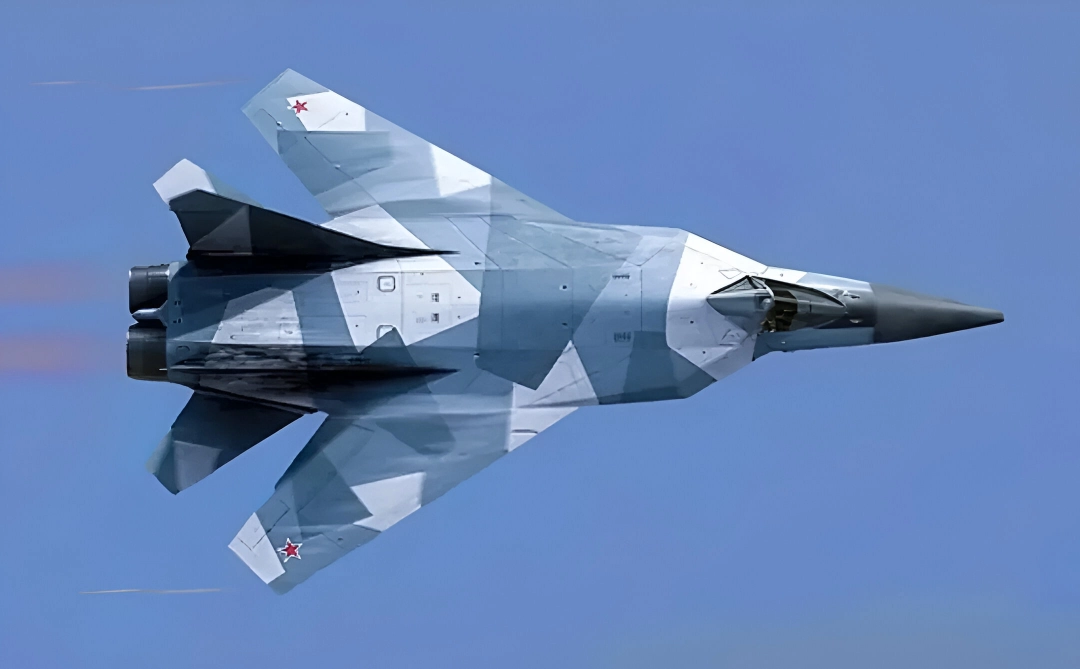
Each new feature adds heat, weight, or complexity that fights against the others. It seems that integration is hard, and even small technical compromises can delay the whole project for years.
Then there’s the money problem. Developing a brand-new airframe, a next-generation engine, and hypersonic-capable materials is not cheap under the best circumstances and Russia’s economy has been under growing strain.
Sanctions have made it difficult to access high-grade composites, advanced electronics, and precision machine tools, many of which are sourced internationally. Even if domestic substitutes exist, they rarely match the same quality or efficiency.
This raises the question if Russia can really afford to push the MiG-41 fighter program to completion while also funding the Su-57, the Su-75 “Checkmate,” and various drone and missile projects. History suggests priorities eventually collide, and something gives way.
Read also: Sukhoi Su-75 Checkmate: Russia’s Stealth Fighter Revolution
You can already see hints of this in recent delays. The Su-57 fighter, for instance, took more than a decade to move from prototype to limited service, and even now, production numbers remain small. Other programs have faced similar stalls or redesigns, often blamed on “refinements” but more likely tied to resource and supply limits. That same pattern could easily repeat for the MiG-41. Ambition alone doesn’t make deadlines move faster.
Analysts, both Western and Russian, have been cautious about taking the MiG-41 story at face value. Some see it as a “signaling project,” a way for Moscow to show it’s still in the technological race even if actual production remains far off.
Russian defense writers themselves sometimes describe it as a “concept study” rather than a full program, hinting that it might serve more as a testing ground for materials or engines than a fighter you’ll actually see in squadrons anytime soon.
So yes, the dream of a hypersonic interceptor might be technically imaginable, but the odds of it emerging soon, or exactly as promised, remain uncertain at best.
If you look at the official talk, the MiG-41 fighter seems to be getting closer. You’ll see mentions of test flights “soon,” sometimes pegged to 2025, and talk of it entering service sometime in the next decade (between 2028 and 2035). But after watching how other advanced jets have developed, it’s tough to take those dates literally. They feel more like goals than promises.
For context, Russia’s own Su-57 project was first announced back in the early 2000s. Its maiden flight came in 2010, but full production models didn’t really begin trickling out until more than a decade later. Even now, production numbers are limited.
Western programs tell a similar story: the U.S. F-22 and F-35, or Europe’s upcoming FCAS and Tempest projects, all took well over ten years from concept to service and that’s with bigger budgets, broader industrial bases, and relatively stable supply chains. By comparison, the MiG-41’s timeline looks… ambitious, to put it gently.
Read also: Boeing F-47: U.S. Next-Generation Air Dominance Fighter Jet
There are also hints that not everything is moving as smoothly as claimed. Building a new engine, possibly a variable-cycle or hybrid turbo-ramjet, takes extensive testing. Flight control systems that can handle Mach 4 speeds need their own development path. Everything on the aircraft (e.g., the coatings, the sensors, the wiring), has to survive ridiculous temperatures and pressure. And if just one part isn’t ready, the whole thing gets delayed.
Realistically? In the best-case scenario, maybe a test jet flies before 2030, (but it’s more of a technology demonstrator rather than a full-combat prototype). After that, if the money stays and things don’t get bogged down, an initial production version could appear sometime in the 2030s.
The worst-case is easier to imagine: the MiG-41 quietly shifts into a long-term research effort, much like earlier “paper projects” that never reached serial production. It’s possible the MiG-41 never makes it to the runway, at least not soon. What it might do instead is shape how Russia thinks about the next generation of interceptors.
Officials still mention early flight dates; 2025, maybe the 2030s, but it’s hard to picture that happening soon. With the cost, the tech hurdles, and sanctions slowing things down, it might stay a long-term goal rather than a real jet in service anytime soon.