Follow Us:
Follow Us:

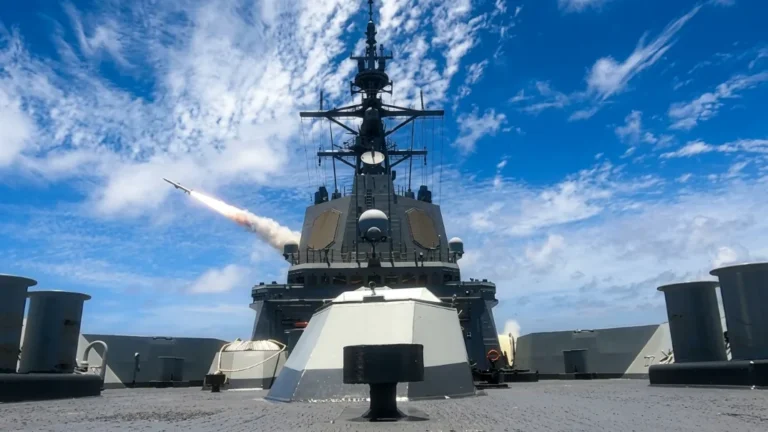
If you want to understand modern naval warfare, forget giant aircraft carriers for a moment. Forget even nuclear submarines. Sometimes the weapon that changes the game is small enough to ride on the back of a truck, hidden under a camo tarp, waiting for the right moment.
That’s exactly the story of Ukraine’s Neptune Missile—a homegrown cruise missile that went from obscure prototype to international headline when it sent Russia’s flagship cruiser Moskva to the bottom of the Black Sea in April 2022.
But calling Neptune “just another anti-ship missile” misses the bigger picture. This system represents something larger: the ability of a smaller nation to punch far above its weight with smart engineering and persistence.
Built by the Luch Design Bureau in Kyiv, Neptune wasn’t born in a shiny lab with endless budgets. It was carved out of necessity, shaped by trial, delay, and plenty of improvisation. Ukraine needed a way to stop a navy many times its size, and Neptune became the tool to level that battlefield.
Here’s the twist—Neptune is evolving again. The first version had a respectable range of about 280 km, enough to keep Russian vessels uneasy near the coast.
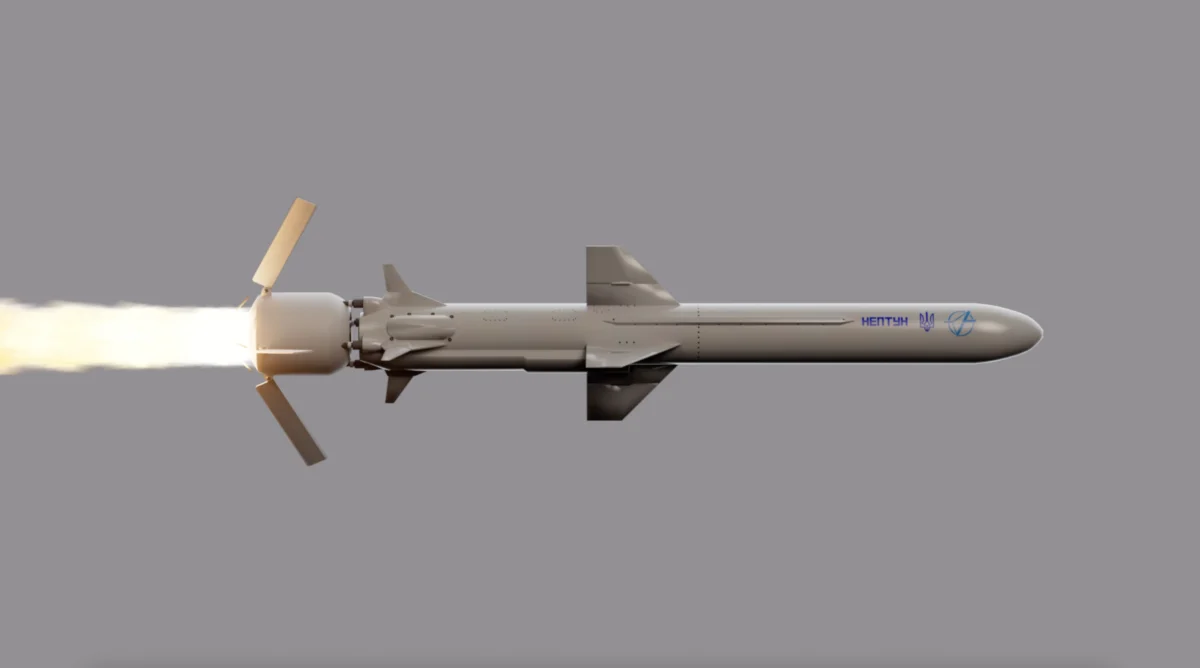
Now, reports suggest an upgraded variant, nicknamed “Long Neptune”, stretches that reach toward 1,000 km. That’s not just an incremental upgrade; it’s a leap that could reshape the strike calculus far beyond the Black Sea. Suddenly, bases, supply hubs, and critical infrastructure hundreds of kilometers away are within reach.
So, when people talk about Neptune, they’re not just talking about metal, fuel, and electronics. They’re talking about a symbol—a reminder that the dynamics of modern warfare aren’t always dictated by who has the biggest fleet, but by who can innovate under pressure.
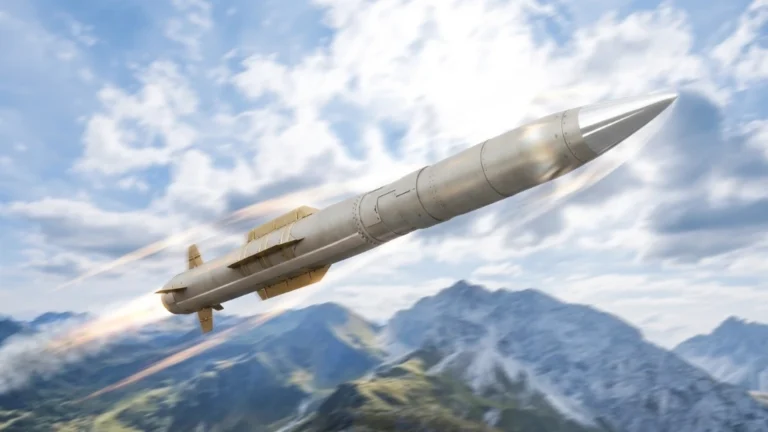
At its core, the Neptune Missile, formally known as the R-360 Neptune, is Ukraine’s homegrown, subsonic cruise missile designed to sink large warships. Think of it as a long-range spear that skims just above the sea’s surface, almost invisible until the last few seconds of its flight. That “sea-skimming” behavior isn’t a gimmick; it’s the key to slipping under radar coverage until it’s too late for enemy defenses to react.
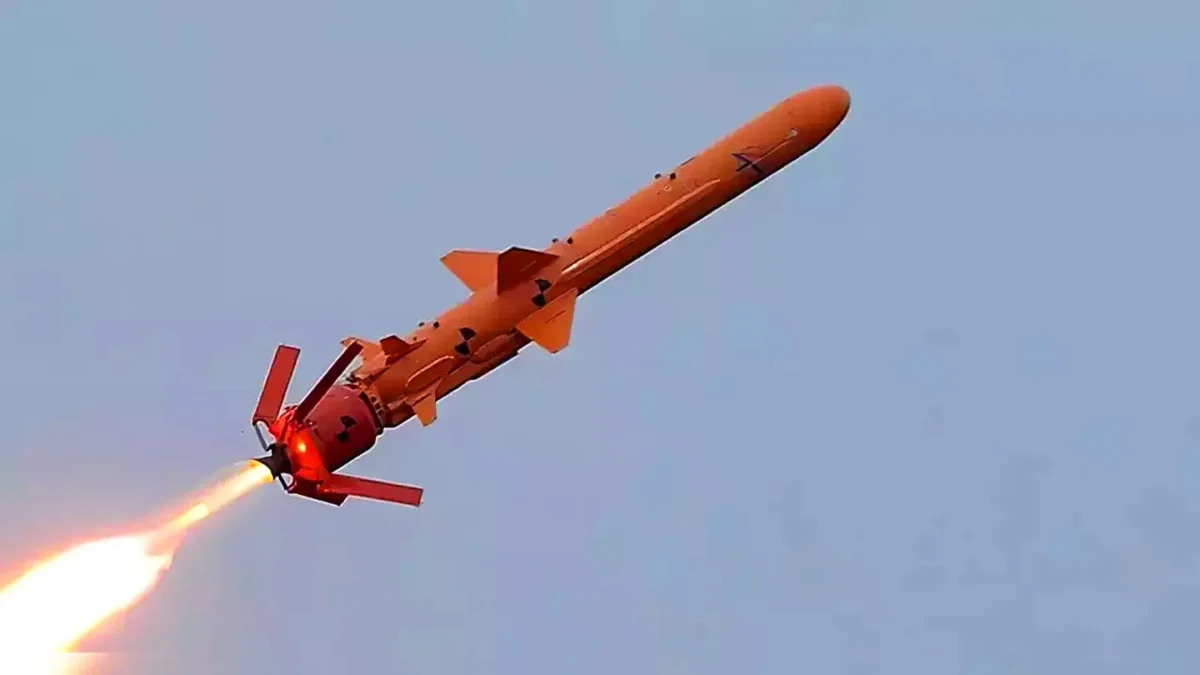
Neptune didn’t appear out of thin air. Its DNA traces back to the Soviet-era Kh-35 missile, sometimes called the “Harpoonski” because of its resemblance to the U.S. Harpoon. But where the Kh-35 was an aging design, Neptune represents a reimagining.
Engineers at the Luch Design Bureau in Kyiv took the basic concept—lightweight, ship-killing, adaptable—and stretched it into something leaner, tougher, and more capable. Longer fuselage, extra fuel, improved electronics: in short, the R-360 was designed to do more with less.
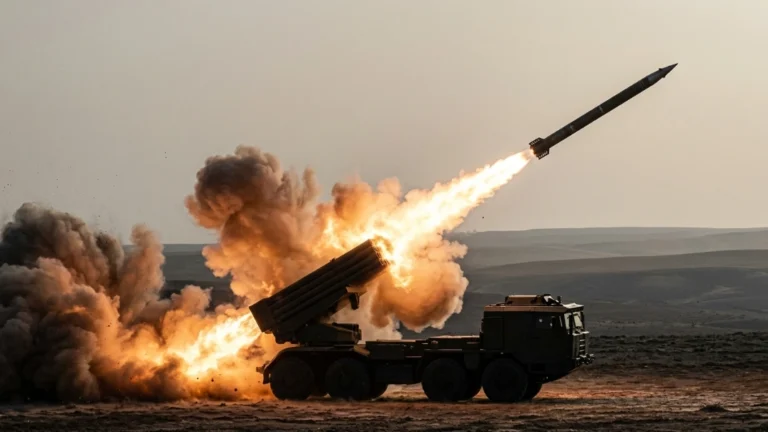
Unlike some missiles that need fancy launch platforms like aircraft or warships, Neptune was built for mobility and flexibility. Its primary launcher is the RK-360MC coastal defense system, essentially a truck-mounted firing unit that can roll down a country road one day and unleash missiles at enemy vessels the next. This “shoot and scoot” design means Ukraine doesn’t have to expose fixed bases to enemy strikes—Neptune batteries can reposition quickly, staying hidden until it’s time to strike.

What sets Neptune apart isn’t just the hardware but the timing of its arrival. Ukraine began serious development around 2013–2014, right after Russia’s annexation of Crimea.
In other words, Neptune was born out of necessity. It was Ukraine’s hedge against being bottled up in its own waters, a way to push back against a naval giant without needing a navy of equal size.
In many ways, Neptune isn’t just a missile. It’s a message: “You may control the sea, but we can still reach you.”
When we talk about the Neptune Missile, it’s easy to get lost in dramatic stories—like the sinking of the Moskva. But let’s pause and look at what the missile actually is on paper. Specs don’t tell the whole story, but they explain why this system has become such a thorn in the side of larger navies.
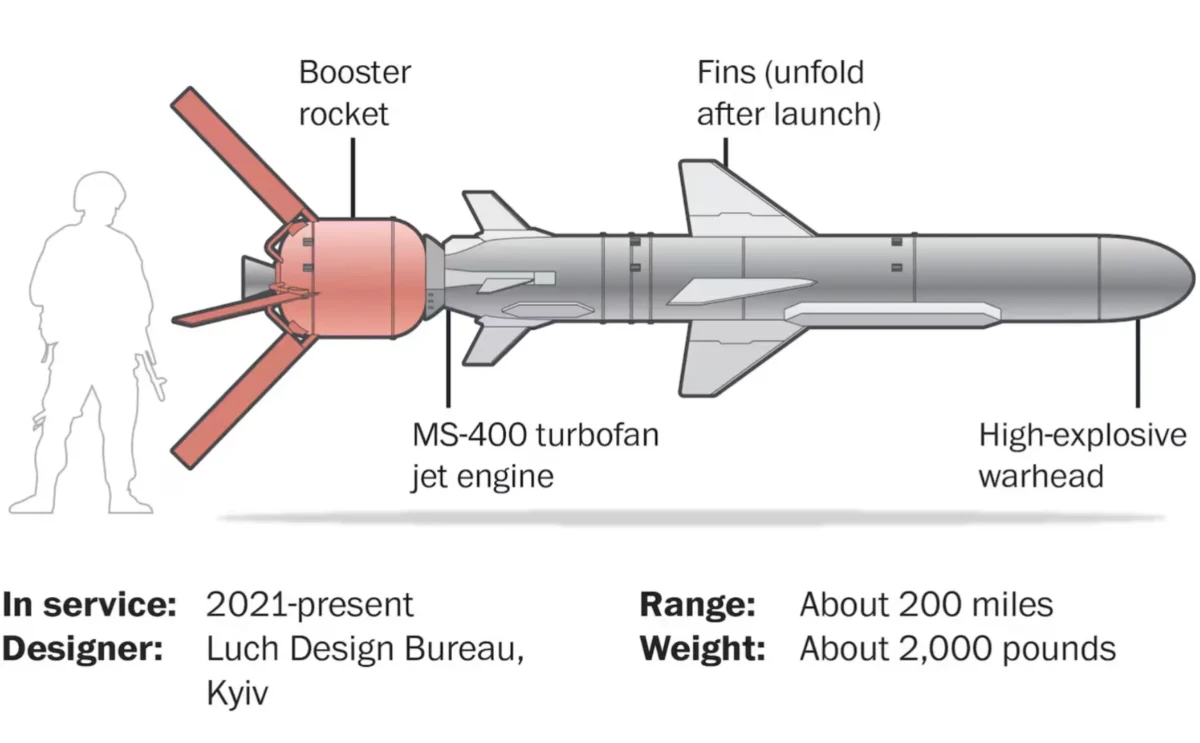
The R-360 is a subsonic cruise missile, meaning it doesn’t rely on speed like a supersonic dart. Instead, it relies on stealthy flight paths, low altitude, and clever guidance. Neptune hugs the water’s surface during most of its journey, blending into the “clutter” that makes radar screens messy. This gives defenders very little time to react once it finally pops up on their systems.
Here’s a breakdown of the baseline Neptune:
| Feature | R-360 Neptune Specification |
| Origin | Ukraine (Luch Design Bureau) |
| Role | Anti-ship cruise missile |
| Length | ~5.05 m (16.6 ft) |
| Diameter | 0.38 m (15 in) |
| Launch Weight | ~870 kg (1,918 lbs) |
| Warhead | ~150 kg (high explosive fragmentation) |
| Propulsion | Turbojet engine with solid-fuel booster |
| Speed | Subsonic (~0.8–0.9 Mach) |
| Effective Range | Up to 280 km (~174 miles) |
| Guidance System | Inertial navigation + active radar homing |
| Launch Platform | RK-360MC mobile coastal defense battery |
Now, a quick example of how this works in practice: imagine a Russian frigate cruising 200 km off Ukraine’s coast. On paper, that distance feels safe—far from artillery, drones, or smaller strike boats. But Neptune erases that comfort zone. Within minutes of launch, it can close that gap and slam a 150-kilogram warhead into the vessel’s side, crippling or sinking it outright.
What makes these specifications compelling isn’t that Neptune is the most powerful missile in the world. It isn’t. But it’s powerful enough, especially when fired in salvos, to force enemy commanders to rethink where they sail and how they defend themselves.
Military technology rarely stands still, and the Neptune Missile is no exception. After proving itself in combat, Ukrainian engineers didn’t just sit back and admire their work. They pushed forward, experimenting with a stretched and more ambitious variant often referred to as “Long Neptune.” And if early reports hold true, this upgrade is more than just cosmetic—it’s a leap in capability.
The most obvious change is range. Where the original R-360 reached roughly 280 km, the Long Neptune is reported to extend its reach up to 1,000 km. That’s not a minor tweak; it quadruples the missile’s footprint. Suddenly, targets far inland—air bases, logistics hubs, even command centers—are potentially within Neptune’s grasp. For Russia, it means nowhere in occupied Crimea or even parts of southern Russia is completely safe.

Physically, the Long Neptune looks like a cousin that went through a growth spurt. Reports note a longer fuselage to carry extra fuel, a refined airframe, and upgrades to its onboard electronics. In plain terms: it flies farther, navigates better, and has the brains to find its mark even in contested airspace.
Guidance improvements likely include a blend of inertial navigation, GPS/GLONASS updates, and terminal active radar homing, helping the missile stay on course during its long journey before switching to a precise lock in the final seconds.
Here’s where it gets even more interesting: analysts suggest the Long Neptune isn’t just about ships anymore. With its extended range and guidance package, it looks increasingly optimized for land-attack missions—turning what began as a coastal defense weapon into a strategic strike asset.
In many ways, the Long Neptune represents the shift in Ukraine’s defense thinking: not just holding the shoreline, but shaping the broader battlefield, forcing adversaries to stretch their defenses thinner and farther than before.
The Neptune Missile wasn’t built to sit in a showroom—it was built to fight. And fight it did. Its baptism of fire came in April 2022, when two Neptunes struck the pride of Russia’s Black Sea Fleet, the guided missile cruiser Moskva. At the time, many observers doubted Ukraine had the means to pull off such a strike. Yet within hours, images and confirmations rolled in: the 12,000-ton flagship was ablaze, later slipping beneath the waves.
Why did this matter so much? Because the Moskva wasn’t just any ship. It was the fleet’s command vessel, bristling with radar and surface-to-air missiles, meant to protect other ships from exactly the kind of attack that brought it down. Losing it didn’t just dent Russia’s navy—it shattered the aura of invulnerability that large warships often project. One salvo of relatively inexpensive missiles had humbled a vessel worth hundreds of millions of dollars.
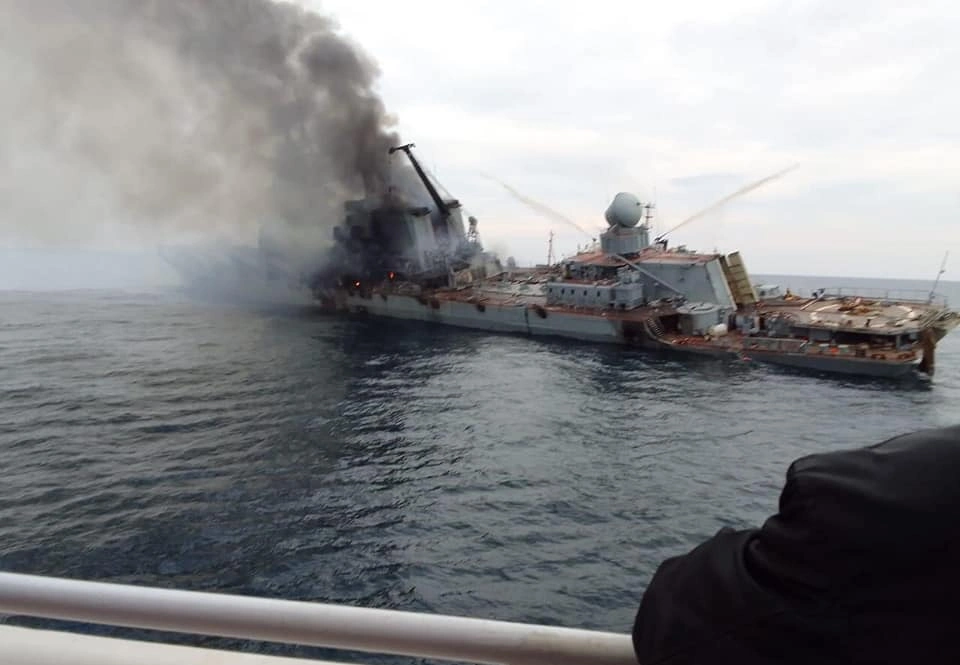
Since then, reports suggest Neptune has been used in other, less publicized strikes. Analysts and open-source trackers point to attacks on Russian air-defense sites, fuel depots, and military infrastructure deep behind the front. While official confirmations are rare—Ukraine often stays quiet about strike details—the missile’s fingerprints keep showing up in assessments.
What’s striking is how Neptune altered the psychology of the war. After the Moskva incident, Russian warships pulled back farther from Ukraine’s coastline, effectively conceding freedom of movement in waters they once dominated. That one event turned Neptune from a “new weapon” into a symbol of resilience and deterrence.
It’s worth remembering: Neptune doesn’t win battles alone. But its record shows how a clever, locally developed system can change the behavior of a much stronger adversary. And in war, perception is sometimes as powerful as raw firepower.
When you hear “cruise missile,” it can sound abstract—like something out of a video game. But the Neptune Missile is surprisingly straightforward once you strip away the jargon. Imagine you’re tossing a stone across a lake.
The stone doesn’t fly in a straight arc like a bullet; it skips low across the water, each bounce keeping it close to the surface. That’s essentially what Neptune does—only at hundreds of miles per hour and with a warhead strapped to the front.
Here’s the journey step by step:
The beauty of Neptune is that it doesn’t rely on sheer speed or size. Instead, it uses guile—low altitude, smart guidance, and the element of surprise. In naval warfare, that can be even deadlier than brute force.
Every missile has its family tree, and the Neptune Missile is no different. To really appreciate what makes it unique, it helps to line it up against other well-known anti-ship weapons.
Start with its Soviet ancestor, the Kh-35. Often nicknamed the “Harpoonski,” the Kh-35 was a competent but aging design—a modest-range subsonic missile that looked and behaved a lot like the American Harpoon. Ukraine’s engineers didn’t just copy it; they stretched it.
Neptune is longer, carries more fuel, and extends its range beyond the Kh-35’s ~130 km, pushing close to 280 km in the baseline version. Think of it as the Kh-35’s leaner, tougher cousin that can actually keep pace with modern threats.
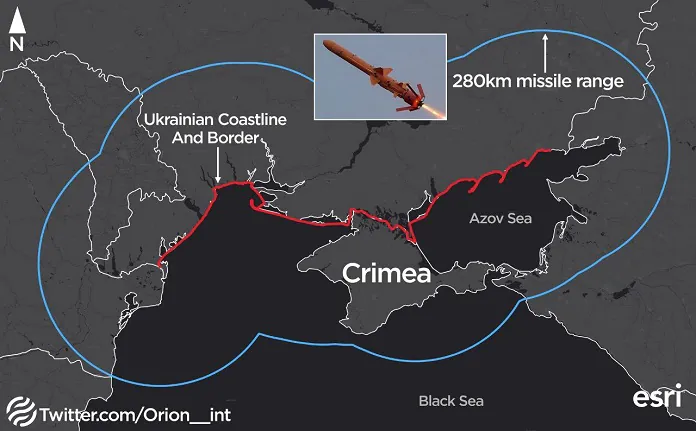
Speaking of the Harpoon, that’s the natural Western comparison. Harpoon Block II can hit out to around 280 km, putting it in the same ballpark as Neptune. Where Neptune edges ahead is its cost and local availability—Ukraine can produce and field it without waiting on foreign suppliers. Where Harpoon still leads is in maturity: decades of upgrades, multiple launch platforms (ships, subs, aircraft), and a long combat history.
Then there’s the French Exocet, infamous for sinking the HMS Sheffield during the Falklands War. Exocet is smaller and lighter, with shorter reach (around 70–180 km depending on the variant). Its reputation is built on real-world effectiveness, but range-wise, Neptune already outpaces it.
For a heavyweight comparison, take Russia’s P-800 Oniks. That’s a supersonic beast, flying nearly three times faster than Neptune and out to 600+ km. But Oniks is heavy, expensive, and limited to large launch platforms. Neptune, by contrast, is mobile, road-ready, and easier to hide—a guerrilla-style missile compared to Oniks’ battering ram.
So where does Neptune fit? It’s not the fastest or the most glamorous. Instead, it’s the practical middleweight: affordable, mobile, and deadly enough to force even well-armed navies to keep their distance.
The Neptune Missile began as a defensive idea—an answer to the problem of how a country without a massive navy could keep a powerful fleet at bay. In just a few years, it has transformed into one of the most talked-about weapons of the war, not because of flashy hype, but because it proved itself where it mattered most: in combat.
From the sinking of the Moskva to rumored strikes against air-defense systems in Crimea, Neptune has become more than steel and circuitry. It’s a story of resilience, ingenuity, and adaptation under fire. Its evolution into the Long Neptune, with ranges approaching 1,000 km, suggests that Ukraine isn’t content to merely defend its shores—it intends to project power deeper, changing how adversaries think about the battlefield.
What makes Neptune compelling isn’t that it outclasses every missile in the world. It doesn’t. But it embodies something far more disruptive: the ability of a smaller nation, under immense pressure, to innovate quickly and create a weapon that rewrites the rules of naval warfare.
In that sense, Neptune isn’t just a missile—it’s a reminder that in modern conflict, brains and adaptability can matter just as much as raw firepower.