Follow Us:
Follow Us:

Aircraft carriers are often seen as the ultimate symbol of naval power—massive, high-tech floating fortresses bristling with aircraft and surrounded by layers of protection. But beneath the steel and bravado lies a question: “Is it possible to destroy an aircraft carrier?”
At over 1,000 feet long and carrying thousands of crew members, these giants of the sea seem almost invincible. They travel with entire fleets dedicated to their defense, operate far from enemy shores, and are designed to take serious punishment. Yet in an age of hypersonic missiles, submarine stealth, and high-tech warfare, some experts argue that their vulnerability is growing.
So what would it actually take to sink one? Could a single well-placed missile do the job, or would it require a coordinated, multi-pronged attack? And perhaps more importantly—are aircraft carriers becoming high-value targets in a world where no ship is truly safe?
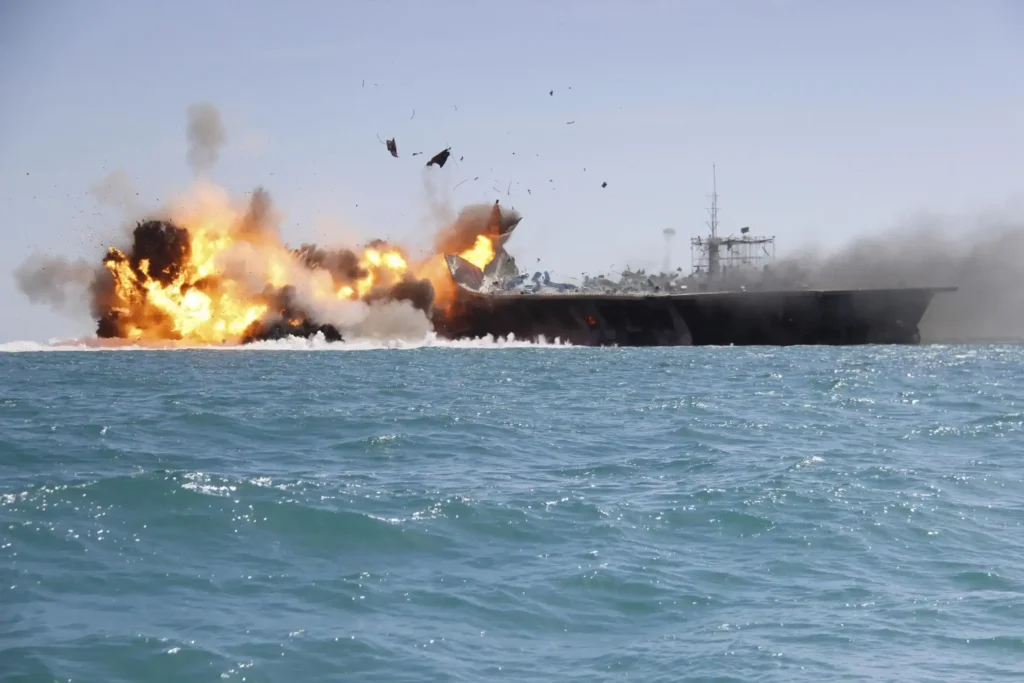
To understand whether it’s possible to destroy an aircraft carrier, it helps to first understand why doing so would be incredibly difficult.
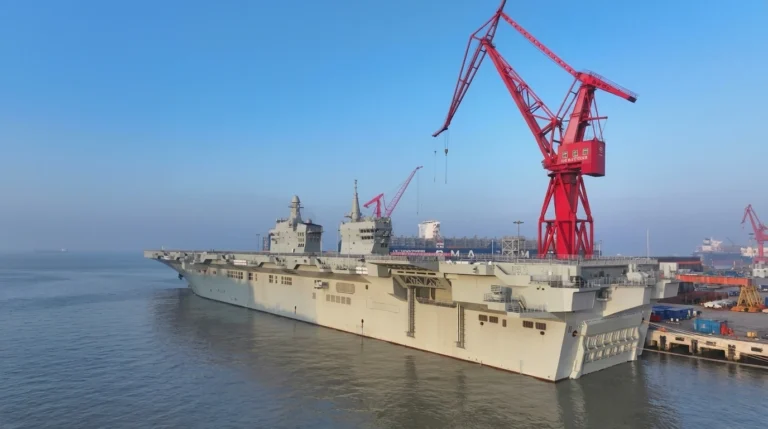
First off, aircraft carriers are huge. The U.S. Navy’s Nimitz-class and Ford-class carriers are over 1,000 feet long—longer than three football fields—and weigh upwards of 100,000 tons. That sheer mass makes them tough to knock out with a single blow. Think of trying to sink a moving city—because that’s essentially what an aircraft carrier is.
Surprisingly, they’re also fast. These ships can hit speeds over 30 knots (around 35 mph), which might not sound like much, but for something that massive, it’s impressive. Speed adds survivability—it makes them harder to target, track, and engage.
Then there’s armor and compartmentalization. While not invincible, aircraft carriers are designed with multiple watertight sections, redundant systems, and armor that can absorb significant damage. A single missile might damage part of the ship, but it’s unlikely to take it out entirely.
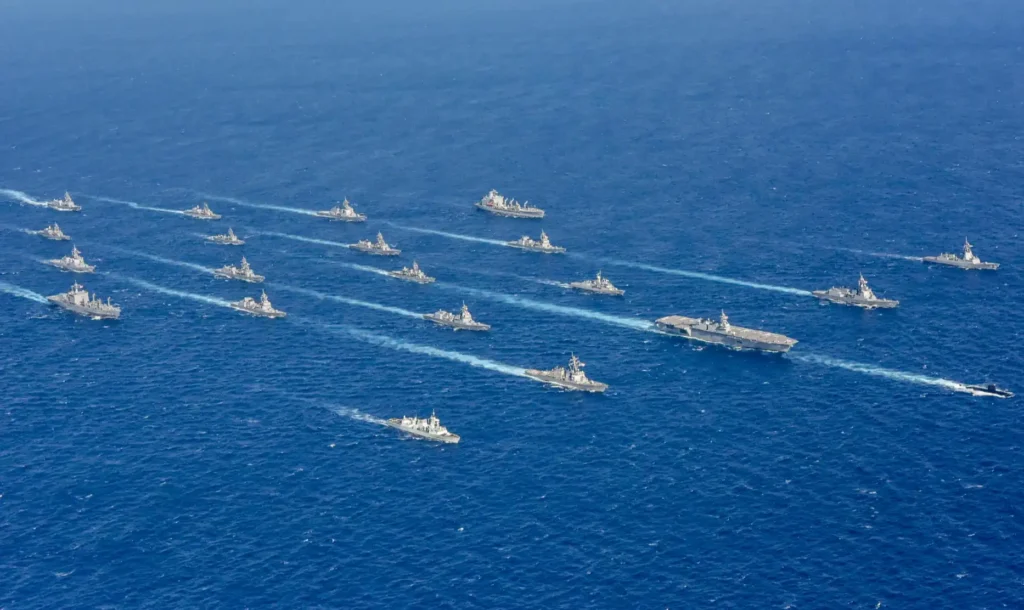
But perhaps the most important aspect of an aircraft carrier’s defense isn’t the ship itself—it’s the entire Carrier Strike Group (CSG) that sails with it. A carrier doesn’t travel alone. It’s always surrounded by a protective bubble of destroyers, cruisers, submarines, and supply ships.
These escort vessels are armed to the teeth with advanced aircraft carrier defenses—like Aegis radar systems, anti-missile interceptors, and sonar arrays designed to detect and neutralize underwater and aerial threats. If an enemy missile is inbound, one of these ships (or several) will likely engage it before it even comes close to the carrier.
This layered protection system is designed to deal with even the most advanced anti-ship ballistic missiles or hypersonic threats to carriers. That’s part of what makes the CSG so formidable—it’s a moving fortress, not just a single target.
Read also: How U.S. Aircraft Carriers Defend While Under Attack
And then there’s the air wing. Carriers bring their own air force to the fight. Dozens of fighter jets, early warning aircraft, and helicopters provide aircraft carrier defenses from above, detecting and neutralizing threats well before they reach striking distance.
Add to that sophisticated electronic warfare systems, which can jam enemy sensors, confuse targeting systems, or even spoof incoming missiles. It’s like giving the carrier a digital invisibility cloak—making it hard to find, harder to lock onto, and even harder to hit.
Now that we’ve seen why aircraft carriers are so powerful, it’s time to look at the other side of the coin. Despite all their size, speed, and layered protection, aircraft carriers are not invulnerable. In fact, modern warfare is evolving in ways that specifically target their weaknesses.
So yes, aircraft carrier vulnerability is real—and growing.
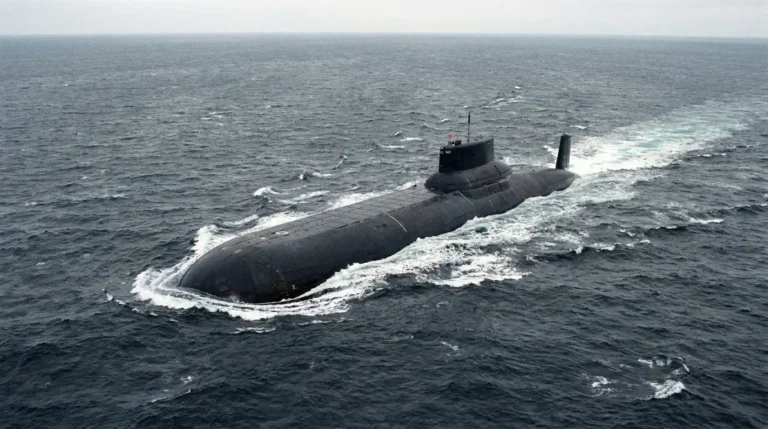
One of the most persistent and stealthy dangers to a carrier is the submarine. These underwater predators are notoriously hard to detect, especially in deep or noisy waters. A well-positioned enemy sub could potentially get close enough to launch torpedoes or cruise missiles.
In exercises (and even during Cold War encounters), there have been multiple instances where allied submarines have successfully “snuck up” on U.S. carriers undetected, raising serious concerns about the vulnerabilities of aircraft carriers in real-world combat. A modern, quiet diesel-electric submarine—or even a nuclear-powered one—could, in theory, land a crippling blow before being discovered.
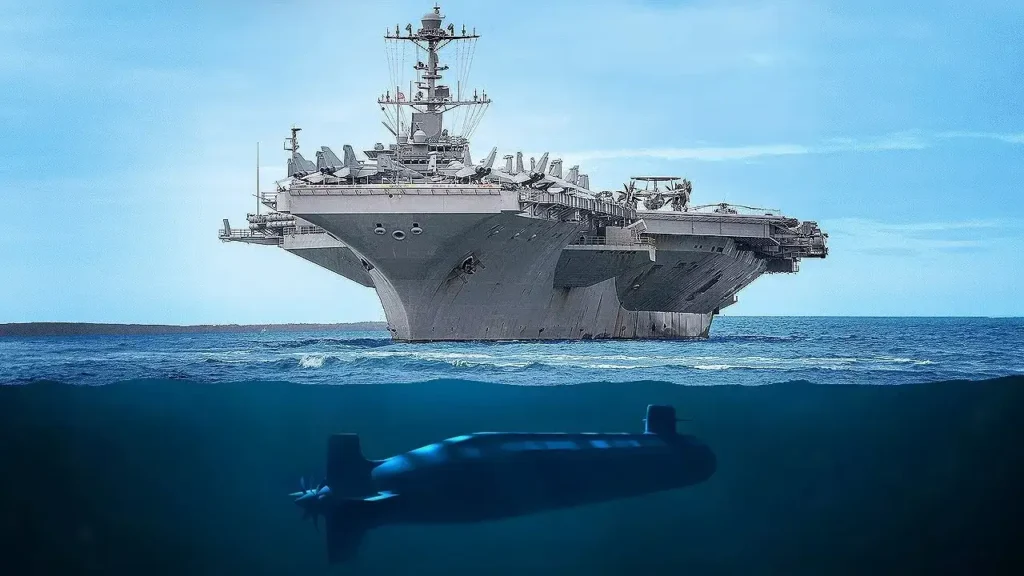
Then there’s the growing threat from anti-ship ballistic missiles (ASBMs) and cruise missiles. These are specifically designed to target large naval vessels from long distances. Countries like China and Russia have developed weapons with one goal in mind: to keep carrier strike groups out of their region.
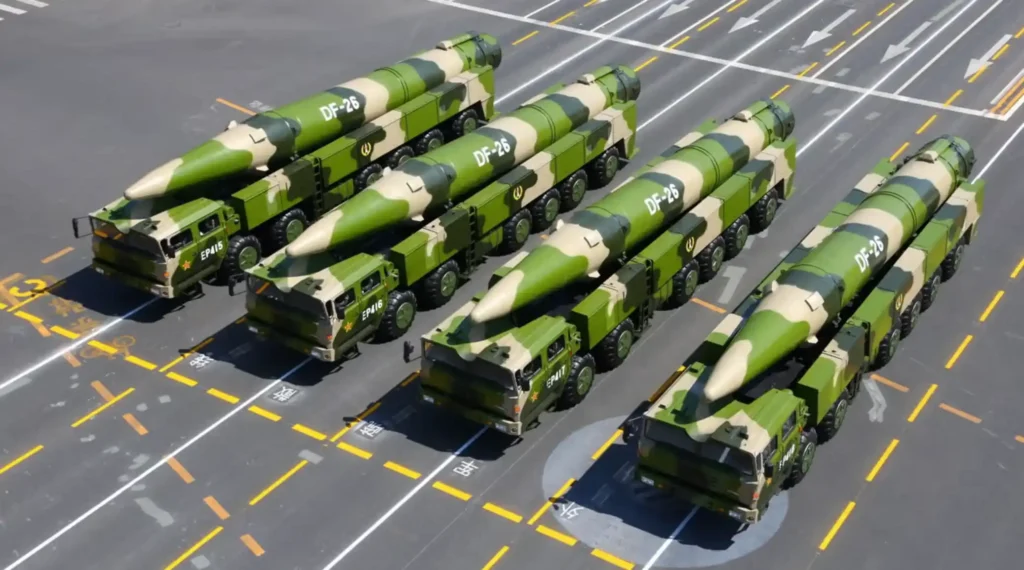
Take China’s DF-21D and DF-26, for example. These so-called “carrier killer weapons” are long-range ballistic missiles equipped with maneuverable warheads. They’re designed to home in on moving ships, potentially from thousands of kilometers away.
Read also: Why are Ballistic Missiles Hard to Intercept
If one of these weapons were to hit a carrier—or even come close—the damage could be catastrophic. And remember, we’re not talking about a naval battle 10 miles offshore. These systems can launch from deep within a country’s territory, far from retaliation.
Cruise missiles pose a similar danger. They fly low, often under radar detection, and can be launched from land, sea, or air. Think of something like Russia’s Kalibr missile or the U.S.’s Tomahawk. If a hostile force launched a coordinated volley of cruise missiles, even the best carrier strike group defenses might struggle to intercept them all.
Have aircraft carriers ever actually been destroyed in history? And if so, what can those events teach us about their vulnerabilities today? Let’s take a look back at some key moments and imagine what it might take to sink one in the future.
The most famous historical example of aircraft carriers being sunk comes from World War II, particularly during the Battle of Midway in June 1942. This battle marked a turning point in the Pacific War and showcased how devastatingly effective well-coordinated attacks on carriers could be.
During the battle, four of Japan’s fleet carriers—Akagi, Kaga, Soryu, and Hiryu—were sunk by American dive bombers. These ships were enormous, displacing around 30,000 to 40,000 tons each and carrying over 70 aircraft apiece. Their loss wasn’t just about the ships; it was about the pilots and planes too—Japan lost approximately 250 experienced aircrews, a blow that severely affected its naval aviation capabilities for the rest of the war.
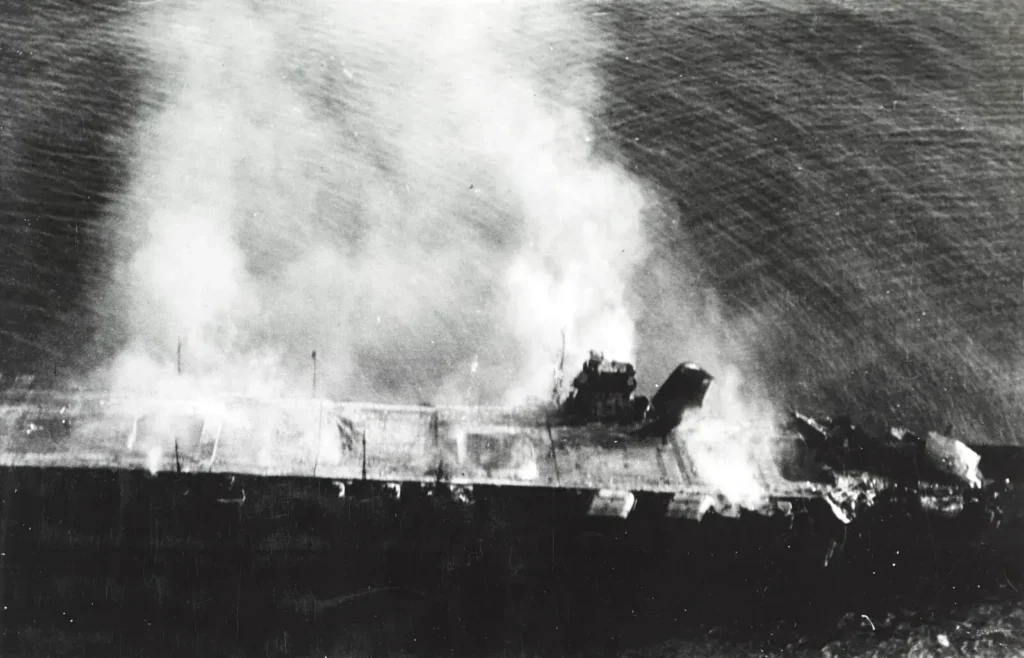
The carriers were vulnerable because they were caught off guard and lacked sufficient air cover and early warning. Despite their size and firepower, a single well-placed bomb hitting the flight deck or hangar could trigger catastrophic fires and explosions. For example, the Kaga suffered multiple bomb hits that ignited fuel and ammunition stores, leading to uncontrollable fires and a massive explosion that doomed the ship.
Casualties were heavy. On Akagi, over 300 sailors and airmen lost their lives, and similar numbers perished on the other carriers. The Japanese fleet’s inability to protect these key assets highlighted a critical weakness: without layered defenses and adequate reconnaissance, even the largest carriers could be taken down by concentrated air attacks.
Back then, carriers didn’t have the layered defenses and electronic warfare systems modern carriers boast. Instead, they were far more vulnerable to air attacks, torpedoes, and bombs.
The sinking of carriers like the Akagi and Kaga showed just how decisive such strikes could be—and how important air superiority and reconnaissance were in targeting them. Fast forward to the Cold War and beyond, and we see a different picture. Carriers evolved with advanced carrier strike group defenses precisely to prevent a repeat of those catastrophic losses.
So, after all that, the big question remains: Could a modern aircraft carrier actually be sunk today? With all the technological advancements in missile systems, submarines, and electronic warfare, it’s a question military experts, strategists, and curious civilians alike have debated for years.
Modern aircraft carriers benefit from decades of lessons learned and improvements in their carrier strike group defenses, but the threats they face have also evolved—sometimes at lightning speed.
We’ve already talked about stealthy submarines lurking beneath the waves, capable of launching torpedoes and cruise missiles. These subs can evade sonar and strike from unexpected angles. Then, there are anti-ship ballistic missiles like China’s DF-21D and DF-26, designed specifically as “carrier killer weapons” to threaten large naval vessels from hundreds of miles away.
Add in the newest menace: hypersonic threats to carriers. These weapons travel faster than Mach 5, can maneuver mid-flight, and arrive with almost no warning. Traditional missile defenses struggle to keep up.
Even with all this, carriers are not sitting ducks. Their layered defenses, electronic warfare suites, and air cover provide multiple opportunities to detect, intercept, and neutralize these threats before they reach the ship.
When it comes to the question of whether any nation today possesses the capability to sink a modern aircraft carrier, the answer narrows down to a few countries with the right mix of technology, experience, and strategic motivation.
Some countries have developed—or are developing—advanced weapon systems specifically designed to challenge the dominance of these massive vessels. Chief among them is China. Over the past decade, China has invested heavily in a range of sophisticated carrier-killer weapons, including the DF-21D and DF-26 anti-ship ballistic missiles.
Read also: Dongfeng 21 (DF-21D): Can It Really Sink a U.S. Aircraft Carrier?
These weapons are designed to strike moving ships from hundreds of miles away, making them a direct threat to U.S. and allied carriers operating in the Pacific region. Coupled with a growing fleet of quiet, modern submarines and rapid advances in hypersonic threats to carriers, China’s capabilities present one of the most credible challenges to aircraft carrier survivability.
Russia also remains a significant player, possessing a large inventory of long-range cruise missiles and hypersonic weapons, alongside a capable submarine force.
However, Russia’s ability to project naval power far from its shores is more limited compared to China’s expansive network of bases and sensor systems. This limits its capacity to sustain or coordinate complex attacks against carriers in open ocean environments, especially against a fully defended carrier strike group.
Other nations, such as Iran and North Korea, have demonstrated missile technology that could threaten smaller naval vessels or regional forces, but they lack the reach, precision, and supporting naval assets necessary to realistically target and sink a modern supercarrier on the high seas. Their missile arsenals, while alarming in certain contexts, do not currently pose the same level of risk to large, well-defended carriers as those of China or Russia.
So, while no nation today has a guaranteed, foolproof method to sink a fully protected aircraft carrier, certain powers are closing the gap with increasingly advanced and integrated offensive systems.
So, what can destroy an aircraft carrier?
What about a nuclear strike? Could that be the only way to truly destroy a carrier?
A nuclear weapon would certainly guarantee catastrophic damage, but using one comes with enormous strategic, political, and humanitarian consequences. Nuclear strikes are a last resort—there’s no “surgical” nuclear option at sea. It would escalate conflicts dramatically and risk global condemnation.
In reality, the goal of many carrier killer weapons is to disable or sink carriers with conventional warheads, through precision strikes and overwhelming firepower, rather than relying on nuclear weapons.
Many defense analysts acknowledge that while modern carriers are incredibly well-defended, their vulnerabilities cannot be ignored. For example, naval strategist Bryan Clark, a well-known expert on maritime warfare, has pointed out that carriers remain “vulnerable to a well-coordinated attack by modern anti-ship ballistic missiles and advanced submarines.”
Clark and others emphasize that the real challenge is the integration of multiple threats—ballistic missiles, cruise missiles, stealthy submarines, and hypersonic threats to carriers—which can saturate and overwhelm even the best carrier strike group defenses.
Similarly, Michael O’Hanlon, a senior fellow at the Brookings Institution, has pointed out that carriers are “extremely hard to sink,” but not invincible.
He explains that adversaries, particularly China and Russia, are investing heavily in long-range missile systems and hypersonic weapons precisely to challenge the U.S. Navy’s historical dominance at sea. O’Hanlon highlights that “the carrier’s greatest vulnerability lies in its reliance on a complex network of defenses that could be stressed under a large-scale attack.”
From the U.S. Navy’s own perspective, their doctrine reflects a focus on resilience and layered defense. A U.S. Navy publication notes that carriers operate within a carrier strike group that provides “multi-layered protection through surface ships, submarines, aircraft, and electronic warfare capabilities.”
The doctrine emphasizes the importance of early detection, rapid response, and continuous adaptation to new threats—especially against emerging carrier killer weapons and hypersonic threats to carriers.
Looking abroad, Chinese military analysts openly acknowledge the strategic importance of anti-carrier weapons. One PLA Navy analyst described the DF-21D missile as a “game-changer” capable of “restricting or denying the U.S. carrier strike group’s freedom of movement in contested waters.”
Russian defense experts, too, emphasize their reliance on advanced submarines and cruise missiles to “compensate for surface fleet limitations” and challenge NATO naval superiority
Taken together, these expert views paint a picture of a constant technological tug-of-war. Aircraft carriers remain among the most potent symbols of naval power, but they are also at the center of an escalating arms race, with each side seeking to develop more effective offensive and defensive systems.