Follow Us:
Follow Us:

Tensions around Venezuela are heating up again. In early November 2025, the U.S. redeployed F-35 fighters to a Cold War–era base in Puerto Rico and sent a carrier strike group into the Caribbean. This is the biggest American presence there in decades.
Not long after, a senior Russian lawmaker claimed Moscow had just shipped new air-defense systems, including the Pantsir-S1 and Buk-M2E, to help Caracas guard its skies. Inside Venezuela, President Nicolás Maduro’s government has been tightening its grip, rallying militias, and warning citizens to prepare for what it calls “defense of the homeland.”
At first glance, Venezuela’s military doesn’t look like much of a match for the United States. The economy is in rough shape, and much of its weaponry dates back to another era. But that picture can be misleading.
Despite years of decline, the Venezuelan armed forces remain one of the largest and best-organized in Latin America. They’ve layered their defenses, trained for guerrilla-style warfare, and built ties with countries like Russia, China, and Iran.
Whether any of that would hold up in a real fight is another matter. After decades of expecting a possible confrontation with Washington, Caracas may finally feel that moment edging closer. So, how strong is Venezuela’s military, really?
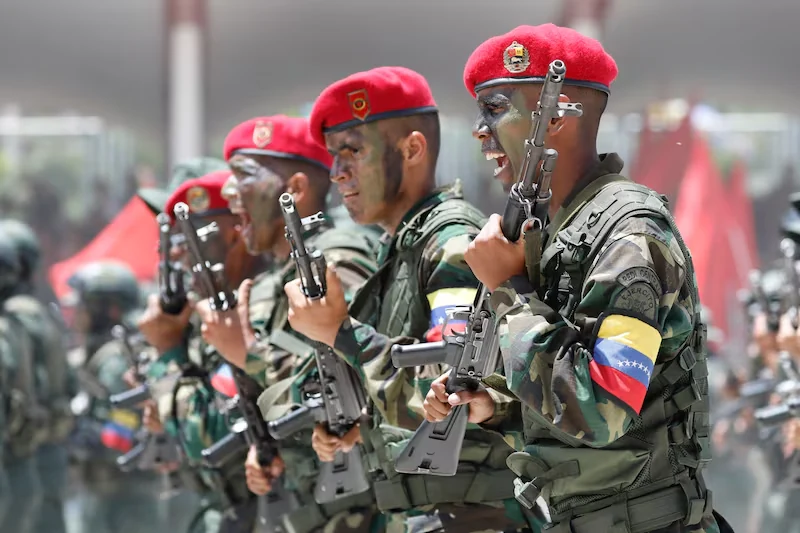
Venezuela’s military strength starts with organization. The Fuerza Armada Nacional Bolivariana (FANB) combines regular troops with armed civilian groups and political loyalty networks. Under Nicolás Maduro, reforms have tightened central control and deepened the connection between the military’s survival and the government’s own stability.
| Category | Details |
| Official Name | Fuerza Armada Nacional Bolivariana (FANB) |
| Main Branches | 1. Venezuelan Army: Largest branch; responsible for border defense and ground operations. 2. Venezuelan Navy: Manages coastal defense, a limited submarine fleet, and a surface fleet. 3. Venezuelan Air Force: Operates a mix of U.S.-era aircraft and Russian Su-30MK2 fighters. 4. National Guard: Hybrid internal security force; acts as both military and police. 5. Bolivarian Militia: Civilian-based militia loyal to the government, focused on territorial defense and resistance warfare. |
| Estimated Active Personnel | ~120,000–150,000 troops (Army, Navy, Air Force, National Guard combined) |
| Reserves & Militia | 300,000–500,000 reservists (approx.) and potentially up to several million claimed militia members (actual number likely lower). |
| Conscription | Exists in law but is weakly enforced; most enlistments are voluntary or economically motivated. |
| Key Strengths | Large manpower base in Latin America; strong political cohesion; experience in internal control and asymmetric warfare. |
| Key Weaknesses | Aging equipment, limited logistics, corruption, and heavy politicization of the command structure. |
On paper, the FANB has five main branches: the Army, Navy, Air Force, National Guard, and the so-called Bolivarian Militia.
In Venezuela, the Army makes up most of the armed forces and takes charge of border defense as well as many internal security tasks. The Navy’s role is smaller, focused mainly on guarding the coast and keeping a modest fleet operational, a few frigates and submarines among them.
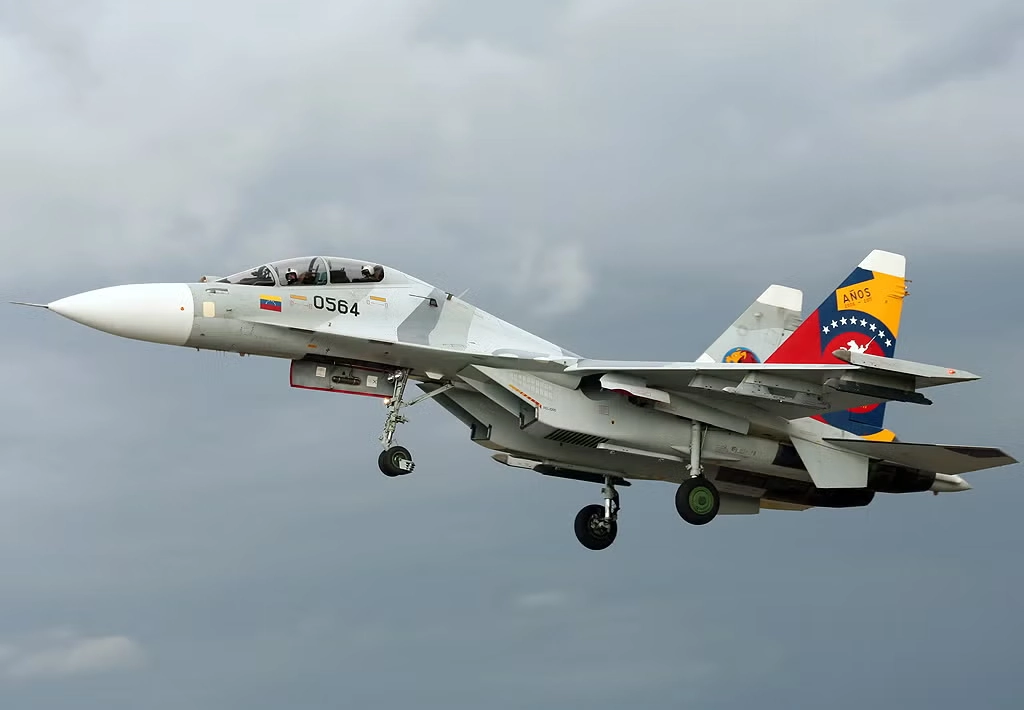
The Air Force still flies some aging U.S. models, but its main strength now comes from Russian-made Su-30MK2 fighters. Then there’s the National Guard, which sits in a gray area between the military and the police. It’s often called on to handle domestic unrest or internal control rather than external defense.
Then there’s the Bolivarian Militia, which might be the most politically charged branch of all. Formed under Hugo Chávez, it was designed to put weapons directly into the hands of loyal citizens. Estimates vary, but the government claims it has up to three million members.
Those numbers are probably on the high side, but even a smaller share of that force could matter in a long or messy conflict. The basic idea is that if Venezuela were ever invaded, these local militias could fight in a scattered, drawn-out resistance alongside the regular army.
When it comes to leadership, the military and politics are almost inseparable. Many top officers have climbed the ranks as much through political loyalty as through command experience. That loyalty helps Maduro keep the armed forces on his side, though it also makes the institution feel less professional and more like an arm of the ruling party. It’s common to see generals speaking at political rallies or moving into cabinet roles as the boundary between soldier and politician is often blurred.
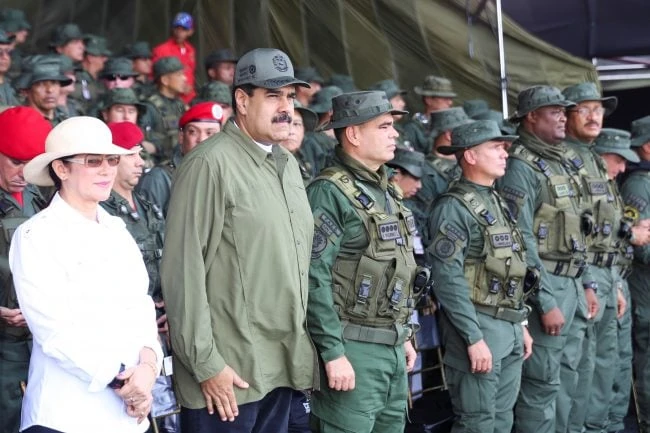
As for size, reliable figures are scarce. Most outside observers put active-duty strength somewhere between 120,000 and 150,000, plus several hundred thousand reservists and militia members. Conscription technically exists but isn’t tightly enforced; most people who join do so for pay or stability in a struggling economy.
All of this makes Venezuela’s armed forces smaller than those of major powers, but far more tied to the state’s political machinery. That connection could prove either stabilizing or risky, depending on how much loyalty endures if the system ever comes under real pressure.
If you take a look at Venezuela’s military hardware, it feels like a mix of old and new. There’s still some sturdy equipment from Russia, a handful of aging systems left over from earlier decades, and plenty that’s kept operational through creativity and spare parts.
Sanctions have made it hard to buy or repair much from abroad, but partnerships with countries like Russia, China, and Iran have helped the military keep more of its gear functional than one might expect.
The Army is the backbone of it all. It operates a range of tanks and armored vehicles, though many are aging. Venezuela’s best tanks are the Russian T-72B1Vs, not cutting-edge, but reliable and sturdy.

These units operate beside older French AMX-30 and AMX-13 tanks, along with BMP-3s and BTR vehicles that handle troop transport. Most of the artillery traces back to Soviet designs — systems like the 122 mm Grad rocket launcher, the M-46 130 mm gun, and a few self-propelled howitzers. None of this counts as state-of-the-art, but within the region it still adds up to a fair amount of firepower.
The Air Force is where the country shows off its flashier side. Its crown jewels are about two dozen Su-30MK2 fighter jets from Russia; fast, powerful, and easily the most advanced in northern South America. There are still a few old F-16A/B Fighting Falcons from the 1980s sitting around too, but keeping them flight-ready has always been a struggle. For support, Venezuela leans on Mi-17 and Mi-35 helicopters, and those K-8 jet trainers that double as light attack aircraft.
Defensively, Caracas has spent years building a layered air-defense network, also with Russian help. Systems like the Buk-M2E, Pechora-2M, and Pantsir-S1 can’t stop everything, but they’d make any low-flying strike risky. The overall command and radar system isn’t on par with NATO setups, but it’s good enough to complicate an air campaign.
The Navy is smaller, but it’s built for local defense, not power projection. A few Mariscal Sucre-class frigates, a couple of German Type 209 submarines, and coastal patrol boats give it some bite close to home. Add in a few marine units trained for amphibious ops, and it’s clear they’re mostly preparing for coastal defense, not blue-water battles.
Beyond conventional weapons, Venezuela has been putting quiet effort into asymmetric warfare and cyber capabilities. It’s hard to say how advanced these are, but there’s evidence the government has invested in electronic surveillance, cyber-intelligence, and information warfare, often with guidance from Iran and Russia. The idea seems to be to compensate for weaknesses in conventional power by making it harder for an enemy to control the narrative or the battlefield network.
So while Venezuela’s military arsenal might not look impressive next to the U.S. or even Colombia’s newer forces, it’s not a pushover either. It’s a force built less for projection and more for survival. If anyone tried to invade, the goal wouldn’t be to win conventionally, it would be to make the fight as painful and politically costly as possible.
When it comes to how ready Venezuela really is for a fight, it’s complicated. On paper, Venezuela’s military looks big. There are plenty of troops, long lists of equipment, and speeches about defending the country. But in practice, things don’t run as smoothly. Money is tight, gear breaks down, and morale often depends on politics rather than training. A tank or a jet doesn’t mean much if it can’t move, fly, or shoot when it needs to.
Years of economic decline and sanctions have made that problem worse. The government stopped publishing clear defense numbers, but most outside reports say spending has dropped sharply. Less money means fewer training flights, fewer exercises, and vehicles sitting idle because parts can’t be replaced.
Even so, the armed forces still hold regular drills, usually described as “defense of the revolution” or “anti-imperialist” exercises. They’re meant to show strength, but analysts who follow them closely say many are more about symbolism than practice. They look impressive on television, but the level of real combat preparation behind them is probably limited.
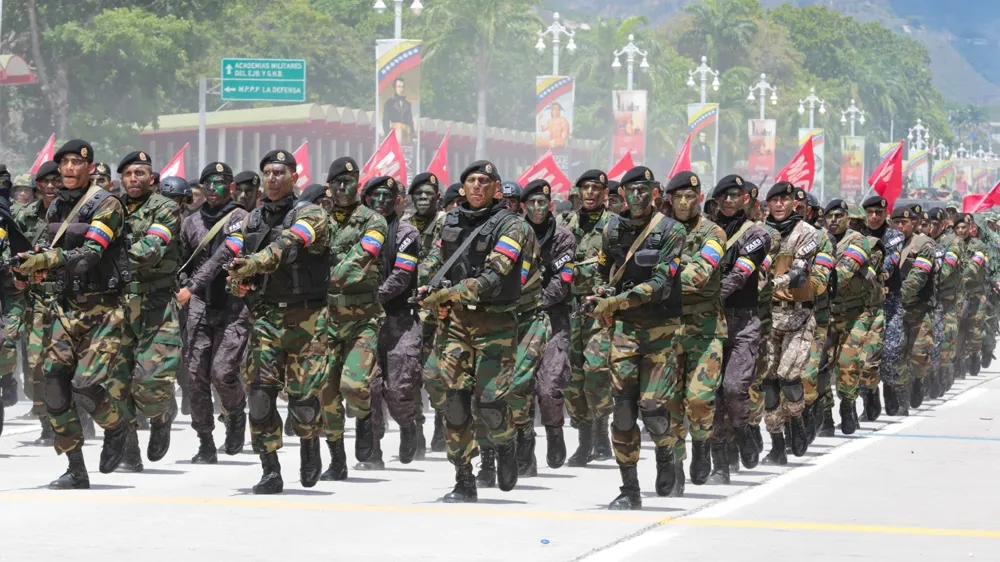
Venezuela doesn’t have much recent combat experience to point to. The military hasn’t fought a major war in modern times. Most of its operations have been internal, like patrolling borders, cracking down on smuggling, or clashing with Colombian groups along the frontier. Those encounters have given some troops real-world experience, but mostly in short, low-level fights rather than the kind of large, sustained combat a war with the U.S. would involve.
Morale is another layer to the story. The senior ranks are closely tied to President Maduro’s government, with many officers holding political or economic stakes in keeping the system intact. That loyalty helps maintain control, but it doesn’t always equal readiness or confidence in the field. In a crisis, it’s not obvious whether every unit would stay loyal or try to protect itself.
So, could Venezuela fight? Probably, at least for a while. But the bigger question is how effectively and for how long. The country talks a lot about resistance and defense, yet its ability to follow through would depend on whether that political structure can hold together once the pressure starts. If it ever came to a real war, survival and endurance might matter more than sheer firepower.
If it ever came down to a real fight between the U.S. and Venezuela, there’s no question who’d have the upper hand on paper. The United States military outclasses Venezuela in almost every category (e.g., technology, training, logistics, and global reach). But “on paper” and “in practice” aren’t always the same thing, especially when you’re talking about a country that’s spent decades preparing for a guerrilla-style defense on its own turf.
Let’s start with the obvious: U.S. superiority is overwhelming. If it ever came to a straight fight, the U.S. would have a clear upper hand. The Navy could lock down Venezuela’s coastline within days, using carrier aircraft, cruise missiles, and long-range bombers. The Air Force could likely knock out much of Venezuela’s air defense network before the first wave even landed.
American forces are better trained, better supplied, and supported by a level of surveillance and coordination that Venezuela simply doesn’t have. In conventional terms, it wouldn’t be a long war.
The hardest part wouldn’t be the first few days of fighting; it would be what came next. Venezuela’s terrain alone would slow everything down. The south is covered in jungle, the west is mountainous, and most of the population lives in crowded coastal cities. Moving troops and supplies through that kind of environment would be slow and complicated. Any serious campaign would mean landing forces by sea and air, holding beachheads, and pushing inland step by step.
Venezuela’s defense strategy seems built around that reality. Since it can’t win a straight conventional fight, it would likely try to make an invasion costly and exhausting. The Bolivarian Militia, a civilian reserve force, could melt into neighborhoods and countryside, using ambushes, sabotage, and quick strikes rather than open battles.
At the same time, the government might lean on cyber operations and media campaigns to create confusion and rally sympathy abroad, turning the conflict into a drawn-out political struggle rather than a short military one.
Then there’s the psychological front. The government would almost certainly frame an invasion as proof of U.S. imperialism, using it to rally national pride and shore up loyalty at home. Even if morale was uneven, that kind of messaging can make people dig in. For the U.S., the danger isn’t losing the war, it’s winning it too quickly and then getting stuck in a long, unpopular occupation.
So yes, America could take Venezuela’s defenses apart in days. But holding the country afterward, and managing what comes next, would be a far tougher fight.
Over the past two decades, it’s built a small but meaningful network of military and political partners, mainly Russia, China, and Iran. None of them are likely to go to war on Venezuela’s behalf, but they’ve given Caracas just enough backing to stay in the game and complicate any outside attempt to isolate it.
Russia has been the most important player by far. Since the Chávez era, Moscow has sold Venezuela billions of dollars’ worth of weapons, everything from Su-30 fighter jets and Mi-17 helicopters to Buk and Pantsir air-defense systems.
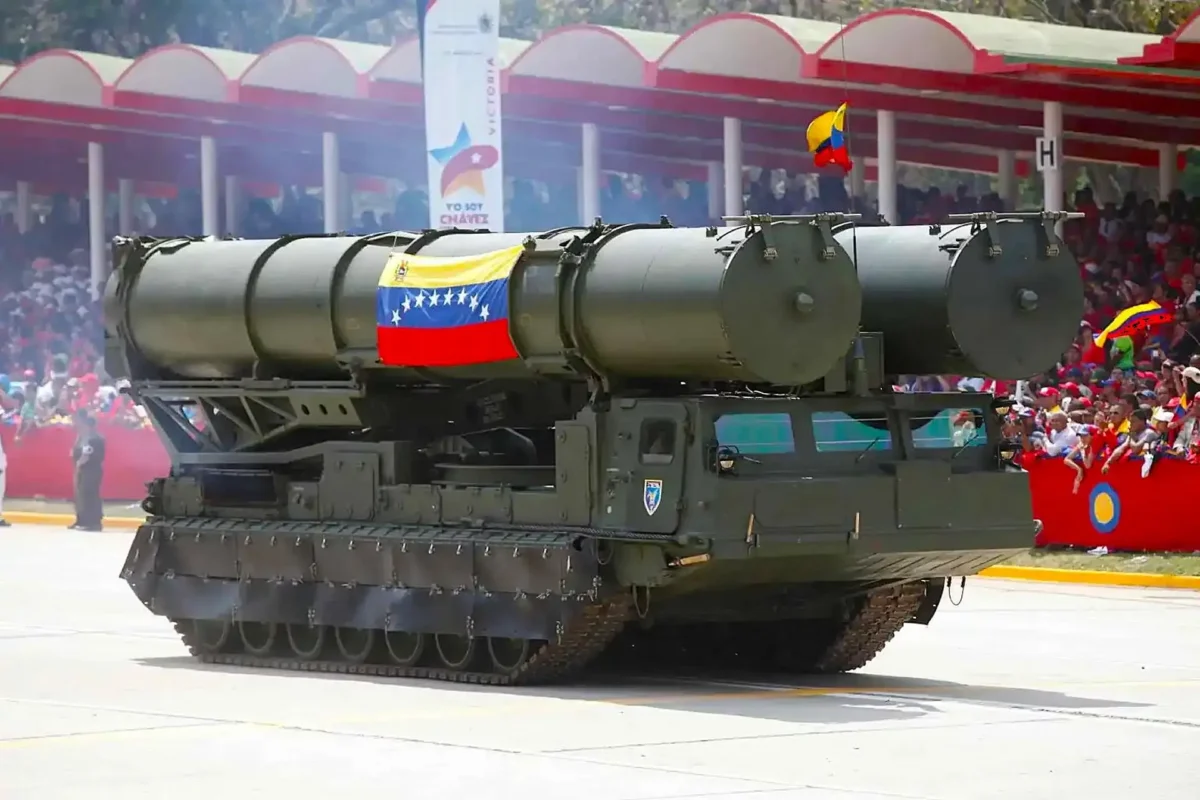
Russian advisors have also trained Venezuelan crews and helped set up radar and maintenance systems. There’s even been talk, off and on, of Russian naval visits or joint exercises in the Caribbean, mostly symbolic, but politically useful
The partnership gives Russia a low-cost way to needle Washington in its own hemisphere, and it gives Venezuela a sense of protection, even if that protection is more psychological than practical.
China’s involvement has been quieter but just as strategic. Beijing has provided military hardware, communications systems, and especially surveillance and cyber tools that the Venezuelan government uses for internal security.
China’s real leverage, though, is economic. It’s one of Venezuela’s main creditors, and Chinese companies have invested heavily in oil and infrastructure projects. China’s role is mostly economic. Its loans and investments mean it has an interest in seeing Venezuela stay stable, though it tends to avoid any talk of direct military involvement.
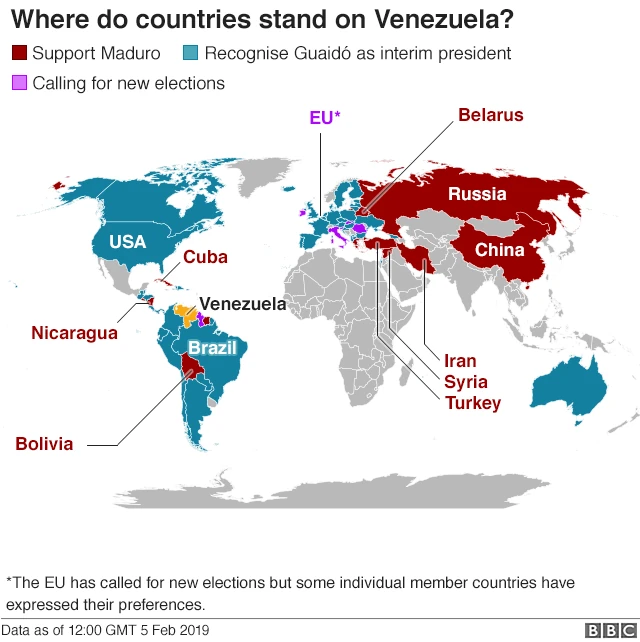
Iran’s connection is a bit different. Over the past several years, the two countries have traded fuel, equipment, and technical help. There are frequent claims that Iranian specialists have worked with Venezuelan teams on drones and electronics, though details are often unclear. What’s more certain is that both governments share a sense of standing together against U.S. pressure, which gives their partnership a political edge as well as a practical one.
Of course, all of this happens under the shadow of international sanctions. U.S. and European measures have cut Venezuela off from many global arms markets, so deals with Russia, China, and Iran are often done through back channels or barter systems (e.g., oil for weapons, gold for spare parts).
The sanctions have slowed down procurement and made it nearly impossible to modernize on a large scale, but they’ve also pushed Venezuela to become more resourceful, relying on local production and maintenance where it can.
Regionally, Venezuela’s position is complicated. Venezuela isn’t cut off from the world, but it doesn’t have many close partners either. Countries such as Colombia and Brazil tend to keep their distance, watching events in Caracas with caution.
Even long-time allies like Cuba have less to offer these days, given their own economic troubles. Still, Venezuela keeps some diplomatic ties alive through regional groups like ALBA and continues to present itself as part of a broader coalition that challenges U.S. influence in Latin America.
It might put up resistance, but defeating a major power such as the United States would be highly unlikely. The armed forces still have some capable equipment, including Russian aircraft, tanks, and missile systems and the troops are familiar with the country’s tough terrain.
et years of economic decline, poor upkeep, and minimal training have taken a toll. Sanctions and internal mismanagement make it hard to get spare parts or supplies. In an actual conflict, U.S. forces would almost certainly control the air and sea within days.
Even so, Venezuela could try to prolong the fight through smaller-scale tactics (e.g., guerrilla warfare, cyber disruption, and the use of local militias) to make any occupation slow, costly, and politically difficult.