Follow Us:
Follow Us:

Picture this. The airfield is quiet in that uneasy, before-the-storm way. Then engines begin to cough, whine, and finally roar to life, one after another, in a long, deliberate line. Fighter jets nose forward. Tankers follow. Heavy transports lumber behind them.
From above, it looks almost unreal, like a mechanical migration. This is an elephant walk, and once you’ve seen one, you don’t forget it.
An elephant walk isn’t a flyover. It’s not an air show trick, either. It happens on the ground, where military aircraft taxi in tight formation, rolling toward the runway as a single, coordinated force.
The name fits, big, loud, purposeful. Just like elephants moving together across a plain, these aircraft move with intent, precision, and a message attached.
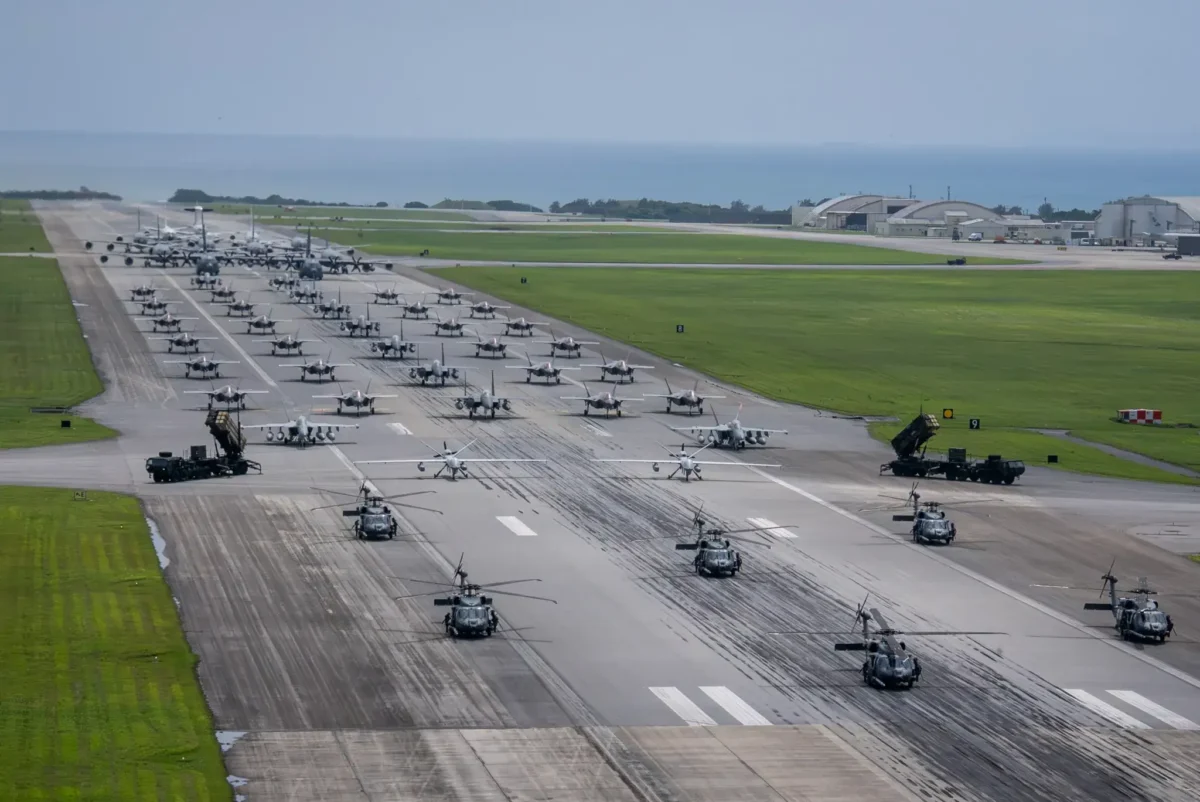
For the military, an elephant walk is part drill, part declaration. It proves something important: we’re ready, right now. Pilots, maintainers, air traffic controllers, and commanders all have to be in sync. Miss one beat, and the whole rhythm breaks. When it works, it’s a living checklist of readiness.
What makes the elephant walk especially fascinating is how many layers it carries. To insiders, it’s about timing, logistics, and muscle memory. To outside observers, especially rivals watching satellite feeds, it’s a quiet but unmistakable signal of capability. No speeches. No press conferences. Just aircraft moving, fast and together.
In this post, we’ll unpack what an elephant walk really is, where it came from, why militaries still rely on it, and what it tells us about modern warfare.
At its core, an elephant walk is a ground-based military aviation maneuver where multiple aircraft taxi in close sequence, sometimes nose-to-tail, toward a runway, preparing for rapid or near-simultaneous takeoff. No fancy aerobatics. No dramatic climbs. Just raw coordination on concrete.
But that simple definition doesn’t quite capture the weight of it.
In military terms, an elephant walk is less about movement and more about proof. Proof that aircraft are fueled, armed (or at least configured), maintained, crewed, and mission-ready at the same moment. That’s harder than it sounds.
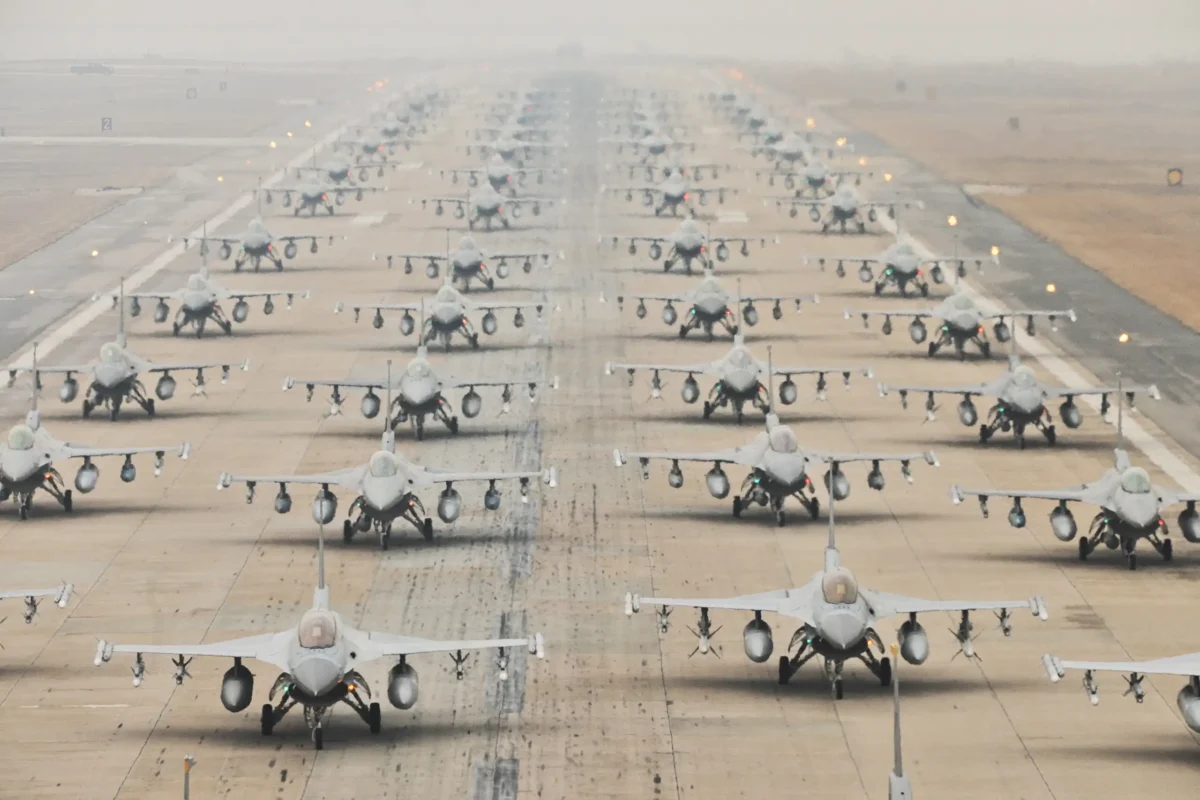
On a modern airbase, a single fighter might require 20–30 maintenance personnel to clear it for flight. Multiply that by 12, 24, sometimes even 80 aircraft, and suddenly the elephant walk becomes a logistical stress test.
The phrase itself lives mostly in air force and naval aviation culture, not the army, despite the occasional confusion. You won’t see tanks doing elephant walks. This is about airpower: fighters, bombers, tankers, surveillance planes, and heavy transports rolling together as a unit.
There’s also a timing element that often gets overlooked. Aircraft in an elephant walk are sequenced to minimize gaps between takeoffs, sometimes launching within seconds of one another. That matters in combat scenarios where survivability depends on getting airborne before an adversary can react.
Informally, pilots sometimes describe an elephant walk as “the dress rehearsal you can’t fake.” Either the system works, or it doesn’t. And when dozens of aircraft move smoothly as one, the message is clear, even from the ground: this force is organized, practiced, and very much awake.
It’s not a parade. It’s a statement, made at taxi speed.
The name “elephant walk” didn’t come from a committee or a doctrine manual. It emerged the way most military slang does, organically, from people watching something strange and trying to describe it fast.
The earliest references trace back to World War II, when massive formations of bombers would line up and taxi out together. Think B-17s or B-24s: bulky, slow to maneuver, and spaced just closely enough to keep things efficient without turning the runway into chaos. From a control tower or a nearby hill, the scene looked uncannily like a herd of elephants trudging toward water, one after another, steady, unstoppable.
That visual stuck.

Elephants also made sense symbolically. They’re not quick. They’re not subtle. But they’re powerful, coordinated, and surprisingly disciplined when moving as a group. That comparison resonated with aircrews who understood that airpower wasn’t just about speed in the sky, it started with deliberate movement on the ground.
Interestingly, the term survived even as aircraft got sleeker and faster. An F-22 Raptor rolling in formation doesn’t resemble an elephant in any literal way, yet the phrase still fits. Why? Because the behavior stayed the same. Heavy logistics. Massive coordination. No room for error.
There’s also an unspoken cultural layer here. Military aviation loves tradition. Once a term proves useful, and vivid, it tends to stick around long after the original context fades. “Elephant walk” became shorthand. Say it in a briefing, and everyone immediately understands the scale, intent, and seriousness of the event.
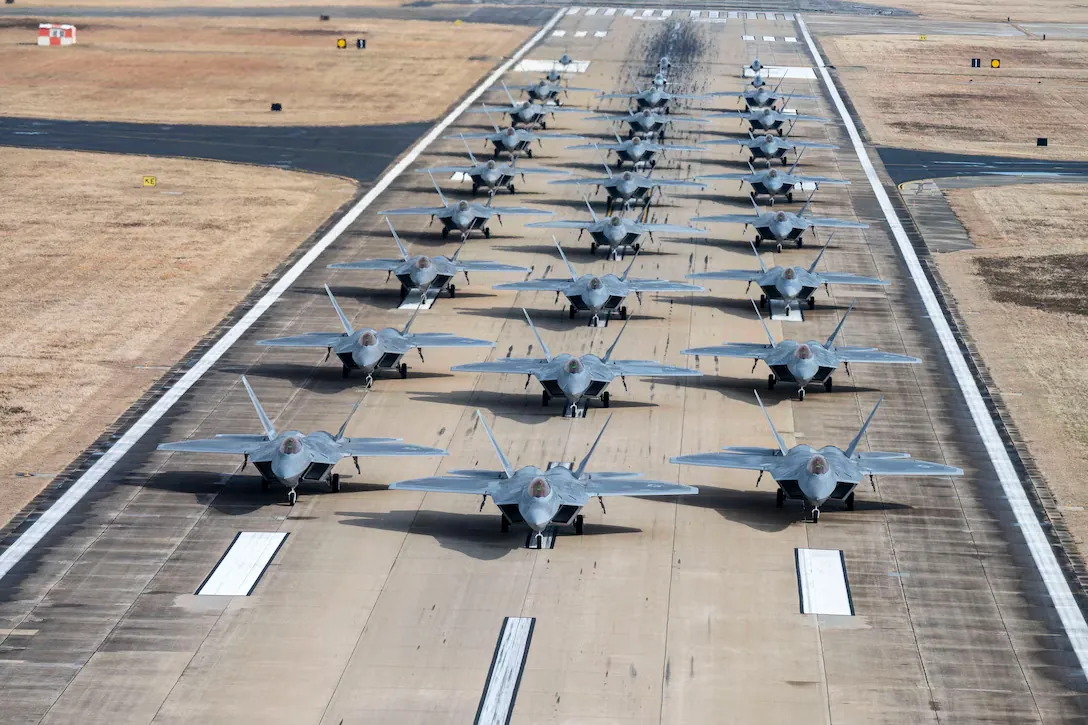
So when you hear the phrase today, you’re hearing an echo from WWII airfields, concrete, oil stains, propellers spinning, carried forward into the jet age without losing its punch.
The elephant walk didn’t start as a show of strength. It started as a problem-solver.
During World War II, Allied air forces faced a brutal math equation: launch a lot of aircraft, quickly, from limited runways, often under the threat of attack.
Taxiing bombers one by one simply took too long. So crews compressed the process. Aircraft lined up. Engines ran hot. Takeoffs happened in rapid succession. What mattered was speed and survival, not elegance.
Fast forward to the Cold War, and the elephant walk took on a new personality. Nuclear deterrence demanded readiness at a moment’s notice. Strategic bombers and tankers practiced mass launches to ensure they could get airborne before an enemy strike wiped them out on the ground.
In that era, an elephant walk wasn’t symbolic; it was existential. Fail to launch fast enough, and the mission (and possibly the war) was over.
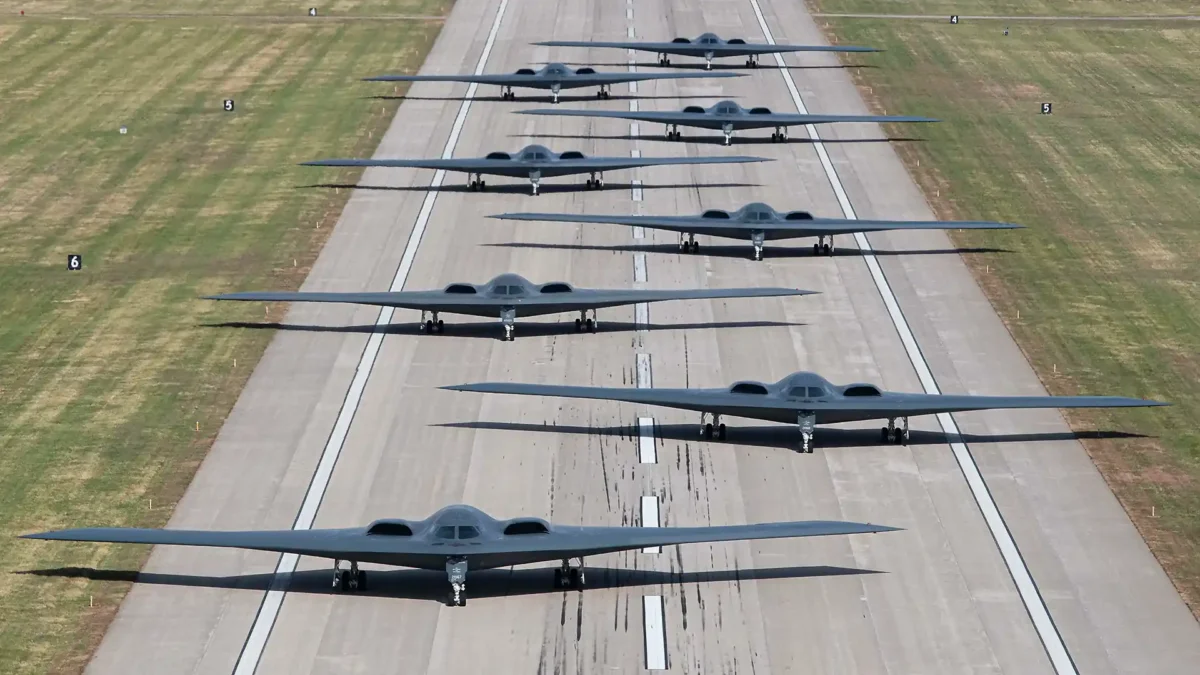
As technology advanced, so did the complexity. Modern aircraft rely on software checks, encrypted communications, precision fueling, and synchronized crews. That means today’s elephant walk is less about brute movement and more about systems integration. If one data link fails, one maintenance step lags, the whole sequence can unravel.
What’s fascinating is how the purpose quietly shifted. Yes, elephant walks still validate readiness. But they also serve a strategic communications role. When dozens of aircraft taxi together in 2024, satellites are watching. Analysts are counting. Adversaries notice.
In a way, the elephant walk matured from a tactical workaround into a doctrinal signal, a blend of training, deterrence, and quiet messaging. Same movement. Different stakes.
On the surface, an elephant walk looks almost ceremonial. Engines humming, aircraft rolling, cameras clicking. But underneath that spectacle is a checklist so unforgiving it borders on ruthless. That’s exactly the point.
First, and most critically, an elephant walk tests readiness under pressure. It compresses hours of preparation into a narrow window. Fueling teams, weapons crews, pilots, maintainers, air traffic controllers, command staff, everyone has to hit their mark at the right second. If even one aircraft can’t taxi, the failure is visible immediately. There’s nowhere to hide mistakes on a runway.
Second, elephant walks validate surge capability. Modern conflicts aren’t slow. Militaries assume that the first hours matter most. Can a base launch 24 aircraft in minutes? Can it do so again tomorrow? Elephant walks provide hard answers, not optimistic guesses.
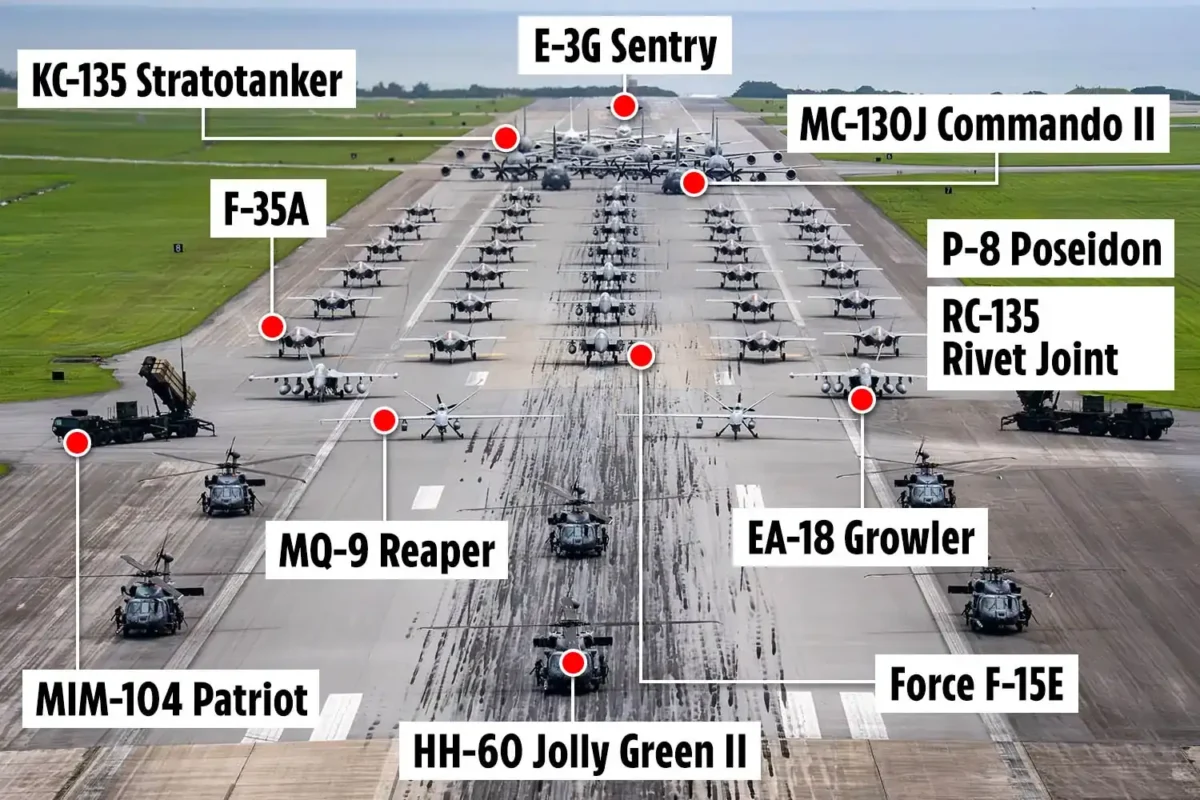
There’s also a deterrence angle that’s impossible to ignore. When a base rolls out 40 fighters or a mix of bombers, tankers, and surveillance aircraft, it sends a message without saying a word. Analysts on the other side don’t just see jets, they see logistics depth, maintenance discipline, and command control. In military signaling, that’s gold.
Finally, there’s a human factor. Crews often describe elephant walks as confidence-builders. You feel the scale. You trust the system, or you learn exactly where it’s fragile.
In short, an elephant walk isn’t about looking powerful. It’s about proving power works when stress, time, and complexity collide
Not all elephant walks look the same, because not all aircraft bring the same strengths, or headaches, to the runway. The mix tells you a lot about the message being sent.
Fighter jets are the headliners. F-15s, F-16s, F-22s, and F-35s dominate elephant walks because they represent immediate combat power. They’re fast, lethal, and maintenance-intensive. When you see a long line of fighters rolling together, the takeaway is simple: sortie generation is healthy.
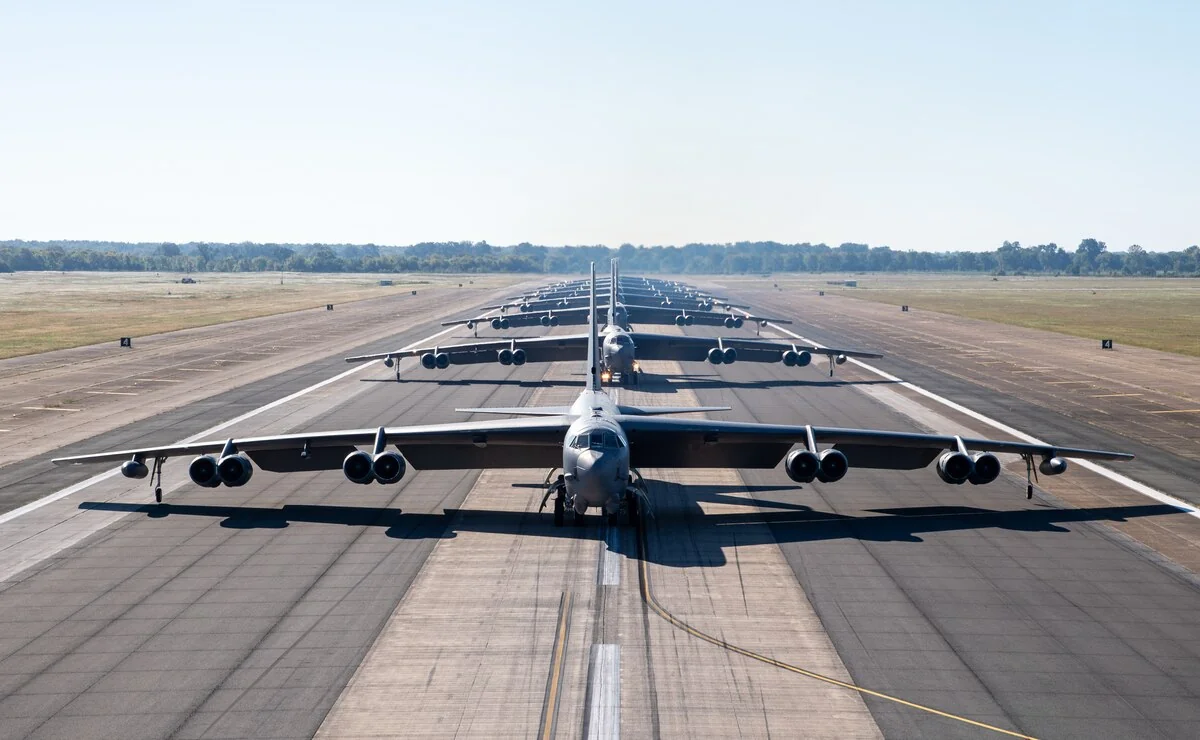
Heavy bombers change the tone entirely. A B-52 or B-1 in an elephant walk isn’t about speed; it’s about reach. These aircraft can project power across continents. Even one bomber in the line suggests strategic intent. Several? That’s a statement with a long shadow.
Then come the quiet enablers, tankers, and support aircraft. KC-135s, KC-46s, and surveillance platforms often don’t get the spotlight, but they’re the backbone. Without them, fighters stay grounded or go nowhere useful. Including tankers in an elephant walk is a subtle flex: we can sustain this.
Transport aircraft, like C-17s or C-130s, sometimes appear as well. Their presence hints at rapid mobility, troops, equipment, humanitarian aid, or all three. Different mission, same readiness principle.
Here’s a simplified snapshot:
| Aircraft Type | Role in Elephant Walk | Signal Sent |
| Fighters | Immediate combat power | Speed & lethality |
| Bombers | Long-range strike | Strategic reach |
| Tankers | Aerial refueling | Endurance |
| Transports | Mobility & logistics | Flexibility |
An elephant walk isn’t random. Every aircraft in line is there for a reason, and together, they tell a very deliberate story.
Some elephant walks pass quietly, witnessed only by base personnel and a few bored seagulls. Others ripple far beyond the runway.
One of the most talked-about examples happened at Joint Base Elmendorf–Richardson in Alaska, where dozens of F-22 Raptors taxied in tight formation during a readiness exercise. No takeoffs were needed. The message was already delivered. Analysts later noted that the base demonstrated the ability to generate a large fifth-generation force in a region uncomfortably close to strategic rivals. Translation: this wasn’t accidental.
Another eye-opening case came from Andersen Air Force Base in Guam, where bombers, tankers, and fighters rolled together in a mixed elephant walk. That mix matters. Fighters alone look sharp. Bombers alone look heavy. Put them together, and you’re showing a complete kill chain: strike, refuel, command, repeat.
Even smaller units get value from the maneuver. An Air National Guard wing once conducted its first elephant walk with fewer than a dozen aircraft. No headlines. No viral clips. Internally, though, it revealed something uncomfortable: two jets couldn’t meet timing standards. That discovery led to changes in maintenance scheduling that later cut launch delays by nearly 18%. Quiet win. Big payoff.
Internationally, elephant walks have become more common among allied air forces operating together. When multiple nations taxi aircraft in sequence, the subtext is interoperability. Different uniforms. Same rhythm.
These examples show why elephant walks matter. They’re not about size alone. They’re about coordination, credibility, and revealing truths, sometimes flattering, sometimes not, right there on the pavement.