Follow Us:
Follow Us:

One shot can change the course of a battle. That’s not Hollywood exaggeration, it’s military reality.
A well-trained sniper armed with the best sniper rifle can eliminate a high-value target, gather intelligence, or halt an advancing force from well over a kilometer away, often without revealing their position. Few weapon systems have such a disproportionate impact on the battlefield.
But here’s where many rankings miss the mark. The rifle with the longest advertised range isn’t automatically the world’s best.
Maximum range looks impressive on paper, yet professional militaries care far more about consistent first-round hits. That means accuracy, reliability, ergonomics, barrel quality, ammunition compatibility, and the ability to perform in everything from desert heat to Arctic cold.
Modern sniper rifles have evolved dramatically over the past three decades. Today’s leading platforms feature modular chassis, adjustable stocks, free-floating barrels, and match-grade triggers capable of delivering sub-MOA accuracy.
Some, like the latest multi-caliber systems, even allow operators to switch between cartridges for different missions, something unimaginable just a generation ago.
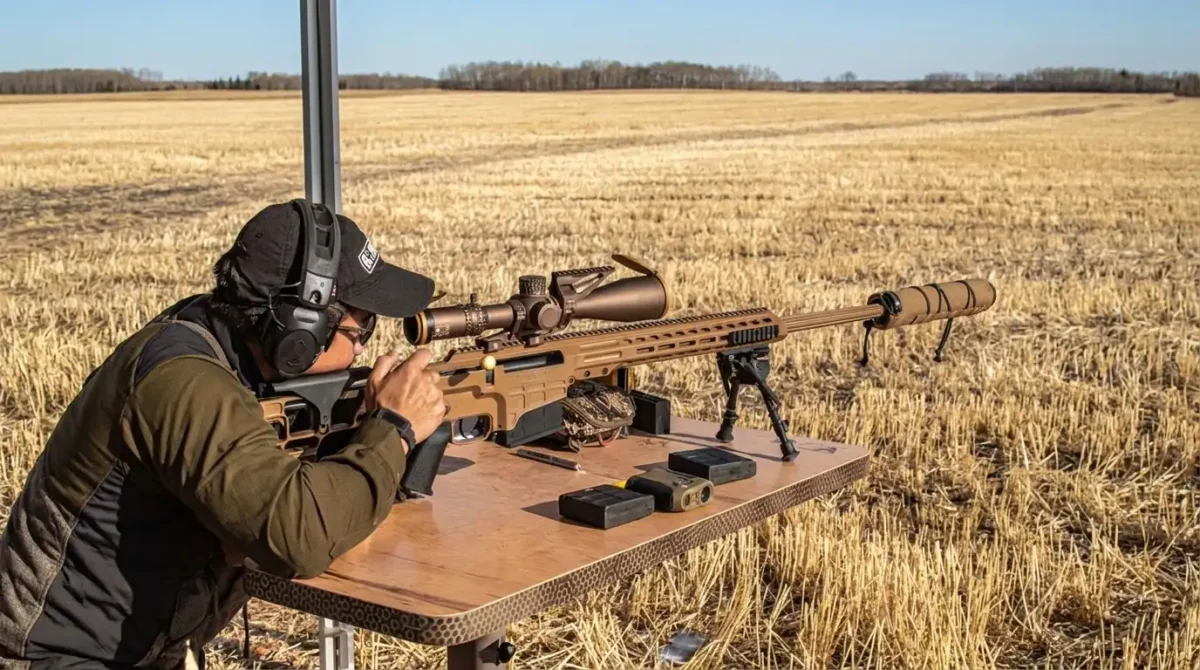
In this post, we’ve ranked the top 5 best sniper rifles in the world using criteria that matter in real military service rather than internet hype. Each rifle is assessed for combat-proven performance, precision, effective range, reliability, military adoption, and technological innovation.
You’ll also learn where each platform excels, what its limitations are, and why elite forces continue to rely on these rifles despite the constant arrival of newer designs.
Every military claims its latest rifle is more accurate, more reliable, and more advanced than the last. Yet brochures don’t win battles, performance does.
That’s why this ranking isn’t based on marketing claims, civilian popularity, or record-breaking shots that happened once under ideal conditions. Instead, it focuses on qualities that professional snipers depend on every day.
The first factor is combat effectiveness. Rifles that have proven themselves in real conflicts naturally rank higher than platforms with limited operational history. A precision rifle that consistently performs in Afghanistan’s mountains, Iraq’s deserts, or Eastern Europe’s harsh winters has already passed the toughest test imaginable.
Next comes accuracy, arguably the defining trait of any sniper rifle. Most modern military precision rifles are capable of sub-minute of angle (sub-MOA) accuracy with match-grade ammunition, allowing consistent hits at extended ranges. However, true battlefield precision also depends on barrel consistency, trigger quality, and how well the rifle maintains zero after thousands of rounds.
Effective range is another critical consideration, but it shouldn’t be confused with maximum range. While many rifles can fire well beyond 1,500 meters, their practical engagement distance, where trained operators can reliably achieve first-round hits, is often significantly shorter. That practical range matters far more than theoretical limits.
Reliability also plays a major role. Dust, mud, snow, rain, and extreme temperatures quickly expose weaknesses in any firearm. The world’s best sniper rifles continue functioning with minimal maintenance, even in unforgiving environments.
Finally, we considered military adoption and technological innovation. Rifles selected by elite units undergo years of testing before entering service. Widespread adoption by professional armed forces is often the strongest endorsement a precision rifle can receive, reflecting a balance of accuracy, durability, and real-world battlefield effectiveness.
At the top of this ranking is the Barrett MRAD (Multi-Role Adaptive Design), a rifle that reflects where military precision shooting is headed rather than where it has been.
Instead of building a sniper rifle around a single cartridge, Barrett engineered the MRAD as a modular, multi-caliber platform that can be reconfigured for different missions in minutes. That versatility was a major reason the U.S. military selected it as the Mk22 Advanced Sniper Rifle under the Precision Sniper Rifle (PSR) program.
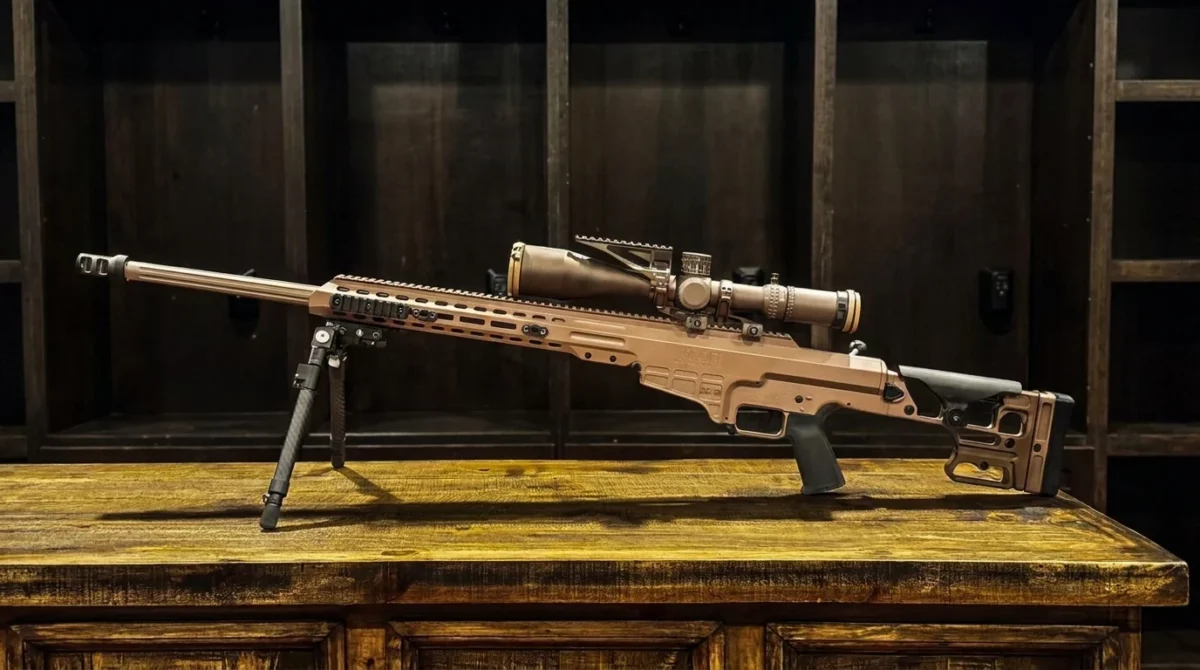
The Mk22 can be chambered in 7.62×51mm NATO, .300 Norma Magnum, and .338 Norma Magnum, allowing operators to tailor the rifle to mission requirements without replacing the entire weapon system.
Combined with its free-floating barrel, fully adjustable folding stock, and match-grade trigger, the MRAD consistently delivers sub-MOA accuracy while maintaining excellent reliability in harsh operational environments.
Beyond its technical features, the MRAD offers something many legacy rifles cannot, future-proof adaptability. As ammunition technology evolves, military forces can integrate new calibers with minimal changes to the platform, reducing logistics costs and extending the rifle’s operational lifespan. This flexibility makes it one of the most advanced precision rifles currently in military service.
| Specification | Details |
| Country of Origin | United States |
| Manufacturer | Barrett Firearms |
| Caliber | 7.62 NATO, .300 Norma Magnum, .338 Norma Magnum |
| Action | Bolt-action |
| Weight | Approximately 6.7 kg (14.8 lb) |
| Effective Range | Up to 1,500 m+ (depending on caliber) |
| Magazine Capacity | 10 rounds |
Strengths
Limitations
If there is one rifle that truly earned its reputation through battlefield performance, it’s the Accuracy International Arctic Warfare Magnum (AWM).
Known in British service as the L115A3, this bolt-action rifle has become a benchmark for military precision thanks to its exceptional accuracy, rugged construction, and proven effectiveness in some of the world’s most demanding combat environments.
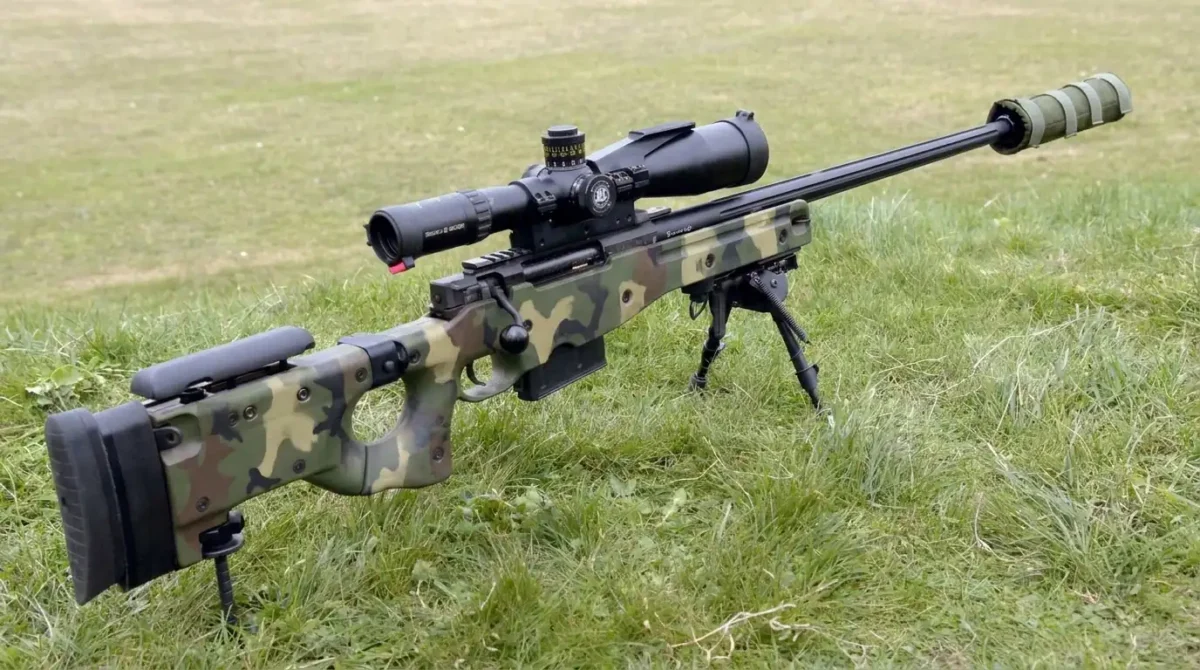
Originally developed in the United Kingdom, the AWM was designed to operate where many firearms struggle: freezing temperatures, blowing sand, heavy rain, and thick mud. Its chassis system, corrosion-resistant materials, and reliable bolt mechanism allow the rifle to maintain consistent performance even after prolonged exposure to extreme conditions.
That dependability is one reason it has been adopted by military and special operations units across Europe, North America, and Asia.
Chambered primarily in .338 Lapua Magnum, the L115A3 delivers sub-MOA accuracy and an effective range of approximately 1,500 meters. It gained worldwide recognition during the Afghanistan War when British Army sniper Corporal of Horse Craig Harrison achieved what was then the longest confirmed sniper kill in history, 2,475 meters (2,707 yards) in 2009.
While that remarkable shot required ideal conditions and exceptional skill, it highlighted the rifle’s extraordinary potential in expert hands.
| Specification | Details |
| Country of Origin | United Kingdom |
| Manufacturer | Accuracy International |
| Caliber | .338 Lapua Magnum |
| Action | Bolt-action |
| Weight | 6.8 kg (15 lb) |
| Effective Range | Up to 1,500 m |
| Magazine Capacity | 5 rounds |
Strengths
Limitations
Precision isn’t always about chasing the longest shot. Sometimes it’s about delivering the same result, shot after shot, regardless of the weather or terrain. That’s exactly where the Sako TRG 42 has built its reputation.
Designed in Finland during the late 1990s, this bolt-action precision rifle quickly became a favorite among military snipers and law enforcement agencies that needed uncompromising accuracy without the weight of larger anti-materiel rifles.
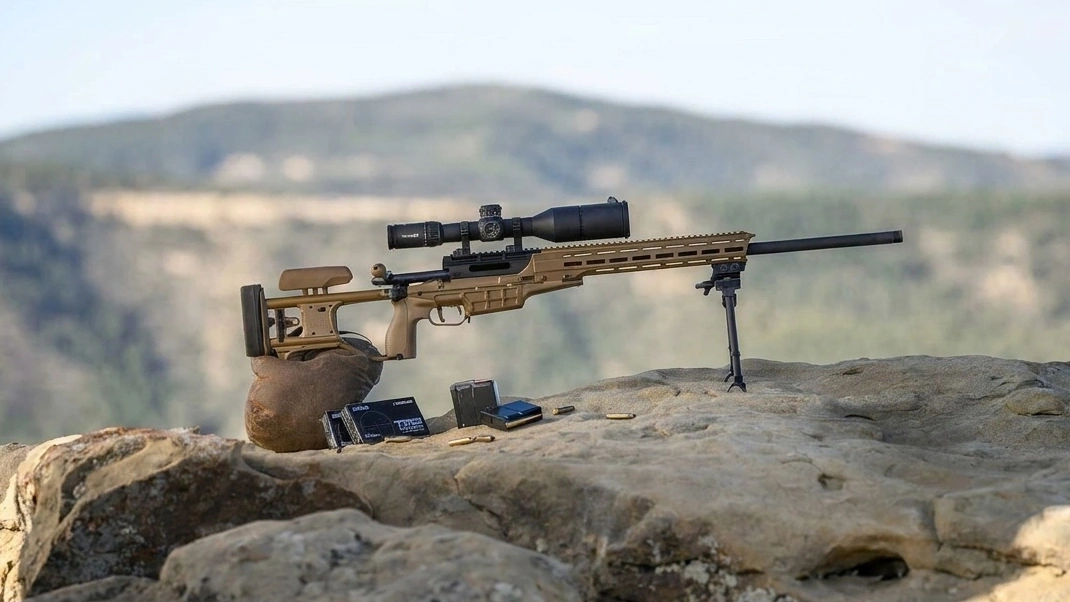
The TRG 42 is most commonly chambered in .338 Lapua Magnum, a cartridge specifically developed for engaging targets beyond the reach of standard 7.62 NATO rifles while remaining lighter and more manageable than a .50 BMG platform. With high-quality match ammunition, the rifle is widely capable of sub-MOA accuracy, and experienced marksmen can confidently engage targets at 1,200 to 1,500 meters under favorable conditions.
One reason the TRG 42 stands out is its attention to ergonomics. The fully adjustable stock, crisp two-stage trigger, and cold hammer-forged barrel help shooters maintain consistent accuracy during extended missions.
Combined with excellent manufacturing standards, these features have earned the rifle a reputation for reliability in harsh climates, from freezing Nordic winters to hot, dusty operational environments.
Today, the Sako TRG 42 is fielded by military and police units in more than 20 countries, proving that precision engineering can be just as valuable as raw firepower.
| Specification | Details |
| Country of Origin | Finland |
| Manufacturer | Sako |
| Caliber | .338 Lapua Magnum |
| Action | Bolt-action |
| Weight | 5.1 kg (11.2 lb) |
| Effective Range | 1,200–1,500 m |
| Magazine Capacity | 5 rounds |
Strengths
Limitations
When a mission calls for more than pinpoint accuracy, the Barrett M82, later standardized by the U.S. military as the M107, steps into a class of its own.
Unlike traditional precision rifles designed solely for engaging personnel, this iconic platform was developed as an anti-materiel rifle, capable of destroying vehicles, radar systems, communication equipment, and other high-value targets from long distances.
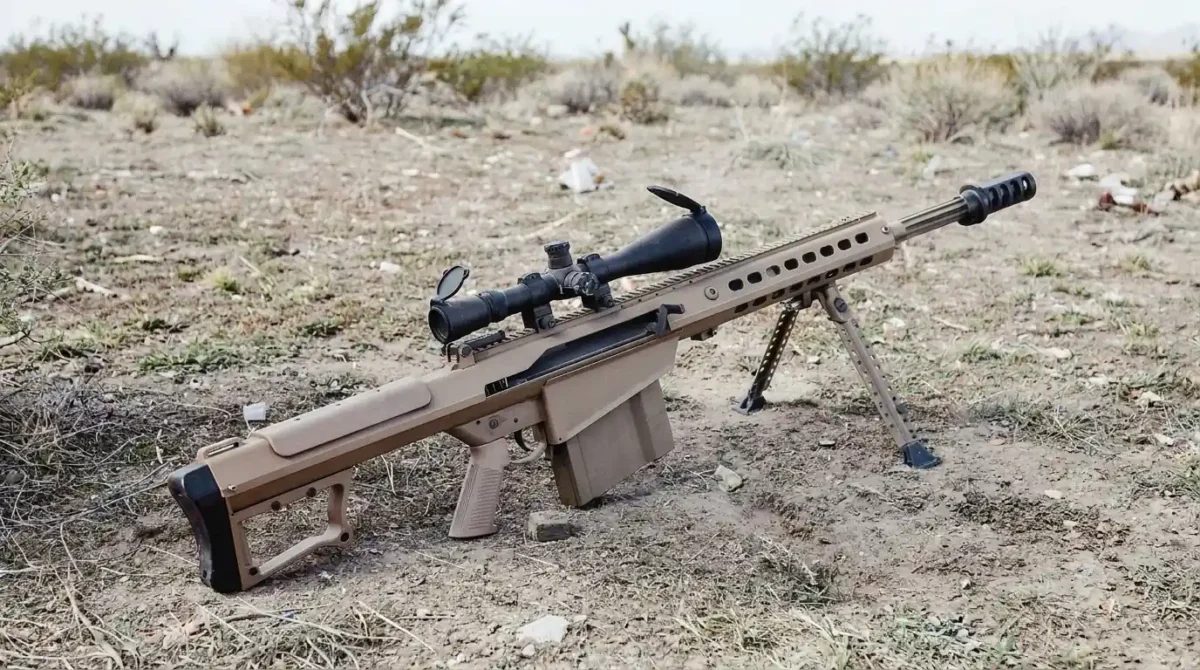
Introduced during the 1980s by Ronnie Barrett, the rifle chambers the formidable .50 BMG (12.7×99mm NATO) cartridge. The massive round delivers enough energy to penetrate light armor, concrete barriers, and engine blocks while remaining effective well beyond 1,800 meters.
Despite firing one of the world’s most powerful military cartridges, the rifle’s short-recoil operating system and large muzzle brake significantly reduce felt recoil, making it surprisingly manageable for trained operators.
Although the M107 cannot match the surgical precision of elite bolt-action rifles, typically producing 1.5 to 2 MOA accuracy, that was never its intended role. Its real strength lies in combining long-range firepower with rapid semi-automatic follow-up shots, allowing operators to quickly engage multiple targets or correct missed shots without cycling a bolt manually.
Today, the Barrett M107 serves with the U.S. military and dozens of allied nations, earning a reputation as one of the most recognizable and battle-proven heavy sniper rifles ever built.
| Specification | Details |
| Country of Origin | United States |
| Manufacturer | Barrett Firearms |
| Caliber | .50 BMG (12.7×99mm NATO) |
| Action | Short recoil, semi-automatic |
| Weight | 13.6 kg (30 lb) |
| Effective Range | 1,800 m+ |
| Magazine Capacity | 10 rounds |
Strengths
Limitations
The SVD Dragunov may not be the most accurate rifle on this list, but dismissing it because of that would overlook its true purpose. Introduced by the Soviet Union in 1963, the Dragunov was never intended to compete with modern bolt-action precision rifles.
Instead, it was built as a designated marksman rifle (DMR), a weapon that could extend the effective range of infantry squads while maintaining the rapid follow-up shots of a semi-automatic platform.
Designed by Yevgeny Dragunov, the rifle fires the powerful 7.62×54mmR cartridge and typically achieves an effective range of around 800 meters against point targets.
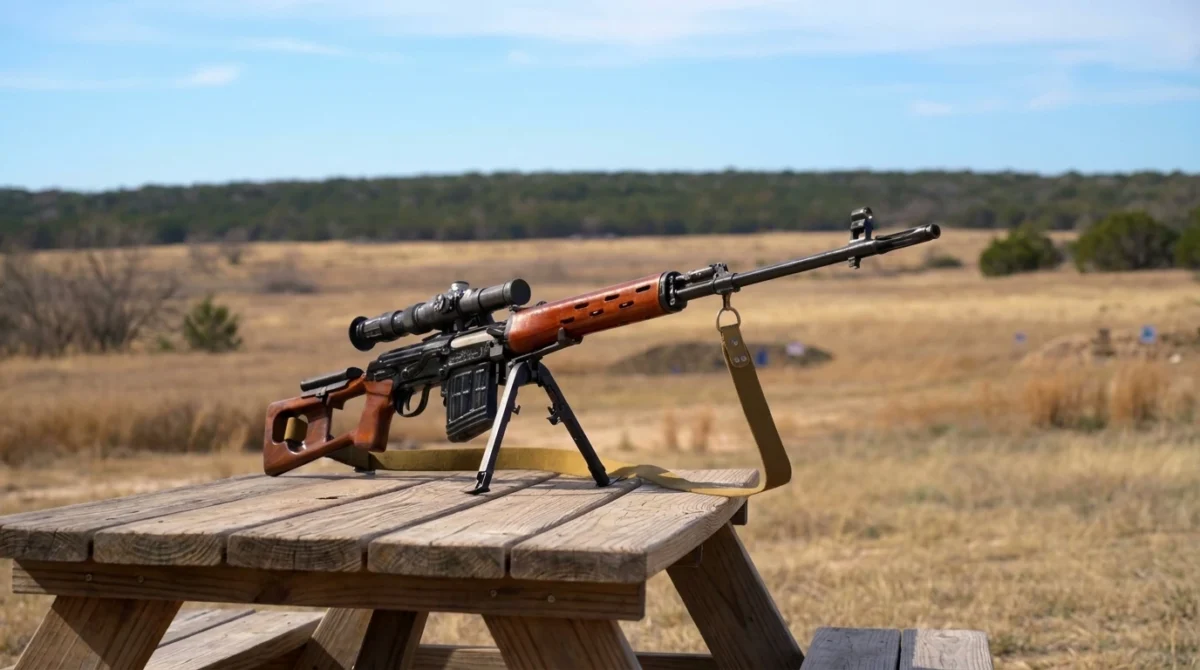
While its accuracy generally falls between 1.2 and 2 MOA, it compensates with exceptional reliability, lightweight construction, and a proven ability to function in harsh environments ranging from Siberian winters to Middle Eastern deserts.
What truly sets the Dragunov apart is its longevity. More than six decades after entering service, it remains in use with the armed forces of over 30 countries, making it one of the most widely fielded military precision rifles ever produced. Its rugged gas-operated design requires minimal maintenance, a quality that has kept it relevant despite the arrival of more sophisticated sniper systems.
| Specification | Details |
| Country of Origin | Soviet Union (Russia) |
| Manufacturer | Izhmash (now Kalashnikov Concern) |
| Caliber | 7.62×54mmR |
| Action | Gas-operated, semi-automatic |
| Weight | 4.3 kg (9.5 lb) |
| Effective Range | Up to 800 m |
| Magazine Capacity | 10 rounds |
Strengths
Limitations
While every rifle on this list is capable of outstanding long-range performance, they were built for very different missions.
Some prioritize rapid follow-up shots, while others sacrifice speed for maximum precision. Likewise, an anti-materiel rifle designed to disable vehicles should never be judged by the same standards as a lightweight bolt-action rifle carried by a reconnaissance team.
The comparison below highlights the strengths of each platform at a glance, making it easier to understand why no single rifle dominates every category.
| Rank | Rifle | Country | Caliber | Action | Effective Range | Primary Role |
| 1 | Barrett MRAD (Mk22 ASR) | United States | 7.62 NATO, .300 Norma Mag, .338 Norma Mag | Bolt-action | 1,500 m+ | Precision Sniper Rifle |
| 2 | Accuracy International AWM (L115A3) | United Kingdom | .338 Lapua Magnum | Bolt-action | Up to 1,500 m | Long-range precision |
| 3 | Sako TRG 42 | Finland | .338 Lapua Magnum | Bolt-action | 1,200–1,500 m | Precision Sniper Rifle |
| 4 | Barrett M82/M107 | United States | .50 BMG | Semi-automatic | 1,800 m+ | Anti-materiel Rifle |
| 5 | SVD Dragunov | Soviet Union (Russia) | 7.62×54mmR | Semi-automatic | Up to 800 m | Designated Marksman Rifle |
A clear trend emerges from the comparison. The top three rifles all use bolt-action systems because they offer superior mechanical consistency, making them the preferred choice for first-round precision at extended distances.
By contrast, the Barrett M107 and SVD Dragunov trade a small amount of accuracy for faster follow-up shots, making them better suited for missions where speed and sustained fire are just as important as precision.
Ultimately, the best sniper rifle depends on the mission. Modern military forces increasingly favor modular platforms like the Barrett MRAD, but proven classics such as the AWM and Dragunov continue to demonstrate that reliability and battlefield experience remain invaluable assets.