Follow Us:
Follow Us:

In early 2022, as Russian armored columns rolled across the Ukrainian border, many observers thought they were watching a scene from a bygone era.
Dozens, sometimes hundreds of tanks pushed forward in tight formations, reminiscent of Cold War-era tactics. Within days, videos of burning T-72s and ambushed convoys flooded the internet. Javelins, NLAWs, and Turkish Bayraktar drones tore through armored vehicles with shocking efficiency. It was a wake-up call: Were tanks becoming obsolete in modern warfare?
Yet, fast forward to 2024 and beyond, and the picture has grown more complicated. Despite the vulnerabilities exposed in Ukraine, tanks are still being ordered, upgraded, and deployed by nearly every major military power.
The U.S. is modernizing its M1 Abrams, China is fielding its ZTZ-99A, and Russia continues to push its T-90M and the elusive T-14 Armata. Even Israel, known for urban combat innovation, relies heavily on the battle-hardened Merkava. Clearly, someone still believes in the tank. So what’s really going on here?
In this analysis, we’ll explore the complex, often contradictory role of tanks in modern warfare. By the end, you may find that the answer to whether tanks are still relevant isn’t as straightforward as many headlines would have you believe.
Tanks first roared onto the battlefield during World War I, lumbering through the trenches of Europe in a slow, experimental debut. But it was during World War II that tanks truly came into their own.
From the Soviet T-34 to the German Panzer and Tiger tanks, these armored machines often defined the outcome of battles. The concept of blitzkrieg, lightning war, relied heavily on fast-moving armored divisions spearheading assaults, crushing defenses, and causing chaos deep behind enemy lines.
In fact, some military historians still argue that the Eastern Front in WWII was, in many ways, a “tank war.” The evolution of tank warfare during this period was rapid and brutal, with each side racing to develop better armor, stronger guns, and more reliable machines.
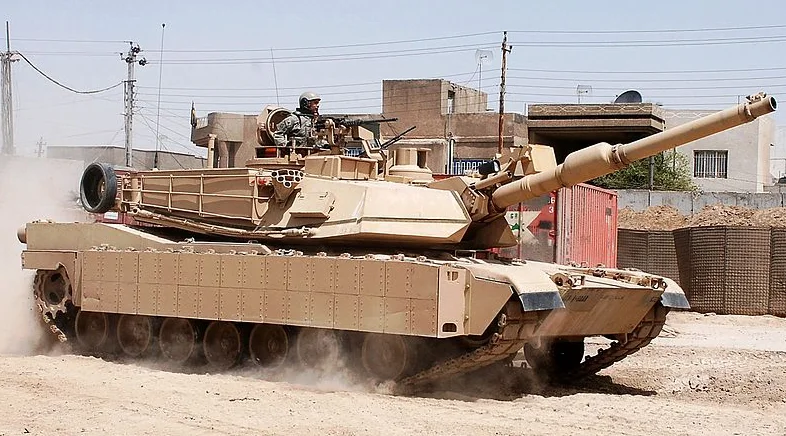
Fast forward to the Gulf War in 1991, and the narrative of tank dominance reached another high point. U.S. M1 Abrams tanks, equipped with advanced targeting systems and heavy armor, devastated Iraqi armored forces with near-clinical precision.
Many of these engagements were over before the Iraqis even knew they were under fire. The Abrams vs. T-72 matchup became a kind of technological showcase, and to many military planners at the time, it was hard to imagine a future battlefield without tanks at its core.
Of course, these historical moments also reflected the strategic environment of their time: open terrain, large-scale conventional battles, and relatively clear frontlines. And this is where the story begins to shift — because the nature of war has changed.
Today’s conflicts, from Fallujah to Mariupol, are rarely fought on desert plains or frozen steppe. Instead, they often play out in dense urban warfare environments, with insurgents, drones, and precision-guided munitions replacing massed tank assaults. And this shift has led some to wonder, if tanks were once kings of open warfare, are they now just oversized, vulnerable relics in the era of asymmetric combat and anti-tank weapons?
But while tanks have enjoyed a long legacy of battlefield dominance, recent conflicts have raised difficult questions about their survivability and relevance. The 21st century has not been kind to these steel giants — and if there’s one place where this reality has become impossible to ignore, it’s in Ukraine.
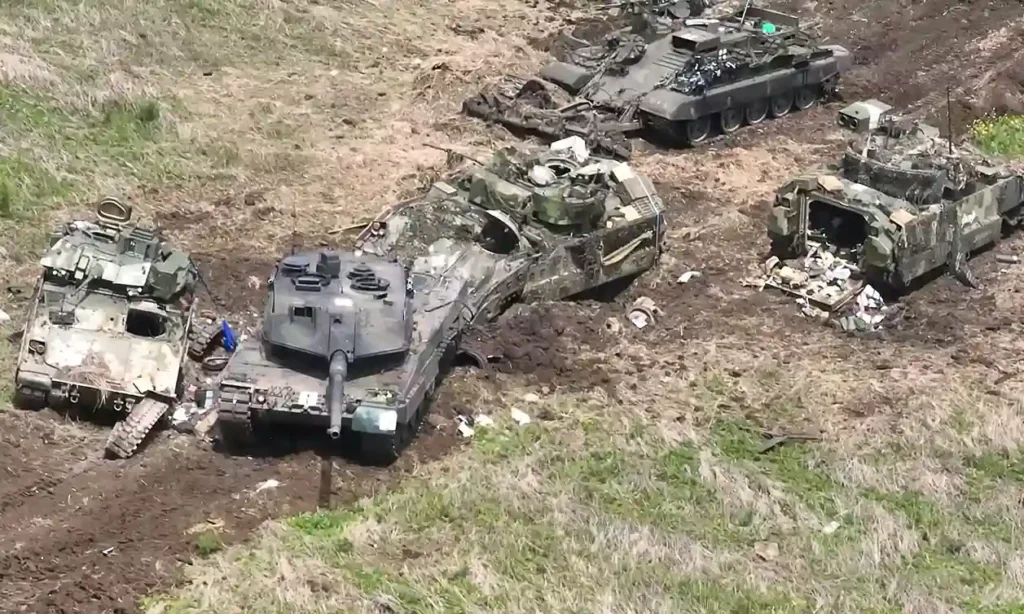
Since Russia’s full-scale invasion in 2022, tanks have been deployed on a massive scale — yet so have the systems designed to destroy them. From the early days of the war, Ukrainian troops armed with Javelins, NLAWs, and loitering munitions like the Switchblade have been able to take out Russian armored vehicles with startling effectiveness.
Even modern tanks such as the T-90M have suffered losses, and in many cases, the destruction was captured on video and shared widely online, shaping global perceptions of tank vulnerability.
And it’s not just Western-supplied missiles causing problems. Commercial drones retrofitted with explosives — or simply used to spot for artillery, have become a cheap and deadly counter to heavily armored formations. These small UAVs can hover above tank columns undetected, feeding real-time intelligence to artillery batteries or dropping munitions directly onto thin top armor, a spot where many tanks remain most exposed.
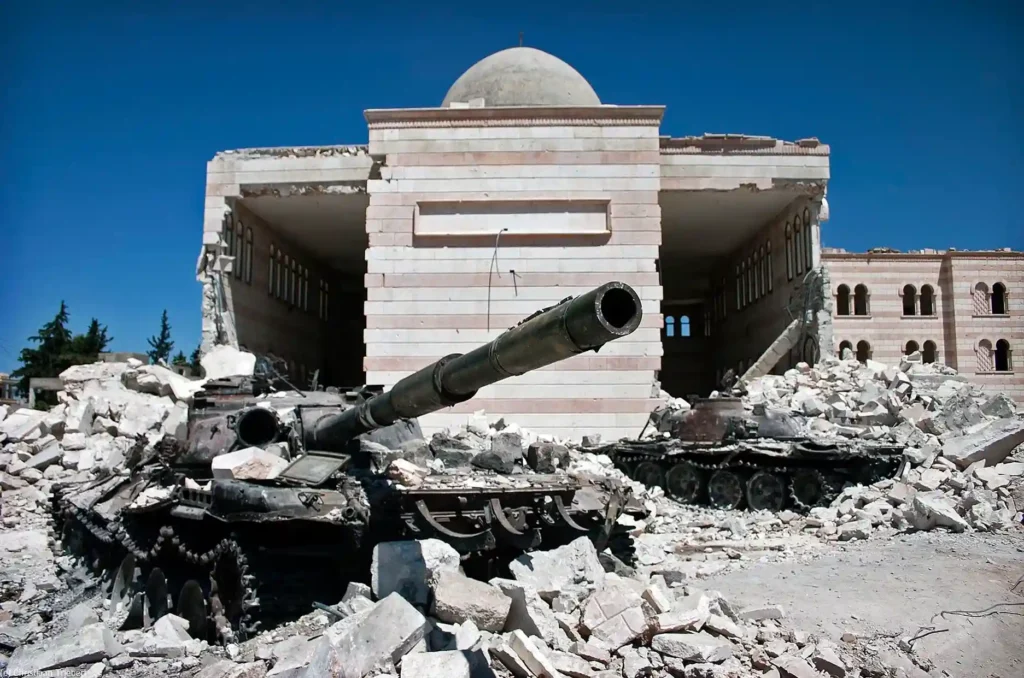
Of course, this isn’t a completely new phenomenon. In Syria, during the height of the civil war and the ISIS insurgency, tanks also suffered heavy losses, particularly in urban warfare environments like Aleppo or Palmyra. Whether used by the Syrian Arab Army or rebel groups, tanks often found themselves outmatched by terrain they weren’t built for, narrow streets, hidden ambush points, and the constant threat of handheld anti-tank weapons around every corner.
In cities, tanks lose many of their core advantages. Their powerful, long-range guns become harder to use in tight spaces. Their line of sight is limited, making them heavily reliant on infantry support. And without that coordination, even the most advanced tank becomes a sitting target. Urban warfare, in this sense, is a uniquely hostile environment for armored vehicles.
Then there’s the logistical burden. Tanks are not just battlefield assets, they’re also massive engineering projects that require constant fuel, spare parts, and crew training. Even something as simple as transporting a tank across rough terrain can strain supply lines.
In places like Ukraine, where muddy roads and drone surveillance make mobility a challenge, keeping tanks running has proven to be a logistical nightmare. Some reports have even suggested that a significant number of Russian tank losses came not from enemy fire, but from mechanical breakdowns, abandonment, or recovery issues.
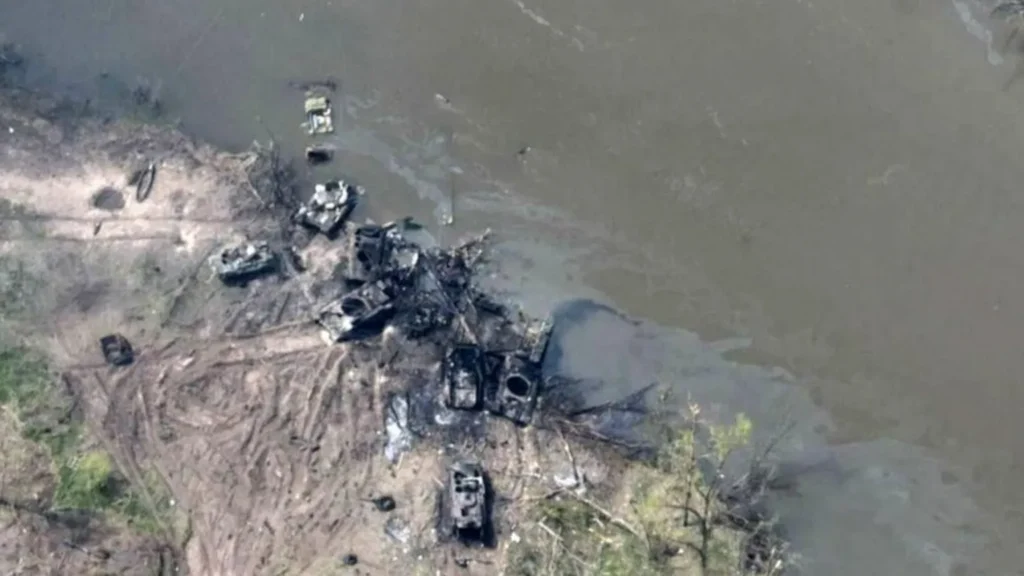
Critics argue that these combined factors — cost, vulnerability, and operational complexity — make tanks increasingly hard to justify in modern warfare. Why invest tens of millions in a single armored vehicle when a soldier with a $30,000 missile or a $500 drone can neutralize it?
Despite the headlines and viral videos showing burning tanks on Ukrainian highways, many militaries around the world are not walking away from armored warfare. In fact, some are doubling down. This may seem counterintuitive at first, given how vulnerable tanks have appeared in recent conflicts, but for many commanders, the answer lies not in abandoning tanks altogether, but in rethinking how they’re used.
At their core, tanks still offer something few other platforms can match: a unique blend of mobility, protection, and firepower. They can move across rough terrain, take hits that would destroy lighter vehicles, and deliver devastating blows against fortified positions.
In the right conditions, this combination still produces what’s often called the “shock effect”, a psychological and tactical advantage that can overwhelm unprepared defenders.
But modern warfare is no longer about tanks acting alone. Increasingly, it’s about integration. In combined arms operations, tanks don’t lead the charge blindly; they work alongside infantry, UAVs, engineers, and artillery in tightly coordinated assaults. A good example of this is how Israeli forces operate in dense environments like Gaza or southern Lebanon.
The Merkava tanks are rarely deployed without infantry cover and constant drone overwatch. Infantry protects tanks from close-range threats like RPGs, while drones scout ahead and artillery suppresses enemy strongpoints. When done properly, this coordination can significantly reduce the vulnerabilities that tanks face in isolation.
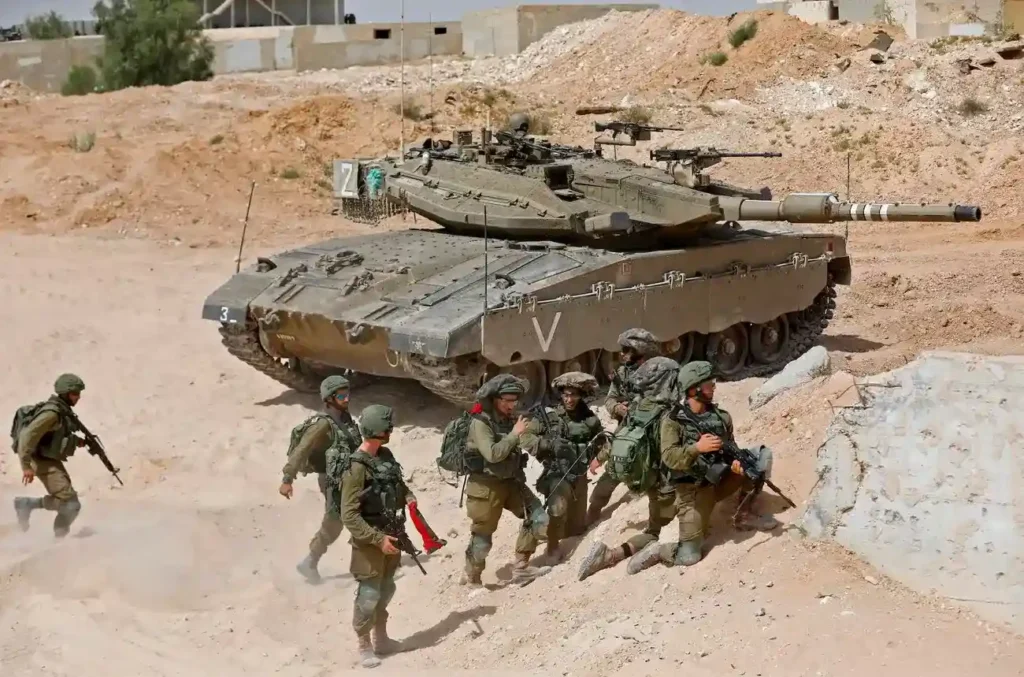
Even in Ukraine, where tanks have suffered major losses, some units, particularly those supported by recon drones and modern artillery, have managed to use armored thrusts effectively to exploit weak points in enemy lines. Tanks remain essential for breaching fortified positions, delivering sustained firepower in ways that infantry alone cannot.
Moreover, the technology behind tanks is evolving to match the threats. Several countries are now equipping their main battle tanks with Active Protection Systems (APS) designed to intercept incoming threats before impact.
Israel’s Trophy system, for example, has proven its effectiveness in real combat, shooting down RPGs and anti-tank missiles with radar-guided countermeasures. Russia has developed the Arena system, and the U.S. is testing APS like Iron Fist for its M1 Abrams. While these systems are not foolproof, they do represent a significant leap forward in tank survivability.
Read also: How Explosive Reactive Armor (ERA) Protects Modern Tanks
There’s also work being done in thermal cloaking, signature management, and even drone-tank integration. Some experimental units are testing UAVs launched directly from tanks, providing immediate aerial reconnaissance. This allows tank crews to see beyond buildings or tree lines — traditionally blind spots — and act faster and more precisely.
Critically, tanks still play a psychological role on the battlefield. Their presence can compel enemies to retreat, slow down offensives, or shift resources. In certain tactical situations, particularly in open terrain or fast-moving operations, there may simply be no substitute for a heavily armed, armored vehicle that can push through resistance and hold ground.
That said, no one is claiming that tanks are invincible or that they can operate as they once did in the Gulf War. But the notion that they are entirely obsolete may be premature. Rather than dying out, tanks appear to be evolving, adapting to a world where they are no longer the centerpiece of the battlefield, but a critical part of a much broader, more complex combined arms ecosystem.
If there’s one modern conflict that has reignited the global debate over the role of tanks in modern warfare, it is unquestionably the Russo-Ukrainian War. When Russia launched its full-scale invasion in February 2022, many assumed that its massive armored formations would deliver a quick and decisive breakthrough.
Instead, what followed was a brutal showcase of both the vulnerability and the resilience of tanks on a modern battlefield.
In the first weeks of the war, Russian tanks, often operating in long convoys without sufficient infantry or air cover, were devastated. Ambushes using Javelin and NLAW anti-tank weapons turned highways and rural chokepoints into graveyards for T-72s and T-80s.
Drones hovered overhead, guiding artillery strikes or dropping munitions directly onto vehicle roofs. The images spread fast: burnt-out hulks, twisted turrets, crews abandoning vehicles.
Read also: How Autonomous Drones Are Changing Modern Warfare
Despite those early setbacks, both Russia and Ukraine have continued to use tanks throughout the war — and not just in small numbers. In major offensives and counteroffensives alike, tanks remained a core element of combined-arms operations.
For instance, during Ukraine’s summer counteroffensive in Zaporizhzhia and Donetsk in 2023, Ukrainian forces pushed forward with Leopard 2s and T-64 variants, attempting to breach dense Russian minefields and fortifications. Russia, for its part, employed modernized T-90Ms and even a few T-14 Armata prototypes in defensive and limited offensive roles.
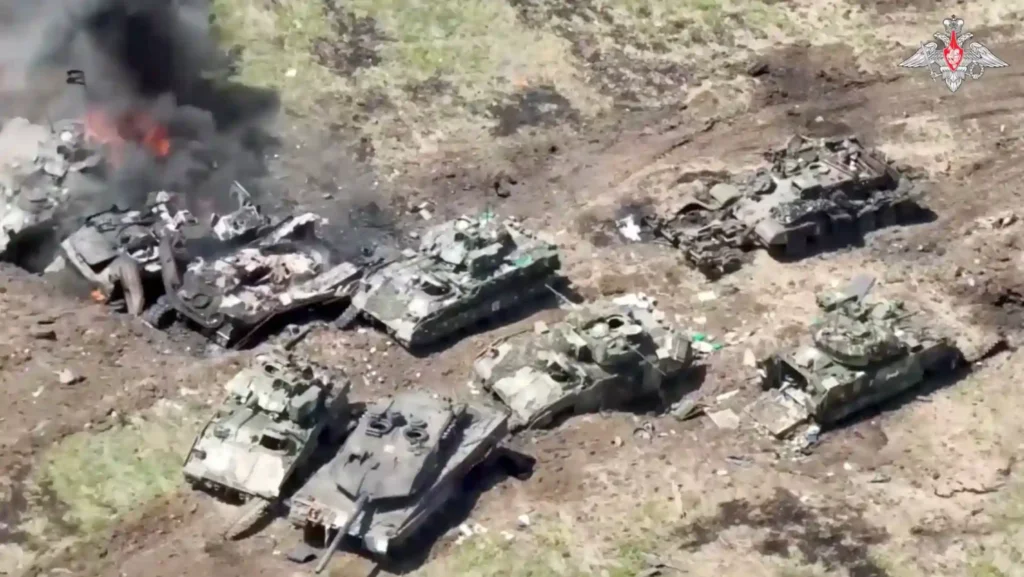
Adapt, or Be Destroyed?
What’s telling is not just that tanks are still being used in the Russo-Ukraine war— it’s how they’re being used that’s evolving. Both sides appear to be learning, adapting, and rethinking tank doctrine in real time.
One key adaptation has been “hull-down” positioning, where tanks use terrain to expose only their turrets while keeping the vulnerable hull hidden. This centuries-old tactic has taken on renewed importance in a battlefield saturated with drones and precision-guided weapons. In areas like Kreminna Forest or the flatter sectors near Robotyne, tanks have been spotted using ridgelines and tree lines for cover, popping up briefly to fire and then withdrawing.
Another tactical shift has been the use of tanks in night operations. With improved thermal optics, tanks can now operate effectively in darkness — often avoiding the drones and loitering munitions that dominate daytime battles. Ukrainian tank units, in particular, have reported conducting nighttime movements to reposition under cover, avoiding detection and engaging targets with relative surprise.
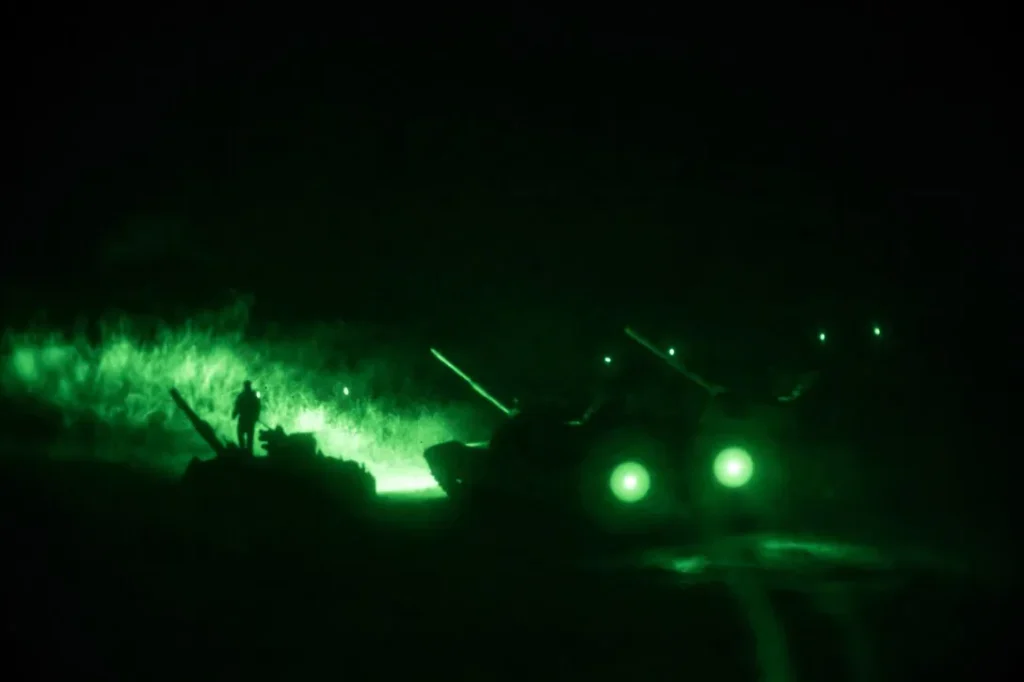
Perhaps the most significant evolution is the growing emphasis on tank-infantry-drone coordination. Neither side can afford to send tanks forward without layered support. Ukrainian forces often use small commercial drones to scout routes, spot enemy ATGM teams, and relay real-time footage back to both tank crews and infantry squads.
Russian units have similarly adopted “drone spotters” to guide tank fire or coordinate with artillery. This tight coordination, while not always successful, reflects a recognition that modern tank warfare now requires synchronization across multiple domains, including cyber, electronic warfare, and unmanned systems.
Importantly, these adaptations haven’t eliminated losses. Tanks on both sides continue to be destroyed — sometimes in large numbers. But the shift suggests that, rather than abandoning tanks, commanders are recalibrating how tanks fit into the broader equation.
They are no longer treated as battlefield juggernauts, but as vulnerable yet essential assets whose survivability depends on careful planning, support, and the intelligent use of terrain, time, and technology.
So, while the role of tanks in the Ukraine war may not resemble their classic form in the Gulf War or WWII, it arguably represents a new chapter — one in which flexibility, coordination, and adaptation may matter as much as armor thickness or gun caliber.
From the NATO perspective, tanks continue to be viewed as essential in conventional warfare scenarios. In a 2023 briefing, General Christopher Cavoli, NATO’s Supreme Allied Commander Europe, noted that “despite heavy losses in Ukraine, armored formations remain critical for seizing and holding ground.”
He emphasized that NATO doctrine continues to evolve around combined arms operations, where tanks, infantry, drones, and artillery work in close coordination. This thinking has shaped procurement strategies: countries like Poland have ordered hundreds of M1 Abrams and K2 Black Panther tanks, while Germany is investing heavily in the next-gen MGCS (Main Ground Combat System), a joint program with France.
On the U.S. side, the Pentagon has acknowledged the vulnerabilities tanks face, especially in urban warfare and asymmetric conflicts, but it has stopped short of calling them obsolete.
A 2022 RAND Corporation study stated that “tanks remain highly valuable in peer conflict scenarios,” particularly in “maneuver warfare where armored shock and survivability are decisive.” However, it also recommended that future designs must prioritize mobility, network integration, and modular protection over sheer armor thickness.
Notably, U.S. Army doctrine is already shifting. In the wake of Ukraine, the U.S. is increasingly focused on integrating drones and active protection systems into its armored brigades.
Lieutenant General Scott McKean (ret.), one of the architects of the Army’s Multi-Domain Operations concept, remarked in 2023 that “tanks are no longer the centerpiece of a formation, they’re part of a synchronized system where information, speed, and coordination often matter more than brute force.”
In Russia, perspectives are more complex. On one hand, the Russian military continues to lean heavily on tanks. Despite catastrophic losses, Russia has fielded modernized versions like the T-90M and invested in high-profile programs like the T-14 Armata, which boasts features like an unmanned turret and advanced sensors. But even within Russian circles, there’s a quiet acknowledgement that tank warfare must evolve.
Russian military commentators such as Mikhail Khodarenok, a retired colonel and defense analyst, have stated that “tanks must now be treated as part of a layered and protected system — not as spearheads but as support for infantry and drones.”
Critics, including some Western experts, have gone further. Justin Bronk, a defense analyst at the UK’s Royal United Services Institute, has argued that while tanks may still serve a role in conventional conflicts, their cost, visibility, and vulnerability to anti-tank weapons make them less viable in modern hybrid warfare.
Still, few experts are calling for the complete retirement of tanks. Instead, there’s a growing consensus that the future of armored warfare depends on innovation — smarter integration with digital systems, better protection against drones and missiles, and flexible designs tailored to specific environments, especially urban and contested terrain.