Follow Us:
Follow Us:

“Flares alone won’t save you anymore.”
That’s a claim some air combat analysts are starting to make as missile technology evolves at a breakneck pace. On one side of the debate, there are those who believe that traditional tools like flares and chaff countermeasures no longer cut it against today’s smarter, faster, and more adaptable missile threats.
They argue that radar-guided missiles and infrared seekers are getting too precise to be fooled by 20th-century tricks. On the other side, some experts counter that survival in modern air combat still hinges on a layered defense—combining those same legacy systems with cutting-edge electronic warfare in fighter jets, stealth technology, and rapid evasive maneuvers.
So, how do fighter jets evade missiles in reality? Is it all about tech—jammer pods, decoys, and stealth coatings—or do pilot instincts and split-second decisions still matter as much as they did in the Cold War?
As we break this down, we’ll look at how modern fighter jet defense systems actually work, what they’re up against, and how pilots are trained to outsmart missiles that are built to be almost impossible to escape.
To understand how fighter pilots survive in modern air combat, it’s helpful to first look at what they’re up against. Missiles designed to take down fighter jets come in many forms—but most threats fall into two broad categories: heat-seeking missiles and radar-guided missiles. Each type hunts its target in a different way, and each demands a different kind of response.
First, Heat-seeking missiles, sometimes called infrared homing missiles. These weapons track the infrared signature—or heat—emitted by a jet’s engines. Because they don’t rely on radar, they’re often referred to as “fire-and-forget” weapons.

Some analysts suggest that short-range heat-seekers like the American AIM-9X or the Russian R-73 have become exceptionally dangerous in recent years, with sensors capable of locking onto targets from extreme angles or even from the front. That means a pilot can’t assume they’re safe just because the enemy is behind them.
Infrared missile evasion typically relies on the use of flares, which create a hotter heat signature than the aircraft, luring the missile away—though even this tactic may not always work if the missile is smart enough to distinguish between real and decoy heat sources.
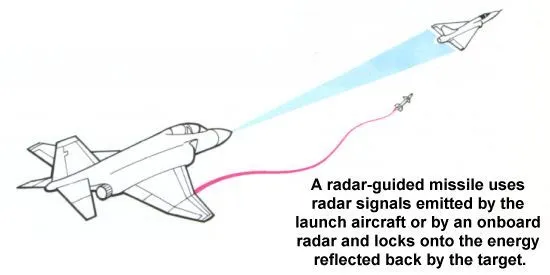
Then there are radar-guided missiles, which are generally used for long-range engagements. These threats—like the American AIM-120 AMRAAM or the Russian R-77—rely on radar signals to track and home in on their target. Some use active radar homing, where the missile itself carries a radar seeker.
Others might be guided by the launch aircraft’s radar until they’re close enough to switch to their own sensors. Avoiding these weapons often involves radar-guided missile evasion techniques such as deploying chaff countermeasures—tiny strips of metal that confuse the radar signal—or using electronic warfare in fighter jets to jam the missile’s seeker.
It’s also worth noting the difference between air-to-air missiles—those launched by other aircraft—and surface-to-air missiles (SAMs), which are fired from ground-based platforms. SAMs like the Russian S-400 or the American Patriot system can threaten jets from well over 100 kilometers away, and are often integrated into larger air defense networks.
These systems are especially dangerous in conflicts where air superiority isn’t guaranteed. While air-to-air missiles are typically launched during high-speed dogfights, surface-launched threats often come as a surprise, guided by powerful radars and sometimes supported by multiple batteries working together.
Once a missile is in the air, a pilot usually has seconds—not minutes—to react. While modern jets are packed with sensors and countermeasures, sometimes the only thing standing between a pilot and disaster is their ability to manually outfly the threat. That’s where evasive maneuvers come in—aggressive, high-speed aerial movements designed to break a missile’s lock, throw off its trajectory, or push it into a position where it simply can’t keep up.
One of the most common techniques involves high-G turns. By pulling tight curves at extreme g-forces, a fighter jet might be able to force a missile into a turn it can’t physically sustain. For example, many air-to-air missiles have high speed but limited agility at close range, meaning a well-timed barrel roll or sudden dive could—at least in some cases—push them off course.

Some reports suggest that in training scenarios, skilled pilots have successfully dodged advanced missiles through these kinds of maneuvers, though real-world success likely depends on timing, aircraft performance, and a bit of luck.
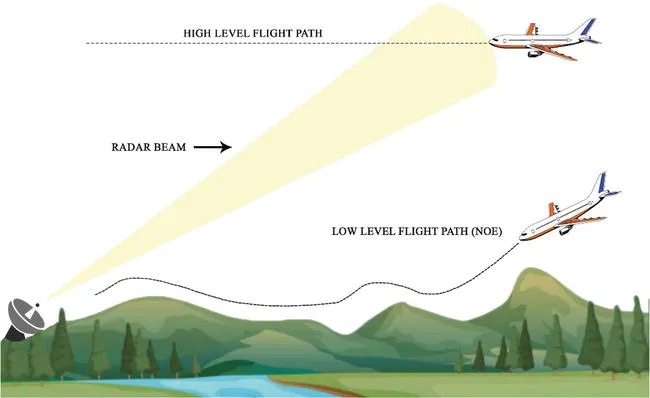
Another key tactic is terrain masking—essentially, flying low to avoid radar lock. By hugging the contours of the ground—hills, valleys, forests—a pilot might be able to stay beneath the radar horizon, breaking line-of-sight from radar-guided missile systems or even the jet that fired the missile.
This technique is especially useful against surface-to-air missile systems, which rely heavily on radar coverage. Of course, flying low comes with risks of its own, including limited reaction time and the danger of colliding with the terrain. But in combat zones like Syria or eastern Ukraine, pilots have reportedly used terrain masking to reduce their visibility to enemy systems.
Speed and agility also matter. Many fighter jets are capable of supersonic speeds, giving them a better chance of outrunning or outmaneuvering incoming threats—at least in theory. Aircraft like the F-22 Raptor or Su-35 are often praised for their supercruise (the ability to fly at supersonic speed without afterburners) and thrust-vectoring, allowing them to perform sharp turns that older jets can’t match. This kind of maneuverability can, in some scenarios, tilt the odds in the pilot’s favor—especially when combined with other tools like infrared missile evasion tactics or electronic warfare systems.
Still, it’s important to note that evasive maneuvers don’t always guarantee escape. Modern missiles are getting smarter, faster, and harder to outfly. But in the right hands—and paired with advanced countermeasures—they can still give pilots a fighting chance when everything else fails.
Once a missile has locked on to a jet, the pilot’s next line of defense often comes down to automated countermeasure systems—technologies designed not to outrun the threat, but to fool it. These systems are built to confuse or blind the missile, giving the pilot precious seconds to escape. While no single method is guaranteed to work, when used together, they form a defensive shield that can significantly increase a jet’s survivability in hostile airspace.
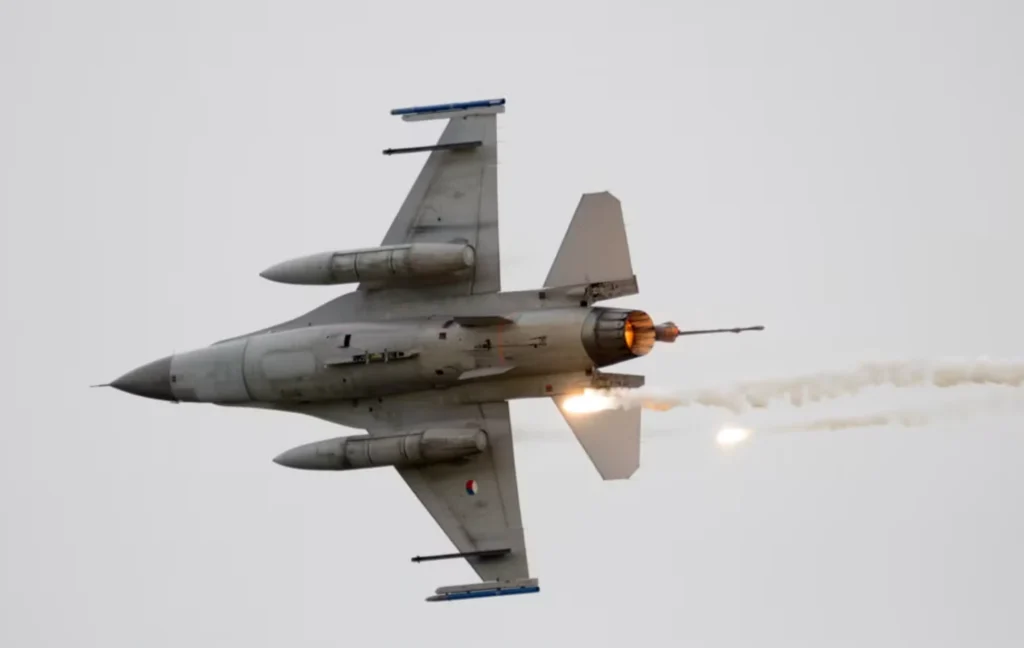
One of the most well-known tools is flares. These are small, high-temperature decoys ejected from the aircraft to counter heat-seeking missiles—those that track the infrared signature of the engine exhaust. The idea is simple: when a heat-seeking missile locks on, the jet releases one or more flares, which burn hotter than the jet’s engines.
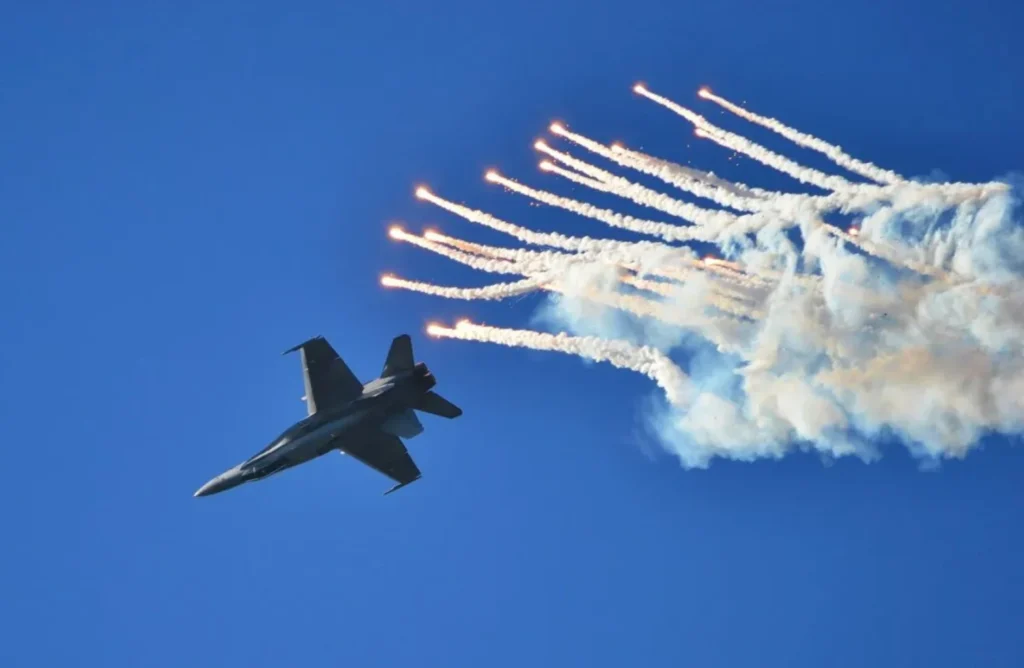
The missile’s seeker may—though not always—redirect toward the brighter, hotter target. While early IR missiles were fairly easy to fool this way, newer generations can sometimes distinguish between a moving jet and a stationary flare. Still, flares remain a standard part of infrared missile evasion and are deployed almost automatically when a threat is detected.
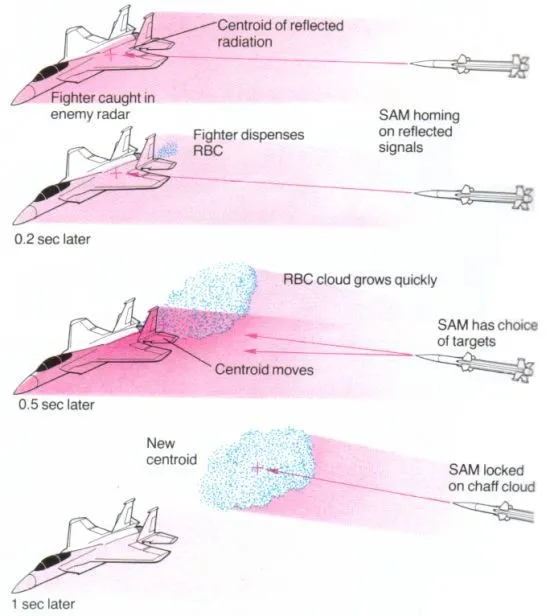
Then there’s chaff, a defense primarily aimed at radar-guided missiles. Chaff consists of tiny aluminum or metallized fibers dispersed in the air, creating a temporary cloud of false radar targets. To the missile’s seeker—or even the radar guiding it—the chaff cloud can appear like a legitimate aircraft, potentially throwing off the missile’s guidance system. As with flares, success can depend on timing and missile sophistication. In some real-world cases, pilots have successfully evaded radar-guided missile threats using chaff and sharp maneuvers together.
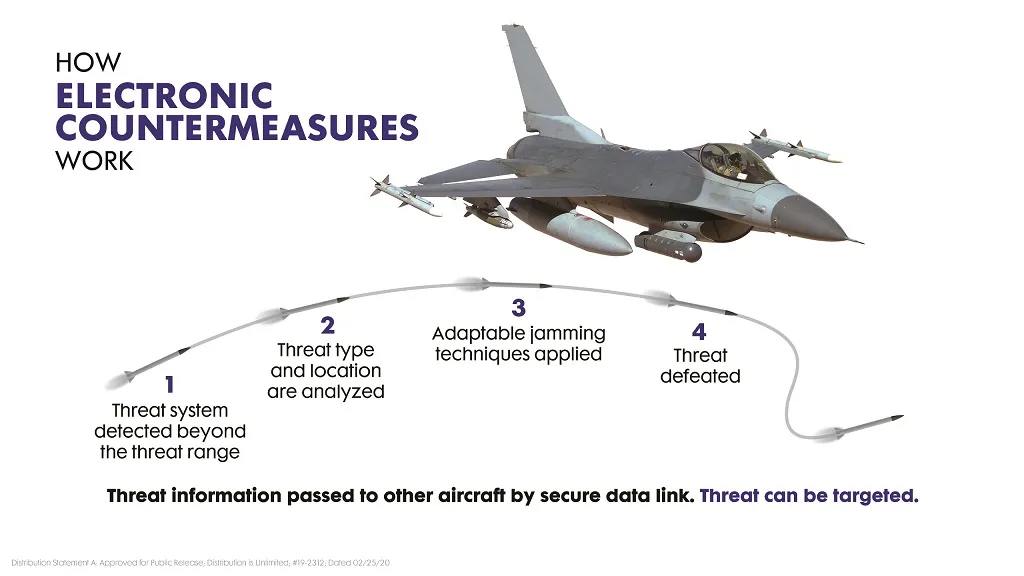
A more advanced layer of protection comes from Electronic Countermeasures (ECM). These are electronic warfare tools built directly into modern fighter jets. ECM systems can jam enemy radar, disrupt missile guidance systems, or even send false signals to confuse the missile entirely.
Some jets, like the F-35 or EA-18G Growler, are believed to carry sophisticated ECM pods capable of detecting incoming threats and actively interfering with them. These systems don’t just protect the aircraft—they can also shield nearby friendly forces by blinding hostile sensors within a given area.
And then there’s DIRCM—Directed Infrared Countermeasures—which may represent the cutting edge of fighter jet missile countermeasures. DIRCM systems use sensors to track incoming infrared-guided missiles, and then respond with a focused laser beam aimed directly at the missile’s seeker head.
The laser is designed to overload or confuse the seeker, forcing the missile off course before it reaches the aircraft. While more commonly seen on larger aircraft like military transports and helicopters, DIRCM is slowly being explored for use on fast jets as well. Its effectiveness is still a matter of some debate, particularly in high-speed air combat, but the potential is promising.

Ultimately, these countermeasure systems—flares, chaff, ECM, and DIRCM—are not used in isolation. In modern combat scenarios, they’re layered and often automated, creating a multi-step defense process. While none of these tools can offer perfect protection, especially against next-generation threats, they still form a vital part of how fighter pilots evade missiles in today’s increasingly lethal skies.
For all the cutting-edge technology packed into today’s fighter jet missile countermeasures—flares, chaff, jammers, and more—there’s still a growing concern that these systems may not always be enough. As missile technology evolves, so do the challenges that modern pilots face. In some cases, even the best evasive maneuvers and defensive suites might only buy a few extra seconds. And depending on the threat, even that might not be sufficient.
One of the most serious threats modern jets may face is what’s known as a saturation attack—essentially, being targeted by multiple missiles at once. In a scenario like this, a single fighter might be locked onto by both radar-guided missiles and infrared seekers, fired either in quick succession or simultaneously from different platforms—say, a ground-based air defense system and an enemy jet. While a pilot might be able to evade one missile or decoy it with flares or chaff, defending against two or three at the same time could easily overwhelm the aircraft’s automated countermeasure systems.
Some experts suggest that in recent conflicts, especially in heavily contested airspace like Ukraine or Syria, multi-layered air defense systems have demonstrated an ability to launch such saturation-style threats. And while trained pilots flying high-performance jets might still stand a fighting chance, the odds may shrink considerably under these kinds of conditions.
Compounding the challenge is the rise of smart missiles—weapons that don’t just lock on and chase a heat or radar signature, but adapt mid-flight using advanced tracking algorithms. Many newer heat-seeking missiles, for example, use imaging infrared (IIR) seekers that can create a thermal image of the target, making it much harder to fool with a simple flare. Likewise, some radar-guided missiles may now switch between active and passive tracking modes or even home in on the jamming signals themselves—turning electronic countermeasures into an unintended beacon.
As these weapons become more adaptive, traditional infrared missile evasion and radar decoy tactics may lose some of their effectiveness. It’s possible that in a few years, countermeasure systems will need to evolve into even more intelligent, autonomous defenses—capable of analyzing threats in real time and deploying the most effective response, without depending too heavily on pre-programmed routines.
That’s not to say fighter jets are defenseless—far from it. But these challenges and limitations suggest that missile evasion is becoming a more complex game of cat and mouse. And in some situations, especially where the missile technology is near-parity or superior, pilots may need to rely just as much on stealth, teamwork, and situational awareness as they do on technology alone.
Looking ahead, the cat-and-mouse game between missile guidance systems and fighter jet missile countermeasures is almost certainly going to intensify. As threats grow smarter and faster, the tools meant to defend against them must evolve just as quickly—if not faster. While traditional methods like flares, chaff, and jamming still have their place, there’s growing momentum toward more intelligent, adaptive technologies, and much of that is being driven by two emerging areas: AI-assisted defensive systems and the use of drones as decoys.
One of the most promising directions involves the use of artificial intelligence (AI) to assist with missile detection, threat analysis, and countermeasure deployment. Instead of relying solely on a pilot or preset algorithms, future fighter jet defense systems might be capable of interpreting complex radar signatures or infrared data in real-time, identifying the type of missile, and choosing the best evasion tactic or countermeasure—automatically. In theory, this could allow a jet to jam a radar-guided missile while simultaneously firing a decoy flare and executing a high-G evasive turn, all in the split second needed to survive.
Some defense analysts believe that AI-assisted electronic warfare systems are already being tested in prototype form aboard next-gen aircraft like the U.S. Air Force’s NGAD (Next Generation Air Dominance) platform. While details are scarce, it’s likely that machine learning could help optimize electronic countermeasure responses by learning from past encounters and improving over time. That said, questions remain about how reliable or autonomous these systems should be, especially when lives hang in the balance.
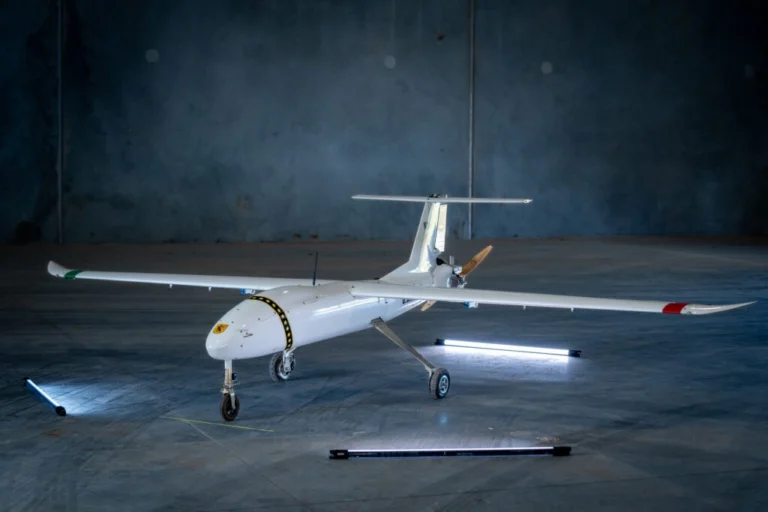
Another area gaining attention is the increasing role of drones—particularly autonomous or loyal wingman systems—as decoys. Instead of putting a $100 million fighter and its pilot in harm’s way, future air combat scenarios might feature expendable or semi-expendable unmanned systems flying alongside manned aircraft.
These drones could be used to draw missile fire, saturate enemy sensors, or even carry their own countermeasure payloads, such as flares or radar jammers. Australia’s MQ-28 Ghost Bat and the U.S. Air Force’s Collaborative Combat Aircraft program are early examples of where this vision may be headed.
Of course, integrating AI and drones into high-speed air combat isn’t without its hurdles. Coordination, trust in autonomy, and secure data sharing are all significant challenges. And while these systems could potentially shift the balance in fighter jet missile evasion, they’re unlikely to replace human pilots or traditional countermeasures entirely—at least in the near term.
Still, one could argue that the future of aerial survival will likely hinge on a hybrid approach: pairing seasoned pilots with smart assistance, and surrounding them with unmanned allies designed to absorb the risks.
Modern fighter jets rely on a layered defense—combining evasive maneuvers, electronic warfare, and smart countermeasures—to stay alive in a sky filled with threats. When a heat-seeking missile is fired, pilots might deploy flares to overwhelm the missile’s infrared guidance, while executing high-G turns to break its tracking lock. If it’s a radar-guided missile, chaff and jamming systems may be used to create confusion, forcing the missile off course.
But that’s only half the story. Today’s jets often use stealth technology to avoid detection in the first place, and future platforms are expected to bring AI-assisted countermeasures and autonomous drones into the mix. These innovations may give pilots a crucial edge against smarter, faster, and more agile missiles.
That said, missile evasion is rarely foolproof. With the rise of saturation attacks and adaptive missile guidance, even the most advanced jets can be overwhelmed. What works in one scenario might fail in another. That’s why survival increasingly depends not just on technology, but also on teamwork, training, and fast decision-making.