Follow Us:
Follow Us:

Imagine a ship that slips through the waves like a shadow, armed with the latest radar, missiles, and drones, all while running on a crew smaller than some luxury yachts.
That’s the Mogami-class frigate, Japan’s sleek, multi-role warship that’s quietly reshaping naval strategy in the Indo-Pacific. If you’ve ever wondered what modern maritime power looks like beyond the headlines of aircraft carriers and destroyers, this is it.
The Mogami-class isn’t just another ship, it’s a glimpse into the future of naval warfare. Officially known as the 30FFM (Thirty-Fast Frigate Multi-mission), this vessel blends stealth design, advanced automation, and modular systems that allow it to switch roles, from anti-submarine hunter to missile platform, almost on a whim.
What makes it fascinating isn’t only its firepower but how it embodies Japan’s strategic philosophy: high-tech, versatile, and surprisingly compact.
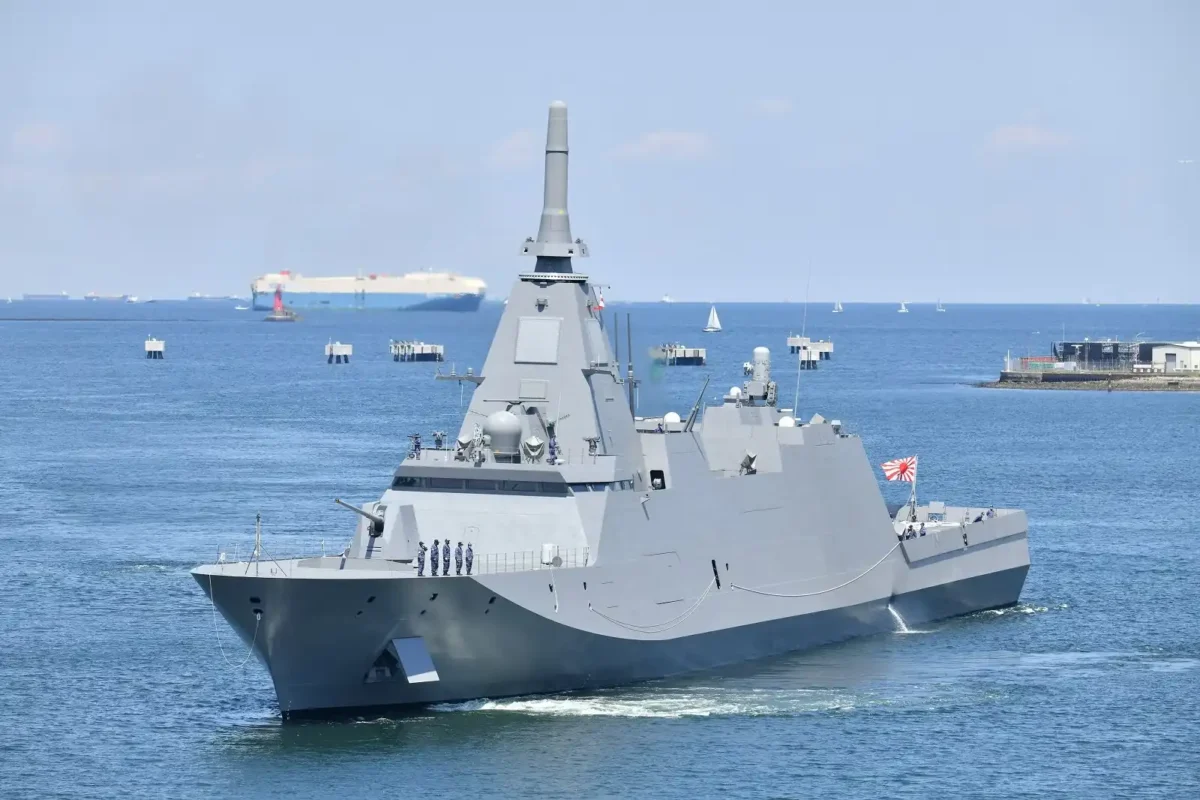
In a world where naval budgets are under scrutiny, the Mogami-class offers efficiency without compromise. Displacing around 5,500 tons, stretching 142 meters, and packing a CODAG (combined diesel and gas) propulsion system, it can reach speeds over 30 knots, fast enough to chase down intruders, but quiet enough to remain elusive.
Sensors and drones expand their reach, while vertical launch systems (VLS) give it teeth against air, surface, and underwater threats.
In this post, we’ll unravel every layer of the Mogami-class frigate, from its origin story and design quirks to the weapons, technology, and strategic impact that make it a game-changer.
So, what exactly is a Mogami-class frigate, and why should you care?
At first glance, it might just look like another modern warship, but dig a little deeper, and you realize it’s a bold statement of Japanese naval ingenuity. Officially part of the 30FFM program (Future Frigate Multi-Mission), the Mogami-class is designed to be a jack-of-all-trades on the water, equally adept at patrolling remote islands, hunting submarines, or providing missile defense.
Think of it as the Swiss Army knife of warships, except it’s built with stealth lines, AI-assisted systems, and weapons that could intimidate much larger vessels.
The development of this frigate is rooted in Japan’s unique strategic environment.
The JMSDF (Japan Maritime Self-Defense Force) needed a ship that could counter growing regional threats, from fast attack craft to advanced submarines, without the cost and crew demands of a destroyer.
Enter the Mogami-class: smaller than a destroyer but packed with enough technology to punch above its weight.
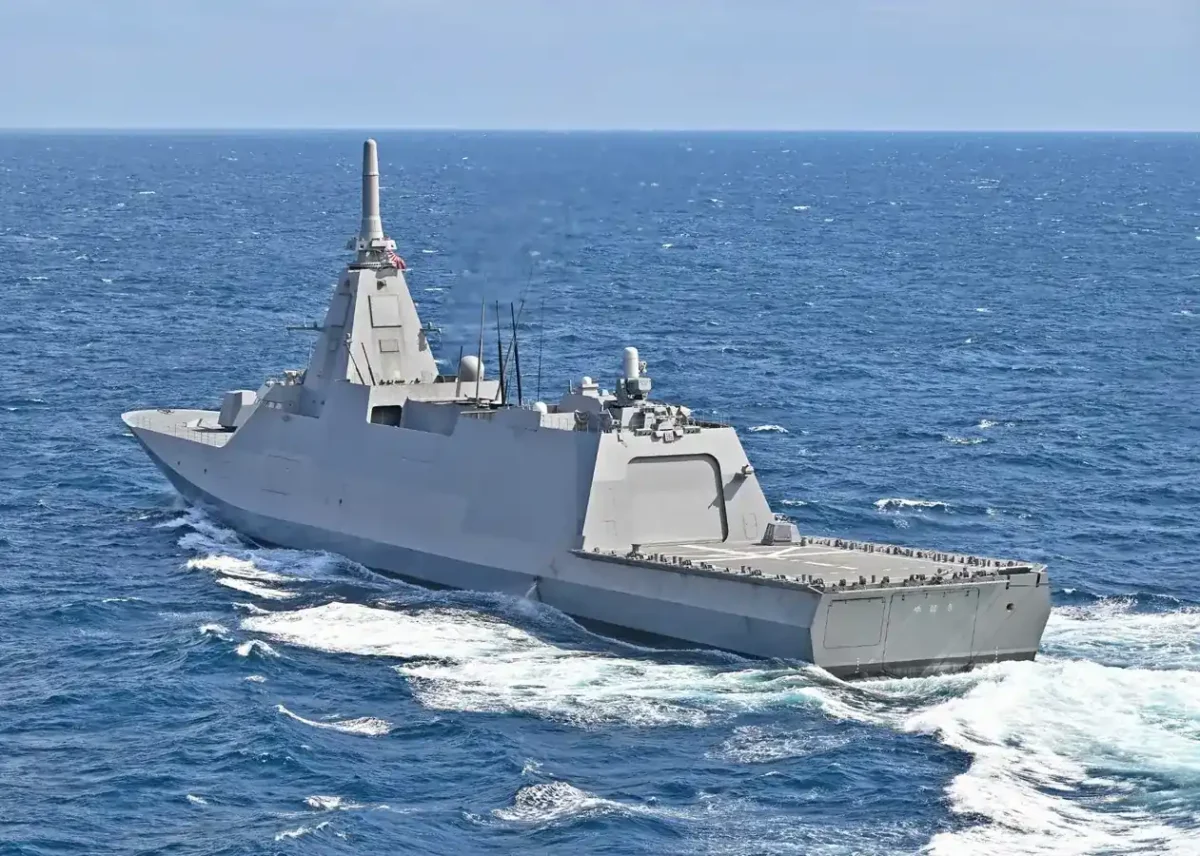
One striking feature is its modular design. Certain sections of the ship can be upgraded or swapped out to fit mission needs, whether that’s extra missile cells for air defense or specialized sonar arrays for anti-submarine operations. And it’s not just brute force; the hull itself is shaped to minimize radar signature, making it sneakier than many older frigates.
In short, the Mogami-class frigate is versatility personified. It represents Japan’s shift toward agile, highly automated vessels that don’t compromise firepower for efficiency.
The story of the Mogami-class begins not with blueprints or steel plates, but with a strategic question: how can Japan modernize its fleet without breaking the bank or bloating the crew roster?
The answer came in the form of the 30FFM program, a project that started around 2015, aimed at producing a multi-role, stealthy, and highly automated frigate capable of operating in diverse maritime environments.
Unlike older frigates, which often specialized in either anti-submarine warfare or surface combat, the Mogami-class was conceived as a flexible workhorse.
Mitsubishi Heavy Industries (MHI) and Mitsui E&S Shipbuilding teamed up to design a hull that could balance speed, stealth, and modularity. By focusing on automation and modern sensor systems, they drastically reduced the crew requirement to roughly 90 sailors, far fewer than older vessels of similar size.
Naming these ships also carries cultural significance. The vessels are named after rivers in Japan, a tradition that connects the modern fleet with historical maritime heritage.
The first ship, JS Mogami, was laid down in 2017 and launched a few years later, signaling the JMSDF’s commitment to a new class of versatile frigates.
From the start, the design emphasized stealth and survivability. Angled hull lines, reduced radar cross-section, and noise-minimizing propulsion systems all contribute to a ship that’s hard to detect, perfect for reconnaissance or rapid response missions.

Even the superstructure is optimized for sensor performance, with radar and communications systems integrated into the hull to reduce exposure.
Essentially, the Mogami-class is the product of strategic foresight meeting technological innovation.
By blending automation, modular systems, and stealthy design, Japan created a warship that’s small enough to be cost-effective yet capable enough to rival larger frigates, and perhaps, in certain scenarios, even destroyers.
Read also: Type 31 Frigate – The Future of Affordable Naval Defense
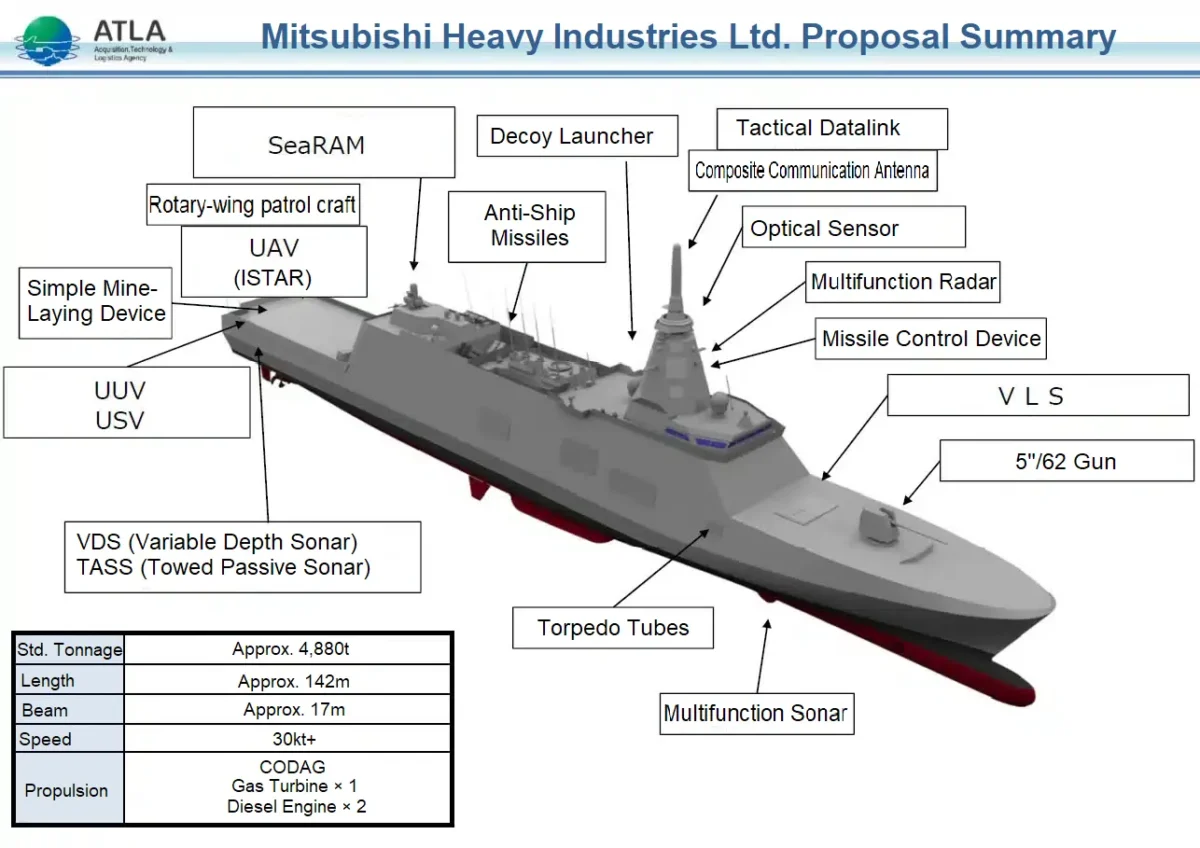
The Mogami-class frigate might look sleek and unassuming, but underneath that streamlined hull lies a sophisticated blend of speed, firepower, and technology. At around 5,500 tons displacement and stretching 142 meters long with a beam of approximately 16 meters, it’s compact enough to maneuver in tight coastal waters yet substantial enough to carry modern weaponry and sensor systems.
Its relatively modest size makes it faster to build and easier to maintain than larger destroyers, a clever solution for navies with limited manpower.
Propulsion is handled via a CODAG (Combined Diesel and Gas) system, which combines the fuel efficiency of diesel engines for cruising with the raw power of gas turbines for high-speed dashes. This gives the Mogami-class a top speed exceeding 30 knots, fast enough to intercept threats or reposition rapidly during multi-mission operations.
At the same time, noise-reducing technology in the engines and propellers ensures it can operate quietly, a critical advantage for anti-submarine missions.
Crew size is deliberately small, with roughly 90 personnel aboard. Advanced automation covers navigation, weapons systems, and damage control, which reduces human error and operational costs.
Interestingly, this automation doesn’t just save space, it allows the ship to carry extra gear, like drones and unmanned vehicles, expanding its mission flexibility without increasing the crew load.
Here’s a quick overview in table form:
| Feature | Specification |
| Displacement | ~5,500 tons |
| Length | 142 m |
| Beam | 17 m |
| Speed | 30+ knots |
| Propulsion | CODAG (Diesel + Gas) |
| Crew | ~90 |
| Mission Systems | ASW sonar, drones, VLS, radar & electronic warfare suites |
In essence, the Mogami-class frigate isn’t just a ship; it’s a compact powerhouse, balancing speed, stealth, and automation. Its technical blueprint makes it nimble, lethal, and surprisingly efficient, perfect for modern naval warfare in the Indo-Pacific.
If the Mogami-class were a superhero, its weapons and sensors would be its utility belt, and it’s impressively well-stocked.
The designers didn’t just aim for versatility; they built a vessel capable of handling multiple threats simultaneously, from submarines lurking below to aircraft and missile threats above.
At the heart of its firepower is the 127 mm naval gun, a versatile cannon capable of engaging surface targets, providing naval gunfire support, or even limited anti-air defense. Complementing this is a suite of anti-ship missiles, primarily the SSM-2, giving the frigate the ability to threaten larger vessels while staying outside their optimal firing range.
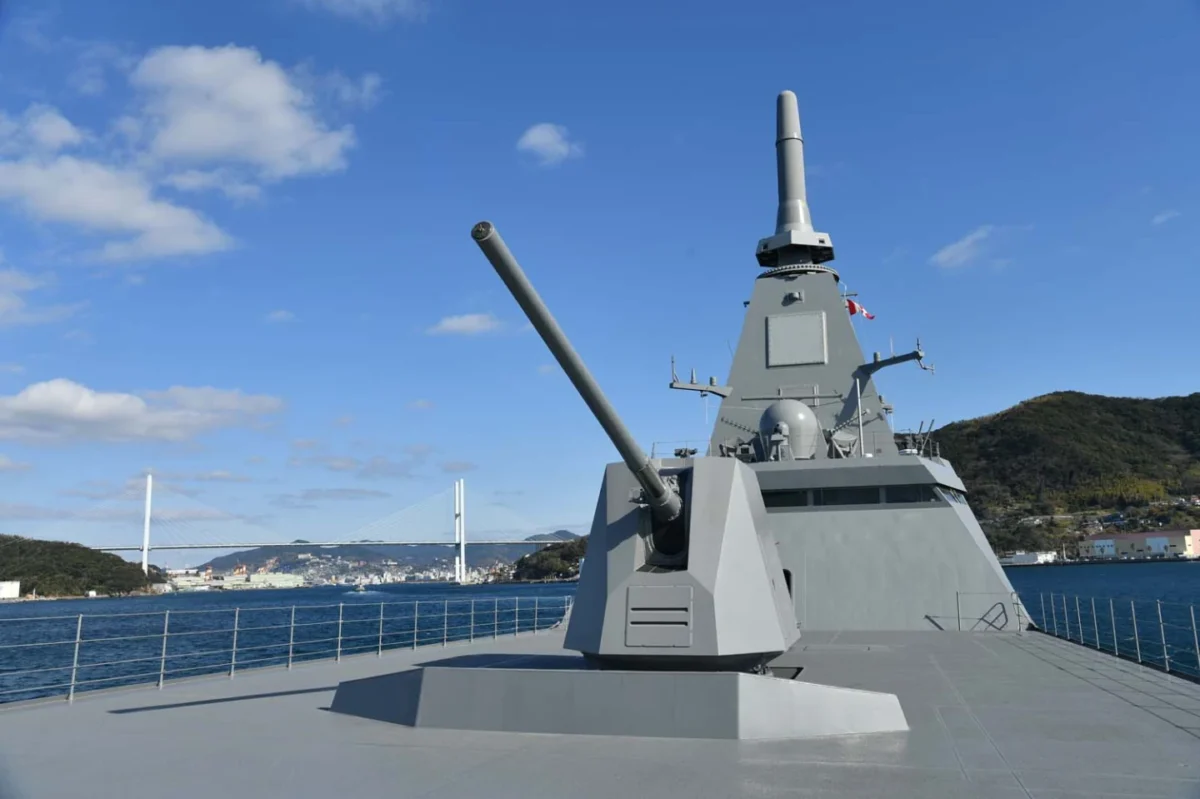
For air defense, the Mogami-class uses SeaRAM CIWS, a close-in weapon system designed to intercept incoming missiles, coupled with Vertical Launch System (VLS) cells, typically housing surface-to-air missiles for longer-range interception.
Anti-submarine warfare (ASW) is another core mission. The frigate carries variable depth sonar and towed array systems, allowing it to detect quiet submarines even in complex coastal environments. It’s also equipped to deploy unmanned underwater vehicles (UUVs), extending its detection range without risking the crew.
Sensors extend beyond sonar. The ship’s radar and electronic warfare systems are integrated into the hull’s stealthy superstructure, reducing exposure while maintaining high situational awareness.
Drones, both aerial and surface, can be deployed for reconnaissance, target acquisition, or mine countermeasures, giving commanders a multi-layered view of the battlefield.
Here’s a snapshot table of key armament and sensor systems:
| System | Role |
| 127 mm naval gun | Multi-purpose surface/shore/limited air engagement |
| SSM-2 missiles | Anti-ship attack |
| VLS (Mk 41) | Surface-to-air missile launcher |
| SeaRAM CIWS | Close-in missile defense |
| Variable depth sonar & towed arrays | Anti-submarine warfare |
| UUV/USV integration | Reconnaissance & mine countermeasures |
| Advanced radar & EW | Detection, targeting, electronic defense |
In short, the Mogami-class frigate packs a punch disproportionate to its size. Its combination of traditional firepower, cutting-edge ASW capabilities, and unmanned systems makes it a versatile predator on the high seas.
The Mogami-class frigate isn’t just a collection of advanced systems. It’s a mission-ready platform capable of adapting to virtually any maritime scenario.
Japan designed it as a multi-role frigate, meaning it can seamlessly switch from anti-submarine operations to missile defense, surveillance, or even humanitarian support. Think of it as a Swiss Army knife of the seas, only with stealth contours and a crew of about 90.
One of its primary roles is anti-submarine warfare (ASW). Equipped with variable depth sonar, towed array systems, and unmanned underwater vehicles (UUVs), it can detect and track modern, quiet submarines, often operating in complex coastal environments that challenge larger vessels. Its CODAG propulsion allows it to quickly reposition and silently approach areas of interest, giving it an edge in ASW missions.
For anti-surface and anti-air operations, the frigate leverages a combination of SSM-2 anti-ship missiles, a 127 mm gun, SeaRAM CIWS, and Vertical Launch System (VLS) cells.
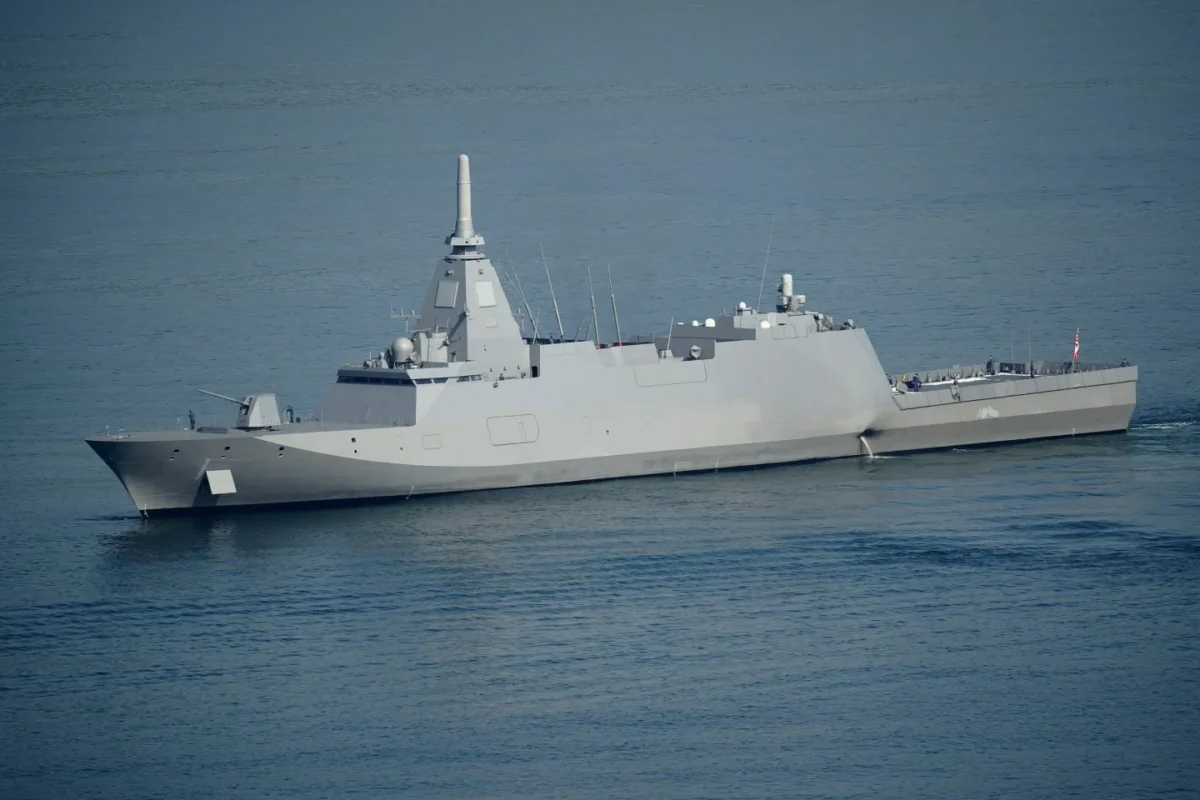
This suite allows it to engage hostile ships, intercept incoming missiles, and defend itself in contested zones, effectively acting as a small but formidable multi-layered defensive platform.
Beyond combat, the Mogami-class also plays a critical role in maritime security and patrol. Japan’s strategic geography, with disputed islands and busy sea lanes, demands vessels that can monitor and respond quickly. These frigates perform island patrols, anti-piracy operations, surveillance, and disaster relief when needed, demonstrating a versatility that extends well beyond conventional warfare.
In short, the Mogami-class frigate is not a one-trick pony. It’s a dynamic, flexible tool in Japan’s naval toolkit, capable of responding to threats, safeguarding sea lanes, and supporting a range of missions with speed, stealth, and precision. It’s this adaptability that makes it a standout in modern frigate design.
The Mogami-class frigate isn’t just a marvel of engineering, it’s a cornerstone of Japan’s maritime strategy. In an increasingly tense Indo-Pacific, where regional powers are modernizing fleets and expanding their naval reach, Japan needed a vessel that could operate flexibly, respond quickly, and project power discreetly. Enter the Mogami-class.
These frigates are perfectly suited for Japan’s “island defense” approach, patrolling remote areas, monitoring disputed waters, and safeguarding vital shipping lanes.
Unlike larger destroyers or cruisers, Mogami-class ships can deploy rapidly, operate in shallow waters, and remain undetected, which is critical when countering stealthy submarines or smaller fast-attack craft. Their presence alone serves as a deterrent, signaling capability without the political weight of larger warships.
But the strategic value isn’t limited to national defense. Japan has positioned the Mogami-class as an exportable platform, with Australia selecting the upgraded variant for its future frigate program. This is not just a business deal, it’s a geopolitical signal.
Read also: Australia to Acquire 11 Mogami-Class Warships
By exporting a highly capable, versatile frigate, Japan strengthens defense ties with allies while projecting its technological prowess globally. There’s also growing interest from nations like New Zealand, highlighting the class’s appeal for smaller navies seeking high capability without massive budgets.
In essence, the Mogami-class represents a blend of deterrence, adaptability, and influence. Its operational versatility, stealth features, and modular upgrades make it a strategic asset that extends beyond Japan’s coastline.
For analysts and naval enthusiasts alike, these frigates exemplify how smart design and foresight can reshape maritime power projection in the 21st century, quietly, efficiently, and very effectively.