Follow Us:
Follow Us:


Defense Feeds – Australia to acquire 11 Mogami-Class frigates marks a historic shift in the Royal Australian Navy’s modernization plan, securing a $6.5 billion defense partnership with Japan.
This major acquisition, selecting Japan’s advanced Mogami-class warship designed by Mitsubishi Heavy Industries over competing bids, is set to transform Australia’s maritime capabilities.
According to Defence Minister Richard Marles, the decision reflects a need for cutting-edge naval technology, rapid ship delivery, and deepening strategic ties between the two countries.
Under the agreement, Australia to acquire 11 Mogami-Class ships underscores the move to replace the ageing ANZAC-class fleet.
The first three frigates will be built in Japan, with the remaining eight constructed at Australia’s Henderson Defence Precinct in Western Australia, significantly enhancing both nations’ naval industries.
The initial vessel is scheduled for delivery in 2029, and full operational status is expected by 2030, strengthening Australia’s position amid evolving Indo-Pacific security challenges.
With a focus on modern features—including stealth design, multi-role weapon systems, and high-level automation—the Australia to acquire 11 Mogami-Class program delivers a leap in naval technology and operational efficiency for the Royal Australian Navy.
Japanese Defence Minister Gen Nakatani hailed the agreement as a “major step” in enhancing the strategic partnership between Tokyo and Canberra, emphasizing Japan’s shipbuilding legacy and commitment to cutting-edge naval technology.
The partnership goes beyond hardware procurement; it strengthens bilateral ties and offers a proof point of Japan’s expanding ambitions in global defense exports after easing long-standing military export restrictions.
For Japan, the deal is also significant for its defense industry, which has traditionally focused on domestic production.
The transfer of production and technology to Australian shipyards, expected to be finalized by 2026, will be a landmark exercise in international collaboration and industrial expansion.
Mitsubishi Heavy Industries’ win aligns with Japan’s broader intent to forge security ties outside its alliance with the United States, as concerns over China’s regional military posture continue to grow in both Canberra and Tokyo.
Still, experts note that Japan’s shipbuilders have limited experience exporting major warships or managing offshore production.
This presents potential hurdles as Japanese and Australian teams collaborate to ensure seamless technology transfer, supply chain integration, and workforce development—a risk the Australian government acknowledges as it pursues unprecedented expansion in naval shipbuilding.
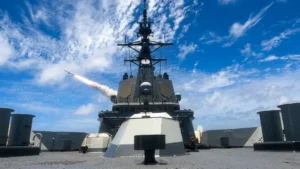
While the Mogami-class frigate brings top-tier technology—such as a 10,000-nautical-mile range, 32 vertical launch missile cells, advanced radar and sonar, and a reduced crew requirement—analysts warn the program faces hurdles that could affect cost and delivery timelines.
Australian yards in Western Australia, where the majority of ships will be built, lack experience handling warship projects of this size and complexity, and the facilities are already committed to other construction efforts.
Historically, Australian naval builds have struggled with delays and budget overruns.
Experts suggest these challenges could push costs beyond projections and invite scrutiny over whether more hulls should be sourced directly from Japan rather than domestically.
Each new warship will be vital for Australia’s ability to defend critical interests, including securing trade routes and maintaining strategic deterrence as part of a rapidly growing surface fleet.
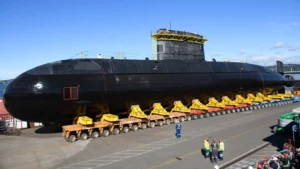
Moreover, as this frigate initiative unfolds alongside Australia’s commitments under the AUKUS agreement—including nuclear-powered submarines—navigating complex program management, industrial consolidation, and international cooperation will be crucial for success.
For both Australia and Japan, the deal is a test of ambition, trust, and capability. If successful, it will not only transform the Royal Australian Navy but also set a new precedent for defense industry collaboration in the Indo-Pacific.