Follow Us:
Follow Us:

If you’ve ever imagined a floating city bristling with helicopters, jets, Marines, and a crew that could rival a small town, then you’re thinking of something like the USS Iwo Jima (LHD‑7).
This isn’t just another ship in the Navy’s lineup; it’s a powerhouse of amphibious might, designed to carry out missions that span from high-stakes combat operations to lifesaving disaster relief. Every inch of its 844-foot frame tells a story of strategy, engineering, and naval heritage, making it one of the most versatile vessels in the world.
Commissioned on June 30, 2001, the USS Iwo Jima is the seventh ship of the Wasp-class amphibious assault ships. Its name honors the legendary Battle of Iwo Jima, a symbol of courage, sacrifice, and military ingenuity during World War II.
While the ship carries the weight of that historic legacy, it also embodies the modern Navy’s emphasis on rapid deployment, amphibious operations, and forward presence across global waters.
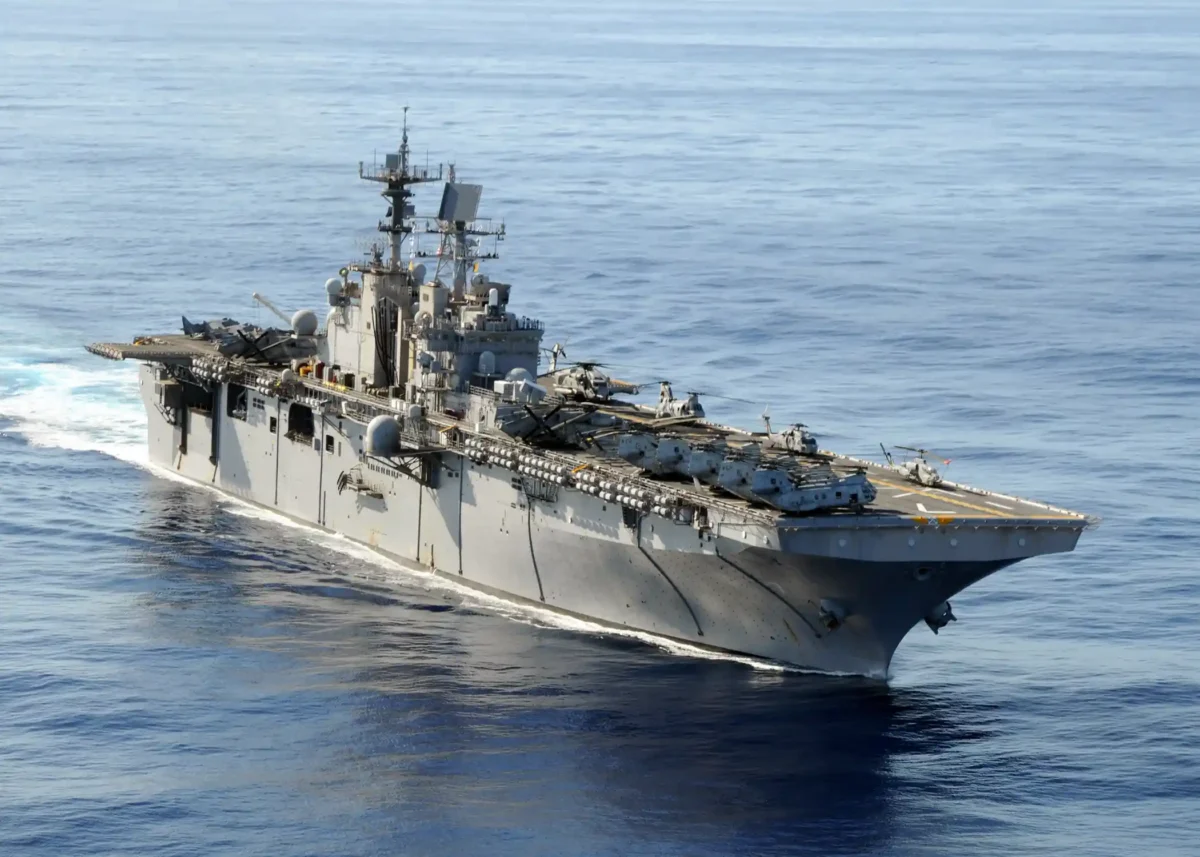
At first glance, you might notice its sheer size. This floating fortress spans 844 feet in length, displaces 41,150 tons, and houses a crew of 1,108 sailors, plus up to 1,894 Marines during missions.
Its flight deck supports a combination of helicopters, tiltrotor aircraft like the MV-22 Osprey, and even F-35B Lightning II jets, making it a versatile launch pad for air and ground operations.
But the numbers only tell part of the story. What really makes the USS Iwo Jima stand out is its dual identity: a high-tech warship ready for combat and a beacon of American naval presence capable of delivering aid, projecting power, and supporting Marines anywhere in the world.
In a sense, it’s the Swiss Army knife of the Navy, capable of switching roles at a moment’s notice.
Whether you’re a naval enthusiast, a student of military history, or just someone curious about what makes these leviathans tick, the USS Iwo Jima offers a window into modern amphibious warfare and maritime strategy. It’s not just a ship, it’s a floating microcosm of the U.S. Navy’s reach, resilience, and ambition.
The story of the USS Iwo Jima (LHD‑7) is as much about legacy as it is about steel and engines. Named after one of the most iconic battles in U.S. military history, the Battle of Iwo Jima in 1945, this ship carries a weighty mantle.
That battle, fought on a tiny volcanic island in the Pacific, became a symbol of courage, sacrifice, and determination, immortalized in the famous photograph of Marines raising the American flag atop Mount Suribachi. By naming LHD‑7 after Iwo Jima, the Navy not only honors that heroic chapter but also links the ship’s identity to the Marines it carries into battle.
Construction of the USS Iwo Jima began in 1996 at the Ingalls Shipbuilding yard in Pascagoula, Mississippi. It took five years of precision engineering, welding, and testing before the ship was officially commissioned on June 30, 2001.
Unlike earlier amphibious assault ships, LHD‑7 was designed with versatility in mind, a floating command center, a launch platform for aircraft, and a mobile base for Marine expeditionary units. Every beam and bulkhead was designed for multi-mission functionality.
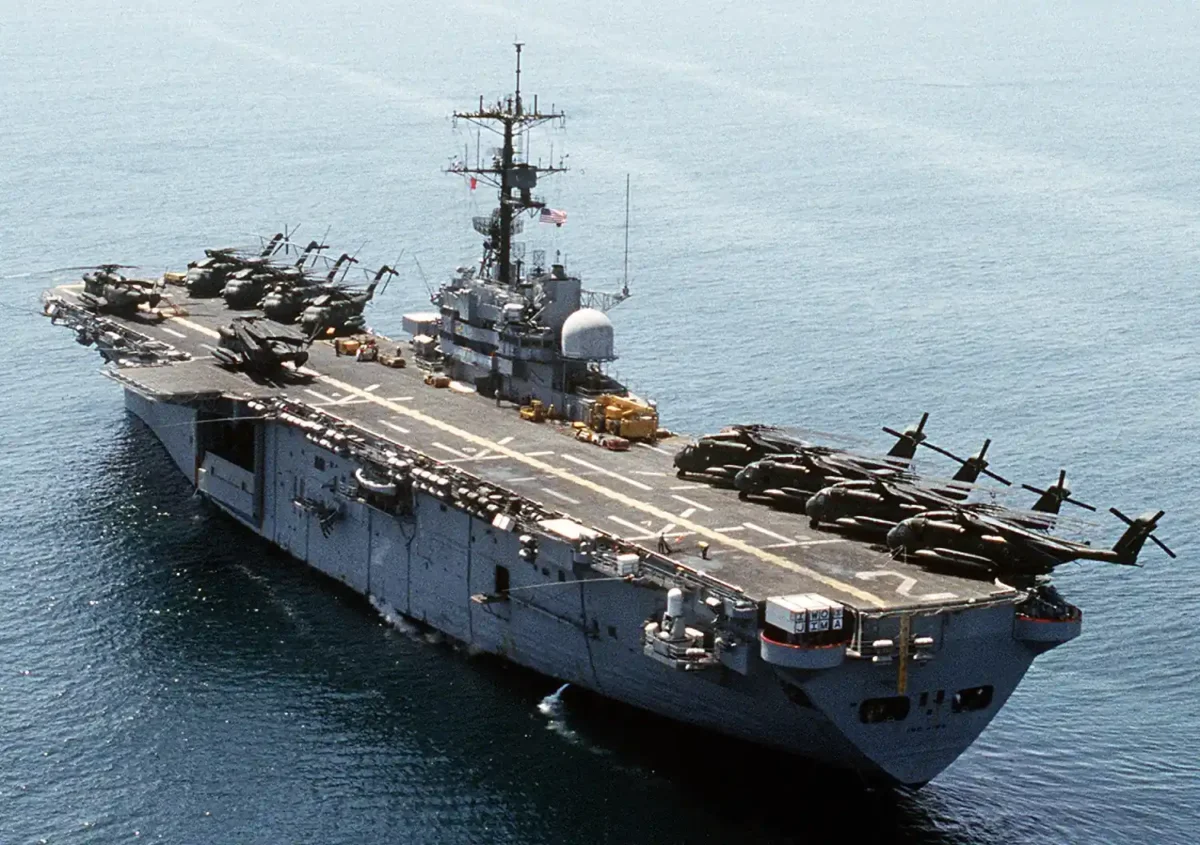
Interestingly, this is actually the second Navy ship to bear the name Iwo Jima.
The first, USS Iwo Jima (LPH‑2), was commissioned in 1961 and served with distinction during the Vietnam War, participating in troop transport, amphibious operations, and humanitarian missions.
By the time LHD‑7 came online, it was carrying forward not just a name but decades of operational legacy. It’s a subtle reminder that in naval tradition, names are vessels of memory, they connect sailors to history while charting new paths forward.
Throughout its service, USS Iwo Jima has straddled the line between combat and diplomacy. Its deployments read like a global map of U.S. interests: from exercises in the Mediterranean to humanitarian relief in the Caribbean, this ship has proven that history isn’t just in books, it sails on the waves, in steel hulls and rotor blades.
In short, USS Iwo Jima isn’t merely a modern Wasp-class ship; it’s a living tribute to courage, endurance, and the Marine Corps’ unwavering spirit, a name carried proudly across oceans.
Step aboard the USS Iwo Jima (LHD‑7), at least in your imagination, and you’ll realize this isn’t just a ship; it’s a marvel of naval engineering.
Think of it as a city at sea, floating on 41,150 tons of steel, bristling with helicopters, jets, Marines, and enough machinery to power a small industrial town. Every feature of LHD‑7 is designed for versatility, speed, and survivability, making it the Swiss Army knife of the U.S. Navy.
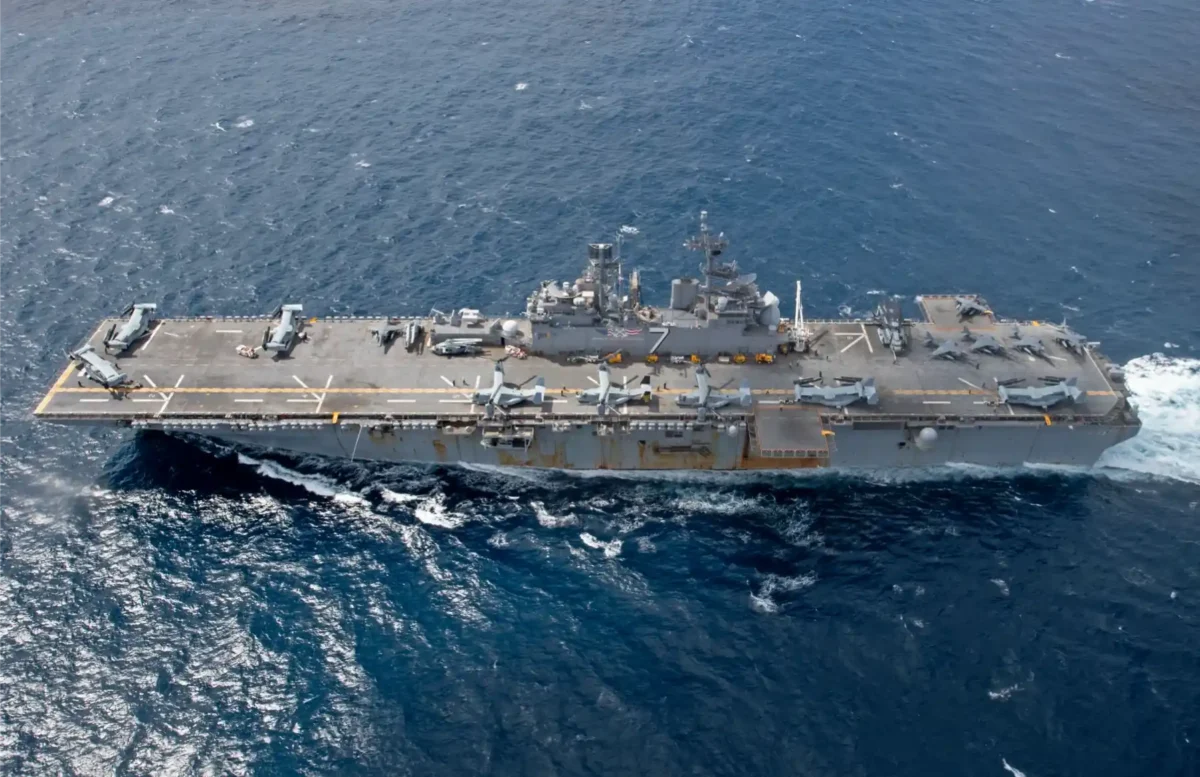
At 844 feet long and 106 feet wide, the USS Iwo Jima can carry over 3,000 personnel when combining the ship’s crew and embarked Marines. Its flight deck is a spectacle: a sprawling launch pad for rotary and fixed-wing aircraft, including CH-53 Sea Stallions, AH-1Z Vipers, MV-22 Ospreys, and even the F-35B Lightning II.
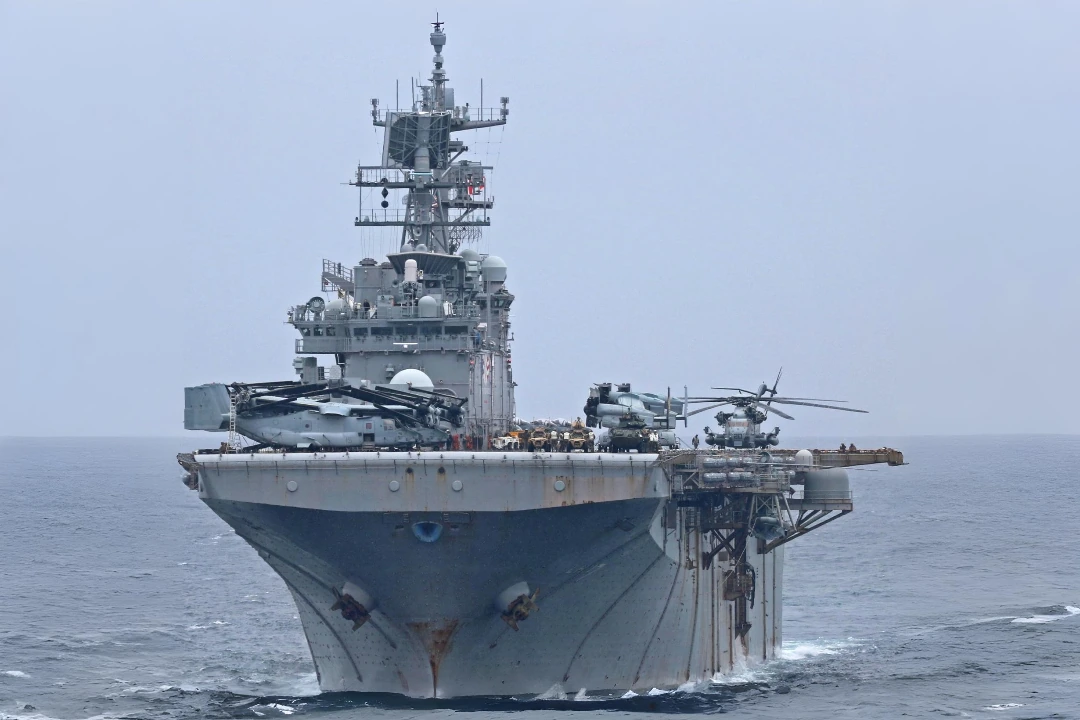
The design allows simultaneous takeoffs and landings, turning the deck into a buzzing hive of aviation activity during operations.
Below deck, the hangar and vehicle bays store amphibious assault vehicles, tanks, and trucks, ready to roll onto beaches or docks anywhere in the world. Its well deck, a signature feature of Wasp-class ships, floods to launch landing craft and amphibious vehicles directly into the sea, think of it as a backstage door for Marine operations, hidden beneath the steel hull.
Powering this leviathan are two steam turbines generating 70,000 horsepower, giving it a top speed of over 22 knots. The ship’s propulsion system is paired with multiple redundant systems for maneuvering and survivability.
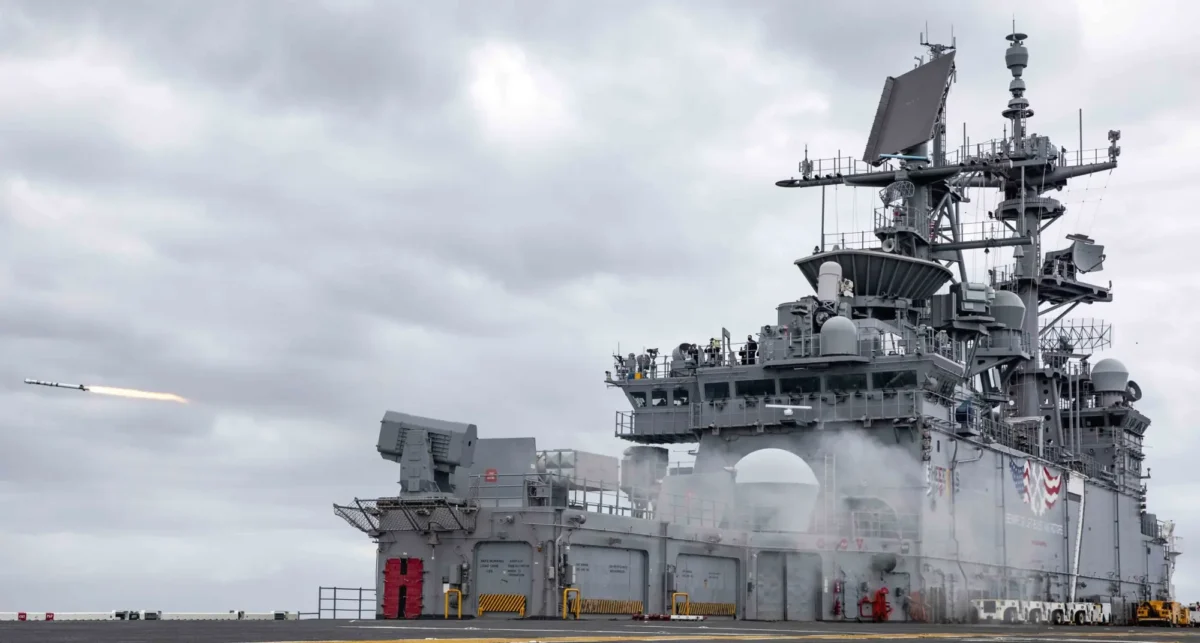
Defensive armament is equally impressive: it’s equipped with RIM-7 Sea Sparrow missiles, Rolling Airframe Missiles (RAM), Phalanx CIWS, and a variety of machine guns. This means the USS Iwo Jima isn’t just carrying Marines into conflict, it can defend itself in contested waters.
Here’s a quick snapshot of LHD‑7’s specs:
| Feature | Specification |
| Length | 844 ft |
| Beam | 106 ft |
| Displacement | 41,150 tons |
| Crew | 1,108 sailors + 1,894 Marines |
| Speed | 22+ knots |
| Aircraft Capacity | 20+ helicopters, MV-22 Osprey, F-35B jets |
| Propulsion | 2 steam turbines, 70,000 hp |
| Armament | RIM-7 Sea Sparrow, RAM, Phalanx CIWS, MGs |
| Well Deck | Launches LCACs, amphibious vehicles |
What’s fascinating is how every inch is multi-purpose. From the bridge to the hangar, from the flight deck to the well deck, LHD‑7 blends firepower with flexibility.
It’s a floating launchpad, a command center, and a lifeboat all in one, proof that modern naval design isn’t just about brute force; it’s about smart, adaptable engineering that can respond to almost any scenario.
If the USS Iwo Jima were a character in a story, it would be the versatile hero who can do almost anything, sometimes a warrior, sometimes a lifesaver, always a leader. Its core purpose is amphibious warfare: transporting Marines, tanks, and aircraft directly to the frontline, often where traditional ports or runways don’t exist.
But LHD‑7 isn’t just a “delivery ship”; it’s a floating command center capable of orchestrating complex operations across air, land, and sea simultaneously.
At the heart of its mission is the Amphibious Ready Group (ARG) deployment. LHD‑7 often serves as the flagship for an ARG, which typically includes a mix of amphibious ships and a Marine Expeditionary Unit (MEU).
This combination allows the Navy and Marines to respond rapidly to crises, whether it’s a combat operation in hostile territory or a humanitarian mission after a natural disaster. Picture the ship as a mobile headquarters that can project power, coordinate air and ground forces, and support Marines anywhere on Earth.
But the USS Iwo Jima’s story doesn’t end at combat. Its design makes it incredibly effective for humanitarian assistance and disaster relief (HADR).
After Hurricane Katrina in 2005, for example, amphibious ships like LHD‑7 were deployed to deliver supplies, medical aid, and evacuation support to devastated areas. Its ability to carry thousands of personnel, vehicles, and tons of equipment makes it a lifeline in emergencies, a reminder that modern naval power isn’t always about guns and missiles.
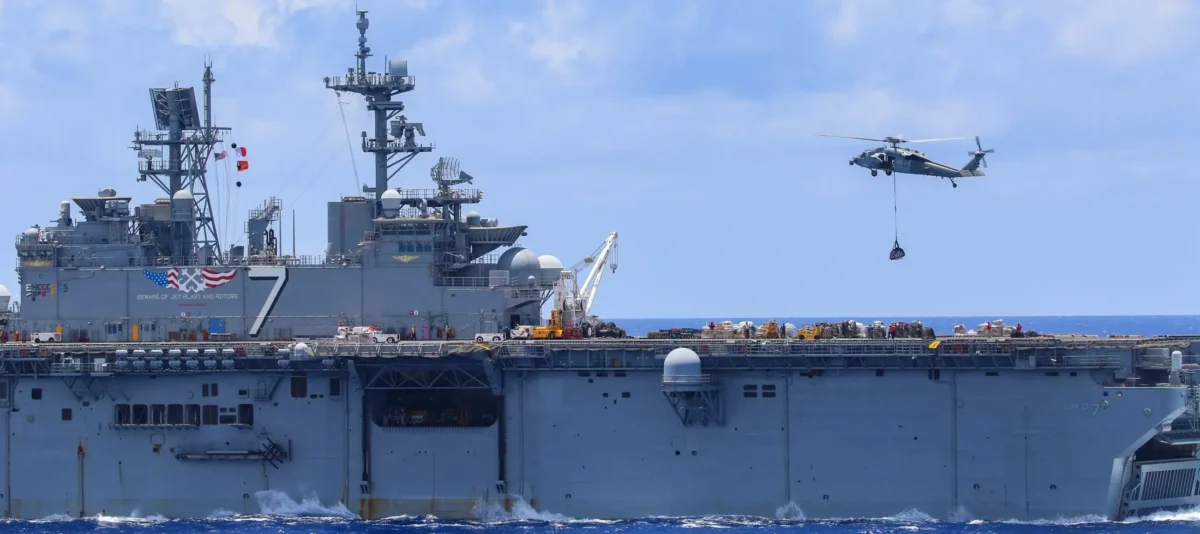
Additionally, LHD‑7 participates in training exercises worldwide, from the Mediterranean to the Pacific. These exercises strengthen partnerships with allied navies, test new tactics, and maintain readiness for real-world scenarios. Whether it’s practicing amphibious landings on a simulated beach or coordinating multi-ship air operations, the USS Iwo Jima is always honing the skills that make it a cornerstone of U.S. naval strategy.
In essence, LHD‑7 thrives in duality: it’s both a combat-ready juggernaut and a humanitarian workhorse, a ship designed to adapt, respond, and lead, often simultaneously. Few vessels carry such a range of responsibilities, making the USS Iwo Jima a true linchpin in global naval operations.
The USS Iwo Jima isn’t just a marvel of engineering; it’s a globe-trotting workhorse with a résumé that reads like a map of U.S. military involvement over the last two decades. From combat operations to humanitarian missions, its deployments highlight the ship’s unmatched versatility and the strategic value of amphibious assault ships in modern naval warfare.
LHD‑7’s maiden deployment in 2003 was a baptism by fire, joining the 26th Marine Expeditionary Unit (MEU) in support of Operation Iraqi Freedom.
The ship transported Marines, vehicles, and aircraft directly into the theater, acting as a mobile base for operations ashore. Its ability to serve as a command hub, launch point for helicopters and tiltrotor aircraft, and rapid response platform for ground forces was on full display, cementing its role as a linchpin in amphibious warfare.
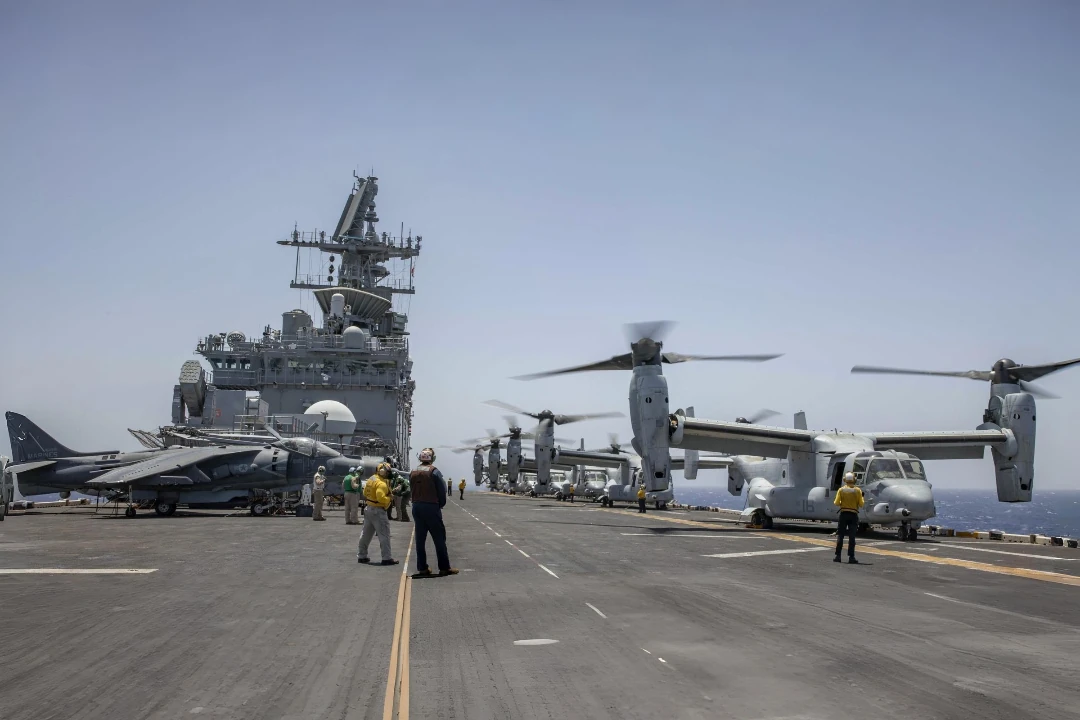
Over the years, USS Iwo Jima has participated in a variety of joint and multinational exercises, demonstrating the U.S. Navy’s ability to project power and foster alliances.
For example, deployments in the Mediterranean and Western Pacific have involved coordinated exercises with NATO and regional partners, integrating complex air-sea-land maneuvers that sharpen both tactical readiness and operational coordination.
But not all of its missions are combat-related. LHD‑7 has repeatedly answered the call for humanitarian assistance and disaster relief (HADR).
From hurricane relief in the Caribbean to evacuation support during crises in Africa and the Middle East, the ship’s massive cargo capacity, medical facilities, and well-deck operations make it a floating hub of aid and rescue capability.
Here’s a quick snapshot of some key deployments:
| Year | Mission/Operation | Role |
| 2003 | Operation Iraqi Freedom | Transport & command hub for Marines |
| 2005 | Hurricane Katrina relief | Disaster response & evacuation |
| 2010 | Mediterranean deployment | NATO exercises & joint training |
| 2015 | Western Pacific ARG deployment | Amphibious exercises & MEU operations |
| 2023 | Caribbean humanitarian support | Aid & disaster relief |
Across these missions, one constant emerges: the USS Iwo Jima is a ship designed to adapt to any challenge, whether it’s projecting combat power across oceans or saving lives in disaster zones. Its operational history isn’t just a list of deployments, it’s a testament to the strategic flexibility and global reach of the U.S. Navy.
The USS Iwo Jima isn’t just a ship; it’s a statement, a floating embodiment of versatility, resilience, and naval innovation. From its steel-plated hull to its buzzing flight deck, every corner of LHD‑7 is designed for adaptability.
It can launch amphibious assaults, coordinate multinational operations, and deliver humanitarian aid across oceans, all while carrying a crew and Marine contingent rivaling a small town. That dual identity, warship and lifesaver, makes it uniquely indispensable in today’s unpredictable world.
Beyond the specs and deployments, what truly sets USS Iwo Jima apart is its legacy. Named after a battle that symbolizes courage and sacrifice, LHD‑7 carries that history forward while charting its own path across global waters.
Each deployment, each exercise, each mission, whether in combat, training, or relief, reinforces its role as both a guardian and a messenger of American naval presence.
For anyone fascinated by naval power, amphibious strategy, or military history, the USS Iwo Jima offers more than facts; it provides a lens into how modern naval engineering, tactical foresight, and sheer human ingenuity converge.
In essence, LHD‑7 is proof that a ship can be more than metal and machinery; it can be a symbol of readiness, adaptability, and enduring maritime legacy.