Follow Us:
Follow Us:

For much of the modern era, American stealth aircraft have ruled the skies almost unseen. Radar beams would sweep across the sky, but the F-22 and B-2 slipped through as if they weren’t there at all. Now, a new kind of technology may be changing that equation.
China claims to have developed something that could strip away stealth’s protective cloak, called quantum radar. It sounds like science fiction, yet Beijing insists it’s real.
If such claims prove accurate, the age of one-sided stealth dominance could be nearing its end. Quantum radar supposedly uses the strange rules of quantum physics to detect aircraft that conventional systems can’t, even those built for stealth.
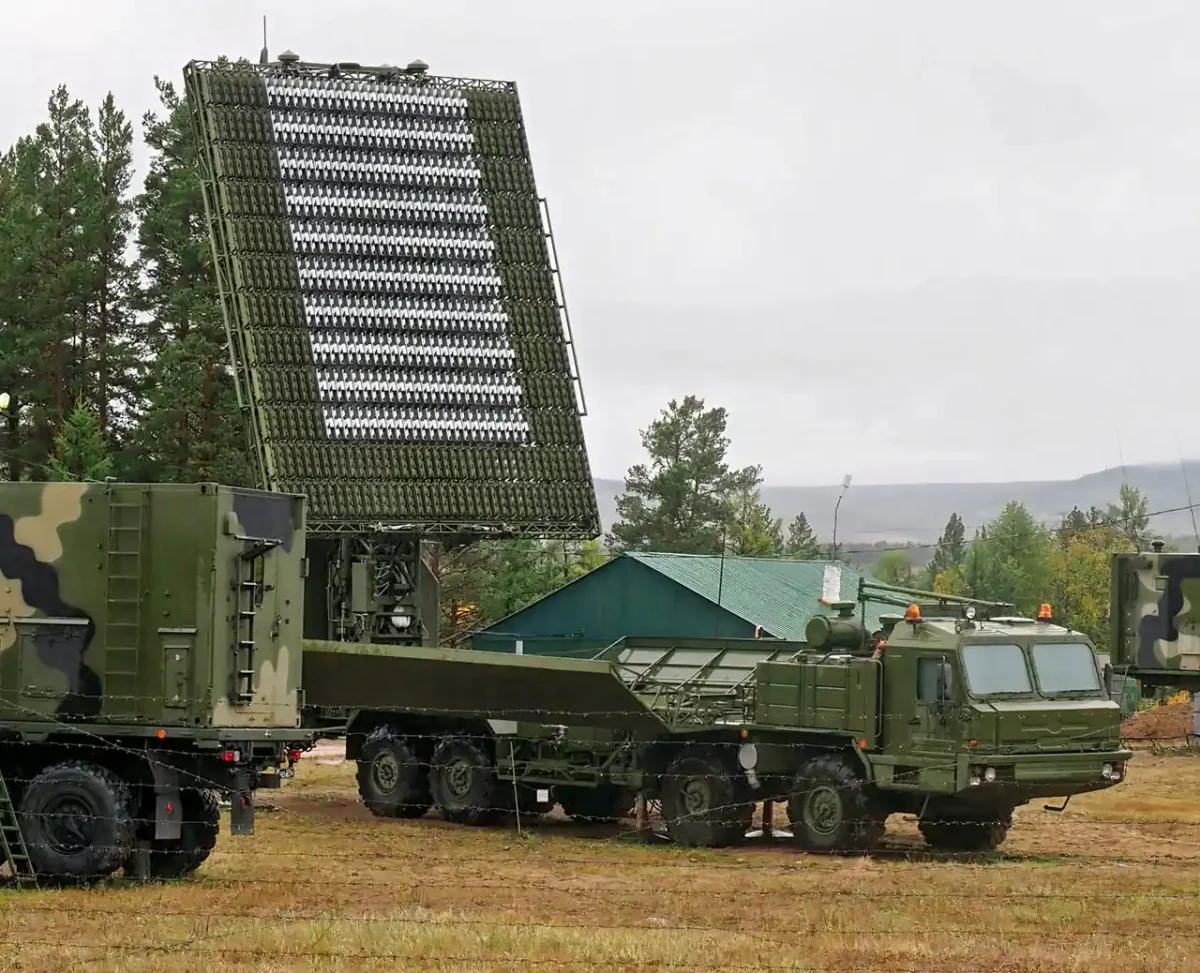
China’s scientists say their quantum radar systems are already operational. But how much of this is genuine progress, and how much is geopolitical theatre?
At its core, a radar is simply a game of echoes. Traditional radar systems send out bursts of radio waves, wait for them to bounce off an object, and then use the returning signal to figure out where that object is.
The basic concept of radar dates back to World War II, though the technology behind it has advanced enormously since then. The challenge today is that stealth aircraft are built to defeat this very process. Their shapes and special coatings scatter or absorb radar energy so that barely anything returns.
Quantum radar tries to change the rules entirely. Instead of just bouncing radio waves off an object, it uses something known as quantum entanglement. It’s an odd phenomenon where two particles stay linked no matter how far apart they are.
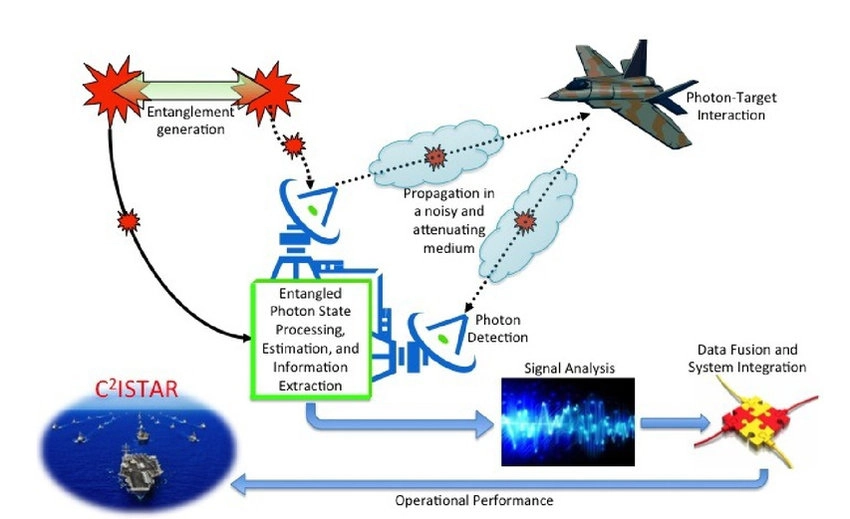
In theory, one photon from the pair is sent toward the sky while the other remains at the radar base. When a signal returns, the system looks for tiny matching traits between the two. If the pattern fits, it may suggest the radar has found something real rather than random noise
It’s a clever idea, almost poetic in how it flips the problem. Rather than fighting stealth coatings and jamming signals, quantum radar tries to “listen” for the quantum fingerprint of an aircraft itself. Proponents say this could allow detection of objects that conventional radar can’t see, including those wrapped in radar-absorbing materials.
The problem is that entangled particles don’t handle the real world very well. A bit of heat, a bump from an air molecule, or stray radiation can destroy their connection almost instantly. Scientists can manage this in laboratory conditions, but maintaining that link through the open atmosphere is far more difficult.
Many physicists suggest that the amount of noise and signal loss over long distances would make large-scale, field-ready quantum radar systems very hard to achieve.
To picture the challenge, imagine trying to whisper across a football field during a hurricane and still be perfectly understood. That’s why, when China’s state media talks about detecting stealth aircraft hundreds of kilometers out, it’s understandable that experts remain skeptical. It might be a sign of where technology is heading, or perhaps more of a signal to make other militaries think twice about their supposed invisibility.
China has been unusually vocal about its work on quantum radar, at least compared to how secretive such programs usually are. Two institutions keep showing up in China’s quantum radar story: China Electronics Technology Group Corporation (CETC) and the Chinese Academy of Sciences (CAS).
CETC is the defense industry powerhouse that builds much of the country’s radar and electronic systems, roughly the equivalent of Raytheon or Lockheed Martin in the U.S. The CAS, meanwhile, provides scientific expertise. Its researchers have led many of China’s quantum science projects, including work on secure communications and space-based experiments.
The first big mention of quantum radar from China appeared in 2016. CETC said it had tested an experimental system that could track stealth aircraft from about a hundred kilometers away. The timing caught attention because it came as China’s defense industry was expanding its work on systems meant to counter U.S. air capabilities in Asia.
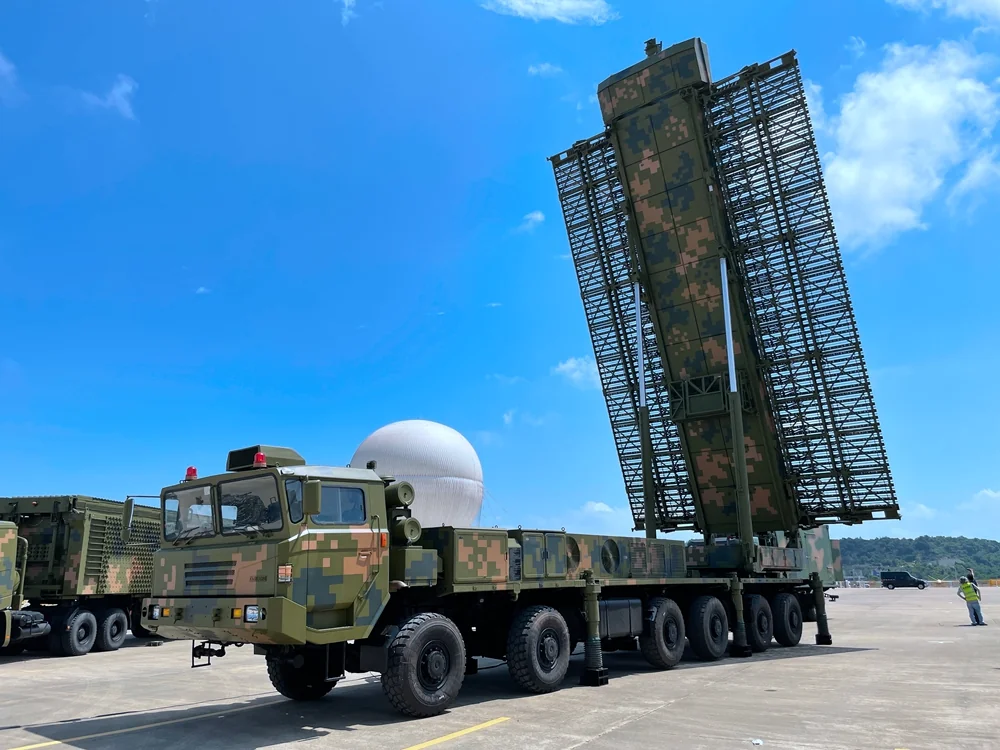
However, details were scarce. No technical data, peer-reviewed studies, or verifiable demonstrations were released, just a few lines in state media and a series of confident statements about “major breakthroughs.”
Since then, Chinese outlets have continued to mention progress. In 2021, the Academy of Sciences was linked to outdoor tests of an updated radar.
Then in 2023, another story suggested a few prototypes might already be in field testing with some military support. It’s hard to say how much of that is real development and how much is Beijing trying to show it’s ahead of the curve.
If it ever works as promised, quantum radar might one day plug into China’s air-defense web, sitting next to traditional radars and missile batteries. In theory, it could catch what stealth jets try to hide, then let standard systems move in for the shot.
But that’s a long road ahead. The science is tricky, and building a version that can survive wind, heat, and electronic noise would be a big win in itself.
So, where does that leave us? Probably somewhere between possibility and propaganda. China’s quantum radar efforts could be genuine steps toward a new class of detection technology or they could be serving a psychological role, sowing uncertainty among rivals who’ve long relied on stealth as a guarantee of invisibility.
To understand what quantum radar is supposedly trying to do, it helps to first remember why stealth works in the first place. Aircraft like the F-22 or B-2 don’t actually make themselves invisible, they just make it very hard for radar to see them.
Read also: How Do Stealth Aircraft Work? Stealth Tech Breakdown
Their shapes steer radar energy away, and special coatings soak up much of the signal. Paired with electronic jammers, a stealthy aircraft may only register as a tiny dot or it might drop below the radar’s noise floor altogether.
The idea behind quantum radar is to change how radar “sees.” Normal radar depends on the strength of a returning signal. A quantum version would instead track whether a photon coming back still matches its partner left behind. If it does, the radar knows the signal is genuine. That’s why some researchers think it might spot targets that stealth coatings or jammers would normally hide.
But when it comes to real-world performance, things get more complicated. The technology looks impressive on paper, but real-world use is another story. Chinese reports have mentioned tests showing ranges of up to 100 kilometers.
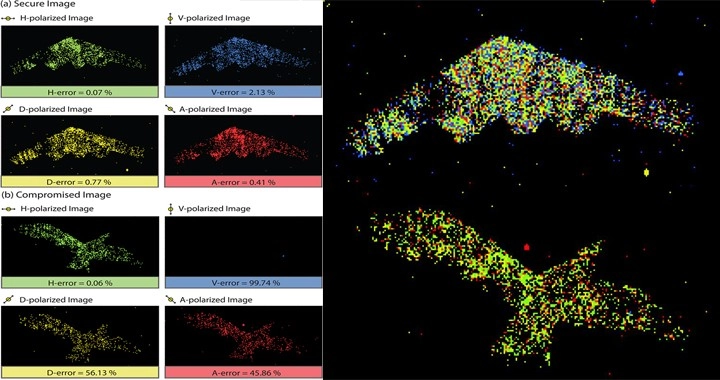
Western specialists, however, believe the effective distance is far shorter, perhaps only several kilometers, even under good weather. The weakness is in the entanglement itself. Photons scatter or lose their link when they pass through air that isn’t perfectly stable, and background radiation or heat can easily bury the signal.
Read also: How does a quantum radar sensor work?
This is why many physicists and defense analysts remain skeptical.. No public evidence yet confirms a working quantum radar that can spot stealth aircraft at operational distances. Experiments in laboratories have shown parts of the concept, but adapting those setups up to something that works day and night, through rain, clouds, and jamming, seems a long way off.
Some analysts also wonder if the payoff would really match the effort. Quantum setups are hard to build and even harder to keep stable. And even if they could pick up a stealth aircraft, it’s not clear they’d do it better or faster than the advanced radar networks already operating today.
So, can quantum radar truly detect stealth aircraft? The honest answer, for now, is maybe — but probably not yet. It’s an exciting concept with real scientific promise, but much of what we’ve heard so far sits somewhere between ambition and experiment.
If China is genuinely making progress with quantum radar, it’s safe to say the United States and its allies are paying close attention. In fact, the United States has been looking into quantum sensing for quite a while, though not only for radar.
The research stretches beyond radar, touching on navigation, communication, and even ways to fight through electronic jamming. Groups like DARPA and the Air Force Research Lab have tested ideas that could one day let aircraft fly without GPS. Unlike China, though, Washington rarely talks about this work. It keeps things mostly quiet, with few public updates or big announcements.
In general, Western defense circles seem interested but cautious; curious about what’s possible, yet aware of how tough it will be to make it work in the field.
Many American and European scientists believe that while quantum sensing could one day make radar more precise or harder to jam, the kind of “stealth-killing” system China describes may still be far from operational reality. Still, even the possibility of such a system changes how militaries think.
If quantum radar ever moves from theory to reality, it could change how air combat works. For decades, stealth has been at the heart of America’s military strategy; the way it reaches deep into contested airspace and stays unseen.
Even a small loss of that advantage could push planners to rethink what air superiority and deterrence really mean in the modern era. Future conflicts could depend less on being unseen and more on being faster, more networked, or more electronically resilient.
There’s also a bigger picture here. The sense that we might be entering a new kind of arms race, not over missiles or aircraft, but over physics itself. The U.S., China, and Europe are all investing heavily in quantum research. They’re exploring everything from computing to secure communication to radar. The thinking is that whoever cracks it first could hold a serious advantage.
But, as with other tech rivalries in the past, the outcome might be less about who “wins” and more about how each adapts along the way. Some breakthroughs may work better on paper than in practice. Others could take decades to mature. And just as stealth technology never made aircraft invincible, quantum radar, even if it works, might not make them helpless either.
So, is Chinese quantum radar really the end of U.S. stealth technology? Probably not, or at least not yet. Quantum radar is an exciting field, and China’s work in it looks serious, but the evidence still points to an early research stage rather than a deployable system.
The dramatic claims of detecting stealth jets far out over the horizon may say as much about strategic image-building as about technical reality. That doesn’t mean it’s all hype, just that it’s probably not yet the breakthrough some headlines make it out to be.
It’s too soon to say whether quantum radar will ever deliver on its promise, but the research does seem to be moving in an interesting direction. Even if the current systems don’t live up to their claims, steady progress in quantum research around the world suggests that practical versions could eventually appear. History often shows that technologies once dismissed as “impossible” tend to become routine over time.
As for the future of stealth and counter-stealth warfare, it seems we’re entering a new chapter of stealth and detection. Stealth won’t disappear, but its supremacy may slowly erode. The next stage of air combat may be less about who can disappear and more about who adapts faster. Stealth planes will likely keep their edge, though not without challenge.
Future designs might spread their defences across radar, heat, and electronic signatures, while radar systems learn to read faint patterns instead of just sending stronger signals. Quantum radar isn’t rewriting the rules yet, but it hints that no form of invisibility lasts forever.