Follow Us:

Follow Us:

Imagine a battlefield where precision firepower can be unleashed from hundreds of kilometers away, mounted on a truck that looks deceptively ordinary. That’s GMARS—the Global Mobile Artillery Rocket System. At first glance, it might appear like just another military vehicle, but peel back the layers and you’ll see why NATO militaries and defense watchers are calling it a game-changer.
GMARS is the product of an unusual but powerful transatlantic partnership: Rheinmetall, Germany’s defense giant, and Lockheed Martin, the U.S. aerospace and defense heavyweight. Together, they’ve engineered a launcher that blends old reliability with new mobility.
Instead of reinventing every wheel, they built GMARS around munitions already proven in combat, like the GMLRS (Guided Multiple Launch Rocket System) and ATACMS (Army Tactical Missile System). This makes it less of a risky “unicorn project” and more of a practical, battle-ready machine.
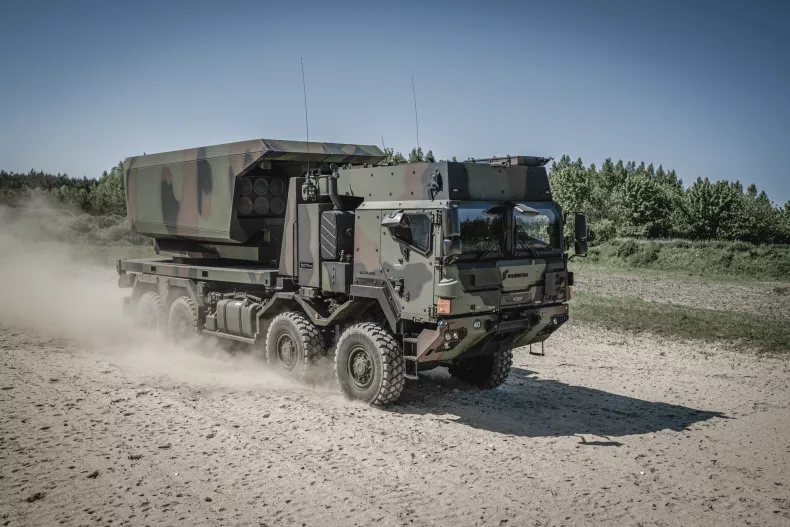
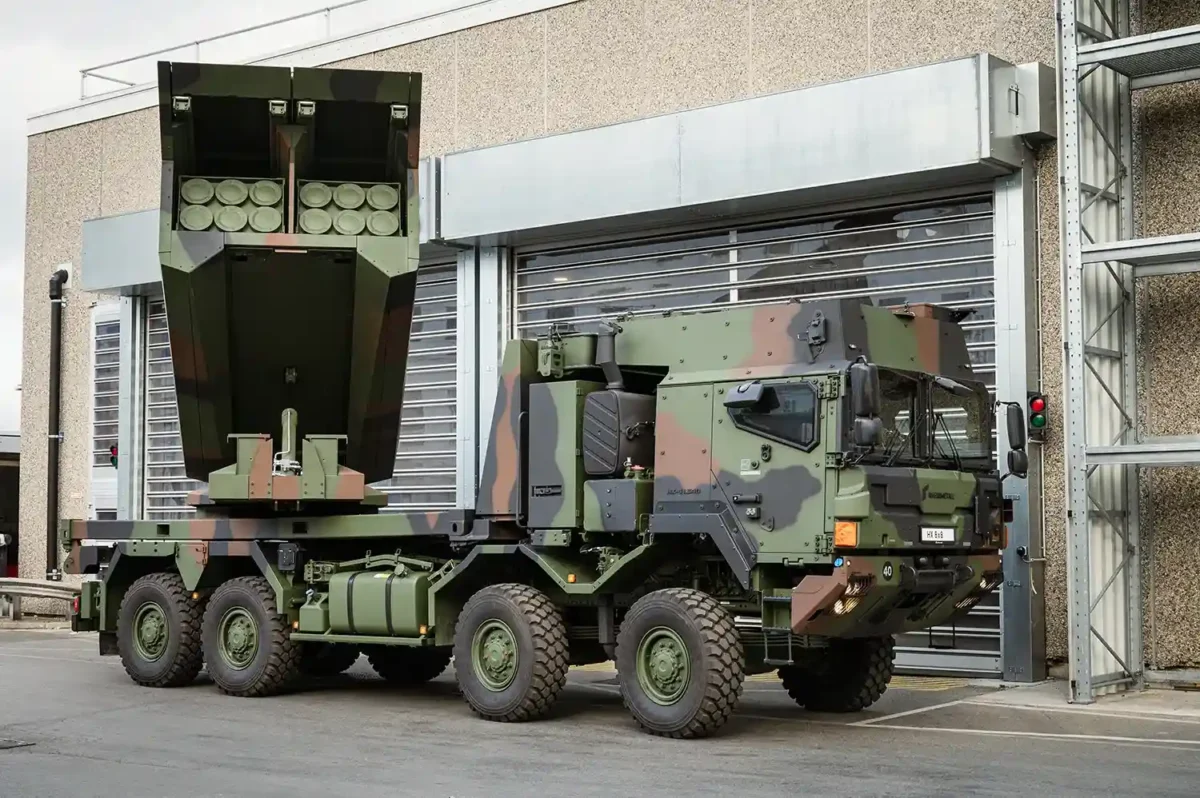
But here’s the clever part—GMARS isn’t just another clone of the HIMARS or M270 launchers already in service. It’s mounted on Rheinmetall’s HX 8×8 wheeled chassis, giving it road speed, range, and survivability that traditional tracked systems sometimes lack. In military jargon, they call it “shoot-and-scoot”: fire your rockets, then vanish before anyone can lock onto your position. In plain language, it’s a slingshot with wheels and stealthy reflexes.

And timing couldn’t be better. As Europe faces the harsh reality of needing deeper fire support and interoperability within NATO, GMARS has stepped into the spotlight. It’s not a prototype gathering dust on paper. The system has already roared to life, with its first live firing taking place in August 2025 at the White Sands Missile Range in New Mexico.
In short: GMARS isn’t just another acronym. It’s the next chapter in modern rocket artillery—and it’s writing that chapter right now.
The story of GMARS really begins in 2023, when two very different defense cultures—Germany’s Rheinmetall and America’s Lockheed Martin—sat down at the same table. On paper, it looks like an odd couple. Rheinmetall brings decades of expertise in armored vehicles and battlefield logistics, while Lockheed Martin is best known for advanced aerospace systems and missile technology. But in practice? The pairing makes perfect sense. Each side had a puzzle piece the other lacked.
Rheinmetall needed a way to boost Europe’s artillery reach without starting from scratch. Lockheed had the rockets—GMLRS, ER-GMLRS, ATACMS, and even the next-gen PrSM (Precision Strike Missile)—but not the wheeled platforms suited to Europe’s terrain and logistical networks.
Read also: PrSM Missile: How It Outmatches ATACMS in Battle
Together, they sketched out a system that could be manufactured, maintained, and fielded on both sides of the Atlantic, making it more than a “buy American” or “buy German” product. Instead, GMARS became a truly transatlantic launcher.
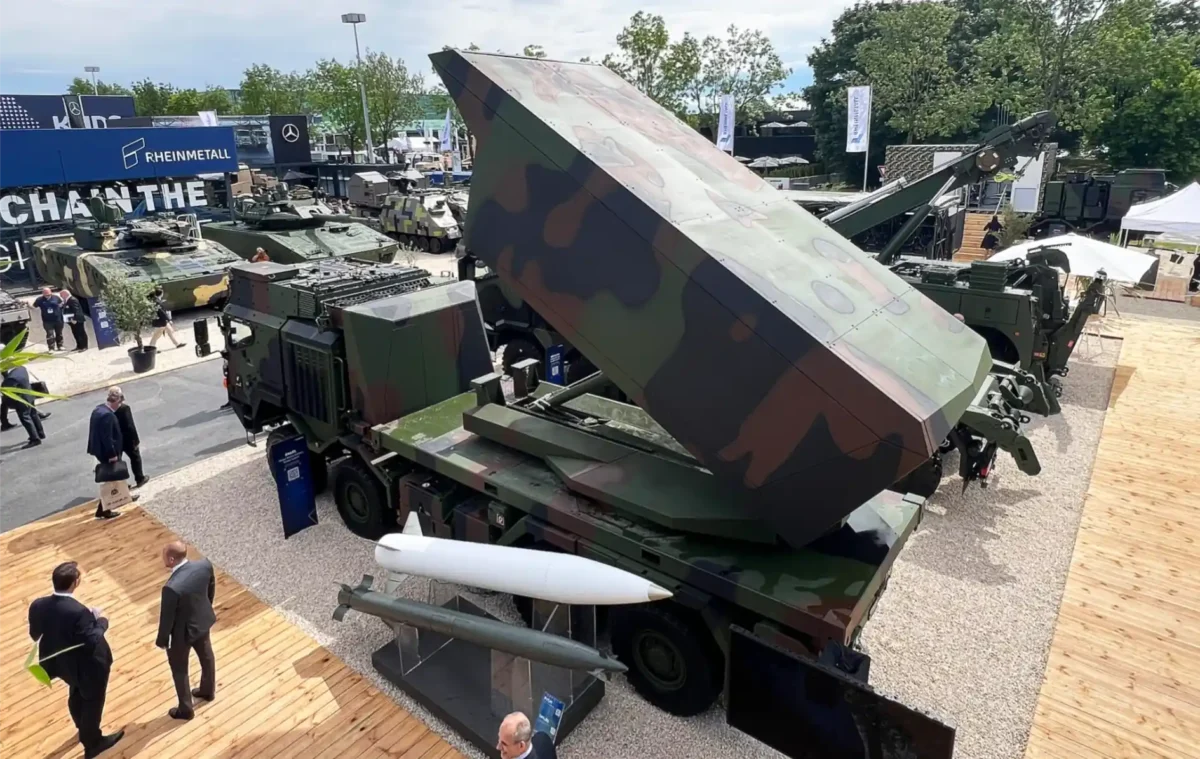
By mid-2024, the first prototype was ready for the public eye. Where better to unveil it than Eurosatory 2024, the Paris-based defense mega-show? It wasn’t just a static mock-up, either—the GMARS stood alongside NATO-standard equipment, clearly signaling that this wasn’t a science project but a near-ready battlefield solution. Defense analysts immediately noticed the smart design choice: keeping the launcher compatible with existing MLRS munitions meant militaries wouldn’t need to reinvent their entire logistics chain.
This kind of partnership is rare. Defense projects often collapse under politics, cost overruns, or finger-pointing between contractors. GMARS, however, emerged as the opposite: a straightforward, adaptable system designed to solve an immediate NATO problem. In many ways, it feels less like a shiny prototype and more like an urgently needed answer—the artillery world’s equivalent of building a bridge between continents.
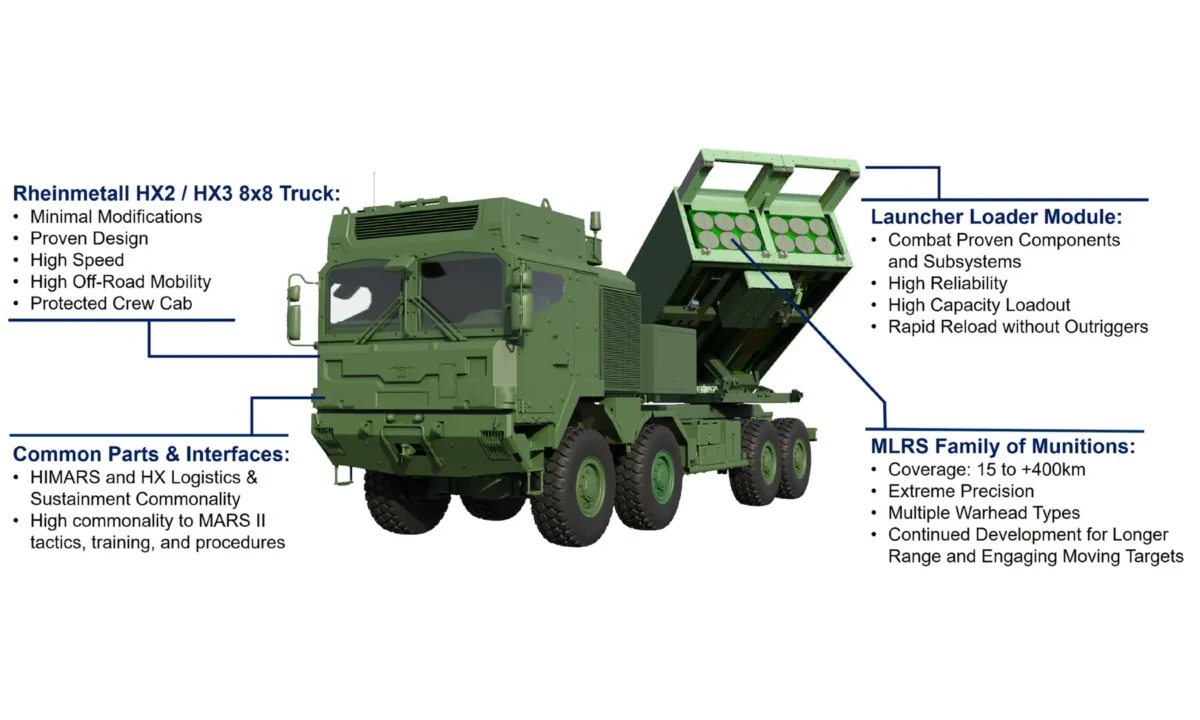
When you strip away the acronyms and industry jargon, the real question is simple: what can GMARS actually do? The answer lies in its mix of brute firepower, speed, and clever engineering. Unlike the older tracked launchers, GMARS rides on Rheinmetall’s HX 8×8 wheeled truck chassis, which gives it surprising mobility for something that can lob missiles hundreds of kilometers away. Think of it as a heavyweight boxer who also happens to run marathons.
Here’s a snapshot of its core specifications:
| Feature | GMARS Specification |
| Chassis | Rheinmetall HX 8×8 wheeled truck |
| Crew | 2 (optionally 3) |
| Max Road Speed | ~100 km/h (62 mph) |
| Combat Range | Approx. 700 km on road |
| Armament Compatibility | GMLRS, ER GMLRS, ATACMS, PrSM |
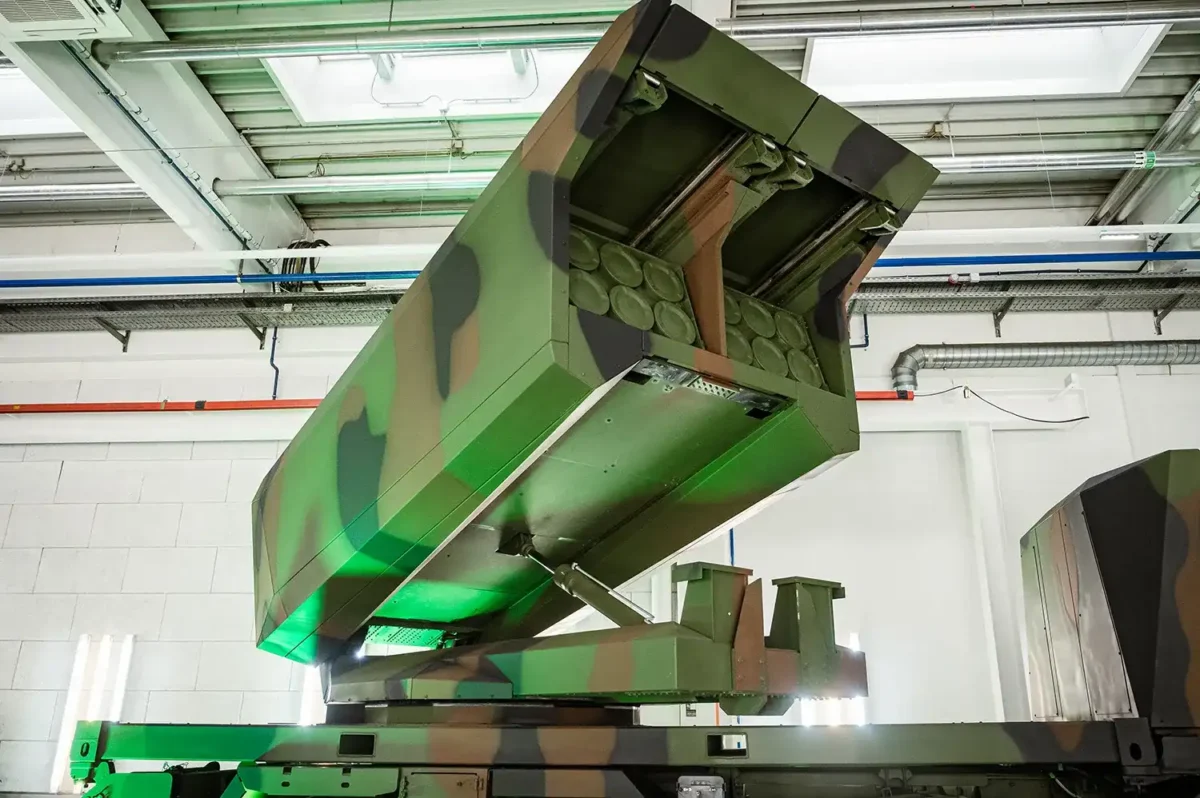
| Launcher Pods | 2 (same as M270, double HIMARS capacity) |
| Firing Range | Up to ~400 km (PrSM) |
| Reload System | Crane-assisted rapid reload |
| Protection | Armored cab with NATO-standard protection levels |
One standout feature is firepower capacity. While HIMARS carries a single pod (6 rockets), GMARS mounts two pods—that’s 12 GMLRS rockets, or two ATACMS/PrSM missiles. This puts it on par with the M270 tracked launcher but with the speed and road agility of a wheeled platform.
Another clever touch: the armored crew cabin. Designed to NATO standards, it shields the two operators from small arms and shrapnel. With just a pair of soldiers (sometimes three), the system can fire, reload, and displace in minutes. The phrase “shoot-and-scoot” isn’t marketing fluff here; it’s a survival tactic. Launch, fold the system, and be kilometers away before counter-battery radar even finishes its scan.
Put simply, GMARS isn’t just about how far it shoots—it’s about how fast it moves, how quickly it reloads, and how seamlessly it slots into NATO’s existing rocket arsenal.
Defense technology doesn’t earn credibility from glossy brochures or flashy expo displays—it earns it when rockets leave the rail and hit their mark. That’s exactly what happened on August 4, 2025, when the GMARS (Global Mobile Artillery Rocket System) carried out its first live-fire test at the legendary White Sands Missile Range in New Mexico.
White Sands has a reputation of its own. It’s where generations of U.S. missile systems have either proven their worth or been quietly shelved. For GMARS, firing there wasn’t just symbolic—it was a stress test under the eyes of military officials, engineers, and skeptical observers who have seen plenty of “next big things” stumble at this very stage.
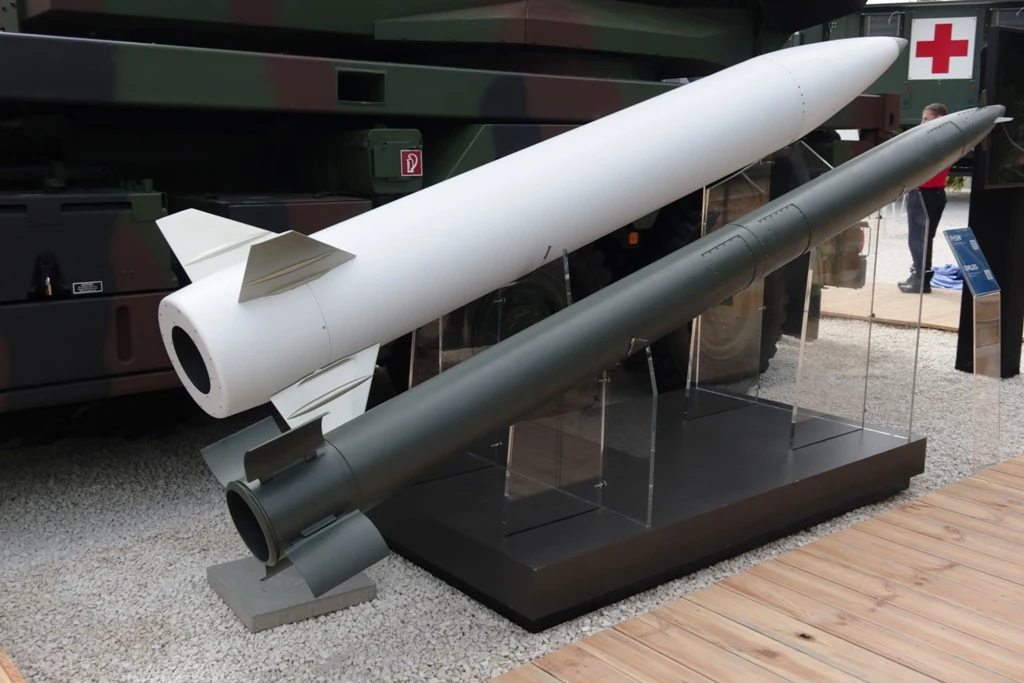
The launcher fired a GMLRS rocket, a munition that’s already combat-proven in multiple conflicts. This wasn’t about testing the rocket itself; it was about proving the marriage of Rheinmetall’s wheeled platform with Lockheed’s precision munitions.
Could the system launch smoothly? Would the recoil and blast stress the vehicle? Could it maintain accuracy while using a new chassis? Those were the questions. The answer, according to both Rheinmetall and Lockheed Martin, was a resounding yes.
What made this milestone significant wasn’t just the technical success—it was the timing. Europe is scrambling to replenish and modernize its long-range fires. With NATO members funneling aid to Ukraine and inventories running thin, a system like GMARS arrives as both a stopgap and a future-proof investment. One Rheinmetall executive framed it simply: “GMARS gives Europe an indigenous deep-fire solution without reinventing the wheel.”
For the soldiers who may one day crew it, the test wasn’t abstract engineering. It meant that the machine is no longer a sketch on a PowerPoint slide—it’s real, it fires, and it works.
If you zoom out from the technical details, the bigger story of GMARS is how it fits into NATO’s evolving playbook. For decades, the alliance leaned heavily on American-made systems like the M270 MLRS and HIMARS to provide long-range rocket artillery.
Effective, yes—but overwhelmingly U.S.-centric. GMARS changes that balance by giving Europe a homegrown, yet fully interoperable launcher that can plug directly into NATO logistics and fire-control networks.
That interoperability is no small thing. GMARS can fire the same rockets and missiles as its U.S. cousins, which means Germany, Poland, or any other adopter doesn’t need to set up entirely new supply chains. A rocket made in the U.S. can slot into a launcher built in Europe, and vice versa. In NATO terms, that’s like everyone finally agreeing to use the same charging cable—a logistical headache solved before it even starts.
Strategically, GMARS provides something NATO sorely needs: deep-fire capability on wheels. European armies have struggled with mobility versus firepower trade-offs. Tracked systems like the M270 are powerful but slower to redeploy over long distances. Wheeled platforms like GMARS can keep pace with mechanized brigades, shoot from unexpected positions, and reposition before counter-battery fire closes in. It’s the kind of flexibility modern conflicts demand.
Politically, the program also signals a subtle shift. By co-developing GMARS, Europe isn’t just buying American tech—it’s shaping it. That means European industries share not only the cost burden but also the industrial know-how, securing jobs and ensuring that long-range firepower isn’t entirely outsourced.
In a future where NATO’s credibility hinges on rapid response and layered firepower, GMARS doesn’t just fill a gap. It redefines the alliance’s ability to strike deep, move fast, and do it together.
To truly appreciate GMARS, it helps to see it side by side with other long-range rocket artillery platforms. Think of it like comparing sports cars: on paper, top speed and horsepower tell part of the story, but handling, versatility, and durability matter just as much. In the artillery world, GMARS combines mobility, firepower, and interoperability in ways that set it apart from older systems like HIMARS and M270 MLRS.
Here’s a quick snapshot:
| System | Chassis | Crew | Rocket Pods | Max Range | Mobility |
| GMARS | Rheinmetall HX 8×8 wheeled | 2–3 | 2 | 400 km (PrSM) | 100 km/h, road/mobile |
| HIMARS | FMTV 6×6 wheeled | 3 | 1 | 300 km (ATACMS) | 90 km/h |
| M270 MLRS | Tracked | 3 | 2 | 300 km (ATACMS) | 64 km/h |
From this comparison, a few points stand out. GMARS merges the best of both worlds: it matches the M270 in payload but rides on a wheeled chassis for faster redeployment over long distances. Unlike HIMARS, which carries a single pod, GMARS doubles the strike capacity without compromising mobility. And compared to tracked platforms, it can cover highways and rural roads at higher speeds, making it more versatile in Europe’s varied terrain.
Another subtle edge is interoperability. GMARS was designed with NATO logistics in mind. It can fire U.S.-made rockets while adhering to European vehicle standards, meaning fewer headaches for supply chains and training. This makes it not only a weapon system but also a strategic tool for alliance cohesion.
In short, GMARS isn’t just another launcher—it’s a carefully calibrated hybrid that answers the pressing modern question: how do you get maximum firepower into a mobile, flexible, and alliance-friendly package?
GMARS isn’t just another acronym on a military spec sheet—it’s a glimpse into the future of long-range artillery. By merging Rheinmetall’s wheeled chassis expertise with Lockheed Martin’s proven rocket technology, GMARS has carved out a unique space in modern warfare: one where mobility, firepower, and interoperability coexist seamlessly.
For NATO, it represents more than a new launcher. It’s a system designed to move fast, strike deep, and adapt to evolving threats without overhauling entire logistics chains. Its ability to fire multiple types of munitions—GMLRS, ATACMS, and soon PrSM—means armies can respond flexibly, whether it’s rapid counter-battery fire or precision strikes hundreds of kilometers away.
The first live-fire in August 2025 wasn’t just a test; it was a statement. GMARS works. And with future expansions—new munitions, deeper integration into digital command networks, and potential cruise missile compatibility—the system promises to remain relevant for decades.
In essence, GMARS is more than hardware; it’s a strategic enabler. It bridges continents, unites allies, and brings modern artillery into the fast-moving, networked battlefield of the 21st century. If you’re watching the evolution of military firepower, GMARS is the name you’ll want to remember.