Follow Us:
Follow Us:

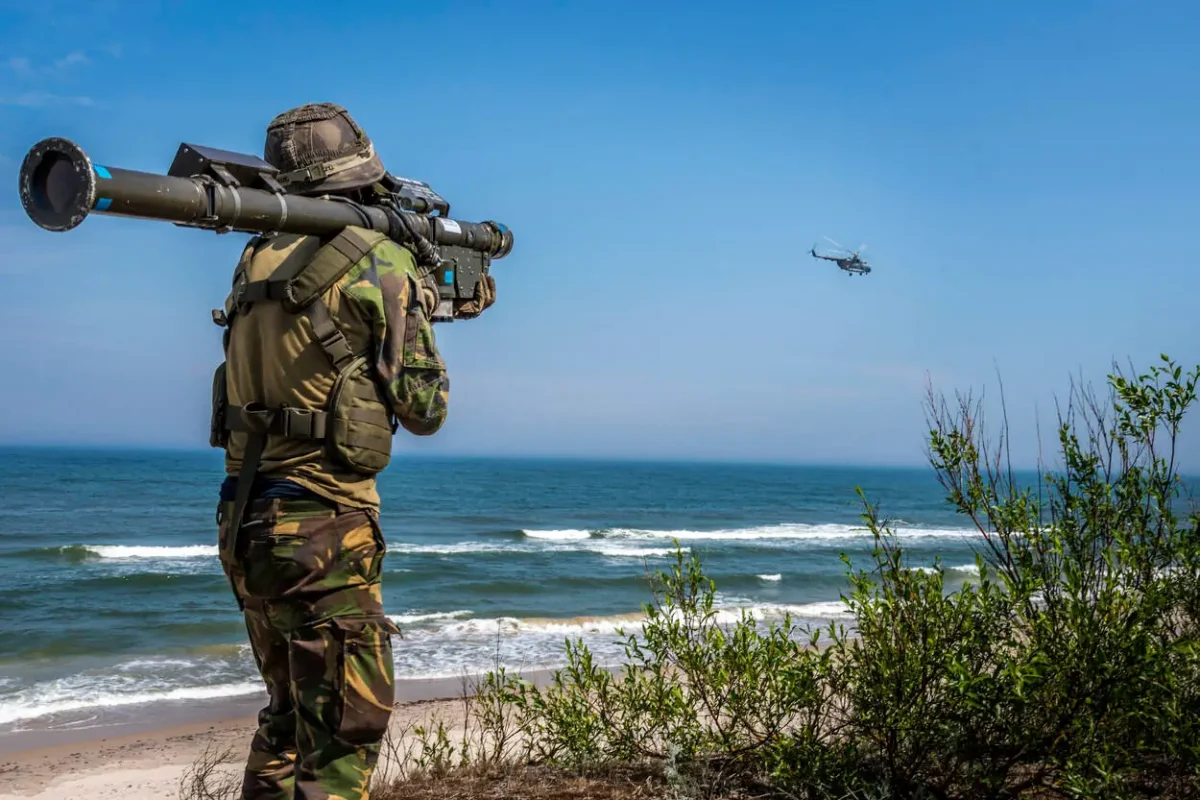
You’ve probably seen that clip, a lone soldier aiming a tube at the sky, a trail of smoke, and then boom. Another aircraft is gone. That’s the FIM-92 Stinger, and for decades, it’s been the go-to weapon for anyone trying to even the odds against air power.
To soldiers in Afghanistan, it was the “miracle stick”. It helped Afghan fighters take down Soviet helicopters in the ‘80s. It’s been spotted in Ukraine too, still doing the same job, forty years later. But the world has changed. Jets are faster. Drones are smaller. Air defenses are smarter. Its design looks almost primitive compared to today’s sleek precision systems. But why is an old shoulder-fired missile like the Stinger still around?
Think of the Stinger as a “heat-seeker on a stick.” It doesn’t broadcast anything; instead, it listens for heat. More precisely, the missile has a passive infrared sensor in its nose that looks for the hot signature of an aircraft, usually the engine exhaust or the hot parts of a rotor-head/engine.
Modern versions use a cooled IR detector, which helps it see weaker or more distant heat sources, so the seeker may be noticeably better on newer blocks.
Spot and point — The shooter visually acquires the target, points the launcher, and brings the seeker onto the target. On many engagements the shooter gets the crosshair on the hottest visible part (like a helicopter’s exhaust).
The system may give an on-sight or audio cue when the seeker has a viable lock. (*This lock-on-before-launch step matters, if the seeker can’t lock, the missile probably won’t find the target after launch).
Launch and fly — Once fired, the rocket boosts the missile up to its cruise speed. The seeker continues to “look” for the target and sends steering information to the missile’s control surfaces.
The missile is doing continuous course corrections to home in on the infrared source. (*The flight is mostly autonomous after launch, the shooter doesn’t guide it).
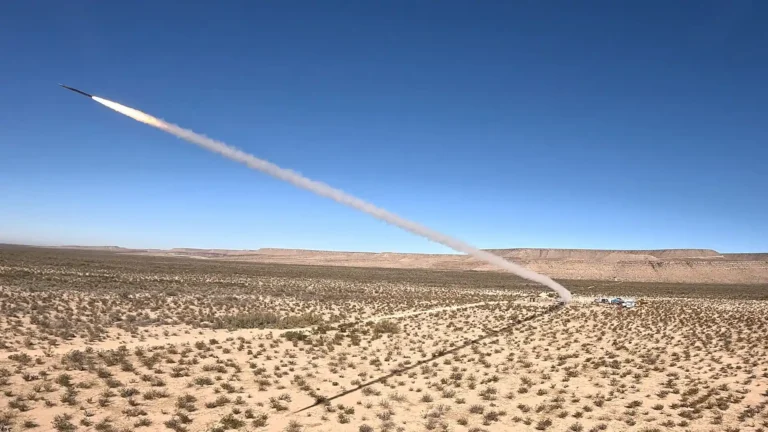
Terminal phase and hit* — As it closes in, the missile makes final guidance corrections to strike the aircraft. The warhead is relatively small but designed to do serious damage to a helicopter or to critical parts of a light aircraft or drone. (*Because the warhead is compact, the Stinger is about disabling critical systems (rotor, engine, fuel) rather than obliterating a large aircraft).
Caveats!!!
A few practical caveats are worth keeping in mind when thinking about how the Stinger actually performs.
First, the missile’s infrared seeker is both its strength and its limitation. Because it passively homes in on heat, it’s hard for a target to detect the missile before impact, which is an advantage, but that same reliance on a thermal signature means the Stinger works best when it can “see” hot parts of an aircraft, engine exhaust or other warm surfaces.
In situations where the engine signature is small, masked, or viewed from a cold aspect, the seeker may struggle to get or keep a lock, and newer seeker variants only partially mitigate that problem.
Range and geometry also matter more than raw numbers suggest. While manufacturers and manuals often quote engagement ranges of a few kilometres, real-world effectiveness depends heavily on the size of the target, the angle of attack, altitude, and environmental clutter such as clouds or ground heat.
In other words, a Stinger can reach out far in ideal conditions, but many successful engagements happen at shorter distances where the thermal contrast is clearer and the missile has a better chance of finding critical components like rotors or engines.
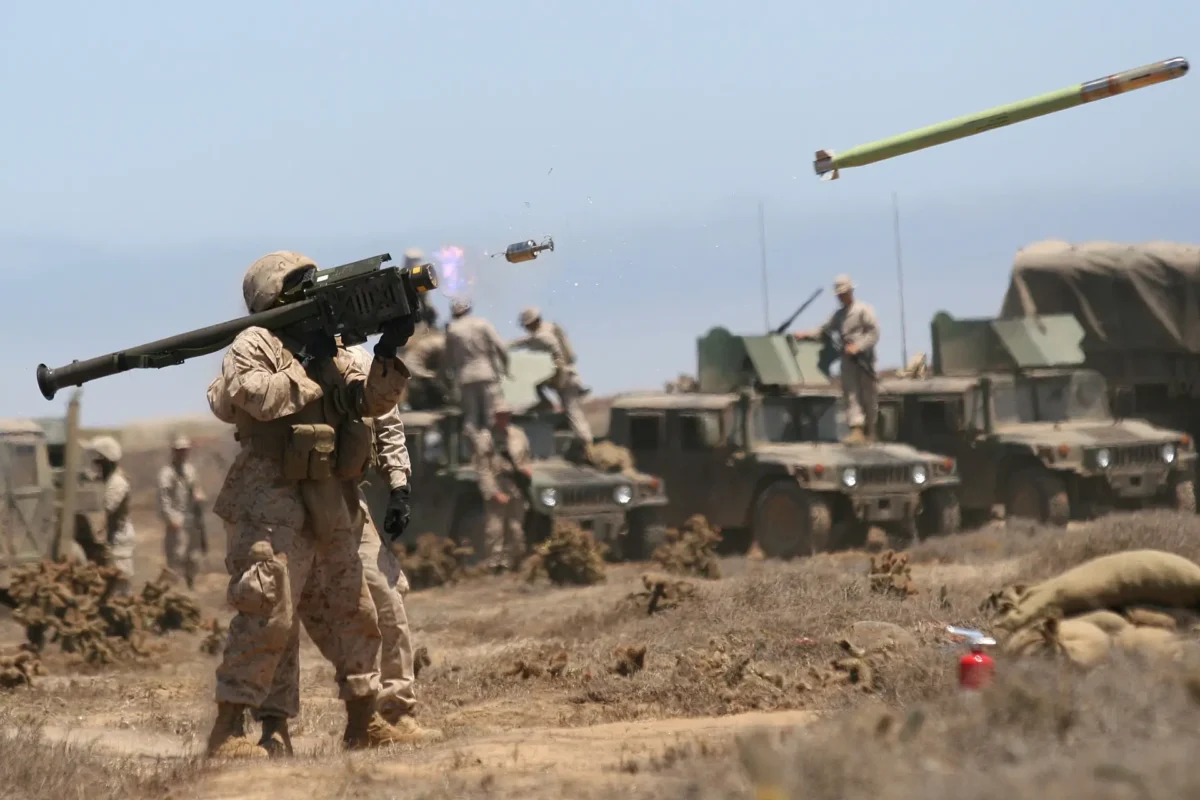
Speed is another practical factor. The missile closes on its target quickly, which reduces the window for a pilot or drone operator to react; that rapid time-to-target is part of why the system remains useful. But high speed also demands swift and accurate guidance.
The missile has to make rapid course corrections in the terminal phase, so flight dynamics and seeker responsiveness influence whether a near miss becomes a hit. Those are engineering realities that affect operational outcomes more than the headline specs.
Countermeasures can blunt the Stinger’s advantage. Since it homes on heat, decoys like flares can sometimes draw it away from the intended target, and aircraft designed with thermal masking or directional exhausts may present a much smaller signature.
Electronic jamming has a limited effect on a passive IR seeker, but a suite of modern defensive measures, combining masking, decoys, and tactics, can reduce the missile’s probability of kill.
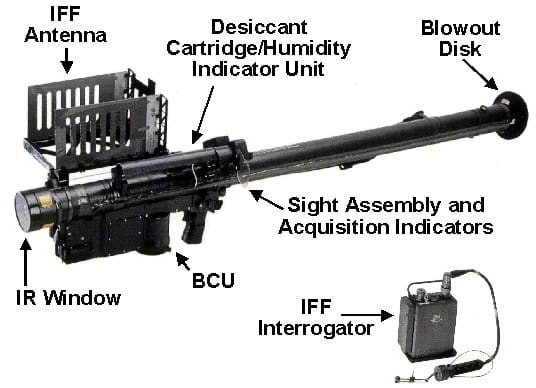
So, while the system was built to stop helicopters and low-flying planes and performs best there, it has proven adaptable; against small or low-signature UAVs its success will vary depending on how much heat the drone emits and how it’s flown.
| Item | Typical value (approx.)* |
| Overall length | ~1.5 m (about 60 in) |
| Missile diameter | ~70 mm |
| Launch weight (missile only) | ~10–15 kg |
| Complete system weight (missile + launcher/pack) | ~15–20 kg |
| Warhead type & weight | Small high-explosive/fragmentation — roughly 3 kg (varies by variant) |
| Guidance | Passive infrared (IR) seeker — later variants use cooled seekers |
| Propulsion | Solid-fuel rocket motor |
| Speed | Up to roughly Mach 1.5–2 (order of magnitude; variant and conditions affect this) |
| Effective engagement range | Often quoted in the low single-kilometre to several-kilometre band (roughly a few hundred metres up to ~4–8 km depending on variant and engagement geometry) |
| Typical target set | Rotary-wing aircraft (helicopters), low-flying fixed-wing aircraft, many types of UAVs |
| Seeker field of view / lock-on | Narrow, rear/side-aspect optimized (see notes) |
*(Numbers above are rounded and variant-dependent; later Stinger variants (Block I/II, Stinger-RMP, etc.) have different seeker sensitivity, electronics and slightly different performance).
Lately, thinking about the FIM-92 Stinger on today’s battlefields feels a bit like watching a scrappy boxer up against a ring full of newfangled defenses. It still has punches, but the opponent keeps changing the rules.
Modern aircraft often come with sophisticated countermeasures that are designed specifically to blunt heat-seeking weapons. Things like directional exhausts, thermal shielding, and distraction flares may not make a plane invisible, but they can make the missile’s job harder by masking or confusing the heat signature the seeker relies on.
So while the Stinger’s passive IR seeker is elegant in its simplicity, that simplicity also means its effectiveness can be significantly affected by how well a target hides or spoofs its thermal fingerprint.
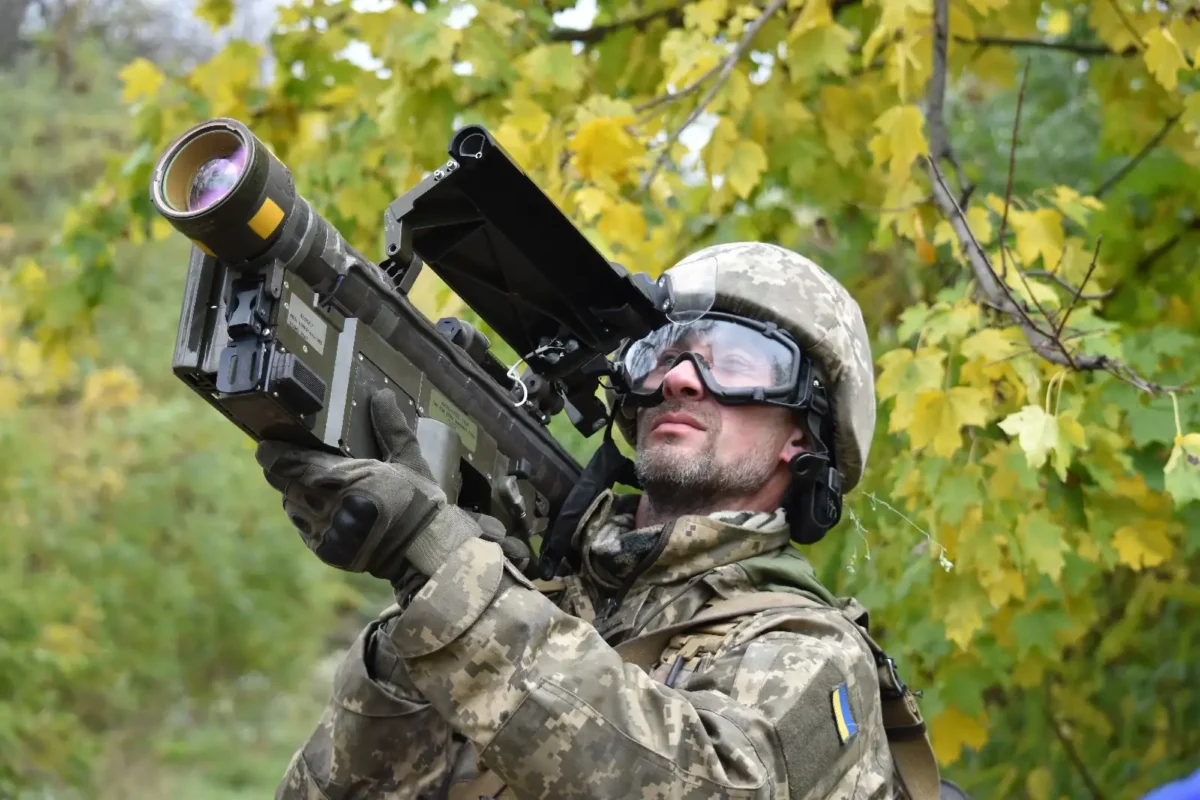
At the same time, the skies now include a lot more drones, everything from tiny quadcopters to larger, more capable UAVs, and that changes the game in ways that aren’t always obvious.
Some drones present a very small thermal signature and might be hard for older seekers to detect, while others are slow-moving and exposed enough that a Stinger could still be useful.
Operators have been improvising, and the missile has occasionally found new roles against unmanned systems, but success here tends to be hit-or-miss (pun intended): it really depends on the drone’s size, how hot its motors get, and the tactical situation.
There’s also electronic warfare, which introduces another layer of uncertainty. Because the Stinger is a passive IR system, traditional radio-frequency jamming doesn’t directly blind it the way it can blind radar-guided weapons.
Still, electronic warfare suites often come as part of an integrated defensive package that includes tactics and sensors designed to reduce the chance of being visually or thermally acquired in the first place. In short, EW may not fry the seeker, but it can change how the battle unfolds in ways that indirectly reduce a Stinger’s window of opportunity.
Upgrades to the Stinger have mostly been incremental; cooler, more sensitive seekers, crisper signal processing, small propulsion and fuze improvements. Those changes do matter; they quietly raise the missile’s chances of finding faint thermal signatures and make the system a little more reliable under stress.
Still, it’s worth being skeptical about how far those tweaks can take a design that dates back to the 1970s. Improved sensors can help, but they don’t magically close the gap against aircraft or drones purpose-built to hide heat or to spoof incoming threats.
There’s also a practical side to modernization: integration and training. Modern variants are sometimes easier to mount or to feed into layered air-defence tactics, and better training helps operators pick the right moment to shoot.
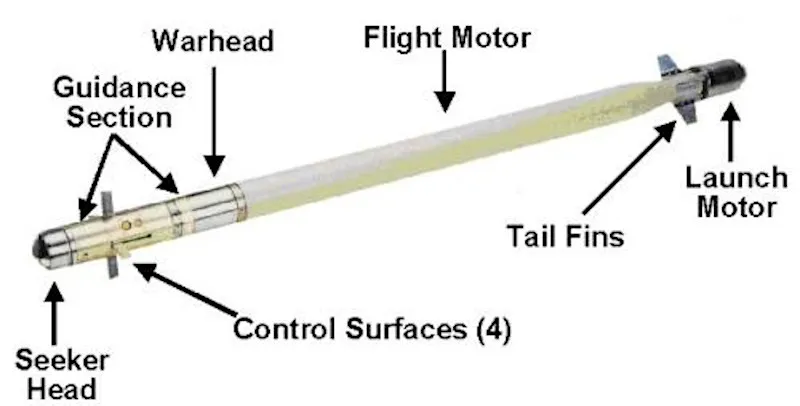
But critics might point out that the real gains often come from doctrine and practice, not just from swapping in a newer seeker. In other words, the tool gets better only when people and procedures change with it, otherwise you’re just carrying a shinier stick.
Because the Stinger has a proven track record, operators and policymakers may favour upgrades instead of investing in entirely new solutions that might be better suited to future air threats. It’s a cost versus payoff. Incremental upgrades are relatively cheap compared with entirely new systems, and that makes them attractive, especially for militaries that need lots of missiles, not just a handful of high-end interceptors.
Yet investing in lots of improved Stingers may buy short-term resilience but doesn’t eliminate the deeper vulnerability that comes with relying on an old design. It may postpone hard choices about layered air defence, sensor fusion, or new interceptors that could be better suited to countering stealth, swarms of small drones, or sophisticated decoy tactics.
Maybe the easiest way to picture Stinger effectiveness is by looking at this scenario:
Picture a small team huddled behind a ridge at dawn, coffee cooling in their hands and binoculars trained on a faint shape scraping the skyline. One of them shoulders a Stinger, breathes out, steadies the launcher, and waits for that tiny crosshair to bite. If the missile locks, the scene that follows can be quick and brutal.
That vignette helps explain why the FIM-92 Stinger still matters: it’s a human-scale weapon that gives individual soldiers the ability to threaten aircraft in a way that no amount of distant artillery or air superiority can fully remove.
That said, if we’re honest, the Stinger’s effectiveness in modern warfare is a mixed and context-dependent story. On the strength side, the Stinger is compact, portable, and relatively simple to use, which means it can be widely distributed and quickly deployed by light forces or irregular units. Its passive infrared seeker makes it harder for an aircraft to detect the launch before impact, and newer seeker improvements appear to increase sensitivity against weaker heat signatures.
Because it’s a one-shot system that doesn’t need an elaborate support chain, the Stinger can be decisive in the right moment: a well-timed ambush against a low-flying helicopter or an exposed UAV can still end badly for the aircraft.
However, it’s guided by a passive IR sensor. Meaning that it depends on a clear thermal signature; against aircraft using thermal masking, directional exhausts, or advanced flares, the seeker may struggle. The practical engagement envelope, the ranges and aspect angles where it reliably gets a lock and kills the target, can be narrower than the headline numbers suggest, especially against fast jets or high-end platforms.
Modern electronic-warfare packages and integrated defensive tactics don’t necessarily spoof a passive IR seeker directly, but they can shape the engagement so the shooter never gets the clean geometry the Stinger needs.
Human factors matter too: the best missile in the world won’t help if the shooter is exposed, misidentifies the target, or fires from a poor position. So while the Stinger can be very effective in many situations, it’s not a universal solution and may be less reliable against high-end or well-protected aircraft.
When we compare the Stinger to other MANPADS like the Russian 9K38 Igla, a few practical contrasts appear, though again the truth is often nuanced. Both systems are designed around the same basic idea, a shoulder-fired, heat-seeking missile, and both have seen incremental upgrades over decades.
The Igla family may offer somewhat different seeker characteristics and engagement profiles; depending on variant, an Igla seeker might be tuned differently for countering certain signatures or operating in particular clutter environments.
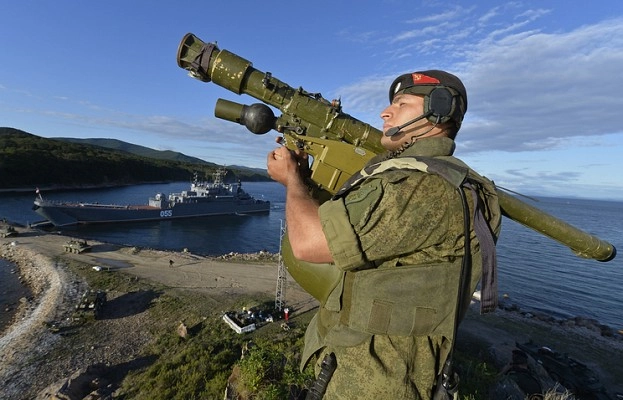
In experience and anecdote, each system has had successes and failures, and performance often seems to come down to training, tactics, and the specific variant fielded rather than an absolute superiority of one over the other.
Cost and logistics also shape the comparison. The Stinger has the advantage of longstanding Western logistics and training pipelines in many armies and partner forces, which may make it easier to integrate into certain militaries’ doctrines.
Conversely, the Igla (and similar systems) can be attractive where supply, pricing, or political alignment favour Russian-origin equipment. In practical terms, a well-trained crew with older hardware may outperform a poorly trained crew with a newer model, so comparisons that ignore doctrine and human factors are likely to mislead.
In real combat, the Stinger’s story has always been about adaptation. Ukraine offers a good recent example. When Russian helicopters began operating close to the front lines in 2022, Ukrainian troops turned to the FIM-92 Stinger as one of their quickest answers.
Videos from the early months of the war showed small teams using the missile to ambush low-flying aircraft, often with surprising success. Those moments reminded many observers that even an older weapon can still bite hard when used well. The Stinger gave infantry units a sense of independence; they didn’t have to wait for higher-level air defenses or friendly fighters to react.
Over time, though, the results grew more complicated. Russian pilots adjusted their tactics, flying higher or launching weapons from outside the Stinger’s effective range. Some aircraft began using more advanced flares and thermal suppression systems, which appeared to reduce hit rates.
Ukrainian forces also had to deal with the missile’s limited stock and the practical challenge of training new operators quickly. None of that made the Stinger useless, but it did show its limits: it works best when the enemy gets close and complacent, not when aircraft stay distant and shielded.
The same pattern seems to repeat in other conflicts. In the Middle East and elsewhere, the Stinger has proven lethal when conditions line up; clear sight, hot target, good positioning, but less reliable in cluttered or electronically complex environments. These mixed results don’t necessarily weaken its reputation; instead, they highlight the importance of context.
The lesson many analysts draw is that the Stinger remains effective when it’s part of a broader defensive network, not the only line of protection. On its own, it’s a quick ambush tool; within a layered air-defense system, it’s a useful piece of the puzzle.