Follow Us:
Follow Us:

In August 2025, Rheinmetall announced that Curtiss-Wright would supply the turret drive stabilization system (TDSS) for the KF51 Panther main battle tank.
What makes this so striking is the timing. Berlin has launched a €400 billion rearmament plan, one of the biggest in Europe’s postwar history, aiming to rebuild its defense strength after years of underinvestment.
Still, the story isn’t all smooth steel and future firepower. Despite the hype, no army actually fields the KF51 Panther yet. It sits somewhere between prototype and promise, a bold design chasing a place on tomorrow’s battlefield.
Some defense watchers call it Germany’s “tank of the future.” Others quietly wonder if it might become another expensive experiment, which is impressive on paper but hard to deploy in numbers.
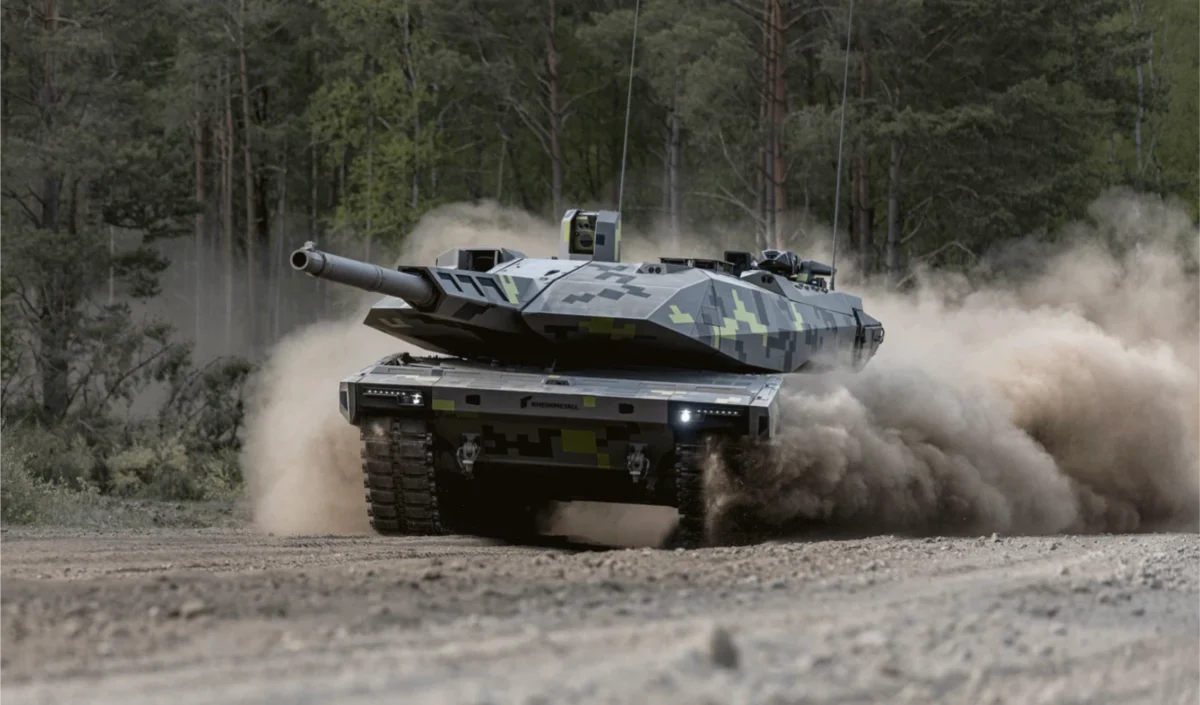
So, what makes the German KF51 Panther tank so captivating and controversial at the same time?
In this analysis, we’ll look at what it brings to the table, why it’s causing such a stir in military circles, and whether it really stands a chance of reshaping the future of armored warfare.
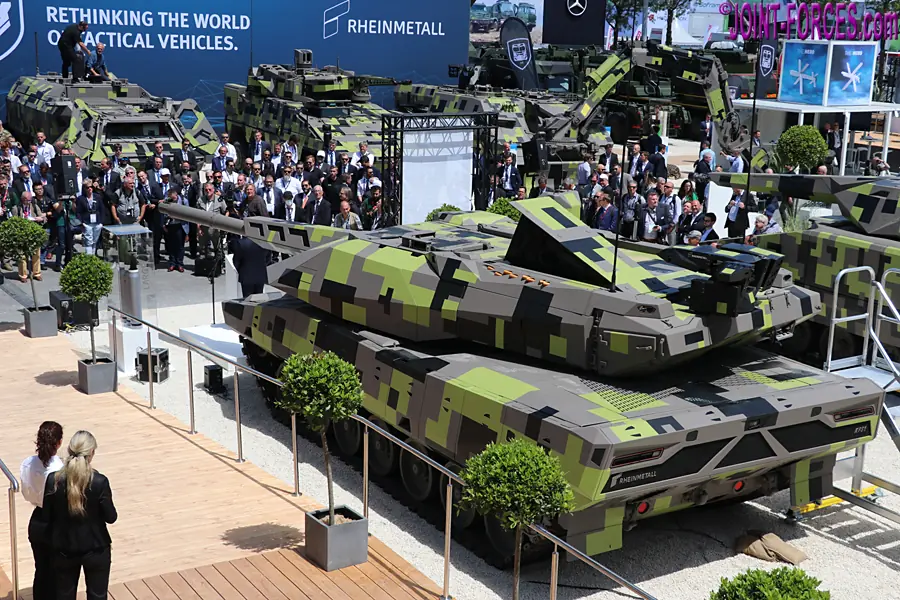
When Rheinmetall first unveiled the KF51 Panther at the Eurosatory defense exhibition in 2022, it caught almost everyone off guard.
Germany hadn’t revealed a completely new tank design in decades, and here was something that looked straight out of the future; sleek lines, digital displays, and promises of “next-generation” everything. Some observers joked that it looked more like a sci-fi movie prop than a real combat vehicle.
Rheinmetall had been working on the Panther as a response to what many experts see as a growing gap in Western armored capabilities.
Europe’s main battle tanks, like the Leopard 2, are solid and proven, but they’re also designs from the late Cold War. Meanwhile, Russia’s T-14 Armata and the steady modernization of tanks in Asia pushed European defense industries to think differently.
That’s why the KF51 Panther made such a splash. Rheinmetall didn’t position it as a replacement for the Leopard 2 right away, but rather as a “new concept for modern warfare.” It promised modular armor, digital control systems, and even the potential for remote or crew-optional operation someday. It was an idea of what tanks could become if they were redesigned for 21st-century battlefields.
And that’s what’s fueling all the buzz in military circles. Some analysts see the Panther as a glimpse into the next era of armored warfare; leaner, smarter, and more connected.
Others are skeptical, pointing out that it’s still a prototype with no confirmed buyer yet. But either way, the KF51 Panther has managed to get people talking, and in the world of defense innovation, that’s often the first sign that something important might be happening.
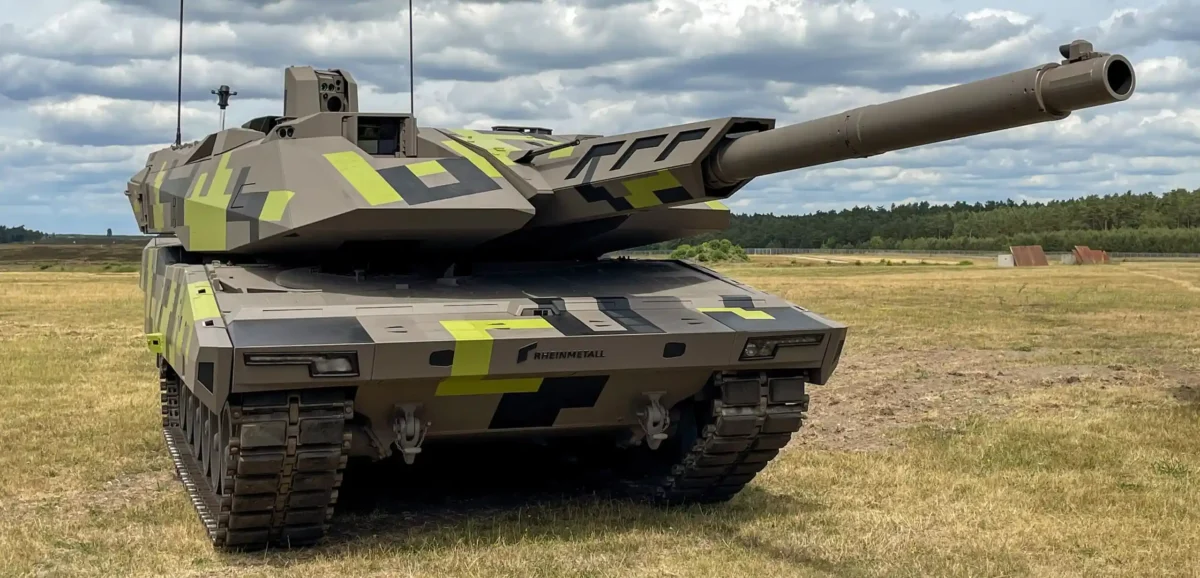
One of the biggest talking points about the KF51 Panther is its 130mm smoothbore gun. Rheinmetall claims it’s up to 50% more powerful than the older 120mm gun used on most Western tanks. It’s designed to take on modern armored threats, including heavily protected Russian and Chinese tanks. The gun also comes with an autoloader, which could allow the crew to fire faster while staying safer inside the vehicle.
When it comes to protection, the Panther seems to mix old-school toughness with new digital tricks. It’s said to use layered armor, a combination of physical plating and active protection systems (APS) that can detect and intercept incoming threats like anti-tank missiles.
Rheinmetall calls this a “smart” defense system. The idea is that the tank won’t just sit there and take a hit; it’ll see the danger coming and react almost instantly. Of course, how well this works in a chaotic battlefield is something no one can fully confirm yet.
Another eye-catching feature is the unmanned turret. This design moves the crew out of the turret and into a more protected hull compartment. It’s a major shift from traditional tank layouts.
Read also: Leopard 2A8 Specs and Performance You Need to Know
The Panther also reportedly uses AI-assisted targeting, which means computers help the crew identify and track threats faster. That could make it more responsive in combat, but it also raises new questions about how much control humans should give up to machines, especially when making life-or-death decisions.
The tank’s modular design might be one of its most practical ideas. Rheinmetall says parts like armor panels, sensors, and even weapons can be swapped out as technology evolves.

In theory, that means armies won’t have to buy brand-new tanks every time a new upgrade comes out; they could just upgrade the systems they already have. It’s a flexible, cost-saving approach, though it depends on whether countries are willing to adopt such a model.
And then there’s the digital side. The KF51 Panther reportedly comes packed with AI systems, sensors, and even drone integration. Some reports suggest it can launch small reconnaissance drones directly from the tank, giving the crew eyes in the sky. It also has built-in cyber and electronic warfare protection, which matters more than ever now that tanks are basically rolling computers.
Rheinmetall hasn’t revealed much about these systems, probably for security reasons, but the fact they’re even being discussed shows how different this design philosophy is.
Comparison Table: KF51 Panther vs T-14 Armata vs Abrams X
| Feature | KF51 Panther | T-14 Armata | Abrams X (est.) |
| Weight | ~ 59 tons | ~ 55 tons, | ~ 60 tons (lighter than M1A2 SEP v3’s ~ 73 tons). |
| Top Speed | ~ 70 km/h | ~ 80–90 km/h | ~ 65–70 km/h |
| Operational Range | ~ 500 km | ~ 500 km | ~ 500 km (hybrid-electric system may improve fuel efficiency by ≈ 20%) |
| Main Gun / Firepower | 130 mm L52 smoothbore | 125 mm 2A82-1M smoothbore | 120 mm XM360 smoothbore (est.) with advanced ammo) |
| Loading System | Autoloader | Autoloader | Manual (upgrade planned to semi-auto or reduced-crew operation) |
| Crew Size | 3 (optional 4th for mission systems) | 3 | 3 (possible 2-crew in the future) |
| Armor / Protection | Layered passive + reactive + Active Protection System (APS) | Composite armor + APS (Afghanit) | Composite + Trophy APS (U.S.–Israeli system) |
| Unmanned Turret | Optional / partially unmanned design | Fully unmanned | No (manned turret retained) |
| Digital Integration | Full NATO NGVA compliance, AI sensors, drone link | Advanced digital systems, domestic network | AI battle management, multi-domain link (C4ISR) (in testing) |
| Cyber & EW Resilience | Designed for high cyber protection | Moderate, domestic EW suite | Advanced cyber shield, hybrid-system isolation |
Where the KF51 Panther Seems Strong…

Where the KF51 Panther Might Be Weaker…
When compared with the T-14 Armata, on many metrics, T-14 is similar to KF51 in claimed speed, range, and digital/sensor/capability side.
But the T-14 is Russian, and operational deployment has had delays, and its performance under combat (in Ukraine etc) is still being observed. Some features may work well; others may suffer reliability, maintenance, logistics, supply or even training challenges.
KF51 may have an advantage in how much NATO/Western infrastructure, doctrine, and interoperability already exists that could support its use. If it integrates smoothly with NATO communication, supply, maintenance etc, that counts.
What About Abrams X?
Because less is publicly confirmed, Abrams X is harder to pin down. It’s expected to modernize what the US already has: better electronics, possibly hybrid power / more efficient systems, better protection, etc.
But Abrams X likely will still carry heavy weight, heavy fuel consumption; upgrading existing systems has both advantages (less risk, more proven parts) and disadvantages (some constraints from legacy systems).
KF51 may compete by being newer from the ground up, perhaps more future-proof in some ways. But Abrams X might benefit from economies of scale, existing supply chains, and combat-proven heritage.
For all the excitement around the KF51 Panther, not everyone is convinced it’s the future of armored warfare. Like most next-generation projects, it faces a few real-world hurdles from cost and complexity to questions about how it would actually perform under fire.
Let’s start with the obvious one—money. The Panther’s advanced systems, from its 130 mm gun to its digital architecture and active protection suite, don’t come cheap.
Rheinmetall hasn’t released an official unit price yet, but some defense analysts estimate it could cost well over €15 million per tank, depending on configuration and production scale. For comparison, an upgraded Leopard 2A7 costs roughly €12–13 million, and even that’s already considered pricey.
Beyond the purchase cost, the maintenance burden could be significant. Tanks loaded with sensors, AI processors, and drone interfaces may need highly trained technicians and steady access to spare parts.
That’s manageable for wealthier NATO members, but smaller armies might struggle to keep them running in the field. As one analyst put it, “The Panther might end up being a tank that only a few countries can afford and even fewer can sustain.”
The KF51 Panther is impressive on paper, but many of its features are still unproven outside test ranges. The 130 mm gun, for example, hasn’t seen combat. While Rheinmetall claims it delivers 50% more kinetic energy, that doesn’t automatically translate into better battlefield results; accuracy, ammunition type, and crew training all play a part.
Its AI-assisted targeting and unmanned turret concepts also raise practical questions. Will the systems hold up under electronic warfare or heavy jamming? How easily can soldiers troubleshoot problems in combat?
And what happens if the AI misidentifies a target? Rheinmetall has emphasized human oversight, but as military tech becomes more automated, those concerns are hard to ignore.
There’s also the issue of interoperability. While the Panther is built around NATO’s digital architecture, each country uses slightly different communication and data systems. Getting everything to “talk” seamlessly could take time and if it doesn’t, the tank’s high-tech advantage might not fully translate to the field.
Even the most advanced tank can be vulnerable in the wrong situation. The war in Ukraine has shown how quickly drones, loitering munitions, and portable anti-tank weapons can destroy multi-million-euro armor.
The KF51’s active protection system is designed to counter those threats, but no system is foolproof. Saturation attacks, where multiple projectiles strike at once, could still overwhelm its defenses.
There’s also a philosophical question: is the age of the heavy tank fading? Some military thinkers argue that future wars will favor mobility, stealth, and networked drones over massive, high-cost platforms. If that turns out to be true, the Panther could risk being a high-tech answer to a problem that’s already changing.
Still, it’s worth noting that every generation of tanks has faced similar doubts. When the Leopard 2 and M1 Abrams appeared in the late Cold War, critics said they were too expensive, too heavy, and too complex. Yet decades later, they remain among the most respected armored vehicles in service. The same might happen with the KF51 Panther or it might not.