Follow Us:
Follow Us:

When Moscow first unveiled the Avangard missile, a lot of people outside Russia treated the claims with doubt. Speeds above twenty times the speed of sound, skimming the upper atmosphere, turning like a jet mid-flight—it all sounded more like a sci-fi script than something real.
But over time, bits of evidence have pointed the other way. Satellite photos and intelligence leaks suggest this isn’t just propaganda. The system appears to be sitting in silos inside Russia, which makes it harder to dismiss outright.
Avangard is fascinating partly because of the split in how people see it. It sits somewhere between wonder and doubt. Russian officials have called it “invincible.” It can outfly any defense.
But outside experts mostly think that it’s an impressive idea but one that might not live up to every promise. Could a missile really outpace every defense shield on the planet? Or is this partly about fear and perception, rather than raw capability? How powerful is it really?
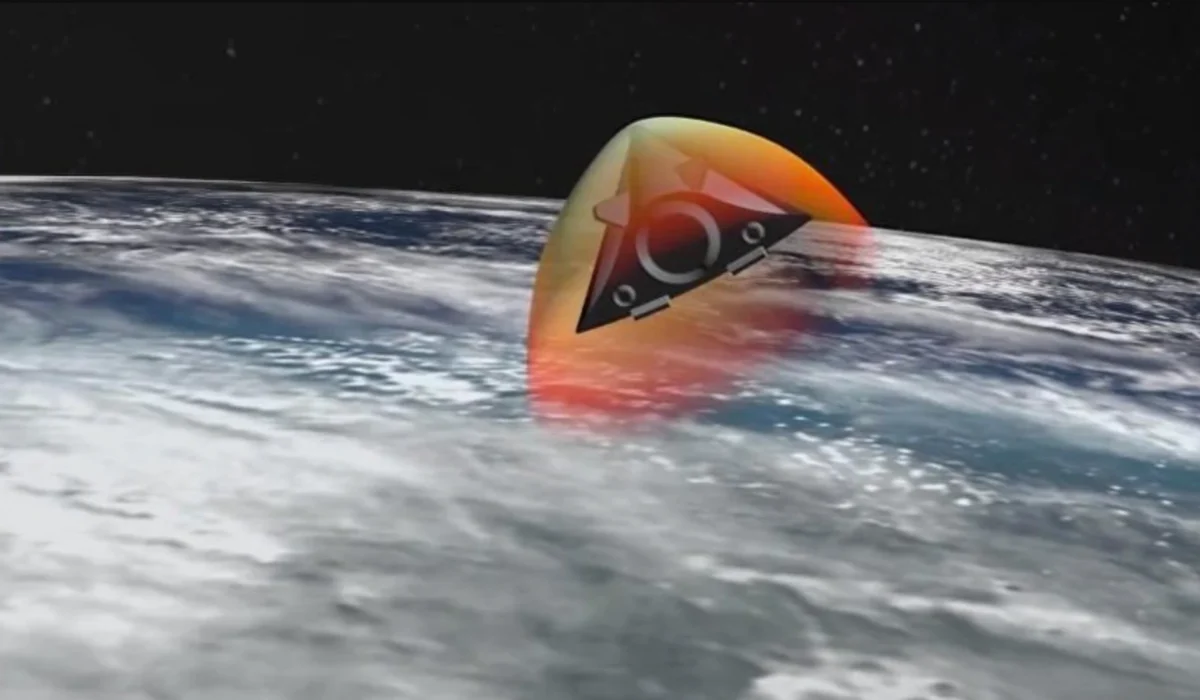
The Avangard isn’t really a missile in the usual sense. It’s more of a glide vehicle that rides into space on top of a heavy ICBM and then comes back down at very high speed. A simple way to picture it is like a special payload carried up by a rocket.
The difference from a normal warhead is in what happens next. Instead of falling along a fixed arc, Avangard is said to be able to glide and even shift course as it reenters the atmosphere. This makes its path less predictable and makes it harder for missile defenses to guess where it will go.

To get a sense of the difference, think of a regular ICBM warhead like throwing a ball straight up and letting it drop. You can more or less tell where it’s going to land. Avangard is closer to a frisbee thrown hard across a field; it can tilt, dip, or curve while it’s still flying fast. That extra bit of unpredictability is what makes defense planners uneasy.
Work on what became the Avangard really does stretch back a long way. Researchers in the late Soviet era started looking at hypersonic re-entry bodies in the mid-1980s, and a few early test launches happened around 1990–1992. Those early efforts then largely stalled after the Soviet Union broke up (money and organization just weren’t there for a while).
In the 1990s, the project quietly picked up again under names like “Object 4202” or Yu-71, but progress was slow. Different institutes (reports usually point to groups such as NPO Mashinostroeniya and the Moscow Institute of Thermal Technology) tried to keep the work alive, testing prototypes sporadically through the 2000s.
Some tests reportedly failed; others were partial successes. That stop-start rhythm is why many experts say the program only really matured much later, after years of incremental work.
A couple of things helped push the Avangard project forward. One was the U.S. decision to pull out of the ABM Treaty in 2002, along with later missile-defense work in the West, which gave Moscow a strong reason to show it could get around those shields.
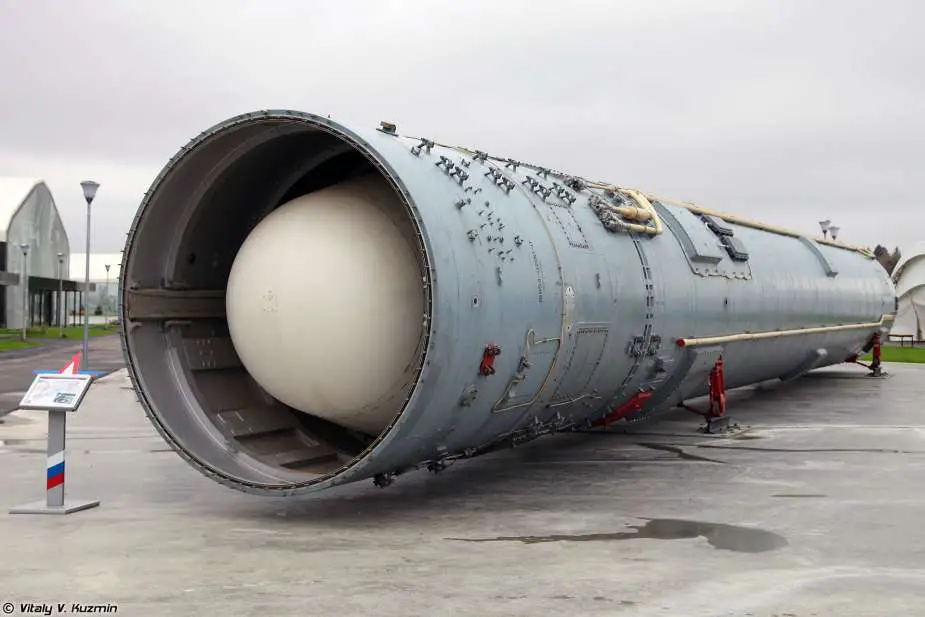
The other was a run of more modern trials in the 2010s. Russia talked up a flight test in 2016 and pointed to launches from places like Dombarovsky that, according to its claims, hit the Kura test range.
By 2018, Putin was ready to announce Avangard as part of a new class of strategic weapons, and the first units were said to be on duty by the end of 2019. Still, open sources warn that many technical details, exact numbers, and the real combat-readiness of the system remain murky.
The program didn’t move forward without bumps. Open sources hint that after 2014, when ties with Ukraine broke down, Russia had to swap out or redesign certain parts and control systems that used to come from Ukrainian factories. That likely meant extra delays and extra work.
In the end, even as Russia moved toward production, Avangard’s path into service looks uneven; a mix of old Cold War research, renewed urgency in the 2000s, a few headline tests in the 2010s, and finally the political push to say it was ready for duty.
Avangard was first shown off in 2018, when President Vladimir Putin used his annual speech to unveil it as part of a new wave of Russian weapons.
He spoke of a system able to cover intercontinental distances and reach speeds said to be between Mach 20 and 27. Many Western experts raised eyebrows at those figures. But only a year later Russia announced that operational units had been placed on duty in Orenburg, mounted on SS-19 ICBMs.
Since its debut, Russia has presented Avangard as an active part of its arsenal. Official statements talk about operational units, but no one outside the country really knows how many exist or how often they’ve been tested.
Independent checks are almost impossible, and some experts doubt the system has ever been pushed through the kind of trials that would prove it in combat. What seems fairly certain is that Moscow views it not only as a weapon, but also as a political message.
| Feature | Common claim | What that means |
| Speed | Up to Mach 20–27 (sometimes quoted ~Mach 27). | Extremely fast (tens of times faster than a jet). That makes reaction time for defenses very short. |
| Warhead/payload | Can carry nuclear or conventional payloads. | It’s designed to carry a blast/explosive package, either a nuclear warhead or a non-nuclear one. |
| Range | Often described as intercontinental (claims >6,000 km when launched from ICBMs). | If true, it can reach targets across continents when boosted by a heavy ICBM. |
| Maneuverability & targeting | Reportedly capable of high-G maneuvers and flight-course changes during reentry. | It may not follow a simple parabola; this could make tracking and interception harder. |
People often point to the Mach 20–27 numbers when they talk about Avangard. If those speeds are actually reached during reentry, the vehicle would cross airspace extremely quickly, which cuts down the time defenders have to notice, track, and act. That’s why speed is the headline feature.
Read also: How Do Hypersonic Missiles Work?
At the same time, public speed figures come mostly from official Russian statements and open-source analysis (independent, fully transparent verification is limited). So it’s probably fair to say the Avangard is very fast, but exactly how fast in all conditions is still a bit unclear.
The Avangard missile is often described as having the ability to carry either a nuclear or a conventional warhead. In simple terms, the glide vehicle is like a delivery system that can be fitted with different types of explosives depending on the mission.
Russian officials have suggested that nuclear versions could pack very high yields, possibly in the megaton range, although independent confirmation is thin. That makes sense given Avangard’s role as part of Russia’s strategic deterrent, but the exact numbers remain murky.
The conventional option is also mentioned in open reporting, and in theory it could allow Avangard to strike important non-nuclear targets with little warning. Its extreme speed would make it very hard to intercept, so even a non-nuclear strike could have a major impact.
Still, there are doubts about how effective this would be. A conventional charge small enough to survive the heat and stress of hypersonic flight might not deliver the kind of damage that justifies such an expensive system.
If one of these glide vehicles is launched, outside observers cannot easily tell whether it carries a nuclear or conventional payload. That uncertainty alone adds pressure in a crisis, since leaders may have to assume the worst. In this way, the “dual-use” feature of the Avangard may be as much about psychology and deterrence as about actual battlefield flexibility.
The short version is that the Avangard glide vehicle doesn’t have its own long-range engine — its reach depends entirely on the rocket that launches it. That matters because different Russian boosters give very different ranges.
Older carriers like the UR-100N UTTKh (NATO: SS-19) can loft an Avangard a long way. The new RS-28 Sarmat is meant to send heavier loads even farther, potentially anywhere on the globe. In plain terms: the glide body gives the final maneuver and speed, but the booster supplies the distance.
Read also: RS-28 Sarmat “Satan 2”: Russia’s Most Feared ICBM Today
How far an Avangard can actually travel in a mission depends on a few things: which ICBM is used, how high the booster throws the vehicle (apogee), and the flight profile the crew chooses. Public sources often give a round figure of several thousand kilometres for the glide phase alone.
CSIS notes range “over 6,000 km” when paired with suitable boosters, but that number is more of a practical estimate than a hard limit.
Heavier boosters like Sarmat are reported to have much larger gross ranges (tens of thousands of kilometres in some claims), which would let an Avangard reach distant targets while still having energy left to maneuver during reentry.
Still, open reporting mixes official claims and analyst estimates, so exact operational ranges and trade-offs (for example, trading range for extra maneuverability) are not fully clear.
A lot of the concern around Avangard is not just speed, but that it might be able to change course while reentering. If true, that would complicate interception: missile-defense radars and interceptors typically expect predictable paths.
But how sharp and sustained those maneuvers can be, and how reliably they can be performed under real launch and reentry stresses, is debated.
Some analysts say the maneuverability is a real problem; others caution that detection, tracking and counter-measures can adapt over time. In short: maneuvering likely helps its survivability, but it isn’t an automatic guarantee of “invincibility.”
Think of Avangard as a clever delivery pod rather than a powered rocket. First, a heavy ICBM booster lifts the pod high above the atmosphere. At a planned point the glide vehicle separates from the booster and re-enters the upper atmosphere.
Instead of simply falling on a fixed ballistic arc, the pod glides and can make sharp, high-speed course changes while it rides through the air. That basic boost-then-glide sequence is what people mean by a “boost-glide” system; the rocket gives the distance, and the glider provides the last-mile movement.
The mechanics inside the glide vehicle are a mix of heat-tolerant shape, guidance systems, and tough materials. At hypersonic speed the air around the vehicle heats up a lot, so the exterior needs special thermal protection.

Guidance uses inertial sensors and likely satellite navigation plus onboard sensors to steer; the vehicle can then produce lift and small control forces to change direction during flight. These moves are limited by extreme heating and structural stress, so the maneuvers are not like what a fighter jet can do, but they are enough to make the path hard to predict.
Compared with traditional ICBM reentry vehicles, maneuverability is the key difference. A conventional RV mostly follows a predictable parabolic path after boost; trackers can calculate its impact point early and cue interceptors.
An HGV like Avangard, by contrast, can alter its glide path in the atmosphere, change altitude, and perform so-called “atmospheric skip” moves that extend or reshape the flight. That makes early, accurate trajectory prediction tougher and shortens the effective reaction time for defenders.
Why does that make interception so hard in practice? There are a few linked reasons. First, the speed is enormous. hypersonic means many times the speed of sound, so detection-to-intercept timelines are very short.
Second, the low and changing flight path can hide the vehicle from systems tuned to watch the high, predictable midcourse of ballistic missiles.
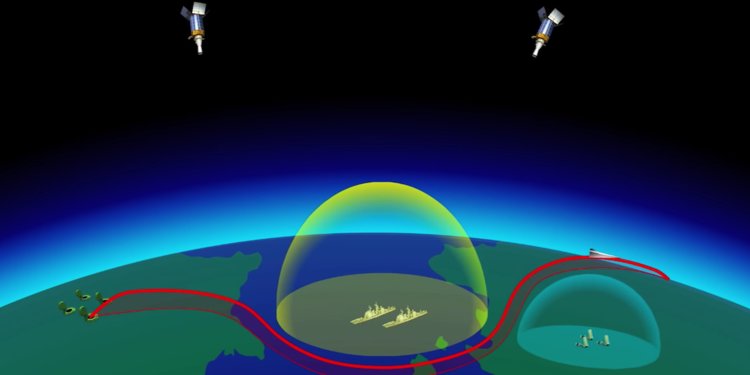
Third, because the vehicle can maneuver, defensive systems that expect a fixed path may be forced to re-task or miss. Taken together, speed plus low altitude plus unpredictability reduce the window when an interceptor can be launched and guided to a hit.
That said, it’s not that interception is literally impossible. Analysts note practical counteroptions: intercepting during the boost phase (when the whole rocket is still climbing), using more distributed and faster sensors, or developing interceptors and layered defenses tuned for the glide phase.
There are also hard engineering limits on how much a glide body can maneuver while surviving the heat and G-forces, so some of the most dramatic claims may be overstated.
For Moscow, the Avangard isn’t just another missile on the shelf. It’s meant to send a message. Russian leaders have worried for years that American missile-defense systems might one day weaken their nuclear edge.
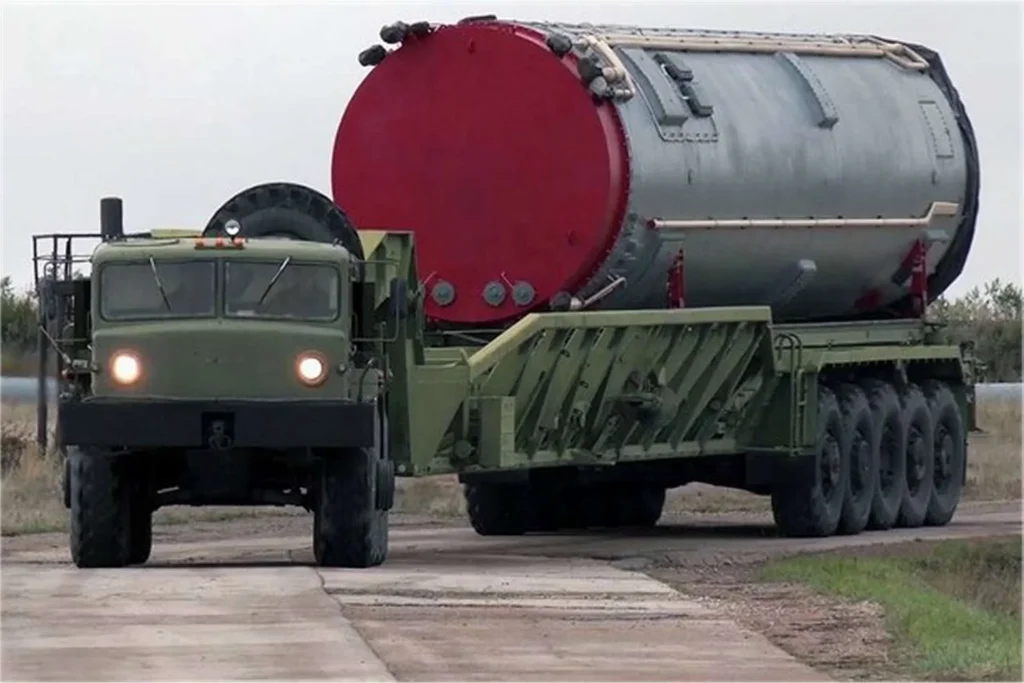
So by showing off a weapon that’s advertised as too fast and too unpredictable to intercept, they’re really trying to prove their deterrent still counts, no matter how much the U.S. and NATO invest in defenses. Whether all of the claims hold up or not is hard to say, but the symbolism is clear enough.
Read also: Fastest Missile in the World: Top 5 Ranked by 2026
The Avangard is meant to calm nerves at home and remind rivals abroad that Russia would still have the ability to strike back if it ever came to the worst.
For the U.S. and NATO, Avangard creates a real headache. For decades, missile defense in the West has been built on the assumption that enemy warheads would follow predictable paths. That’s what radars and interceptors were trained for.
A system like Avangard, if it works as advertised, breaks that assumption. It doesn’t behave that way, instead it can shift around while flying, and that makes defense planning much harder.
So, the Avangard system could force the West to rethink how its sensors, radars, and interceptors are arranged. Some experts argue that this doesn’t make defenses useless, but it does reduce confidence that every incoming strike could be stopped. Even the possibility of a few “leakers” can have a big effect on strategic calculations.
If you zoom out, the Avangard seems less about numbers and more about trust in the old balance. For years, the nuclear standoff worked on a simple idea: both sides knew that if one struck first, the other could still hit back hard enough to make it pointless.
That logic hasn’t disappeared, but weapons like Avangard muddy the water. They cut down warning times and make it harder to know exactly what’s coming in or how to respond in the heat of the moment. And once one country fields this kind of system, others may feel they need something similar just to keep up.