Follow Us:
Follow Us:

You know that feeling when an old workhorse just… refuses to quit? That’s pretty much the story of the Mi-8 Helicopter, one of the most prolific rotorcraft ever built and still buzzing around battlefields, remote airports, and civilian operations decades after its debut.
And right now, it’s in the headlines, not because it’s being retired, but because these trusty choppers are still playing starring roles in major global events.
Recently, for example, Ukraine’s Special Operations Forces claimed to have downed a Russian Mi-8 with a long-range “deep strike” drone deep inside Russian territory, marking what analysts are calling a new chapter in modern warfare and drone tactics.
At the same time, Russia is grappling with the reality that many of its aging Mi-8s, some with service lives stretching over 40 years, are reaching safety limits and facing phased retirement unless they’re replaced or upgraded.
The Mi-8 Helicopter traces its roots back to the late 1950s, when the Soviet Union wanted a simple but tough medium transport helicopter that could do a bit of everything.
Mil Design Bureau started with piston engines, but very early on they made a smart call: switch to turboshaft engines. That decision pretty much shaped the Mi-8’s future.
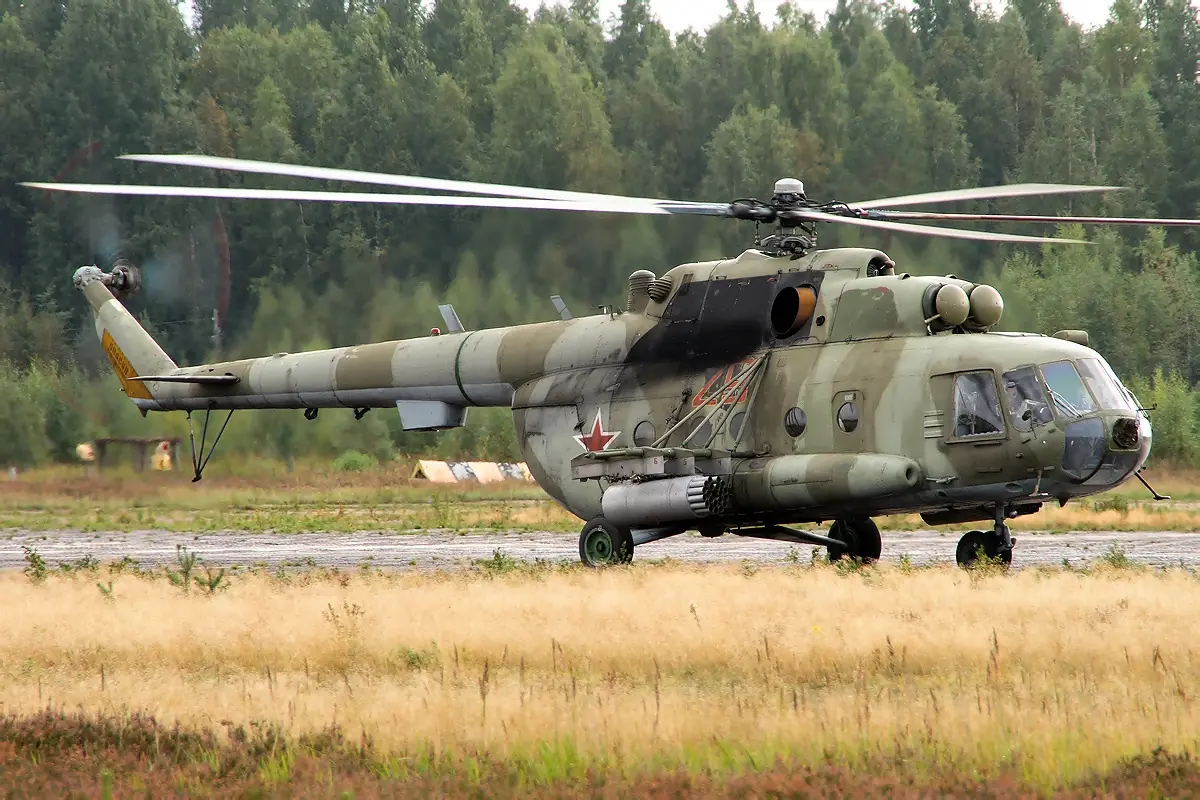
The Mi-8 first flew in 1961, and by the mid-1960s, it was entering service. From there, things snowballed fast. The design was intentionally straightforward: a large, rounded fuselage, clamshell rear doors, and a roomy cabin that could be reconfigured quickly. It was easy to fly, easy to fix, and forgiving in rough conditions.
Read also: UH-60 Black Hawk: The Ultimate Versatile Military Helicopter
Over the years, the helicopter kept evolving rather than being replaced outright. New engines, better avionics, improved rotor systems, and dozens of sub-variants turned the basic airframe into a global platform. That’s why you’ll see Mi-8s flying everything from Arctic supply missions to desert combat ops.
At its core, the Mi-8 is a flying multitool. Militaries used the Russian Mi-8 helicopter as a troop carrier, gunship, medevac, and command platform, while civilian operators flew it for cargo hauling, firefighting, offshore support, and passenger transport.
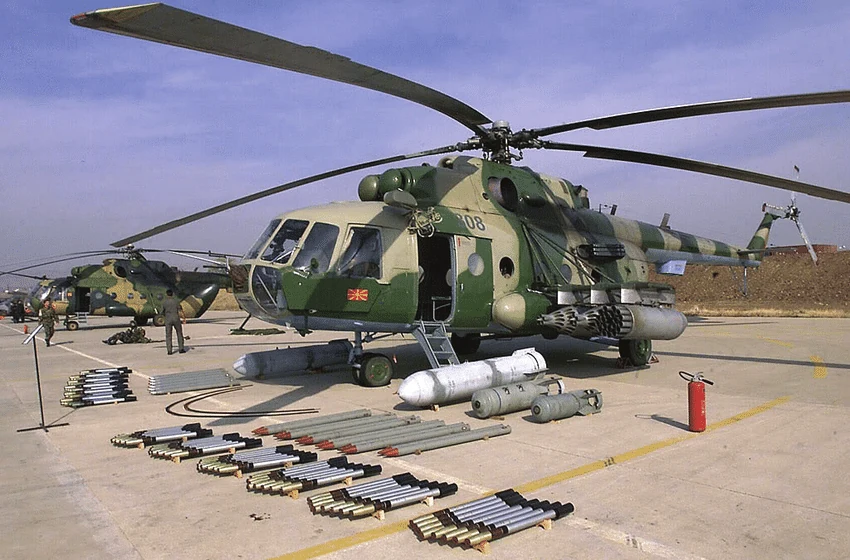
Because it can operate from rough fields, handle extreme cold or heat, and fly decent distances for its class, the Mi-8 helicopter’s range and capacity made it especially valuable in remote regions with limited infrastructure.
On paper, the Mi-8 helicopter’s size and weight make it look bulky and yeah, it kind of is. But that’s the point. That wide, almost boxy fuselage gives it a massive cabin compared to Western helicopters in the same class. In real-world terms, this means:
Short answer: fast enough. Powered by two turboshaft engines, usually the TV2-117 or the more powerful TV3-117, the Mi-8 puts out between 3,400 and 4,400 total shaft horsepower. That’s plenty for a helicopter of this size.
Is it winning speed races? Nope. But helicopters like the Mi-8 aren’t built for that. What this speed really implies is reliability under load. Even when it’s heavy with troops, fuel, or weapons, it still moves at a steady pace without stressing the engines too hard.
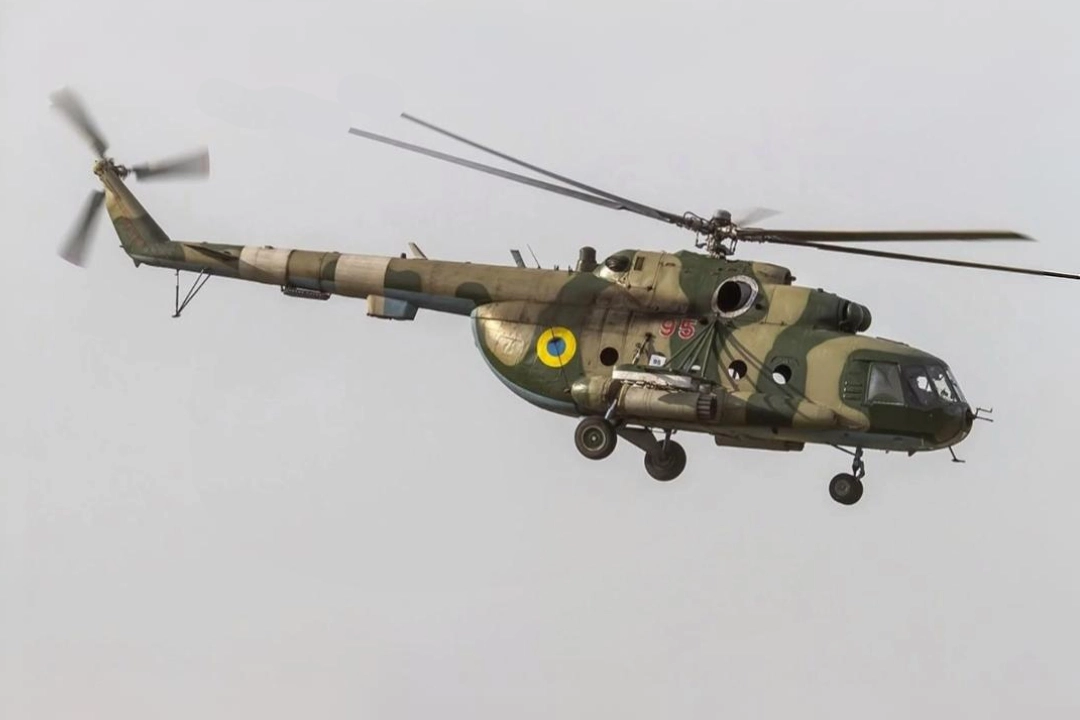
With standard internal fuel, it can fly roughly 465 km (289 miles) on a normal mission. Add auxiliary fuel tanks, and suddenly you’re looking at up to ~960 km (597 miles).
That translates to several hours of flight endurance, depending on load and conditions. Practically speaking, this lets the Mi-8 operate in remote regions where refueling options are limited, like Siberia, deserts, mountains, offshore platforms, you name it.
So when people ask, “What is the range of the Mi-8 helicopter?” The real takeaway is flexibility. It can do short tactical hops or long-haul support missions without much fuss.
| Length | ~18.2 m (59.7 ft) |
| Rotor Diameter | ~21.3 m (69.9 ft) |
| Height | ~5.65 m (18.5 ft) |
| Empty Weight | ~7,260 kg (16,005 lb) |
| Max Takeoff Weight | ~12,000 kg (26,455 lb) |
| Internal Payload | ~4,000 kg (8,800 lb) |
| Troop Capacity | Up to 24 soldiers |
| Engines | 2× Klimov TV2-117 or TV3-117 turboshafts |
| Engine Power | ~1,700–2,200 shaft horsepower each |
| Top Speed | ~250 km/h (155 mph) |
| Range | ~465 km (289 miles) |
| Extended Range (aux tanks) | Up to ~960 km (597 miles) |
| Service Ceiling | ~4,500 m (14,760 ft) |
Early Mi-8s were pretty barebones; analog gauges, basic radio navigation, and minimal automation. Simple, rugged, and easy to repair in the field. That simplicity is part of why so many are still flying.
Modernized versions, though, are a different story; GPS/GLONASS navigation systems, Digital flight displays, Weather radar, Secure military communications, Night-vision-goggle compatibility.
This mix of old-school toughness and upgrade potential is a big deal. It means operators can keep the same airframe but modernize the brains, extending the helicopter’s usefulness without buying an entirely new fleet.
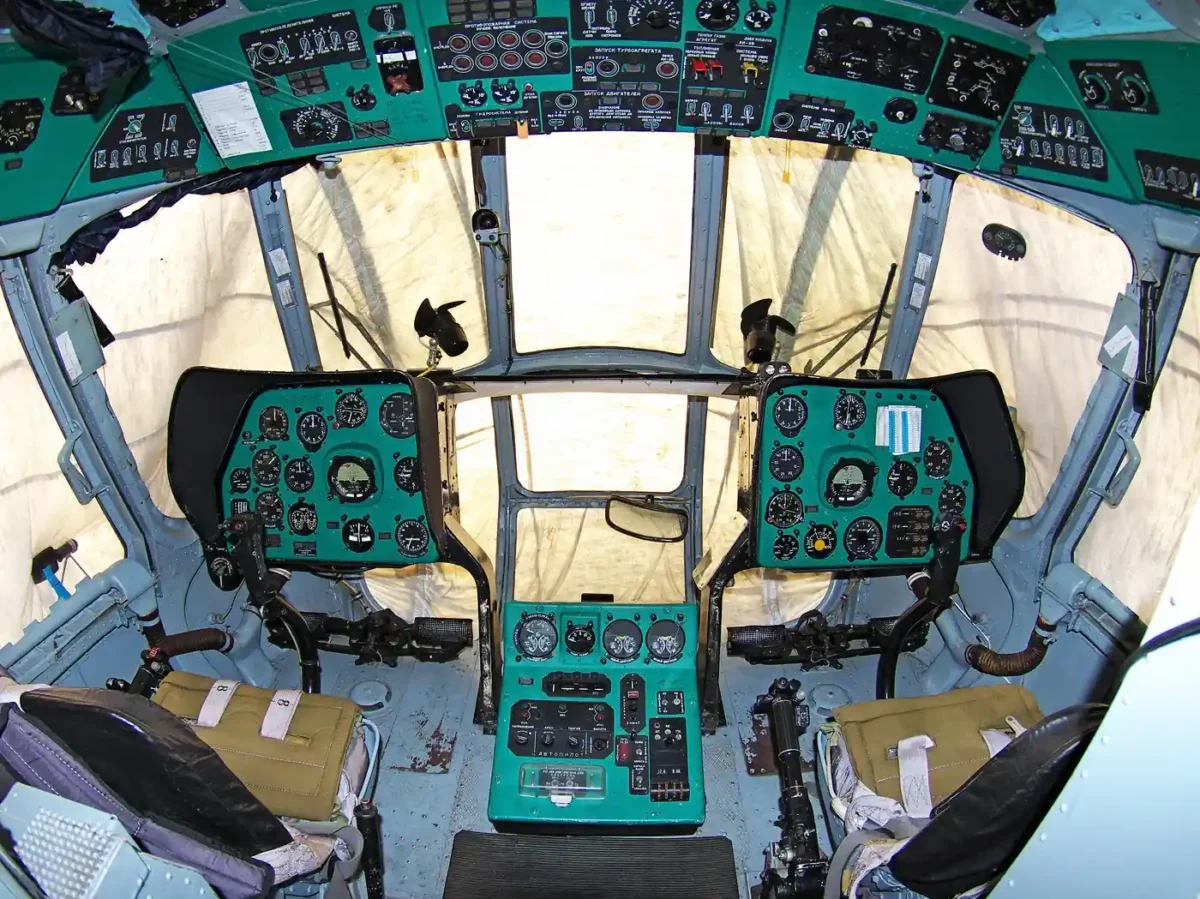
When you step back and look at the Mi-8 helicopter specifications, the message is pretty clear: this machine was never meant to impress on paper. It was built to carry a lot, fly far enough, survive harsh conditions, and keep going.
And honestly? That’s exactly why, more than 60 years after its first flight, the Mi-8 is still one of the most widely used helicopters on the planet.
When people talk about the Mi-8 helicopter interior, they’re usually surprised by just how roomy it feels once you’re inside. From the start, the cabin was designed more like a utility space than a sleek passenger compartment, and that’s exactly why it works so well.
In its standard transport setup, the Mi-8 can seat up to 24 passengers or troops along fold-down benches lining the sides, leaving the center open for gear. Those benches can be removed quickly, turning the helicopter into a flying cargo box that can handle bulky loads, pallets, or even vehicles. Thanks to the wide sliding side door and rear clamshell doors, loading cargo is straightforward.
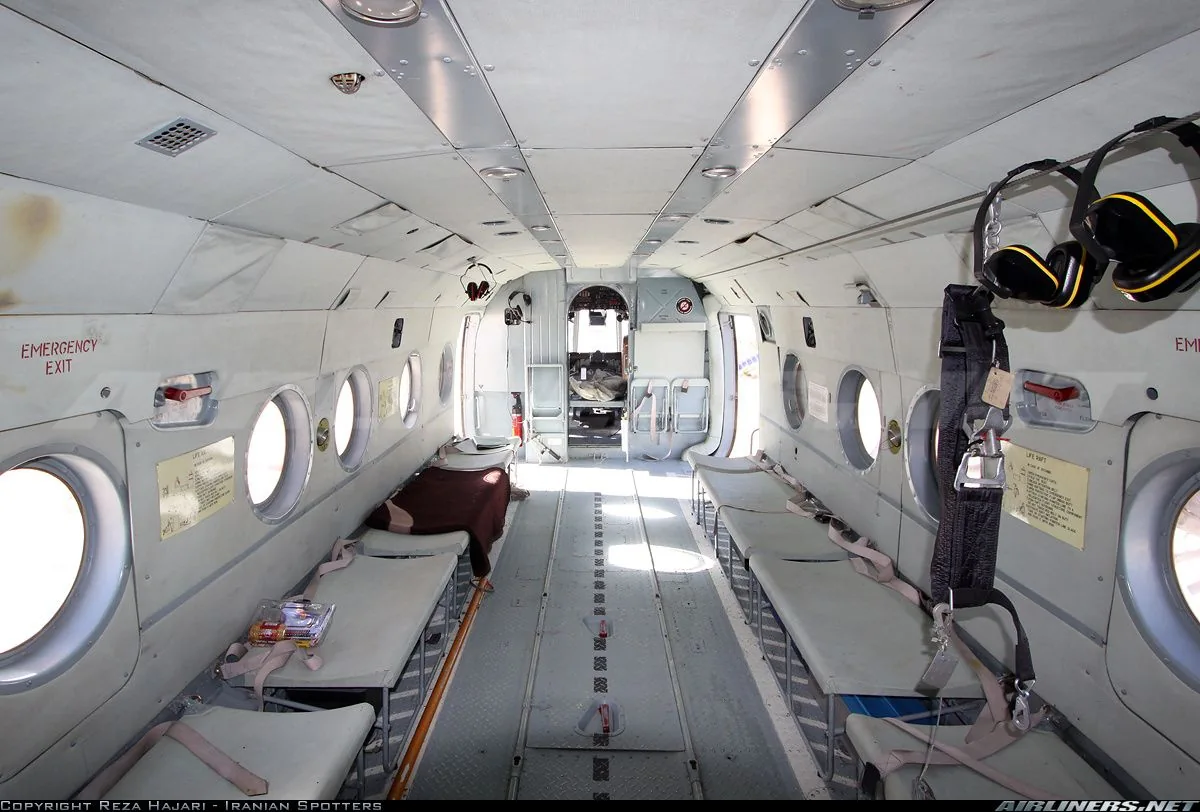
What really sets the Mi-8 apart, though, is how easily that interior can be reworked for different missions. Medical evacuation versions swap seats for stretchers, oxygen systems, and basic onboard medical gear, allowing crews to treat and transport wounded personnel in flight.
There are also VIP and executive variants that feel almost like a different aircraft altogether, with sound insulation, comfortable seats, climate control, and sometimes even small lounges. Civil operators often customize interiors with extra fuel tanks, firefighting equipment, or surveillance consoles, depending on the job.
Short answer? It depends a lot.
A brand-new or factory-refurbished Mi-8-series helicopter (often sold today as upgraded Mi-8AMT or Mi-17 variants) can run roughly USD $12–18 million, depending on avionics, engines, and mission equipment.
Older airframes are a different story. On the secondary market, used Mi-8s can sometimes be found for USD $3–7 million, especially if they’re earlier models with analog cockpits and basic systems.
Operating costs matter just as much. The Mi-8 isn’t cheap to fly, but it’s considered cost-effective for what it can lift and where it can operate. Fuel burn is higher than light helicopters, but maintenance tends to be straightforward, spare parts are widely available, and the design is famously forgiving in rough environments. That balance keeps long-term costs predictable, especially in regions with limited support infrastructure.
When you look at the Mi-8 Helicopter, it’s pretty clear why it’s lasted this long, but it’s also fair to say it isn’t perfect. Like most long-serving aircraft, its strengths are obvious, and its weaknesses show up once you compare it to newer designs.
On the plus side, the Mi-8’s biggest advantage is versatility. It can haul troops, cargo, fuel drums, medical stretchers, or mission equipment without much reconfiguration. That big, boxy cabin and strong engines mean it lifts a lot for its size, even in hot, high, or dusty conditions where some helicopters struggle.
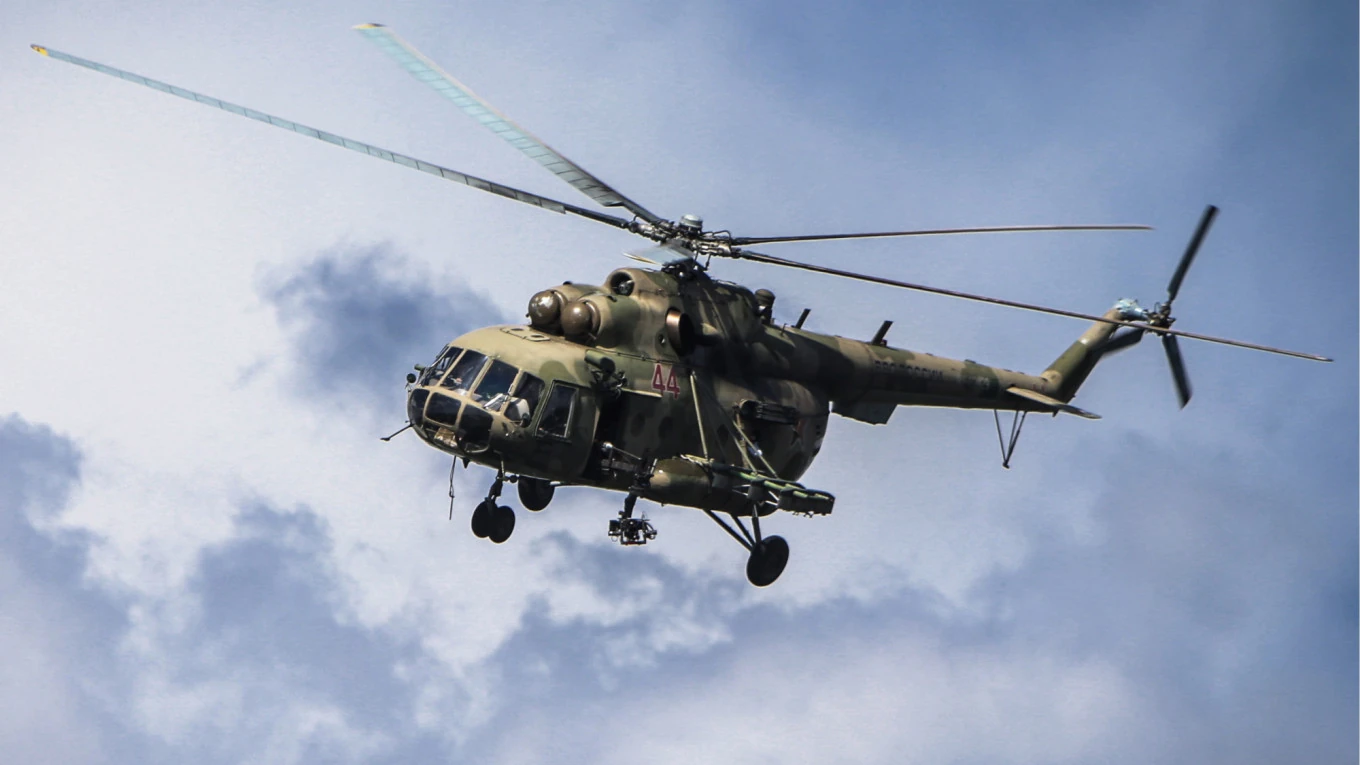
Add to that a reputation for mechanical toughness and relatively simple maintenance, and you start to see why operators in remote or harsh regions keep choosing it. Spare parts are widely available, and crews often describe it as forgiving, not overly delicate or picky about where it lands.
That said, the Mi-8 does show its age. Compared to modern Western helicopters, it’s less fuel-efficient, noisier, and usually lacks advanced automation unless it’s been upgraded. Older variants especially rely on analog avionics, which can increase pilot workload and limit situational awareness.
Comfort is another trade-off, while the cabin is spacious, vibration and noise levels are higher than what you’d expect from newer designs. And in contested airspace, the Mi-8’s size and speed don’t do it many favors when facing modern air defenses.
The Mi-8 and Mi-17 helicopters are closely related. Think of the Mi-17 as a more modern, export-focused evolution of the original Mi-8. They look almost identical at first glance, and in many ways, they do the same jobs. But there are some practical differences that matter once you dig in.
The Mi-17 usually comes with more powerful engines, which improves lift, hot-and-high performance, and overall reliability when fully loaded. That extra power also helps slightly with range and cruise efficiency, especially on longer missions. Speed-wise, though, there isn’t a dramatic gap, both helicopters cruise at roughly the same pace and top out in the same general ballpark. You’re not choosing one over the other for raw speed.
Capacity is another area where they’re more alike than different. Both can carry around 24 passengers or roughly 4,000 kg (8,800 lb) internally, so from a payload perspective, they’re essentially equals.
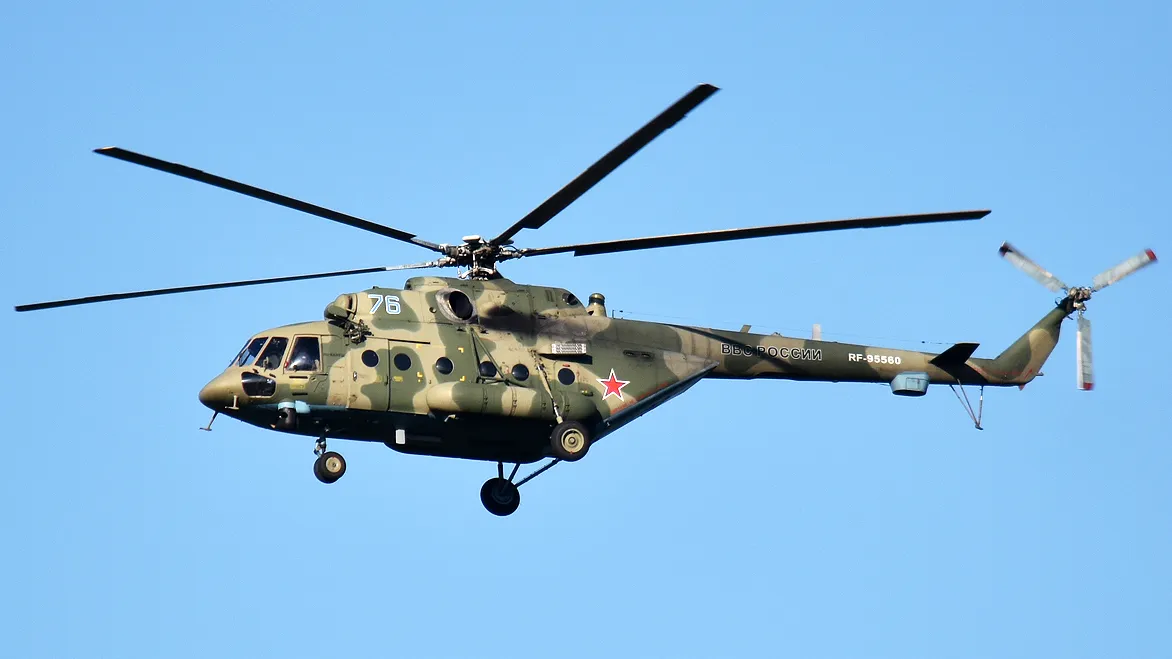
The difference shows up in how comfortably they handle that weight. The Mi-17 tends to feel less strained under heavy loads, particularly in demanding environments.
Avionics and systems are where the Mi-17 pulls ahead. It’s more likely to feature modern navigation, communication gear, and optional digital cockpits, especially in export and upgraded variants. That reduces pilot workload and makes the aircraft easier to integrate into modern airspace and military operations.
Cost-wise, the Mi-8 is generally cheaper, especially on the used market, which makes it attractive for civilian operators or air forces on tight budgets. The Mi-17 costs more upfront, but many operators see that as a fair trade for better performance and longer service life.
If you compare them to similar medium transport helicopters globally, both Mi-8 and Mi-17 stand out for payload and ruggedness per dollar. Western counterparts often offer better comfort, efficiency, and avionics, but usually at a higher purchase and operating cost.
So the short version?
The Mi-8 is the classic, budget-friendly workhorse. The Mi-17 is the refined, more capable upgrade. Same DNA, just tuned for slightly different priorities.