Follow Us:
Follow Us:

When you think of a helicopter that combines raw firepower with the ability to carry troops into the thick of battle, one name inevitably rises above the rest: the Mi-24 Hind Helicopter.
To the uninitiated, it might look like just another military chopper, but to those who’ve seen it in action, it’s a terrifying blend of brute strength, speed, and tactical ingenuity. Picture a flying tank with wings—capable of strafing enemy positions while ferrying soldiers into the heart of danger. That’s the Mi-24 in a nutshell.
Developed in the late 1960s by the Soviet Mil Moscow Helicopter Plant, the Mi-24 was designed to shatter conventional limits. Unlike other helicopters of its time, it wasn’t just a transport or a gunship—it was both. The designers aimed for a craft that could insert troops into battle, provide close air support, and survive heavy fire.
Over the decades, it has earned a reputation not just for being tough but also almost indestructible in hostile conditions. Fun fact: the Mi-24 is nicknamed “flying tank” because its armor and speed allow it to shrug off attacks that would down lighter helicopters.
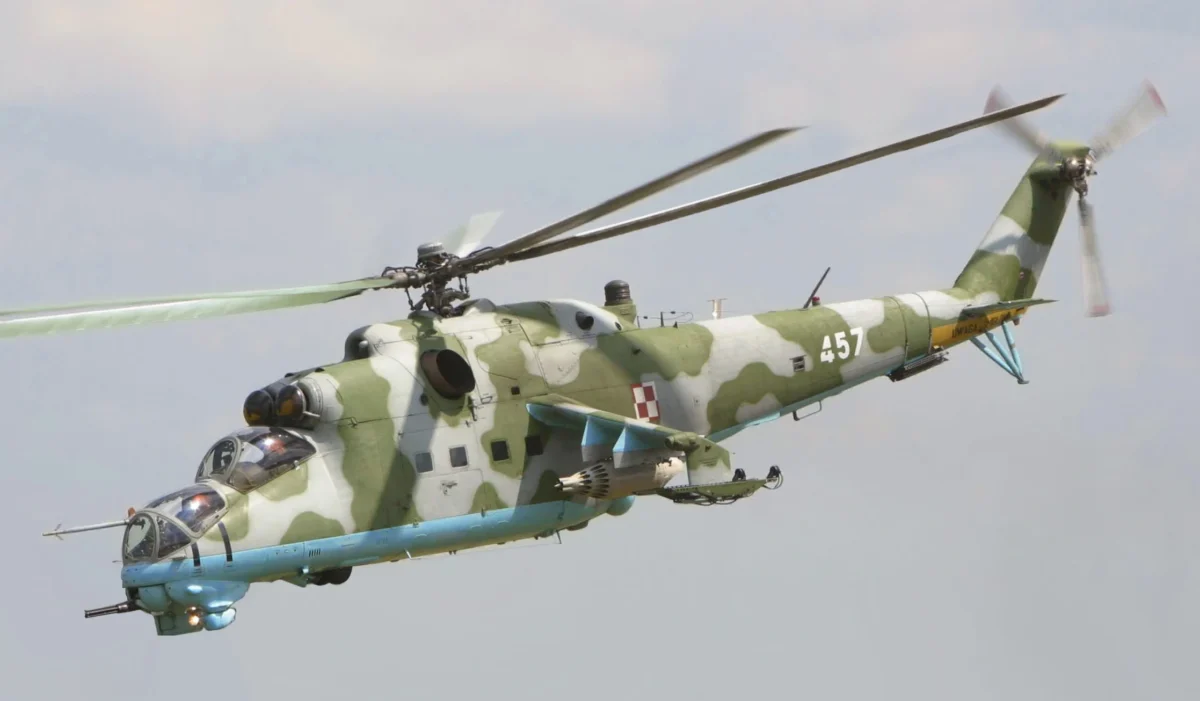
Globally, the Mi-24 Hind has been a star player in dozens of conflicts, from Afghanistan in the 1980s to more recent skirmishes in Africa and the Middle East. More than 2,600 units have been produced, serving in over 50 countries—a testament to its versatility and enduring relevance.
Beyond the battlefield, it’s also carved out a curious cultural footprint, appearing in documentaries, war films, and even video games, reinforcing its image as a symbol of Soviet, and now Russian, military ingenuity.
In this post, we’ll peel back the rotor blades and explore everything about the Mi-24 Hind Helicopter: its history, design, combat record, and why it remains one of the most fearsome attack helicopters in the world today.
The story of the Mi-24 Hind Helicopter begins in a time of intense Cold War rivalry. The late 1960s were a period when the Soviet Union wanted something extraordinary, a rotorcraft that could do the job of a tank, a gunship, and a troop transport all at once.
Most helicopters back then were either lightly armed observation crafts or clunky transports. The Soviet military wanted a beast that could take the fight directly to the enemy, carry soldiers into battle, and survive the chaos without blinking. Enter the Mi-24, a helicopter that would defy traditional design logic.

Developed by the Mil Moscow Helicopter Plant, the first prototypes rolled out in 1969. The Mi-24’s design was bold: armored fuselage, retractable landing gear, and a sleek profile that somehow balanced speed with brute strength. It could carry up to eight fully equipped troops in addition to its lethal armament.
That combination of mobility and firepower was revolutionary. While other helicopters were relegated to supporting roles, the Mi-24 could insert, attack, and extract in a single, fluid operation.
Read also: Kamov Ka-52 Alligator: Russia’s Advanced Attack Helicopter
By 1972, the Mi-24 officially entered service with the Soviet Air Force. Its debut wasn’t just about raw power—it was about strategic innovation. Designers incorporated heavy weaponry, including a chin-mounted 12.7mm machine gun and rocket pods capable of carrying anti-tank missiles.
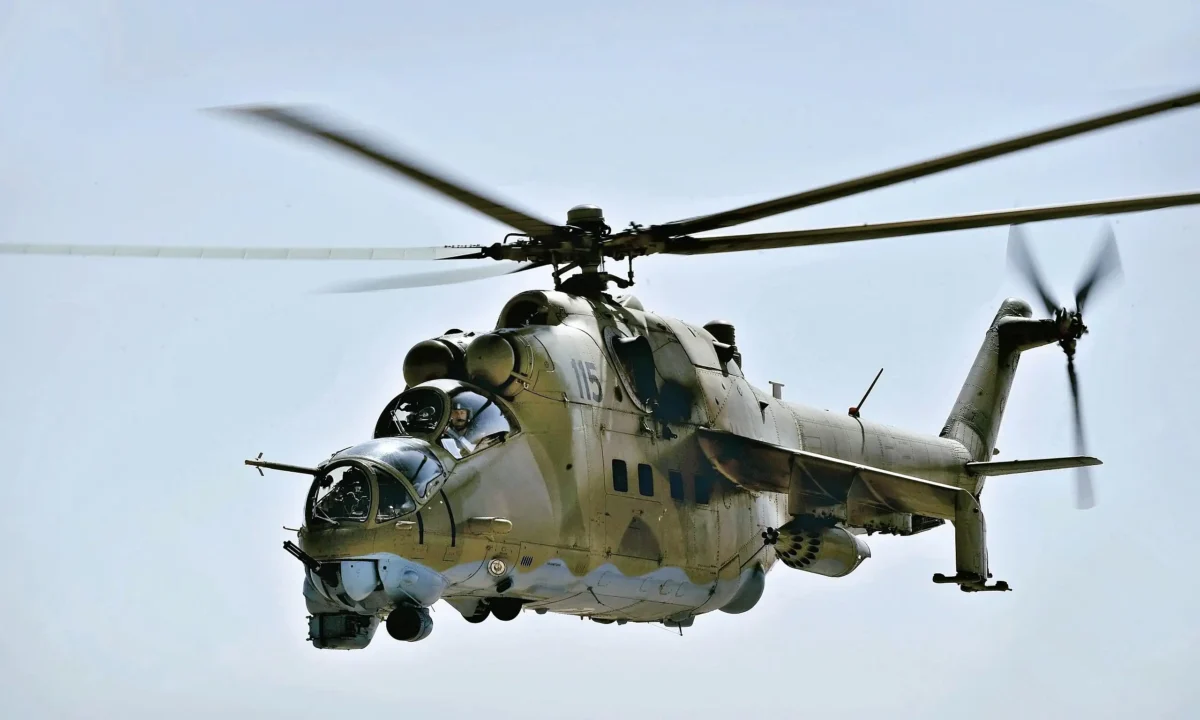
Its armor was resilient enough to withstand small arms fire and shrapnel, giving crews confidence that few other helicopters could offer. Over the next decade, multiple upgrades and variants appeared, each refining the balance between speed, armor, and firepower.
Production numbers tell a story of global impact: more than 2,600 Mi-24 Hinds have been built, finding their way into the arsenals of over 50 countries. From the deserts of Afghanistan to the jungles of Africa, this helicopter became not just a weapon, but a symbol of Soviet, and later Russian, engineering audacity. Its blend of firepower, transport capability, and sheer presence would set the standard for attack helicopters for decades to come.
When you first lay eyes on the Mi-24 Hind Helicopter, it’s impossible not to notice its imposing silhouette. Unlike the slender, nimble helicopters you often see in airshows, the Hind has a heavy, almost tank-like presence. But appearances can be deceptive—it’s not just big; it’s fast, agile, and lethal.
At the heart of its design is a reinforced all-metal fuselage, providing armor protection for both the crew and vital components. This isn’t a helicopter that flinches under fire; the Hind can shrug off small-arms rounds and shrapnel, giving its pilots a survival edge in hostile environments. Its cockpit layout is tandem, with the pilot in the rear and weapons officer in front, optimizing visibility and targeting precision.

Under the hood, or more accurately, under the rotor, is a pair of Isotov TV3-117 turboshaft engines, each producing around 2,200 horsepower. This power allows the Mi-24 to reach speeds up to 208 mph (335 km/h) and cover roughly 280 miles (450 km) without refueling. That combination of speed and endurance is rare for an attack helicopter, making it capable of rapid insertions and surprise strikes.
When it comes to firepower, the Hind is a flying arsenal. Early models featured a 12.7mm Yak-B gun, while later variants like the Mi-24P sported a 30mm cannon. Add to that rocket pods, anti-tank guided missiles, and even bombs, and you have a helicopter that can tackle a wide range of battlefield targets, from armored vehicles to fortified positions.
Read also: Bell AH-1Z Viper: Marine Corps’ Most Advanced Attack Helicopter
Its versatility doesn’t end there. Over the years, multiple variants emerged, Mi-24V, Mi-24P, Mi-35, and Mi-35M, each refining weapons systems, avionics, and survivability. Some versions can even perform aerobatic maneuvers like barrel rolls, a feat almost unheard of for a craft this size.
| Specification | Mi-24 Hind |
| Max Speed | 208 mph (335 km/h) |
| Range | 280 miles (450 km) |
| Crew | 2 (pilot + weapons officer) |
| Troop Capacity | 8 fully equipped soldiers |
| Primary Armament | 12.7mm / 30mm cannon |
| Missile Systems | AT-2/AT-6 anti-tank missiles |
| Engines | 2 × Isotov TV3-117 |
The Mi-24 Hind isn’t just a helicopter; it’s an engineering statement. Every curve, every rivet, every weapon system is designed for one purpose: dominance in the air and on the ground. It’s not just built to survive—it’s built to command.
The Mi-24 Hind Helicopter didn’t just sit in hangars looking intimidating, it earned its reputation on some of the world’s toughest battlefields. From the moment it entered service in the early 1970s, it was designed to perform multiple combat roles simultaneously: troop transport, close air support, and anti-armor warfare. Few helicopters before have attempted such an audacious combination.
Its baptism by fire came in Afghanistan in 1979, where the Soviet Union deployed the Hind extensively. Flying into mountainous terrain and ambush-prone valleys, the Mi-24 demonstrated its resilience. Pilots reported that its heavy armor and powerful engines allowed it to survive hits that would down lighter helicopters.
Read also: Mil Mi-28 Havoc: Russia’s Deadliest Attack Helicopter
Troops on the ground valued it as both a gunship and a transport; it could carry a squad of soldiers, strike enemy positions, and extract them, all in a single sortie. Statistics from the Afghan conflict suggest the Mi-24’s presence dramatically increased Soviet ground force effectiveness, despite high attrition rates in the rugged terrain.
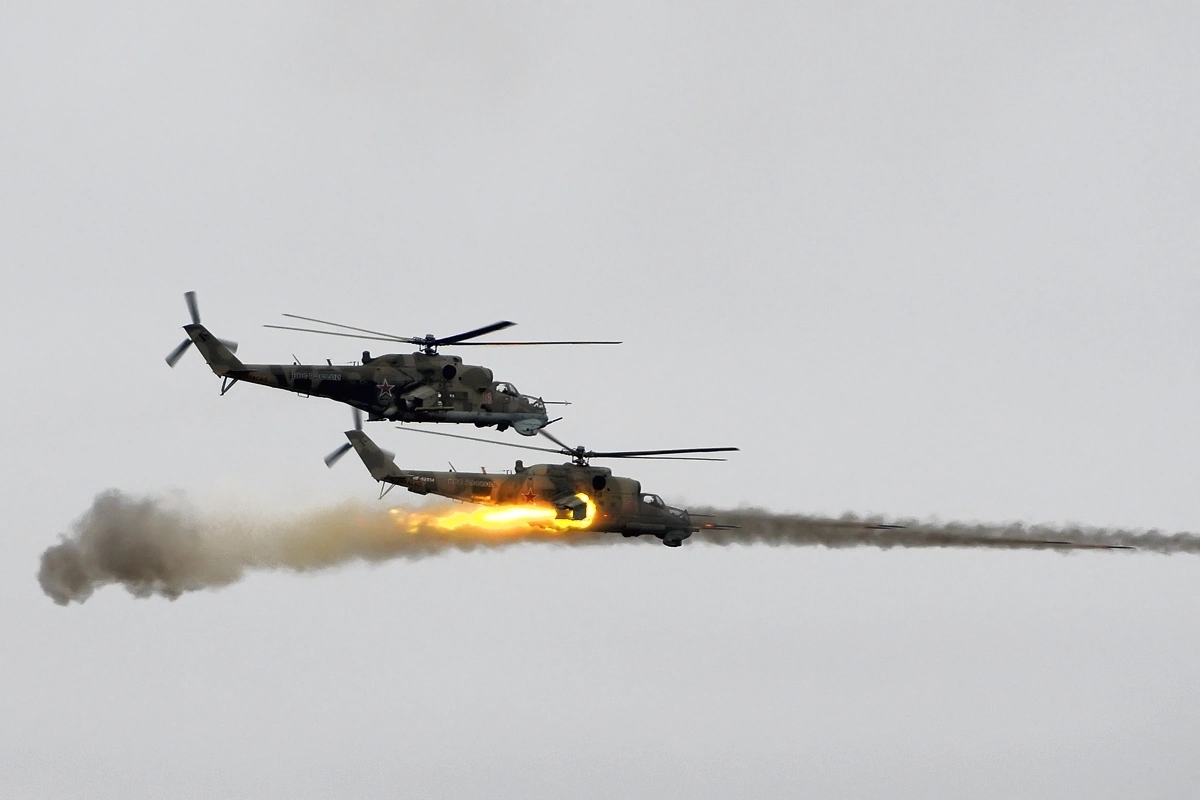
Beyond Afghanistan, the Hind has been a key player in numerous global conflicts. In Africa, it provided decisive air support in the Angolan civil war, while in the Middle East, variants have participated in skirmishes where speed, firepower, and armored survivability were essential.
Even in Eastern Europe, Mi-24s have been spotted in military exercises and limited combat operations, proving their adaptability to diverse combat environments.
Read also: AH-64 Apache: The World’s Most Advanced Attack Helicopter
More recently, in the 2020 Nagorno-Karabakh conflict, a Russian Mi-24 was shot down by Azerbaijani forces, highlighting that while the Hind is formidable, modern anti-aircraft systems can challenge even the most rugged designs.
Yet, its operational history remains impressive: decades of service across continents, a wide range of missions, and a continued presence in modern arsenals.
| Conflict | Role & Impact |
| Soviet-Afghan War (1979–89) | Troop insertion, close air support, high durability |
| Angolan Civil War | Anti-armor operations, air superiority in local conflicts |
| Middle East skirmishes | Reconnaissance, rapid troop deployment, tactical strikes |
| Nagorno-Karabakh 2020 | Modern combat testing, vulnerabilities exposed |
The Mi-24 Hind isn’t just a relic of the Cold War—it’s a proven, multi-role combat machine whose legacy continues to shape modern helicopter warfare. Its unique combination of transport, firepower, and resilience keeps it relevant even decades after its debut.
Few military machines achieve true iconic status, but the Mi-24 Hind Helicopter has done just that. Decades after its first flight, it remains a symbol of Soviet engineering audacity and Russian military capability. Its legacy is not just in battles won or enemies struck down, but in how it redefined what an attack helicopter could be.
Even today, the Hind continues to serve in active combat roles across the globe. Russia maintains several upgraded variants, including the Mi-35M, featuring modern avionics, precision-guided weapons, and enhanced survivability.

Allied nations, from India to Angola, still rely on Mi-24s for both defense and offensive operations. Its longevity is rare in the world of military aviation, where technology becomes obsolete within a decade. The Hind’s ability to adapt through upgrades, combined with its foundational design, allows it to remain relevant against modern threats.
Culturally, the Mi-24 has also carved out a remarkable presence. It’s been featured in documentaries, films, and video games, often portrayed as the ultimate airborne predator. In military parades and air shows, its distinctive silhouette and powerful rotor sound capture the imagination, evoking both awe and intimidation.
The Hind has even inspired contemporary helicopter design philosophy, influencing modern attack helicopters that attempt to blend firepower, speed, and troop mobility in a single platform.
The Mi-24 Hind isn’t merely surviving; it’s thriving in a world of drones, smart missiles, and stealth aircraft. Its blend of raw power, flexibility, and historical significance ensures that it will remain a touchstone in military aviation discussions for decades. In short, the Hind is more than a helicopter—it’s a legend that refuses to be grounded.
The Mi-24 Hind Helicopter is more than just a weapon of war—it’s a flying embodiment of innovation, resilience, and raw power. Few aircraft manage to combine troop transport capabilities with the firepower of a gunship, yet the Hind does it with remarkable efficiency.
Over decades of service, it has proven itself in some of the harshest battlefields on Earth, from the mountains of Afghanistan to conflicts across Africa and the Middle East. Its presence on the battlefield isn’t just tactical; it’s psychological, often turning the tide simply through intimidation and versatility.
What sets the Mi-24 apart is its ability to evolve. Modern variants like the Mi-35M integrate advanced avionics, precision-guided weapons, and improved survivability, ensuring the Hind remains relevant even in today’s drone-dominated warfare. At the same time, its cultural footprint, from documentaries and films to video games, cements its status as a symbol of aerial dominance.
In the end, the Mi-24 Hind Helicopter is a rare combination of history, technology, and legend. It stands as a reminder that ingenuity in military design can produce machines that are not just functional, but iconic. For enthusiasts, historians, and military strategists alike, the Hind remains a fascinating subject, a testament to the enduring power of engineering audacity.