Follow Us:
Follow Us:

If you’ve ever wondered what brute strength looks like in rotorcraft form, the CH-53K King Stallion is your answer.
Picture a helicopter that doesn’t just move cargo, it shrugs at gravity, scoops up armored vehicles, and keeps flying as if physics signed a waiver. This isn’t a modest upgrade or a warmed-over redesign. It’s a full-on rethink of what a heavy-lift helicopter can be in the 21st century.
At first glance, the CH-53K King Stallion feels like overkill. Three engines. Fly-by-wire controls. A lift capacity that borders on absurd. But context matters. Modern battlefields are messy, fast-moving, and often far from paved runways or friendly infrastructure.
The U.S. Marine Corps didn’t want “good enough.” They wanted a machine that could haul more, go farther, and do it in brutal heat, thin air, or salt-soaked shipboard conditions, without breaking a sweat.
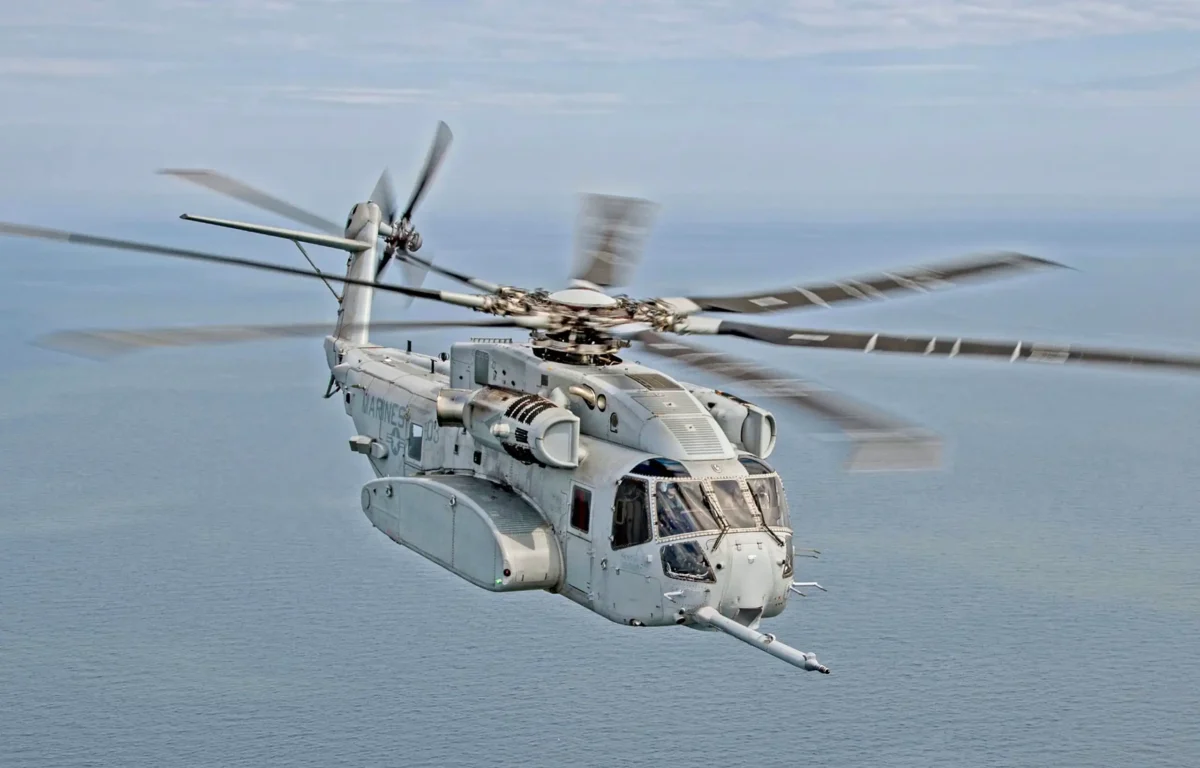
What makes this aircraft especially interesting isn’t just raw power (though lifting 36,000 pounds externally deserves a pause). It’s how the CH-53K blends that muscle with digital intelligence.
Think of it less like an old-school workhorse and more like a heavyweight athlete wearing a smartwatch, strong, yes, but also aware, efficient, and surprisingly precise.
This post takes a different path than most. Instead of rattling off specs and calling it a day, we’ll look at how the CH-53K King Stallion fits into real-world operations, why it exists at all, and what it quietly signals about the future of military aviation. No hype. No brochure talk. Just the story behind the machine, and why it matters more than you might think.
At its core, the CH-53K King Stallion is a heavy-lift transport helicopter, but calling it that feels like calling a cargo ship “a boat.” Yes, it moves things from Point A to Point B. But how it does that is where the story gets interesting.
Built by Sikorsky, now part of Lockheed Martin, the CH-53K was designed specifically for the U.S. Marine Corps as the long-term replacement for the aging CH-53E Super Stallion.
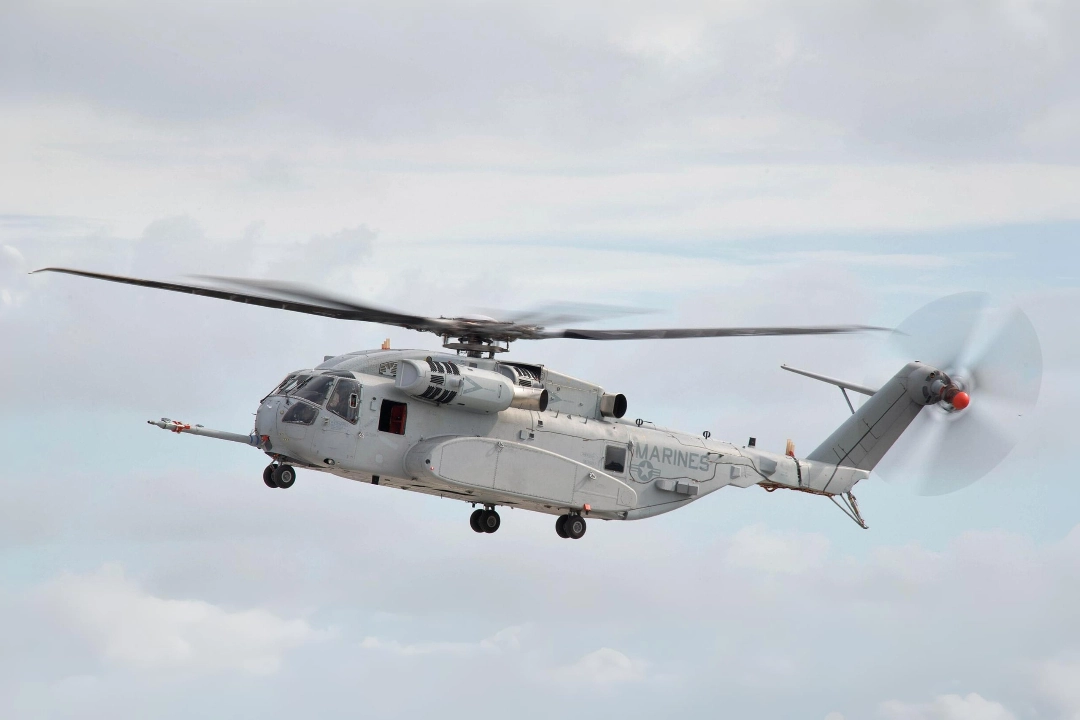
The Marines needed something tougher, smarter, and far more capable than its predecessor, especially as modern missions demand longer ranges, heavier equipment, and operations in places where conditions are anything but friendly.
The King Stallion’s job is simple in theory: move Marines, vehicles, artillery, and supplies from ships to shore, or deep inland, without relying on runways.
In practice, that means lifting armored vehicles, engineering gear, and palletized cargo that would ground most helicopters instantly. It’s the aerial equivalent of a semi-truck that can land on a postage stamp.
What sets the CH-53K King stallion apart is that it was designed around today’s battlefield, not yesterday’s. Digital fly-by-wire controls reduce pilot workload. Composite rotor blades increase lift while cutting maintenance headaches. Even the cargo system is smarter, allowing faster loading and fewer people on the ground, an underrated advantage when time equals risk.
In short, the CH-53K isn’t just a helicopter. It’s a logistical force multiplier, one that turns impossible lifts into routine missions and quietly reshapes how the Marines move, fight, and respond worldwide.
The CH-53K King Stallion didn’t appear overnight. Its story is more marathon than sprint, marked by ambition, friction, recalibration, and finally, momentum.
And honestly? That slow burn tells you a lot about how hard this helicopter is pushing the envelope.
The program traces back to the mid-2000s, when the Marine Corps realized the CH-53E Super Stallion, though powerful, was aging fast. New armored vehicles were heavier. Missions were longer. Maintenance hours were stacking up like unpaid bills. The solution wasn’t another patch; it was a clean-sheet design built for the next 40 years.
That decision came with consequences. Advanced systems, digital flight controls, and entirely new engines meant higher complexity. Development delays followed. Costs climbed. Critics circled. For a while, the CH-53K King stallion became a favorite example in debates about defense acquisition gone wrong.
Then something shifted.
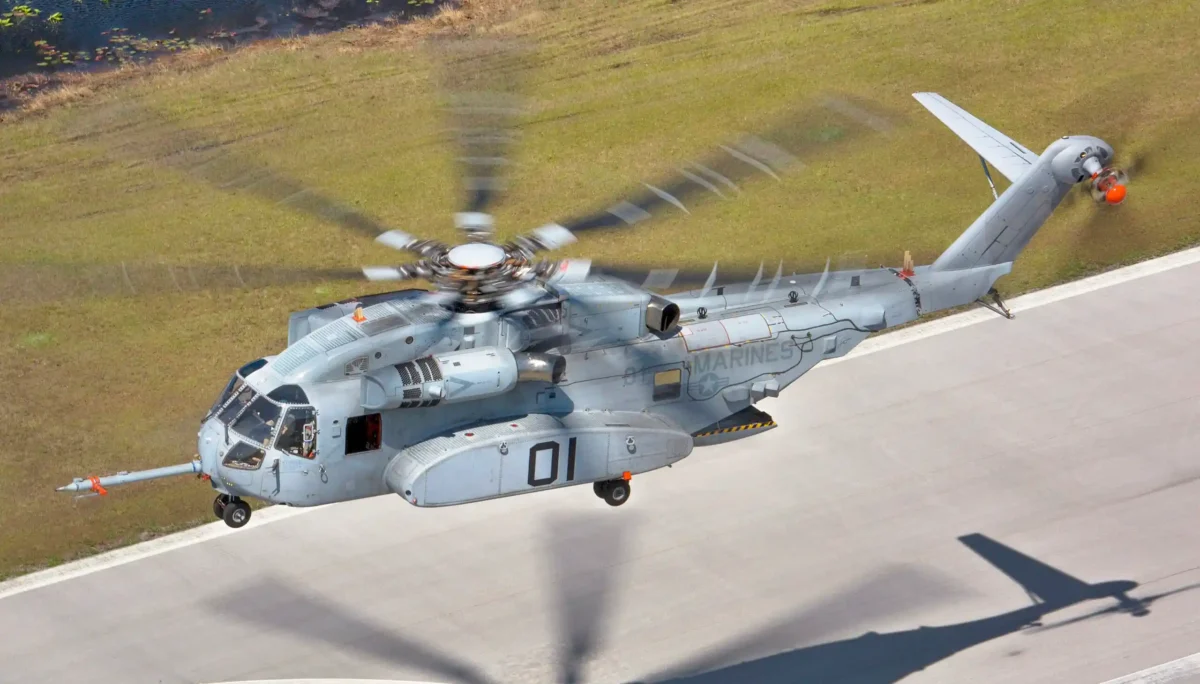
By April 2022, the Marine Corps declared Initial Operational Capability (IOC). Aircraft started flying real missions with real units. Pilots began reporting that the helicopter could lift more and feel easier to fly, a rare combo in heavy aviation. Maintenance data improved. The noise died down.
Production followed suit.
Read also: CH-47 Chinook Helicopter Capabilities: What Makes It So Reliable?
In 2023–2024, the program entered full-rate production, backed by multibillion-dollar U.S. Navy contracts. The long-term plan calls for roughly 200 aircraft, replacing the entire CH-53E fleet.
Here’s a simplified timeline:
| Milestone | Year |
| Program Launch | 2006 |
| First Flight | 2015 |
| Initial Operational Capability | 2022 |
| Full-Rate Production | 2023–2024 |
| Planned Service Life | Through 2060s |
The takeaway? The CH-53K’s rocky development wasn’t a failure; it was the cost of building something genuinely new.
And now that production is steady, the King Stallion is finally doing what it was designed to do: lift the heaviest loads, in the worst conditions, without drama.
Specs usually read like alphabet soup. Numbers. Acronyms. Easy to skim, easier to forget. But with the CH-53K King Stallion, the technical details aren’t trivia; they’re the reason this aircraft exists at all.
Let’s start with power, because everything else hangs off it.
The King Stallion runs on three GE T408-GE-400 turboshaft engines, each pushing roughly 7,500 shaft horsepower. Together, that’s over 22,000 shp, making it the most powerful helicopter the U.S. military has ever fielded.
The result? It can lift 36,000 pounds externally, roughly the weight of a fully loaded city bus, while still operating in high heat and thin air. Desert? Mountains? Humidity that feels personal? Still flies.
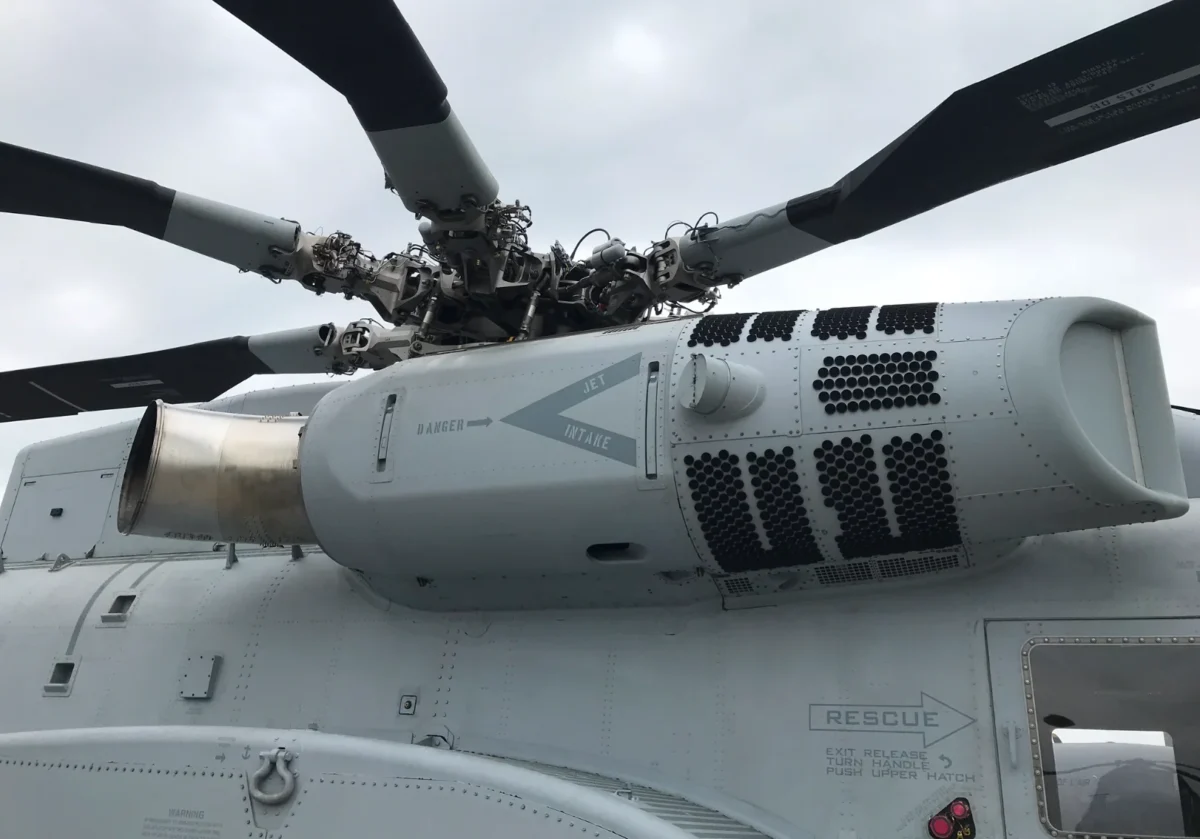
Now layer in the airframe. Composite rotor blades generate more lift with less vibration, which sounds minor until you realize vibration kills both airframes and crew endurance.
The fly-by-wire system replaces old mechanical linkages with digital controls, smoothing flight inputs and dramatically reducing pilot fatigue. This matters on long missions when precision isn’t optional.
Here’s where it comes together:
| Specification | CH-53K King Stallion |
| Engines | 3 × GE T408-GE-400 |
| Total Horsepower | ~22,500 shp |
| Max External Lift | 36,000 lbs |
| Internal Cargo | Up to 30,000 lbs |
| Max Speed | ~170 knots |
| Flight Controls | Full fly-by-wire |
One underrated detail: the wider cabin. The CH-53K can carry vehicles and pallets that simply wouldn’t fit in older helicopters, no awkward disassembly, no compromises. Roll it in, lock it down, go.
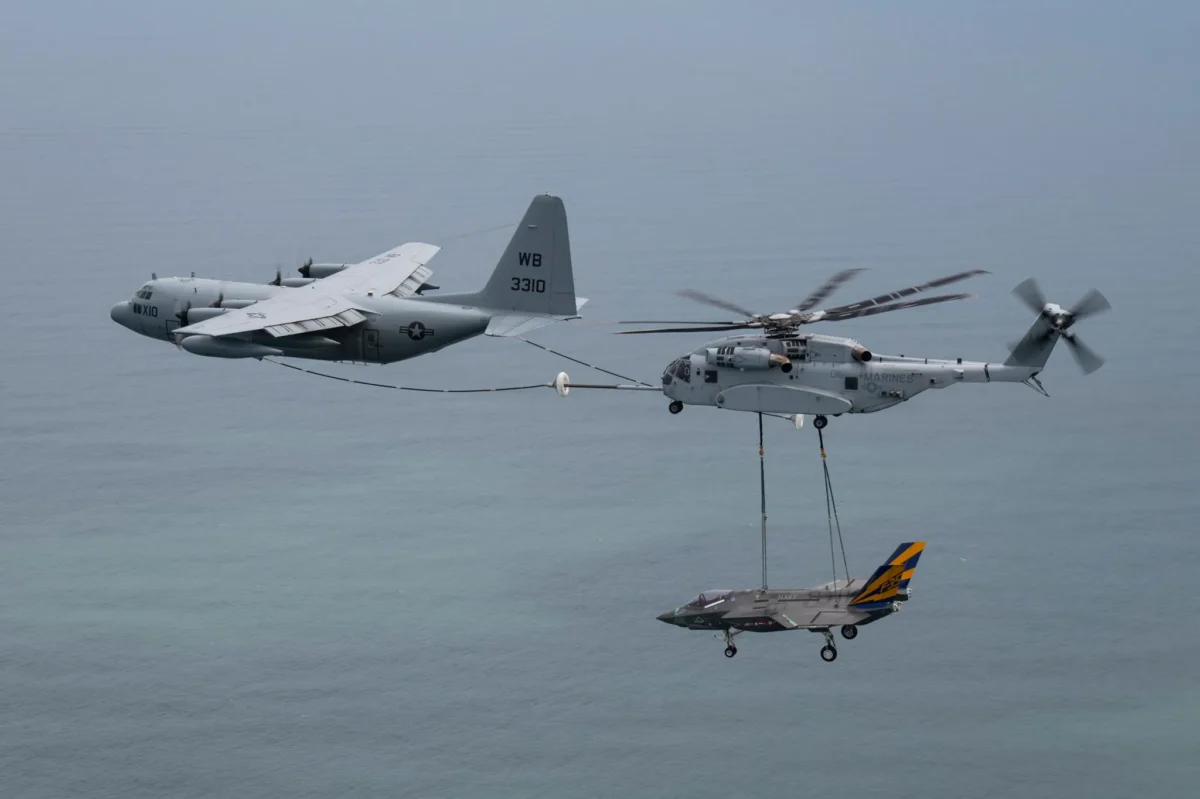
In plain terms, the CH-53K King Stallion isn’t strong by accident. Every spec points toward one goal: moving heavy, mission-critical gear quickly, safely, and repeatedly, without asking pilots or maintainers to pay the price later.
Specs are nice on paper. Missions are where reputations are made. And this is where the CH-53K King Stallion quietly separates itself from almost everything else with rotors.
Its primary job is heavy-lift assault support, moving massive loads from ship to shore or deep inland in a single hop. We’re talking artillery systems, armored vehicles, fuel bladders, and construction equipment. Loads that used to require multiple sorties can now move in one. Fewer flights mean less exposure, less fuel burned, and fewer crews at risk. That’s not flashy, but it’s decisive.
Read also: Top 5 Biggest Military Helicopters in the World
One of the King Stallion’s defining advantages is performance in what planners call “hot and high” conditions. Heat robs engines of power. Altitude thins the air.
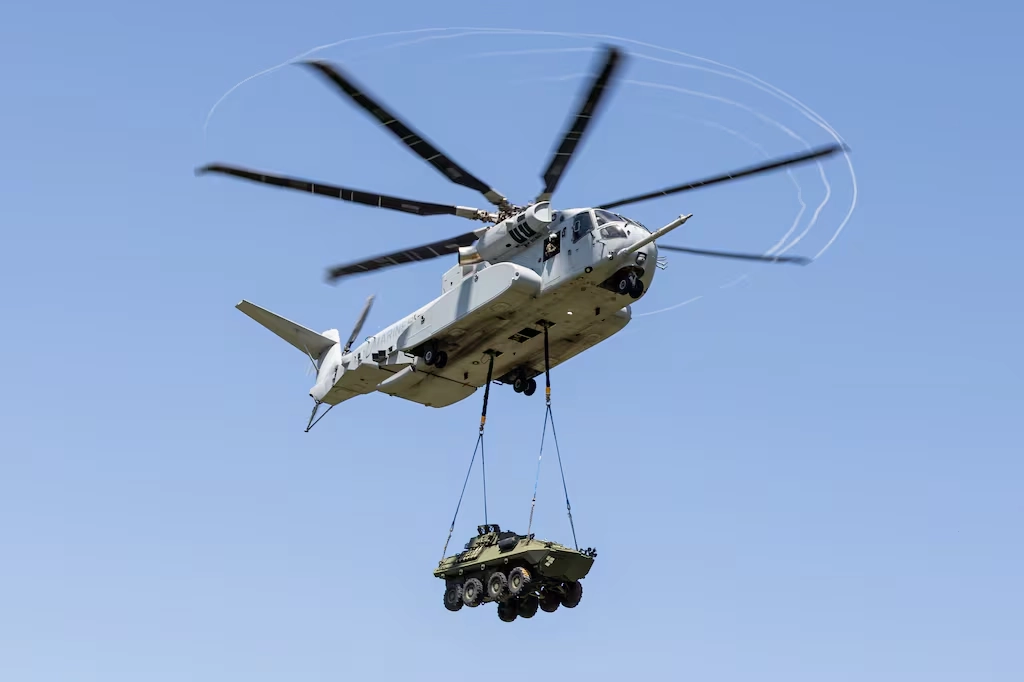
The CH-53K was built to shrug off both. In practical terms, that means Marines get their gear where they need it, even when the environment is actively working against them.
Beyond combat, the CH-53K King Stallion is a humanitarian workhorse. Earthquakes, floods, and hurricanes, these disasters tend to wipe out roads and ports first.
A helicopter that can lift generators, water purification units, and heavy vehicles straight into disaster zones becomes invaluable. In those moments, raw lift capacity turns into saved time, and saved time turns into saved lives.
Typical mission profiles include:
What’s striking is how often the King Stallion replaces multiple aircraft types in planning scenarios. It doesn’t just fill a role, it compresses the logistics chain.
In short, the CH-53K isn’t built for one kind of mission. It’s built for uncertainty. And that flexibility may be its most strategic weapon of all.
It’s tempting to think of the CH-53K King Stallion as a shinier version of the CH-53E Super Stallion. Same family. Same general silhouette. Bigger price tag. But that comparison misses the point. This isn’t a facelift, it’s a generational leap.
The CH-53E first flew in the late 1970s. It was a beast for its time, and it earned its keep for decades. But the battlefield changed. Vehicles got heavier. Electronics multiplied. Maintenance hours ballooned.
By the 2010s, keeping the E-model flying often meant heroic effort from maintainers and a growing logistics bill.
The CH-53K King Stallion flips that equation.
Lift capacity jumps dramatically. The CH-53E tops out around 27,000 pounds externally under ideal conditions.
The CH-53K pushes that to 36,000 pounds, and more importantly, does it in heat and altitude where the older aircraft simply can’t. That difference isn’t academic; it determines whether a vehicle arrives today or tomorrow.
Then there’s the cockpit. Analog gauges versus digital displays. Mechanical controls versus fly-by-wire. Pilots transitioning to the K-model often describe it as “less wrestling, more managing.” That reduced workload translates into safer low-level flight and better performance during complex landings.
A side-by-side makes it clearer:
| Feature | CH-53E Super Stallion | CH-53K King Stallion |
| First Flight | 1974 | 2015 |
| Max External Lift | ~27,000 lbs | 36,000 lbs |
| Engines | 3 × T64 | 3 × T408 |
| Flight Controls | Mechanical | Fly-by-wire |
| Maintenance Burden | High | Significantly reduced |
The real win, though, is sustainability. The CH-53K was designed with data-driven maintenance in mind, sensors, diagnostics, and easier access to components. Less time fixing. More time flying.
So no, this isn’t just an upgrade. It’s the difference between maintaining a classic car and driving something built for modern roads, faster, smarter, and far less fragile.
It’s easy to focus on fighters, drones, and hypersonics; the sharp end of modern warfare gets all the attention. But wars, relief efforts, and deterrence strategies quietly hinge on logistics. And that’s where the CH-53K King Stallion earns its keep.
This helicopter changes assumptions. It alters planning conversations before rotors even spin. Commanders can move heavier gear faster, with fewer assets, and under tougher conditions. That compresses timelines. It reduces exposure. It creates options where none existed before.
The real impact of the CH-53K King Stallion isn’t a single spec or mission, it’s cumulative. A vehicle delivered hours earlier. A unit resupplied in one lift instead of three. A disaster zone reached when roads are gone and ports are unusable. These moments don’t trend on social media, but they decide outcomes.
There’s also a cultural shift baked into the aircraft. Digital systems, predictive maintenance, reduced pilot workload, these reflect a broader move toward sustainability in military aviation. Not just flying harder, but flying smarter. For a platform expected to serve well into the 2060s, that mindset matters.
Think of the King Stallion less as a helicopter and more as infrastructure. Like a bridge you don’t notice until it’s gone, its value is measured by what it enables others to do.
In a world that’s heavier, faster, and less forgiving than ever, the CH-53K isn’t about dominance, it’s about reliability under pressure. And that might be the most underrated form of power there is.