Follow Us:
Follow Us:

There’s a certain sound that can stop veterans mid-sentence.
Not a song. Not thunder. A helicopter rotor.
That deep whop-whop-whop echo belongs to the Huey family, an aircraft line so recognizable that even people who know almost nothing about military aviation can identify it instantly.
And sitting in the middle of that legacy is the UH-1N Twin Huey, a machine that rarely gets the spotlight its older Vietnam-era cousin receives, yet quietly became one of the most dependable helicopters the military ever fielded.
The funny thing? The UH-1N wasn’t built to be glamorous. It was built because pilots needed something safer.
Early Huey variants relied on a single engine. Reliable enough most days, sure, but “most days” becomes uncomfortable math when you’re flying low over mountains, water, desert heat, or combat zones.
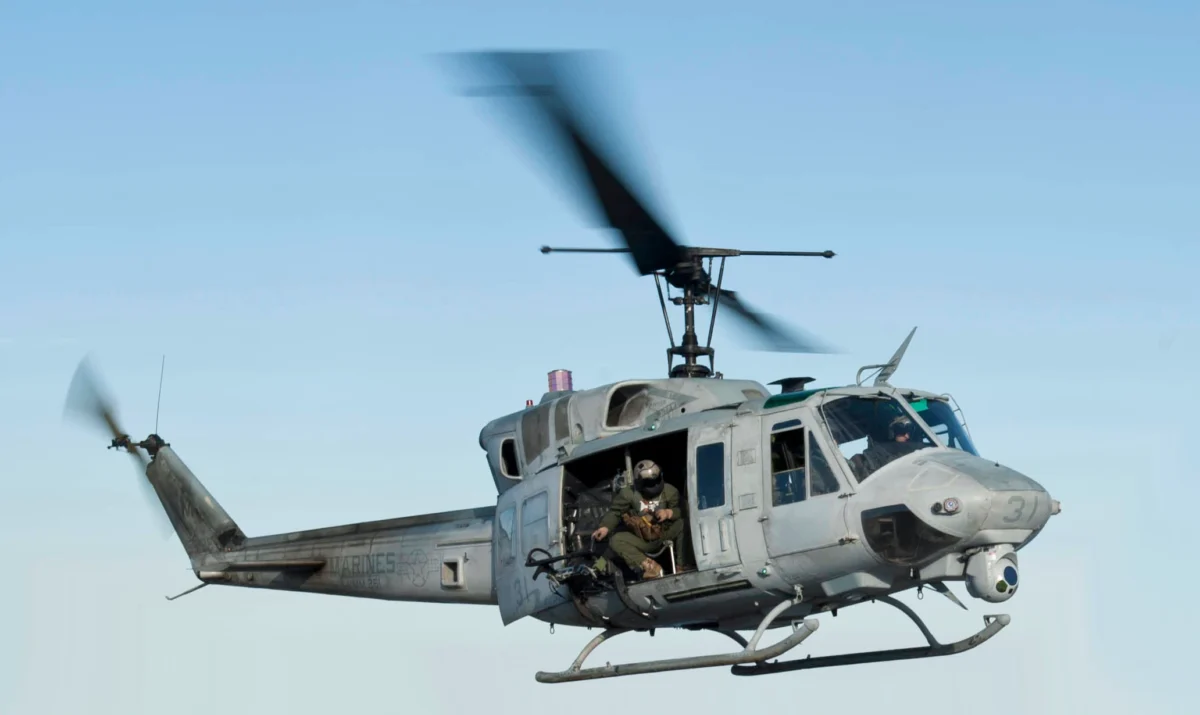
Bell answered that problem by giving the Huey two engines instead of one, creating the Bell UH-1N Twin Huey, a helicopter with extra lifting power, better survivability, and the ability to keep flying even after mechanical trouble that would’ve doomed earlier models.
And that changed everything.
From transporting Marines in brutal weather conditions to guarding America’s nuclear missile fields, the UH-1N Huey became the kind of aircraft military crews trusted with jobs where failure simply wasn’t an option.
It hauled medevac patients, inserted reconnaissance teams, carried diplomats, rescued stranded civilians after hurricanes, and occasionally served as an airborne reminder that old machines can still outperform newer ones when maintained properly.
What makes the Twin Huey helicopter fascinating isn’t just the hardware, it’s the contradiction.
It looks rugged and almost primitive beside sleek modern rotorcraft. The cockpit can feel cramped. The cabin rattles. Rivets everywhere.
Yet pilots consistently describe the aircraft with the kind of affection normally reserved for old pickup trucks or fishing boats that somehow refuse to die.
And perhaps that’s why the UH-1N Twin Huey still captures attention decades after its first flight. It isn’t just a helicopter. It’s a survivor with rotor blades.
At first glance, the UH-1N Twin Huey looks a lot like every other Huey helicopter ever made. Long cabin. Rounded nose. Skids underneath. That unmistakable rotor silhouette. But underneath the familiar shape sits a major engineering shift that changed how the aircraft performed in the real world.
The biggest difference? Two engines instead of one.

The original Hueys, the helicopters most people associate with Vietnam films and grainy war footage, were powered by a single turboshaft engine. That setup worked, but it also carried a quiet risk. If the engine failed in difficult terrain, pilots had very few good options.
Read also: MH-139 Grey Wolf: The Helicopter Built for Modern Threats
Bell solved that problem by creating a twin-engine version based on the civilian Bell 212 platform, and the result became the Bell UH-1N Twin Huey.
Its powerplant, the Pratt & Whitney PT6T “Twin-Pac,” essentially combined two turbine engines into a single gearbox system. If one side failed, the helicopter could often continue flying on the remaining engine long enough to land safely. In military aviation, that’s not a luxury, it’s survival.
The helicopter quickly earned a reputation for versatility. One day it could carry troops into remote terrain; the next, evacuate wounded personnel or transport cargo through terrible weather. Some crews jokingly called it “the airborne pickup truck.” Not elegant. Just dependable.
And honestly, that rugged practicality explains why the Twin Huey helicopter lasted so long in military service. It wasn’t designed to impress airshow crowds. It was designed to start every morning, fly hard all day, and come back with dents, dust, and stories.
The story of the UH-1N Twin Huey begins, oddly enough, with a problem nobody wanted to admit out loud at first: helicopters were being asked to do too much with too little margin for error.
By the late 1960s, the original Huey had already become legendary. During the Vietnam War, these helicopters were everywhere, troop insertions, medevac runs, command missions, supply transport.
The aircraft worked hard, maybe too hard. Pilots loved the Huey’s simplicity, but military planners started realizing that a single-engine helicopter operating in hostile environments left very little room for mechanical failure.
Canada pushed the issue forward.
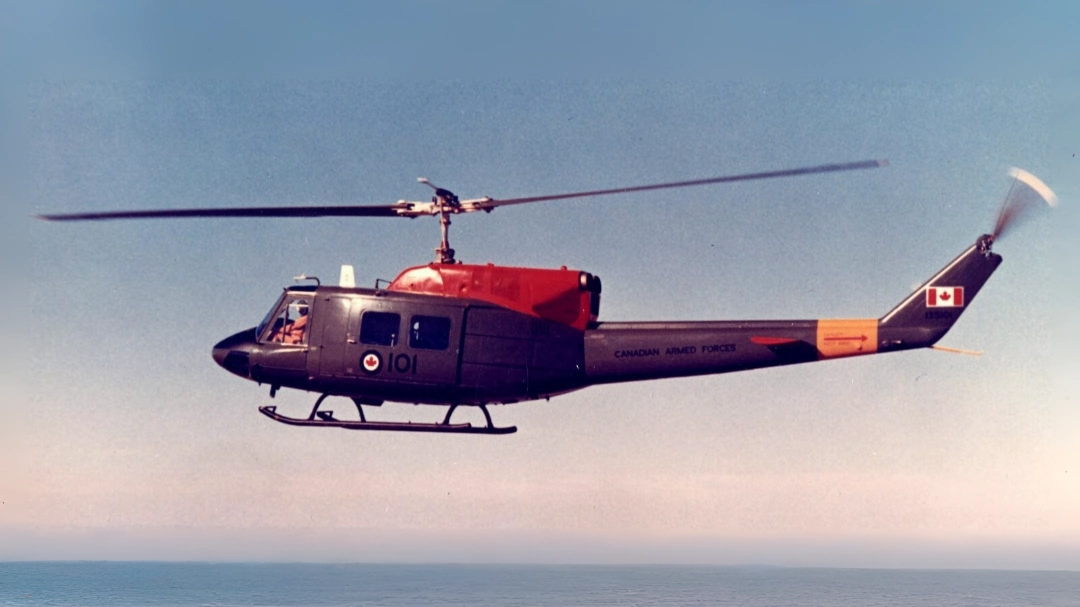
The Royal Canadian Air Force needed a more reliable utility helicopter capable of handling harsh weather, remote Arctic operations, and long-distance transport. Bell responded by redesigning the Huey around a twin-engine system.
The project evolved from the civilian Bell 212, but militarized quickly. In 1969, the aircraft made its first flight. Soon after, it entered service as the CH-135 Twin Huey in Canada and the UH-1N in the United States.
That twin-engine setup changed the helicopter’s personality entirely.
Instead of merely surviving missions, the aircraft could now operate with greater confidence in mountainous terrain, over water, and in combat zones where engine redundancy mattered enormously. U.S. Marine Corps units adopted it.
The U.S. Air Force did too, particularly for security missions around intercontinental ballistic missile sites, one of those strange Cold War details that sounds fictional until you realize it wasn’t.
Production expanded steadily through the 1970s.
What’s interesting is how quietly the Bell UH-1N evolved. It never arrived with the dramatic fanfare of attack helicopters like the Apache. No blockbuster image makeover. No futuristic marketing. It simply became dependable machinery in an era obsessed with reliability.
And sometimes that’s the aircraft that lasts longest, the one crews trust instinctively when conditions get ugly.
Numbers alone rarely explain why pilots become attached to a helicopter. Still, the technical side of the UH-1N Twin Huey tells you a lot about why the aircraft earned such a stubbornly loyal reputation over the decades.
The defining feature, of course, is the twin-engine configuration. The helicopter uses the Pratt & Whitney Canada PT6T-3 Twin-Pac system, essentially two turbine engines driving a single output shaft. It’s a clever bit of engineering that gave crews something priceless in military aviation: backup power when things went sideways.
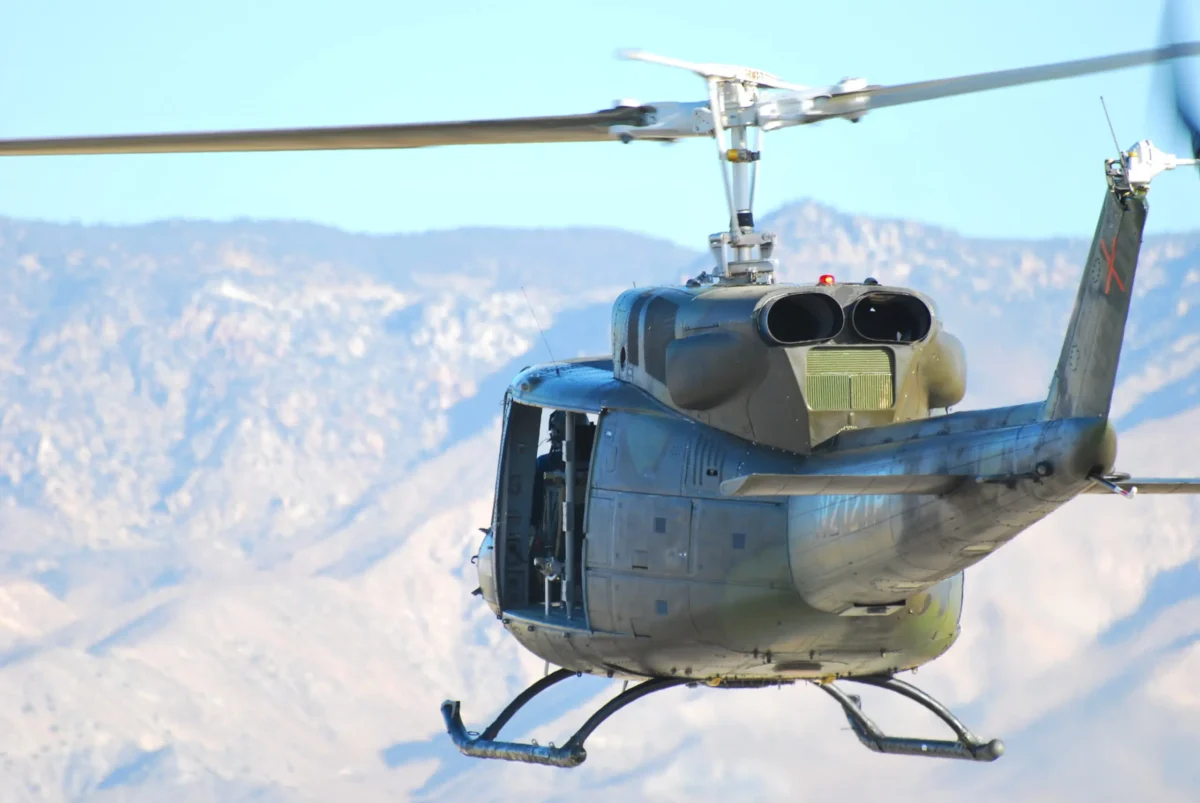
And helicopters, sooner or later, always encounter sideways situations.
Compared with earlier single-engine Hueys, the Bell UH-1N offered improved lifting capability, better high-altitude performance, and stronger survivability during combat or harsh weather operations. It wasn’t dramatically faster than older variants, but it was steadier under pressure, kind of like the difference between an old motorcycle and a reliable 4×4 truck.
| Specification | Details |
| Manufacturer | Bell Helicopter |
| Powerplant | Pratt & Whitney PT6T-3 Twin-Pac |
| Horsepower | Approx. 1,800 shp combined |
| Crew | 2–3 |
| Passenger Capacity | 13–14 troops |
| Maximum Speed | ~125 knots (144 mph) |
| Cruise Speed | ~110 knots |
| Combat Range | Approx. 250 nautical miles |
| Service Ceiling | Around 17,000 ft |
| Rotor Diameter | 48 ft |
| Length | 57 ft 1 in |
One underrated aspect of the Twin Huey helicopter is cabin practicality. The aircraft’s wide sliding doors and boxy interior made loading troops, medical stretchers, or cargo surprisingly efficient. Marines could board quickly. Rescue crews could work inside without feeling folded into a sardine tin.
Pilots often mention another trait too: stability.
The UH-1N Huey wasn’t flashy in the air. It didn’t dart around like lightweight scout helicopters. Instead, it had a steady, predictable feel, especially useful during rescue operations or low-altitude transport missions where sudden movements could become dangerous fast.
In a strange way, the aircraft’s specifications reflect its whole identity: practical, forgiving, and built for endurance rather than spectacle.
The UH-1N Twin Huey earned its reputation the old-fashioned way, by showing up for almost everything.
Troop transport? Yes. Medevac? Constantly. Search-and-rescue? Absolutely. VIP transport, missile field security, disaster relief, reconnaissance support… somehow this helicopter kept getting assigned jobs far outside what most aircraft are expected to handle. And weirdly enough, it usually performed them well.
That versatility became the helicopter’s defining trait.
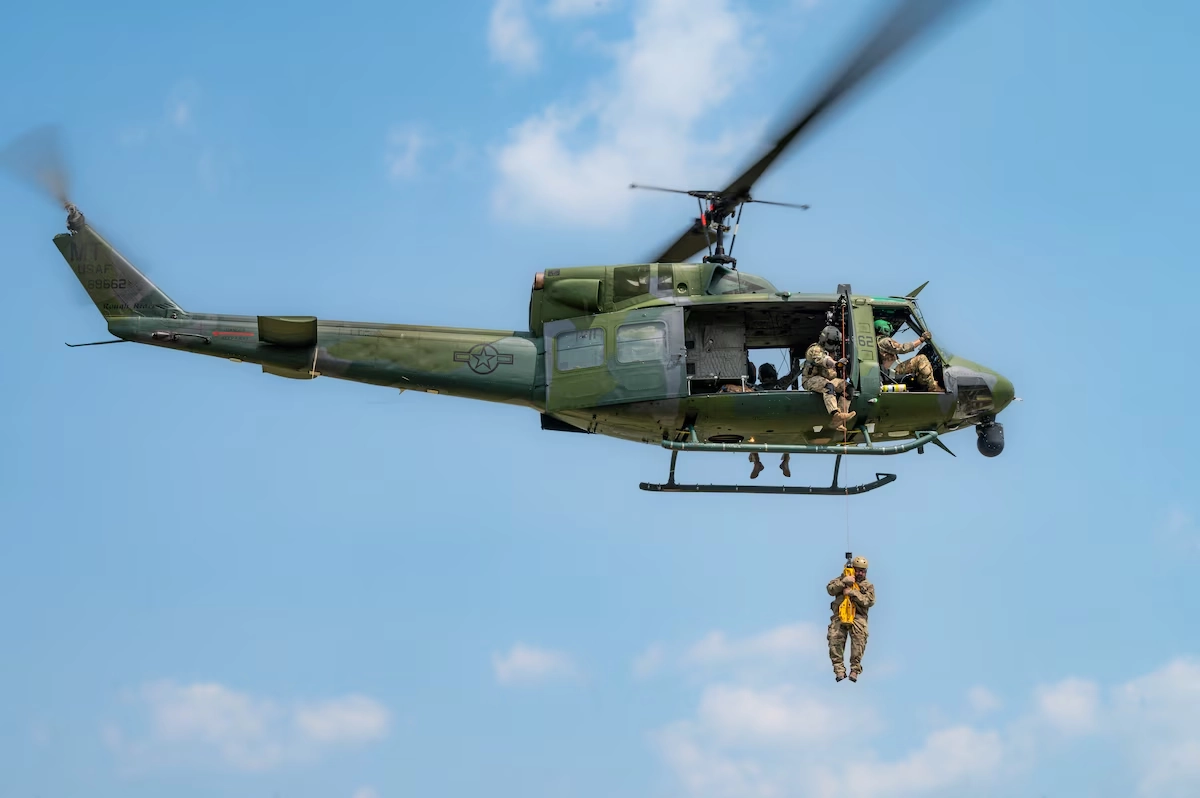
In the U.S. Marine Corps, the Twin Huey helicopter often served as a utility workhorse supporting expeditionary operations. Marines relied on it for rapid troop movement between ships and shorelines, particularly in environments where larger helicopters weren’t practical. Dusty desert landing zones, cramped jungle clearings, rough coastal terrain, the aircraft adapted with very little drama.
The U.S. Air Force used the UH-1N Huey differently. One of its most unusual assignments involved protecting America’s nuclear missile silos.
Helicopter crews transported security teams across massive stretches of isolated terrain surrounding intercontinental ballistic missile fields.
Imagine flying low over frozen plains in Montana at night, carrying armed response personnel toward facilities most civilians never even think about. That was routine work for the UH-1N.
Here’s a snapshot of its primary military roles:
| Mission Type | UH-1N Role |
| Troop Transport | Tactical insertion/extraction |
| Medevac | Casualty evacuation |
| Search & Rescue | Civilian and military rescue |
| Security Operations | Missile site patrol |
| Command & Control | Airborne coordination |
| Disaster Relief | Evacuation and supply delivery |
One often-overlooked strength of the Bell UH-1N Twin Huey was reliability during humanitarian crises. Hurricanes, floods, wildfires, the helicopter repeatedly appeared in disaster zones because it could land almost anywhere and operate with minimal infrastructure.
That matters more than people realize.
Advanced aircraft can look impressive at defense expos, sure. But when roads disappear under floodwater or communications collapse after storms, crews tend to reach for helicopters they trust mechanically.
The UH-1N became one of those aircraft. Not glamorous. Not cutting-edge. Just consistently useful when conditions got ugly and time started running short.
At a distance, the UH-1N Twin Huey and the UH-1Y Venom look like close relatives. Same Huey DNA. Same broad silhouette. Same mission philosophy centered around utility and flexibility. But climb inside both helicopters back-to-back and the difference feels less like an upgrade and more like stepping across generations.
The UH-1N Huey belongs to an era where durability mattered more than digital sophistication. Analog gauges filled the cockpit. Pilots relied heavily on instinct, muscle memory, and raw flying skill. The helicopter was dependable, but it demanded attention constantly, like driving an old manual-transmission truck through mountain roads during winter.
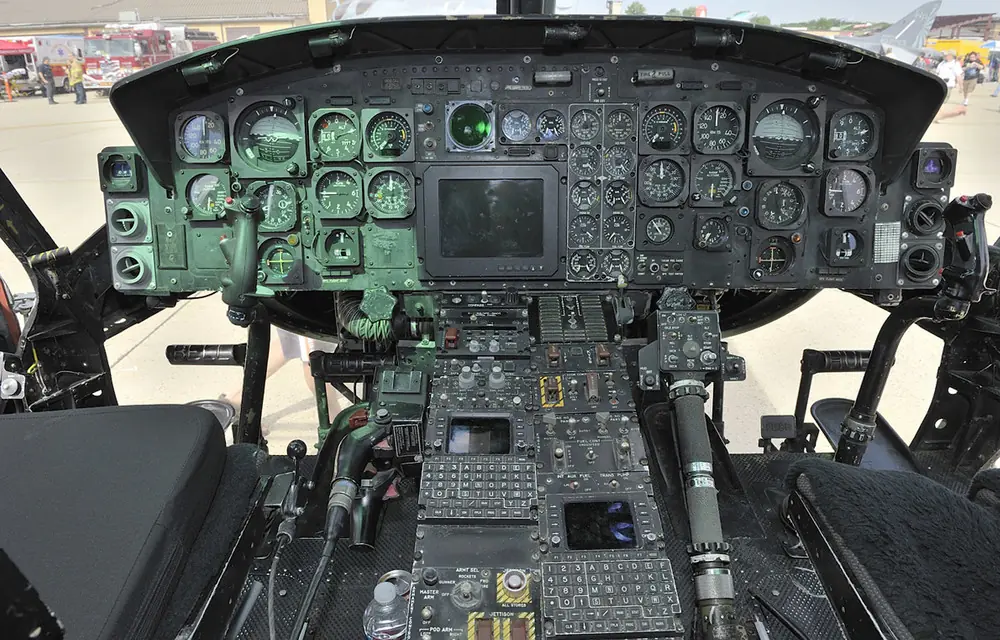
The UH-1Y Venom, meanwhile, was built for modern warfare. It introduced a fully digital glass cockpit, advanced navigation systems, stronger engines, composite rotor blades, and dramatically improved battlefield survivability. Marines sometimes describe it as “the Huey after years at the gym.”
And honestly… they’re not wrong.
One of the biggest changes came from the rotor system. The UH-1N Twin Huey uses the classic two-blade rotor setup that creates the iconic Huey sound people recognize instantly. The UH-1Y switched to a four-blade composite rotor system, reducing vibration while increasing lift and speed.
Here’s how the two aircraft compare:
| Feature | UH-1N Twin Huey | UH-1Y Venom |
| First Introduced | Early 1970s | 2000s |
| Rotor System | 2-blade | 4-blade composite |
| Cockpit | Analog instruments | Digital glass cockpit |
| Engines | PT6T Twin-Pac | GE T700 engines |
| Max Speed | ~144 mph | ~180+ mph |
| Lift Capability | Moderate | Significantly improved |
| Combat Survivability | Good | Advanced |
Still, the older Bell UH-1N has one advantage people rarely talk about: simplicity.
In remote environments, simpler aircraft can sometimes stay operational longer because crews know how to repair them quickly without layers of software diagnostics. That matters during extended deployments where logistics become messy.
So while the UH-1Y Venom clearly outperforms the older helicopter technologically, the Twin Huey helicopter remains respected for something harder to engineer, earned trust.
The UH-1N Twin Huey earned its iconic status in a way modern helicopters rarely do, it became familiar to people far beyond military aviation circles.
Even today, the sound of its rotor blades can trigger instant recognition. That deep, uneven whop-whop-whop isn’t just noise anymore; it’s practically part of aviation history.
What made the Twin Huey helicopter memorable wasn’t flashy technology or aggressive firepower. It was presence.
The aircraft appeared everywhere: military bases, disaster zones, rescue missions, border patrol operations, even humanitarian evacuations after hurricanes and wildfires. For decades, people associated the helicopter with movement, urgency, and survival.
Pilots respected the UH-1N Huey because it felt dependable under pressure. Mechanics appreciated its straightforward design. Crews knew the aircraft could take punishment, land in rough conditions, and keep flying long after newer systems might require extensive maintenance. That reliability created emotional attachment over time.
There’s also a cultural factor impossible to ignore. Huey helicopters became visual shorthand for military aviation in films, documentaries, and television. While older variants often dominated Vietnam-era imagery, the Bell UH-1N Twin Huey carried the legacy forward into modern service.
In many ways, the aircraft became more than transportation.
It became a symbol of arrival, whether bringing troops, rescuers, supplies, or hope.