Follow Us:
Follow Us:

When you first see the Su-47 Berkut, with its backward-swept wings and unconventional silhouette, it almost feels like someone misread the fighter jet design rulebook on purpose.
It’s a bold experiment from Sukhoi Su-47 engineers that pushed aerodynamic boundaries in the 1990s and still gets people talking today about why it looked so weird and why Russia only built one Su-47.
Even now, decades after its sole prototype took shape, the Russian Su-47 keeps cropping up in aviation debates, not because it’s returning to service, but because recent industry chatter highlights that forward-swept wings really did deliver unprecedented agility while also introducing headaches in structural stress and cost that ultimately grounded the project.
It’s almost like the Berkut became a permanent footnote in airpower discussions, influential without being operational.
Yet that one prototype’s legacy arguably lives on in the conversation around newer fighters and aircraft design philosophies, even as Russia pushes ahead with modern jets like the Su-57 and debates continue over what counts as “worth building.”
So, what is the Su-47 Berkut? At its core, it was never meant to be a frontline fighter you’d see lined up on airbases across Russia.

The Su-47 Berkut started life as an experimental technology demonstrator, basically Sukhoi asking, “What happens if we break the rules and see how far we can push them?”
The idea traces back to the late Soviet era, when engineers were already thinking beyond traditional wing layouts. After the USSR collapsed, those ideas didn’t disappear, but funding definitely shrank. What survived was a single, ambitious project: the Sukhoi Su-47, originally known as the S-37, which finally flew in 1997. The goal was data. Sukhoi wanted to explore advanced aerodynamics, fly-by-wire systems, and especially the controversial forward-swept wing design.
From a development and design standpoint, the Sukhoi Su-47 Berkut sits in a really interesting place in Russian aviation history.
Sukhoi, which had already built a reputation with aircraft like the Su-27 family, used the Berkut as a bridge between Cold War thinking and future fifth-generation concepts.
In a way, it was a flying laboratory, testing composite materials, digital flight controls, and extreme maneuverability concepts that traditional designs struggled to support.
What makes this even more fascinating is that Sukhoi reportedly knew the risks going in. The company understood that forward-swept wings could offer incredible agility and control at high angles of attack, but also suspected they might come with serious structural and cost penalties.
The Su-47 was their way of proving or disproving that tradeoff in the real world. And while only one aircraft was ever built, its influence quietly fed into later Russian fighter programs, even if the Berkut itself never moved beyond the prototype stage.
Honestly, almost everything about it feels different. While most fighter jets stick to tried-and-true layouts, the Su-47 Berkut went all-in on experimentation. What really sets the Su-47 Berkut apart from other fighter jets is that it looks and behaves, like it came from a parallel design timeline.
While most fighters chase stealth shaping or raw speed, the Sukhoi Su-47 leaned hard into experimentation. Almost everything about it was built to test ideas rather than to fit neatly into existing doctrine.
That’s why, even today, it still feels unusual compared to both older Soviet jets and modern fighters.
This is the feature everyone notices first, and honestly, for good reason. The forward-swept (or inverted) wings on the Su-47 Berkut were an aerodynamic gamble.
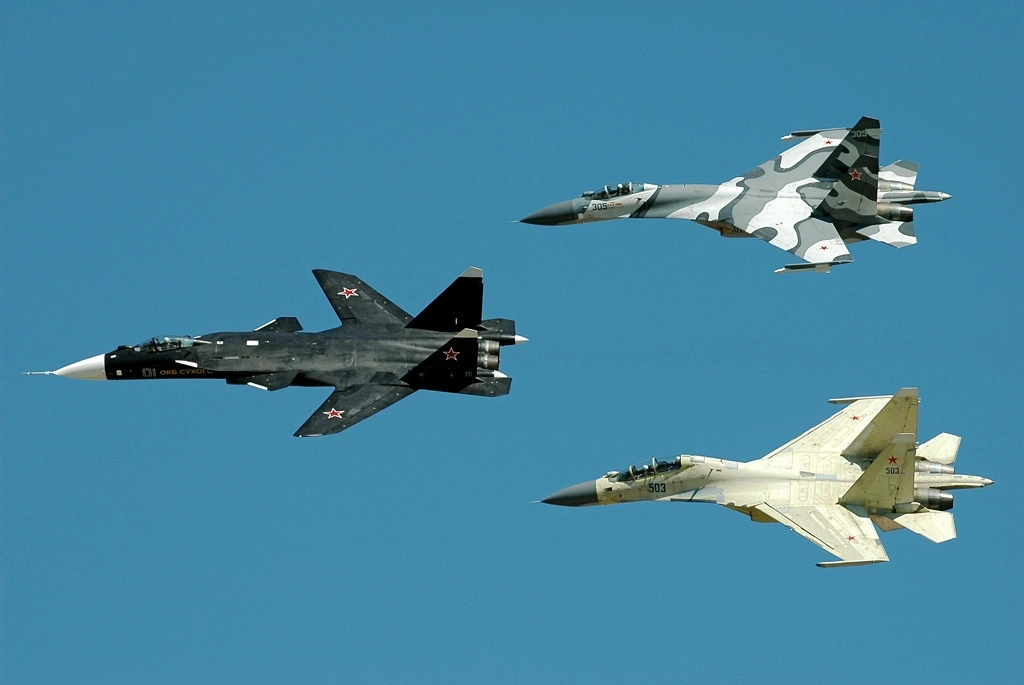
In theory, this wing layout improves maneuverability, especially at high angles of attack. It can make the aircraft feel more controllable during aggressive turns and low-speed handling, which is something dogfight-focused designers care a lot about.
But those inverted wings also create serious structural stress. As speed and G-forces increase, the wings naturally want to twist in ways engineers don’t love. Sukhoi tried to solve this using advanced composite materials and fly-by-wire systems, and by most accounts, it worked, technically.
Still, it was expensive, complex, and probably not practical for mass production at the time. That tension between performance gains and real-world costs is a big part of why the Su-47 stayed experimental.
The Su-47 cockpit was surprisingly modern for its time, especially considering Russia’s economic situation in the 1990s. It featured a glass-cockpit layout with digital displays, hands-on-throttle-and-stick (HOTAS) controls, and heavy integration with fly-by-wire systems.
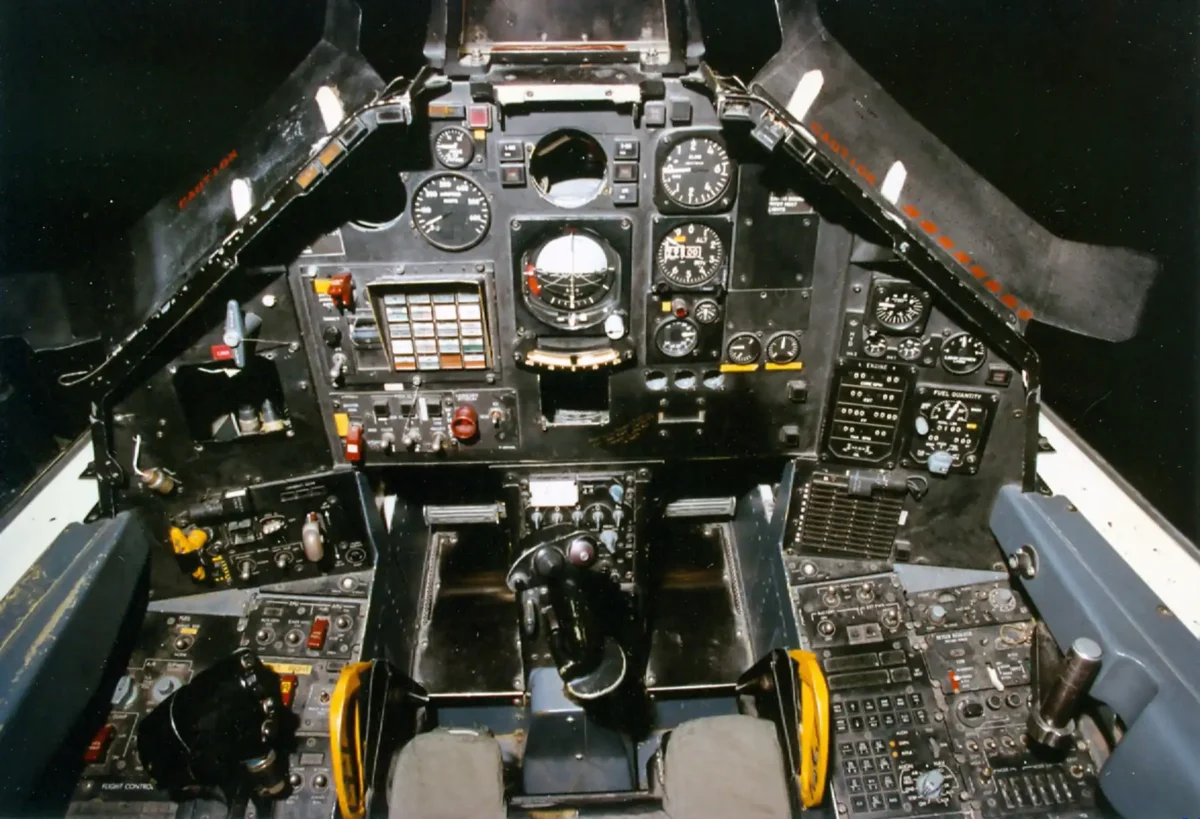
All of that was essential because without constant computer assistance, the aircraft would’ve been extremely difficult, if not impossible, to fly safely.
The idea was to reduce pilot workload while flying an aircraft that was, aerodynamically speaking, a bit unstable by design. Fly-by-wire wasn’t just helpful here, it was essential. Without computers constantly making micro-adjustments, the Su-47 likely wouldn’t have been flyable in a safe or predictable way.
In that sense, the cockpit reflects the Berkut’s overall philosophy: push the limits, then rely on technology to keep things under control.
| Manufacturer | Sukhoi |
| Role | Experimental technology demonstrator |
| First Flight | 1997 |
| Crew | 1 pilot |
| Length | ~22.6 m (≈ 74.1 ft) |
| Wingspan | ~16.7 m (≈ 54.8 ft) |
| Height | ~6.4 m (≈ 21 ft) |
| Empty Weight | ~16,375 kg (≈ 36,100 lb) |
| Max Takeoff Weight | ~35,000 kg (≈ 77,160 lb) |
| Engines | 2 × Lyulka AL-37FU turbofans (with thrust vectoring) |
| Thrust (each) | ~142 kN (≈ 31,900 lbf) with afterburner |
| Top Speed | ~Mach 2.0 (≈ 2,470 km/h / 1,535 mph) |
| Combat Radius | ~3,300 km (≈ 2,050 miles) |
| Service Ceiling | ~18,000 m (≈ 59,000 ft) |
| Flight Controls | Digital fly-by-wire |
| Radar | Experimental / testbed systems |
| Armament | Conceptual only (no operational weapons fitted) |
On paper, the Su-47’s top speed looks impressive, around Mach 2, or roughly 2,470 km/h (1,535 mph), which puts it comfortably in the same league as many fourth-generation fighters. But speed was never really the headline feature here.
Where the Su-47 Berkut likely stood out was how it flew rather than how fast it went.
The forward-swept wings were designed to improve control at high angles of attack, meaning the jet could stay stable and responsive even during extreme maneuvers. Combined with thrust-vectoring engines and fly-by-wire controls, the aircraft reportedly handled exceptionally well at low speeds and during aggressive turns.
This part often surprises people; the Su-47 armament was mostly theoretical. The aircraft was never intended to be fully combat-ready, so it didn’t carry an operational weapons load during testing.
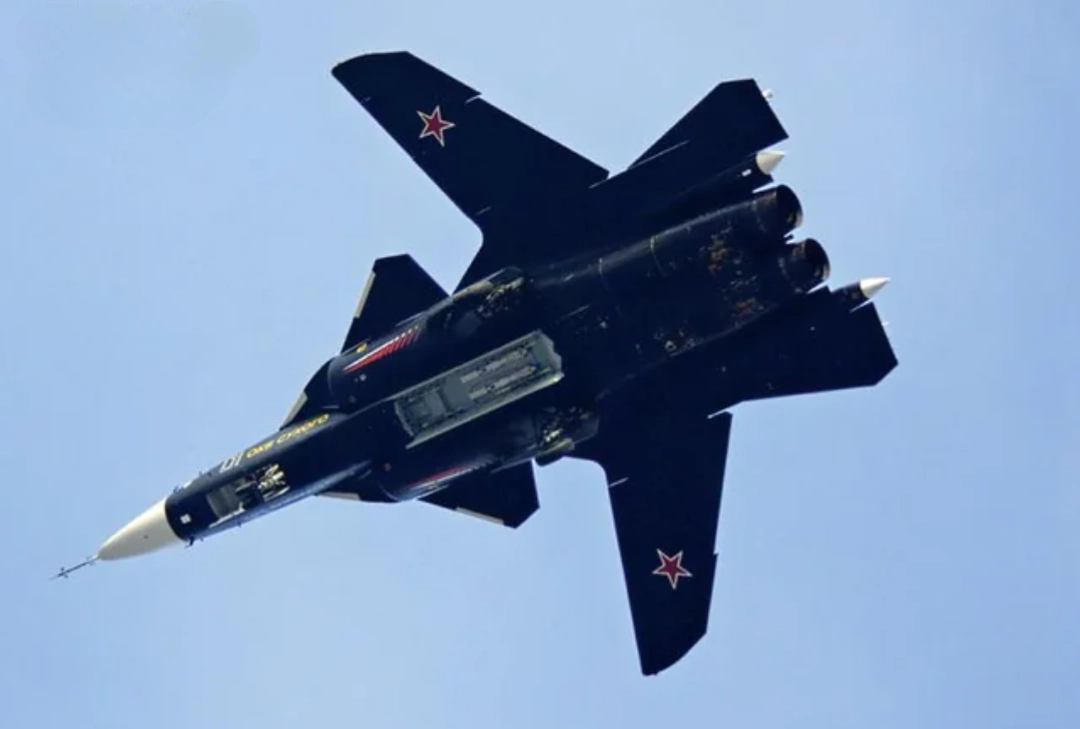
In concept, though, Sukhoi envisioned the Sukhoi Su-47 Berkut carrying internal and external weapons similar to other Russian fighters, air-to-air missiles, air-to-ground munitions, and possibly a built-in cannon.
Some mock-ups even hinted at internal weapons bays, which would’ve supported early stealth ideas. But none of that progressed beyond design studies.
So when people ask what weapons the Su-47 carried, the honest answer is: not much, at least not in real service. Its real “weapon” was data, feeding Sukhoi critical insights into aerodynamics, materials, and control systems that later influenced aircraft like the Su-57 Felon.
Read also: Sukhoi Su-57 Felon: Russia’s Fifth-Generation Stealth Fighter
Short answer? The Su-47 Berkut was probably too ambitious for its moment in history. Longer answer, let’s break it down.
The Sukhoi Su-47 was never really designed with mass production in mind. From the beginning, it functioned more like a flying research lab than a combat-ready fighter.
Sukhoi wanted real-world data on forward-swept wings, advanced composites, and fly-by-wire systems, not an aircraft that could be cheaply built in large numbers.
Its forward-swept wings delivered impressive agility, but they also created huge structural stress. To keep those wings from twisting themselves apart, Sukhoi had to rely on expensive composite materials and constant computer correction. That setup might be manageable for a single prototype, but it didn’t make sense to scale up for frontline service.
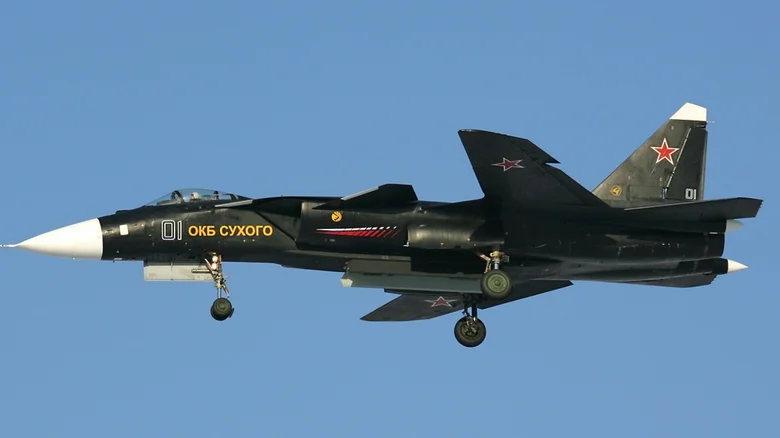
So even though the jet reportedly flew well, it likely didn’t offer a big enough performance payoff to justify the headaches of production.
Politically and economically, Russia in the 1990s simply wasn’t in a position to fund risky, experimental fighters. Defense budgets were tight, priorities were shifting, and the focus gradually moved toward more practical fifth-generation projects.
Technically, the Su-47 Berkut proved that forward-swept wings could work, but also confirmed why most air forces avoid them. The design demanded advanced materials, drove up maintenance costs, and introduced risks that conventional layouts didn’t.
When Sukhoi compared those drawbacks against more traditional designs, ones that still delivered stealth, speed, and agility, the choice became pretty clear.
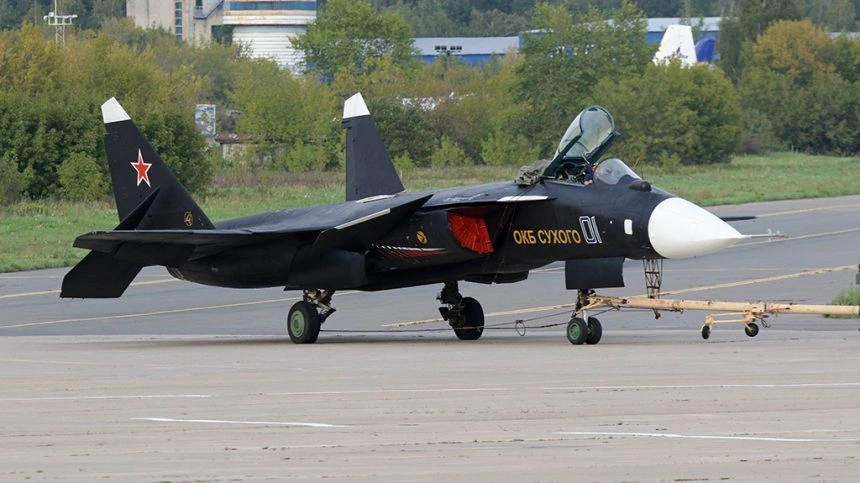
In the end, the Su-47 wasn’t cancelled because it failed. If anything, it did exactly what it was supposed to do: test bold ideas, gather data, and move on. Its DNA arguably lived on in later aircraft, even if the Berkut itself was never meant to leave the prototype stage.
When people talk about the legacy of the Su-47 Berkut, it’s easy to assume it didn’t leave much behind because only one was ever built. The Berkut’s real impact happened after its test flights, shaping how Sukhoi and Russian fighter design more broadly.
At a technological level, the Sukhoi Su-47 helped prove what worked and, just as importantly, what wasn’t worth pursuing. It validated advanced fly-by-wire systems, heavy use of composite materials, and extreme maneuverability concepts.
At the same time, it showed just how demanding forward-swept wings could be in terms of structural stress, cost, and maintenance. Those lessons likely saved Russia from investing heavily in a design path that looked exciting on paper but came with serious long-term tradeoffs.
1. Su-57’s heavy use of composites
One of the biggest takeaways from the Sukhoi Su-47 was how essential composite materials are for modern fighters.
The Berkut pushed composites hard, especially to counter wing stress, and that experience carried straight into the Su-57, which uses composites extensively to reduce weight, manage stress, and improve radar signature.
2. Advanced fly-by-wire and relaxed stability
The Russian Su-47 couldn’t really fly safely without computers constantly making corrections. That forced Sukhoi to refine digital fly-by-wire systems and embrace relaxed stability, where the aircraft is intentionally aerodynamically unstable but computer-controlled.
You see that philosophy clearly in later jets like the Su-35 and Su-57, both of which rely heavily on software to unlock extreme maneuverability without overwhelming the pilot.
3. Maneuverability over brute speed
The Berkut helped confirm something important: raw top speed isn’t everything.
The Su-47 Berkut emphasized control at high angles of attack, post-stall maneuvers, and agility in close-in combat. That mindset shows up later in Russian fighters that prioritize supermaneuverability, thrust vectoring, high-AoA performance, and tight energy control, rather than chasing higher Mach numbers alone.
4. What not to do: forward-swept wings
This might be the most valuable lesson of all. After the Su-47, Russia never seriously pursued forward-swept wings again for fighters. The data likely confirmed that while the concept works, the cost-to-benefit ratio just isn’t there for operational aircraft.
5. Prototype-first development culture
Finally, the Berkut reinforced Sukhoi’s habit of using bold prototypes to test risky ideas before committing to production. That approach, experiment early, filter aggressively, became especially important when resources were limited.