Follow Us:
Follow Us:

If you’ve ever found yourself geeking out over classic jets, the Mikoyan-Gurevich MiG-17 “Fresco” is one of those machines that keeps popping up in conversations.
Lately, there’s buzz in aviation circles about efforts to get a Polish-built MiG-17 (often called a Lim-5) flying again, which, if it happens by spring 2026, would make it the only airworthy example of its kind in Europe and a rare sight at airshows once more.
This is a jet from the early Cold War era that still sparks interest decades later, precisely because it was such a workhorse and left a mark on aerial combat.
From its first flights in the early 1950s to dogfights over Southeast Asia, and now to being lovingly restored by enthusiasts, the Fresco has a story that feels almost alive, bridging the gap between vintage warbird nostalgia and aviation heritage.
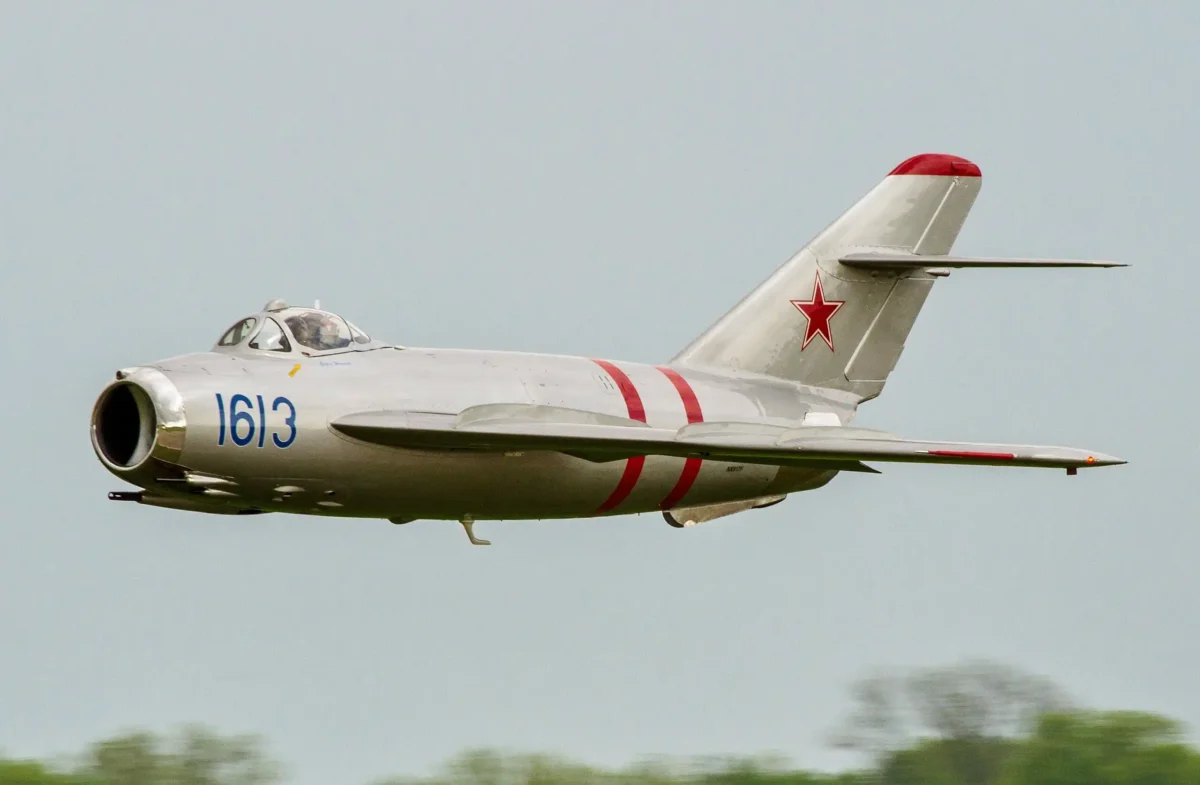
This analysis will dive into what made this relatively simple fighter so not-so-simple in its impact; how fast it could go, what engines and weapons it had, how it compared to its predecessor, the MiG-15 (and even jets that came much later).
The Mikoyan-Gurevich MiG-17 was the Soviet Union’s way of saying, “Okay, the MiG-15 was good… but we can do better.”
Developed in the early 1950s, Soviet engineers took lessons learned from the MiG-15, especially its limits at higher speeds, and tweaked the airframe with more swept wings and aerodynamic refinements to handle faster, transonic flight a bit more comfortably.
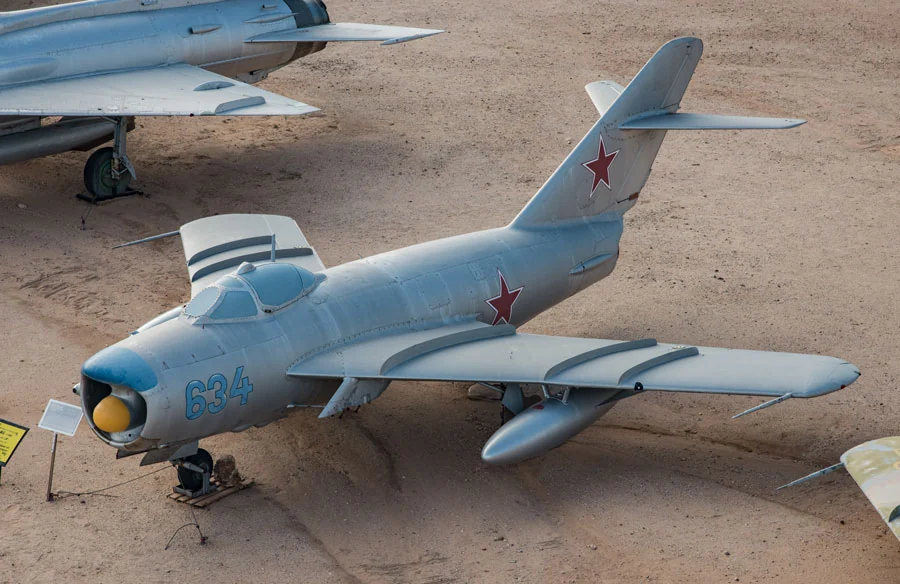
As a Russian MiG-17 fighter, its job fit neatly into Soviet air doctrine at the time. The USSR wasn’t just thinking about flashy dogfights; they were deeply focused on defending airspace, intercepting bombers, and overwhelming enemies with large numbers of relatively simple, rugged aircraft.
The MiG-17 checked all those boxes. It was straightforward to build, tough enough for rough airfields, and capable of mixing it up in close-in combat.
What’s interesting is that while it was designed under the shadow of nuclear bombers and Cold War tension, the MiG-17 fighter jet ended up proving itself in very real shooting wars.
In places like Vietnam, it showed that even without fancy avionics or guided missiles, a well-flown MiG-17 could be a serious threat.
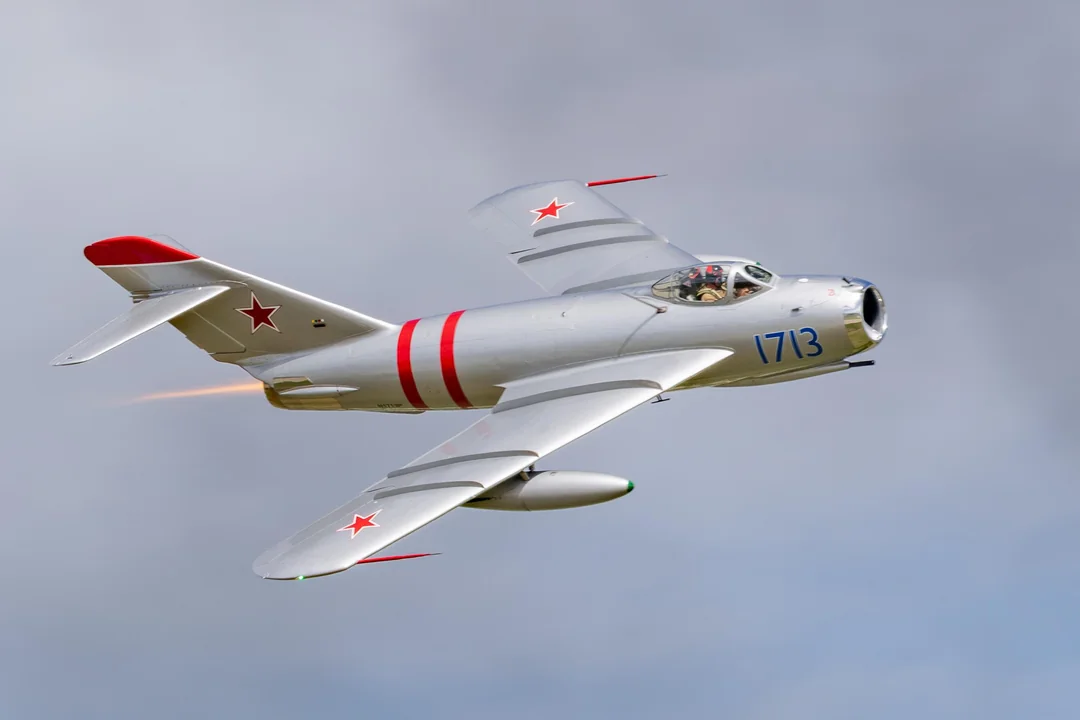
On paper, the MiG-17 Fresco could hit about 1,145 km/h (712 mph) at altitude, which works out to roughly Mach 0.93 under ideal conditions. That’s firmly subsonic, and yeah, next to later supersonic fighters, that number can sound a bit underwhelming. But speed alone doesn’t tell the whole story here.
Where the MiG-17 fighter jet was used at that speed, thanks to a relatively light airframe and a powerful turbojet for its time, it had a strong climb rate of around 65 m/s (12,800 ft/min). That meant it could get up to altitude quickly, which was a big deal in an interceptor role.
Add in excellent low-speed handling and tight turning ability, and suddenly the MiG-17 becomes a lot more threatening than its top speed suggests.
Pilots who faced it often noted that the MiG-17 could out-turn heavier, faster jets, particularly at lower speeds. In close-in dogfights, that agility mattered way more than raw top-end numbers.
Altitude played a pretty noticeable role in how the MiG-17 performed. At higher altitudes, the thinner air allowed the Fresco to reach its maximum speed of around 1,145 km/h (712 mph). That’s where its swept-wing design really paid off, helping it stay stable and efficient as it pushed toward transonic speeds.
Down low, though, things changed a bit. At sea level, the MiG-17’s top speed dropped to roughly 1,110 km/h (690 mph), but this wasn’t necessarily a disadvantage.
Lower altitude meant denser air, better control response, and sharper maneuvering, exactly the conditions where the MiG-17 tended to shine in combat. Many real-world engagements happened down low, where Fresco’s agility and quick reactions made it genuinely dangerous.
Read also: Russian MiG-21 Fishbed: What Makes It a Cold War Icon
So while the MiG-17 never broke the sound barrier in level flight, it didn’t really need to. Its blend of speed, climb, and maneuverability made it a jet that could punch above its weight and catch faster opponents off guard when they underestimated it.
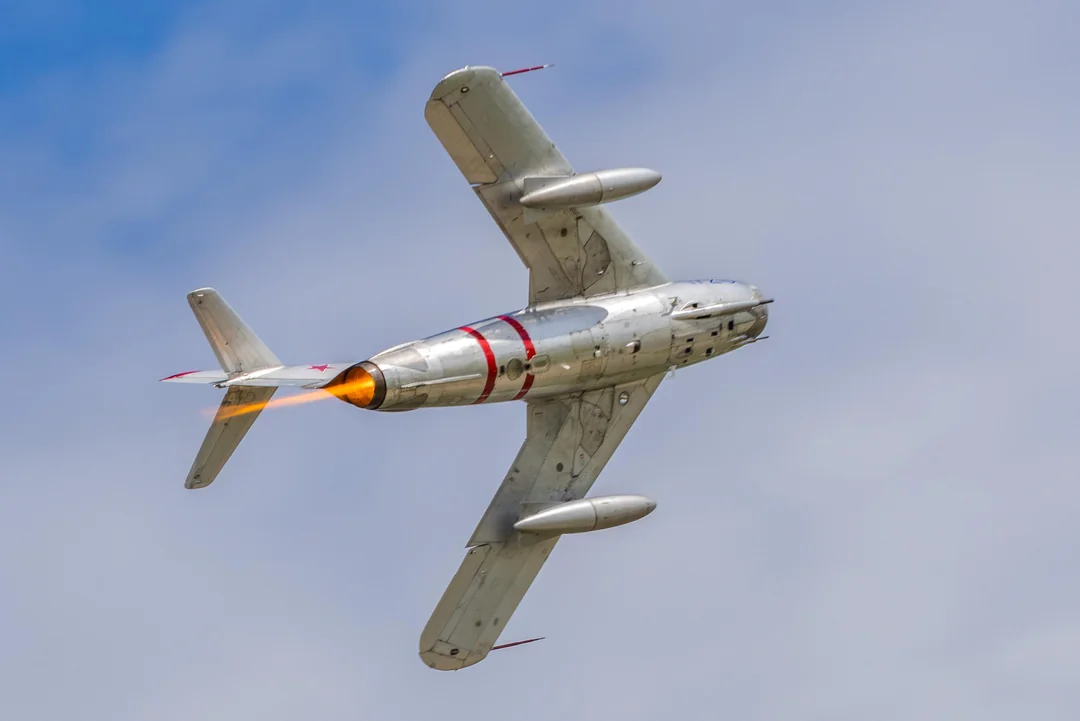
Most MiG-17 variants were powered by the Klimov VK-1F turbojet, which was essentially an improved version of the engine used on the MiG-15, but with a key upgrade: an afterburner.
That afterburner gave pilots a noticeable boost when they needed extra speed or a faster climb, especially during intercepts or in the opening moments of a dogfight.
In terms of thrust, the VK-1F produced around 33.1 kN (7,450 lbf) with afterburner engaged.
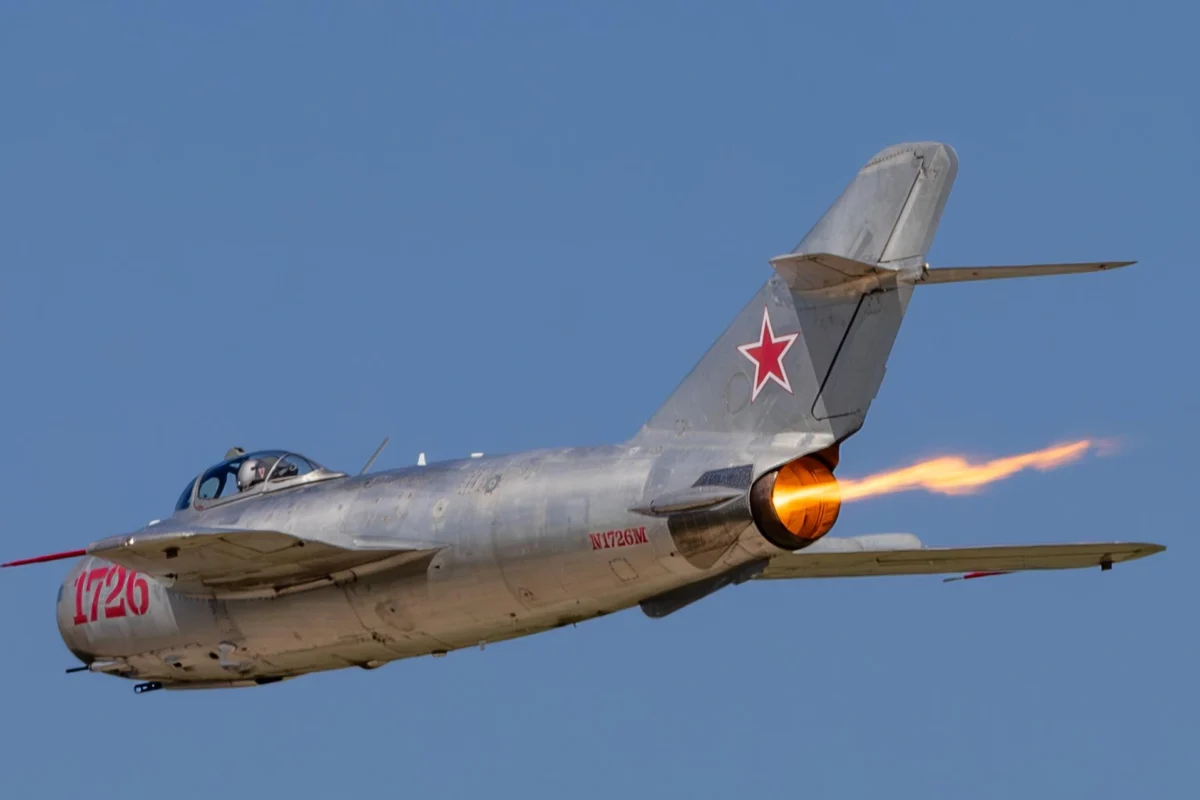
By modern standards, that’s modest, but for the mid-1950s, it was more than enough to make the MiG-17 fighter jet feel lively and responsive. That extra push helped the MiG-17 accelerate quickly and regain energy after hard turns, which mattered a lot in dogfights.
The trade-off, though, was fuel burn. Like many early afterburning jets, the MiG-17 could drink fuel pretty fast when pushed hard, so pilots had to be disciplined about when to light the burner.
As for the MiG-17 range, it was decent but not especially long-legged. On internal fuel, the MiG-17 range sat at roughly 1,080 km (670 miles) in ideal cruise conditions.
In real combat missions, especially with afterburner use, pilots were usually looking at a much shorter operational radius of around 400–500 km (250–310 miles). That limited reach made the MiG-17 very much a point-defense fighter, designed to operate close to friendly bases rather than roam deep into enemy territory.
Endurance followed the same pattern.
On paper, the MiG-17 could stay airborne for about 1.5 to 2 hours, but in high-tempo combat, climbing hard, maneuvering, and occasionally lighting the afterburner, that time could shrink fast. Soviet doctrine more or less accepted this trade-off.
The idea wasn’t long patrols; it was quick reaction, fast intercepts, and sharp engagements, then back to base.
Climbing into the MiG-17 cockpit was probably a pretty eye-opening experience, especially for pilots who were used to Western jets of the same era. The layout was very much function over comfort. Everything the pilot needed was there, but not much more.
The cockpit was tight, painted in that familiar Soviet blue-green, and built around the idea that the pilot’s main job was to fly the jet and follow ground control instructions, not manage a bunch of complex systems.
The flight controls themselves were straightforward and mostly manual. No fly-by-wire, no fancy augmentation. A lot of pilots later described the MiG-17 as honest and predictable, which probably helped explain why it handled so well in turning fights. That direct control feedback made the jet feel responsive, especially at lower speeds where it really came alive.
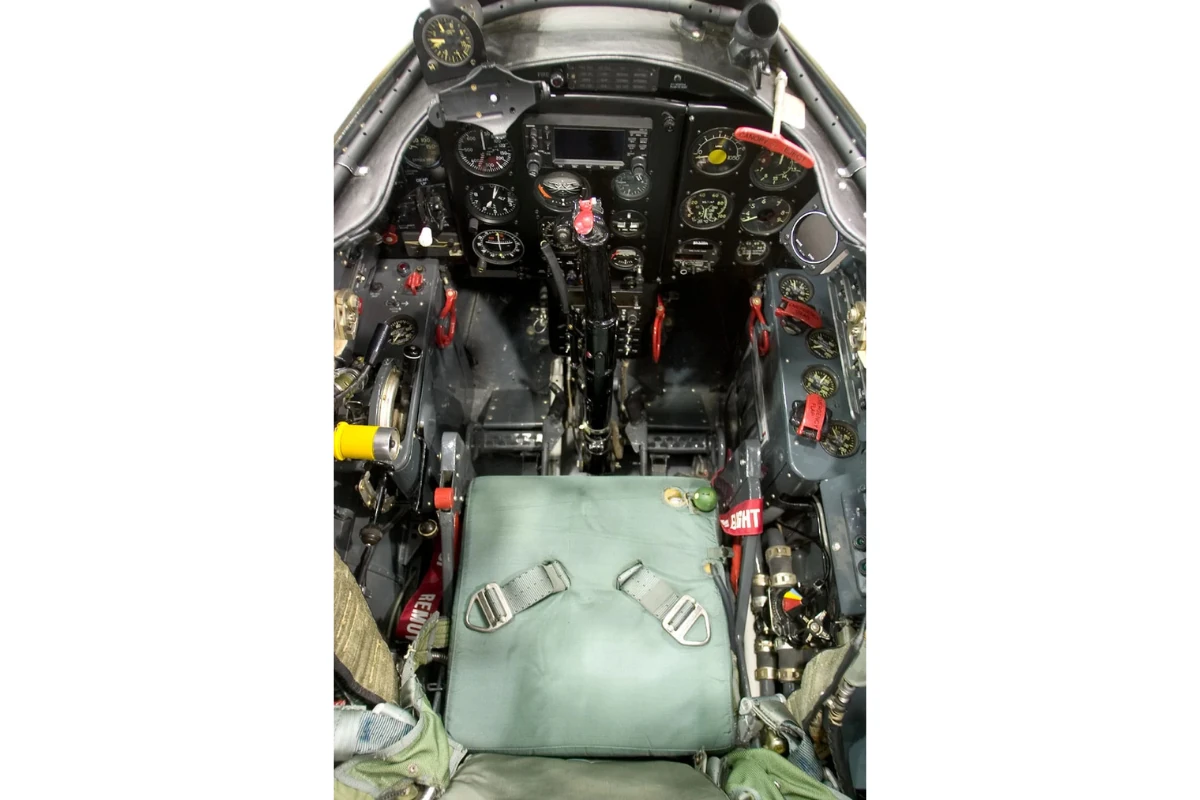
Instrumentation in the MiG-17 was fairly basic by Western standards. It had the essentials: airspeed, altitude, engine gauges, a gunsight, and navigation instruments, but little in the way of advanced radar or situational awareness tools.
Early variants didn’t even have a proper search radar, which meant pilots relied heavily on ground-controlled interception (GCI) to find targets. Compared to Western fighters that were starting to experiment with onboard radar and more complex avionics, this was definitely a limitation.
Visibility was a bit of a mixed bag. The forward view was decent enough for aiming guns and tracking targets, but rearward visibility was restricted by the cockpit framing and the high rear fuselage. That made keeping sight of an enemy in a swirling dogfight more challenging, and pilots had to compensate with constant scanning and tight formation tactics.
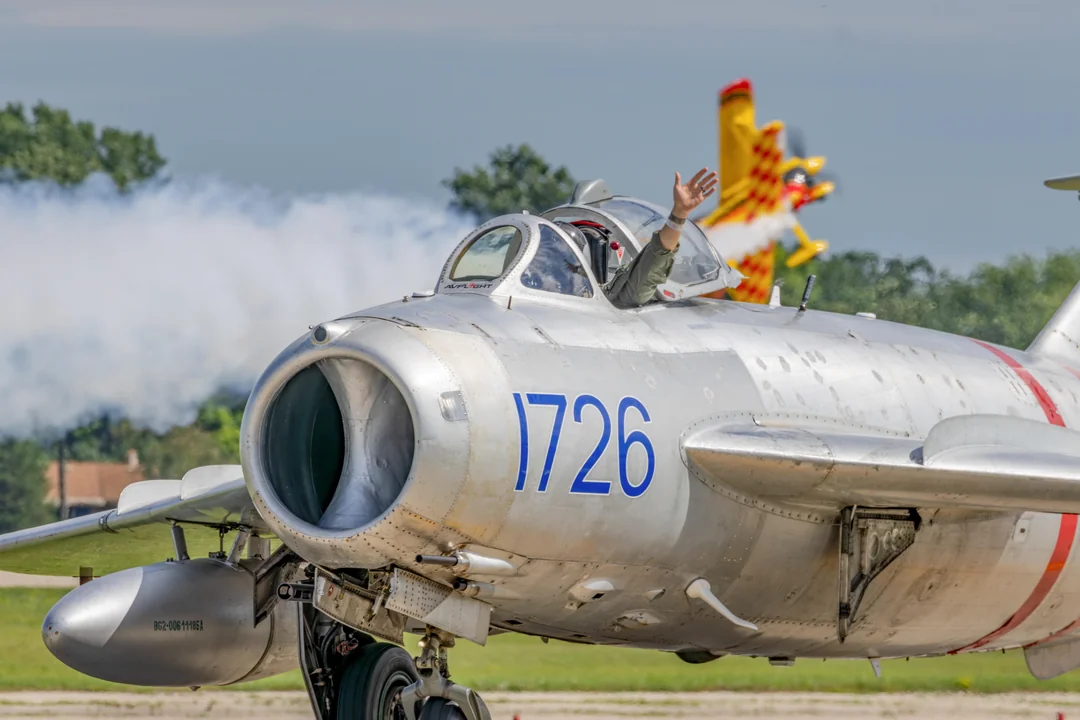
So what did all this mean in practice? The MiG-17 cockpit didn’t make life easy. It pushed pilots to focus on basic flying skills, situational discipline, and teamwork, rather than relying on technology. Against Western jets with better avionics and pilot comfort, the MiG-17 was arguably at a disadvantage.
So, what weapons does the MiG-17 actually have? Short answer: it was all about big guns and brute force, with a little flexibility thrown in.
The standard MiG-17 armament centered on a heavy cannon setup that reflected Soviet thinking at the time: close in, line up the shot, and hit hard.
Most MiG-17s were armed with one 37 mm N-37 cannon and two 23 mm NR-23 cannons mounted in the nose. That combo was devastating when it connected. The 37 mm, in particular, could tear through aircraft or bombers with just a few hits.
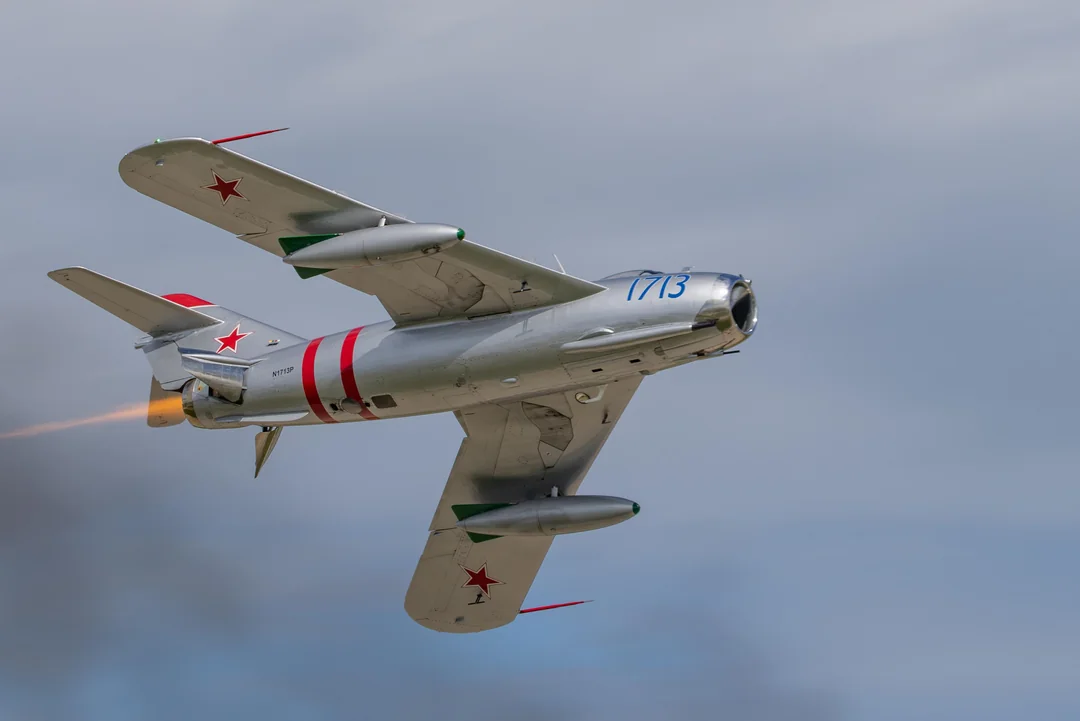
The downside, though, was a relatively low rate of fire and noticeable recoil, which meant pilots had to be disciplined and patient with their shots. Spray-and-pray wasn’t really an option.
Beyond guns, the MiG-17 could also carry unguided rockets and bombs. Typical loads included 57 mm or 80 mm rockets, as well as free-fall bombs up to around 500 kg (1,100 lb) total. That made it useful for ground attack, close air support, and strike missions, especially in conflicts where advanced precision weapons weren’t available or necessary.
In dogfighting, the MiG-17’s gun setup was both its greatest strength and its biggest challenge. If a pilot managed to get the enemy in the sights, the damage was often immediate and decisive. This was especially true against faster jets that relied more on missiles and weren’t optimized for tight turning fights.
That’s part of why MiG-17s earned such a reputation in Vietnam. When the fight slowed down, those cannons could be brutally effective.
For ground attack, the loadouts were simpler but practical. Rockets and bombs let the MiG-17 hit troop concentrations, vehicles, and lightly defended targets.
At first glance, the MiG-15 and MiG-17 can look almost like twins, which is why people often lump them together. But once you scratch the surface, the differences start to matter, especially in how they flew and fought.
In many ways, the MiG-17 was more a refined evolution that fixed the MiG-15’s weak spots.
| Feature | MiG-15 | MiG-17 |
| First flight | 1947 | 1950 |
| Top speed | ~1,075 km/h (668 mph) | ~1,145 km/h (712 mph) |
| Wing design | Swept wings (35°) | More swept wings (45° inner section) |
| Engine | Klimov VK-1 | Klimov VK-1F (with afterburner on many variants) |
| Climb rate | ~50 m/s (9,800 ft/min) | ~65 m/s (12,800 ft/min) |
| High-speed handling | Prone to control issues | Improved stability and control |
| Combat reputation | Korea-era dogfighter | Vietnam-era “giant killer” |
One of the biggest upgrades was aerodynamics. The MiG-17’s wings were more aggressively swept, especially near the fuselage, which helped tame some of the nasty behavior the MiG-15 showed near transonic speeds.
Pilots of the MiG-15 sometimes struggled with compressibility and control stiffness as they got close to Mach 1. The MiG-17 didn’t eliminate those issues entirely, but it made them far more manageable.
Speed-wise, the improvement looks small on paper, roughly 70 km/h (44 mph) faster at altitude, but in real-world flying, it was noticeable.
Add the afterburner-equipped VK-1F engine, and the MiG-17 could accelerate and climb much more aggressively. That extra climb rate and energy recovery made a real difference in dogfights.
Handling was where the MiG-17 really pulled ahead. It turned tighter, felt more stable at high speed, and gave pilots more confidence pushing the jet hard.
In combat, especially at lower altitudes, that translated into better positioning and more firing opportunities.
As a frontline fighter, the MiG-17 has been retired almost everywhere. Advances in missiles, radar, and multirole aircraft eventually made a gun-focused, subsonic jet obsolete. That said, a handful of MiG-17s have lingered on in limited roles over the years, mostly in training, secondary duties, or reserve forces.
Today, you’re far more likely to see the MiG-17 in museums, private collections, or airshow restoration projects than on active combat duty.
Still, the fact that it flew combat missions decades after its introduction and remained respected by pilots who faced it, says a lot.