Follow Us:
Follow Us:

The F-104 Starfighter didn’t just fly fast, it terrified people. Some pilots loved it. Others quietly called it a missile with a seat. And depending on who you ask, it was either one of the boldest fighter designs of the Cold War… or a jet that asked far too much from the humans inside it.
What makes this interesting right now is that the Starfighter keeps sneaking back into the conversation.
As modern air forces talk about extreme-speed interceptors, hypersonic research, and minimalistic fighter designs, engineers keep pointing back to the F-104, a jet that chased speed so aggressively it accepted trade-offs most aircraft never would.
Even decades later, a few privately operated F-104s are still flying in testing and aerospace research roles, which feels kind of wild for an aircraft with such a reputation.
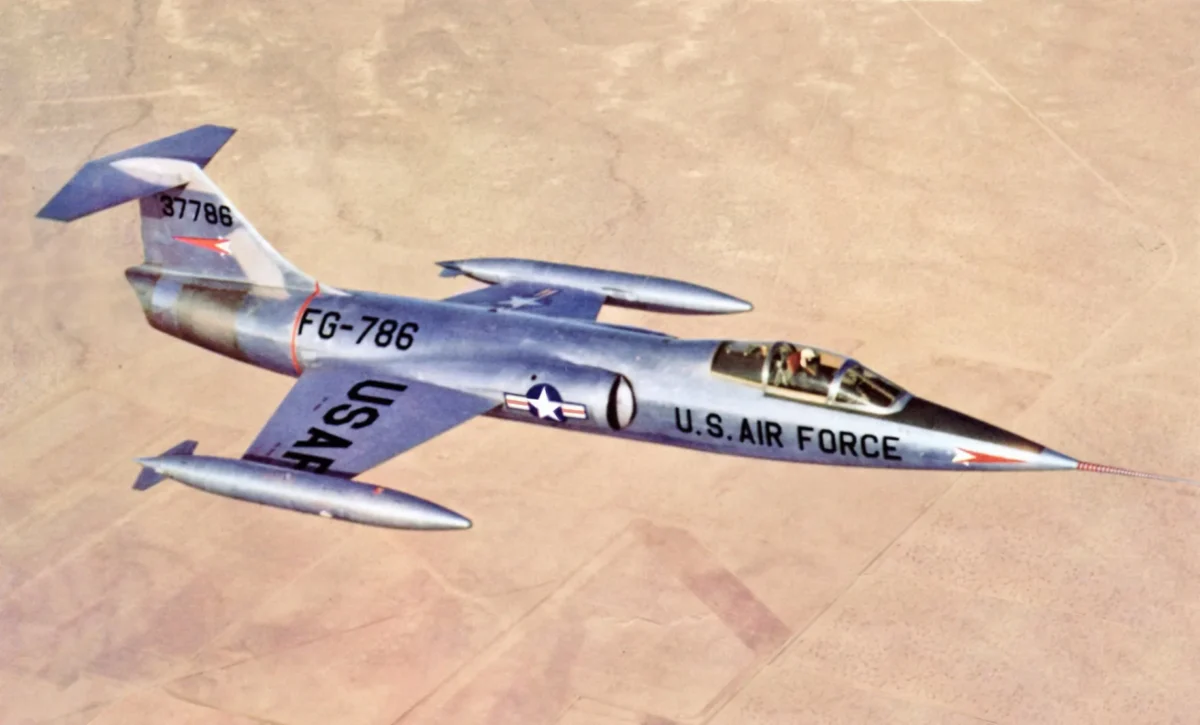
On paper, the Lockheed F-104 Starfighter looked unstoppable: blistering top speed, a ridiculous climb rate, and wings so small they barely seemed legal.
In reality, those same design choices made it notoriously hard to fly, especially outside its ideal flight envelope. That tension, between raw performance and razor-thin margins, is exactly why the F-104 still sparks arguments today.
So the real question isn’t just how fast the F-104 was. It’s why speed came at such a high price, and whether the Starfighter was misunderstood… or simply too extreme for its own good.
So, what exactly was the F-104 Starfighter? It was a Cold War supersonic interceptor designed to do one thing really well: go fast and climb like crazy.
Lockheed built it in the early 1950s after talking directly with U.S. pilots who’d flown in Korea and wanted a jet that could intercept enemy bombers now, not after a long dogfight.
Lockheed’s answer was pretty extreme. The F-104 Starfighter got a powerful engine, a razor-thin fuselage, and famously tiny wings, all to reduce drag and push speed past Mach 2.
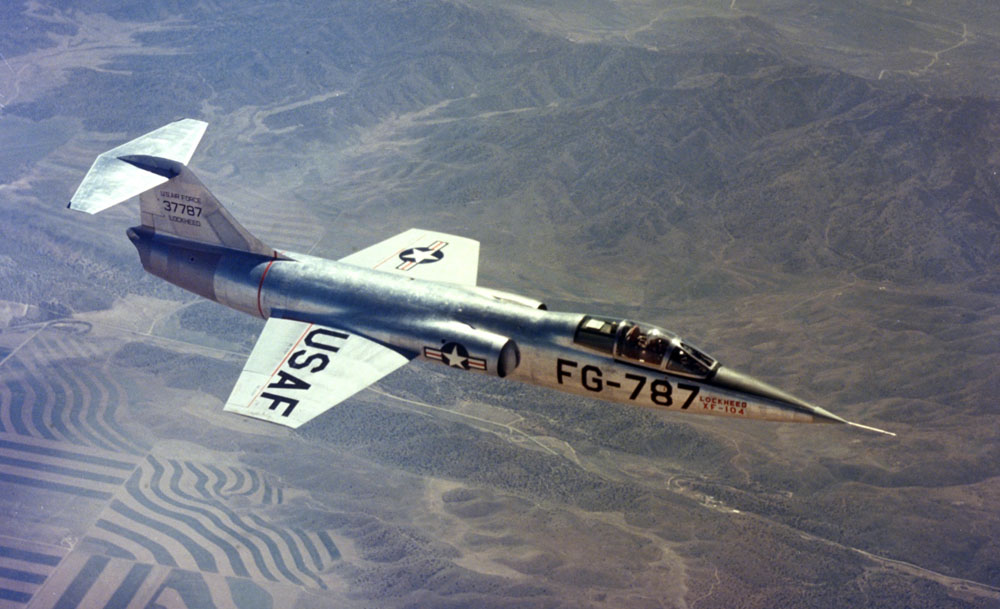
In theory, it could rocket up, hit high-altitude targets, and get out before things got messy. Later versions were adapted into fighter-bomber and reconnaissance roles, especially for NATO allies, even though that wasn’t what the jet was originally optimized for.
Basic features reflected that laser-focused design: a single engine, one pilot, a heavy-hitting cannon, and just enough avionics to support high-speed interception. It was built to be fast, simple, and aggressive, which explains both its impressive performance and the controversy that followed.
| Role | Supersonic interceptor / later fighter-bomber |
| Manufacturer | Lockheed |
| First flight | 1954 |
| Crew | 1 |
| Length | ~16.7 m (≈ 55 ft) |
| Wingspan | ~6.6 m (≈ 21.6 ft) |
| Height | ~4.1 m (≈ 13.5 ft) |
| Empty weight | ~6,350 kg (≈ 14,000 lb) |
| Max takeoff weight | ~13,200 kg (≈ 29,000 lb) |
| Engine | 1 × General Electric J79 turbojet |
| Top speed | ~Mach 2.0–2.2 (≈ 2,135 km/h / 1,325 mph, altitude-dependent) |
| Combat range | ~680 km (≈ 420 mi) |
| Ferry range | ~2,600 km (≈ 1,615 mi) |
| Service ceiling | ~27,400 m (≈ 90,000 ft) |
| Armament | 1× M61 Vulcan 20 mm cannon + missiles/bombs (variant-dependent) |
On paper, these numbers were wild for the 1950s. The speed, ceiling, and climb performance made the F-104 look almost futuristic, though, as we’ll get into later, the specs didn’t tell the whole story.
As the Starfighter spread across NATO and beyond, it changed a lot, sometimes for the better, sometimes… not so much.
Overall, the modifications made the F-104 Starfighter more useful and survivable in theory, but they never fully erased its core personality: a jet that rewarded precision and punished mistakes.
The headline number everyone remembers is speed, and yes, the F-104 Starfighter was seriously fast. At altitude, it could hit around Mach 2.0–2.2 (roughly 2,135 km/h / 1,325 mph), which in the late 1950s was elite territory. That kind of speed meant it could intercept high-flying bombers quickly, before they reached their targets.
The service ceiling was just as eye-catching: about 27,400 m (90,000 ft). In practical terms, that meant the F-104 could climb above many threats and operate where earlier jets simply couldn’t. Its acceleration and climb rate were excellent too, pilots often described it as a jet that wanted to go straight up once the engine was lit.
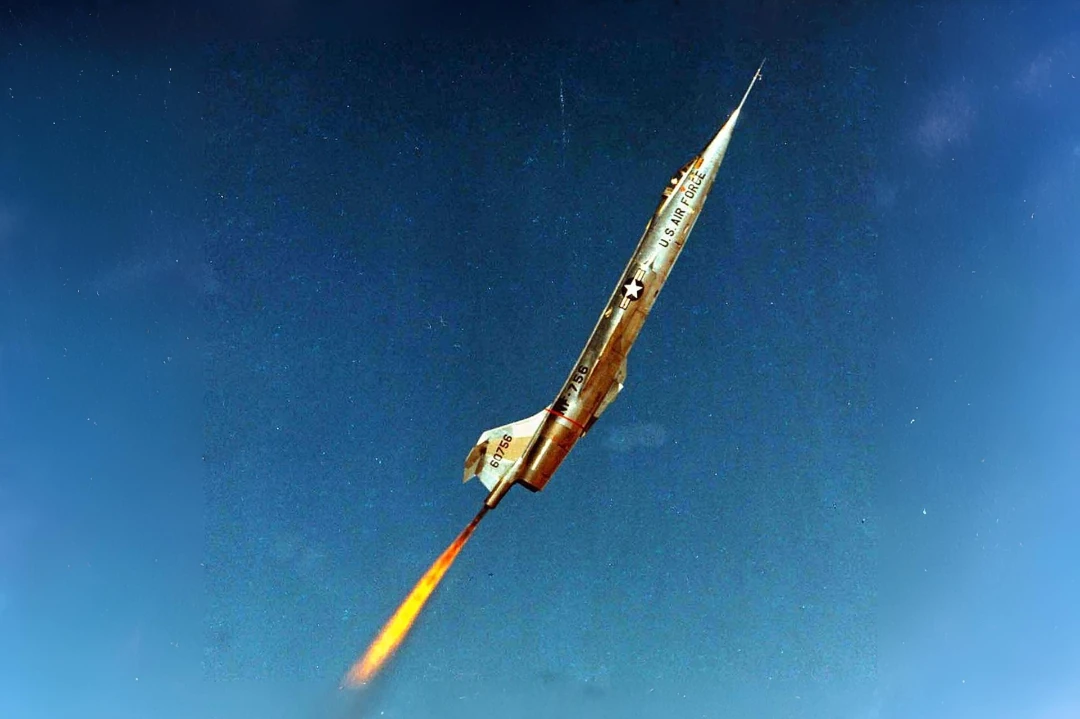
Where things got tricky was maneuverability. Those tiny wings were great for speed and low drag, but they didn’t give much lift in tight turns.
Compared to contemporaries like the MiG-21 Fishbed or Mirage III, the Starfighter was usually faster in a straight line, but less forgiving in dogfights. It wasn’t built to turn and mix it up, maybe it was built to dash in, strike or intercept, and leave fast.
In short: incredible speed and climb, limited turning ability, and very narrow margins if you pushed it the wrong way.
Range was always one of the Starfighter’s compromises.
On internal fuel alone, the combat radius was roughly 600–700 km (370–435 mi), depending on altitude and mission profile. That was fine for short-range interception, but less ideal for long patrols or deep strike missions.
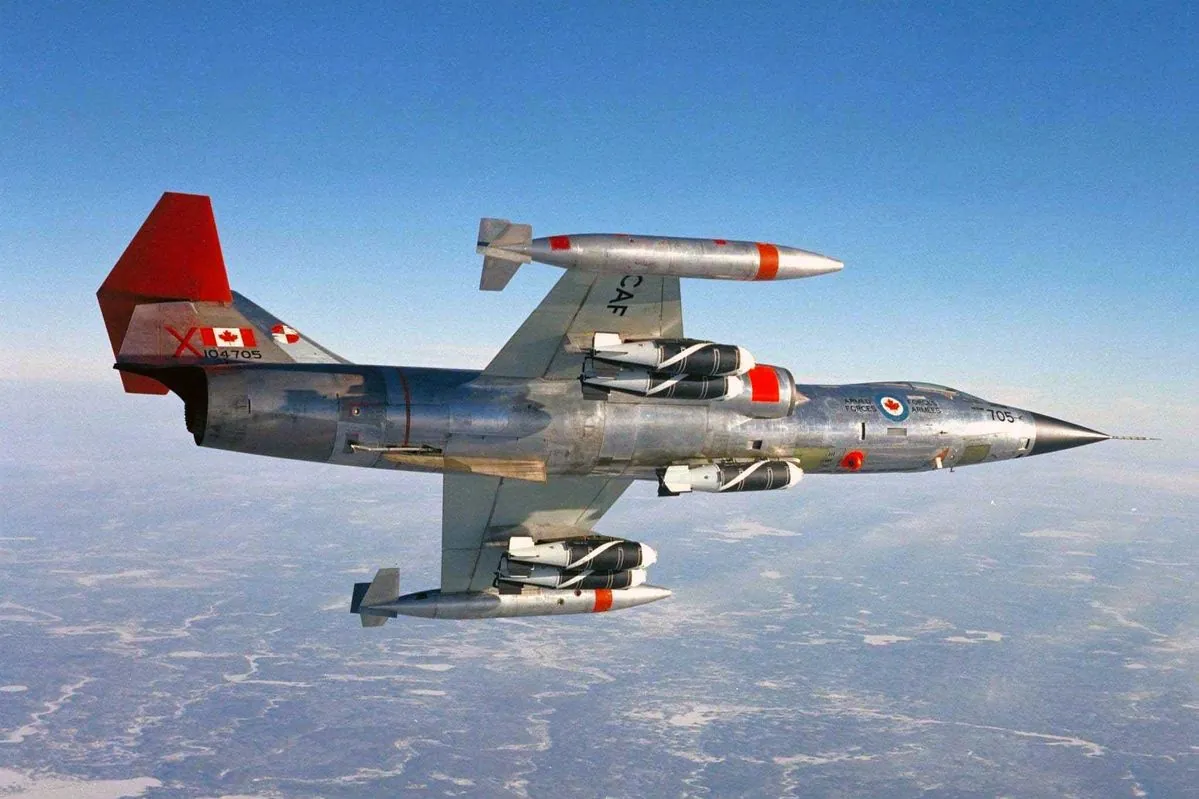
To compensate, most F-104s relied heavily on external drop tanks, which extended the ferry range to about 2,600 km (1,615 mi).
Many later versions were also equipped for aerial refueling, which helped keep them relevant in NATO service. Typical missions reflected these limits: quick intercepts, high-speed strike runs, or short, intense sorties rather than long loiter times.
The short answer? The F-104 Starfighter left very little room for error. Its design pushed speed above almost everything else, and that came with real-world consequences.
Those famously short, razor-thin wings were great at Mach 2, but at low speeds they generated very little lift. That translated into extremely high landing speeds, often over 300 km/h (≈185 mph), which meant takeoffs and landings demanded total precision. Any misjudgment (weather, runway length, pilot workload) could escalate quickly.
Add to that a high wing loading, early-model ejection seat issues, and the fact that many air forces flew the F-104 in roles it wasn’t designed for (like low-level strike), and the risk piled up.
Some operators, most notably in Europe, experienced very high accident rates, giving the jet grim nicknames and a lasting reputation for being unforgiving rather than outright “bad.”
Flying the F-104 well meant staying strictly inside a narrow flight envelope. At high speed and altitude, the jet felt stable and almost effortless. Outside that sweet spot, things could get uncomfortable fast.
Aerodynamically, the small wings stalled abruptly, giving pilots less warning and less margin to recover.
Handling at low speeds, especially during approach and landing, required constant attention and precise control inputs. There wasn’t much “seat-of-the-pants” feedback; you had to trust your instruments and your training.
On top of that, the aircraft’s high acceleration and climb rate could get pilots into trouble quickly if they weren’t managing energy carefully. Inexperienced or undertrained pilots sometimes found themselves behind the jet rather than ahead of it.
The F-104 Starfighter had a surprisingly long and global service life. While it started in the United States, its biggest impact came overseas.
During the Cold War, NATO allies were eager for a fast, modern jet, and the Starfighter fit the bill, at least on paper.
Countries like West Germany, Italy, Canada, the Netherlands, Belgium, Denmark, and Japan all operated the F-104 in large numbers. For many of them, it served as a frontline interceptor, nuclear strike aircraft, or later a fighter-bomber, even though those roles stretched the jet beyond its original design intent.
Italy, in particular, stuck with the F-104 longer than anyone else, flying upgraded versions into the early 2000s.
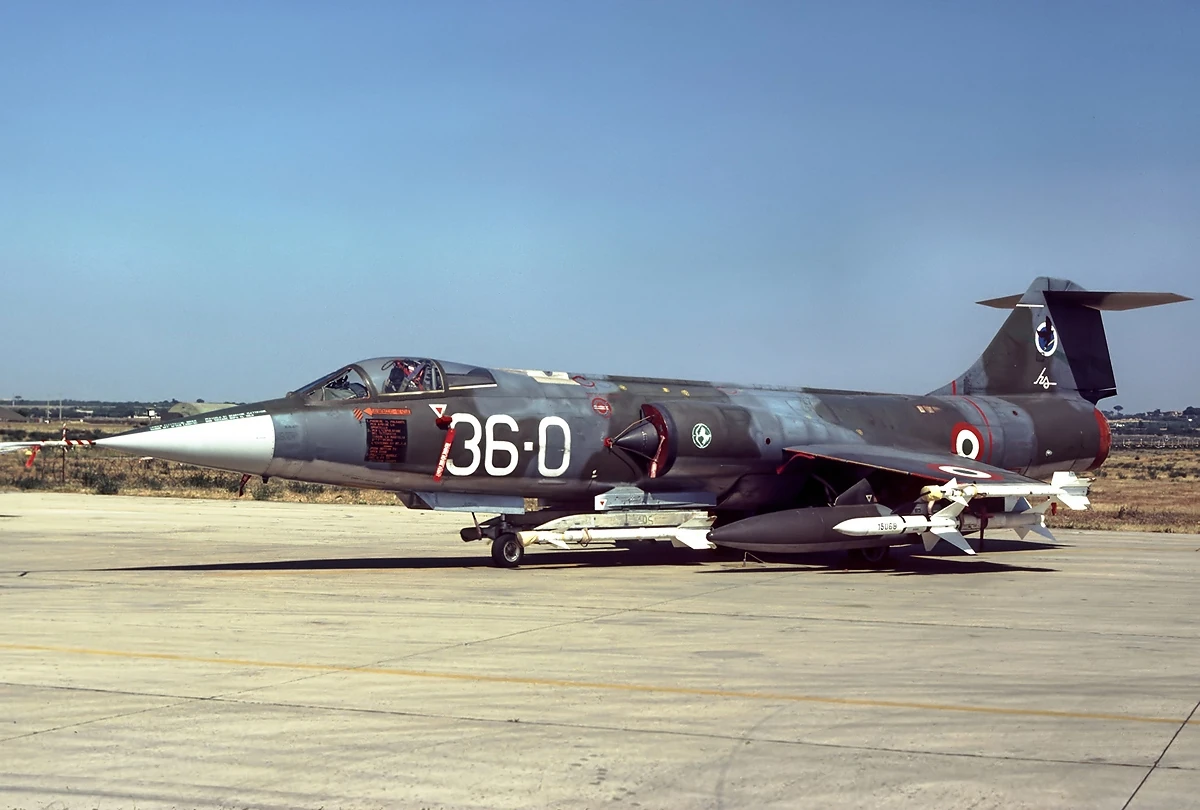
In terms of combat history, the F-104 saw limited direct air-to-air combat. It was used operationally by Pakistan during conflicts with India, where it scored a small number of air-to-air victories, mostly early on.
For most NATO operators, though, the Starfighter’s job was deterrence; quick reaction alerts, high-speed interceptions, and Cold War readiness rather than frequent combat.
Surprisingly, yes, though only a few.
Most F-104 Starfighters today are preserved in museums across Europe, North America, and Asia, often displayed as symbols of Cold War air power. That’s where the vast majority ended up.
That said, a handful of privately owned F-104s have remained airworthy in recent years, mainly operated by specialized companies supporting flight testing and aerospace research, not traditional airshows.
One of the best examples is Starfighters International (sometimes styled Starfighters Space), a private aerospace company based around NASA’s Kennedy Space Center in Florida.
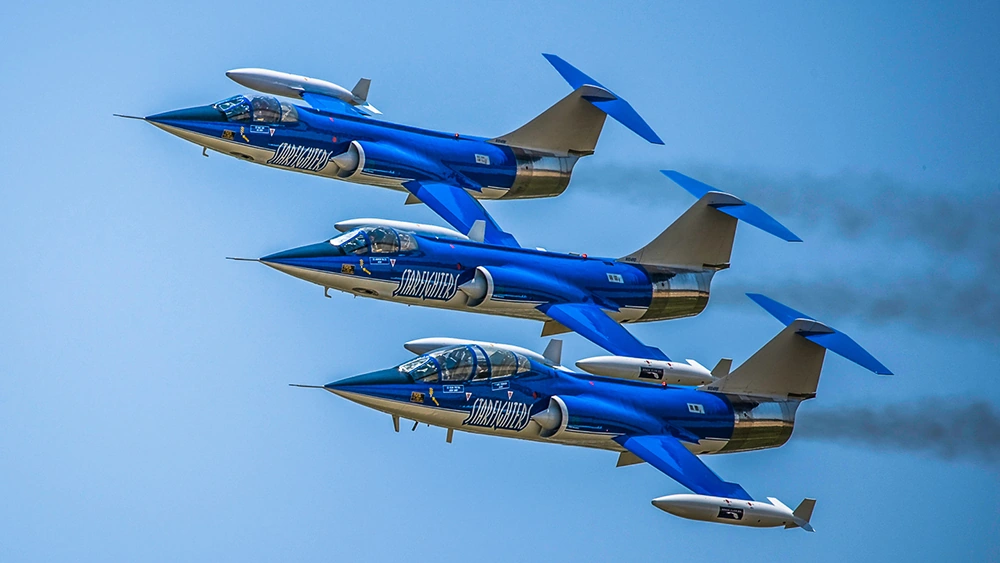
This outfit operates a fleet of former military F-104s, keeping several of them airworthy for flight testing, research, supersonic operations, and even experimental air-launch programs rather than just museum displays or vintage airshows. These jets can fly at Mach 2 and are used for things like hypersonic test support and payload launch platforms.
According to aviation records and preservation lists, there are about 5–7 F-104s registered as airworthy in private hands around the world, including some actively flown in the U.S. for research contracts and demonstration missions.
Several two-seat F-104Ds based in Florida are registered and fly on demand, though not always in public airshows.
The F-104 Starfighter left behind a complicated legacy, but an important one.
From a design standpoint, it proved just how far engineers could push speed, climb rate, and minimalist aerodynamics with the technology of the time. Its influence shows up in later high-speed interceptors and research aircraft that prioritized performance within a very specific mission envelope, rather than trying to do everything.
Operationally, the Starfighter became a hard lesson in trade-offs. It showed that raw performance numbers don’t always translate into real-world effectiveness, especially when an aircraft is asked to do jobs it wasn’t designed for. That experience fed directly into more cautious, balanced fighter designs in the decades that followed.
Perhaps its biggest impact was on pilot training and safety standards. The F-104 highlighted the dangers of narrow flight envelopes, high wing loading, and unforgiving handling.
As a result, air forces placed greater emphasis on advanced simulator training, clearer mission limitations, better weather minimums, and improved ejection systems.
In a way, many of today’s safety practices exist because aircraft like the Starfighter exposed what happens when margins get too thin.