Follow Us:
Follow Us:

Every so often, a weapon system comes along that doesn’t just add another tool to the arsenal—it rewrites the rulebook of what’s possible. Ukraine’s newly unveiled Flamingo cruise missile, officially designated the FP-5, feels like one of those moments. It’s not just another headline about a new piece of hardware; it’s a bold signal that Kyiv intends to strike further, harder, and more unpredictably than before.
Think about this: a missile with a reported range of 3,000 kilometers—that’s enough to reach deep into Russian territory, from industrial hubs around the Urals to critical bases near the Caspian. Now, couple that with a warhead weighing over a metric ton (about 1,150 kg), and you begin to see why this story has military analysts leaning forward in their chairs. Ukraine hasn’t only built a long-range missile; it has, in effect, built a statement of strategic intent.
What makes the Flamingo fascinating isn’t just its raw numbers. It’s the context. This missile emerged not from decades of steady defense budgets but from a nation fighting for survival, improvising under sanctions, air raids, and supply bottlenecks. Even the nickname “Flamingo” comes with an oddly human touch: early test batches had a faint pink tint, and the moniker stuck. There’s something almost ironic about a pastel bird lending its name to a machine designed to shatter hardened targets.

As President Volodymyr Zelensky confirmed, testing is underway and mass production is the next step. That timeline matters. If Ukraine manages to scale production from a handful of prototypes to dozens or even hundreds by next year, the strategic map of the war changes overnight. Suddenly, 90% of Russia’s defense industry sites fall within reach. That’s not just firepower; it’s leverage.
The Flamingo FP-5 isn’t simply a weapon—it’s a message written in steel, range, and precision. And now, let’s break down what exactly this missile is and why it matters.
At first glance, the Flamingo cruise missile sounds almost whimsical—like something out of a Cold War parody. But behind that deceptively gentle name is a weapon engineered with one purpose: to give Ukraine the ability to strike far beyond its borders with precision and force.
The FP-5 is a ground-launched cruise missile developed by a Ukrainian defense company known as Fire Point. It isn’t an air-dropped munition or a naval strike asset. Instead, think of it as a self-contained long-range system that can be deployed from hidden ground launchers, designed to survive in an environment where Russia’s satellites, drones, and bombers are constantly hunting. This alone gives it a unique niche in Ukraine’s growing arsenal—unlike the Storm Shadow or SCALP (which depend on aircraft), the Flamingo can operate independently of airpower.
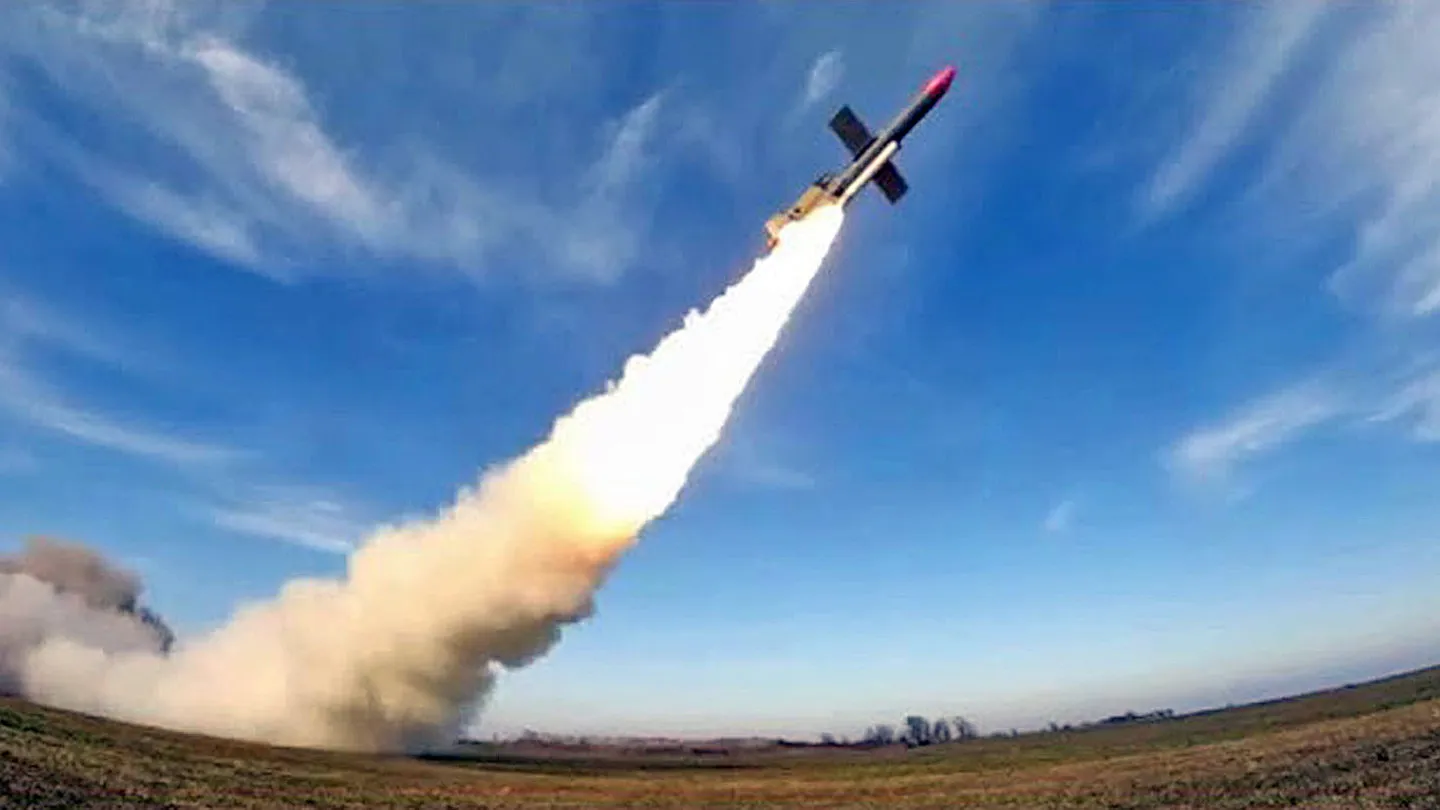
Why “Flamingo”? The origin is almost humorous. According to engineers, the early prototypes had a faint pink hue on their primer paint, and the troops who first handled them jokingly called them “flamingos.” The nickname caught on and eventually became the public face of the program. It’s a reminder that even in the brutal logic of war, small accidents of culture and humor leave their mark.
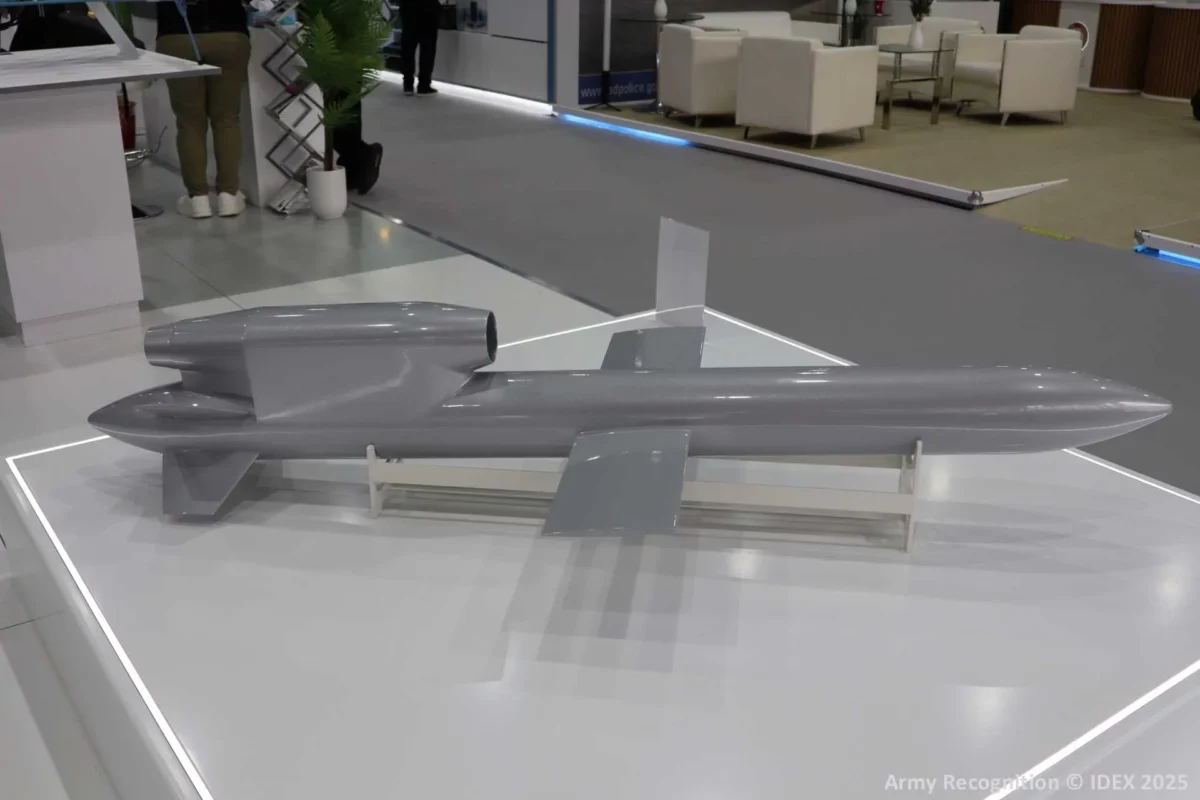
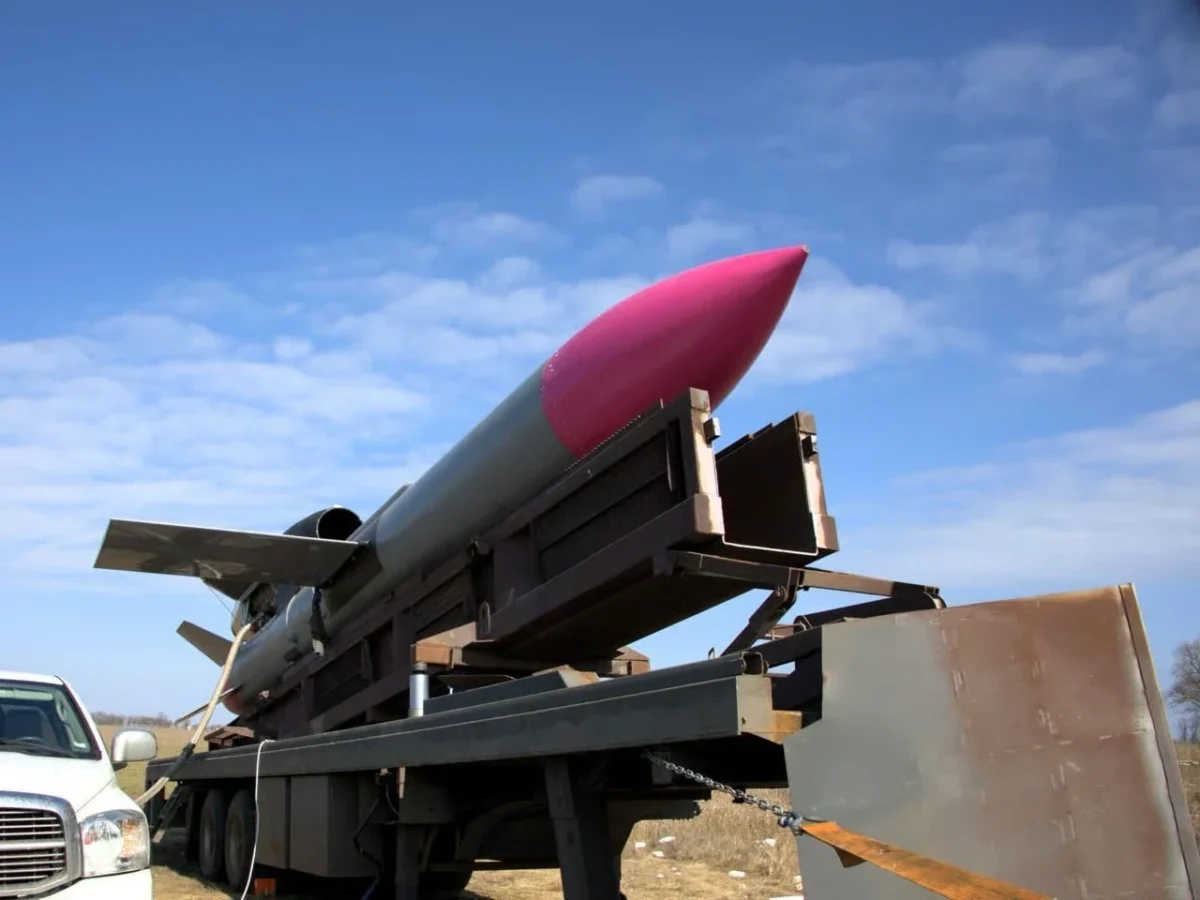
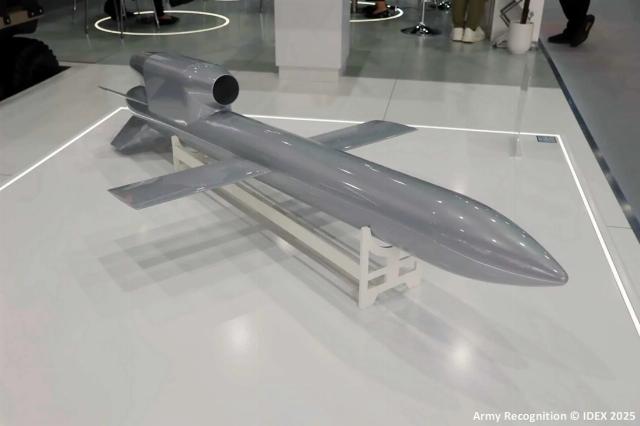
But don’t be fooled by the name. The Flamingo is not fragile. Reports describe a large missile body with an X-shaped tail, a top-mounted air intake, and a turbofan propulsion system—all features that scream heavy-duty endurance. At roughly 6 to 7 meters long (estimates vary), it belongs in the same visual family as the American Tomahawk or the Russian Kh-101.
Its role is straightforward: deep-strike deterrence. If drones like the Shahed harass cities and front-line trenches, the Flamingo exists to make entire industrial districts and command hubs hundreds of kilometers away nervous. In other words, this isn’t tactical firepower—it’s strategic pressure.
When people hear about a new missile, the first questions are always the same: How far can it fly? How hard can it hit? How accurate is it? The Flamingo cruise missile (FP-5) has already generated plenty of speculation, but a handful of details have been confirmed—and they paint a striking picture.
Let’s start with range. Ukrainian officials and defense media report that the Flamingo can travel up to 3,000 kilometers. To put that in perspective: from central Ukraine, that’s enough to cover nearly all of European Russia, reaching as far as Kazan, Samara, or even into the industrial belt of the Urals. Few cruise missiles in the world—outside the American Tomahawk or Russia’s Kh-101—sit in that range category.
Next is the warhead. The Flamingo reportedly carries about 1,150 kilograms (2,535 pounds) of explosives. That’s more than double the payload of the Storm Shadow and even heavier than some ballistic missiles. It’s the difference between striking a warehouse and collapsing an entire industrial complex. Analysts believe this payload makes the FP-5 suitable for hardened targets—command bunkers, bridges, energy plants—rather than just soft-skinned depots.
Accuracy is equally important, and early reports suggest a circular error probable (CEP) of around 14 meters. In simple terms, that means most Flamingos will land within half the width of a tennis court from their intended aimpoint.
For a weapon carrying over a ton of explosives, that level of precision is devastating. Guidance is reportedly a mix of GPS/GNSS supported by an inertial navigation system (INS)—allowing it to keep on course even if satellites are jammed.
Here’s a quick breakdown of what’s known so far:
| Specification | Flamingo FP-5 (Reported) |
| Range | ~3,000 km |
| Warhead | ~1,150 kg HE |
| Accuracy (CEP) | ~14 m |
| Guidance | GPS/GNSS + INS backup |
| Propulsion | Turbofan engine |
| Launch platform | Ground-based mobile launcher |
Of course, these are reported figures, not yet independently verified. But even taken cautiously, they suggest Ukraine has entered a very exclusive club of nations able to field a truly long-range, heavy-payload cruise missile.
The story of the Flamingo cruise missile (FP-5) isn’t one of decades-long R&D with secret labs and endless budgets. It’s the story of a nation under siege, forced to innovate while under constant missile barrages, blackouts, and battlefield losses. That’s what makes its timeline so remarkable.
According to Ukrainian officials, the program remained behind closed doors until the summer of 2025, when President Volodymyr Zelensky publicly acknowledged both its testing and Ukraine’s intent to mass-produce it. That announcement wasn’t a mere “new weapon coming soon” press release—it was timed to send a political and military signal.
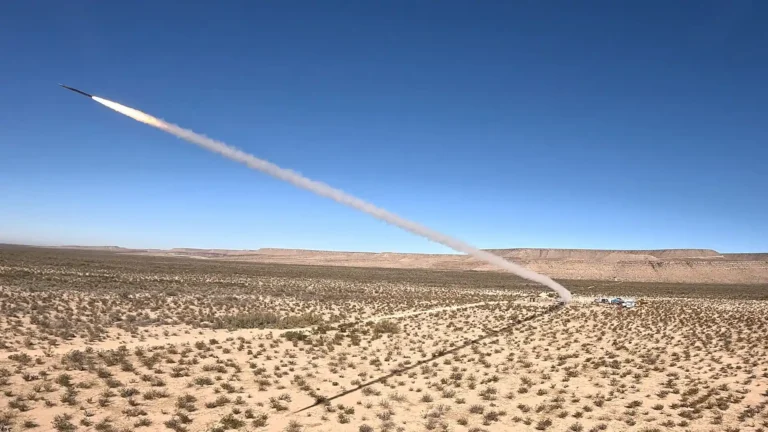
The reveal took place in mid-August, paired with carefully released footage showing the missile on its mobile launcher and in flight. That footage, while limited, confirmed the missile’s existence and basic configuration: a large fuselage, X-tail fins, and a top-mounted intake reminiscent of other long-range cruise systems.
The secrecy before the reveal was deliberate. Ukraine has been burned before by premature announcements or leaked prototypes. For instance, earlier indigenous systems like the Hrim-2 ballistic missile suffered from delays and overexposure. This time, Fire Point—the developer—kept the program tightly under wraps until at least one successful flight test had been completed.
The timeline goes something like this:
What’s unusual here is the pace. Most long-range missile programs take a decade or more from concept to operational weapon. Ukraine appears to have gone from sketch to public prototype in roughly half that time, while fighting a war. That acceleration speaks not only to necessity but also to the creative use of existing aerospace knowledge, dual-use tech, and perhaps lessons borrowed from foreign designs.
The reveal of the Flamingo wasn’t just a weapons announcement—it was a calculated piece of strategic theater. By unveiling the FP-5, Ukraine told both its allies and adversaries: we’re no longer limited to the battlefield line of sight; we can reach across the map.
Here’s where the Flamingo cruise missile (FP-5) moves from being just another new weapon into something potentially game-changing. On paper, its 3,000-kilometer reach and 1,150-kilogram payload aren’t just impressive stats—they shift the geography of the war itself.
Think of it this way: for most of the conflict, Ukraine’s strikes have been limited to border regions, occupied territories, or, with Western-supplied missiles like Storm Shadow, targets a few hundred kilometers deep. That meant the Russian heartland—the industrial plants east of Moscow, the aircraft factories near Kazan, even strategic fuel depots deep in the Volga basin—remained out of reach.
The Flamingo redraws that map. With launchers based near central Ukraine, a circle of potential targets suddenly covers 90% of Russia’s defense industry footprint. That’s not speculation; Ukrainian officials have openly hinted at that figure.
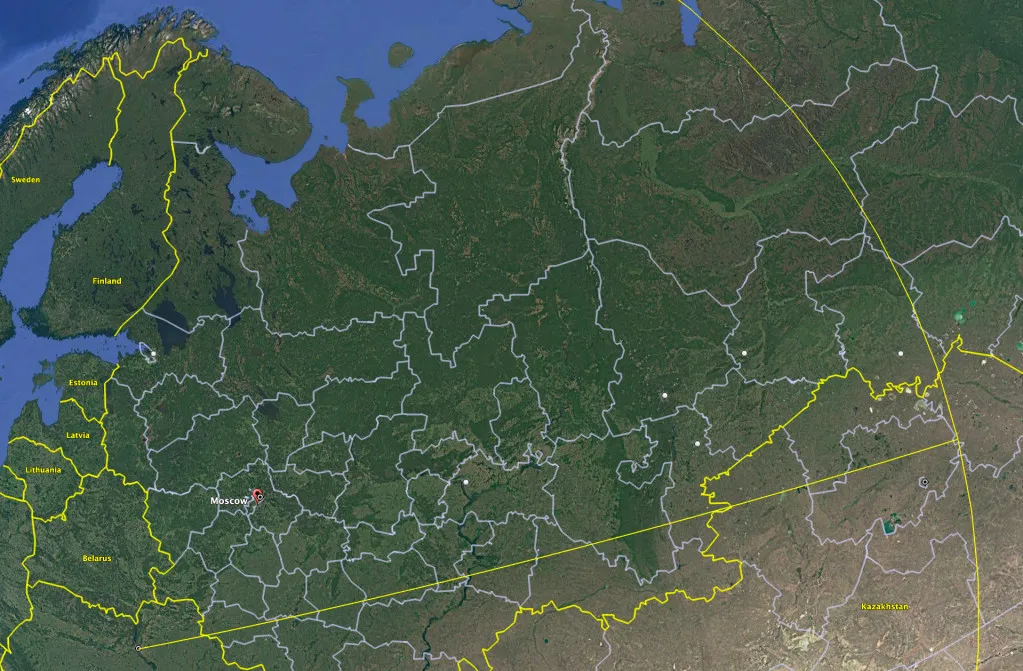
Strategically, this creates what military planners call a deterrence shadow. It’s not just about hitting targets but about forcing the other side to defend more territory than before. Imagine the cost: Russia may need to divert sophisticated air defenses—S-400s, Pantsir systems, radar arrays—away from the front and redeploy them around strategic factories, bridges, and energy nodes hundreds of kilometers inside its borders.
The Flamingo also fits neatly into a layered Ukrainian strike doctrine. Drones and smaller missiles harass tactical positions close to the front. Western-donated long-range weapons hit supply hubs. But the Flamingo? It’s built for strategic effects—crippling the kind of infrastructure that sustains a long war. In that sense, it’s as much a psychological weapon as a physical one.
Of course, the missile’s existence also complicates diplomacy. Allies may quietly support Ukraine’s ability to develop independent strike options, but some will worry about escalation if strikes reach too deep. That tension—between military necessity and political caution—will hover over every Flamingo launch.
In short, the FP-5 doesn’t just give Ukraine a longer spear. It forces Russia to play defense on a chessboard that suddenly got much, much larger.
Building a long-range cruise missile like the Flamingo FP-5 is one challenge; ensuring it can actually reach its target is another entirely. Russia fields one of the densest air defense networks in the world, with layered systems ranging from short-range Pantsir batteries to long-range S-400s.
On paper, those should be formidable obstacles. Yet the design philosophy behind the Flamingo suggests Ukraine has baked survivability into every stage of its development.
First, there’s low-altitude flight. Cruise missiles survive not by outrunning defenses but by sneaking under radar coverage, hugging the terrain at altitudes where detection is spotty and reaction times are short.
The Flamingo is reported to follow this doctrine, using terrain-following navigation to slip through gaps in Russia’s radar net. Flying low also complicates interception by long-range SAMs, which are optimized for high-altitude targets.
Second, electronic warfare resilience. Russia has invested heavily in GPS jamming, especially near high-value sites. Early specs suggest the Flamingo pairs GPS/GNSS with an inertial navigation system (INS) backup, meaning it can continue flying accurately even if satellite signals are scrambled.
Engineers at Fire Point have hinted at additional hardening against electronic interference, possibly including algorithms that allow the missile to reorient itself mid-flight.
Third, there are whispers about decoy tactics. Some analysts believe the Flamingo may deploy countermeasures—such as radar reflectors or false signatures—to confuse air defense radars. Even if these features are still experimental, the very possibility forces defenders to treat every blip as a potential Flamingo, straining limited interceptor stocks.
And then there’s the psychological angle. Russia has already demonstrated difficulty stopping smaller, cheaper drones striking deep inside its territory. A weapon like the Flamingo—faster, heavier, more accurate—stretches that defense dilemma even further. No system can cover everywhere at once.
In essence, survivability for the Flamingo isn’t about being invulnerable. It’s about being just elusive enough that a portion of missiles will get through. And when each warhead carries over a ton of explosives, even a few leakers can have outsized impact.