Follow Us:
Follow Us:

Every so often, a new weapon shows up that feels more like a rumor than a confirmed project. The AIM-260 JATM (the Joint Advanced Tactical Missile) fits squarely into that category. Most of what we know is patchy, sometimes second-hand, and often hedged by official silence.
Still, bits of news have slipped out. Both the U.S. Air Force and Navy are now budgeting serious money, hundreds of millions, for procurement starting in 2026. That alone hints this program has moved beyond testing and is becoming real.
Some reports suggest the missile could push close to Mach 5, with a range that might outclass the AIM-120 AMRAAM. Nobody outside the program can say for sure, though. A rendering released earlier this year shows a weapon about the same length as an AMRAAM, but with a fatter motor section. That could point to a longer reach while keeping it small enough to fit inside stealth fighters. Or it could just be a placeholder image.
What stands out is the timing. The Navy, for example, has started trimming AMRAAM purchases to make room for the new missile. And if rivals like China’s PL-15 really can reach targets further out, maybe the U.S. doesn’t see the AIM-260 as optional, but necessary.
If you’ve heard of the AIM-260 JATM, you probably know it gets talked about as the U.S. answer to China’s and Russia’s long-range missiles. Pinning down its exact origins is tricky (public details are thin), but some reports say the program started sometime in the mid-2010s, maybe around 2017, but the roots probably go back a little earlier.
What’s clear is that Lockheed Martin is leading it. From what I can tell, the idea wasn’t simply to add another missile to the inventory. It was more about building something that could eventually take over from, or at least back up, the AIM-120 AMRAAM, which has been the mainstay since the early ’90s.
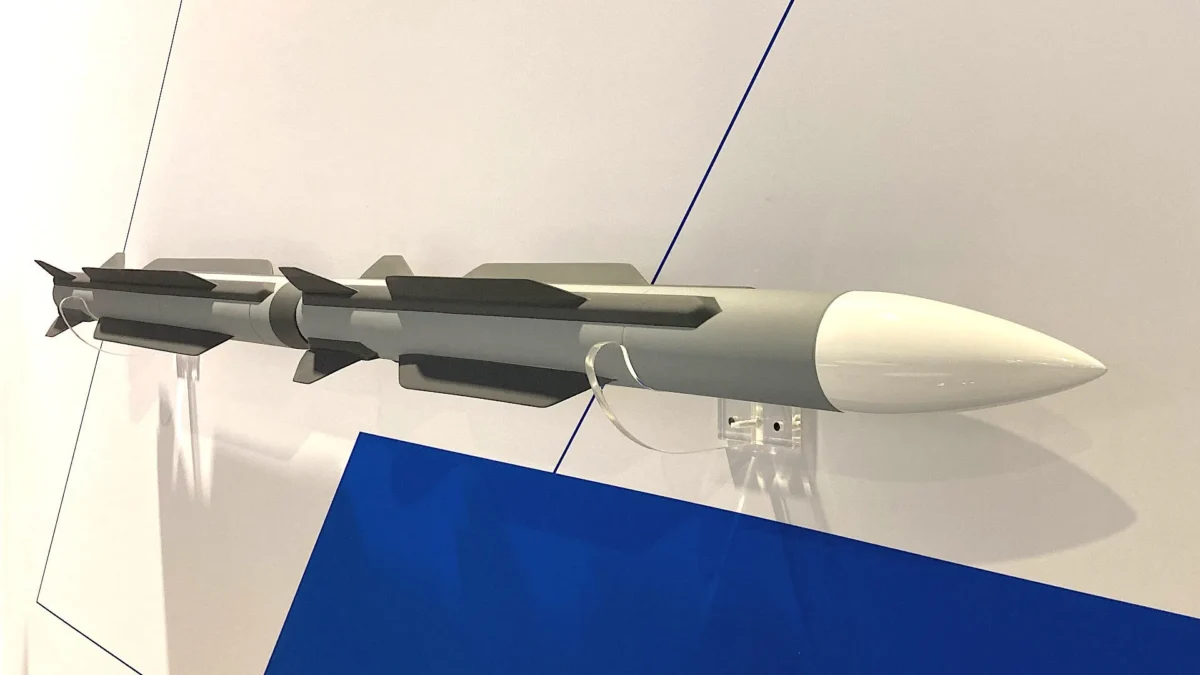
Why the rush? Well, it seems the AMRAAM, despite many upgrades, was starting to show its age against newer threats. Some Chinese outlets have been talking up the PL-15 missile, saying it can reach far beyond the AMRAAM. Hard to know how much of that is hype, but if even part of it is accurate, U.S. pilots could end up on the wrong side of a long-range fight. The AIM-260 seems to be Washington’s attempt to close that gap or maybe even flip the odds back.
As for how it fits in, the missile isn’t meant to be some exotic, one-off weapon. From what’s been hinted at, it should slide right into the current fighter lineup. The design apparently keeps it small enough for the F-22 and F-35 to carry it inside their weapon bays, which is key if you want to stay stealthy. That might also explain why it looks about the same size as an AMRAAM, even though the expectation is that it’ll fly quite a bit farther and faster.
When you set the two missiles side by side, at least from what we know, the AMRAAM is still reliable and combat-proven, but its maximum range is probably under 200 km. The AIM-260, on the other hand, is rumored to push well past that mark.
Whether it’s double or just “significantly more” is unclear, since official numbers are tightly held. But the point seems to be clear: the U.S. didn’t want its frontline pilots flying with a missile that might get outranged before they even had a chance to fight back.
The AIM-260 JATM is often linked with near-hypersonic performance, though no official figures have been made public. A few open reports put its speed close to Mach 5, but that may be more ambition than reality.
What is visible, however, is a missile design that seems built for efficiency: a stretched motor section, fewer fins than the AMRAAM, and a cleaner body overall. These choices usually mean better energy retention over long distances.
The aim appears to be simple, out-range the AIM-120 without changing the external size, so that existing fighters can carry it. Analysts also point to the likelihood of a dual-pulse motor, which would give the missile a second burst of power late in flight, when targets are most likely to turn hard in an effort to survive.
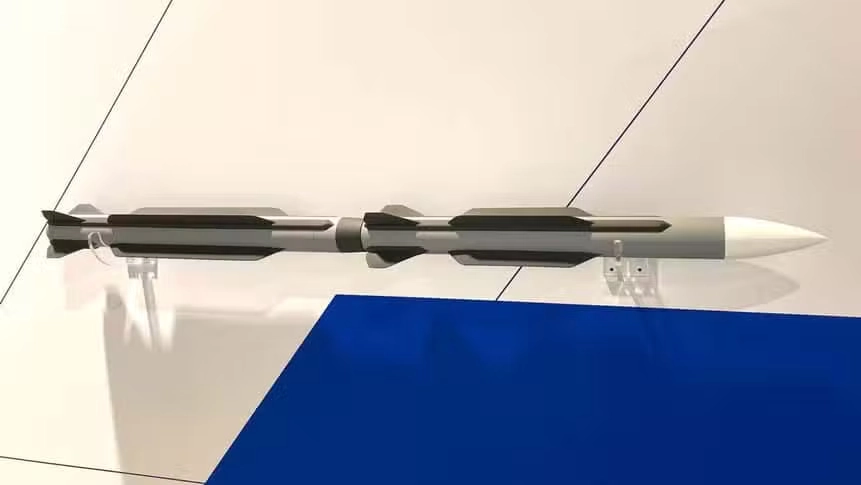
Equally important is the missile’s guidance architecture. From what has been suggested in open sources, the AIM-260 JATM seems to use an advanced active radar seeker, most likely paired with a strong datalink. The point of that setup would be flexibility.
In this setup, the firing aircraft would not have to keep its radar pointed at the target from start to finish. Updates could instead come mid-flight from supporting platforms: an airborne warning plane, a friendly fighter, or possibly an unmanned relay.
Such networking is essential for long-range engagements, where the target may maneuver outside the launching aircraft’s immediate sensor coverage. Observers have also noted what appear to be conformal antennas along the missile’s body, which would be consistent with efforts to harden communication links against jamming.
Some analysts have even raised the possibility of multi-mode seekers, combining radar with infrared or passive homing features, though whether this will appear in the initial variant remains uncertain.
Another defining feature of the Lockheed Martin AIM-260 is its physical compatibility. Lockheed Martin appears to have kept the AIM-260 close to AMRAAM’s dimensions. The logic is fairly clear, “if the missile matches that footprint, it can go straight into the bays of stealth fighters such as the F-22 and F-35, while still working on legacy aircraft like the F/A-18”. The design choice points toward practicality and it feels like a deliberate move to make the missile better, but keep it easy to slot into the force already in service.
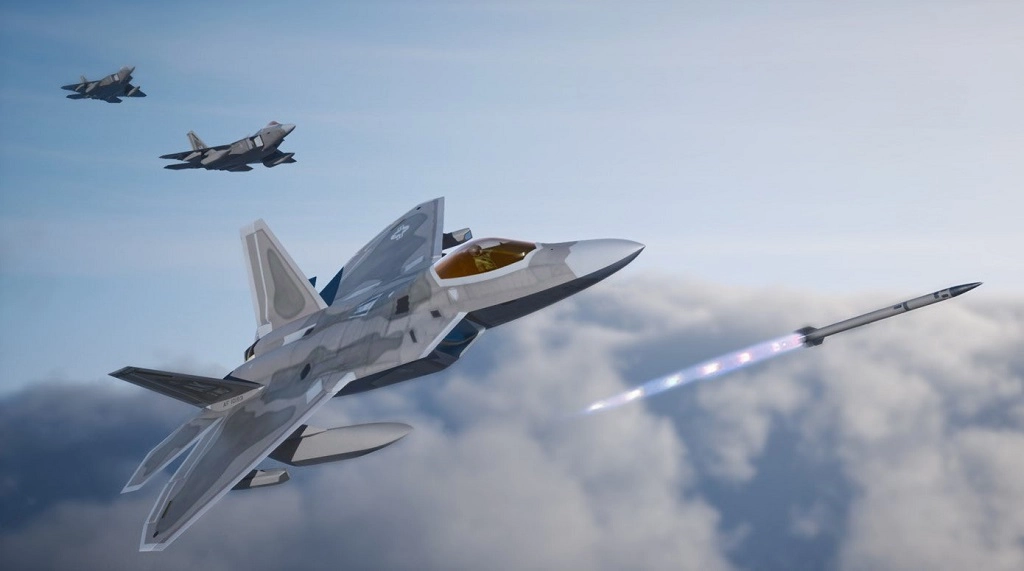
Looking further ahead, the AIM-260 is also positioned as a bridge to the next generation of air combat. Programs like the Air Force’s NGAD or the Navy’s F/A-XX are expected to depend on heavy networking and teaming between crewed and uncrewed aircraft. In such an environment, a missile with long reach, secure networking, and flexible guidance options is a core enabler of future tactics.
The AIM-260 JATM might not look like a revolution at first glance, but the implications could be bigger than the design suggests. For years, U.S. fighters leaned heavily on the AMRAAM, and it did the job. The problem is that rivals haven’t been standing still.
China’s PL-15, for example, is often credited (at least in open sources) with a longer reach, which puts American pilots in an uncomfortable spot. If the JATM really does close that gap, or even reverse it, then the whole rhythm of an air fight starts to change. Getting the first shot in and knowing you can disengage afterward, shapes a confidence in the cockpit.
Consider a hypothetical standoff in the Western Pacific. An American F-35 patrol runs into a group of Chinese J-20s, each carrying the PL-15. If the U.S. jets are limited to AIM-120s, the picture isn’t great, the Chinese side may be able to shoot first, which usually means the F-35s have to break formation, burn fuel on defensive maneuvers, or call in help from nearby assets. With the AIM-260 in the loadout, the encounter looks different.
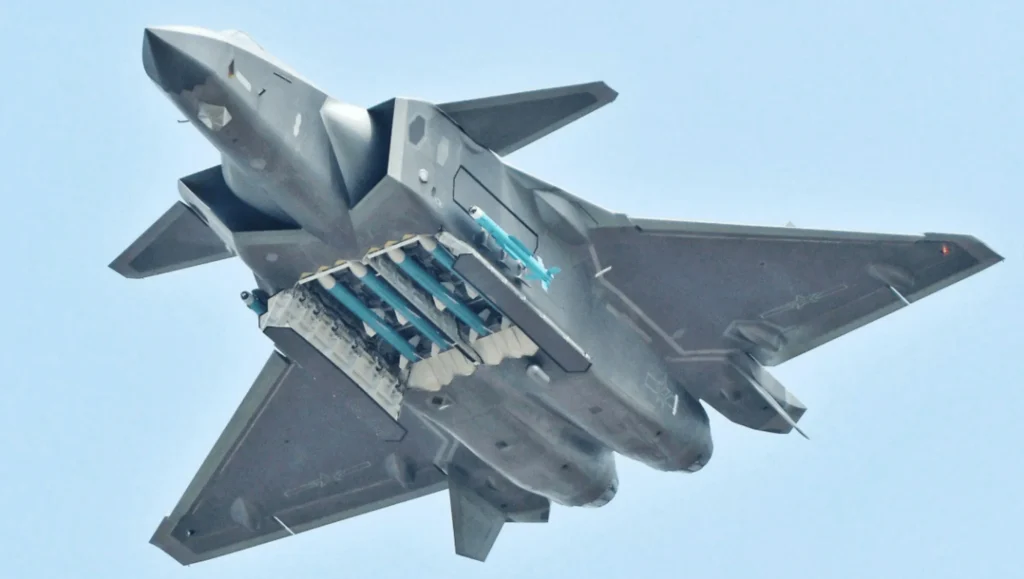
The range gap closes, maybe even flips, and that forces the J-20s to think twice about pressing forward. What’s interesting here is that the outcome doesn’t depend only on whether missiles are fired. The very perception of range advantage can shape how aggressively each side is willing to push.
There’s also the question of how opponents respond. If American missiles really do outrange what others have, rival air forces won’t just sit still. They might keep their fighters tucked in closer to ground-based defenses. Or they might throw more effort into electronic tricks and decoys. Some may even feel pushed to speed up their own missile programs, just to close the gap.
From a pilot’s view, the psychology shifts too. If you think the other side can reach you first, you’re less likely to take risks in wide open airspace. Maybe you hold back, maybe you wait for cover, maybe you avoid the fight altogether. That hesitation alone can change how an encounter plays out, sometimes without a single shot being fired.
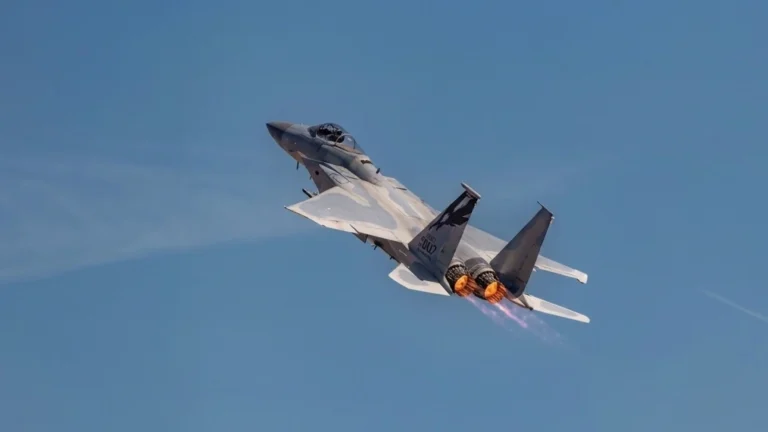
On a broader scale, what stands out with the JATM is how it fits across different aircraft. The missile isn’t only for the newest stealth jets. It can ride inside an F-22 or F-35, but it also works under the wings of older planes like the F/A-18. That kind of flexibility starts to matter once you think about joint ops or coalition work. Not every partner is flying around in fifth-generation fighters, so being able to spread the same weapon across different fleets keeps things simpler.
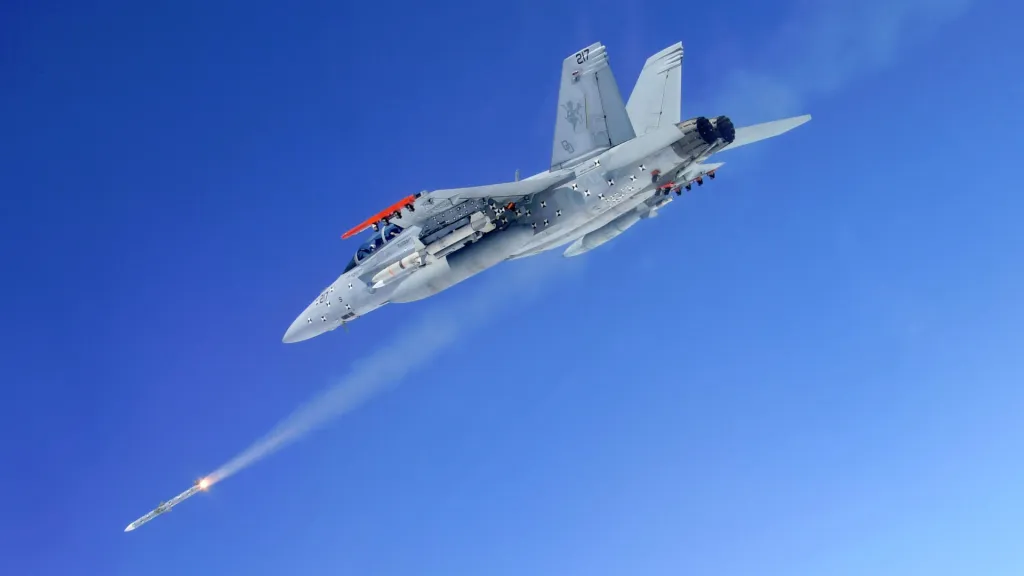
Picture a mixed package going out: F-22s or F-35s at the front, harder to detect, and legacy fighters trailing behind. If they’re all carrying the same missile, the coordination becomes a lot easier. Everyone’s working with the same reach and the same rules of engagement. It’s a quiet kind of advantage, but it helps keep U.S. units and allied forces on the same page instead of split by technology gaps.
For all the promise, the AIM-260 JATM is not free of problems. Building something faster, longer-ranged, and still small enough to fit inside an F-35 bay means pushing the limits of rocket motors, seekers, and heat management. None of that is easy. Even small tweaks in materials or electronics can delay production, and with a program this secretive, delays don’t usually make the news until much later.
Then there’s the question of numbers and money. A missile like this is bound to be more expensive than the AIM-120 it’s meant to replace, but no clear cost figures have been released. According to recent procurement data, the AIM-120 AMRAAM, its predecessor, is going for around $1.37 million each when bought by the U.S. Air Force. For foreign buyers, that price jumps—Poland, for example, is looking at roughly $3.3 million apiece for the AIM-120D3 variant.
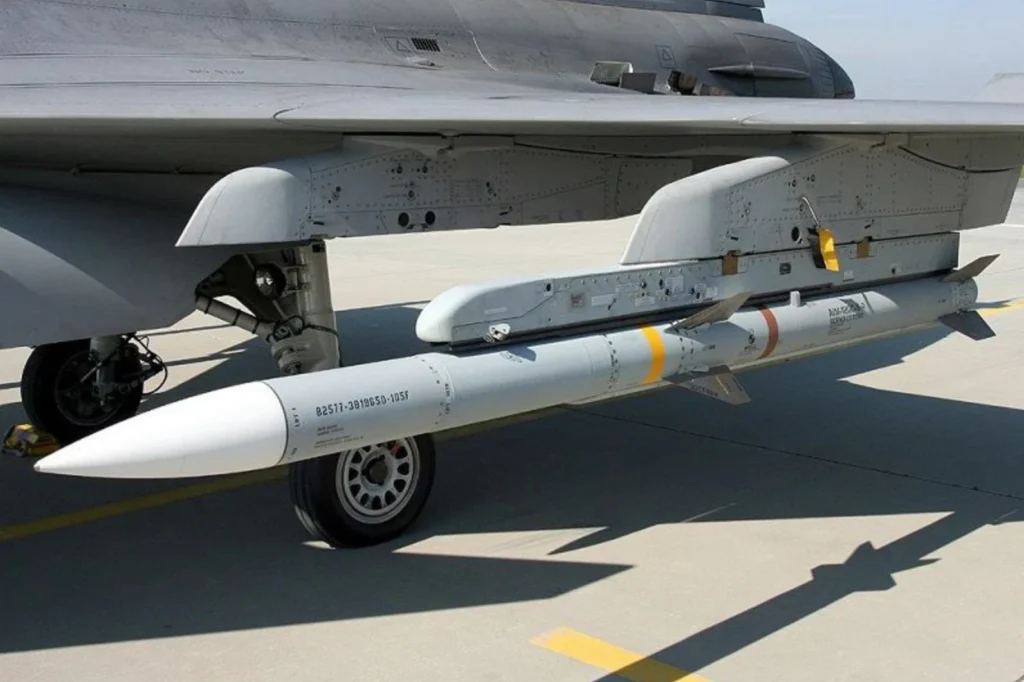
So if AIM-260 costs, say, two or three times that (which wouldn’t be shocking for next-gen tech), you can see how budgets and buying rates could take a hit. Right now, the Navy has already earmarked $309 million in FY2026 for AIM-260A procurement, while drastically reducing the AMRAAM buys (down to 51 missiles at $59 million). That tells you there’s room to start building inventory, but supply won’t scale overnight.
On top of that, new tech means new supply chains. You’ve got to train maintainers, stock spares, tweak logistics. In a fast-moving crisis, being able to rapidly leverage assets and having the ammo on hand can matter more than technical specs.
Is it really that powerful? Will it live up to the promise written on paper? That’s the question surrounding the AIM-260 JATM. It’s being pitched as the missile that lets U.S. pilots fire first again, clawing back the range advantage. But claims on paper don’t always survive contact with the real world, and until this weapon is tested in numbers, nobody can say for sure how much of that edge is real.
What does seem clear is that the JATM is less about one weapon and more about signaling intent. If the U.S. can field it at scale, it doesn’t just give pilots a better shot in a long-range duel, it also tells allies and competitors alike that America is not stepping back from the race for air dominance.