Follow Us:
Follow Us:

An aircraft carrier doesn’t simply appear in the middle of the ocean. Before it begins a deployment, thousands of sailors, mechanics, engineers, pilots, and logistics specialists have already spent months preparing it at one of America’s massive naval bases. These waterfront installations are where missions take shape long before the fleet sails over the horizon.
When people search for the largest US naval base, they’re often thinking about sheer size. But acreage is only part of the equation.
A base’s true value lies in what it can support, whether that’s nuclear-powered submarines, carrier strike groups, amphibious task forces, or the supply chain that keeps the U.S. Navy operating across the globe.
Some bases occupy thousands of acres yet focus on a single strategic mission, while others function like self-contained cities with dozens of piers, airfields, repair facilities, warehouses, hospitals, and housing for tens of thousands of personnel.
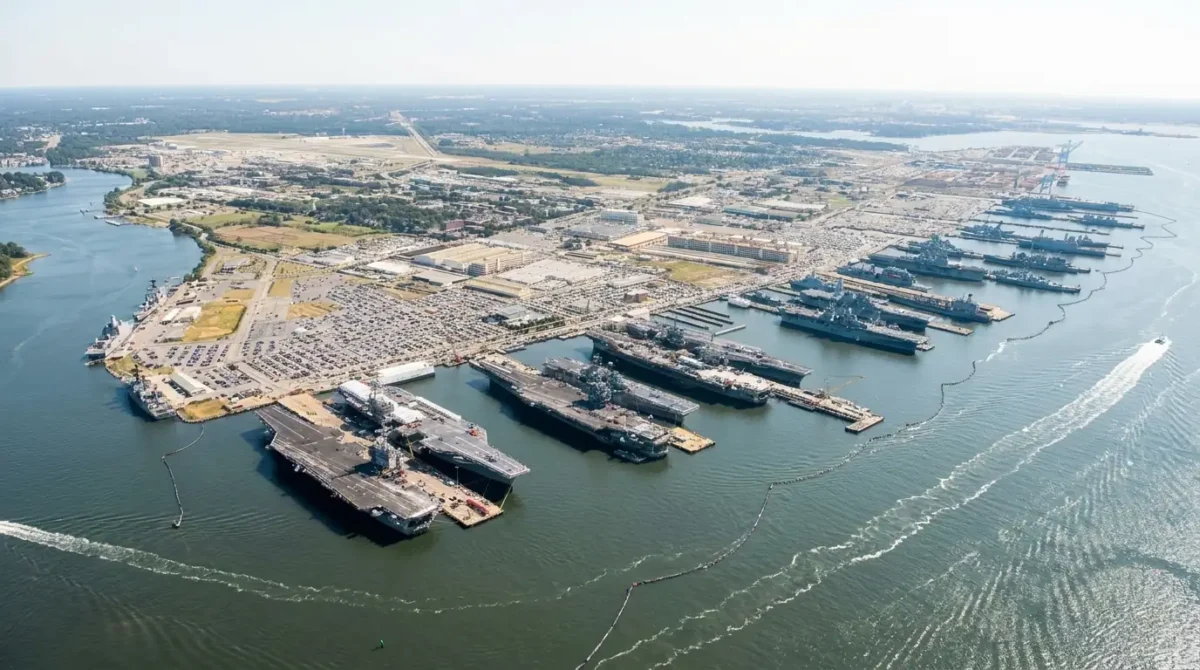
Today, the U.S. Navy operates more than 70 major installations worldwide, but a handful stand above the rest because of their scale and influence.
These bases anchor operations in the Atlantic, Pacific, and Indo-Pacific, placing American naval power within reach of critical maritime chokepoints and global trade routes. Their importance has only grown as naval competition intensifies in regions such as the South China Sea, the Arctic, and the North Atlantic.
In this post, we’ll rank the top five largest US naval bases based on their physical size, fleet capacity, and strategic role. You’ll also discover what makes each installation unique, how they compare, and why these naval hubs remain indispensable to America’s maritime dominance in the 21st century.
Not every naval installation is built for the same purpose, so ranking them isn’t as simple as comparing acreage. A sprawling base dedicated to submarines serves a very different mission than one designed to support multiple aircraft carriers. To make this list meaningful, we evaluated each installation using four key criteria rather than land area alone.
Physical size was the starting point. We considered the total land area, waterfront, number of piers, dry docks, and operational facilities. A larger footprint generally allows a base to accommodate more ships, aircraft, maintenance infrastructure, and future expansion.
Next came fleet capacity. Some of the largest U.S. naval bases are homeports for dozens of surface combatants, amphibious warships, or nuclear-powered submarines. Others host entire carrier strike groups or serve as headquarters for major fleet commands, making them operational centers rather than simply docking locations.
We also assessed strategic importance. Geography matters in naval warfare. Bases positioned along the Atlantic seaboard, the Pacific coast, or the Hawaiian Islands give the U.S. Navy rapid access to critical sea lanes, alliance networks, and potential conflict zones. Their locations influence everything from deterrence patrols to humanitarian response missions.
Finally, we looked at infrastructure and mission diversity. Modern naval bases are far more than harbors. They include ship repair yards, aviation facilities, logistics centers, ammunition storage, training schools, hospitals, and command headquarters that keep the fleet mission-ready around the clock.
Read also: Top 5 Biggest Army Bases in the US and Why They Matter
Using these four factors creates a more balanced ranking, one that reflects not just the largest US naval base by acreage, but also the installations that deliver the greatest operational value to the U.S. Navy and its global missions.
No discussion of the largest US naval base begins anywhere else. Located in Hampton Roads, Virginia, Naval Station Norfolk is the world’s largest naval installation, covering approximately 4,300 acres with more than 14 miles (23 km) of waterfront and 11 aircraft carrier-capable piers. Its enormous footprint allows the base to support one of the most powerful concentrations of naval forces anywhere on the planet.
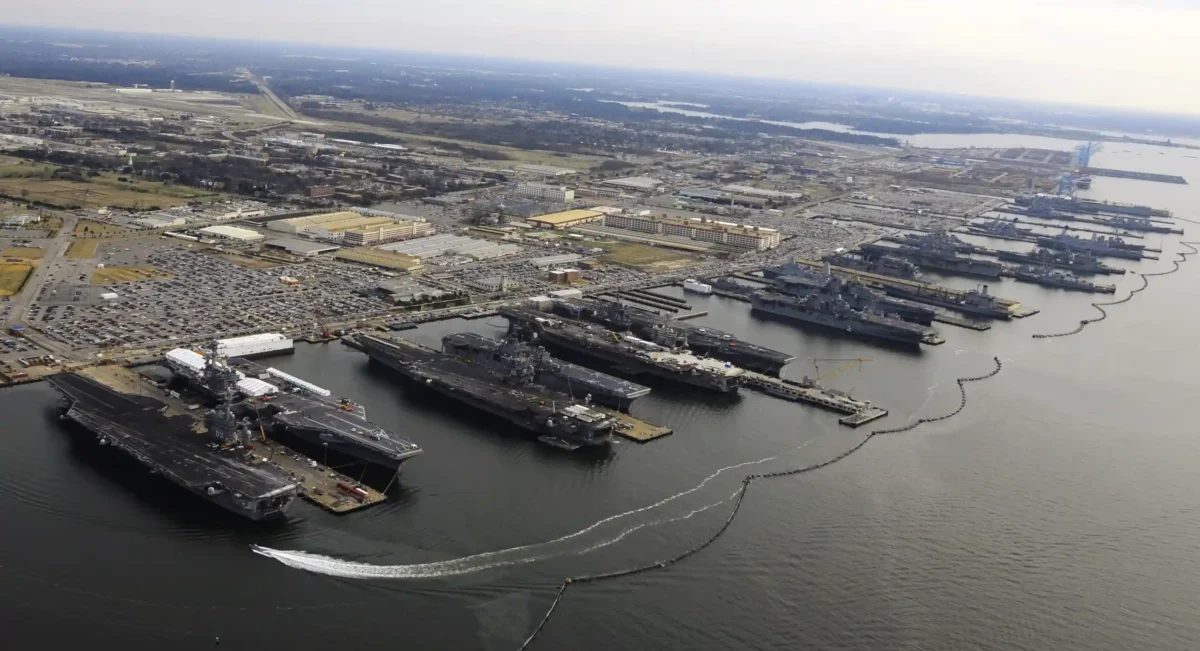
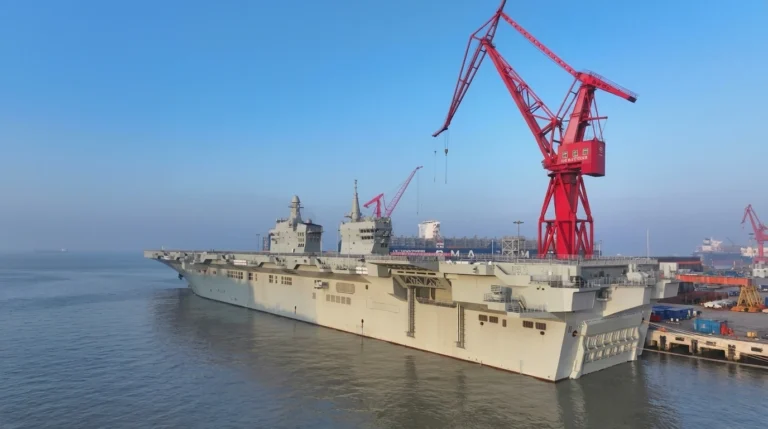
At any given time, Naval Station Norfolk is home to 75–80 ships, including Nimitz- and Gerald R. Ford-class aircraft carriers, guided-missile destroyers, cruisers, amphibious assault ships, and fast combat support vessels.
It also hosts nearly 130 aircraft and serves more than 80,000 active-duty personnel, civilians, and contractors, making it comparable to a medium-sized city in both population and daily operations.
Beyond its impressive size, Norfolk is the operational heart of the U.S. Atlantic Fleet. Carrier strike groups departing from its piers routinely deploy to Europe, the Mediterranean, the Middle East, and the North Atlantic.
The base also supports NATO exercises, multinational training, and rapid-response missions during global crises. Its proximity to major shipyards, logistics centers, and defense industries further strengthens its strategic value.
| Feature | Naval Station Norfolk |
| Location | Norfolk, Virginia |
| Approx. Size | 4,300 acres |
| Waterfront | 14+ miles (23 km) |
| Major Piers | 11 |
| Homeported Ships | 75–80 |
| Primary Mission | Atlantic Fleet operations |
What truly sets Norfolk apart isn’t just its acreage; it’s the ability to sustain multiple carrier strike groups simultaneously while serving as the Navy’s premier hub for logistics, maintenance, training, and global force projection.
For that reason, it remains the benchmark against which every other U.S. naval base is measured.
Stretching across Washington State’s Puget Sound, Naval Base Kitsap is one of the Navy’s most strategically valuable installations, and arguably its most important for undersea warfare.
Created in 2004 through the merger of Naval Submarine Base Bangor and Naval Station Bremerton, the base combines submarine operations, surface fleet support, and one of the nation’s premier ship maintenance centers under a single command.
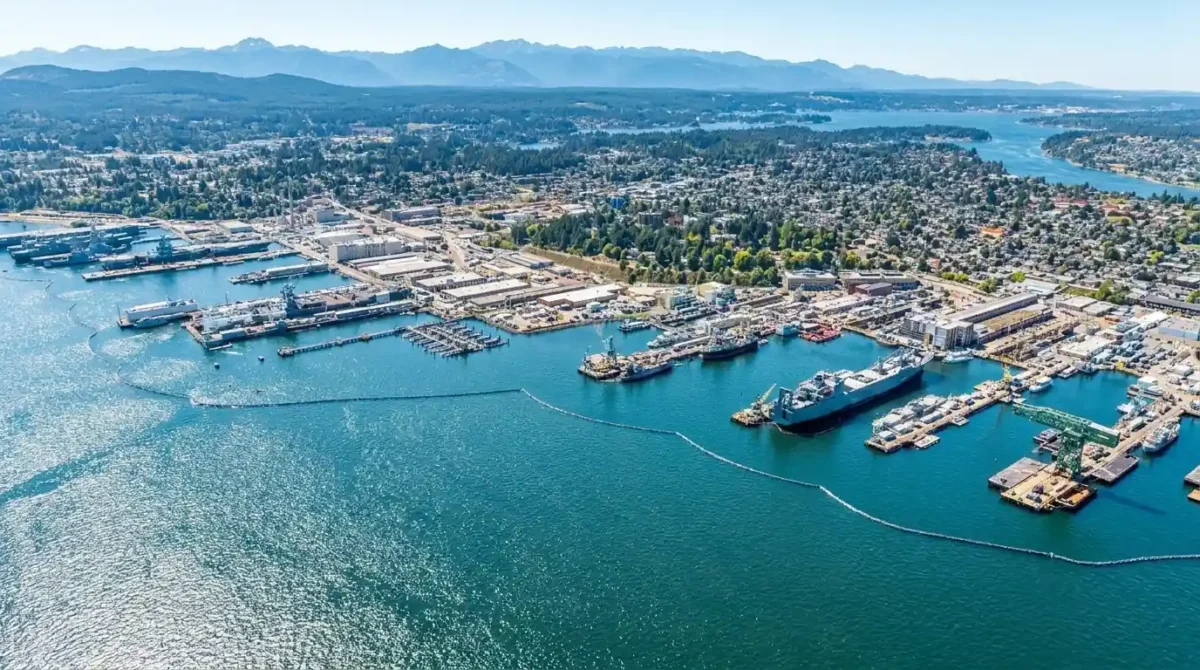
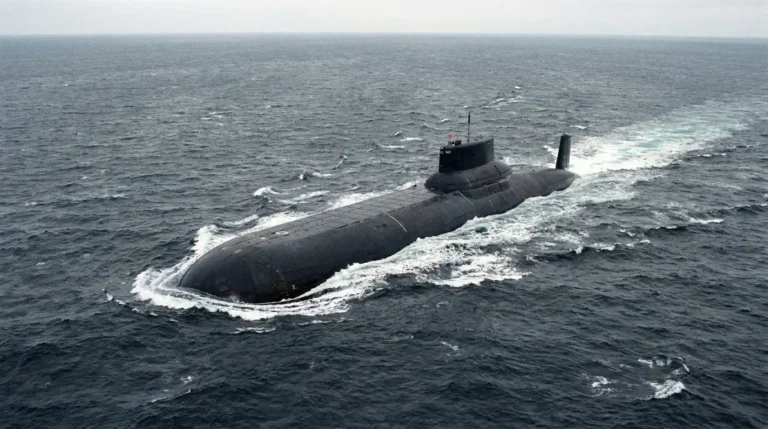
Covering more than 11,000 acres across multiple sites, Naval Base Kitsap is significantly larger than many traditional naval stations. Its Bangor complex serves as the Pacific homeport for the Navy’s Ohio-class ballistic missile submarines (SSBNs), which carry the sea-based leg of America’s nuclear triad.
These submarines conduct continuous deterrent patrols, providing a survivable nuclear force that remains hidden beneath the ocean for months at a time.
Read also: Top 5 Biggest US Military Bases: By Size, Troops & Impact
Meanwhile, Bremerton supports aircraft carriers, guided-missile destroyers, and other surface combatants. Adjacent to the base is Puget Sound Naval Shipyard, one of only a handful of U.S. facilities capable of overhauling and refueling nuclear-powered warships.
That maintenance capability is just as important as the ships themselves, ensuring the Pacific Fleet remains ready for long deployments.
| Feature | Naval Base Kitsap |
| Location | Washington |
| Approx. Size | 11,000+ acres |
| Primary Fleet | Pacific submarine force |
| Key Assets | Ohio-class SSBNs, aircraft carriers |
| Strategic Role | Nuclear deterrence & fleet maintenance |
Unlike the largest US naval base at Norfolk, Kitsap’s strength isn’t measured by the number of ships tied to its piers. Its real value lies beneath the surface.
By supporting the Navy’s ballistic missile submarines and maintaining nuclear-powered vessels, Naval Base Kitsap plays a quiet but indispensable role in America’s strategic deterrence and Indo-Pacific security posture.
If Naval Station Norfolk is the center of Atlantic naval power, Naval Base San Diego is its Pacific counterpart for surface fleet operations.
Situated along San Diego Bay, the installation is the largest naval base on the U.S. West Coast, covering roughly 977 acres with more than 12 miles (19 km) of berthing space. Its location places the U.S. Navy within rapid reach of the Indo-Pacific, one of the world’s most strategically important maritime regions.
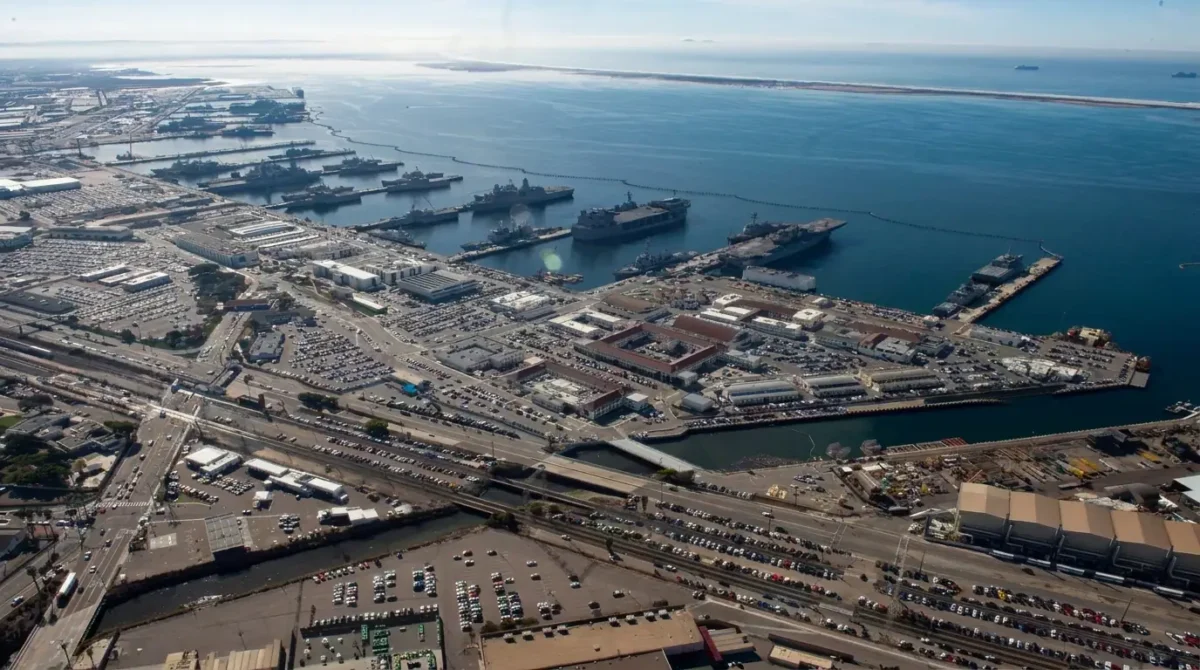
The base is home to 50-plus ships and supports a wide mix of vessels, including Arleigh Burke-class destroyers, Ticonderoga-class cruisers, littoral combat ships, amphibious transport docks, and expeditionary support ships.
Unlike Kitsap, which focuses heavily on submarines, San Diego specializes in surface warfare, amphibious readiness, and expeditionary operations.
Its strategic importance has grown significantly in recent years as the U.S. Navy places greater emphasis on the Indo-Pacific.
Ships departing San Diego routinely deploy to the Western Pacific, South China Sea, and Indian Ocean, where they participate in freedom of navigation operations, multinational exercises, and humanitarian assistance missions alongside allied navies.
| Feature | Naval Base San Diego |
| Location | San Diego, California |
| Approx. Size | 977 acres |
| Berthing Space | 12+ miles |
| Homeported Ships | 50+ |
| Primary Mission | Pacific surface fleet operations |
Beyond its waterfront, the base benefits from a dense network of nearby naval air stations, logistics facilities, and maintenance centers, creating one of the most comprehensive military ecosystems in the United States.
While it isn’t the largest US naval base by acreage, Naval Base San Diego remains one of the Navy’s busiest operational hubs, serving as the primary launching point for surface combatants tasked with maintaining stability and deterrence across the vast Pacific Ocean.
Hidden along Georgia’s Atlantic coastline, Naval Submarine Base Kings Bay rarely makes headlines, but its mission is among the most consequential in the U.S. military.
As the East Coast home of the Navy’s Ohio-class ballistic missile submarines (SSBNs), Kings Bay forms a critical pillar of America’s nuclear deterrent, ensuring a credible second-strike capability at sea.
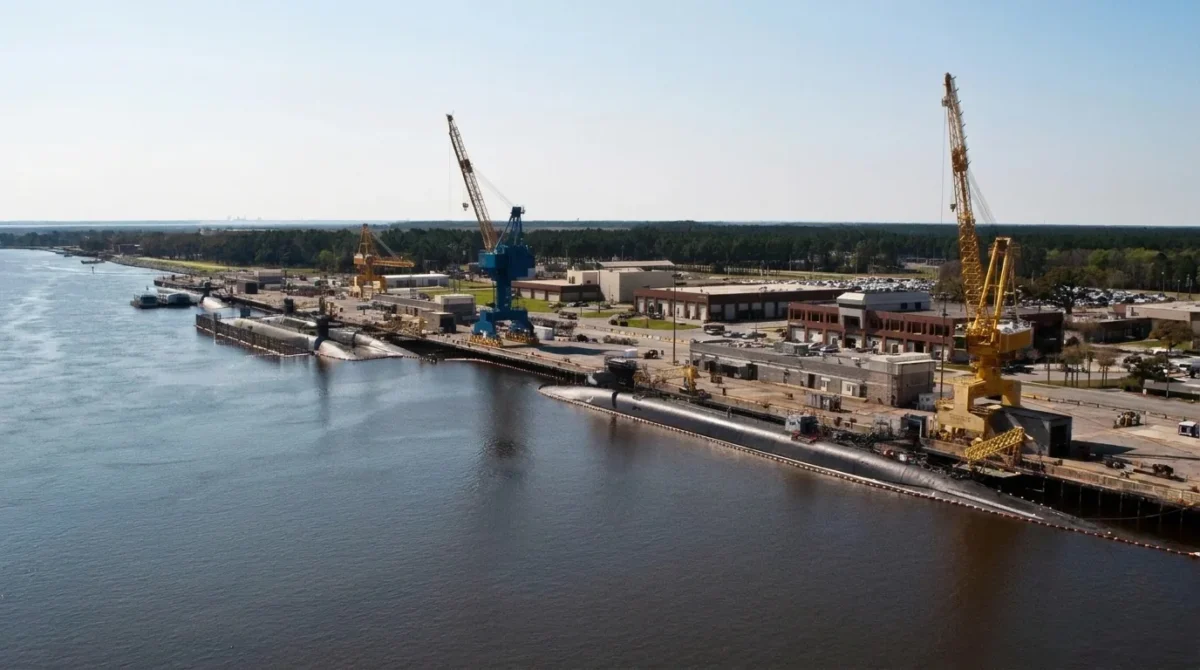
The base spans approximately 16,000 acres, making it one of the largest U.S. naval installations by land area. Unlike bases that accommodate a diverse mix of warships, Kings Bay is purpose-built for submarine operations. Its secure waterfront, specialized maintenance facilities, strategic weapons handling infrastructure, and extensive training areas are all designed to support the Navy’s most sensitive and closely guarded assets.
In addition to ballistic missile submarines, Kings Bay is also home to Virginia-class fast attack submarines (SSNs), which conduct intelligence gathering, anti-submarine warfare, and precision strike missions.
Together, these vessels provide the Navy with both strategic deterrence and conventional combat capabilities.
| Feature | Naval Submarine Base Kings Bay |
| Location | St. Marys, Georgia |
| Approx. Size | 16,000 acres |
| Primary Fleet | Ballistic missile & attack submarines |
| Key Assets | Ohio-class SSBNs, Virginia-class SSNs |
| Primary Mission | Nuclear deterrence |
Geography is another major advantage. Positioned on the Atlantic coast with direct access to deep water, Kings Bay enables submarines to deploy discreetly into the Atlantic Ocean with minimal transit time. Its distance from heavily congested commercial ports also enhances operational security.
Although it lacks the bustling piers of the largest US naval base at Norfolk, Kings Bay’s strategic value is immense.
Every submarine leaving its docks represents a silent, nearly undetectable component of America’s nuclear triad, making the base one of the most important deterrence hubs in the world.
Few military installations carry the historical weight and strategic importance of Joint Base Pearl Harbor–Hickam (JBPHH).
Located on the island of Oahu, Hawaii, the base occupies a commanding position at the crossroads of the Pacific Ocean, making it an essential hub for U.S. naval and air operations across the Indo-Pacific.
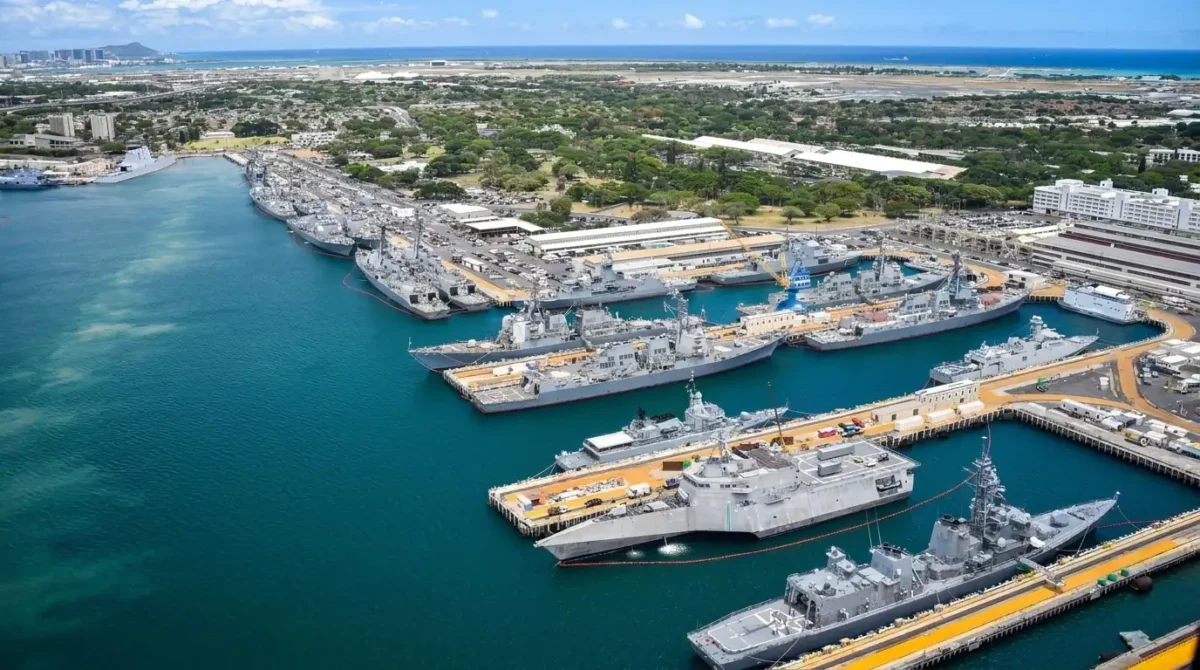
Formed in 2010 by merging Naval Station Pearl Harbor with Hickam Air Force Base, the installation brings together naval, air, and joint-force capabilities under one command. It serves as the headquarters of the U.S. Pacific Fleet, which oversees naval operations across more than 100 million square miles of ocean, an area stretching from the U.S. West Coast to the Indian Ocean.
Pearl Harbor is home to nuclear-powered attack submarines, surface combatants, Coast Guard vessels, and a wide range of support ships.
The adjacent Pearl Harbor Naval Shipyard and Intermediate Maintenance Facility is one of the few shipyards in the United States certified to maintain and modernize nuclear-powered submarines, making it indispensable for sustaining fleet readiness in the Pacific.
| Feature | Joint Base Pearl Harbor–Hickam |
| Location | Oahu, Hawaii |
| Primary Fleet | U.S. Pacific Fleet |
| Key Assets | Attack submarines, surface warships |
| Strategic Role | Indo-Pacific command and logistics |
| Notable Facility | Pearl Harbor Naval Shipyard |
Beyond its military capabilities, Pearl Harbor remains a symbol of resilience. The attack of December 7, 1941, transformed the harbor into a defining chapter of American history, yet today it stands as one of the Navy’s most advanced forward-operating bases.
Although it is not the largest US naval base by acreage, Joint Base Pearl Harbor–Hickam is arguably one of the most strategically positioned. Its central Pacific location allows the U.S. Navy to respond rapidly to regional crises, strengthen alliances, and maintain a persistent presence in one of the world’s most contested maritime theaters.
Each of America’s largest naval bases has a distinct mission. Some are designed to support aircraft carriers and surface combatants, while others focus on nuclear submarines or regional command.
Looking at them side by side makes it easier to understand why no single installation can perform every mission, and why the Navy depends on a network of specialized bases.
| Rank | Naval Base | State | Approx. Size | Primary Fleet | Strategic Role |
| 1 | Naval Station Norfolk | Virginia | 4,300 acres | Atlantic Fleet | Carrier strike groups, amphibious operations, NATO support |
| 2 | Naval Base Kitsap | Washington | 11,000+ acres (multiple sites) | Pacific submarine force | Nuclear deterrence, submarine operations, fleet maintenance |
| 3 | Naval Base San Diego | California | 977 acres | Pacific surface fleet | Indo-Pacific deployments, amphibious readiness |
| 4 | Naval Submarine Base Kings Bay | Georgia | 16,000 acres | Atlantic submarine force | Ballistic missile submarines, nuclear deterrence |
| 5 | Joint Base Pearl Harbor–Hickam | Hawaii | Multi-installation complex | U.S. Pacific Fleet | Indo-Pacific command, logistics, forward operations |
Although Kings Bay covers more land than Naval Station Norfolk, acreage alone doesn’t determine overall importance. Norfolk remains the largest US naval base in terms of operational capacity, waterfront infrastructure, fleet concentration, and its ability to support multiple carrier strike groups simultaneously.
Likewise, Naval Base Kitsap and Kings Bay specialize in strategic submarine operations, while San Diego excels as the Navy’s busiest West Coast surface fleet hub. Pearl Harbor–Hickam, meanwhile, acts as the forward headquarters for U.S. naval power across the Indo-Pacific.
Taken together, these five installations represent the Navy’s balanced approach to global maritime security.
Rather than relying on a single superbase, the United States distributes its fleet across strategically located hubs, ensuring flexibility, resilience, and the ability to respond quickly to emerging threats in multiple theaters at once.
The largest U.S. naval bases are far more than homeports for warships, they’re strategic assets that shape how quickly and effectively the United States can respond to events around the world. Without these installations, even the most advanced fleet would struggle to sustain long-term operations.
On the East Coast, Naval Station Norfolk and Naval Submarine Base Kings Bay provide immediate access to the Atlantic Ocean, Europe, and the Middle East.
Norfolk serves as the launch point for carrier strike groups and amphibious ready groups, while Kings Bay quietly supports the nation’s sea-based nuclear deterrent through its fleet of ballistic missile submarines.
Across the Pacific, Naval Base San Diego, Naval Base Kitsap, and Joint Base Pearl Harbor–Hickam form a layered network that supports U.S. operations from the West Coast to the Western Pacific.
Their locations are increasingly important as maritime competition intensifies in the Indo-Pacific, where freedom of navigation, alliance commitments, and regional stability remain top defense priorities.
These installations also play a crucial role in logistics. Massive fuel depots, ammunition storage areas, dry docks, aviation facilities, and repair shipyards allow the Navy to keep vessels deployed for months at a time.
During humanitarian disasters, from tsunamis to hurricanes, these same bases become launch points for hospital ships, transport aircraft, and emergency relief supplies.
Perhaps most importantly, they strengthen deterrence. A visible aircraft carrier entering a region can reassure allies, while a ballistic missile submarine leaving port without detection sends a quieter but equally powerful message to potential adversaries.
Whether measured by acreage, fleet capacity, or strategic influence, the largest US naval base and its counterparts form an interconnected network that enables the U.S. Navy to project power, safeguard global trade routes, and respond rapidly to crises wherever they emerge.