Follow Us:
Follow Us:

There’s something quietly intimidating about the Lockheed P-3 Orion. It doesn’t roar across headlines like a stealth fighter. It doesn’t flex supersonic speeds. Instead, the P-3 Orion circles. Patiently. Methodically. Listening to the ocean breathe.
For decades, this four-engine maritime patrol aircraft has been the long, steady arm of naval aviation.
Built during the icy tension of the Cold War and designed primarily for anti-submarine warfare (ASW), the P-3 Orion became one of the most successful maritime patrol aircraft ever produced. More than 750 were built. Over 20 countries operated it. And for many navies, it was the difference between seeing a threat coming, and never knowing it was there.

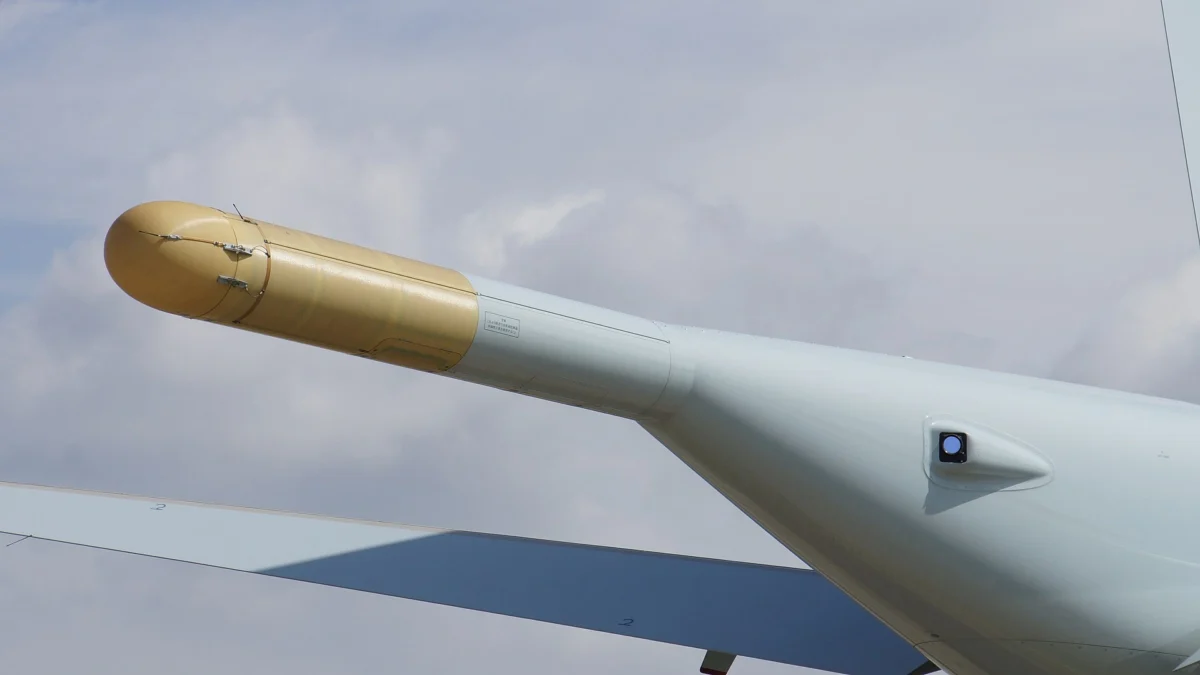
At first glance, it looks like a commercial airliner with a military makeover. That’s because it is. The P-3 was developed from the Lockheed L-188 Electra airliner, but what began as a civilian transport evolved into a submarine hunter equipped with sonar buoys, radar arrays, electronic surveillance systems, and that distinctive tail boom, the Magnetic Anomaly Detector, scanning the ocean for hidden steel hulls below.
Here’s the part most people miss: the P-3 Orion wasn’t just a Cold War relic. It adapted. It surveilled drug trafficking routes in the Caribbean. It patrolled piracy zones. It flew humanitarian reconnaissance after tsunamis. It even chased hurricanes in specialized variants.
The P-3 Orion didn’t just patrol oceans. It defined how modern maritime surveillance works.
The Lockheed P-3 Orion is a four-engine, turboprop maritime patrol and anti-submarine warfare (ASW) aircraft developed for the U.S. Navy in the late 1950s. Its mission? Patrol vast ocean areas, detect enemy submarines, track surface ships, and gather intelligence, often for 10 to 12 hours at a time without landing.
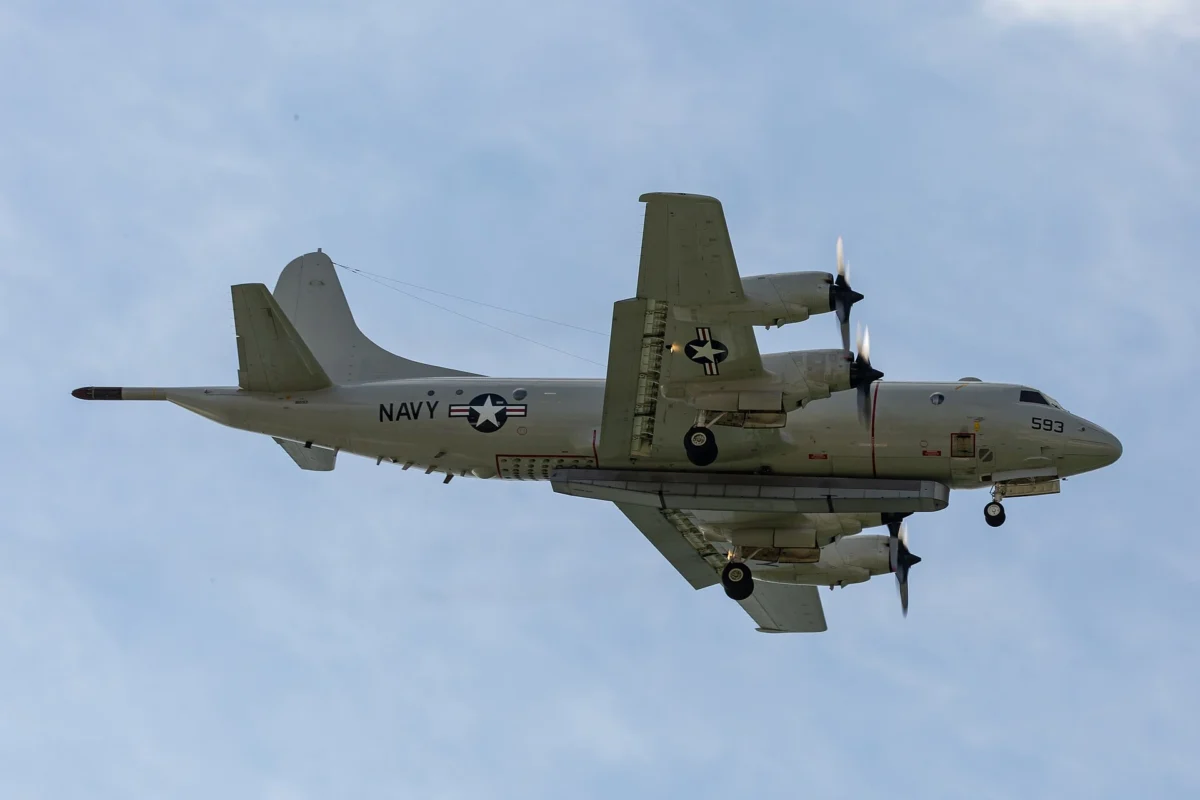
Think of it as a flying ocean sentinel.
Introduced into service in 1962, the P-3 Orion was built during the height of the Cold War, when tracking Soviet submarines was a strategic priority.
Instead of designing an entirely new aircraft, engineers adapted the airframe of the Lockheed L-188 Electra commercial airliner, reinforcing it for low-altitude maritime operations and equipping it with advanced sensors and weapons systems.
Over 750 were built, and more than 20 countries operated the aircraft. While many have retired the platform, some upgraded variants remain in service today, a testament to its durability and adaptable design.
In simple terms, the P-3 Orion isn’t flashy. It doesn’t break speed records.
But for decades, it quietly dominated the skies over the world’s oceans, listening, scanning, and protecting maritime borders long before most people even realized it was there.
The P-3 Orion wasn’t born in a weapons lab. It started life as something far more ordinary, the commercial Lockheed L-188 Electra.
In the late 1950s, the U.S. Navy needed a faster, longer-range replacement for the aging P-2 Neptune. Rather than designing from scratch, engineers at Lockheed Corporation did something clever: they militarized an airliner.
First flight? November 25, 1959.
Service entry? 1962.
Right on time for the Cold War’s underwater chess match.
The P-3 Orion maritime patrol aircraft quickly proved it could loiter for 10–12 hours, sometimes longer with aerial refueling. That endurance mattered. Submarines don’t sprint; they hide. So the Orion learned to outwait them.
Below is a snapshot of its early development timeline:
| Milestone | Year | Why It Mattered |
| First Flight | 1959 | Validated airframe adaptation |
| Operational Service | 1962 | Replaced P-2 Neptune |
| P-3C Variant Introduced | 1969 | Major avionics and ASW upgrade |
| Production Ends | 1990 | 757 aircraft built |
The real leap came with the P-3C variant. New acoustic processors. Better radar. Enhanced electronic surveillance. Suddenly the aircraft wasn’t just detecting submarines, it was classifying them.
And here’s a lesser-discussed angle: the P-3’s reliability became legendary. Crews joked that the Allison T56 turboprop engines would “outlive the crew chief.” Maintenance crews loved its accessibility. It was rugged, forgiving, almost stubborn.

Over time, missions expanded beyond anti-submarine warfare. The P-3 Orion aircraft became a multi-role intelligence platform, tracking surface ships, enforcing maritime borders, even gathering signals intelligence.
It evolved not through flashy redesigns, but through steady upgrades. Layer by layer. Sensor by sensor.
A hunter refined by time, not hype.
Let’s get under the skin of the P-3 Orion, because this aircraft’s real magic isn’t just history. It’s engineering discipline.
At its core, the Lockheed P-3 Orion is a four-engine turboprop built for endurance, not speed. Powered by Allison T56-A-14 engines (each producing about 4,600 shaft horsepower), the aircraft cruises efficiently at long ranges. Jets burn fast. The P-3 sips.
Here’s a clean snapshot of its core specifications (P-3C variant):
| Specification | Data |
| Crew | 11 (varies by mission) |
| Length | 116 ft 10 in (35.6 m) |
| Wingspan | 99 ft 8 in (30.4 m) |
| Max Speed | ~411 mph (661 km/h) |
| Cruise Speed | ~330 mph (530 km/h) |
| Range | 2,380+ nautical miles |
| Endurance | 10–12+ hours |
| Service Ceiling | 28,300 ft |
But raw numbers don’t tell the whole story.
The defining feature is the sensor suite. The P-3 maritime patrol aircraft carries:
That MAD boom? It detects tiny disturbances in Earth’s magnetic field caused by large metal objects, like submarines. It’s subtle science. Almost eerie.
The internal weapons bay can carry torpedoes (like Mk 46/50), depth charges, and anti-ship missiles. Wing pylons add even more flexibility.
One often overlooked strength: stability. The turboprop design allows low-altitude, slow-speed passes over water, essential for accurate submarine tracking.
It’s not flashy. It’s precise.
A flying toolbox engineered to outlast the mission, and sometimes, the era it was built for.
If you imagine the P-3 Orion simply flying in circles over empty water, you’re only half right. Yes, it loiters. But it loiters with purpose.
At its core, the Lockheed P-3 Orion was built for Anti-Submarine Warfare (ASW).
During the Cold War, Soviet submarines slipped quietly beneath the Atlantic and Pacific. The P-3’s job? Find them first.
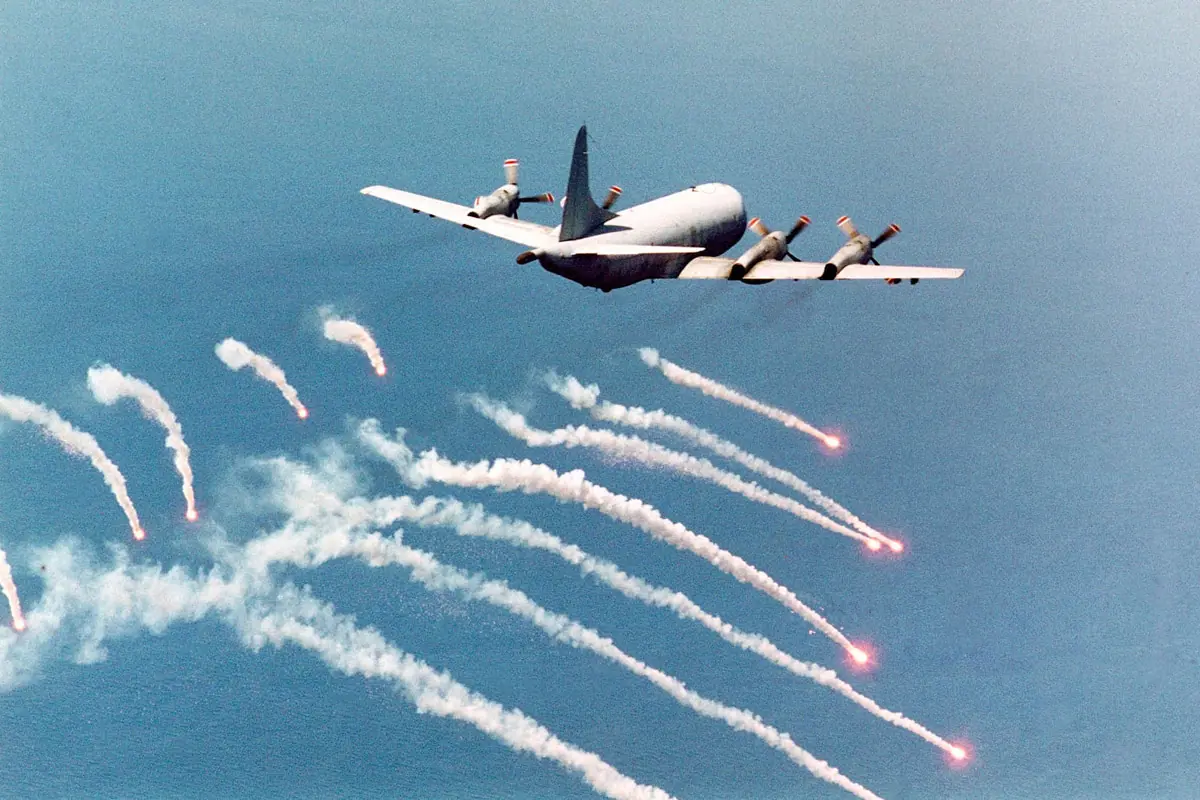
Here’s how a typical ASW mission might unfold:
It’s less Top Gun, more underwater detective work.
But the P-3 Orion aircraft didn’t stay confined to submarine hunting. Its mission set expanded dramatically:
Monitoring shipping lanes. Tracking illegal fishing fleets. Watching choke points like the Strait of Hormuz. Quiet presence, big deterrence.
Signals intelligence packages allowed it to intercept electronic emissions. Think of it as a flying listening post.
In the 1980s and ’90s, U.S. P-3s tracked narcotics trafficking routes across the Caribbean and Eastern Pacific. Slow aircraft? Not a problem. Smugglers use boats.
Long endurance means wide search patterns. After maritime accidents, the P-3’s sensors locate debris fields quickly.
Specialized WP-3D variants operated by the National Oceanic and Atmospheric Administration fly directly into hurricanes to gather data. Yes, into them.
So the P-3 Orion maritime patrol aircraft isn’t just a submarine hunter.
It’s a guardian of coastlines.
A border sentinel.
A storm chaser.
And sometimes, the only aircraft patient enough to watch the ocean all day, because someone has to.
If aircraft had family trees, the P-3 Orion would have a sprawling one, branches stretching across continents, climates, and mission types. What began as a U.S. Navy submarine hunter evolved into a global maritime patrol platform with specialized cousins you might not expect.
The backbone of the fleet became the P-3C variant, introduced in 1969. It brought advanced acoustic processing, improved radar, and upgraded avionics.
Over time, incremental “Update” packages enhanced sensors and survivability. Think of it as software updates… but with propellers.
International operators didn’t just buy the aircraft, they adapted it.
Here are a few notable examples:
| Variant | Country | Unique Role |
| AP-3C Orion | Australia | Advanced ISR & electronic surveillance |
| CP-140 Aurora | Canada | Arctic maritime patrol |
| WP-3D Orion | United States | Hurricane reconnaissance |
| P-3K2 | New Zealand | Maritime patrol & EEZ monitoring |
Canada’s CP-140 Aurora, for example, blends the P-3 airframe with avionics from the S-3 Viking, a hybrid approach that extended operational life well into the 2020s.
In Australia, the AP-3C upgrade transformed the aircraft into a powerful intelligence-gathering tool during Middle East deployments.
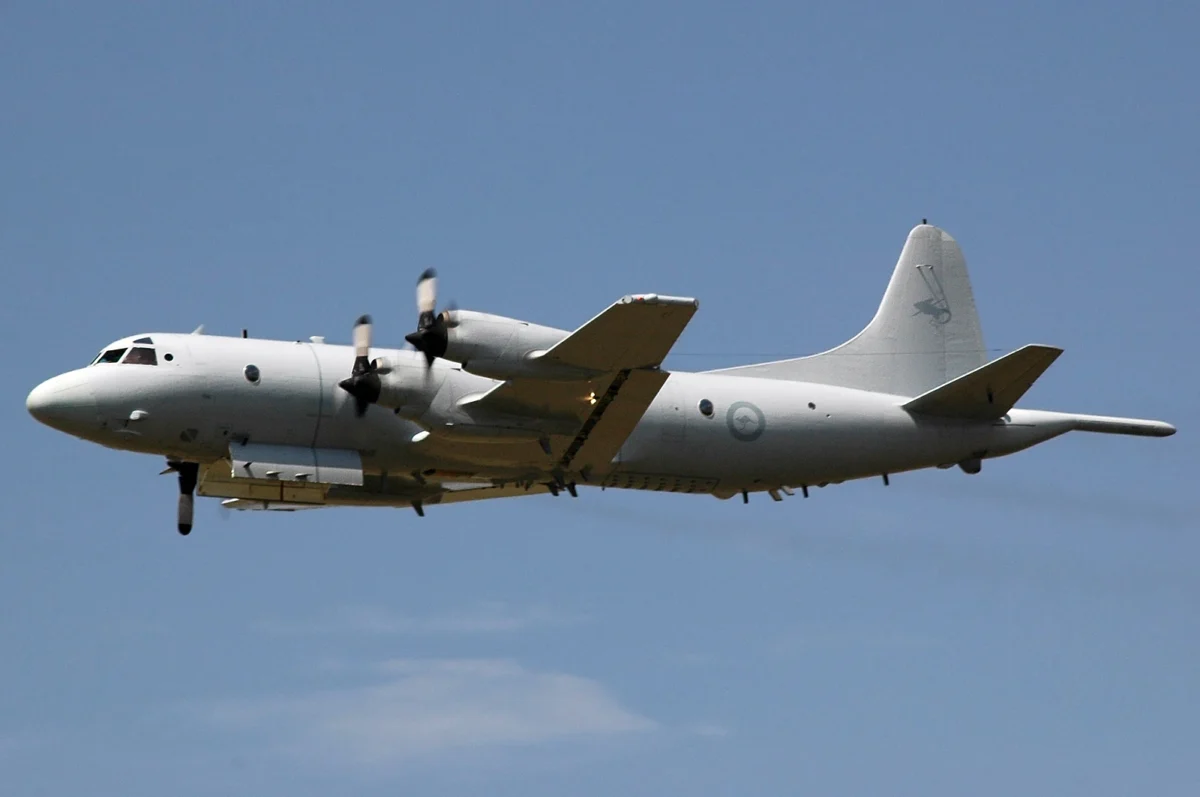
At its peak, more than 20 nations operated the P-3 Orion maritime patrol aircraft, including Japan, Germany, Norway, Spain, and South Korea. Japan even built the P-3 under license, eventually developing its own successor.
Production officially ended in 1990, but service didn’t. Some Orions flew for over 40 years. A few still do.
That longevity says something.
The P-3 wasn’t just exported.
It was trusted.
Here’s the surprising part about the P-3 Orion: it refuses to fade quietly into aviation history.
Even as jet-powered successors take over, the Lockheed P-3 Orion remains operational in several countries. Why? Because endurance, reliability, and mission flexibility never go out of style.
For nearly six decades, the P-3 defined maritime patrol aviation. During the Cold War alone, U.S. Navy Orions flew thousands of hours tracking Soviet submarines.
Some estimates suggest that at peak operations in the 1980s, P-3 squadrons were logging over 300,000 flight hours annually. That’s not symbolic presence, that’s constant ocean surveillance.
But legacy isn’t just measured in flight hours.
The P-3 pioneered multi-sensor fusion long before it became a buzzword. Acoustic data, radar returns, magnetic readings, and electronic emissions were analyzed together in one aircraft. Today’s ISR platforms operate on the same principle, just with faster processors.
Its primary successor, the Boeing P-8 Poseidon, trades turboprops for jet engines and analog consoles for digital workstations. Faster? Absolutely. Higher altitude? Yes. But some crews quietly admit the P-3’s low-speed handling at sea level was unmatched.
There’s also an economic truth: many smaller nations continue flying upgraded P-3 variants because replacing them outright would cost billions.
In a way, the P-3 Orion represents a philosophy of military design that feels rare now, build it strong, upgrade it patiently, and let it serve for generations.
It was never glamorous.
But it was there. Watching. Listening. Enduring.
And sometimes, that’s the kind of legacy that lasts longest.