Follow Us:
Follow Us:

It feels like we’re finally at one of those “remember when…” moments for the KF-21 Boramae fighter program. After years of prototypes, test flights, and production milestones, South Korea is on the brink of handing over the first of its own multirole combat jets to the Republic of Korea Air Force in 2026.
If you’ve been following developments, and even if you haven’t, the KF-21 Boramae isn’t just another fighter jet. It’s the product of a long, sometimes winding journey toward aerospace independence, blending modern avionics, stealthy shaping, and twin-engine performance into what many are calling a highly competitive 4.5-generation fighter that could appeal to air forces looking for capability without the sticker shock and export strings tied to some 5th-gen jets.
Of course, not everything is finalized yet. While the Boramae is set to start rolling into service this year, full operational capability and exports are still shaping up, and enthusiasts and analysts alike are watching closely to see how it stacks up on the global stage.
At its core, the KF-21 Boramae is South Korea’s homegrown multirole fighter jet, designed to sit right in that sweet spot between older 4th-gen aircraft and full-blown 5th-gen fighters. It’s meant to gradually replace jets like the F-4 Phantom and F-5 Tiger, while also easing the workload on more expensive platforms such as the F-35 Lightning.
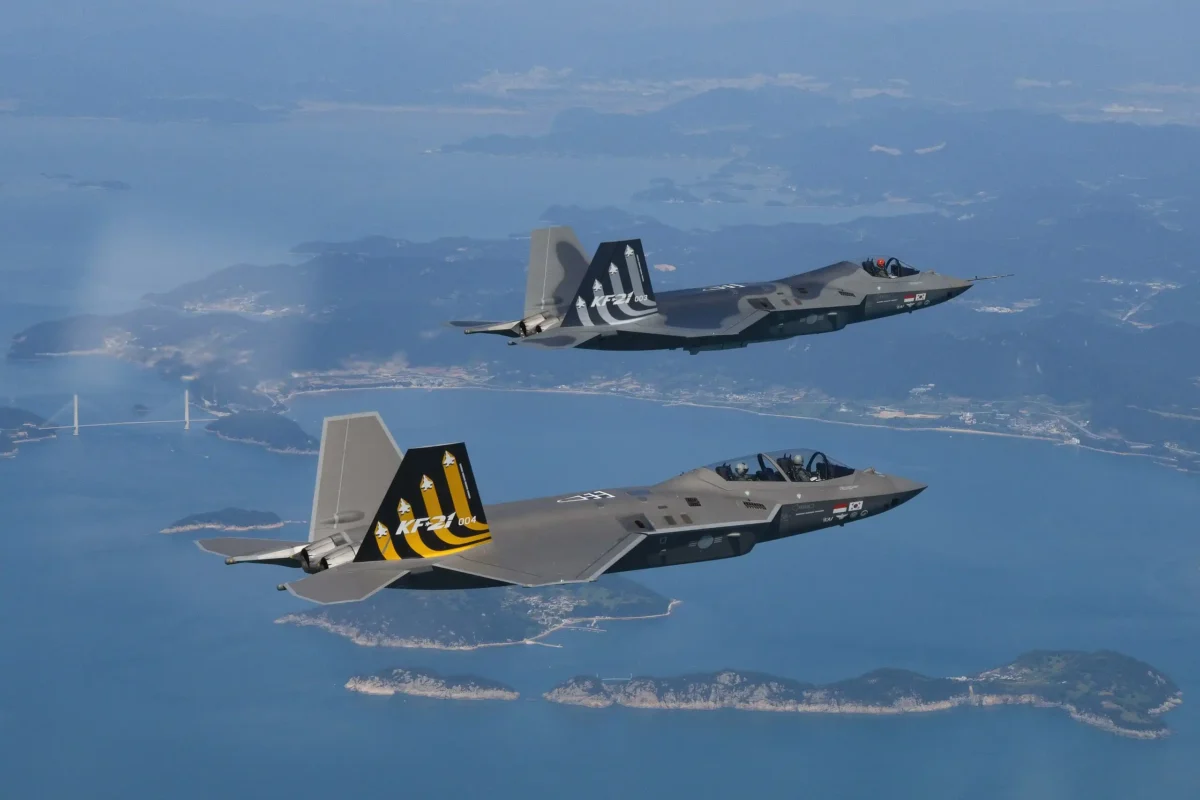
In practical terms, the KF-21 Boramae fighter is shaping up to be a flexible, everyday workhorse for air defense, patrol, and strike missions, at least that’s the direction the program seems to be heading.
The name itself is pretty symbolic. “Boramae” is a Korean term that roughly translates to young hawk, often associated with something that’s been trained and is ready to fly on its own. That fits the program nicely, since the jet represents South Korea’s push to stand on its own in advanced fighter development rather than relying entirely on foreign designs.
As for how it all came together, the program is led by Korea Aerospace Industries (KAI), with heavy backing from the South Korean government and close involvement from the Republic of Korea Air Force.
Development officially kicked off in the mid-2010s, with the idea of building a modern fighter using proven technologies, but integrating them locally. It hasn’t been a solo effort; foreign partners and suppliers play a role, yet the overall project is widely seen as a major step toward strengthening South Korea’s defense industry and long-term strategic independence.
The idea started taking shape in the early 2010s, when South Korea began seriously looking for a way to replace aging fighters without fully depending on imports. Formal development kicked off around 2015, and after years of design work, simulations, and subsystem testing, the first KF-21 Boramae prototype rolled out in 2021.
The big milestone came in July 2022, when the jet made its first flight, which was widely seen as a make-or-break moment for the program.
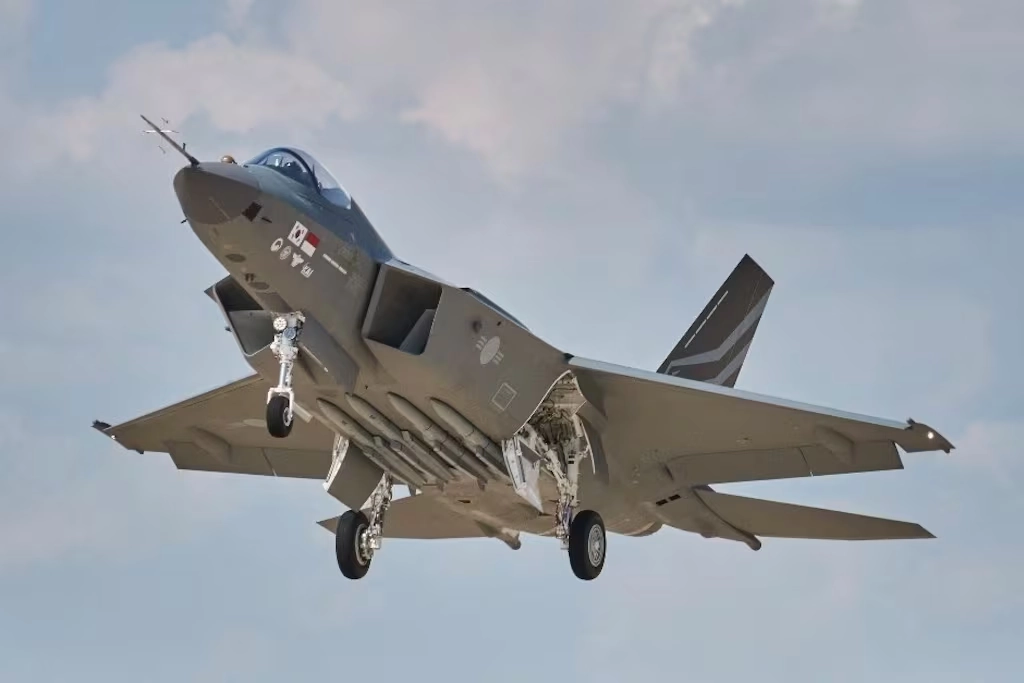
Since then, multiple prototypes have been flying regularly, slowly expanding the flight envelope and testing radar, avionics, and weapons integration. It’s still very much a phased process, but so far, progress has looked steady rather than rushed.
In terms of partnerships, Indonesia has been the most visible international partner, originally committing funding and participation in exchange for future aircraft and tech involvement. That relationship has had a few bumps along the way, but Indonesia remains part of the program.
Read also: Turkish KAAN Fighter Jet Specs & Tech You Need to Know
At the same time, a large chunk of the work comes from domestic suppliers, which is kind of the point. South Korea has been using the KF-21 as a way to grow its own aerospace ecosystem, not just build a single jet.
Short answer: control, cost, and capability.
South Korea likely realized that relying entirely on foreign fighters can get expensive, politically complicated, and limiting over time.
By building the KF-21 Boramae fighter, the country gains more control over upgrades, weapons integration, and long-term sustainment.

There’s also the strategic angle. The KF-21 helps bridge the gap between older jets and stealth aircraft like the F-35, offering modern sensors and performance without the same level of cost or operational restrictions.
And beyond military needs, the program doubles as an industrial investment, helping South Korea move closer to the top tier of countries that can design and produce advanced fighter jets on their own.
At first glance, the KF-21 Boramae fighter jet looks familiar, and that’s not by accident.
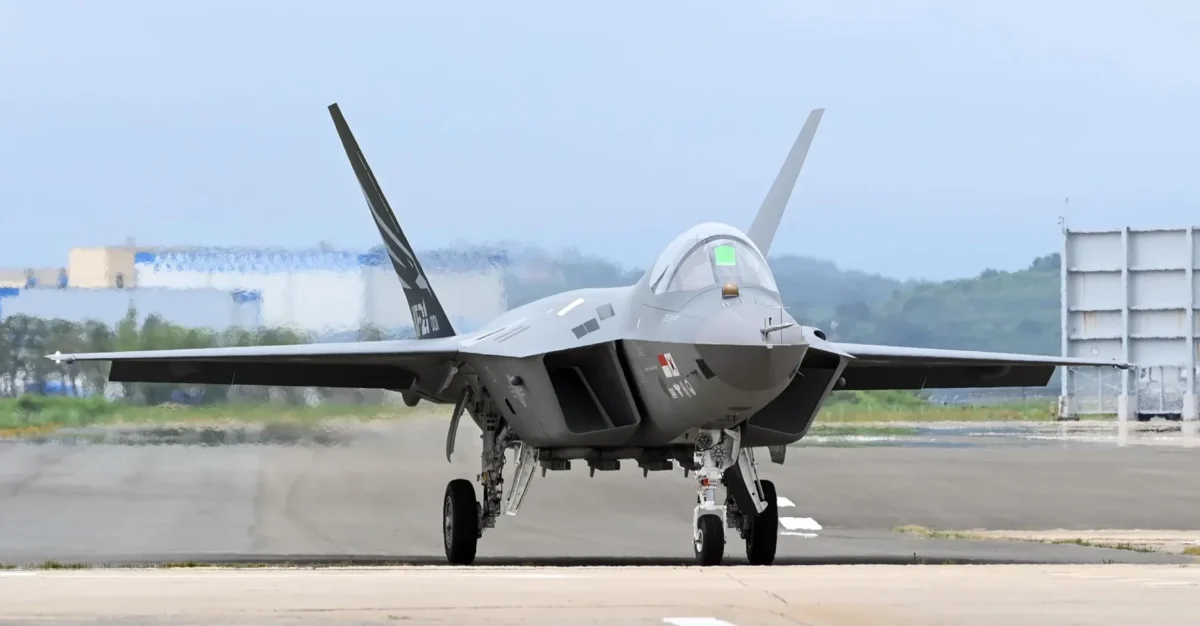
The airframe uses a clean, modern layout with canted twin tails, blended wing-body shaping, and widely spaced twin engines, all of which point to stability, survivability, and growth potential rather than radical experimentation. It’s a conventional design in the best sense, aiming for predictable handling and easier maintenance while still looking sleek enough to pass the “modern fighter” test.

Aerodynamically, the jet leans toward efficiency and high-speed performance. The wings and fuselage are shaped to reduce drag, and while stealth clearly influenced the design, it doesn’t chase extreme low observability at the expense of everything else.
You can tell the engineers were trying to strike a balance; something that flies well, carries a useful weapons load, and doesn’t become a nightmare to operate day-to-day.
Instead of going all-in on stealth like a true 5th-gen fighter, the design philosophy seems to be about practical stealth. That means reduced radar cross-section through shaping and materials, but without fully internal weapon bays in its early versions.
The trade-off? Lower development risk, lower cost, and a jet that’s easier to upgrade over time.
Performance still matters here. With a twin-engine setup, the KF-21 likely offers solid thrust, redundancy for safety, and good high-altitude performance.
The idea appears to be building a fighter that’s “stealthy enough” for most missions, while still being fast, agile, and affordable enough to buy in meaningful numbers.
The short answer: somewhere in between, but closer to 4.5 generations.
Fighter “generations” aren’t official rules, but more of a shorthand used by analysts to group aircraft by capabilities.
In simple terms, 4.5-generation fighters usually have advanced radars (like AESA), modern avionics, data-link networking, and high agility, but they don’t fully prioritize stealth.
5th-generation fighters, on the other hand, are built around low observability from the ground up, internal weapon bays, sensor fusion as a core feature, and deep integration into networked warfare.

So, compared to typical 4.5-gen fighters like the Eurofighter Typhoon or Rafale, the KF-21 borrows newer design cues, cleaner shaping, more advanced avionics, and a stronger focus on sensor integration. That puts it a step ahead of older designs.
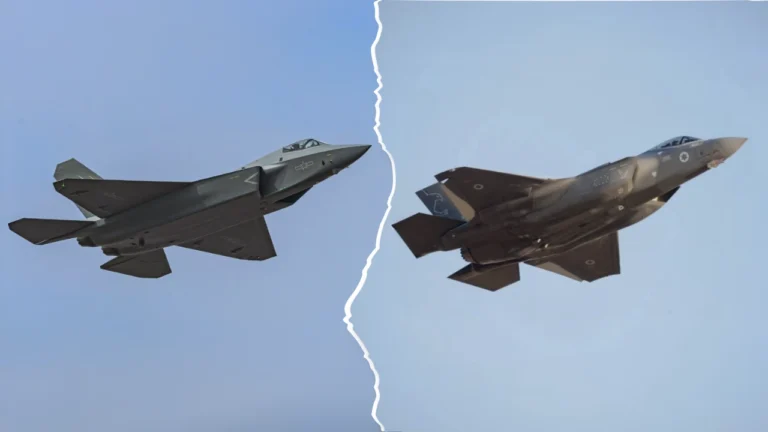
Against true 5th-gen fighters like the F-35 or J-20, though, the differences are pretty clear.
The KF-21 doesn’t fully prioritize deep stealth or internal weapons carriage from the start, which are core features of 5th-gen aircraft. Because of that, it’s probably best described as a high-end 4.5-generation fighter with some 5th-gen influences, rather than a full leap into the next generation.
The combat radius, roughly 1,000 km (620 miles), reflects a more realistic scenario where the jet flies out, performs a mission, and returns with fuel reserves.
The ferry range, closer to 2,900 km (1,800 miles), assumes external fuel tanks and minimal combat load. It’s useful for repositioning aircraft or long-distance deployments, but less representative of wartime operations.
External fuel tanks can significantly extend endurance, though they come with trade-offs in drag and radar visibility. Mission profile matters too, high-altitude cruise, low-level penetration, or heavy payloads all change the equation.

So while the numbers look solid, how far the KF-21 actually goes depends heavily on how it’s being used.
Powering the KF-21 Boramae are two GE F414 engines, a well-known and widely used powerplant also found on aircraft like the Super Hornet and Gripen E. Each engine produces around 98 kN (22,000 lbf) of thrust with afterburner, giving the jet strong acceleration and a comfortable safety margin thanks to the twin-engine setup.
One of the big advantages here is reliability. The F414 has a solid track record, which should translate into easier maintenance and predictable operating costs. It’s not the most fuel-efficient engine ever made, but it’s generally considered a good balance between performance and sustainment.
Here’s a quick snapshot:
| Crew | 1 (single-seat), 2 (twin-seat trainer) |
| Length | ~16.9 m (≈55.4 ft) |
| Wingspan | ~11.2 m (≈36.7 ft) |
| Height | ~4.7 m (≈15.4 ft) |
| Engines | 2 × GE F414-GE-400K |
| Thrust (each) | ~98 kN (≈22,000 lbf) with afterburner |
| Maximum Speed | Mach 1.8+ (≈2,200 km/h / 1,367 mph) |
| Combat Radius | ~1,000 km (≈620 miles) |
| Ferry Range | ~2,900 km (≈1,800 miles) |
| Radar | Indigenous AESA radar |
| Hardpoints | 10 external stations (initial variants) |
The KF-21 cockpit is very much a modern glass setup. Large multifunction displays dominate the panel, replacing older analog gauges and giving pilots a cleaner, more flexible interface.
The layout is designed to reduce workload, with sensor data fused and presented in a more intuitive way, at least in theory.
Avionics-wise, the jet features an indigenous AESA radar, which is a big deal for South Korea’s defense industry.
Add to that infrared sensors, electronic warfare systems, and secure data links, and the KF-21 starts to look less like a traditional fighter and more like a networked combat platform. It’s built to see, share, and react faster, which arguably matters as much as raw speed.

Development-wise, the KF-21 program has reportedly cost several billion US dollars, funded mainly by the South Korean government with contributions from partners like Indonesia.
That figure sounds large, and it is, but for a clean-sheet fighter development program, it’s generally seen as restrained, especially when spread over decades of service and domestic industrial growth.
The idea seems to be that upfront investment pays off later through lower dependence on foreign upgrades and support.
On a per-aircraft basis, the unit production cost is often estimated in the USD 65–85 million range, depending on configuration and production volume. That puts the KF-21 fighter jet well below stealth-heavy platforms like the F-35, which typically costs over USD 100 million per jet once spares, support, and sustainment are factored in.
Even compared to other modern 4.5-generation fighters, the KF-21 is positioned as competitively priced, especially for air forces that want advanced sensors and performance without paying a premium for deep stealth.
That pricing gap is really the point. The KF-21 Boramae isn’t trying to out-stealth or out-tech the F-35; it’s trying to offer a modern, capable fighter at a more predictable and manageable cost. For countries balancing budgets, fleet size, and long-term maintenance, that trade-off could end up being more attractive than chasing the most advanced jet available.
When it comes to export potential, countries in Southeast Asia, the Middle East, and parts of Eastern Europe are often mentioned as possible customers, especially those looking to modernize aging fleets without jumping straight to high-end stealth fighters.
Indonesia, as a development partner, is the most obvious case, though its level of commitment has gone back and forth. Beyond that, interest has mostly taken the form of evaluations and early discussions rather than firm orders, which is pretty normal at this stage.
Pricing and flexibility are likely to be the KF-21’s biggest selling points.
Compared to jets like the F-35, the KF-21 Boramae fighter is expected to come with fewer political strings, more room for customization, and potentially easier access to maintenance and upgrades.
That matters for air forces that want a capable fighter but also want control over weapons integration and long-term support. If KAI can follow through on those promises, it could make the jet especially attractive to mid-sized air forces.
That said, competition in the global fighter market is intense.
The KF-21 is entering a crowded space alongside aircraft like the Rafale, Gripen E, upgraded F-16s, and even lower-cost Chinese and Russian options. Each of those comes with its own advantages, whether that’s combat experience, established logistics networks, or aggressive pricing.
So while the KF-21 Boramae looks promising on paper, its export success will likely depend on timing, trust, and how well it proves itself once it enters full operational service.