Follow Us:
Follow Us:

When the U.S. Navy first began building what would become the HELIOS laser weapon program around 2018-19, the idea of a shipboard US Navy laser weapon still felt pretty futuristic.
The High Energy Laser with Integrated Optical-Dazzler and Surveillance (HELIOS) was designed to bring a real directed-energy tool to naval defense, and Lockheed Martin delivered the first systems to the Navy by the early 2020s.
Since then, this HELIOS weapon system has been integrated onto Arleigh Burke-class destroyers like USS Preble, where it operates as a roughly 60-kilowatt-class laser capable of countering small aerial drones and similar threats at the speed of light.
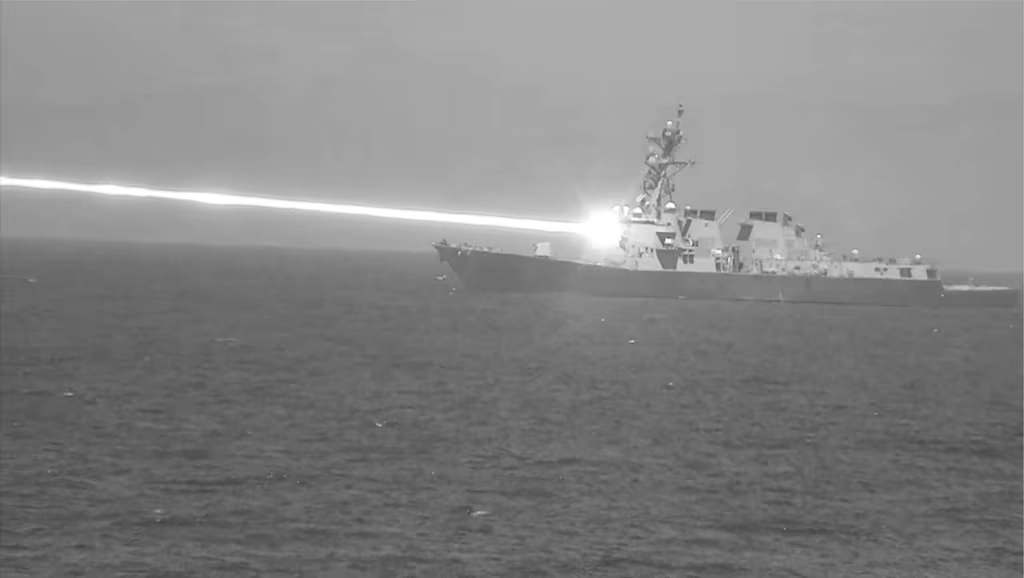
What it can do and what its actual HELIOS laser weapon capabilities will look like in broader fleet use is still being proven out at sea, but recent operational tests showed the system successfully engaging targets during exercises, underscoring its promise as part of layered ship defense.
In current discussions around naval tech in 2025, laser weapons like HELIOS are being credited with moving directed-energy systems closer to everyday operational use, even as competitors around the world work on their own designs.
What is the HELIOS laser weapon, anyway?
At its simplest, the HELIOS laser weapon is the U.S. Navy’s move to make ship-mounted laser weapons practical, not experimental.
HELIOS stands for High Energy Laser with Integrated Optical-dazzler and Surveillance, which already hints at what it’s meant to do. It’s a system designed to detect, track, dazzle, and engage threats, all in one package.
In other words, it’s a smarter, more flexible kind of US Navy laser weapon, not a one-trick beam.

HELIOS was developed by Lockheed Martin, working directly with the U.S. Navy
Lockheed won the contract in the late 2010s, and the idea from the start was to build a laser that could plug into existing combat systems on Navy destroyers, rather than forcing ships to be redesigned from scratch. That’s a big reason the HELIOS weapon system moved from concept to real ships faster than earlier laser projects.
Honestly, it comes down to modern threats and modern costs. Missiles and guns still matter, but using a multi-million-dollar missile to shoot down a cheap drone doesn’t always make sense.
Laser weapons on US Navy ships, like HELIOS, offer a way to deal with drones, small boats, and sensors at the speed of light, with far lower cost per shot.
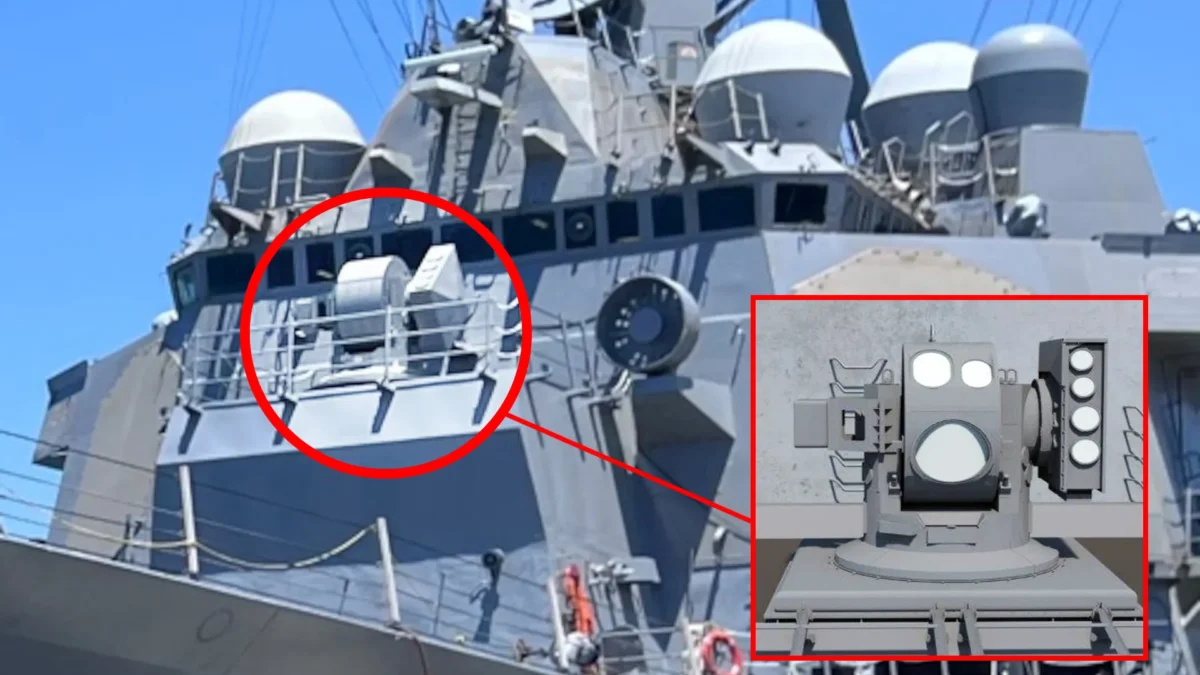
The Navy isn’t betting everything on lasers, but HELIOS fits neatly into a layered defense approach, giving commanders more options when traditional weapons might be excessive or inefficient.
So, how does the HELIOS laser weapon actually work?
At a basic level, it’s a directed-energy weapon, which just means it uses focused energy instead of bullets or missiles. Rather than launching something physical, the HELIOS weapon system concentrates electrical power into a tightly controlled laser beam and sends that energy straight to a target at the speed of light.
There’s no travel time to worry about and no ammo to reload. If the ship has power, the laser can keep firing. That’s a big reason the US Navy laser weapon idea has become so attractive in recent years.
Under the hood, HELIOS relies on solid-state laser technology, which is far more practical for ships than older laser designs. Instead of fragile chemical lasers, solid-state lasers use electrically powered modules that can be combined to produce a strong, stable beam.
This makes the HELIOS laser weapon more reliable, easier to maintain, and better suited for life at sea, where space, cooling, and durability really matter. It also allows the Navy to scale power levels over time as the technology improves.
What makes HELIOS especially flexible is that it’s not always trying to destroy things outright. It includes an optical dazzler, which can temporarily blind or confuse enemy sensors, cameras, or drones without physically damaging them.
At the same time, its built-in surveillance tools help detect and identify targets at a distance. So even when the laser isn’t firing at full power, the system is still contributing to situational awareness.
All of this ties into the ship’s existing target tracking and fire-control systems. HELIOS doesn’t operate on its own; it’s integrated with the destroyer’s radar and combat software, allowing it to automatically track fast-moving targets and stay locked on with extreme precision.
That tight integration is what turns the HELIOS laser weapon capabilities from a neat tech demo into a usable combat tool, and it’s why laser weapons on US Navy ships are starting to feel less experimental and more like a normal part of naval defense going forward.
| Capability | What HELIOS Brings to the Table |
| Power Output | Around 60 kW-class, with room to scale higher in future upgrades |
| Scalability | Modular design lets the Navy increase power as ship systems improve |
| Drone Defense | Effective against small UAVs used for surveillance or attack |
| Small Boat Threats | Can disable sensors or critical components on fast boats |
| Missile & Sensor Disruption | An optical dazzler can confuse or blind seekers and cameras |
| Speed & Accuracy | Hits targets at the speed of light, with extremely high precision |
When it comes to power output and scalability, the HELIOS laser weapon sits in the roughly 60-kilowatt class, which is a solid middle ground for today’s naval lasers. It’s strong enough to handle drones and small surface threats, but just as important, it’s designed to grow.
The HELIOS weapon system uses a modular, solid-state setup, so as shipboard power and cooling improve, the US Navy laser weapon can scale up without reinventing the whole system.
One of the most practical HELIOS laser weapon capabilities is counter-drone and small boat defense. Modern navies are dealing with cheap drones and fast attack craft more than ever, and firing missiles at every one of them just isn’t efficient. HELIOS gives ships a lower-cost, fast-reaction option to disable or destroy these threats before they get close.
HELIOS also shines when it comes to missile and sensor disruption, even if it’s not always trying to shoot missiles down outright. The built-in optical dazzler can interfere with cameras, infrared sensors, and seekers. In real terms, that means laser weapons on US Navy ships can sometimes stop an attack before it fully develops.
The big advantage is precision, speed, and accuracy. The laser hits exactly where it’s aimed, almost instantly, and stays locked on target as long as needed. There’s no ballistic drop, no lead calculation, and no reload time.
So, where is the HELIOS laser weapon actually being used right now? At the moment, HELIOS has been deployed on Arleigh Burke-class destroyers, with USS Preble often cited as the lead ship equipped with the system.
The idea isn’t to rush it onto every hull overnight, but to introduce the US Navy laser weapon on ships that already have the power, cooling, and combat systems needed to support it. In that sense, HELIOS is being rolled out carefully, almost as a learning platform as much as a weapon.
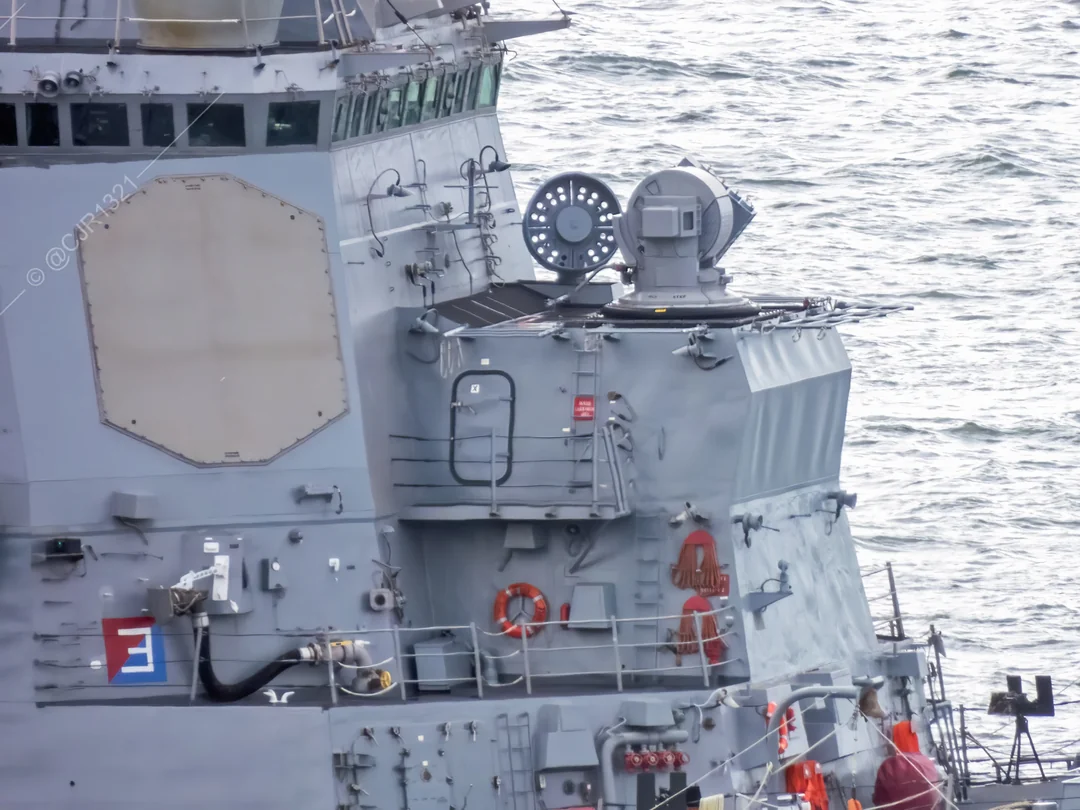
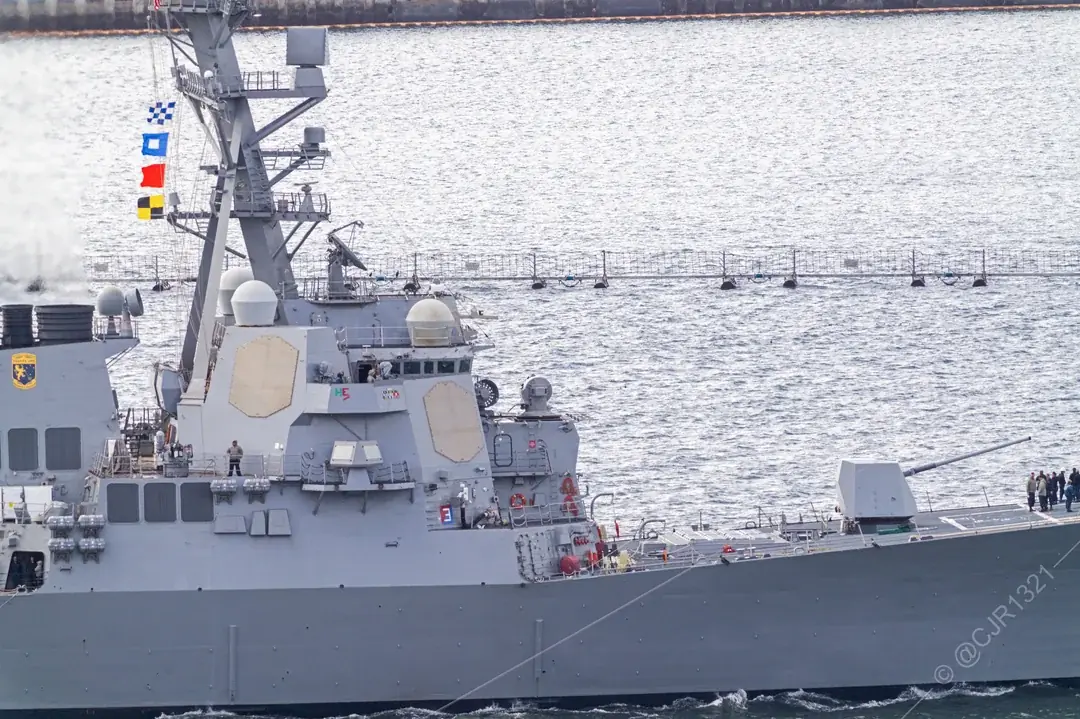
A big reason this rollout works at all is integration with the Aegis Combat System. HELIOS is tied directly into Aegis, which means it can share radar data, tracking information, and threat prioritization with the ship’s other weapons.
That integration allows the HELIOS weapon system to slot into layered defense smoothly, alongside missiles and guns, rather than competing with them.
As for operational testing and real-world use, HELIOS has already moved beyond lab trials.
The Navy has conducted at-sea testing and live demonstrations against aerial targets, focusing on reliability, tracking, and sustained use rather than dramatic shoot-downs. It’s still early days, but the fact that laser weapons on US Navy ships are now being tested in real operational environments suggests HELIOS is less of an experiment and more of a preview of how future naval defense may routinely work.
So, what does HELIOS really do better than traditional weapons, and where does it fall short? The biggest headline advantage is speed-of-light engagement.
The HELIOS laser weapon hits a target almost instantly, which is huge when you’re dealing with fast, close-in threats like drones. There’s no flight time, no lead calculation, and no worrying about missing because the target zigged at the last second.
Reduced ammunition logistics is another real plus. HELIOS doesn’t need magazines, reloads, or resupply ships carrying specialized ammo. As long as the ship has power, the laser keeps working.
Still, that shifts the burden elsewhere. Power generation and thermal management become the new “ammo,” and not every ship can support that without upgrades.
Beyond the obvious points, HELIOS also offers graduated response options, which traditional weapons don’t. The optical dazzler lets crews warn, confuse, or disable sensors without destroying the target outright.
When people talk about the HELIOS laser weapon range or its “cost-per-shot,” they’re often stunned by how cheap the actual firing is compared to missiles.
| Weapon Type | Typical Cost Per Shot |
| HELIOS Laser Weapon (electricity) | ~$1 – $50 per shot (electricity + overhead). |
| Rolling Airframe Missile (RAM) | ~$900,000 – $950,000 per missile. |
| Evolved Sea Sparrow Missile (ESSM) | ~$1.5 million per missile |
| Standard Missile-2 (SM-2) | ~$2 – $2.5 million per missile |
| Standard Missile-6 (SM-6) | ~$4 – $4.3 million per missile |
Once the system is built and integrated, HELIOS uses shipboard electricity, so firing it can cost on the order of a or a few tens of dollars each time, literally energy and a bit of system overhead. That’s orders of magnitude cheaper than traditional interceptor missiles that cost hundreds of thousands to millions of dollars per shot.
Of course, this cost picture is only part of the story. Buying and installing HELIOS isn’t free, the overall system can run roughly a hundred million dollars or more per unit in early production runs, similar in scale to some conventional weapon systems.
Read also: Standard Missile-6 (SM-6): How It Redefines Modern Air Defense
So while the day-to-day firing cost is tiny, the upfront investment is still significant. Even so, when you think about repeated engagements against lots of cheap threats (like swarms of drones), that low per-shot cost can really add up in savings compared to launching dozens of expensive missiles.
The first big limitation is weather and atmospheric effects. Laser weapons like HELIOS work best in clear air, but fog, heavy rain, dust, smoke, and even sea spray can weaken the beam before it reaches the target. That means performance can drop in exactly the kind of rough, messy conditions where naval combat often happens.
Then there’s the issue of power generation and cooling. Laser weapons don’t need ammunition, but they do need a lot of electricity and serious thermal management. Ships have to divert power from other systems, and not every vessel has the spare capacity to do that without upgrades.
In practice, this limits where systems like the HELIOS laser weapon can be deployed and how long they can fire at full effectiveness.
Range and line-of-sight are other constraints. Lasers travel in straight lines and can’t bend over the horizon, so they’re limited by what the ship can physically see and track. Targets behind waves, terrain, or other obstacles are simply out of reach, and effective engagement ranges are shorter than those of long-range missiles.
There are also a few quieter challenges worth mentioning. Hardened or reflective targets can take longer to defeat, saturation attacks can overwhelm a single laser, and rules of engagement may limit when dazzling or blinding sensors are allowed.
All of that reinforces the same takeaway: laser weapons are powerful tools, but they’re not magic, and they work best when paired with traditional naval defenses rather than trying to replace them outright.