Follow Us:

Follow Us:

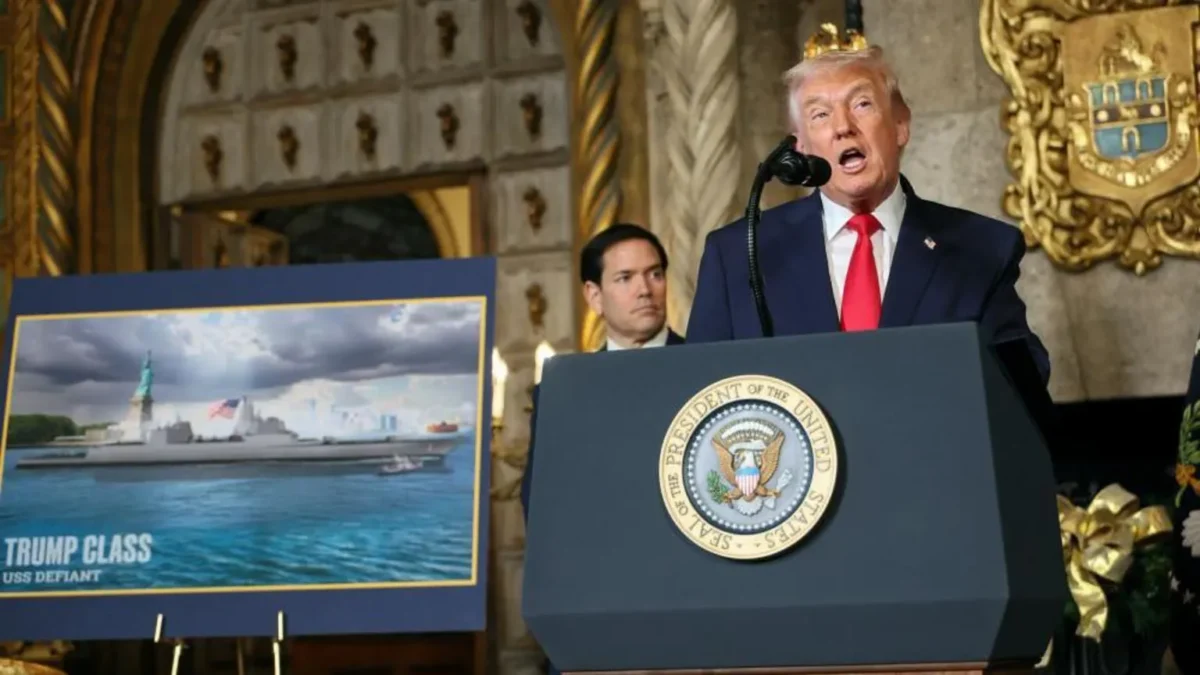
Defense Feeds, Washington – In a bold move shaking up naval strategy, President Donald Trump has greenlit the construction of enormous new battleships for the US Navy. Dubbed the “Golden Fleet” initiative, this plan promises the biggest surface warships America has seen since World War II.
Announced alongside Defense Secretary Pete Hegseth and Navy Secretary John Phelan at Mar-a-Lago, the project eyes two initial purchases with ambitions for up to 25 vessels over time. Construction kicks off around 2030, marking a dramatic shift from slimmer next-gen destroyer plans.
Trump boasted about personally guiding the aesthetic design, calling himself a “very aesthetic person.” Renderings of the lead ship, USS Defiant (BBG-1), stole the show. Its logo draws from a famous photo of Trump right after surviving an assassination attempt in July 2024.
This isn’t just hardware, it’s a symbol of defiance and American might on the high seas. Navy leaders hail it as the largest, most lethal, and versatile warship ever, outpacing anything afloat today.
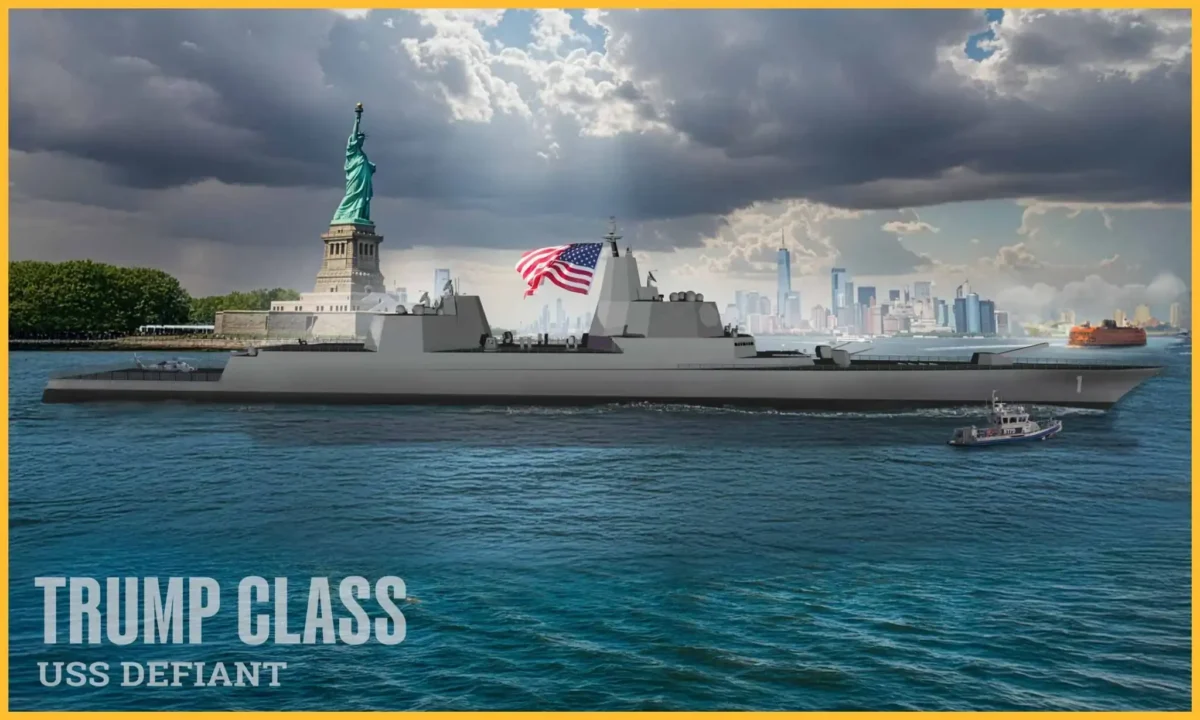
The announcement spotlights a resurgence in US shipbuilding amid tensions with global rivals. Keywords like “Trump battleships,” “US Navy Golden Fleet” and “next-generation warships” are buzzing in defense circles. As shipyards from coast to coast gear up, this could pump billions into the economy and restore naval dominance.
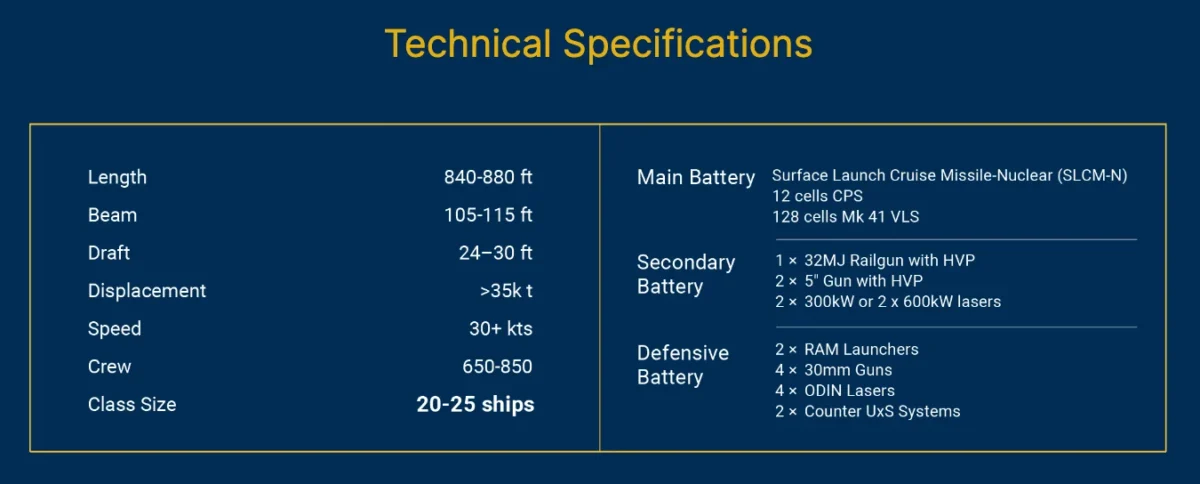
These Trump-class battleships dwarf current fleet heavyweights. At over 35,000 tons with a draft of 24 to 30 feet, they’re more than twice the 15,000-ton Zumwalt-class destroyers, the Navy’s prior largest surface combatants.
Expect speeds topping 30 knots powered by gas turbines and diesels feeding a robust electrical grid for weapons and sensors. A flight deck and hangar will handle V-22 Osprey tiltrotors and future vertical lift aircraft, boosting operational flexibility.
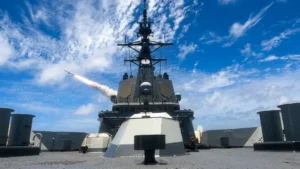
Armament mirrors proven systems from Flight III Arleigh Burke destroyers. That means the cutting-edge AN/SPY-6 radar, 128 MK-41 vertical launch cells, a dozen Conventional Prompt Strike hypersonic missiles and twin five-inch guns.
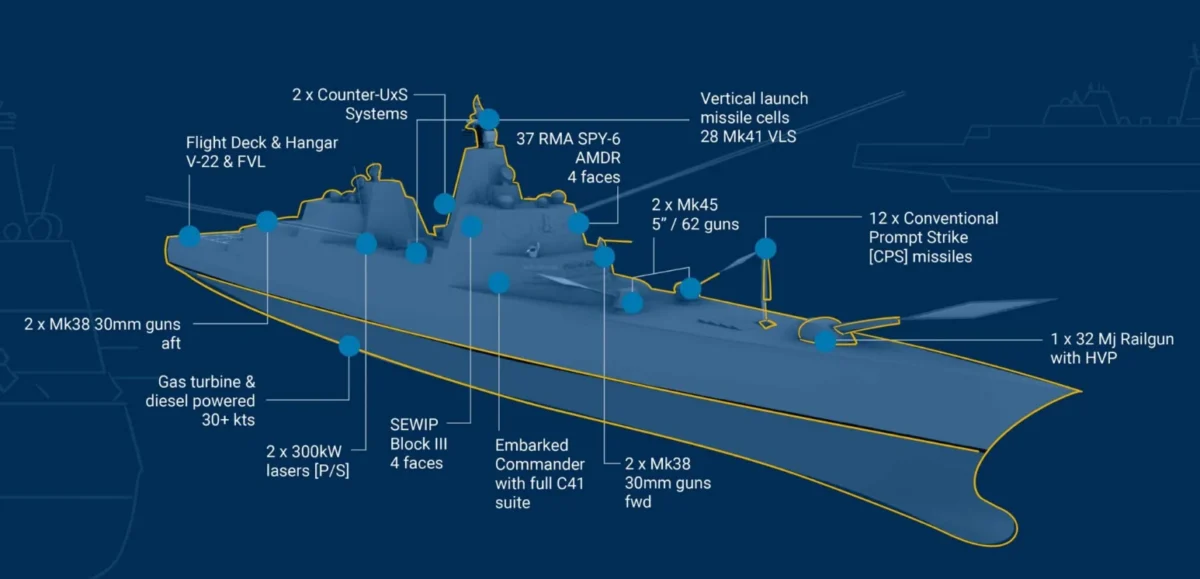
Room remains for upgrades like directed-energy weapons, nuclear sea-launched cruise missiles or even a 32-megajoule railgun. Sources say the design supports manned and unmanned platforms, enabling independent ops, carrier strike group integration or leading surface action groups.
Navy docs emphasize its role in the broader warfighting concept, providing forward command and control. Unlike pure destroyers, this platform commands respect in any threat environment.
Analysts note similarities to the canceled CG(X) cruiser from years back, but scaled up massively. The Zumwalts are already getting hypersonic tube retrofits at HII’s Ingalls yard in Mississippi, proof these beasts can handle big payloads.
Built entirely in American steel, the ships promise jobs nationwide. Trump stressed partnerships without naming allies, fueling speculation on international input. When pressed on countering China, he quipped it’s a “counter to everybody,” not pinpointed at Beijing.
Still, with hypersonics and vast VLS cells, these hulls scream power projection against peer threats. SEO terms like “USS Defiant battleship specs” and “Golden Fleet warships” highlight why this tops defense searches.
This bombshell replaces the DDG(X) program unveiled in 2022, which envisioned half-sized vessels with lasers and hypersonics. Delays plagued DDG(X) as budgets stretched thin on subs, fighters and Burke upgrades. Navy brass now pivots to these behemoths, settling on 30,000 tons after eyeing up to 50,000. Smaller 15-20k ton options got nixed for maximum punch.
Recent overhauls set the stage. Just last week, officials greenlit a patrol frigate based on the Coast Guard’s Legend-class from HII Ingalls. That followed killing the troubled Constellation frigate over design woes and labor shortages.
Shipyards like General Dynamics Bath Iron Works in Maine and HII in Pascagoula stand ready. Bath’s president vows full support; HII’s CEO touts workforce ramps and distributed building networks for faster delivery by 2026.
Trump tackled workforce worries head-on: robots will fill gaps. No battleship has hit the water since the 60,000-ton USS Missouri in 1944, site of Japan’s WWII surrender. The nuclear USS Long Beach at 17k tons was the biggest post-war until Zumwalt. Obama axed the 20k-ton CG(X) in 2010 over costs, opting for Burkes instead.
Price tags? Expect $10-15 billion per hull depending on kit. Analyst Bryan Clark floated 12-13 buys with specialized hypersonic tubes alongside VLS.
That’s a hefty bill, but proponents argue it beats piecemeal upgrades. “Trump Navy battleships” and “US surface fleet overhaul” dominate SERPs, drawing eyes to economic boosts from Philly to San Diego, Maine to Mississippi, Great Lakes to Gulf.
Challenges loom. The industrial base must scale up after decades without supersized combatants. Yet with yards humming and Trump driving, this Golden Fleet could redefine naval supremacy. Secondary keywords like “hypersonic battleship missiles” and “Navy shipyard jobs” underscore the stakes.