Follow Us:
Follow Us:

When Russia first put the 9M730 on display, known in NATO circles as the “SSC-X-9 Skyfall,” it sounded more like a fragment from a Cold War thriller than a weapons brief.
Media and official statements painted a picture of a small, nuclear-driven cruise missile that might stay aloft for hours or days, hug the surface, and pop up from unexpected directions; if those features ever worked as described, they could complicate conventional missile-defense schemes.
Even after several years, much about the Burevestnik is still unclear. The project has been kept mostly secret, and the information that has emerged points to repeated test problems and at least one serious accident.
Official statements have promised breakthrough results, but independent evidence remains limited. Some experts see it as a bold experiment with major risks, while others think it’s still far from being a weapon that could be used in the field.
What, then, do we actually know about this so-called “nuclear-powered cruise missile”? And how close is Russia to turning the Burevestnik from an experimental concept into an operational threat?
The 9M730 Burevestnik, which roughly translates to “storm petrel” in Russian, is reportedly a nuclear-powered, nuclear-armed cruise missile still in experimental development. Within NATO reporting, it’s designated as the SSC-X-9 Skyfall. This name reflects both its mysterious nature and its potential link to strategic nuclear delivery systems.
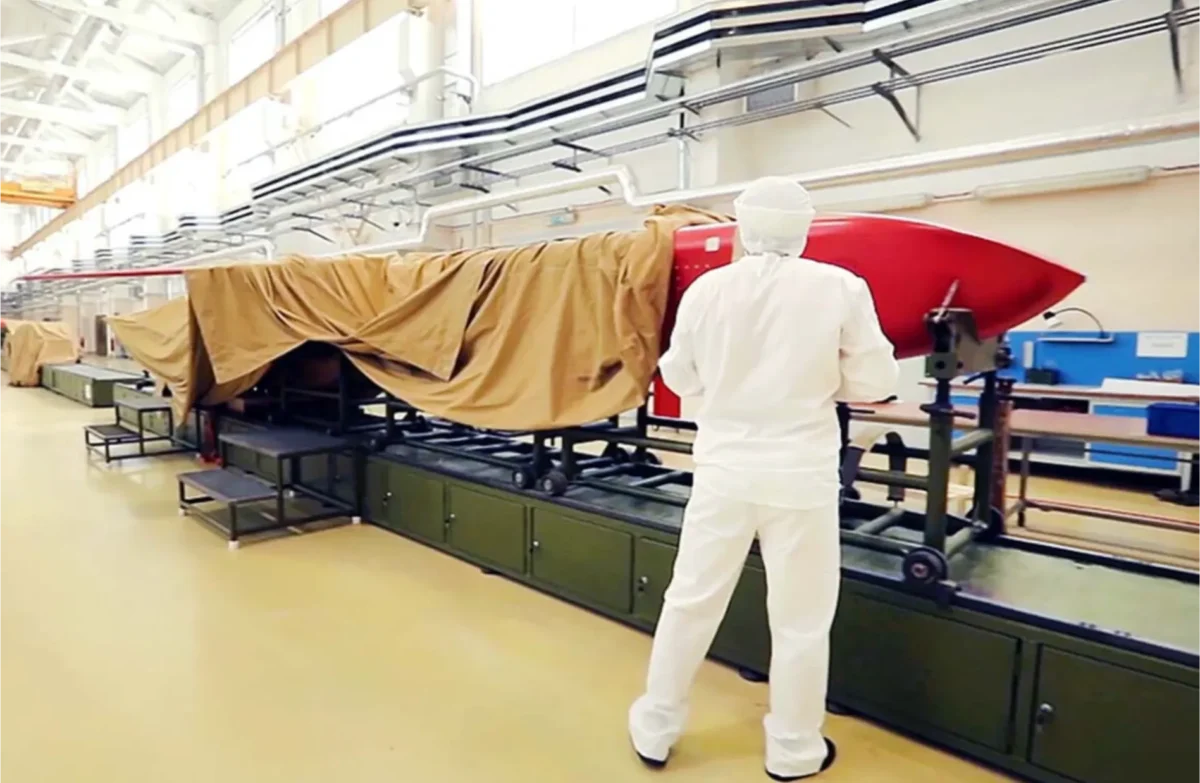
In concept, the Burevestnik could combine the long-range endurance of a strategic missile with the maneuverability of a low-flying cruise weapon. Russian sources have claimed it might travel “unlimited distances,” using a compact nuclear reactor to power its flight rather than relying solely on conventional fuel.
Back in 2018, Russia surprised the world with talk of a missile that didn’t need fuel in the normal sense. Putin called it the Burevestnik, and NATO later labeled it “Skyfall.” He said it could travel far longer than any other cruise missile and reach targets from unexpected directions. The speech stirred a mix of fascination and doubt — everyone wanted to know whether it was a real project or just a bold statement meant to make a point.
However, development appears to have started several years earlier, possibly in the mid-to-late 2000s, under a broader push to modernize Russia’s strategic arsenal. Since its public reveal, multiple tests have reportedly taken place at remote Arctic and northern test ranges.
Some of these tests are believed to have failed, while others may have achieved partial success. Western intelligence assessments suggest the program remains in the prototype or testing phase, and there’s little concrete evidence that the missile has entered operational service.
Most cruise missiles run on jet engines that burn fuel, but the Burevestnik missile was built around a different idea. Instead of a tank of kerosene, it’s said to carry a small nuclear reactor that heats incoming air and pushes it out the back for thrust. If that system truly works, the missile could, at least in theory, stay in the air for many hours, maybe even days, without ever stopping to refuel.
Russian officials have often called this an “unlimited range,” though that’s probably more of a slogan than a literal fact. The missile would still have limits: parts wear down, guidance drifts, and even a reactor has a finite lifespan.
The idea itself goes back a long way. Decades ago, in the 1950s, Project Pluto in the United States tried something similar: a nuclear ramjet meant to keep a missile flying for long stretches.
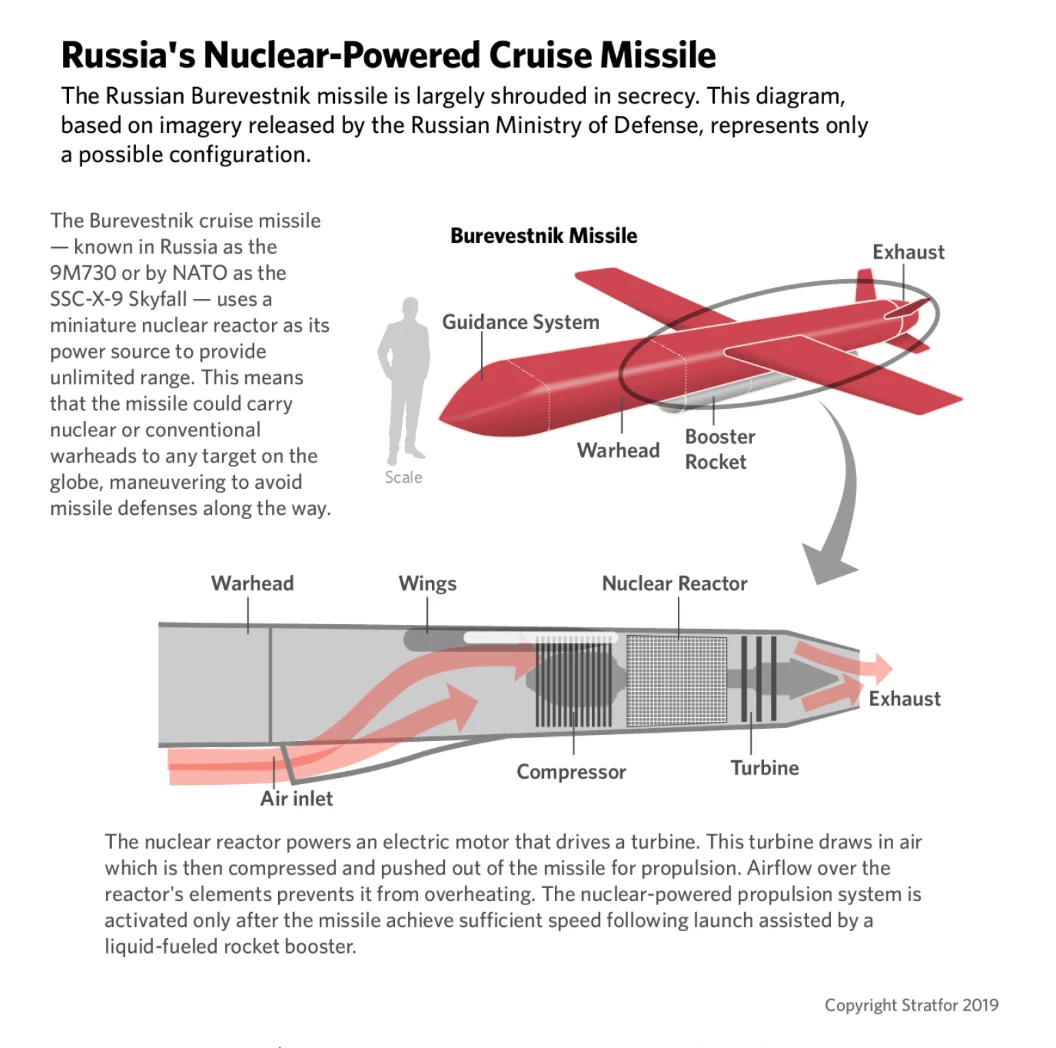
The tests showed it could be done technically, but the project ended when the risks, from radioactive exhaust to diplomatic fallout, turned out to be unacceptable. A reactor that directly heats and expels air, for instance, could release radioactive material during flight, contaminating its flight path even in normal operation.
The Burevestnik may or may not use a cleaner, closed-cycle system, but the secrecy around the program makes it hard to know. What seems likely is that managing radiation shielding, thermal control, and weight inside a compact missile frame would be a tremendous engineering challenge, perhaps one reason why the missile’s test record has reportedly been uneven.
What that really means…
Saying a nuclear-powered cruise missile could have “unlimited” range is mostly shorthand, and it should be read with care. Taking fuel out of the equation does open new possibilities. A nuclear-powered system wouldn’t have to stop when its tanks run dry, so in theory it could stay in the air far longer than any regular cruise missile.
Still, there are other limits that eventually catch up; the lifespan of the reactor, wear on parts exposed to heat and stress, the reliability of its guidance system, and the challenge of maintaining something that complex. So while range might no longer depend on fuel, it would still depend on how well the machine holds together over time.
At the same time, the way a nuclear propulsion system produces thrust could create its own liabilities. If the design involves heating and expelling air or otherwise interacts directly with the surrounding atmosphere, it may leave a radiological signature that sensors or people could detect and a failed test or crash could spread contamination.
That prospect is not only an operational drawback (it could reveal flight paths or compromise stealth) but also a political and humanitarian one: routine testing, accidents, or even normal operation that emits radioactivity would likely provoke strong international backlash and complicate any attempt at routine deployment.
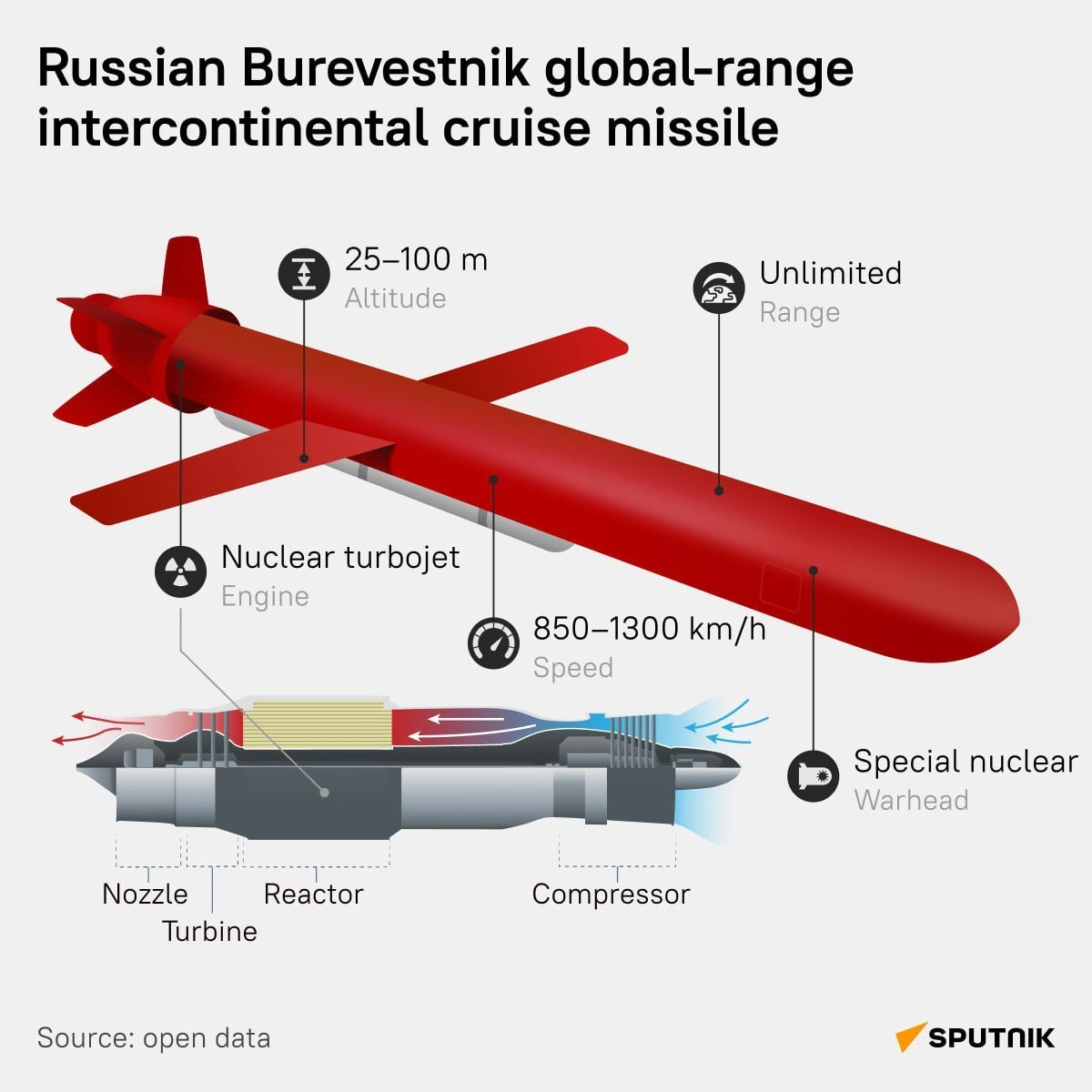
Because Russia has not released full technical data, most public “specs” are inferred from imagery, state briefings, and analogy to other missiles. Open-source intelligence and analysts tend to converge on some cautious points:
Caveat: all of these remain hypotheses, because the program has been secretive and the publicly available images and statements are fragmentary. Some claims (e.g., very long nonstop flights) are likely selective or politically framed rather than independently verified.
What nuclear propulsion permits:
What nuclear propulsion doesn’t guarantee
The Burevestnik isn’t meant to replace Russia’s existing nuclear weapons but to fill a peculiar gap in its strategic arsenal. Moscow already has a powerful triad (e.g., land-based ICBMs, submarine-launched ballistic missiles, and long-range bombers), all capable of global reach.
The Burevestnik seems designed as a “fourth pillar,” a weapon that could, at least in theory, survive a full-scale nuclear exchange and still strike back. Because its nuclear propulsion could keep it airborne for hours or even days, the missile might circle or approach from unexpected directions, bypassing radar networks and missile defenses.
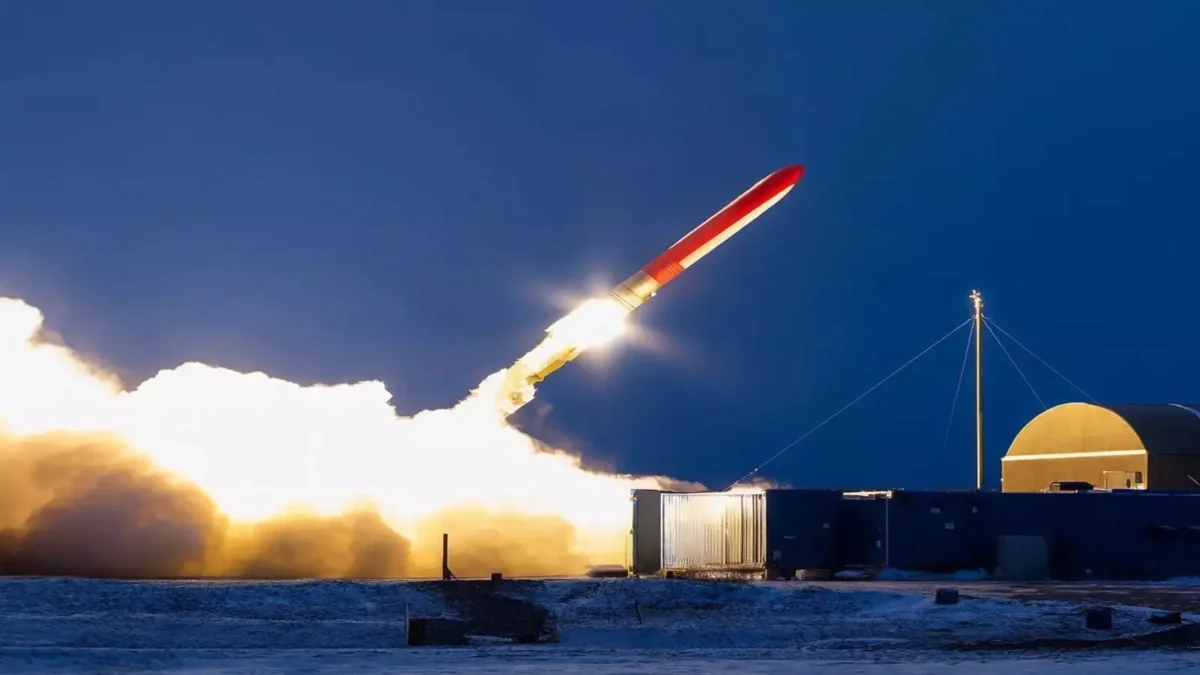
In Russia’s own framing, this makes it a tool of “assured retaliation,” a guarantee that even if conventional deterrence collapses, the country could still inflict unacceptable damage. Western analysts, however, tend to see it as more symbolic than practical. A technological statement meant to signal that Russia won’t be boxed in by U.S. missile defense systems.
That symbolism says a lot about the moment we’re in. With the INF Treaty gone and New START’s future in doubt, Washington and Moscow are once again testing the edges of what’s possible. The Burevestnik doesn’t reshape the nuclear balance, but it does capture the spirit of competition that’s returned.
For NATO planners, the missile doesn’t necessarily pose a new operational threat, given its likely vulnerability to detection and the dangers of nuclear propulsion.
But politically, it complicates any path back to arms limitation talks. The very idea of a nuclear-powered, nuclear-armed cruise missile challenges the norms of restraint that underpinned decades of non-proliferation efforts.
When defense analysts talk about the Burevestnik, there’s usually a pause, the kind that comes before someone says, “Well, it depends.” Western specialists generally see the concept as bold but probably more theoretical than operational. The hard truth is that stuffing a working reactor into a missile raises immense technical and safety problems that are not easy to solve.
Think tanks like RAND and CSIS have called it “impressive but impractical,” suggesting that the missile’s real value might lie more in the message it sends than in what it can actually do.
Looking ahead, few experts believe nuclear-powered missiles will ever become a standard part of modern arsenals. Even if Russia manages to get the Burevestnik flying reliably, every test risks spreading radiation, and every deployment would raise diplomatic uproar.
The U.S. and China both abandoned similar experiments long ago after concluding the dangers were too great. That’s why many see the Burevestnik as a political statement more than a practical weapon.
So in a strange way, the Burevestnik may be less about preparing for war and more about psychology. It may be a symbol of technological defiance meant to remind the world that Russia is still willing to take risks others won’t.
Whether that’s brilliant strategy or reckless brinkmanship depends on who you ask, but one thing seems clear: this missile has already done its job by keeping everyone else watching, wondering, and worrying.