Follow Us:
Follow Us:

Since its debut in the early 1980s, the U.S. Navy’s Aegis missile defense system has stood at the center of America’s air and missile defense strategy. It’s a flexible architecture, mounted on ships and now replicated on land through Aegis Ashore, but some analysts argue it’s now facing threats far beyond what it was first built to counter.
Now, the world edges into an era of hypersonic weapons, missiles that can travel at over five times the speed of sound and maneuver unpredictably. This raises the big question if Aegis can still keep up.
Much of Aegis’s reputation comes from the combat system at its core. It ties radar, computers, and interceptors like the SM-6 into one fast-moving web of defense.
On paper, it’s still one of the most capable missile-defense setups ever built. But the world it was designed for keeps changing. In mid-2025, U.S. destroyers equipped with Aegis helped intercept several Iranian ballistic missiles over the Mediterranean while defending Israel.

So, how does Aegis really hold up today? We’ll dig into how it works, where it struggles, especially with hypersonic threats, and whether new updates such as the Sea-Based Terminal Increment 3 might finally give it some breathing room.
In many ways, the Aegis missile defense system works like a ship’s nervous system. Created by the U.S. Navy and Lockheed Martin, it links radar, computers, and missile batteries so they act together in real time. Once a threat appears, Aegis detects, tracks, and fires almost automatically in a matter of seconds, well before a human could even react.
It works like a digital brain. The system’s radars, first the classic AN/SPY-1, and now the newer SPY-6, continuously scans the sky, searching hundreds of kilometers out for incoming aircraft or missiles. Once a threat is found, Aegis quietly does the math, lines up an interceptor, and fires before the target gets close.

Over the decades, its role has only grown. Through the Aegis Ballistic Missile Defense (BMD) program, ships can now shoot down ballistic missiles in space or during re-entry. And with Aegis Ashore, that same architecture has moved onto land, guarding sites in Romania and Poland, with Japan now considering other options after local opposition. That flexibility is what makes Aegis stand apart.
What really makes Aegis work, though, are the missiles themselves. The Standard Missile-3 (SM-3) is the classic Aegis “space interceptor.” It goes after ballistic missiles way up in space, relying purely on impact rather than explosives. It’s literally one projectile smashing into another at extreme speed.
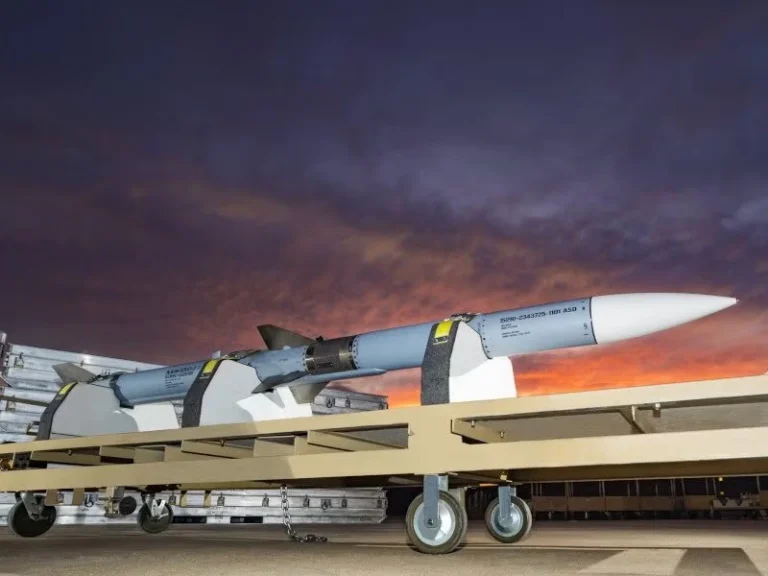
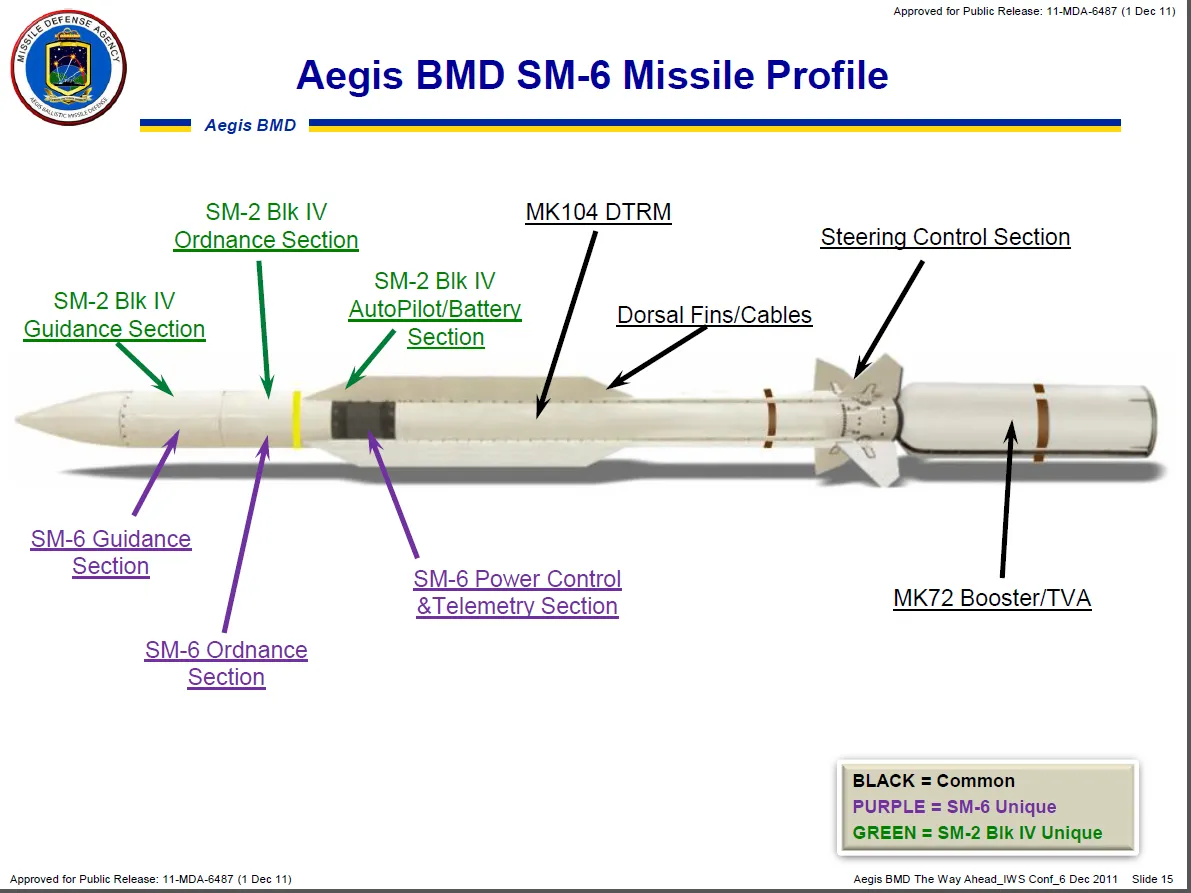
The SM-6 plays a different role. It’s the flexible one, able to chase aircraft or cruise missiles, and sometimes even hit a ballistic target that slips through lower in the atmosphere. What makes the Standard Missile-6 interesting is that it blends speed and adaptability. It’s rumored to reach around Mach 3.5, and newer versions may even push higher.
When people say “hypersonic,” they’re really just talking about anything that flies faster than Mach 5, around 6,000 kilometers an hour. That’s quick enough to cross a country in minutes. The real challenge isn’t only the speed, though. It’s how these missiles fly.
Older ballistic missiles rise, arc through space, then drop toward their target on a path that’s more or less predicted. Hypersonic weapons don’t play by those rules. Instead of flying in a clean arc like traditional ballistic missiles, they can steer and shift mid-course, making them far trickier to track or intercept.
Read also: 5 Reasons Why Ballistic Missiles Are Hard to Intercept
Traditional ballistic missiles, such as those Aegis was originally built to counter, behave in a relatively predictable way. They go up, then come down, a physics problem that radar and computers can model with precision.
Hypersonic glide vehicles (HGVs), on the other hand, break that logic. After being boosted high into the atmosphere, they glide along the upper edge of it, skipping and adjusting course like a stone across water. This gives them a lower flight path and a constantly changing trajectory.

So, Ballistic missiles, for all their danger, at least play by familiar rules. They climb, arc, and fall; easy enough for radar to read. Hypersonic weapons are a different story. They streak across the sky so fast that by the time a system spots them, they’ve already started to change altitude or angle.
This mix of speed, altitude, and maneuverability is what throws defense systems off balance (often referred to as the “triple challenge” of hypersonic defense). They move too fast for radar to update smoothly and fly in the awkward space between what air and space sensors were designed to handle. Aegis, brilliant as it is, was built around predictability, and hypersonics seem to exist just to break it.
Read also: How Do Hypersonic Missiles Work?
The two most common hypersonic threats today are Hypersonic Glide Vehicles (HGVs) and Hypersonic Cruise Missiles (HCMs). One rides a rocket into space first, then glides back down at incredible speed, that’s the glide vehicle, like China’s DF-ZF or Russia’s Avangard.

The other stays lower, inside the atmosphere, and uses an engine to keep that crazy speed going; that’s the cruise type, like Russia’s Zircon. They take different paths, but the idea’s the same: move fast, move unpredictably, and make it nearly impossible for defenses like Aegis to keep up.
People keep asking whether Aegis can actually stop hypersonic missiles. The short answer? Not really, at least not yet. The system started out decades ago to counter ballistic and cruise missiles (it wasn’t built with hypersonics in mind), yet each new test hints at how far it’s evolving beyond its original design.
Take the FTX-40 flight test back in late 2023. It was a big moment for the Aegis program, maybe the most meaningful in years. In that exercise, a U.S. Navy destroyer running the newest Aegis Baseline 9 software managed to track and shoot down a medium-range missile target using an SM-6 Dual II interceptor.
The target wasn’t a real hypersonic weapon, but it behaved like one in some ways: fast, low, and unpredictable. The Navy called it a success, though a cautious one. Aegis can now keep up with faster, trickier threats, but the real hypersonic challenge is still waiting.
The SM-6 Sea-Based Terminal (SBT) Increment 3 upgrade is meant to bridge that gap. The SM-6 is already the most flexible missile in the U.S. Navy’s arsenal. It can shoot down aircraft, cruise missiles, and even some ballistic missiles within the atmosphere.
Increment 3 reportedly improves its seeker sensitivity, data processing, and range, giving it a better chance at hitting hypersonic-like targets during their final descent phase. In theory, it’s the Navy’s first line of defense against future glide vehicles that dip below the reach of space-based interceptors.
Even with smarter missiles, the real challenge is still seeing the target in time. Hypersonic weapons move too fast and too low for most radars to keep a steady lock. That’s why so much hope is being placed on new space sensors.
The U.S. is working on something called the Hypersonic and Ballistic Tracking Space Sensor, or HBTSS, basically a group of satellites that can watch a missile from the moment it’s launched until it hits. If it all works as planned, Aegis ships could tap into that feed, getting an earlier warning and a better firing solution.
But no matter how connected the system becomes, some limits can’t be patched away. A ship’s radar horizon, for instance, is dictated by the curvature of the Earth. If a hypersonic missile is flying just above the atmosphere, an Aegis destroyer may only see it when it’s already hundreds of kilometers into its flight. Even a few seconds of late detection at Mach 8 speed can make interception nearly impossible.
So, can Aegis stop hypersonic missiles today? Not definitively. It can track some of them, engage others in certain flight phases, and probably disrupt a few under the right conditions. It’s probably too soon to say that Aegis can handle a fully maneuvering hypersonic glide vehicle with any real consistency.
What seems more accurate is that the system is moving in the right direction. It’s learning to detect and react faster than ever before, but the reality is, it’s still playing catch-up with a weapon built to outpace everything that came before it.
For all the improvements and successful trials, Aegis still struggles with a few deep-rooted issues. When it comes to hypersonic threats, the real problem, as a lot of engineers admit, isn’t just about hitting something that’s fast. It’s hitting one that’s fast and unpredictable.
The real trouble lies in the mid-course or boost-glide phase of a hypersonic weapon’s flight. This is when a missile travels just outside the atmosphere or along its edge, gliding at extreme speed while constantly shifting its trajectory.
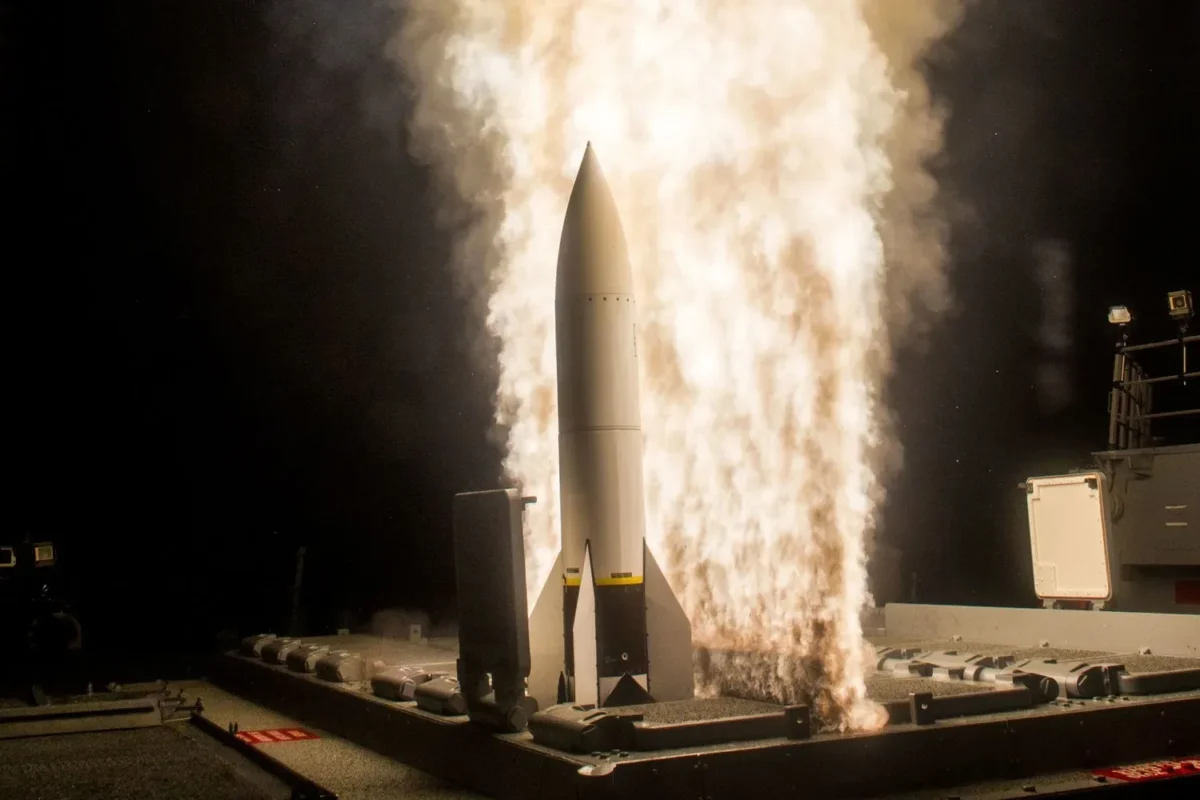
Aegis, like most surface-based systems, can’t reach this zone effectively. Its interceptors, such as the SM-6, are designed mainly for inside-the-atmosphere engagements. That leaves a critical window where a hypersonic glide vehicle can fly almost untouched before diving toward its target.
Technical constraints make things even harder. Interceptor missiles can only go so fast, and adding more speed means heavier materials, more heat, and more cost. The radar and data-link programming also struggle to process and share information quickly enough when the target moves faster than the network’s refresh rate. And since Aegis depends on a web of sensors, any lag or gap in that chain can mean a lost lock on the target.
Then there’s the money problem. Developing new interceptors, upgrading software, and launching constellations of tracking satellites isn’t cheap. Each new test or prototype costs tens or even hundreds of millions of dollars. For the Navy and the Missile Defense Agency, it’s a constant trade-off between keeping existing ships combat-ready and funding next-generation capabilities.
That’s where the Glide Phase Interceptor (GPI) program comes in. It’s meant to do what Aegis currently can’t (striking a hypersonic weapon in its glide phase), before it descends toward the target. GPI is still under development, but it’s designed to work hand-in-hand with Aegis and future radar networks, extending the defense envelope farther into the upper atmosphere. If it succeeds, it could fill the gap between today’s SM-6 intercepts and tomorrow’s space-based systems.
There’s a growing sense that Aegis is running into the limits of what it was built for. Hypersonic defense isn’t only a question of hardware, it’s about speed in every sense; faster detection, tighter coordination, quicker judgment calls. Aegis has evolved before, but this time it might need more than upgrades. It might need a fresh idea of what missile defense should even look like.
In truth, probably not, at least not in the near term. The Aegis missile defense system is an extraordinary piece of engineering, and it has repeatedly proven its worth against traditional ballistic and cruise missiles. But hypersonic weapons are a different kind of challenge altogether.
They don’t just move faster; they rewrite the rules of detection and interception. Aegis can track some of these threats, and in carefully controlled test scenarios, it may even be able to engage them under the right conditions. Yet the idea that it could reliably stop a maneuvering hypersonic glide vehicle today still feels optimistic.
Even so, Aegis is evolving quickly. New upgrades, like the SM-6 Sea-Based Terminal Increment 3, the upcoming Glide Phase Interceptor, and a broader web of space sensors, are starting to give it a real shot. Bit by bit, the system’s learning to see farther, react faster, and work more closely with other defenses in the air, at sea, and beyond.
So, will Aegis “stop” hypersonics? Probably not outright, but it could make them far less certain of success. In modern warfare, that may be enough. Defense has always been a moving target, and Aegis, for all its limits, still represents humanity’s best attempt to stay one step behind, yet never out of the fight.