Follow Us:
Follow Us:

When people think of American military might beneath the ocean’s surface, the iconic Ohio-class ballistic missile subs or Cold War-era Los Angeles-class attack submarines might come to mind. But quietly, a new class has taken center stage; one that might, arguably, be the most capable submarine fleet the U.S. has ever deployed.
Surprisingly, the Virginia-class submarines weren’t originally meant to be extraordinary. In fact, they were designed as a more affordable alternative to the aging Seawolf-class, which had become too expensive to mass-produce.
And yet, over time, the Virginia-class has evolved, some would say transformed, into a multi-role powerhouse packed with advanced stealth, next-gen weapons systems, and even space for future technologies that don’t yet exist.
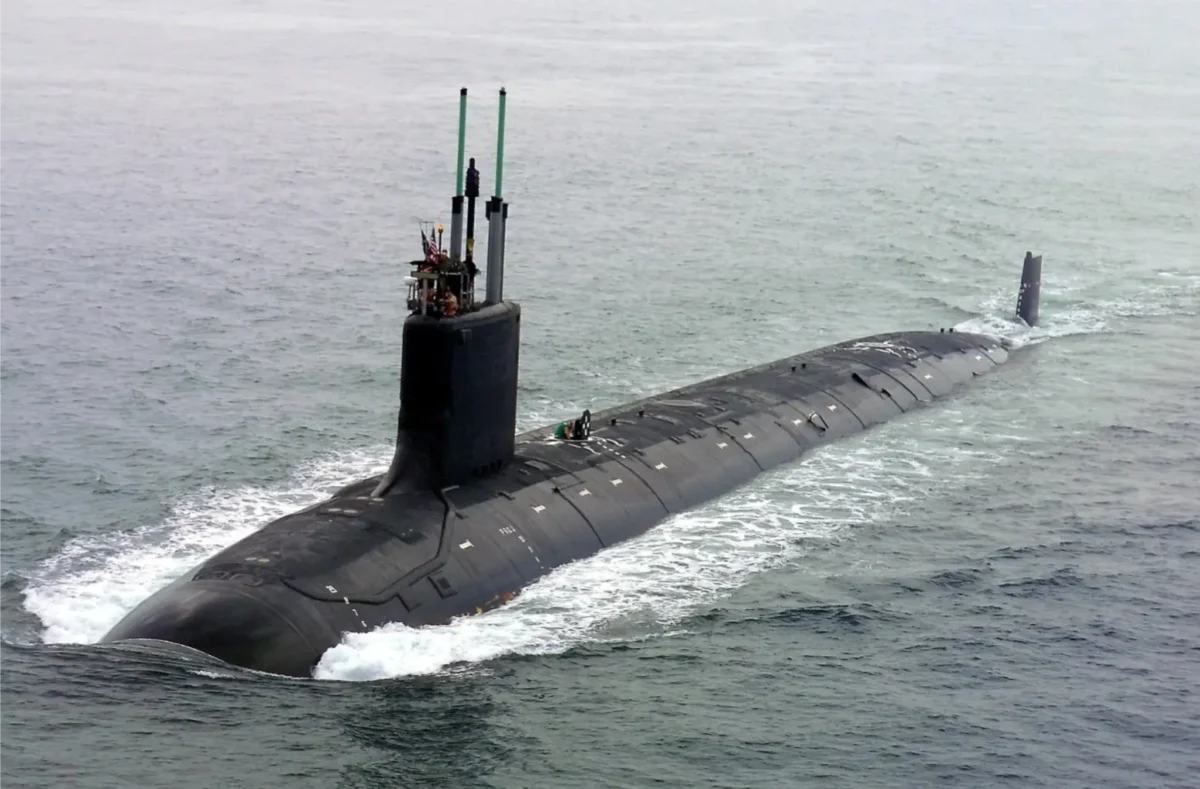
Although not quite as fast or as deep-diving as some Cold War-era subs, these nuclear-powered submarines are optimized for a very different kind of warfare: one that involves intelligence gathering, special forces deployment, cyber surveillance, and potentially launching hypersonic missiles from beneath the sea.
With Block V variants, the class seems to be shifting from a fast attack submarine into something much more versatile, perhaps even strategic. Could the most powerful submarine today be not the biggest or fastest, but the quietest and smartest, like the Virginia-class?
The story of the Virginia-class submarines didn’t start with a bold new idea, it started with a problem. Back in the 1990s, the U.S. Navy needed a new fast attack submarine.
The Cold War was over, and building more of the ultra-powerful (but very expensive) Seawolf-class submarines no longer made sense. They were amazing on paper, fast, deep-diving, heavily armed, but simply too costly to produce in large numbers.
So, the Navy looked for a smarter, more flexible option. That’s when the Virginia-class was born. First introduced in the early 2000s, these nuclear-powered submarines were designed to be cheaper than the Seawolf, but still capable enough to handle a wide range of missions.
At first, expectations were modest. But as global threats changed, the Virginia-class quietly started to evolve.
When the first SSN Virginia was commissioned in 2004, it signaled a new approach. Not only as replacements for the aging Los Angeles-class submarines, which had served since the 1970s, they were being shaped for the modern battlefield: shallower waters, coastal operations, and missions that involved not just torpedoes, but cyber warfare, surveillance, and even carrying special operations teams.
Subsequent blocks of the Virginia-class have introduced major upgrades, from enhanced sonar and stealth technologies to the addition of vertical launch systems and even modules for future hypersonic weapons.
Over time, they started to take on roles that older classes couldn’t keep up with. This made the Virginia-class one of the most versatile nuclear attack submarines in the U.S. fleet.
When it comes to submarines, the one that stays quiet usually wins.
That’s why stealth is one of the most important features of the Virginia-class submarines, and possibly one of their biggest advantages. These nuclear-powered submarines were designed to be incredibly hard to detect, even by the most advanced enemy sonar systems.
One of the key reasons for this is their quiet propulsion system. Instead of relying on traditional, noisy mechanical parts, the Virginia-class uses a special pump-jet propulsor.
Read also: Gotland-class Submarine: Sweden’s Revolutionary AIP Attack Submarine
This is a kind of advanced underwater “fan” that replaces the old spinning propeller. This pump-jet helps the sub move smoothly through the water while making far less noise.
Some analysts have even suggested that it could make the Virginia submarine quieter than any submarine the U.S. has ever built, though of course, exact details are classified.
Another important piece of the stealth puzzle is the hull design.
The outer layer of the submarine is coated with anechoic tiles, rubbery materials that absorb sonar waves instead of bouncing them back. Combined with a specially shaped hull that reduces water flow noise, this makes the Virginia-class extremely hard to spot using passive or active sonar.
And these features aren’t just theoretical.
In real-world operations, such as U.S. submarine activity in the South China Sea, or during precision-strike missions like the 2011 Libya intervention, stealth likely played a key role.
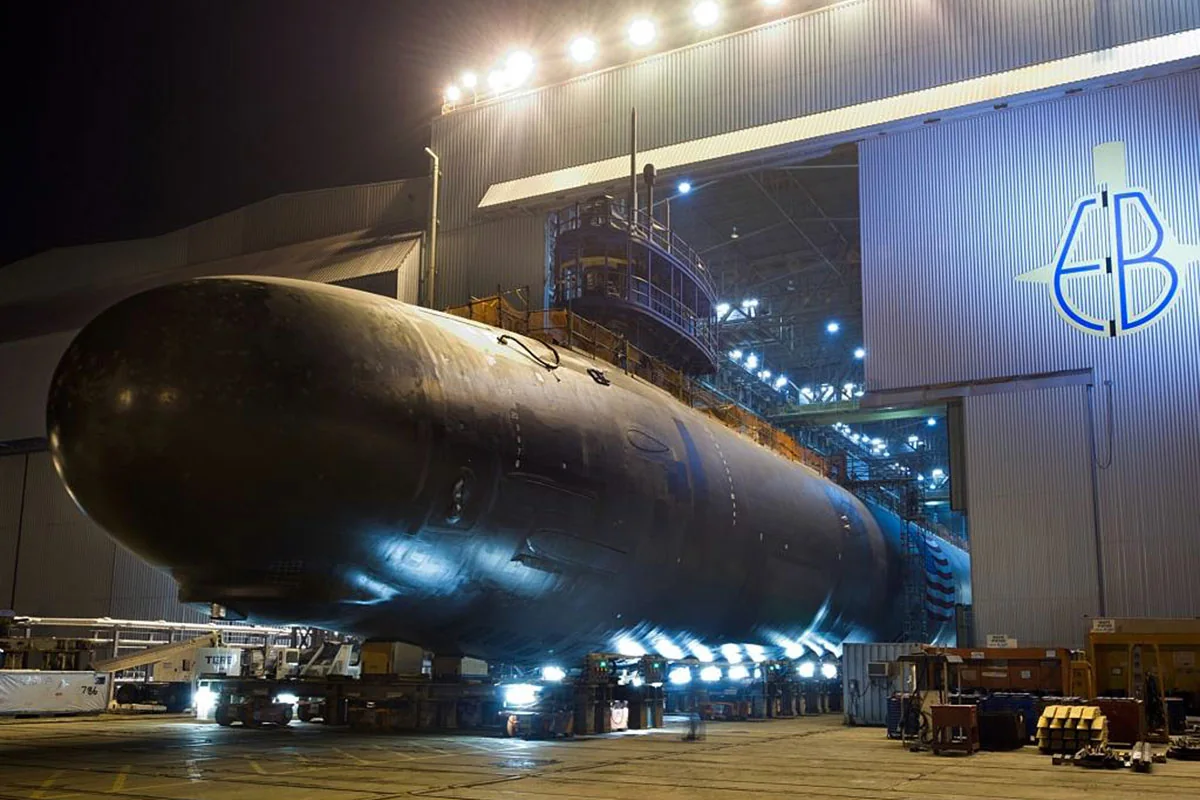
Although the specifics are rarely made public, the fact that these submarines can quietly approach contested areas, launch missiles, or gather intelligence without being detected is a major advantage.
Some reports have even suggested that Virginia-class subs have successfully tracked Russian submarines without revealing their own presence.
Together, these technologies may allow the SSN Virginia to sneak closer to targets, listen in on enemy activity, or position itself for a surprise strike without being noticed.
Despite this, no submarine is truly undetectable. But based on what’s publicly known, the Virginia-class seems to be one of the quietest and most survivable fast attack submarines in service today.
Stealth may help a submarine stay hidden, but it’s the weapons that make it dangerous.
The Virginia-class submarines are armed with a range of powerful weapons that make them extremely versatile in combat. While they’re technically fast attack submarines, they seem to be evolving into something even more capable, possibly bordering on a strategic role due to their expanding payload options.
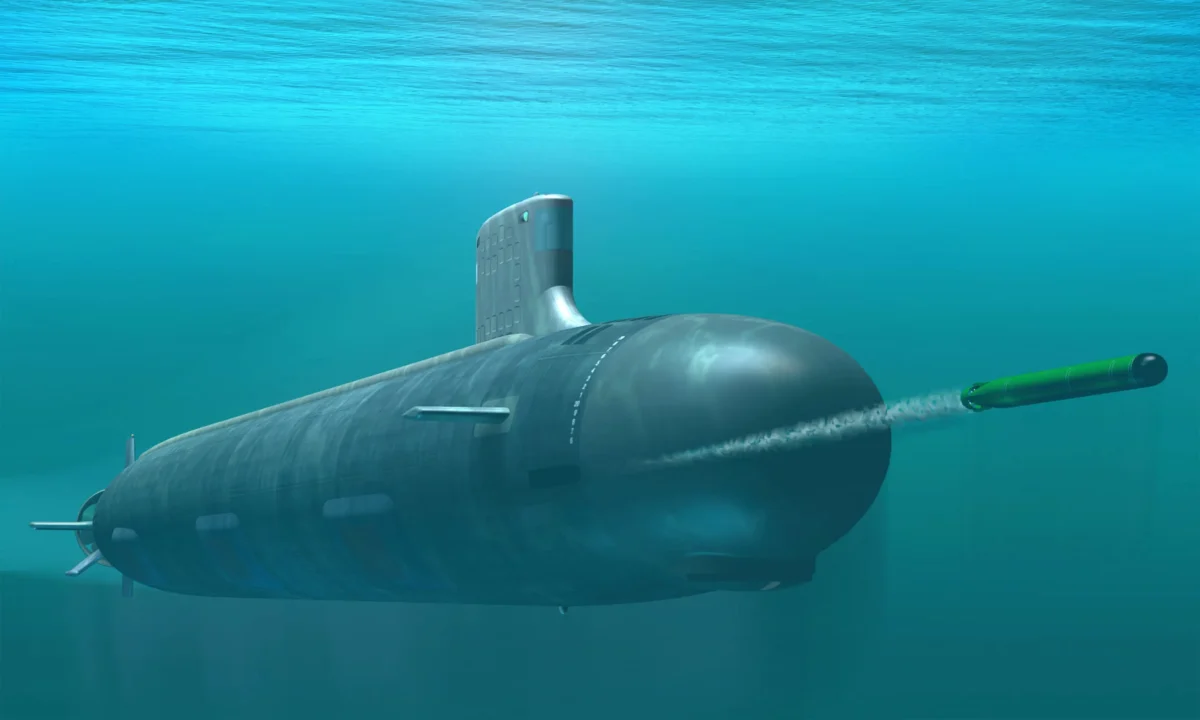
At the core, every SSN Virginia carries Mark 48 advanced torpedoes, which are used to take out enemy submarines or surface ships. These torpedoes are smart, fast, and lethal, able to adjust course mid-run and hit targets deep underwater.
In close-quarters naval combat, they could be a serious threat to even the most modern adversaries.
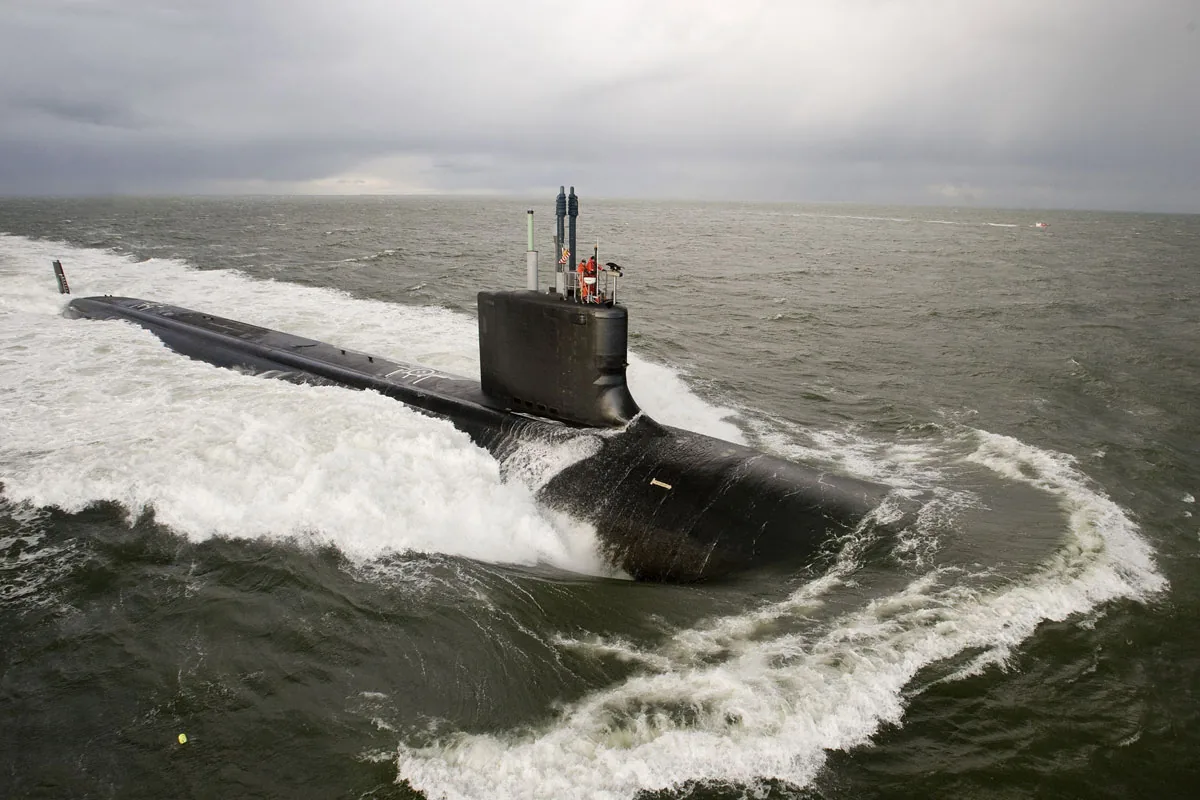
But the real game-changer might be the Tomahawk cruise missiles. These long-range missiles can strike targets on land with extreme precision, from hundreds of miles away, all launched from underwater, without warning.
Virginia-class submarines can carry a mix of these in their vertical launch system (VLS), which allows them to attack from a hidden position. This kind of land-attack capability blurs the line between an attack sub and a long-range missile platform.
And then there’s the Virginia Payload Module (VPM), an upgrade introduced in the newer Block V submarines. This module adds four large-diameter payload tubes, allowing the sub to carry up to 28 more Tomahawk missiles.
Some experts believe this may even help replace the strike role of older Ohio-class guided missile submarines, which are scheduled to retire in the coming years.
What makes all of this especially valuable is how flexible the launch systems are. The Virginia-class isn’t locked into one type of mission, it can switch between anti-submarine warfare, surface strikes, and land-attack operations, depending on what the situation calls for.
In future versions, the same launch tubes might even be used to deploy hypersonic weapons, giving the U.S. Navy a serious edge in long-range strike capability.
Of course, none of this means the Virginia-class is invincible. But with this combination of torpedoes, missiles, and modular launch capability, it’s easy to see why it’s considered one of the most advanced nuclear-powered submarines in the world today.
The Virginia-class submarines are often described as multi-mission platforms, but what truly sets them apart may be their ability to collect intelligence and shape the battlespace long before combat begins.
At the core of this is a sophisticated sonar and sensor suite. These systems, spread across the bow, hull, and towed arrays, allow the submarine to detect and classify ships and submarines across vast distances.
While traditional sonar is about tracking targets, the Virginia’s capabilities likely support broader ISR (Intelligence, Surveillance, Reconnaissance) roles. Mapping sea lanes, monitoring undersea infrastructure, or gathering acoustic signatures are all missions where this kind of fast-attack submarine may quietly operate.
Critically, this intelligence can be strategic. By remaining undetected and feeding real-time data to commanders, a Virginia-class submarine may contribute to early-warning decisions, pre-conflict shaping, or even deterrence.
For example, during NATO’s Dynamic Mongoose exercise in the North Atlantic, Virginia-class submarines have reportedly been used to shadow Russian vessels and collect environmental acoustic data.
While the details remain classified, these operations highlight how stealthy ISR missions strengthen allied situational awareness in areas where Russian and Chinese submarines are increasingly active.
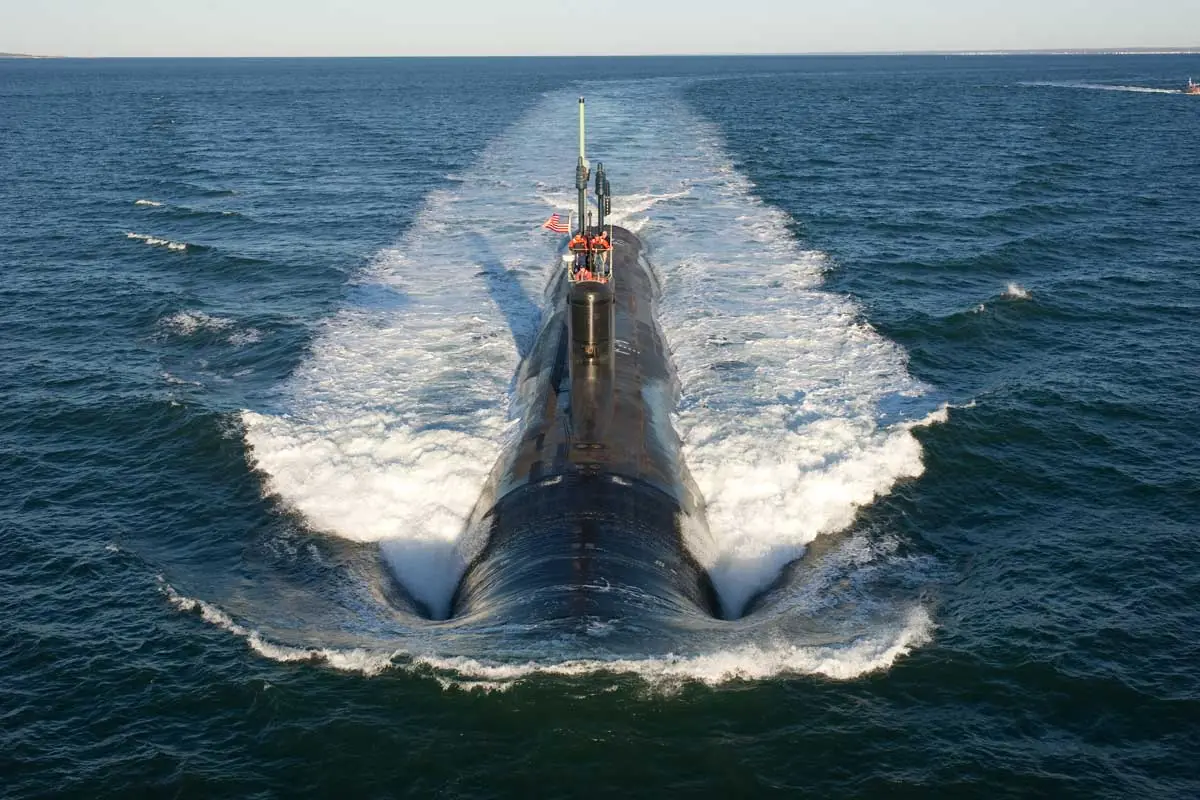
The class is also configured to support Special Operations Forces (SOF) deployment, using a lock-in/lock-out chamber and (in some cases) a dry deck shelter. This enables covert insertion of SEAL teams or unmanned underwater vehicles. It reflects a shift from submarines as pure strike platforms to flexible tools of influence and disruption in gray-zone operations.
These capabilities suggest that the Virginia-class may play as much of a role in preventing conflict as in winning it. Its intelligence and SOF functions align with a modern doctrine that values situational awareness, denial, and control—often without firing a shot
One of the most important reasons the Virginia-class submarines are so effective is their nuclear propulsion system. Unlike diesel-electric submarines, which need to surface or snorkel regularly to recharge batteries, nuclear-powered submarines like the Virginia-class can stay submerged for months at a time. This gives them a huge endurance advantage.
In theory, a Virginia submarine could cross entire oceans, patrol contested waters, and remain hidden undersea for as long as the crew has food.
From a strategic perspective, it also allows for unpredictable positioning. A Virginia-class submarine could be anywhere, off a hostile coast, deep in the Pacific, or under Arctic ice, and adversaries would have no easy way of knowing. This uncertainty can have a powerful deterrent effect, even without launching a single weapon.
In terms of safety and maintenance, nuclear-powered submarines are often seen as more complex but also more reliable over long deployments.
While diesel-electric submarines such as Germany’s Type 212 or Russia’s Kilo-class are extremely quiet during short-range operations, they must surface more frequently and operate closer to home. This makes them more predictable and potentially more vulnerable in open-ocean scenarios.
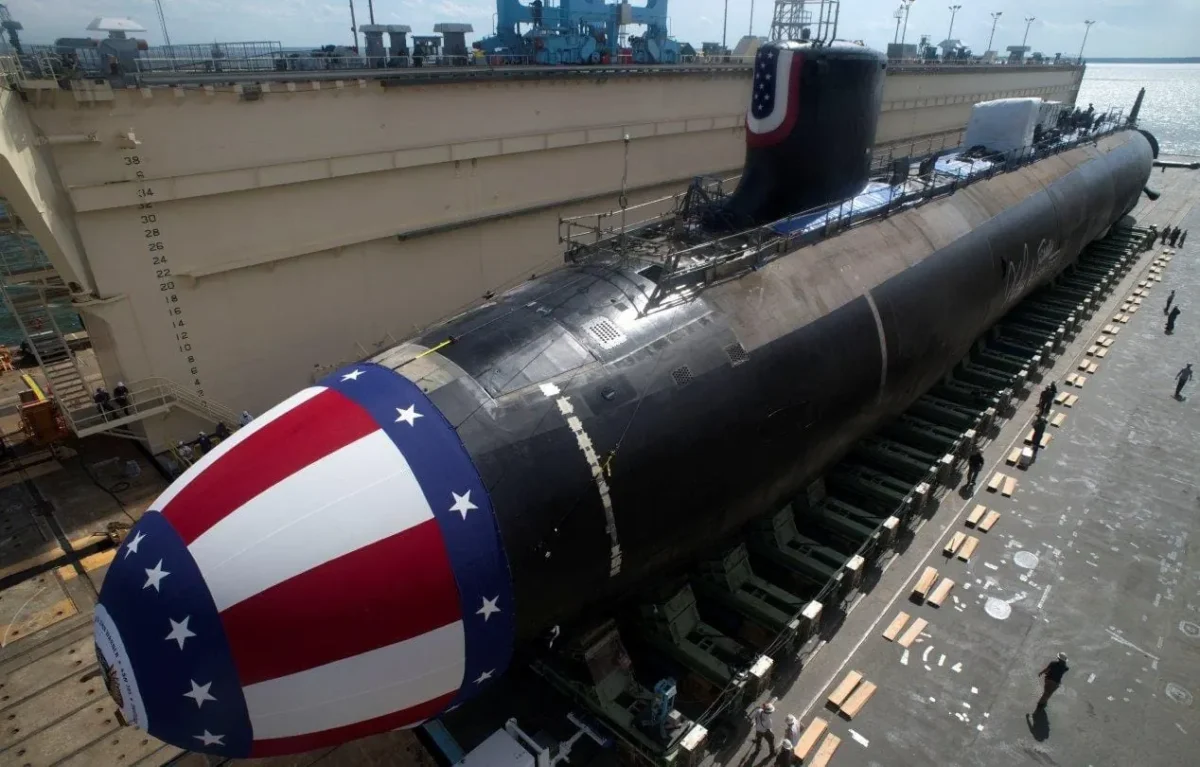
By contrast, the Virginia-class’s nuclear reactor can operate continuously for decades without needing to refuel. This capability allows the U.S. Navy to project power across the globe without relying on forward bases or refueling stops.
Despite this, nuclear propulsion isn’t without its challenges. It requires highly trained personnel and a strong infrastructure to support it. But the U.S. Navy has decades of experience managing nuclear submarines safely, and the Virginia-class appears to benefit from that mature ecosystem.
The early Block I submarines, first deployed in the early 2000s, were focused on getting the platform operational.
These boats were meant to replace the aging Los Angeles-class fast attack submarines, while being more affordable and flexible than the overbuilt Seawolf-class. Block II followed soon after, with changes aimed mainly at streamlining construction and reducing cost, less about new weapons, more about efficiency.
While these versions were solid platforms, their capabilities were still relatively conventional. That would change quickly in later blocks.
With Block III, the upgrades became more ambitious. These submarines featured a redesigned bow with a new sonar system and two large Virginia Payload Tubes that could each launch multiple Tomahawk cruise missiles. This simplified the missile-launch process and opened up more options for payloads in the future.
Block IV focused less on combat upgrades and more on operational efficiency. These boats were built with fewer parts that need frequent maintenance, allowing them to spend more time at sea—up to 15% more, according to some estimates. That might not sound dramatic, but over a 30-year service life, it could make a big difference.
Then comes Block V, which many consider a game-changer. This version introduces the Virginia Payload Module (VPM), a new mid-body section that adds four additional vertical launch tubes. These tubes can carry up to 28 extra Tomahawk missiles, nearly tripling the sub’s land-attack strike capacity. For comparison, that brings it closer to the role once filled by retiring Ohio-class guided missile submarines.
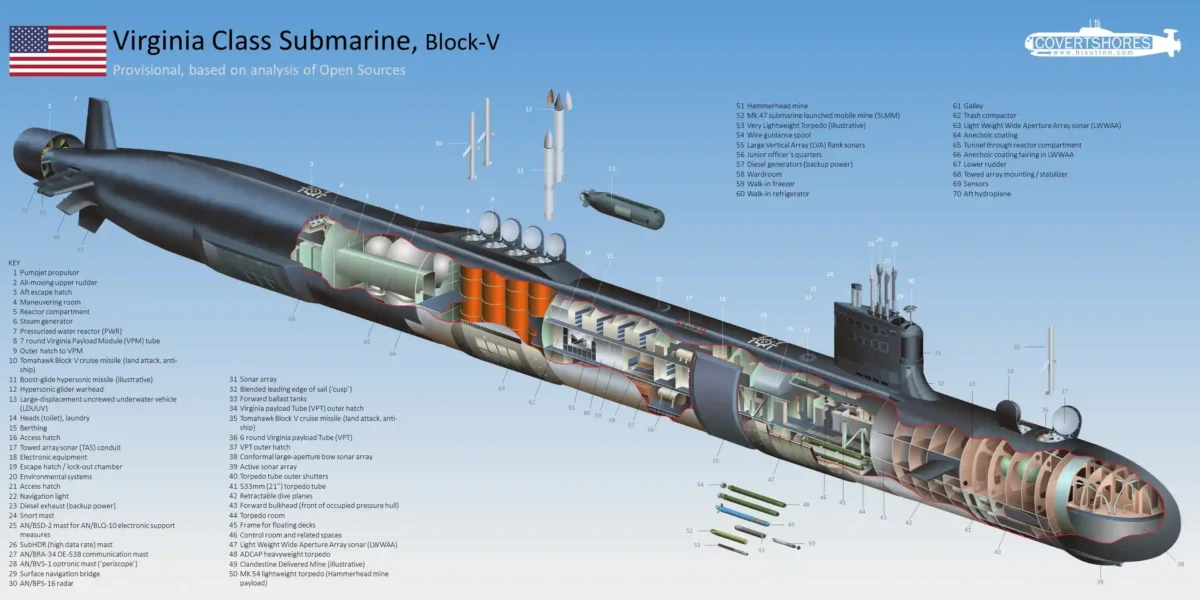
Even more significantly, Block V boats are reportedly being designed with potential compatibility for future hypersonic missiles.
While this hasn’t been fully confirmed, some defense officials have suggested the Navy intends to eventually integrate the Conventional Prompt Strike (CPS) system into the VPM. If that happens, the Virginia-class submarine Block V could serve as a mobile, underwater missile battery, capable of launching precision strikes from thousands of kilometers away.
When it comes to modern nuclear-powered submarines, the Virginia-class is often described as one of the most balanced and capable platforms in the world. But how does it actually compare to other top-tier subs, like the Seawolf-class, the UK’s Astute-class, or Russia’s Yasen-class? The answer depends on what you’re looking for and what you’re up against.
The Seawolf-class was originally meant to be the U.S. Navy’s ultimate fast attack submarine during the Cold War. It’s faster, goes deeper, and is even quieter than the early Virginias. But it was also extremely expensive and perhaps overbuilt for post-Cold War missions.
Only three Seawolfs were ever made. In contrast, the Virginia-class submarines were designed to be more affordable, easier to maintain, and versatile across a wider range of missions, including intelligence gathering, special forces deployment, and strike missions with Tomahawk missiles. While the Seawolf might still be superior in raw performance, the Virginia is arguably more adaptable and scalable.
The UK’s Astute-class submarines are another important comparison. Like the Virginias, they are nuclear-powered submarines built with stealth, endurance, and advanced sensors in mind.
The Astutes are reportedly very quiet and capable in their own right, and they share many features, such as advanced sonar systems and support for special operations forces.
However, the Virginia-class, particularly from Block III onward, seems to have a slight edge in vertical launch capability and overall production scale. The U.S. has been building Virginias at a higher rate, which may translate to operational experience and fleet integration advantages.
What about the Yasen-class from Russia?
This is a serious contender; modern, powerful, and heavily armed. Yasen-class subs carry a wide range of cruise missiles and are believed to have advanced sensor systems. In some areas, like missile payload, the Yasen might even match or exceed the Virginia-class.
But Western analysts often point out that while the Yasen is formidable, it may not be as quiet or efficient as its American counterpart. Also, Russia is building them more slowly and at a much smaller scale. That limits their strategic reach in comparison to the SSN Virginia fleet, which is already large and still growing.
Read also: Why Russian Yasen-M-Class Submarines Are a Nightmare for US Navy
So, where does the Virginia-class submarine really stand? It may not be the fastest or most heavily armed in every category, but it seems to strike a balance that few others do. It combines stealth, endurance, versatility, and now, especially with Block V, a growing emphasis on long-range strike capability, including possible hypersonic weapons in the near future.
In other words, while each of these submarines excels in its own way, the Virginia-class might be the most well-rounded option for global naval power, especially for a navy that needs to do more than just hunt other submarines.