Follow Us:
Follow Us:

Thailand strikes Cambodia with F-16 in deadly border clash, killing civilians and displacing thousands as UN urges immediate de-escalation.
Thailand Strikes Cambodia with F-16s in a dramatic escalation of long-simmering border tensions, triggering one of the deadliest clashes between the two nations in over a decade.
On Thursday, July 24, 2025, the Thai military launched a rare airstrike targeting Cambodian military positions after intense artillery exchanges earlier that morning killed at least 11 civilians and displaced tens of thousands along the disputed frontier.
The border conflict, rooted in long-standing territorial disputes, erupted into open combat shortly after dawn.
Artillery and small arms fire were exchanged near contested zones, rapidly spreading to six separate locations across a 209-kilometer stretch of the Thailand-Cambodia border.
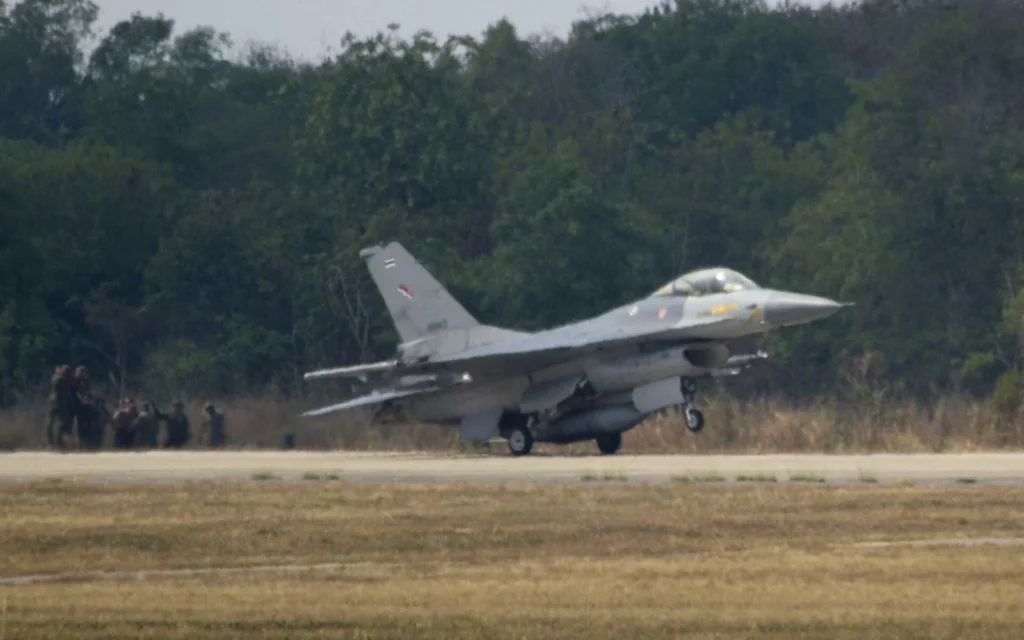
Amid the escalating violence, Thailand deployed six F-16 fighter jets, with one jet mobilized to strike what Thai officials described as a Cambodian military installation.
This marked the first operational use of Thai air power in direct combat against Cambodia in recent history — and solidified global headlines that Thailand strikes Cambodia with F-16 amid rising regional tensions.
Thailand’s acting Prime Minister, Phumtham Wechayachai, defended the use of the F-16, stating it was necessary to “protect civilians” and respond to what he called “a deliberate provocation.
” He added, “We remain committed to dialogue, but we have the right to defend our sovereignty.”
In response, Cambodia condemned the strike, calling it “reckless and brutal military aggression.”
Prime Minister Hun Manet urgently appealed to the United Nations Security Council, accusing Thailand of “unprovoked and premeditated military aggression” in breach of international law.
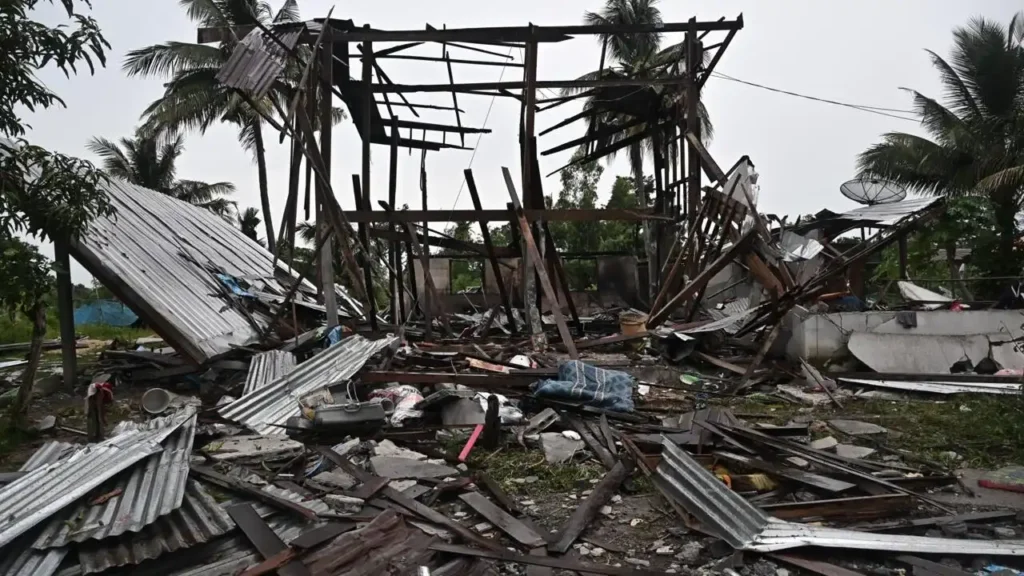
The intensity of Thursday’s clashes sent shockwaves through border communities. In Thailand’s Surin province, a hospital was reportedly hit by artillery, prompting Thai Health Minister Somsak Thepsuthin to decry the attack as “a war crime.”
More than 40,000 civilians have been evacuated from Thai border villages, with makeshift shelters set up to house women, children, and the elderly.
“I’m worried about my children,” said evacuee Suphap Wongwai. “They’re scared and crying. We just want peace.”
Eyewitnesses in both countries reported non-stop shelling and exchanges of gunfire. One Thai villager, speaking from a fortified shelter, said, “The number of explosions is uncountable. It hasn’t stopped since early morning.”
While Thailand confirmed 12 deaths in total—including 11 civilians and an eight-year-old boy—Cambodia has not disclosed the number of its casualties, though evacuations and troop reinforcements have reportedly intensified along its border provinces.
In a chilling reflection of the severity of the clash, diplomatic ties between the two countries further deteriorated as Thailand expelled Cambodia’s envoy and recalled its ambassador to Phnom Penh following a Thai soldier losing a leg in a landmine explosion.
Bangkok accused Cambodian troops of planting the device, a claim Cambodia has dismissed as “baseless.”
The root of this deadly confrontation lies in long-standing disputes over the demarcation of the 817-kilometer Thailand-Cambodia land border.
Central to the discord are claims over historic Hindu temple sites, particularly the 11th-century Preah Vihear Temple and the Ta Moan Thom ruins.
Though the International Court of Justice (ICJ) ruled in 1962 that Preah Vihear belongs to Cambodia, tensions reignited in 2008 when Cambodia moved to designate it a UNESCO World Heritage site.
Sporadic clashes followed over the years, but none have been as extensive or deadly as Thursday’s conflict.
Cambodia has since called on the ICJ again for intervention, though Thailand insists it does not recognize the court’s jurisdiction in this matter, preferring bilateral talks instead. However, the scale of Thursday’s military exchange has prompted international concern.
The United Nations Security Council is expected to convene on Friday to address the escalating crisis. The United States, a treaty ally of Thailand, has called for calm.
“We are gravely concerned by the rising violence and the harm caused to civilians,” said US State Department deputy spokesperson Tommy Pigott. “We urge both sides to cease hostilities immediately and prioritize peaceful resolution.”
Meanwhile, regional players including Vietnam, the Philippines, and China have issued statements urging restraint. China, in particular, expressed its willingness to mediate efforts aimed at de-escalation.
Analysts say Thailand’s use of an F-16 highlights its military superiority over Cambodia, which lacks comparable air capability. Though both countries have built up forces along the border in recent months, the introduction of air power significantly shifts the conflict’s dynamics and raises concerns over further escalation.
As Southeast Asia watches closely, humanitarian concerns continue to mount. Aid agencies are preparing for a potential refugee crisis, and questions remain over how far both sides are willing to go before diplomacy prevails.
With high tensions, increased militarization, and historical resentment fueling the flames, the world now turns to the UN Security Council in hopes of preventing a full-scale war in the heart of the region.