Follow Us:
Follow Us:

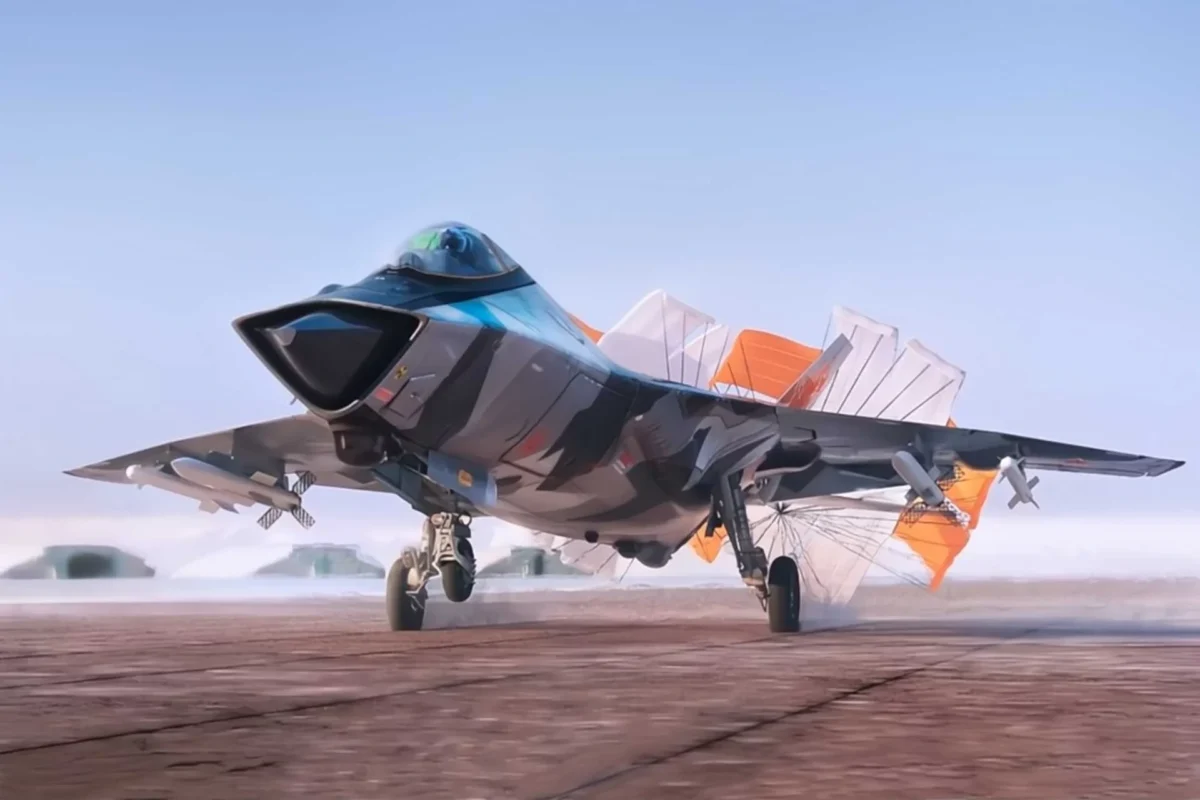
Defense Feeds – Russia revives MiG-41 by announcing the completion of the external design for its next-generation MiG-41 interceptor, a vital step in restarting the long-delayed program.
This advanced interceptor, developed under the PAK DP initiative, is set to replace the aging MiG-31 Foxhound and counter emerging threats such as hypersonic missiles, stealth fighters including the American F-35, and satellites operating in near-Earth orbit.
A prototype flight is expected in the coming years, underscoring Moscow’s commitment to maintaining air superiority amid evolving aerial and space domain challenges.
Retired Russian Air Force commander Vladimir Popov revealed that the MiG-41’s design finalized its external shape by late 2019 and the program entered active development in 2021.
The aircraft draws heavily on research begun in the 1980s but has been substantially modernized to meet today’s operational demands.
It is designed to exceed Mach 4 speeds, operate at near-space altitudes above 12,000 meters, and feature advanced avionics far beyond its MiG-31 predecessor.
The interceptor is slated for both manned and unmanned configurations, aimed at flexible deployment against a wide array of targets.
The MiG-41 is expected to incorporate cutting-edge propulsion technology, including potentially new ramjet or combined-cycle engines, possibly variants of the Izdeliye 30 family already developed for the Su-57 fighter.
Its stealth design will help reduce enemy radar detection, while new radar and sensor arrays will enable broad multi-target tracking and engagement at long ranges.
Read also: Russia’s MiG-41 Fighter Program: Ambition or Illusion?
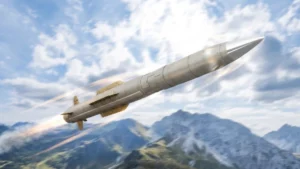
Moreover, the aircraft may deploy the innovative MPKR DP missile system, capable of releasing multiple sub-munitions to increase hit probability against highly maneuverable hypersonic threats.

Beyond traditional air defense roles such as intercepting bombers and fighters, the MiG-41 will undertake missions that address emerging strategic domains.
Notably, it is projected to perform anti-satellite operations targeting objects in low Earth orbit, a capability that ties to Russian defense priorities in the Arctic and northern approaches where vast distances and rapid response are critical.
The interceptor’s range approaches 5,000 kilometers, with a maximum takeoff weight around 100,000 kilograms, signaling a substantial increase in size and power over the MiG-31.
Operational ambitions include engaging stealth aircraft like the F-35 at unprecedented distances, countering hypersonic missile threats, and disrupting reconnaissance platforms operating at extreme altitudes.
The aircraft will also incorporate a laser-based defensive system to intercept incoming missiles, critical for survivability during high-speed missions in contested airspace.
These expansive capabilities place the MiG-41 in a hybrid generation between fifth- and sixth-generation fighter technology.
Despite the bold promises, the MiG-41 program faces significant technical and financial obstacles.
Producing sustained flight at Mach 4+ presents extreme thermal and engineering stresses requiring new materials, cooling systems, and power management innovations.
Russia’s history with advanced fighter development, including delays and limited production numbers for the Su-57 stealth fighter, underscores the complexity of achieving operational status for such a high-performance interceptor.
Budgetary constraints and competing military priorities also add uncertainty to the timeline.
While the MiG-31 remains a valuable asset, its modernization ceiling and aging design necessitate a new platform capable of meeting modern threats.
The MiG-41 represents an ambitious leap in aerial defense technology, blending advanced speed, stealth, and multi-domain reach, potentially restoring Russian air superiority in the coming decades if successful.
The transition from finalized design to prototype and eventual production will be a critical test of Russia’s aerospace industry capabilities to deliver next-generation interceptor fighters in a rapidly evolving strategic landscape.
This fighter’s development seeks to uphold Russia’s historic expertise in high-speed interceptors while integrating future-ready systems to counter emerging threats including America’s stealth F-35 and hypersonic weapons, setting the stage for the next frontier in aerial combat.