Follow Us:
Follow Us:

On May 21, 2025, a streak of light cut across the night sky over California. An unarmed Minuteman III intercontinental ballistic missile (ICBM) launched from Vandenberg Space Force Base and hit a target more than 4,200 miles away near the Marshall Islands. The entire flight took about half an hour, moving at speeds of over 15,000 miles per hour.
The test, officially called Glory Trip 253, was routine, but its meaning was not. The Minuteman missile has been in service for over 50 years, yet it’s still central to America’s nuclear defense strategy. Even with a new missile program being developed to replace it, the Minuteman III continues to prove it can deliver massive destructive power with incredible accuracy.
In other words, a weapon designed in the Cold War is still one of the most feared tools in modern warfare. The question is, how powerful is a Minuteman III missile, and why does it still matter in 2025?
The story of the Minuteman missile begins in the tense years of the Cold War. In the late 1950s, the United States was searching for a nuclear weapon that could be launched quickly, travel thousands of miles, and reach targets deep inside the Soviet Union before enemy missiles could strike back.
At the time, most nuclear missiles used liquid fuel, which took hours to prepare. That delay could be deadly in a nuclear exchange.
The solution was the LGM-30 Minuteman, America’s first solid-fueled intercontinental ballistic missile (ICBM). Solid fuel meant it could be kept ready to launch at a moment’s notice. This was a major advantage for a nation relying on fast retaliation as part of its nuclear deterrence.
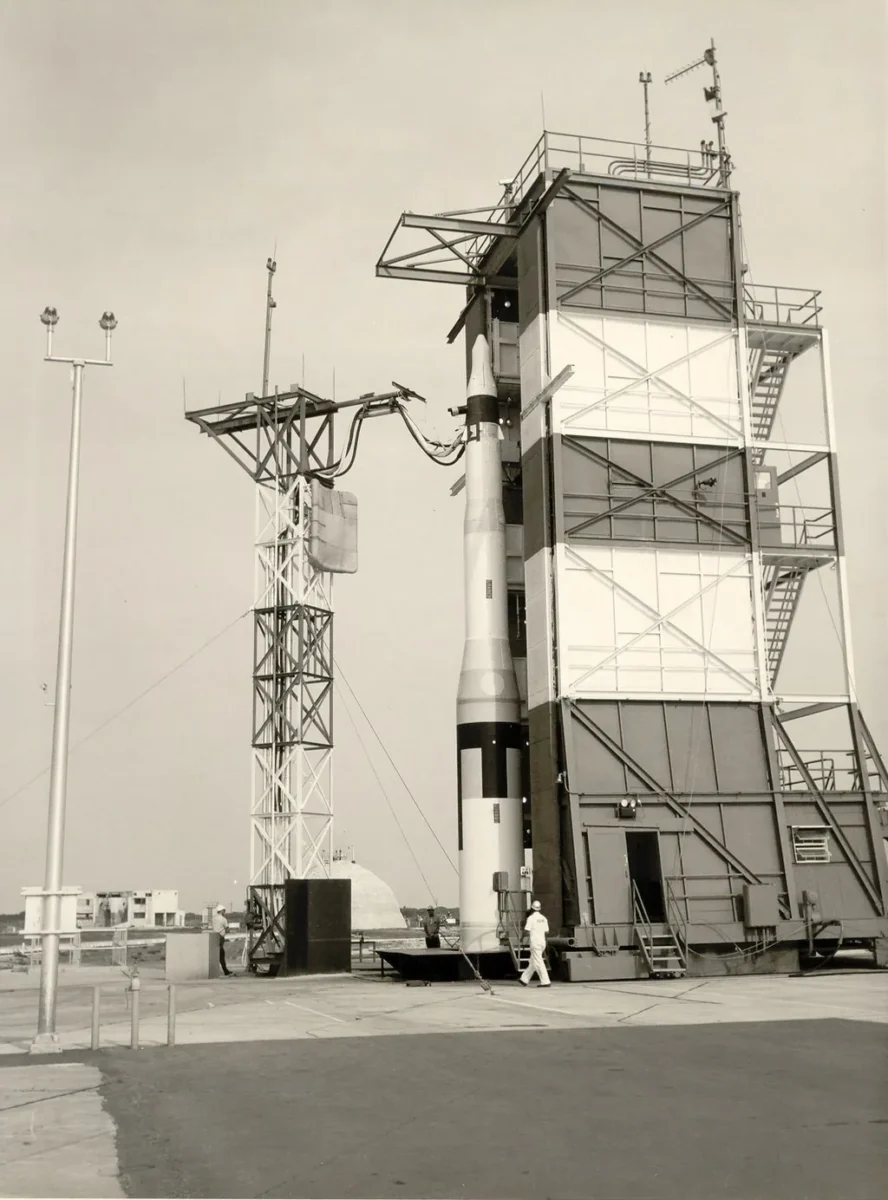
The first version, Minuteman I, entered service in 1962. It was revolutionary for its time, but technology advanced quickly. Just a few years later, the Minuteman II arrived with better range, improved accuracy, and the ability to hit hardened targets like missile silos.
The current and most advanced version, the Minuteman III missile, began deployment in 1970. It introduced multiple independently targetable reentry vehicles (MIRVs), meaning a single missile could carry several warheads, each aimed at a different target. Over the decades, it has been upgraded with new guidance systems, better propulsion, and improved reentry vehicles.
Today’s LGM-30G Minuteman III has a range of about 8,000 miles and can carry a W87 or W78 nuclear warhead with yields in the hundreds of kilotons. While newer systems are in development, this missile still forms the backbone of the U.S. land-based nuclear arsenal.
The Minuteman III missile is often described in terms of raw numbers, but those figures only make sense when we imagine what they mean in the real world. Take its range, roughly 13,000 kilometers or about 8,100 miles.
That means a missile launched from the middle of the United States could hit almost any target on Earth without leaving its underground silo. In a global security context, this reach ensures that no potential adversary can ever feel completely out of range.
Read also: Fastest Missile in the World: Top 5 Ranked by 2026
In terms of speed, it can travel at around 15,000 miles per hour and cover distances faster than 20 times the speed of sound. In practical terms, it could reach its target in about thirty minutes. That leaves very little warning time for anyone on the receiving end, making defense extremely difficult. Even the most advanced anti-missile systems would have to act almost instantly to have any chance of intercepting it.
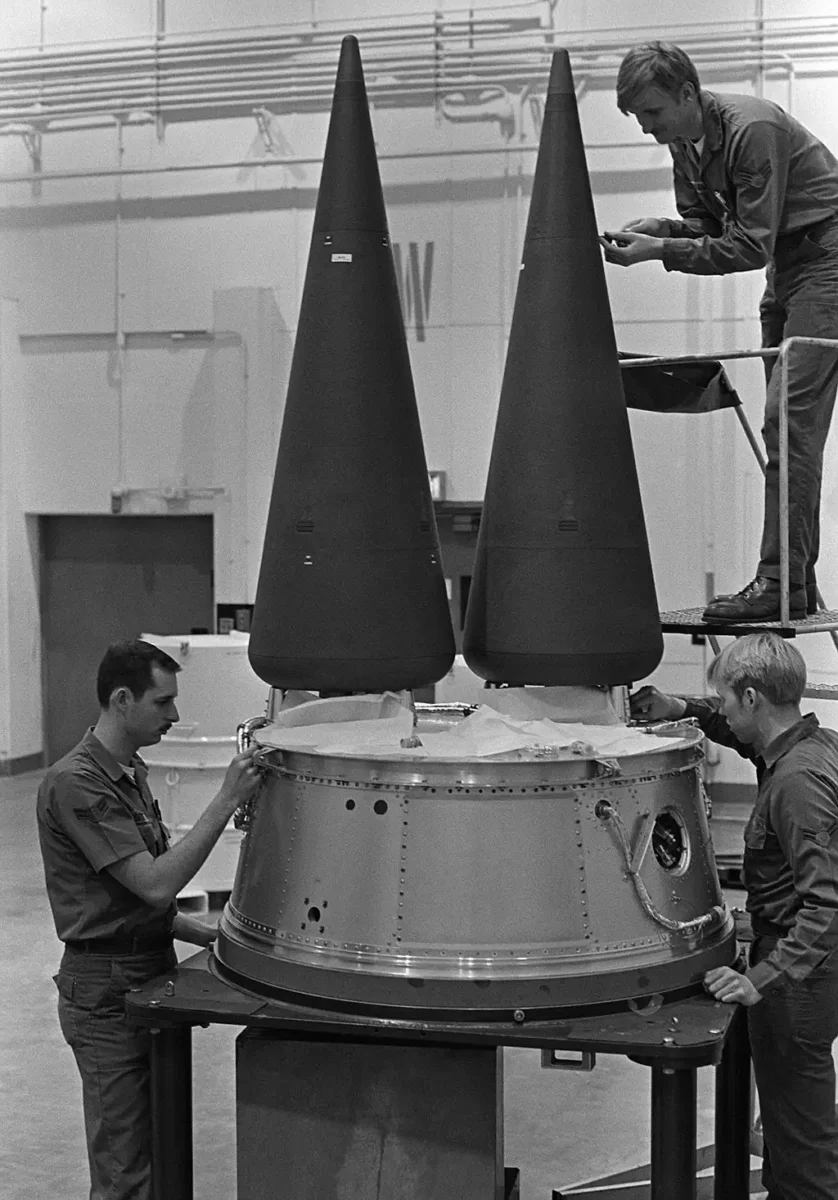
Its payload capacity is equally significant. The Minuteman III can carry up to three MIRVs—Multiple Independently Targetable Reentry Vehicles. Instead of delivering one warhead to one location, a single missile could strike three different targets, each separated by hundreds of miles. This means one launch can inflict damage across multiple strategic sites, multiplying its effectiveness without increasing the number of missiles fired.
Read also: U.S. Air Force Successfully Launches Minuteman III ICBM
The warhead yield also puts its destructive potential into perspective. Each warhead can produce a blast of about 300 to 475 kilotons. For comparison, the atomic bomb dropped on Hiroshima in 1945 was roughly 15 kilotons. That makes a single Minuteman III warhead up to 30 times more powerful, and since the missile can carry three of them, the total potential destruction is staggering.
When these factors, range, speed, payload, and yield, are combined, they create a weapon that is not just powerful on paper but strategically formidable in practice. It’s this combination that explains why, even after more than fifty years in service, the LGM-30G Minuteman III remains one of the most important U.S. nuclear missiles in the modern arsenal.
When talking about how powerful the Minuteman III missile is, it’s worth looking at what other major nuclear powers have in their arsenals. Russia and China, in particular, field some of the most advanced intercontinental ballistic missiles (ICBMs) in the world. While exact details are often kept secret, enough information exists to make some reasonable comparisons.
The Russian Topol-M was first deployed in the late 1990s as a mobile or silo-based ICBM. It carries a single warhead of about 800 kilotons and has a range of roughly 11,000 kilometers. In a real-world conflict, this missile would shine in a second-strike scenario, where Russia needs to respond after absorbing an enemy’s first attack. Its mobility makes it difficult to track and destroy, giving it a higher chance of surviving until launch.
Its successor, the RS-24 Yars, adds multiple warheads, usually three to four, and slightly better range. In a tense standoff, this missile could be used for multi-target retaliation, hitting several key sites with just one launch. Like the Topol-M, its road-mobile option increases survivability in a prolonged nuclear exchange.
Read also: RS-24 Yars ICBM: Russia’s Ultimate Nuclear Deterrent
China’s DF-41 is a newer missile, first revealed publicly in 2019. It reportedly has a range of up to 15,000 kilometers, meaning it could hit any point in the continental United States from launch points deep inside China. If Beijing wanted to overwhelm missile defenses in one massive strike, the DF-41’s potential to carry many MIRVs would make it ideal for that role, possibly up to 10, though many experts believe it usually carries fewer to extend range.
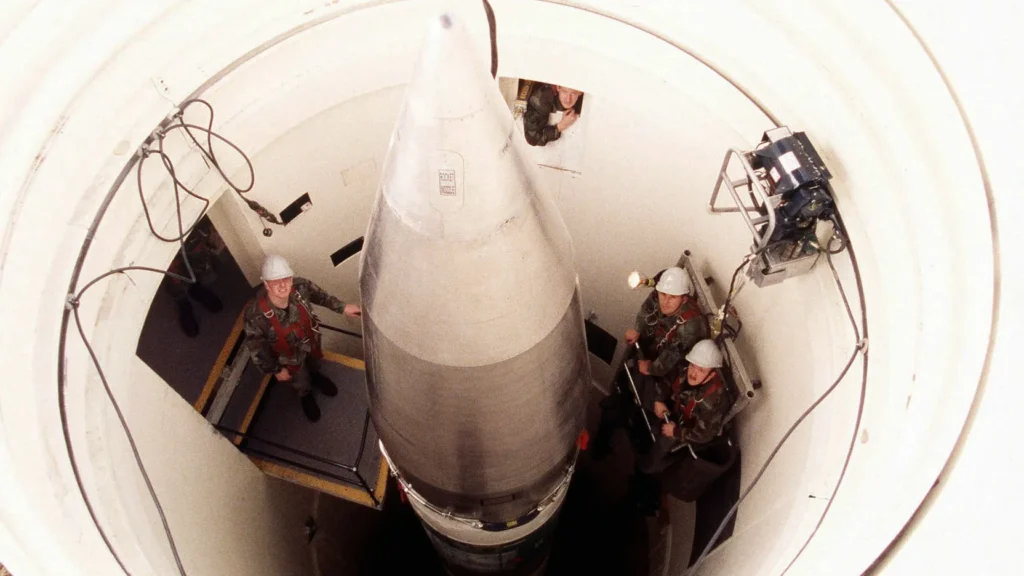
The LGM-30G Minuteman III, in comparison, has a slightly shorter range than the DF-41 but remains highly accurate and reliable after decades of upgrades. Its speed, around 15,000 mph, is similar to other ICBMs, and while it typically carries up to three warheads, each can be as powerful as 300–475 kilotons. The U.S. also benefits from a well-developed early-warning and command system, ensuring the Minuteman III can be launched quickly if needed.
So, while Russia and China’s newest missiles may outmatch the Minuteman III on paper in certain categories like range or warhead count, the U.S. missile remains competitive due to its precision, proven reliability, and integration into a broader nuclear deterrent strategy.
| Missile | Country | Range | Warheads | Warhead Yield | Launch Method |
| LGM-30G Minuteman III | USA | ~13,000 km (8,100 mi) | Up to 3 MIRVs | 300–475 kt each | Silo-based |
| Topol-M (SS-27) | Russia | ~11,000 km (6,835 mi) | 1 | ~800 kt | Silo / Mobile |
| RS-24 Yars | Russia | ~12,000 km (7,456 mi) | 3–4 MIRVs | ~150–500 kt each | Silo / Mobile |
| DF-41 | China | ~15,000 km (9,320 mi) | Up to 10 MIRVs (est.) | ~200–300 kt each (est.) | Mobile / Rail |
It’s hard to picture what 300 to 475 kilotons of explosive power actually means. The most common point of comparison is the atomic bomb dropped on Hiroshima in 1945, which had a yield of about 15 kilotons. That single weapon flattened much of the city, created a firestorm, and killed more than 100,000 people by the end of the year.
By comparison, even the lowest-yield Minuteman III warhead is about 20 times more powerful than the Hiroshima bomb. At the upper end, 475 kilotons, it’s over 30 times more powerful. To put that into perspective, a single Minuteman warhead could unleash more energy than all the explosives used in World War II combined, including both atomic bombs, in just one detonation. And since a single missile can carry up to three of these warheads, the destructive potential of one launch could be equal to 60 to 90 Hiroshima-sized bombs.
If we imagine a hypothetical detonation of a 300-kiloton warhead over a major city, the immediate blast would destroy almost everything within a radius of about 3 kilometers (nearly 2 miles). Severe burns and lethal radiation doses could reach out several kilometers further, while glass windows could shatter over 15 kilometers (9 miles) away. A larger 475-kiloton warhead would expand that destruction even further, with tens of thousands, if not hundreds of thousands, of casualties in the first moments, depending on population density.
Of course, these are modeled estimates. In reality, the effects would vary depending on many factors: the height of the detonation, surrounding terrain, weather conditions, and how prepared the target area was. But even with these uncertainties, it’s clear that the Minuteman missile’s destructive capacity is not just about raw physical damage, it’s about the overwhelming strategic and psychological weight it represents.

The LGM-30 Minuteman III is the land-based pillar of America’s nuclear triad, which also includes ballistic missile submarines at sea and strategic bombers in the air. Each leg of this system plays a different role in ensuring U.S. nuclear deterrence.
Submarines provide stealth and survivability, bombers offer flexibility and visible signaling during crises, and the Minuteman force delivers rapid, high-accuracy strikes from fixed ICBM silos across the central United States.
From a strategic standpoint, the Minuteman’s role is to provide an immediate, on-alert capability. Unlike bombers, which need time to be armed and launched, and submarines, which may require communication delays, these land-based Minuteman III missiles can be fired within minutes of a presidential order. This creates a strong deterrent signal, any potential adversary knows that an attack on the U.S. could be met with an almost instant response
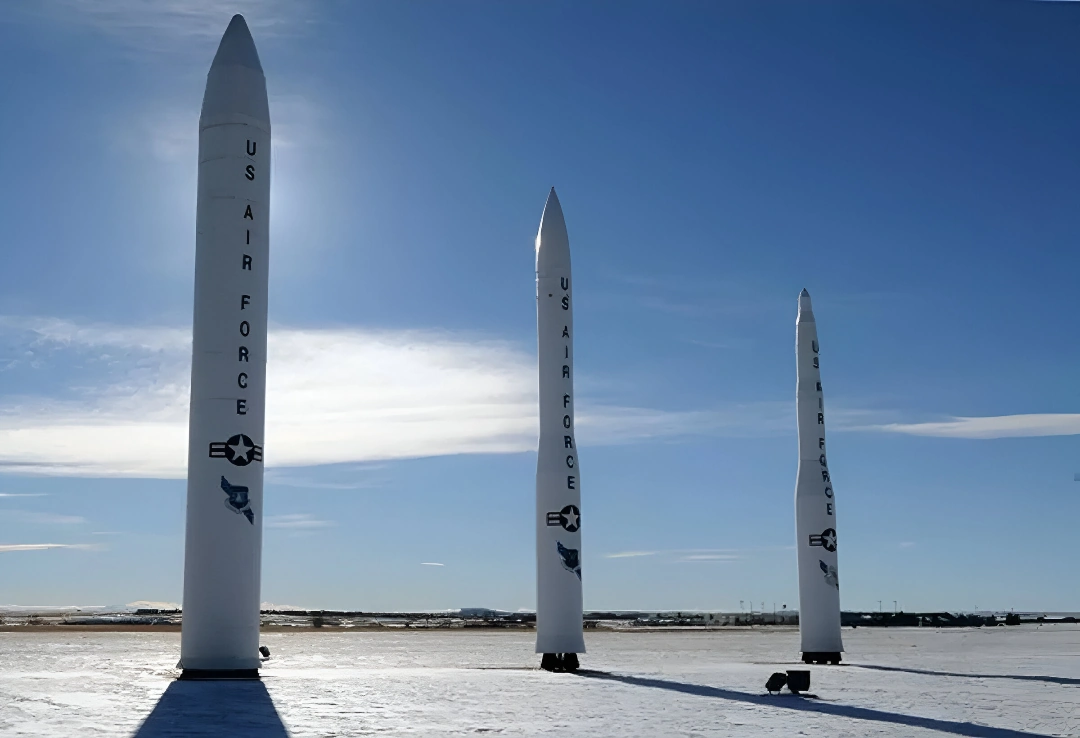
However, it does face some trade-offs compared to the other two legs of the triad. Since Minuteman missiles are stored in fixed underground silos, their locations are known, which could make them more vulnerable in a large-scale nuclear exchange. In contrast, Ohio-class submarines can hide deep underwater, and B-2 or B-52 bombers can be moved or recalled mid-flight, offering more flexibility.
To keep the system credible, the U.S. has invested heavily in lifespan extension and modernization programs. These upgrades include improved guidance systems, new solid-fuel propellants, and enhanced command-and-control links.
While the Minuteman III entered service in the 1970s, continuous updates mean it remains reliable today and will continue to serve until its planned replacement by the Sentinel ICBM in the 2030s. This modernization ensures the land-based leg of the nuclear triad stays relevant despite its fixed location limitations.
The LGM-30G Minuteman III is one of the most formidable strategic weapons ever built, combining speed, range, accuracy, and devastating yield. In U.S. nuclear strategy, it stands as the land-based backbone of the nuclear triad, ensuring a credible deterrent that can respond within minutes to any threat.
Its ability to deliver a warhead 20–30 times more powerful than the Hiroshima bomb, over intercontinental distances, makes it a decisive factor in global security dynamics.
So, if you ask how powerful it is, the answer is that a single Minuteman III can unleash destructive force capable of obliterating a major city, and hundreds of them together form a deterrent that no adversary can ignore.