Follow Us:
Follow Us:

The first thing soldiers noticed wasn’t the shape. It was the sound, that deep, chopping whop-whop-whop slicing through humid air. If you were on the ground in the late 1960s and heard it, you knew something serious had arrived.
The AH-1 Cobra wasn’t just another helicopter. It was a message.
Before the AH-1 Cobra, helicopters mostly carried people, supplies, or the wounded. They were buses, basically. Useful, but vulnerable. Then came this lean, narrow machine built with one purpose: to hunt.
Developed by Bell Helicopter Textron, the Cobra became the world’s first truly dedicated attack helicopter, designed from the ground up for combat rather than adapted into it.
What made the AH-1 Cobra revolutionary wasn’t just its weapons, though it carried plenty. It was the philosophy behind it. Tandem seating reduced its frontal profile. A chin-mounted gun could track targets independently of the helicopter’s direction. It moved like a predator, not a transport. Suddenly, helicopters weren’t just supporting actors in war. They were starring in it.
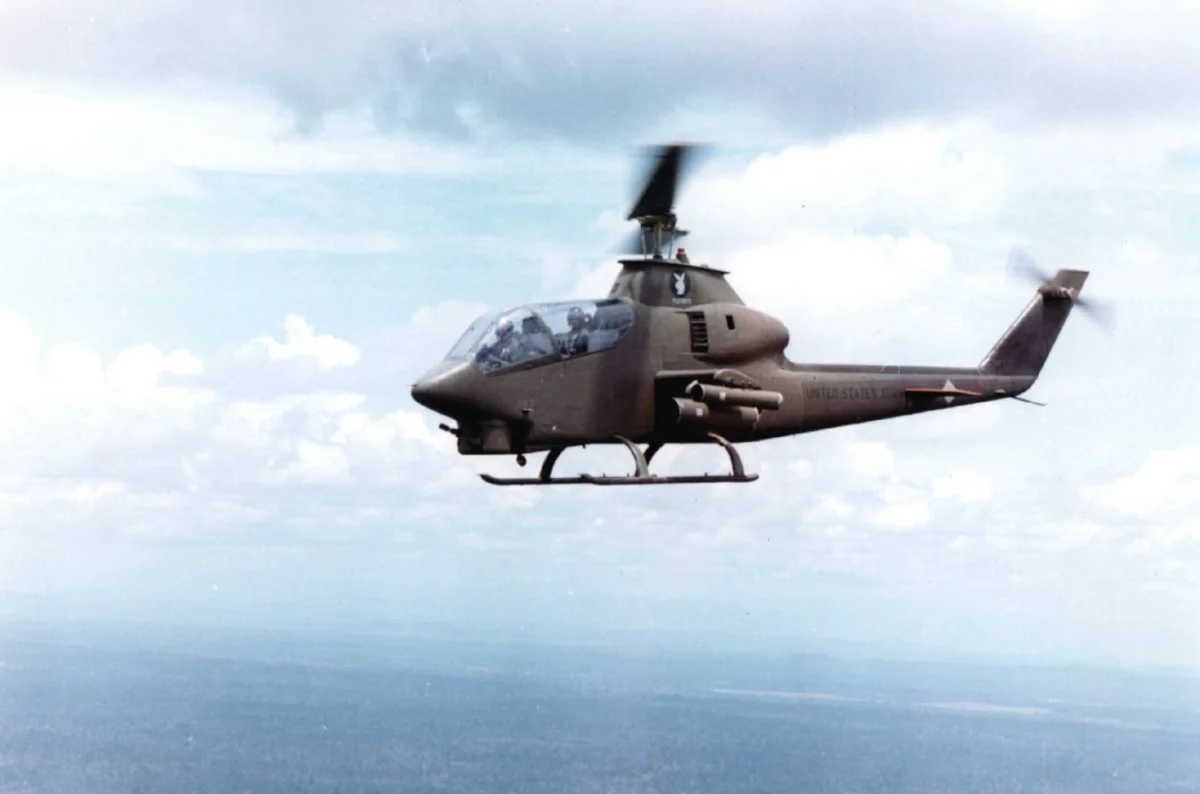
And here’s the surprising part: the Cobra wasn’t meant to be permanent. It started as a fast, almost improvised solution to an urgent battlefield problem. Yet decades later, its DNA still lives on in modern attack helicopters. That’s rare in military engineering.
If you want to understand how aerial combat evolved, from bulky transports to precision strike machines, you have to start with the AH-1 Cobra. Everything that followed borrowed something from this skinny, dangerous pioneer.
If you strip away the mythology and the Vietnam-era nostalgia, what exactly is the AH-1 Cobra?
At its core, the AH-1 Cobra is a purpose-built attack helicopter, designed not to carry troops, not to evacuate casualties, but to deliver firepower with speed and precision. It first flew in 1965 and entered service in 1967, right in the thick of the Vietnam War. Timing wasn’t accidental. The battlefield had exposed a dangerous weakness: troop-carrying helicopters like the Bell UH-1 Iroquois needed armed escort. Fast.

Rather than reinvent the wheel, engineers at Bell borrowed major components from the UH-1, engine, rotor system, transmission, and wrapped them in a dramatically slimmer fuselage.
The result? A helicopter nearly 3 feet narrower than the Huey, with tandem seating that reduced frontal exposure by roughly 40%. Less surface area meant a smaller target. Simple math. Smart design.
Read also: Bell AH-1Z Viper: Marine Corps’ Most Advanced Attack Helicopter
The AH-1 Cobra felt different in the air. Pilots described it as agile, almost twitchy compared to bulkier helicopters. The narrow body cut drag. The stub wings weren’t decorative; they carried rockets and missiles while also generating lift at speed.
In other words, this wasn’t a converted transport. It was a flying gun platform with just enough helicopter wrapped around it to stay airborne.
The AH-1 Cobra exists because of a problem nobody saw coming, at least not fully.
In the early years of the Vietnam War, helicopters like the Bell UH-1 Iroquois, better known as the “Huey,” became essential. They carried troops into battle, evacuated the wounded, and delivered supplies into hostile territory. But there was a flaw. The Huey could transport soldiers, but it couldn’t protect itself very well.
Enemy forces quickly learned to target these slow, predictable aircraft.
The U.S. Army needed something fast. Something armed. Something that could escort the transports and suppress enemy fire. Bell Helicopter responded not with a completely new design, but with something clever.
They took the Huey’s proven engine, transmission, and rotor system, and wrapped them inside a slim, aggressive fuselage built purely for combat. This shortcut shaved years off development time.
The result was astonishingly fast progress:
| Development Milestone | Year |
| Concept initiated | 1965 |
| First flight | September 1965 |
| Production approval | 1966 |
| Entered combat in Vietnam | 1967 |
That’s barely two years from concept to combat. Almost unheard of.
What made the Cobra especially effective was timing. The Vietnam War wasn’t fought along clear front lines. Enemies appeared suddenly, from jungles, tree lines, hidden positions. The Cobra thrived in that chaos. It could arrive quickly, hover low, and deliver precise, overwhelming firepower.
Read also: RAH-66 Comanche: Why the Stealth Helicopter Was Canceled
Pilots quickly gave it nicknames like “Snake,” partly because of its shape, and partly because of how it struck.
More importantly, the AH-1 Cobra proved something that military planners hadn’t fully realized before: helicopters could be hunters, not just helpers. That lesson reshaped aerial warfare permanently.
Numbers don’t tell the whole story, but with the AH-1 Cobra, they come surprisingly close.
This helicopter wasn’t designed to impress on paper. It was designed to survive bad situations. Fast insertions. Heavy fire. Tight escapes. Every specification reflects that harsh reality.

One of the Cobra’s biggest advantages was its balance between speed, weight, and firepower. Too heavy, and it would become sluggish. Too light, and it couldn’t carry meaningful weapons. Bell’s engineers found a sweet spot that gave pilots both agility and bite.
Here’s a clear breakdown of the AH-1 Cobra’s core specifications (based on the AH-1G, the original and most widely used Vietnam variant):
| Specification | AH-1 Cobra (AH-1G variant) |
| Crew | 2 (pilot and gunner) |
| Length | 16.2 m (53 ft 4 in) |
| Rotor Diameter | 13.4 m (44 ft) |
| Height | 4.1 m (13 ft 5 in) |
| Empty Weight | 2,900 kg (6,400 lb) |
| Max Takeoff Weight | 4,536 kg (10,000 lb) |
| Engine | Lycoming T53 turboshaft |
| Engine Power | 1,100–1,400 shaft horsepower |
What stands out immediately is how light the Cobra is compared to later attack helicopters. That low weight translates directly into faster acceleration and tighter maneuvering, both critical when dodging ground fire.
Now let’s look at performance, where the Cobra really earns its reputation:
| Performance Metric | Value |
| Maximum Speed | 277 km/h (172 mph) |
| Cruise Speed | 222 km/h (138 mph) |
| Combat Range | 574 km (357 miles) |
| Service Ceiling | 3,720 m (12,200 ft) |
| Rate of Climb | 8.5 m/s (1,670 ft/min) |
These numbers might not sound extreme today. But in the late 1960s, this was exceptional for an armed helicopter.
More importantly, the AH-1 Cobra could accelerate, fire, and reposition quickly. That ability, to strike and move before the enemy could react, became its greatest survival tool.
If the AH-1 Cobra’s shape made it look dangerous, its weapons made sure that impression wasn’t misleading.
This helicopter wasn’t just armed, it was engineered to deliver controlled violence with surgical precision. And unlike earlier armed helicopters, which often carried fixed guns pointing forward, the Cobra introduced something far more flexible: a fully rotating chin turret.
That chin turret changed everything.

Mounted beneath the nose, it allowed the gunner to aim independently of the helicopter’s direction. Imagine being able to look sideways and fire accurately while still flying forward, that’s the advantage Cobra crews had. It meant faster reactions and fewer predictable attack paths.
Here’s a breakdown of its primary weapons systems:
| Weapon Type | Description |
| 7.62mm M134 Minigun | Rapid-fire machine gun (up to 4,000 rounds/min) |
| 40mm Grenade Launcher | Explosive rounds fired in arcs |
| Hydra 70 Rockets | Unguided rockets in pods |
| 20mm Cannon (later variants) | High-impact autocannon |
| TOW Missiles (later variants) | Wire-guided anti-tank missiles |
The introduction of TOW missiles in later AH-1 Cobra variants was a turning point. Suddenly, the helicopter could destroy tanks from over 3,000 meters away, well outside the range of many ground weapons. This shifted the balance. Tanks, once dominant, had to start worrying about threats from above.
But raw firepower wasn’t the Cobra’s only strength. It specialized in something called “hunter-killer” tactics. Often paired with scout helicopters, the scout would locate targets, and the Cobra would move in fast, strike, and disappear. Quick. Precise. Unsettlingly effective.
In Vietnam alone, AH-1 Cobras flew over one million operational hours. That’s not just usage, that’s trust. Pilots depended on its weapons not just to complete missions, but to survive them.
The AH-1 Cobra didn’t stay frozen in time. It evolved, constantly, sometimes quietly, sometimes dramatically. What started as a quick-response gunship in the 1960s slowly transformed into a family of helicopters, each version shaped by lessons learned in real combat. Think of it less like a single aircraft and more like a bloodline.
The earliest version, the AH-1G, was the original Vietnam War model. It proved the concept worked. But warfare doesn’t stand still, and neither did the Cobra.
Here’s a clear overview of the most important variants and what made each one different:
| Variant | Key Improvement | Primary Role |
| AH-1G | Original single-engine version | Close air support |
| AH-1Q | Added TOW anti-tank missiles | Anti-armor warfare |
| AH-1F | Improved targeting, stronger engine | All-weather combat |
| AH-1J SeaCobra | Twin engines for safety over water | Naval attack missions |
| AH-1W SuperCobra | More power, advanced weapons | Marine Corps frontline attack |
| AH-1Z Viper | Modern avionics, composite rotors | Modern multi-role attack |
One of the most important shifts happened when the United States Marine Corps adopted twin-engine versions like the AH-1J and AH-1W. Flying over open ocean is unforgiving, engine failure isn’t an inconvenience, it’s a disaster. Adding a second engine dramatically improved survival odds.

The AH-1F, meanwhile, added thermal imaging and better targeting systems. This allowed Cobras to operate at night or in poor weather, conditions where earlier models struggled.
What’s fascinating is how adaptable the platform proved to be. Instead of discarding the design, engineers kept upgrading it. New engines. Better sensors. Stronger weapons.
Even decades after its first flight, the AH-1 Cobra’s basic layout was still relevant. That kind of longevity doesn’t happen by accident. It happens when the original design gets something fundamentally right.
The AH-1 Cobra didn’t earn its reputation in test flights or training exercises. It earned it in combat, messy, unpredictable, unforgiving combat.
And nowhere was that more evident than in the jungles of Vietnam, where visibility was poor, threats were everywhere, and survival often came down to seconds.
When the Cobra entered service in 1967, it immediately changed battlefield dynamics.
Before its arrival, troop transport helicopters were exposed and vulnerable during insertions. Enemy fighters could ambush landing zones, knowing the transports had limited defensive firepower.

The AH-1 Cobra fixed that problem. It flew escort, scanned ahead, and neutralized threats before they could strike.
Pilots developed tactics that became standard for decades. One of the most effective was the “low and fast” approach. Instead of hovering high and exposing themselves, Cobra crews would fly just above treetop level, using terrain as cover. They’d pop up briefly, fire rockets or gun bursts, then drop back into concealment. It was aerial ambush, essentially.
Here’s a snapshot of Cobra combat activity during Vietnam:
| Combat Statistic | Value |
| First combat deployment | 1967 |
| Total operational flight hours | Over 1,000,000 |
| Number of Cobras deployed | Over 1,100 |
| Primary missions | Escort, close air support, armed reconnaissance |
But Vietnam wasn’t the end of the Cobra’s combat story.
The helicopter continued serving in conflicts involving the United States Armed Forces and allied nations for decades. It operated in the Middle East, supported counterinsurgency missions, and remained active well into the 21st century in upgraded forms.
What made the AH-1 Cobra so effective wasn’t just its weapons, it was its psychological impact. Its presence alone could disrupt enemy movement. When that unmistakable rotor sound approached, it forced opponents to scatter, hide, or retreat.
Fear, in warfare, is a weapon too. And the Cobra carried plenty of it.
The AH-1 Cobra didn’t become legendary because it was the most advanced helicopter of its time. It became legendary because it arrived exactly when it was needed, and did its job with ruthless efficiency. It protected vulnerable transports. It hunted armored threats. It gave ground forces confidence in situations that once felt dangerously exposed.
What makes the Cobra especially fascinating is how much of modern attack helicopter design still echoes its original blueprint. The narrow fuselage. Tandem crew layout. Forward-focused firepower. These ideas weren’t obvious before the Cobra proved they worked.
Even today, decades after its first combat missions, the AH-1 Cobra represents a turning point. It transformed helicopters from support vehicles into decisive combat weapons.
In the end, the Cobra wasn’t just a machine. It was a shift in mindset, one that reshaped aerial warfare and still influences the battlefield today.