Follow Us:
Follow Us:

Ever wondered how a bomb designed in the 1960s is still shaping global security today? Meet the B61 nuclear bomb—one of the most powerful, flexible, and longest-serving weapons in the U.S. nuclear arsenal.
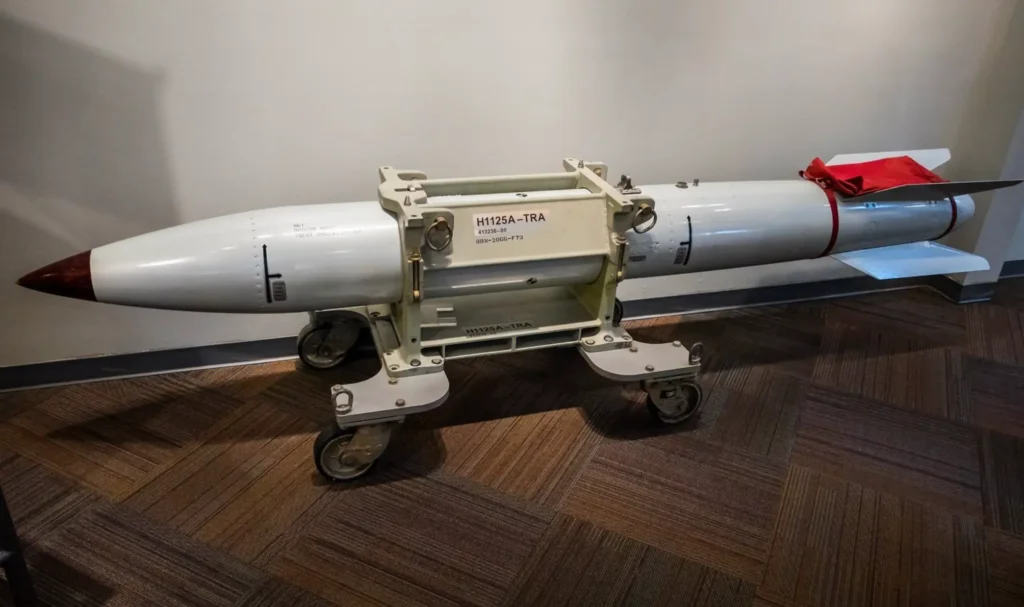
The B61 isn’t just any bomb. It’s a nuclear gravity bomb designed for both precision and adaptability. From its early Cold War origins to today’s high-tech battlefields, it has managed to stay relevant by evolving with the times. We’re talking about a weapon that can adjust its explosive power—ranging from a small 0.3 kilotons to a massive 360 kilotons. That means it can be used for tactical missions or as part of strategic deterrence. Pretty wild, right?
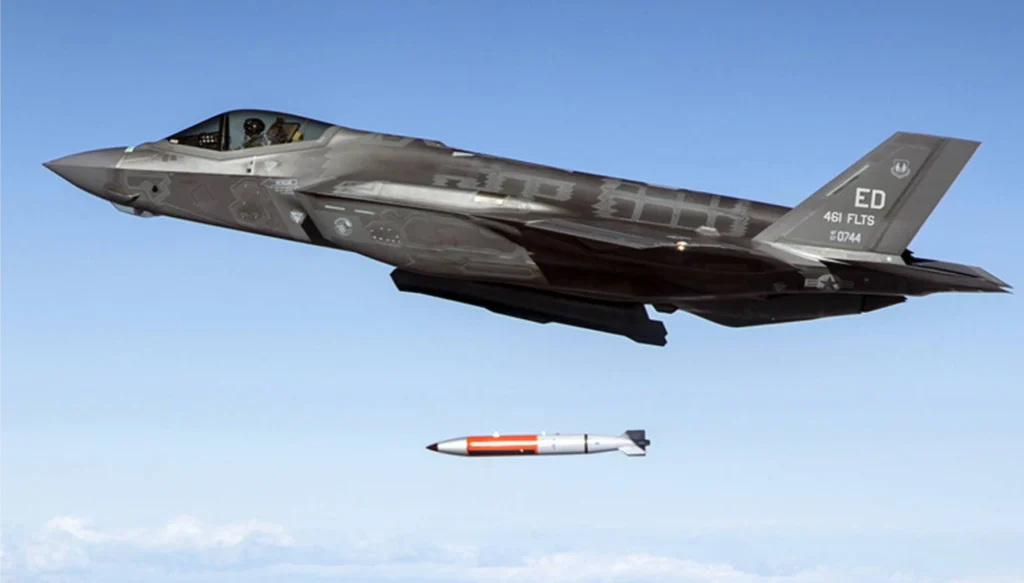
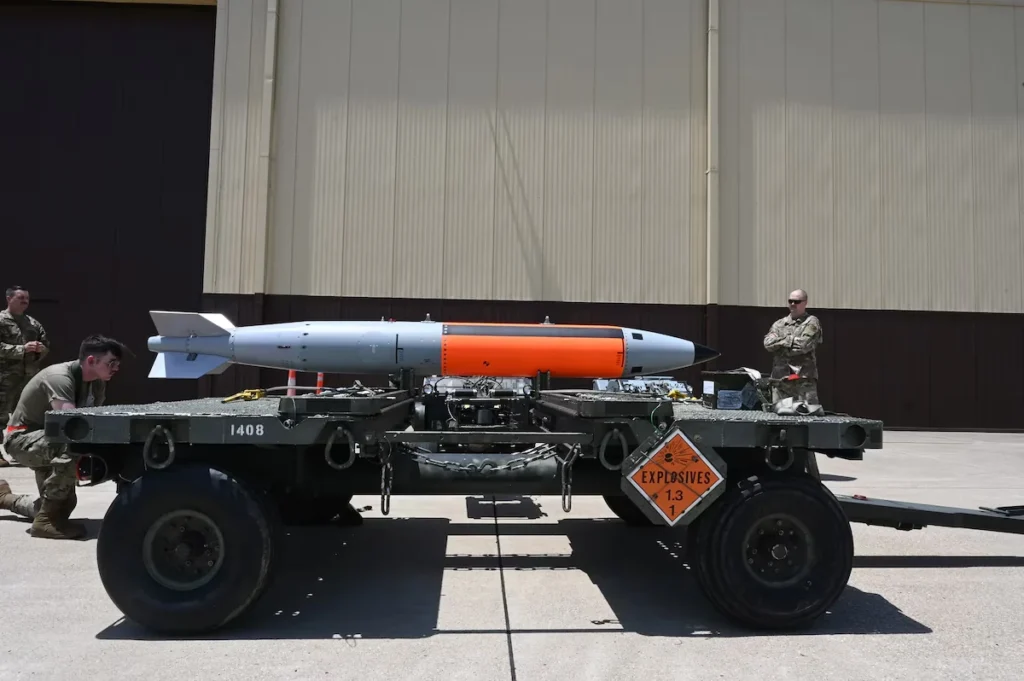
Weighing in at about 700 pounds and roughly 11 feet long, the B61 bomb can be dropped from modern aircraft like the F-35 or the stealthy B-2 Spirit. Unlike long-range missiles, it’s air-delivered, giving it more flexibility in deployment—especially in Europe, where it’s stationed as part of NATO’s nuclear sharing program.
What makes the B61 especially interesting is how it keeps getting modern upgrades. The newer B61-12 model features improved accuracy, digital guidance systems, and safety enhancements. Even more recently, the U.S. has introduced the B61-13, a more powerful variant that adds strategic firepower without needing to build new types of bombs from scratch.
So, why should you care? Because this bomb isn’t just sitting in storage—it’s an active part of America’s nuclear defense strategy. As global tensions rise, especially with countries like Russia and China, the B61 remains at the center of military planning and political debate.
In this post, we’ll break down the bomb’s history, technical features, modern upgrades, controversies, and what its future looks like. Buckle up—this isn’t just about bombs, it’s about global power, politics, and the weapons still shaping our world today.
The B61 nuclear bomb has a long and fascinating history that begins in the heat of the Cold War. Developed by the Los Alamos National Laboratory in the early 1960s, it was created to meet a specific military need: a lightweight, versatile nuclear bomb that could be carried by fast-moving aircraft, deployed from various altitudes, and adjusted in yield depending on the mission.
The first version, known as Mod 0, entered service in 1968. It didn’t take long before more variants followed. Each version—called a “Mod”—brought new capabilities or safety features. Over time, the U.S. produced more than 3,100 B61 bombs across 13 different modifications. Many of the early versions have since been retired, but several remain in active service or storage.
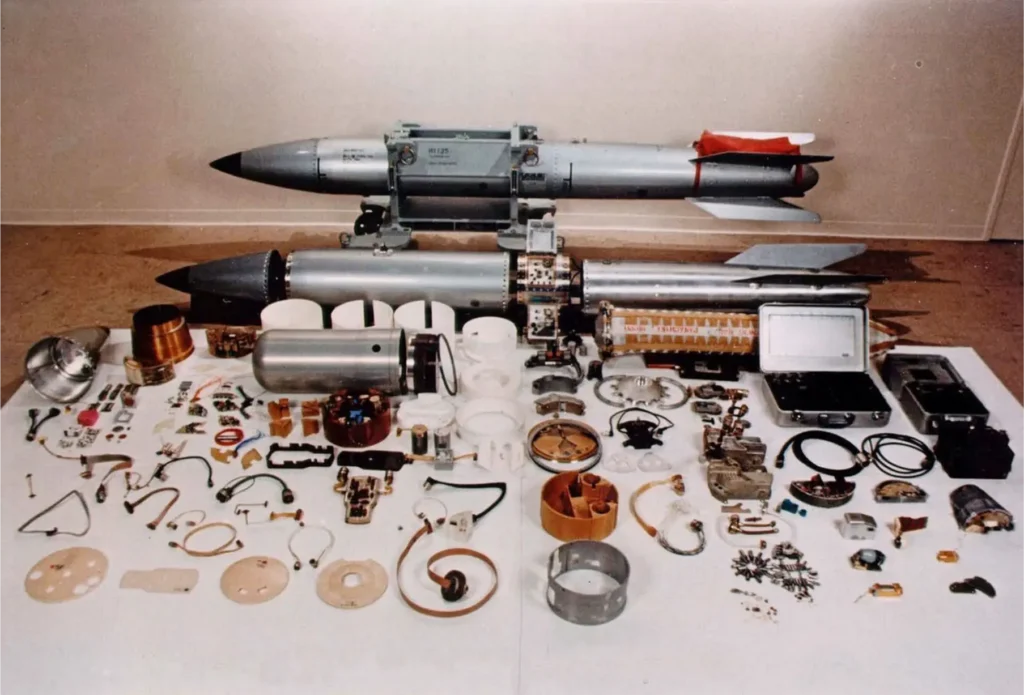
The early B61s were designed for strategic missions, like striking hardened enemy targets deep within Soviet territory. But as battlefield strategy evolved, so did the role of the B61. Newer variants were adapted for tactical use, allowing lower-yield detonations that could be used in regional conflicts or battlefield scenarios—without triggering a full-scale nuclear war.
One notable milestone came with the development of the B61-11, an earth-penetrating bomb introduced in the late 1990s. Unlike previous gravity bombs, this version could burrow underground before detonating, making it more effective against fortified bunkers or underground missile silos.
The modernization journey didn’t stop there. The B61-12, which began development in the 2010s, combined multiple previous versions into one highly accurate, guided bomb. This not only reduced the number of bombs needed in the arsenal but also made the B61 more adaptable to a wide range of aircraft and missions.
And just recently, the U.S. announced the B61-13—a new upgrade intended to offer more yield and precision, designed to work with advanced aircraft like the B-21 Raider.
The story of the B61 gravity bomb isn’t just about weapons development. It’s a reflection of how U.S. military doctrine has shifted, how deterrence strategies have changed, and how one nuclear weapon has managed to evolve across more than five decades of global change.
What makes the B61 nuclear bomb stand out among other weapons in the U.S. nuclear arsenal? It’s not just the raw power—it’s the precision, versatility, and modern engineering packed into a relatively compact design.
Let’s start with one of its most unique features: dial-a-yield capability. This means the B61 can be set to detonate at different explosive strengths depending on the mission. It can be as low as 0.3 kilotons or ramp up to 360 kilotons. That kind of flexibility allows military planners to choose a yield appropriate for the target—whether it’s a hardened bunker, a military base, or a tactical battlefield strike.
The B61 is also a nuclear gravity bomb, meaning it’s dropped from aircraft rather than launched like a missile. While that might sound outdated, don’t be fooled—it’s designed to work with some of the most advanced aircraft in the world, including the B-2 Spirit stealth bomber and the fifth-generation F-35 Lightning II. The upcoming B-21 Raider will also be compatible, making the B61 future-proof for decades to come.
Newer variants, particularly the B61-12, have taken things a step further. This version includes a tail-kit guidance system, turning what used to be a free-fall bomb into a precision-guided weapon. With this update, the bomb can be aimed more accurately, reducing the likelihood of collateral damage while improving its effectiveness against specific targets.
Then there’s the full fuzing option, which gives operators several detonation settings—airburst, ground impact, or delayed detonation after penetration. This means the B61 can adapt to a wide range of mission types, from targeting open-air facilities to destroying underground command centers.
Another important technical note: the bomb uses a two-stage thermonuclear design, which includes a plutonium core and a secondary fusion stage. All active models are engineered with modern safety mechanisms to prevent accidental detonation, even under extreme conditions like a crash or fire.
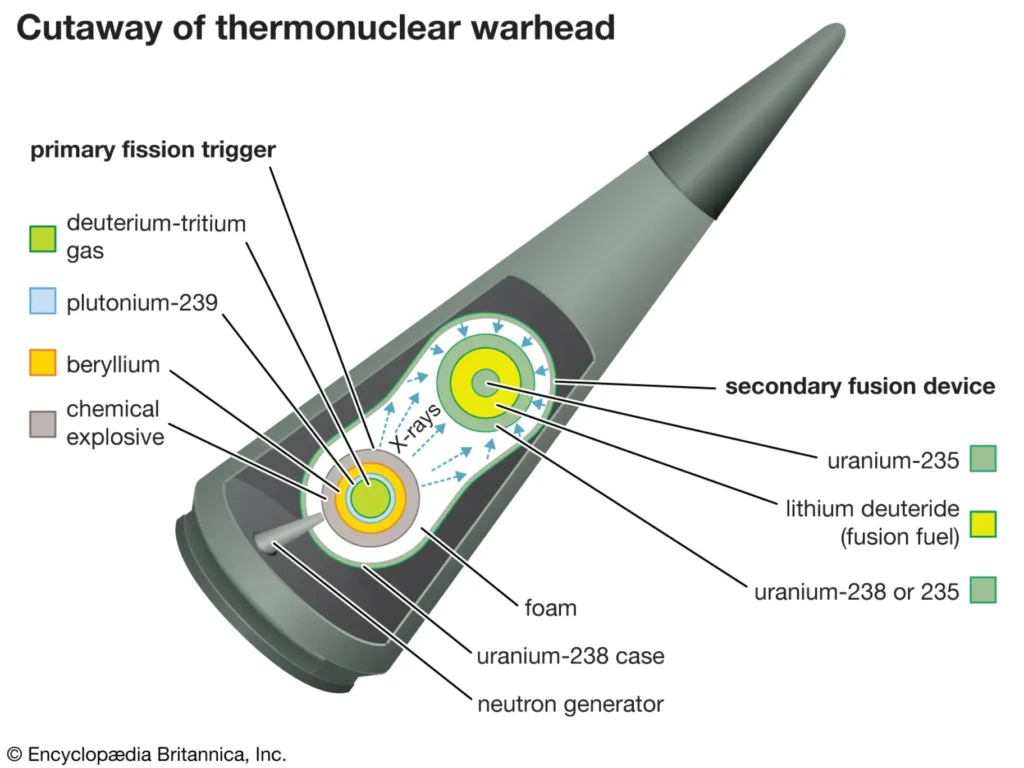
In short, the B61 bomb isn’t just powerful—it’s smart. Its combination of adjustable yield, precision delivery, and multi-mode detonation makes it one of the most advanced nuclear gravity bombs ever built. And that’s exactly why it’s still in use today.
Over the years, the U.S. has invested heavily in keeping the B61 nuclear bomb modern, safe, and ready for current and future threats. These efforts are part of what’s known as the Life Extension Program (LEP)—a long-term plan to upgrade existing nuclear weapons instead of designing new ones from scratch. For the B61, modernization has meant not just better parts, but smarter functionality, improved accuracy, and expanded mission flexibility.
The most significant upgrade to date is the B61-12, which merges several older B61 variants into a single, precision-guided bomb. It features a digital tail-kit guidance system developed by Boeing, giving it the kind of accuracy normally reserved for conventional smart bombs. With this new system, pilots can strike targets with pinpoint precision, lowering the risk of civilian casualties and reducing the need for high-yield detonations.
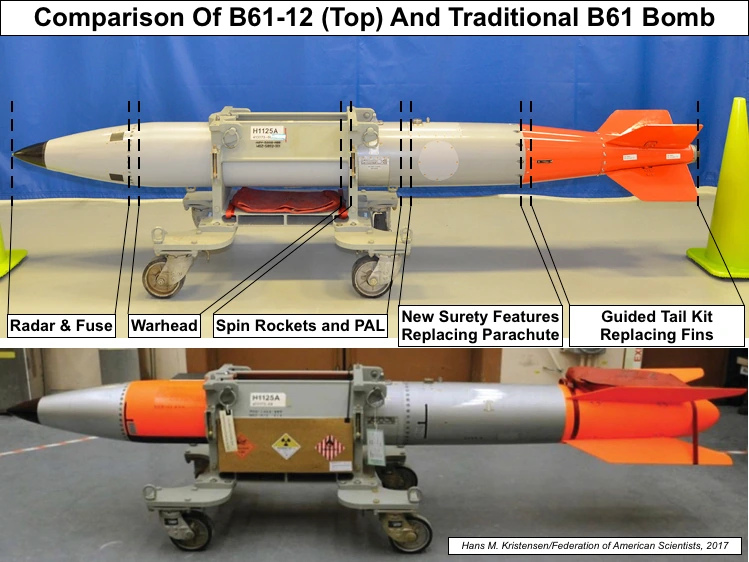
The B61-12 also includes updated safety features and more reliable electronic components. The idea is simple: increase performance while lowering maintenance needs and logistical complexity. By replacing multiple aging versions with one highly capable design, the U.S. not only modernizes its nuclear stockpile but also streamlines it.
But modernization hasn’t stopped there. In 2023, the Department of Defense announced a new version—the B61-13. Unlike the B61-12, which had a maximum yield of about 50 kilotons, the B61-13 boosts that yield up to an estimated 360 kilotons. That’s comparable to the much larger B83 bomb, which is being phased out. In essence, the B61-13 is designed to fill the gap, offering high-yield strategic power in a more compact and flexible form.
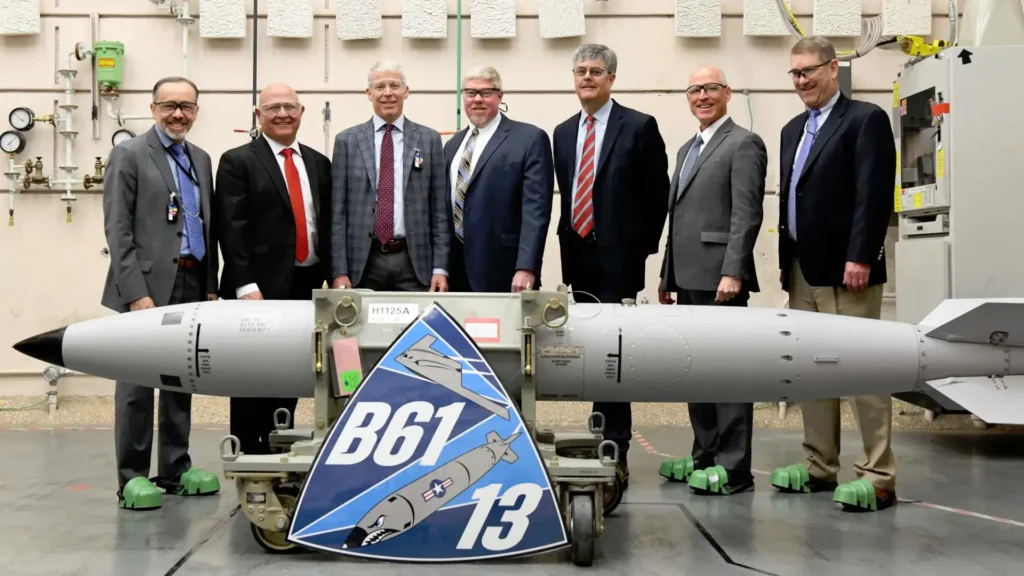
The B61-13 is expected to be compatible with modern aircraft like the B-2 and B-21 bombers and may even see deployment in NATO territories if deemed necessary. The Air Force and the National Nuclear Security Administration (NNSA) recently announced that the first B61-13 unit was assembled ahead of schedule—signaling both urgency and capability.
So why does this matter? Because modernization isn’t just about staying current—it’s about ensuring the U.S. maintains credible deterrence in a world where nuclear threats are once again on the rise.
One of the most unique aspects of the B61 nuclear bomb is where it’s deployed—and who has access to it. While the U.S. owns and controls the B61, several of these bombs are actually stored at military bases across Europe under NATO’s nuclear sharing arrangement. This deployment strategy has made the B61 not just a weapon, but a central piece of geopolitical signaling between allies and adversaries alike.
As of current estimates, around 100 B61 bombs are stationed at six NATO bases across five countries: Belgium, Germany, Italy, the Netherlands, and Turkey. These bombs are housed in hardened bunkers and can be loaded onto NATO-compatible aircraft, such as the F-16 and the Tornado.
In some countries, like the Netherlands and Germany, dual-capable aircraft operated by local pilots are trained for nuclear delivery missions, though actual use of the weapons would still require U.S. authorization.
This setup is more than just strategic logistics—it’s political. By stationing B61 bombs in Europe, the U.S. demonstrates its nuclear commitment to NATO allies. It’s a tangible assurance that if deterrence fails, the alliance has options. At the same time, it acts as a deterrent to potential adversaries, signaling that any aggression could quickly escalate to a nuclear response involving multiple nations.
In recent years, there have been reports suggesting the return of B61 bombs to the United Kingdom, specifically to RAF Lakenheath. If confirmed, this would mark the first time since 2008 that U.S. nuclear weapons were stationed on British soil—another indicator of rising tensions with Russia and a shift in European defense posture.
It’s also worth noting that the B61 gravity bomb remains the only U.S. nuclear weapon currently deployed overseas. That status adds to its strategic weight and explains why it has remained a priority for modernization. As NATO expands its defense commitments and member nations upgrade their aircraft to F-35s—which are certified to carry the B61-12—the bomb’s integration into alliance strategy is only set to deepen.
In short, the B61 bomb isn’t just a U.S. asset—it’s a NATO cornerstone, embedded in the alliance’s very approach to nuclear deterrence.
While the B61 nuclear bomb has been hailed for its adaptability and enduring value, it’s also at the center of major policy debates and growing controversy—both within the U.S. and among its allies. For a weapon designed in the Cold War, the question now is less about capability and more about consequence.
One of the biggest points of contention is the sheer cost of the bomb’s modernization. The B61-12 Life Extension Program alone is estimated to exceed $10 billion, making it one of the most expensive nuclear bomb upgrades in U.S. history. Critics argue that spending billions to upgrade a weapon that may never be used is wasteful, especially when those funds could be redirected toward conventional defense or domestic needs.
Then there’s the moral and legal angle. Organizations like the International Campaign to Abolish Nuclear Weapons (ICAN) have raised alarms about the humanitarian impact of using even a low-yield nuclear bomb. A 0.3-kiloton strike might sound “small” in nuclear terms, but in reality, it could still devastate a city center or kill tens of thousands depending on the location. Legal scholars have also questioned whether any use of the B61 could comply with international humanitarian law, especially if deployed in populated areas.
Deployment in Europe adds more complexity. Public opinion in host nations like Germany and Belgium is often skeptical—or outright opposed—to the presence of U.S. nuclear weapons on their soil. Protests at airbases like Büchel in Germany are common, and political parties in several countries have called for withdrawal of the bombs altogether. That puts NATO in a tough spot: how do you maintain a united nuclear posture when some members want the weapons gone?
The recent announcement of the B61-13, with its high yield and modern guidance, stirred further debate. Supporters say it’s necessary to deter emerging threats from Russia or a nuclear-armed China. Critics see it as a step backward—a reinforcement of Cold War-era thinking that risks fueling a new arms race.
In short, the B61 gravity bomb isn’t just a weapon—it’s a symbol. A symbol of security to some, a dangerous provocation to others. As nuclear policy continues to evolve, the future of the B61 will remain at the heart of that conversation.
The B61 nuclear bomb isn’t just a relic of the Cold War—it’s a living, evolving part of today’s global defense strategy. From its early days as a basic free-fall bomb to its current form as a precision-guided, variable-yield weapon, the B61 has proven its adaptability across decades of technological change and shifting geopolitical realities.
Whether deployed in Europe as part of NATO’s deterrence strategy, loaded onto cutting-edge stealth bombers, or undergoing its latest upgrade in the form of the B61-13, this nuclear gravity bomb remains a critical tool in the U.S. arsenal. Its ability to serve both tactical and strategic missions makes it uniquely valuable, especially in an age where nuclear threats are no longer theoretical but part of real-world conflict planning.
But with that role comes responsibility—and debate. The modernization of the B61 brings up hard questions about cost, ethics, and global security. Some see it as necessary insurance; others view it as a step toward more usable nuclear options that could lower the threshold for war.
Either way, one thing is certain: the world hasn’t outgrown the B61. If anything, the weapon’s continued relevance proves how enduring and adaptable nuclear strategy must be in an unpredictable world. Whether you see it as a protector of peace or a dangerous provocation, the B61 bomb remains one of the most consequential pieces of hardware ever built.