Follow Us:

Follow Us:

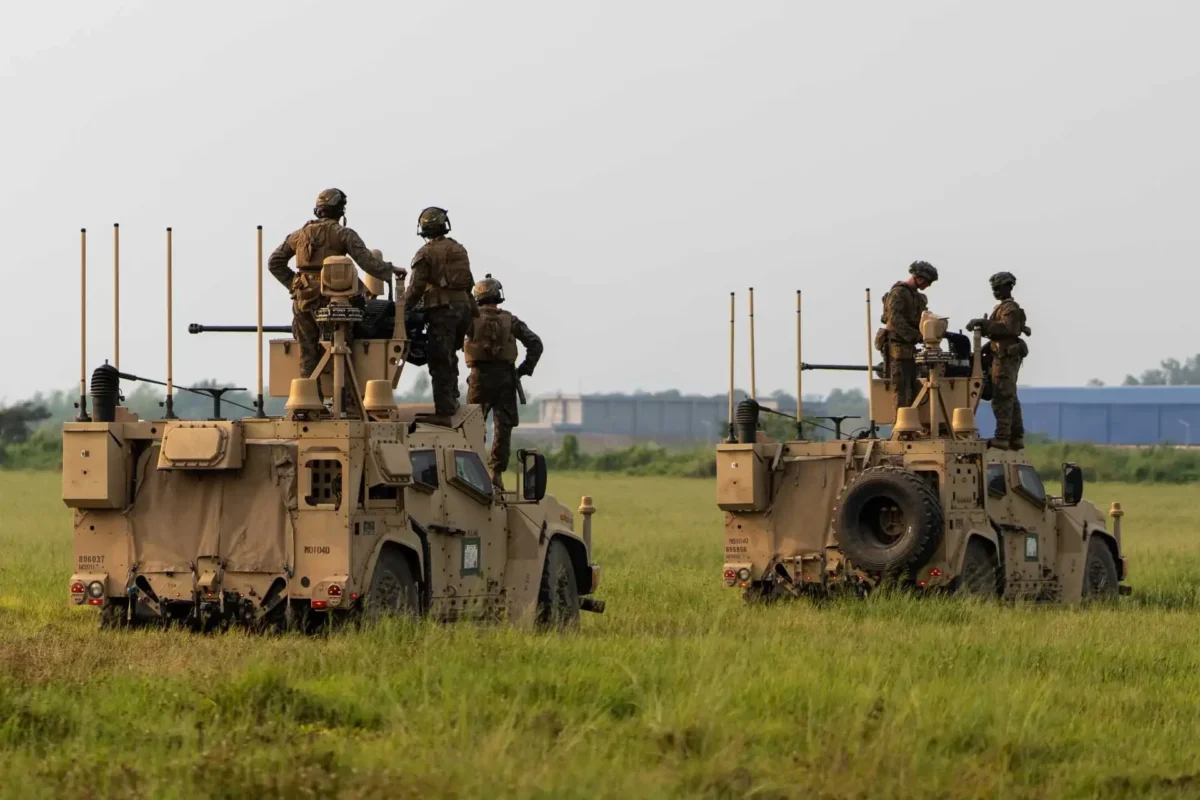
Defense Feeds, Quantico – The MADIS counter-drone system is entering a new phase of modernization as the U.S. Marine Corps integrates autonomous ground vehicles to strengthen protection against increasingly sophisticated unmanned aerial threats. The initiative reflects the Corps’ effort to improve mobile short-range air defense while reducing risks to personnel operating in highly contested environments.
The upgrade comes as drones have become one of the most significant battlefield challenges in modern warfare. Recent conflicts have demonstrated that low-cost unmanned aircraft can threaten maneuver forces, logistics hubs and command posts, prompting militaries to invest heavily in layered counter-UAS capabilities.
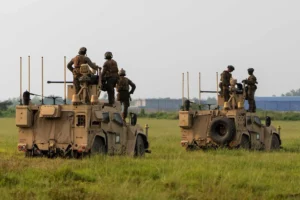
The MADIS counter-drone system has already become a key component of the Marine Corps’ Ground-Based Air Defense modernization strategy. Mounted on tactical vehicles, MADIS combines radar, electro-optical sensors, electronic warfare systems and kinetic weapons to detect, track and defeat a wide range of unmanned aerial threats.
The latest modernization effort introduces autonomous ground vehicles capable of operating alongside Marine formations while carrying counter-drone equipment. These unmanned platforms can extend surveillance coverage, increase operational flexibility and reduce the need to expose personnel in high-risk areas.
By pairing autonomous vehicles with existing MADIS capabilities, the Marine Corps aims to create a more distributed and resilient air defense network. The approach supports Expeditionary Advanced Base Operations (EABO), where small, dispersed units must remain mobile while defending against persistent aerial surveillance and attack.
The integration also reflects a broader shift toward human-machine teaming, allowing autonomous systems to perform supporting roles while Marines retain control over critical operational decisions.
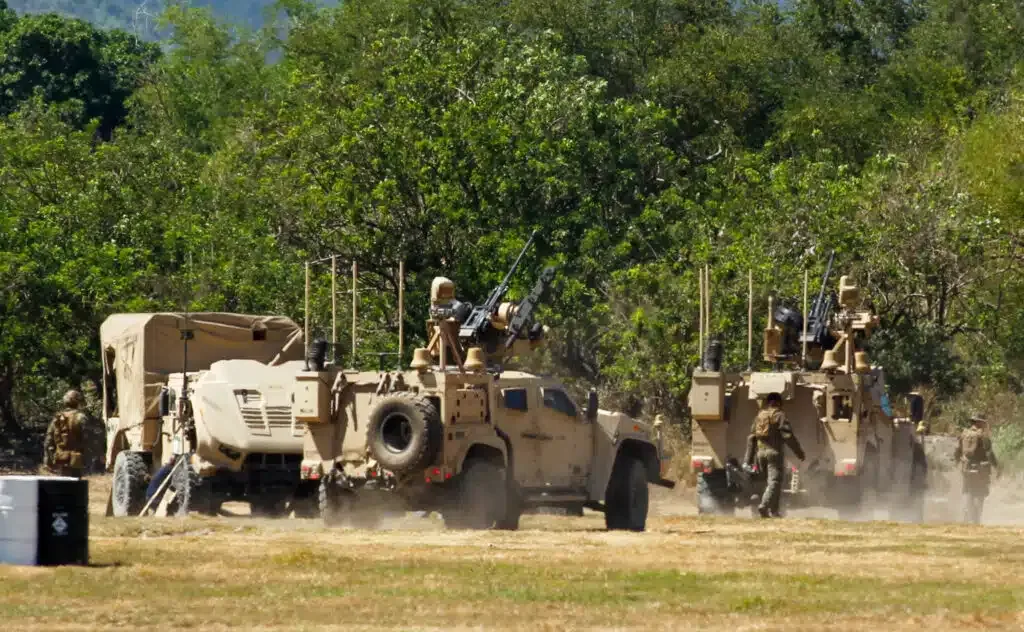
A major advantage of the MADIS counter-drone system modernization is the ability to deploy autonomous vehicles as forward sensors or mobile defensive nodes. These platforms can move independently across challenging terrain while supporting reconnaissance and air defense missions.
The autonomous vehicles can carry radar systems, electronic warfare payloads and other mission equipment that contribute to early detection of hostile drones. Extending sensor coverage gives operators additional time to identify threats and coordinate defensive responses.
Modern counter-drone operations increasingly require multiple layers of protection. Electronic warfare can disrupt drone communications, while kinetic systems provide a hard-kill option against aircraft that continue approaching defended positions. Integrating autonomous platforms into this architecture improves flexibility and expands the area that can be monitored.
The mobility of these vehicles is particularly valuable for Marine expeditionary forces, which are expected to operate from dispersed locations with limited infrastructure. Autonomous systems can help maintain continuous surveillance without placing additional demands on personnel.
As unmanned threats continue evolving, distributed and networked counter-UAS solutions are becoming an increasingly important element of battlefield survivability.
The MADIS counter-drone system modernization underscores the Marine Corps’ growing emphasis on adapting to an operational environment where drones are expected to be present throughout every phase of combat. Protecting maneuver forces now requires more than traditional short-range air defense systems capable of engaging helicopters and fixed-wing aircraft.
The integration of autonomous ground vehicles also aligns with the Pentagon’s broader strategy of incorporating autonomous technologies into future force structures. Unmanned platforms can increase operational tempo, improve situational awareness and reduce risk to personnel while supporting distributed military operations.
For the Marine Corps, enhancing MADIS supports future expeditionary missions in regions such as the Indo-Pacific, where dispersed units may need to defend themselves against persistent drone surveillance and precision strikes while operating far from established bases.
The initiative also highlights the rapid pace of counter-drone innovation. As unmanned aerial systems become more capable and widely available, military organizations are investing in flexible, layered defenses that combine sensors, electronic warfare, autonomous platforms and kinetic interceptors.
By integrating autonomous ground vehicles into the MADIS counter-drone system, the U.S. Marine Corps is taking another step toward building a more agile and survivable air defense capability designed to meet the challenges of future battlefields increasingly shaped by unmanned systems.