Follow Us:
Follow Us:

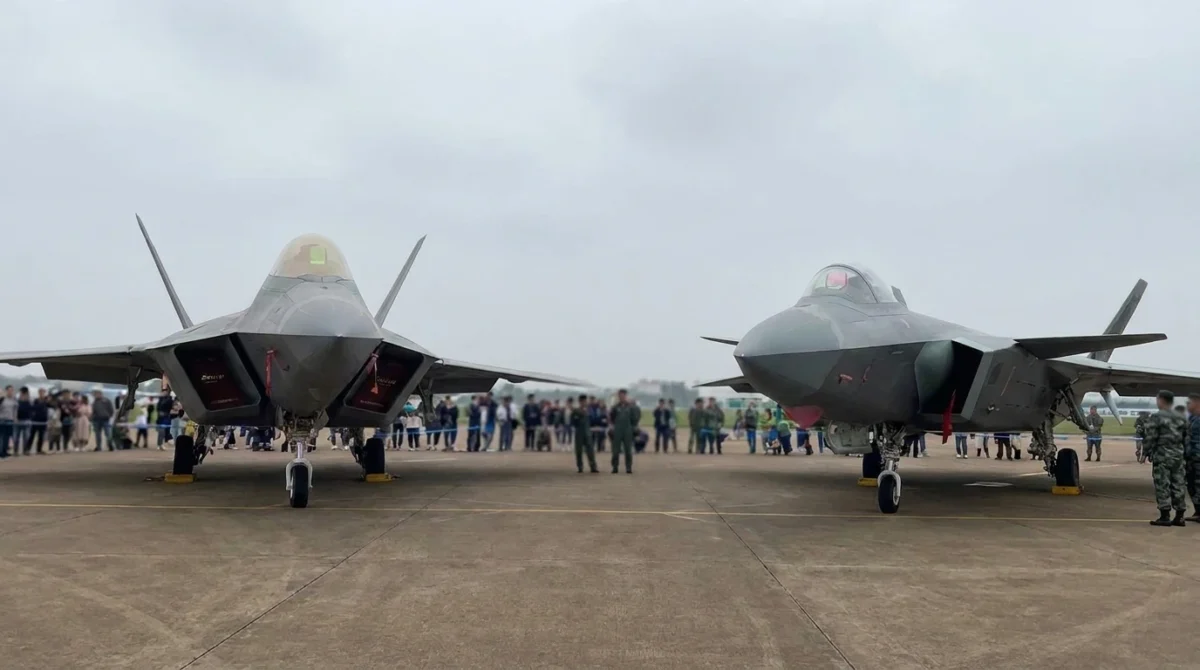
If you only compare the J-20 vs F-22 by speed, stealth, or missile range, you miss the real story. These two fighters aren’t just rivals on a spec sheet. They’re flying expressions of two different military philosophies.
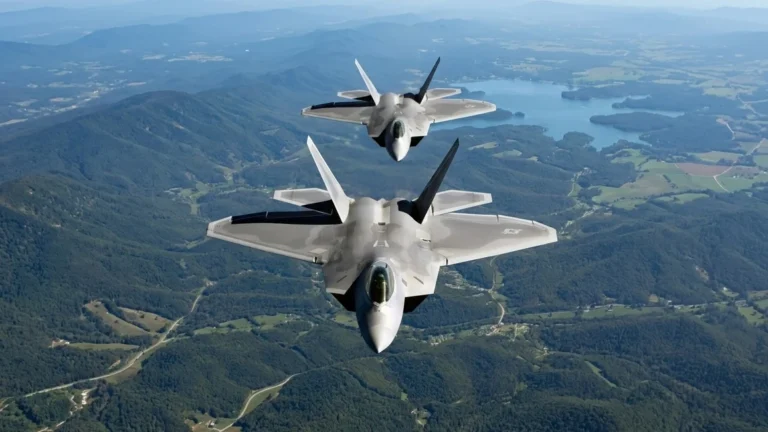
The F-22 Raptor was built around one brutal idea: dominate the air before the enemy even knows a fight has started. It’s compact, highly maneuverable, and designed for stealth-first air superiority.
The U.S. wanted an aircraft that could slip into contested airspace, detect threats early, fire first, and survive against top-tier enemy fighters. Everything about the F-22 points to that mission.
The Chengdu J-20, though, seems to answer a different strategic problem. It’s larger, carries more fuel, and is often discussed as a long-range stealth interceptor as much as a dogfighter. In a Pacific theater where distance is a weapon in its own right, that matters. A lot.
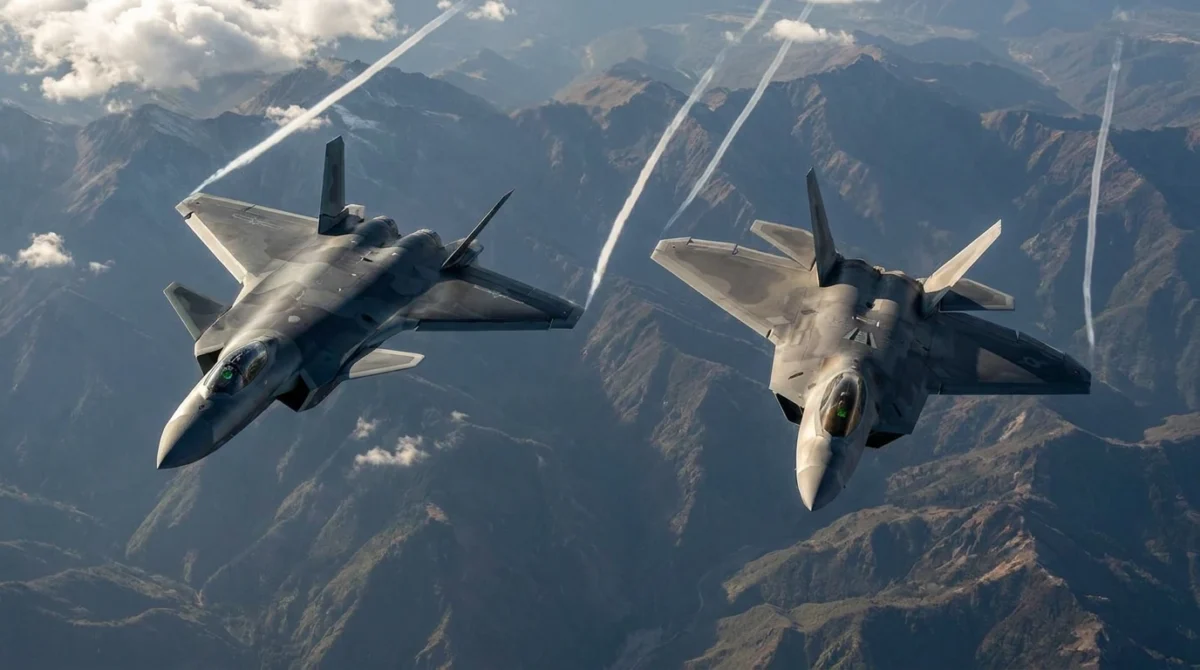
The J-20’s size, sensor layout, and reported emphasis on beyond-visual-range combat suggest a fighter meant not only to challenge enemy jets, but also to pressure tankers, surveillance aircraft, and support assets far from the Chinese mainland.
That’s why this J-20 vs F-22 comparison needs more than a “who wins?” headline. The better question is this: what kind of war was each jet designed for?
In the sections ahead, we’ll break down stealth, engines, range, sensors, missiles, and real combat scenarios, without pretending that classified performance data is sitting neatly in public view.
Let’s be honest, before most readers get into doctrine, stealth shaping, or engine maturity, they want the table. Fair enough. A J-20 vs F-22 comparison almost always starts with the hard numbers: speed, range, size, service ceiling, and weapons load. The catch is that not every number carries the same level of confidence.
The F-22 Raptor is easier to pin down because it has been in service for years and has a much larger public record. The J-20 Mighty Dragon, while no longer mysterious in the way it once was, still lives behind more uncertainty.
Chinese official disclosures are limited, and some performance figures circulating online are estimates rather than confirmed operational data. So the table below is best read as a comparison of the most commonly reported open-source figures, not a lab-certified truth sheet.
| Specification | Chengdu J-20 | F-22 Raptor |
| Country | China | United States |
| Role | Stealth air superiority / long-range interceptor | Air superiority stealth fighter |
| Length | ~20.4 m | ~18.9 m |
| Wingspan | ~13.5 m | ~13.6 m |
| Max speed | Approx. Mach 2.0 | Approx. Mach 2.25 |
| Combat radius | ~1,100–1,200+ miles often reported | ~590–850 miles often reported |
| Service ceiling | ~66,000 ft | ~65,000 ft |
| Internal weapons bay | Yes | Yes |
| Thrust vectoring | Limited / evolving by variant | Yes |
The headline from the table is simple: the J-20 is larger and longer-ranged, while the F-22 is generally faster, more agile, and more mature as a combat system. But those raw stats only start the argument, they don’t settle it.
If you strip the J-20 vs F-22 debate down to one question, this is probably it: which jet is stealthier? And based on open-source analysis, the safer answer is still the F-22 Raptor, though that comes with a few important caveats.
The F-22 was built from the outset as a stealth-first air dominance fighter. Its planform alignment, internal weapons bays, serpentine inlets, edge treatments, and radar-absorbent materials all point to a design optimized to minimize detection from multiple angles, not just head-on.
In plain English: the F-22 is widely believed to have stronger all-aspect stealth, which matters once a fight becomes messy and aircraft aren’t politely facing each other nose-to-nose.
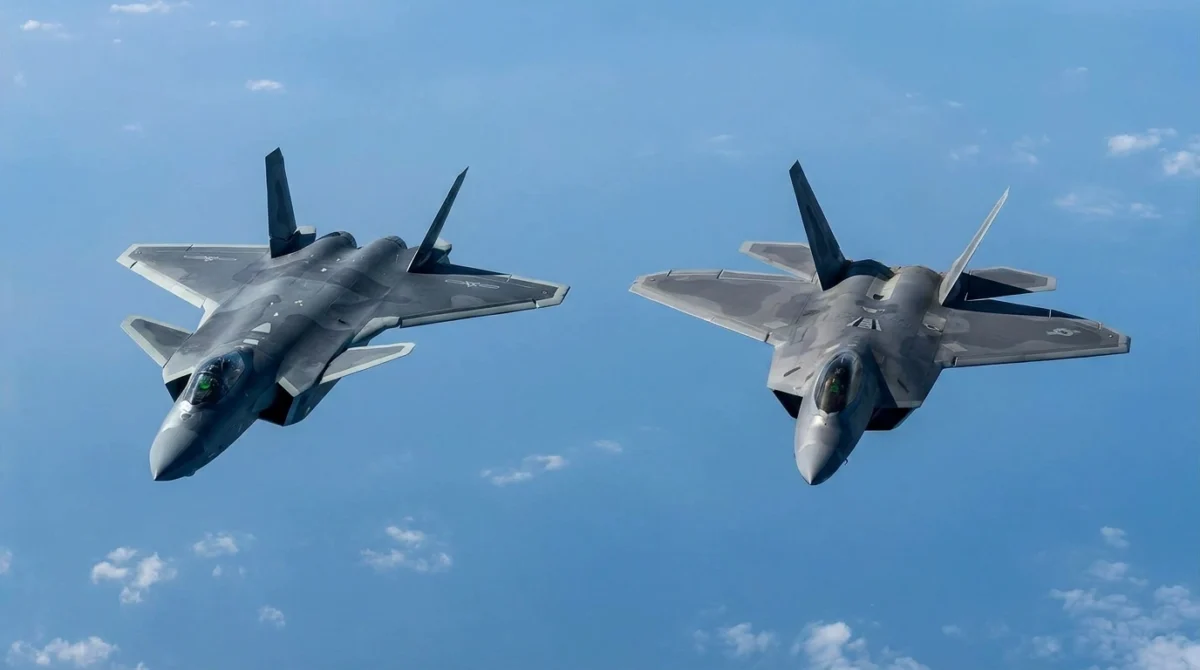
The J-20 takes a more debated path. From the front, it appears to be a serious low-observable aircraft. Its shaping, canted surfaces, and internal weapons carriage suggest a strong effort to reduce frontal radar signature.
But the canard layout, larger airframe, and engine-related questions have fueled years of discussion about whether its side and rear signatures are as refined as those of the F-22. Publicly, no one outside classified circles can settle that with confidence.
Still, stealth isn’t a beauty contest; it’s a tradeoff machine. The J-20 vs F-22 stealth comparison may reflect different priorities rather than one aircraft “failing” the stealth test.
The F-22 seems optimized for maximum survivability in air-to-air combat. The J-20 appears to balance stealth with range, payload, and long-range mission needs.
That’s not the same thing as inferior. But it is different.
This is the part of the J-20 vs F-22 comparison where the F-22 Raptor still carries a pretty intimidating résumé. Not because speed alone wins air combat, it doesn’t, but because speed, sustained energy, and maneuverability shape the kind of fight a pilot can survive.
The F-22 is generally credited with a top speed around Mach 2.25, along with one of its signature advantages: supercruise, the ability to fly at supersonic speed without afterburners. That matters more than it sounds.
Supercruise helps the aircraft cover ground faster, conserve fuel compared with afterburning flight, and launch missiles with more energy behind them. It’s one of those features that quietly improves several parts of the kill chain at once.
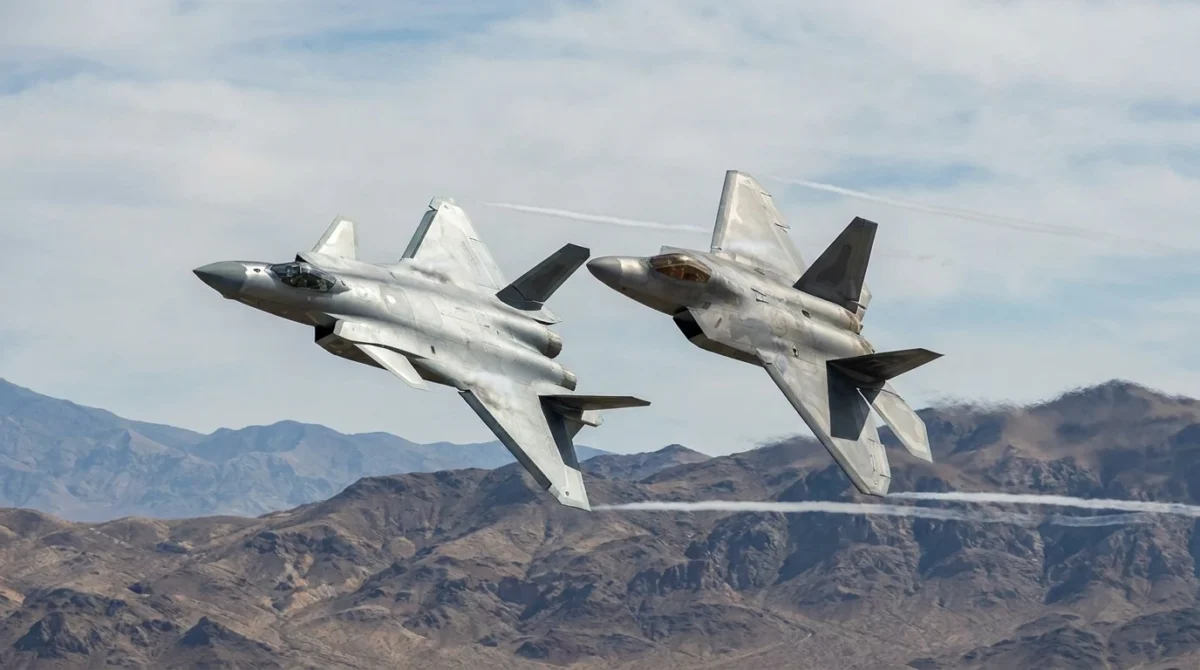
Then there’s maneuverability. The F-22’s thrust-vectoring nozzles and aerodynamic design give it a reputation for exceptional agility, especially in close-range engagements. In a visual-range fight, rare, but still possible, the Raptor is widely seen as the more dangerous knife fighter.
Read also: Su-57 vs F-22 Battle Analysis: Which Fighter Has the Edge?
The J-20, by contrast, has never been framed publicly as a pure dogfight specialist. It’s fast, yes, and newer variants may continue improving performance, but open-source analysis generally treats the J-20 as a platform built for beyond-visual-range combat, long patrols, and strategic reach, not for winning airshow-style turning contests.
That distinction matters because people often ask the wrong question. In F-22 vs J-20, the better question may not be “Who wins the dogfight?” It may be “Would the J-20 even choose to fight that way if it didn’t have to?”
If the F-22 owns the conversation around agility and stealth maturity, the J-20 pushes back hardest in one area: range. And in a serious J-20 vs F-22 comparison, that may be one of the most strategically important differences on the page.
Open-source estimates usually give the Chengdu J-20 a much longer combat radius than the F-22 Raptor. Exact figures vary depending on source and assumptions, but the broad pattern stays consistent: the J-20 is bigger, carries more internal fuel, and appears built for longer missions over larger distances. That matters in the Indo-Pacific, where geography is not background scenery, it’s a combat variable.
Bases are spread out. Tankers become lifelines. A few hundred extra miles can change who gets to stay on station, who needs support, and who has to turn back first.
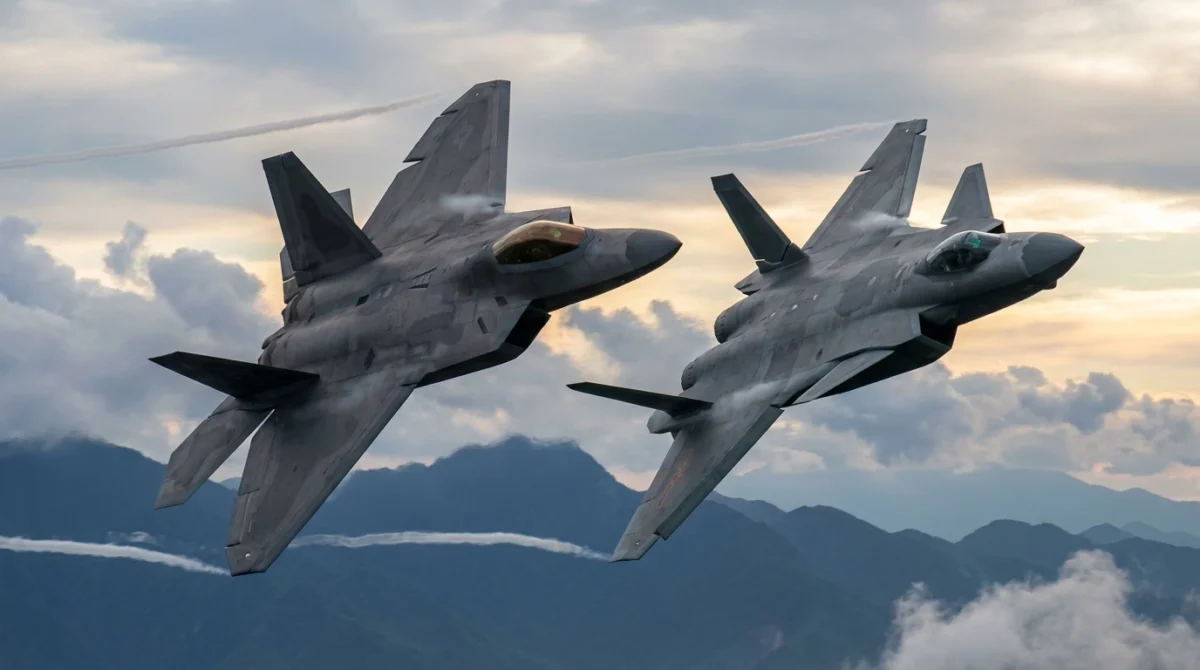
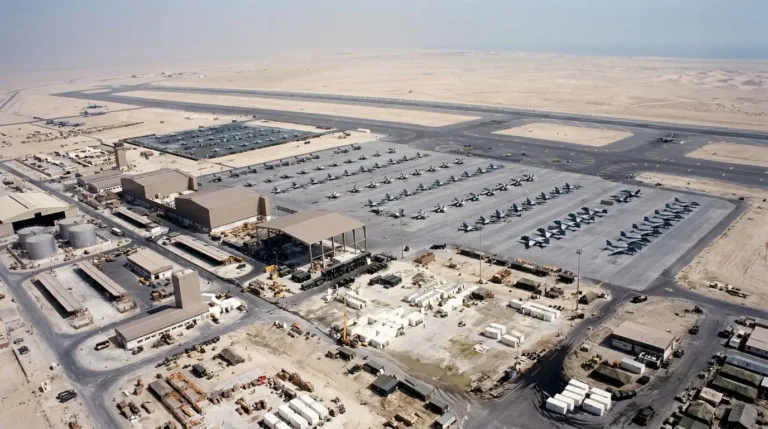
The F-22’s shorter legs don’t make it weak, but they do make it more dependent on the broader U.S. support ecosystem. Tankers, forward basing, and airborne command assets all help offset the aircraft’s range limits. That system is powerful when it’s intact. It’s also exactly the sort of system an adversary would try to disrupt.
This is where the J-20 vs F-22 discussion stops being about airplane fandom and starts sounding like strategy. A long-range fighter isn’t just a fighter with extra gas. It can patrol farther, threaten support aircraft at greater distances, and complicate the enemy’s operating picture in ways that don’t show up in a top-speed chart.
Range doesn’t automatically win fights. But it absolutely changes the map they’re fought on.
A stealth fighter doesn’t win because it looks sleek in a hangar. It wins because it sees first, understands first, and acts first. That’s why the sensor battle is one of the most important parts of the J-20 vs F-22 debate, and also one of the hardest to judge from public information.
The F-22 Raptor is built around a highly respected sensor and electronic warfare package. Its AN/APG-77 AESA radar is often highlighted, but radar is only part of the story.
The aircraft’s passive detection systems, electronic support measures, and sensor fusion are what turn raw inputs into something tactically useful. In a clean summary, the F-22 isn’t just good at spotting threats; it’s good at building a coherent picture of the fight while staying hard to find itself.
The J-20 has attracted increasing attention here because China appears to have invested heavily in sensors and networking rather than simply chasing aerodynamic performance.
Open-source analysis often points to its IRST/electro-optical systems, large nose section for radar integration, and a mission concept that may rely on finding targets, especially high-value support aircraft, at long range. That’s a different emphasis, but not a trivial one.
And this is where the J-20 vs F-22 conversation gets slippery. The public knows far less about real sensor performance than it does about dimensions or top speed. Radar power, detection range against stealth targets, electronic attack capability, data-link resilience, those are the details countries guard like state secrets, because they are.
So the honest answer is a little unsatisfying: the jet with the better “eyes” may decide the fight, and outsiders can only estimate how sharp those eyes really are.
If you grew up on old fighter-jet mythology, it’s tempting to imagine J-20 vs F-22 ending in a close-range turning fight, the kind of cinematic duel where one pilot gets on the other’s tail and that’s that.
Modern air combat is much less romantic. More spreadsheet, less Top Gun. In a real engagement, the missile loadout and the quality of the targeting chain may matter more than raw turning ability.
The F-22 Raptor typically carries AIM-120 AMRAAM missiles for beyond-visual-range combat and AIM-9 Sidewinders for short-range engagements, all while preserving stealth with internal carriage.
It also has an internal 20mm cannon, which sounds old-school until you remember that redundancy matters in combat. The F-22’s weapon system is mature, deeply integrated, and backed by decades of U.S. air combat doctrine.
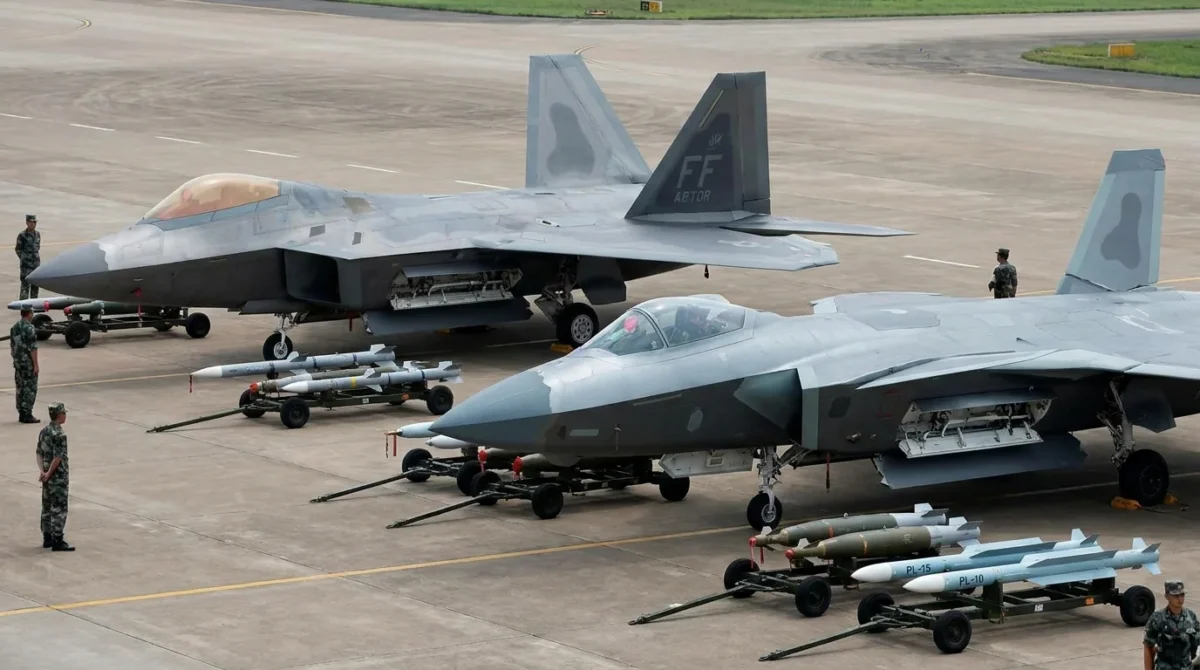
The J-20, meanwhile, is often associated with China’s PL-15 long-range air-to-air missile and short-range PL-10. The PL-15 gets so much attention because it’s tied to the J-20’s likely role as a long-range interceptor and counter-support aircraft platform.
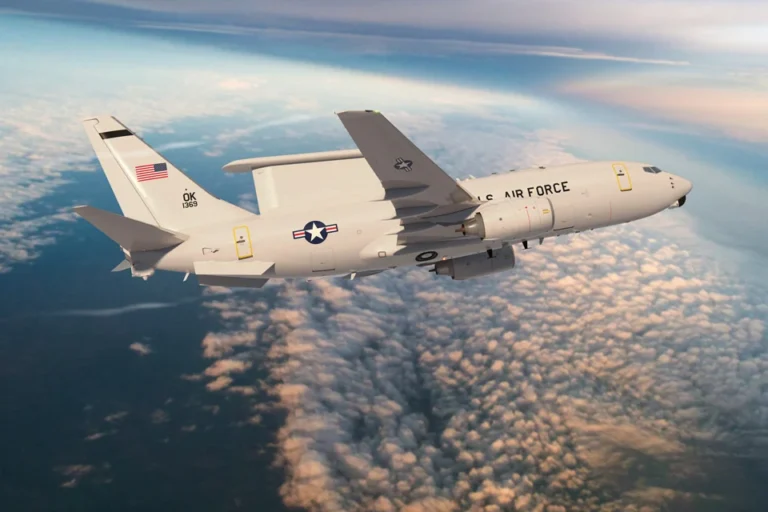
If a stealth fighter can launch a credible long-range missile at tankers, AWACS, or escorts before the opposing force fully reacts, that changes the geometry of the battle in a hurry.
So when people ask who wins F-22 vs J-20, the smarter answer is: probably the side that detects first, launches first, and supports its missiles better. A missile’s brochure range matters, sure. But so do radar tracks, off-board cueing, jamming resistance, pilot training, and whether the target even realizes it’s being hunted.
So, J-20 vs F-22. Which stealth fighter comes out on top?
If you’re looking for the cleanest open-source answer, the F-22 Raptor still looks like the more refined air-superiority machine. It has the stronger reputation for all-aspect stealth, superior maneuverability, mature supercruise performance, and a combat system shaped by years of operational use.
If the question is, Which aircraft would most analysts trust in a close-range air-dominance fight today? the F-22 probably still gets the nod.
But that doesn’t settle the larger F-22 vs J-20 debate, because the Chengdu J-20 was never interesting simply as a Chinese imitation of an American stealth fighter. Its importance lies in the way it bends the comparison. It brings longer range, a design that appears tailored to long-distance operations, and a role that may include threatening tankers, AWACS, and other support aircraft that keep Western airpower functioning.
In other words, the J-20 may be less about beating the F-22 in a textbook fighter duel and more about changing the fight around it.
That’s why the smartest takeaway is also the least dramatic one: these aircraft reflect different strategic priorities. The F-22 is still the benchmark for stealthy air dominance. The J-20 is the more revealing aircraft if you want to understand how China might try to contest the Pacific battlespace over time.
So the better question isn’t “Which jet wins?” It’s this:
In the kind of war each country expects to fight, which aircraft makes more sense?
That’s a much harder question. It’s also the one worth asking.