Follow Us:
Follow Us:

If you drew a circle around the world’s most sensitive military crossroads, chances are the Middle East would sit right in the center of it.
From the deserts of Qatar to the waters of Bahrain, a network of U.S. military installations stretches across the region like a series of interconnected outposts. Some are massive cities hidden behind security fences. Others are small, little-known facilities that rarely make headlines. Together, they form one of the most important military footprints on Earth.
The topic of US Military Bases in Middle Eastern countries often sparks debate. Supporters view these installations as essential for regional stability, counterterrorism operations, and protecting global trade routes.
Critics argue they can increase geopolitical tensions and draw the United States deeper into regional conflicts. Either way, their influence is impossible to ignore.
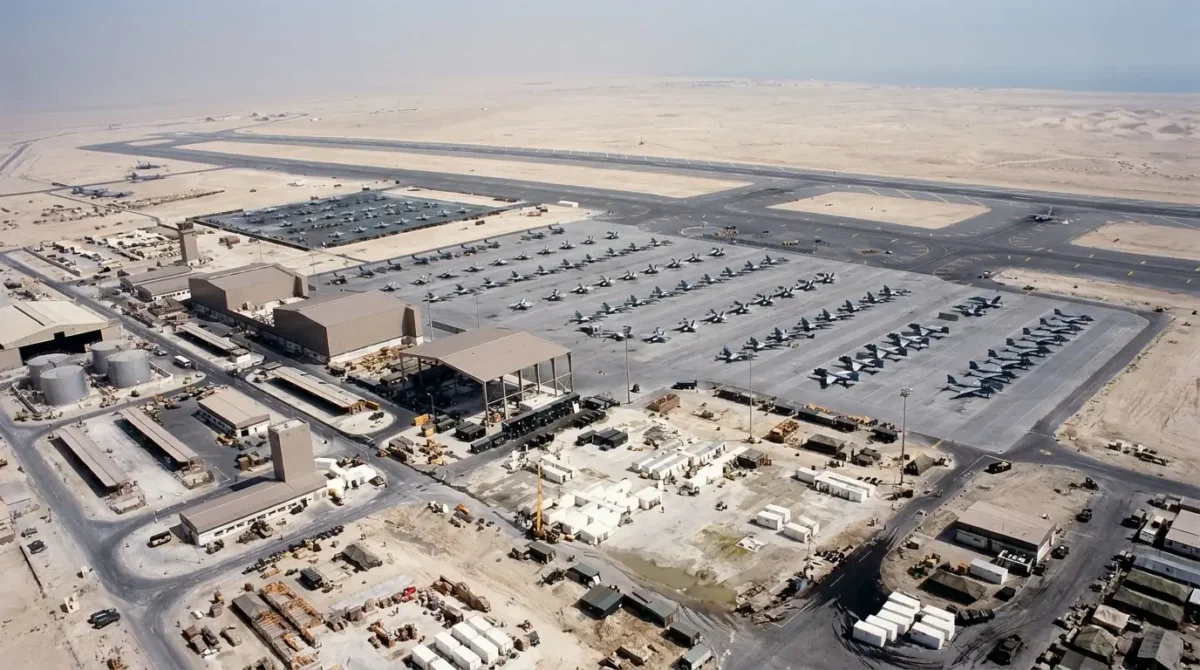
What makes these bases particularly fascinating is that their value goes far beyond military hardware. Think of them as a combination of airports, logistics centers, intelligence hubs, emergency response stations, and diplomatic tools, all rolled into one.
A fighter jet may launch from a runway in Qatar, receive support coordinated from Kuwait, and operate under command structures linked to facilities spread across several countries.
Today, the United States maintains military forces across multiple Middle Eastern nations, including Qatar, Bahrain, Kuwait, the United Arab Emirates, Saudi Arabia, Iraq, Jordan, and Syria.
Collectively, these locations support tens of thousands of personnel and provide rapid access to some of the world’s most strategically important waterways, energy corridors, and conflict zones.
In this post, you’ll discover where these bases are located, why they exist, how they operate, and which installations play the biggest role in America’s military presence in the Middle East today.
Ask ten different experts how many US military bases in Middle East countries actually exist, and you may hear ten different answers.
That’s because the word “base” can mean very different things. Some locations are sprawling installations covering thousands of acres with permanent infrastructure, while others are smaller forward operating sites used for logistics, surveillance, or temporary deployments. The result? There is no universally accepted number.
Most defense analysts estimate that the United States operates or has access to dozens of military facilities across the Middle East, ranging from major air bases and naval headquarters to radar stations and support hubs. Depending on how facilities are categorized, the figure typically falls somewhere between 20 and 50 significant sites.
The countries hosting the largest U.S. military presence include Qatar, Kuwait, Bahrain, the United Arab Emirates, Saudi Arabia, Iraq, Jordan, and Syria. Each location serves a distinct role within a broader regional strategy.
Read also: Top 5 Biggest US Military Bases: By Size, Troops & Impact
An interesting detail often overlooked: many facilities are not owned outright by the United States. Instead, they operate through defense agreements with host nations. In practical terms, this means American forces can maintain aircraft, ships, troops, and equipment while partnering closely with local governments.
So when people ask, “How many US bases in Middle East countries are there?” the most accurate answer is that the U.S. maintains a flexible network of dozens of military locations rather than a fixed collection of traditional bases. That flexibility is exactly what gives the network much of its strategic value.
Looking at a list of military installations is useful. Seeing them on a map tells a completely different story.
When you plot the major US Military Bases in Middle East countries on a map, a clear pattern emerges. They aren’t scattered randomly across the region. Instead, they form a strategic chain that connects critical waterways, air corridors, energy-producing areas, and conflict-prone zones.
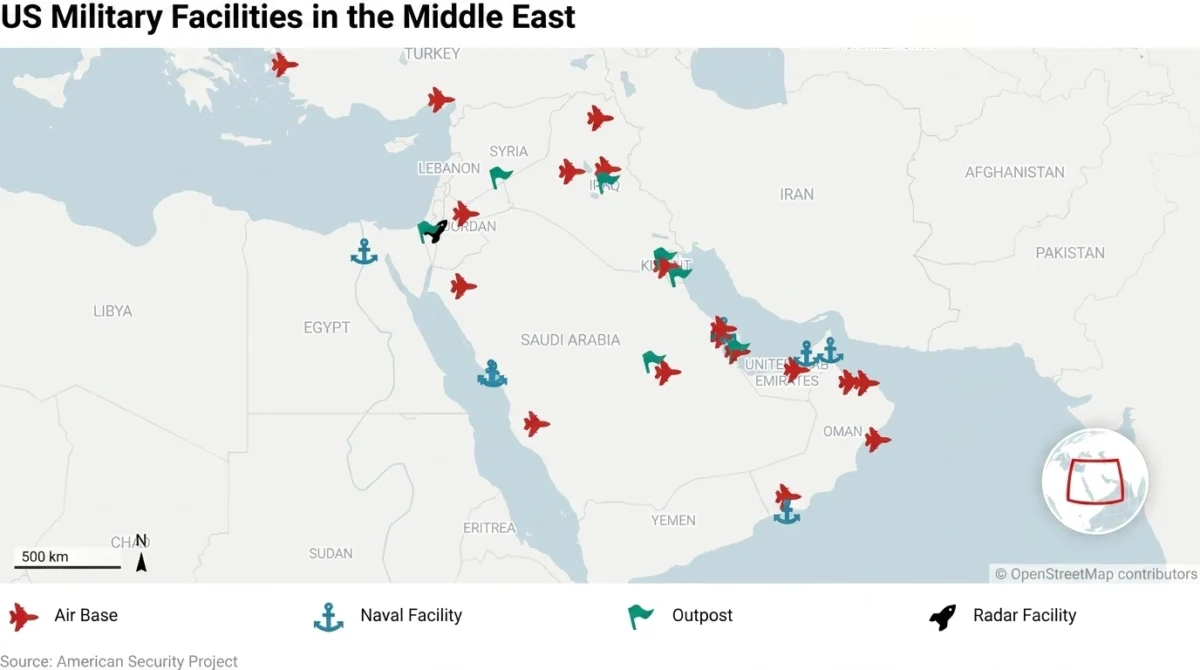
Imagine standing high above the region.
To the east, major installations in Qatar, Bahrain, Kuwait, and the United Arab Emirates sit near the Persian Gulf, one of the world’s most important maritime routes.
To the north, bases in Iraq and Syria provide access to areas where counterterrorism operations have historically been concentrated. Further west, facilities in Jordan create a bridge between the Gulf states and the Eastern Mediterranean.
| Country | Key Installation | Primary Function |
| Qatar | Al Udeid Air Base | Air operations and command center |
| Bahrain | Naval Support Activity Bahrain | U.S. Fifth Fleet headquarters |
| Kuwait | Camp Arifjan | Logistics and troop support |
| UAE | Al Dhafra Air Base | Intelligence and air missions |
| Saudi Arabia | Prince Sultan Air Base | Air defense operations |
| Iraq | Ain al-Asad Air Base | Regional military operations |
| Jordan | Muwaffaq al-Salti Air Base | Coalition air support |
| Syria | Al-Tanf Garrison | Strategic monitoring and security |
What makes this network remarkable isn’t the size of any single installation, it’s the connectivity between them. Aircraft can refuel at one location, receive intelligence from another, and coordinate missions through command centers hundreds of miles away.
In many ways, the map resembles a transportation network more than a traditional military structure. Every base acts like a node in a larger system, helping personnel, equipment, information, and resources move quickly across the region.
That’s why military planners often focus less on individual facilities and more on the overall network. The real strength of America’s military presence in the Middle East lies not in one famous base, but in how all of them work together.
Not all military installations are created equal.
Some facilities serve as modest support hubs with limited personnel. Others function almost like self-contained cities, complete with airfields, housing complexes, maintenance centers, medical facilities, and command headquarters
When discussing US Military Bases in Middle East countries, a handful of installations stand far above the rest in both size and strategic importance.
| Base | Country | Primary Role |
| Al Udeid Air Base | Qatar | Air operations and CENTCOM support |
| Camp Arifjan | Kuwait | Logistics and force deployment |
| Al Dhafra Air Base | UAE | Intelligence and air combat missions |
| NSA Bahrain | Bahrain | Naval operations and fleet command |
| Prince Sultan Air Base | Saudi Arabia | Air defense and regional deterrence |
At the top of the list sits Al Udeid Air Base in Qatar. Often described as the centerpiece of America’s regional air operations, the installation supports thousands of military personnel and hosts a vast array of aircraft. If Middle East military operations were a symphony, Al Udeid would be the conductor’s podium.
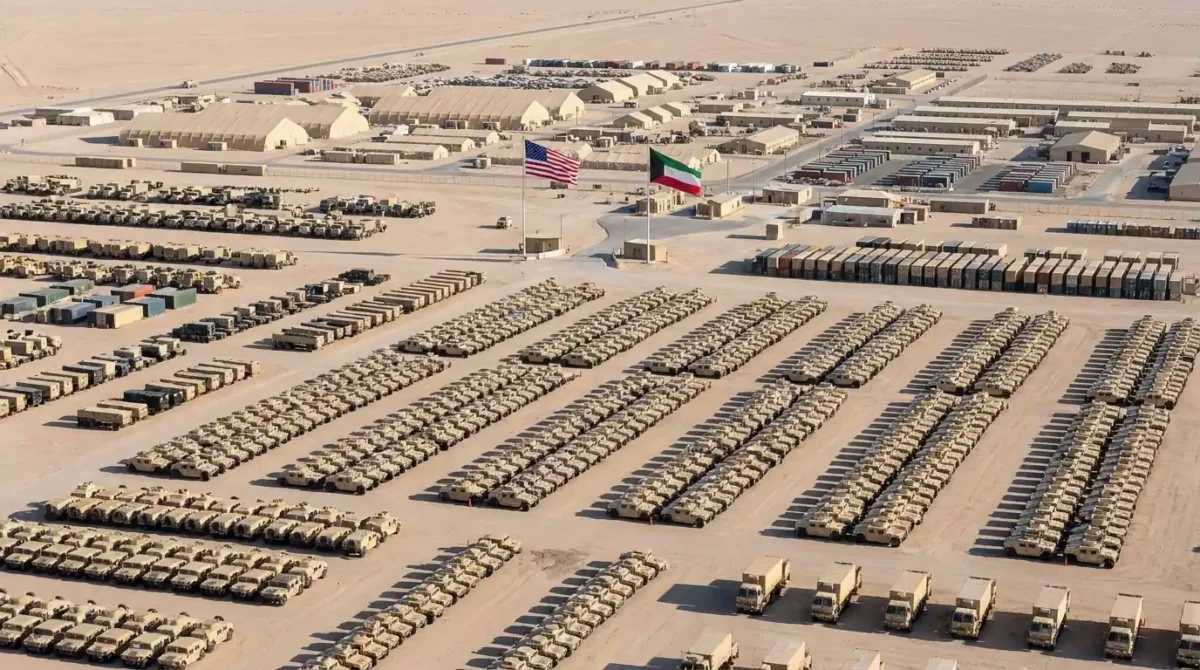
Then there’s Camp Arifjan in Kuwait. Unlike air-focused facilities, this installation specializes in logistics. Equipment, vehicles, supplies, and personnel frequently move through the base before reaching destinations across the region. It’s less glamorous than fighter jets, perhaps, but armies don’t move without logistics.
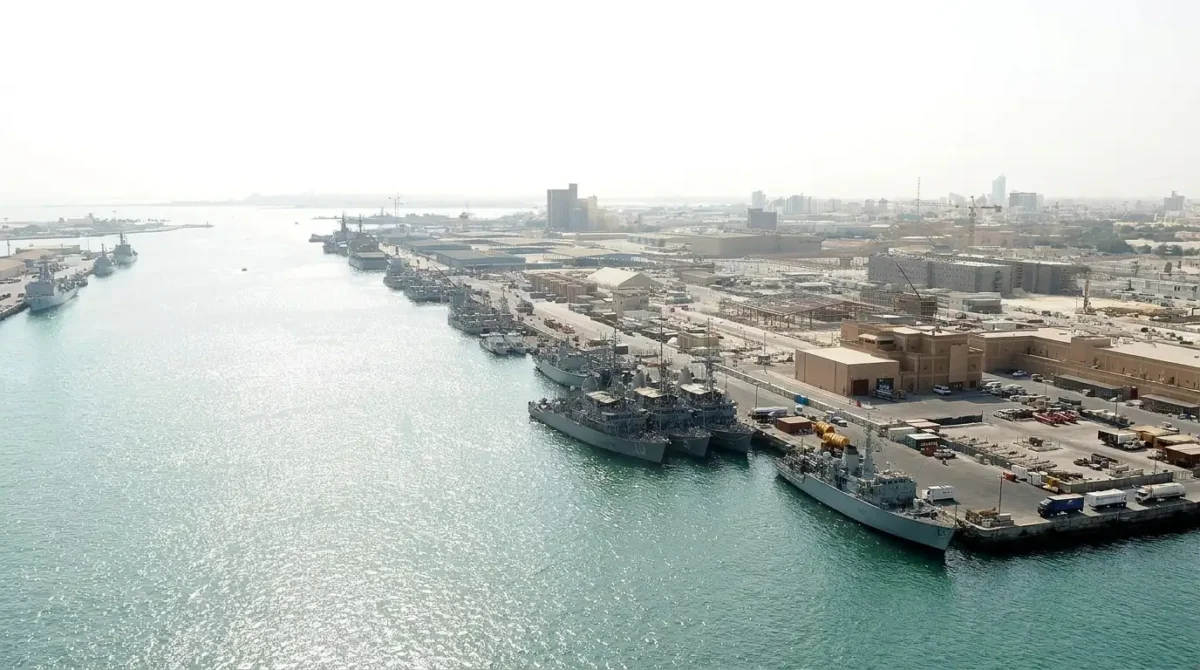
Meanwhile, Naval Support Activity Bahrain serves as the headquarters for the U.S. Fifth Fleet. Its location gives American naval forces direct access to some of the world’s busiest shipping lanes.
Every day, commercial vessels carrying oil, manufactured goods, and raw materials pass through waters monitored by forces operating from Bahrain.
What makes these bases especially important is that each performs a different function.
Together they create a military ecosystem where air power, naval presence, intelligence gathering, logistics, and rapid response capabilities all reinforce one another. Remove one piece and the network still functions. Connect them all, and the result is a remarkably resilient regional presence.
One of the biggest misconceptions about the US military presence in Middle East nations is that every host country plays the same role. In reality, each location contributes something unique to the broader network.
Think of it like a sports team. Every player is important, but not everyone plays the same position.
| Country | Notable Bases and Facilities | Strategic Role |
| Qatar | Al Udeid Air Base | Regional command and air operations |
| Kuwait | Camp Arifjan, Camp Buehring, Ali Al Salem Air Base | Logistics and force deployment |
| Bahrain | Naval Support Activity Bahrain | Maritime security and naval command |
| UAE | Al Dhafra Air Base, Jebel Ali Port access | Air power and naval support |
| Saudi Arabia | Prince Sultan Air Base | Air defense and regional deterrence |
| Iraq | Ain al-Asad Air Base, Erbil Air Base | Counterterrorism and training missions |
| Jordan | Muwaffaq al-Salti Air Base | Coalition operations and surveillance |
| Syria | Al-Tanf and other positions | Counter-ISIS operations |
| Oman | Access agreements at key ports and airfields | Logistics and transit support |
| Egypt | Strategic military cooperation facilities | Regional mobility and security cooperation |
Qatar often attracts the most attention because Al Udeid Air Base serves as one of the most important operational centers in the region. Kuwait, meanwhile, functions as a logistical backbone, moving personnel and equipment where they’re needed.
Bahrain occupies a different niche altogether. As home to the U.S. Fifth Fleet, it serves as a maritime hub overseeing operations in the Persian Gulf, Arabian Sea, and surrounding waterways.
Then there are countries such as Jordan and Oman. They may receive fewer headlines, but military planners value them for their geographic positioning and flexibility. In military strategy, location can be every bit as valuable as size.
Taken together, these host nations create a network that stretches from the Mediterranean approaches to the Gulf.
The result isn’t a collection of isolated bases. It’s an interconnected system designed to support air, land, sea, and intelligence operations across one of the world’s most strategically significant regions.
At first glance, maintaining military installations thousands of miles from American shores might seem unusual. Yet when viewed through the lens of geography, economics, and security, the logic becomes easier to understand.
The simplest answer is that US military bases in Middle East countries allow the United States to respond quickly to events in a region that has shaped global politics for decades. Distance matters. A crisis that requires days to reach can look very different from one that can be addressed within hours.
| Objective | Why It Matters |
| Counterterrorism | Supports operations against extremist groups |
| Maritime Security | Protects vital shipping routes |
| Regional Partnerships | Strengthens alliances with host nations |
| Deterrence | Discourages aggression by hostile actors |
| Rapid Response | Enables quick deployment during crises |
One often-overlooked factor is trade. Roughly a fifth of the world’s petroleum supply moves through the Strait of Hormuz at various points in time. A disruption there can ripple through energy markets from Tokyo to London to New York. Military forces positioned nearby provide a degree of stability for these critical routes.
Another reason involves partnerships. Modern military relationships are rarely one-sided. Joint exercises, intelligence sharing, and defense cooperation help both the United States and host nations improve their capabilities. In many cases, bases serve as platforms for collaboration rather than simply projection of power.
There’s also the deterrence factor. Sometimes the most important military action is the one that never happens. The visible presence of troops, aircraft, ships, and advanced defense systems can influence decision-making long before a conflict begins.
Perhaps the best way to think about these installations is as strategic insurance policies. Governments hope they never need to use every capability available at these bases.
But when a regional emergency unfolds, a terrorist threat, missile attack, humanitarian disaster, or evacuation mission, the value of having forces already in place becomes immediately apparent.