Follow Us:
Follow Us:

The first thing that surprises people about the RCH 155 Howitzer is that it doesn’t behave like traditional artillery at all.
Most self-propelled guns still follow an old battlefield rhythm: stop, deploy, fire, move.
The RCH 155 skips half the routine. It can fire accurately while moving, something that sounded borderline unrealistic not long ago. In modern warfare, where drones and radar systems can detect artillery positions in seconds, that ability isn’t just impressive. It’s survival.
Developed by KNDS, the RCH 155 Howitzer combines a fully automated 155mm gun module with the Boxer 8×8 armored platform.
The result is a wheeled artillery system built for speed, flexibility, and rapid strike missions. Compared to older tracked systems, it’s lighter on logistics, easier to transport across Europe, and requires fewer crew members to operate.
And there’s the weird part: despite all its firepower, only two soldiers are needed inside.
That’s a major shift in artillery doctrine.
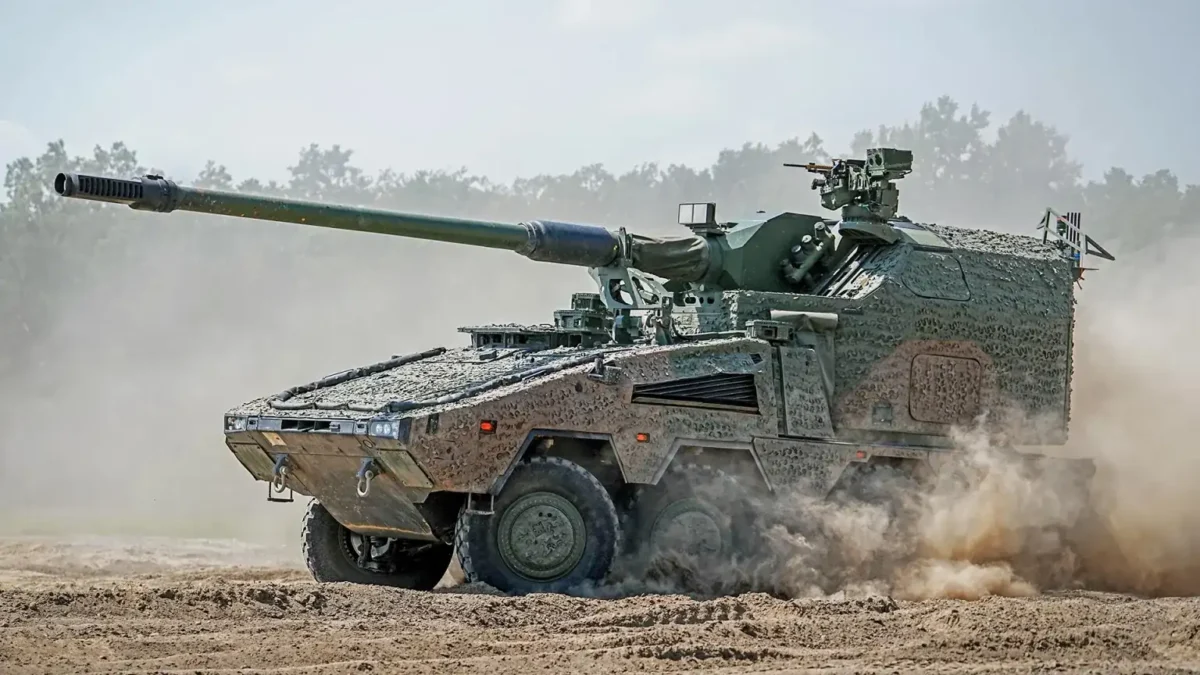
The system also delivers serious range. Using advanced ammunition, the RCH 155 can reportedly hit targets beyond 50 kilometers while maintaining NATO-standard interoperability.
Military planners in Germany, Ukraine, and the United Kingdom have already shown strong interest, largely because modern battlefields reward mobility more than brute armor.
In many ways, the RCH 155 feels less like a classic howitzer and more like a precision strike vehicle disguised as one.
That distinction matters. A lot.
The RCH 155 Howitzer is a next-generation German self-propelled artillery system designed to solve a problem modern armies keep running into: how do you keep artillery alive when every battlefield is saturated with drones, satellites, and counter-battery radar?
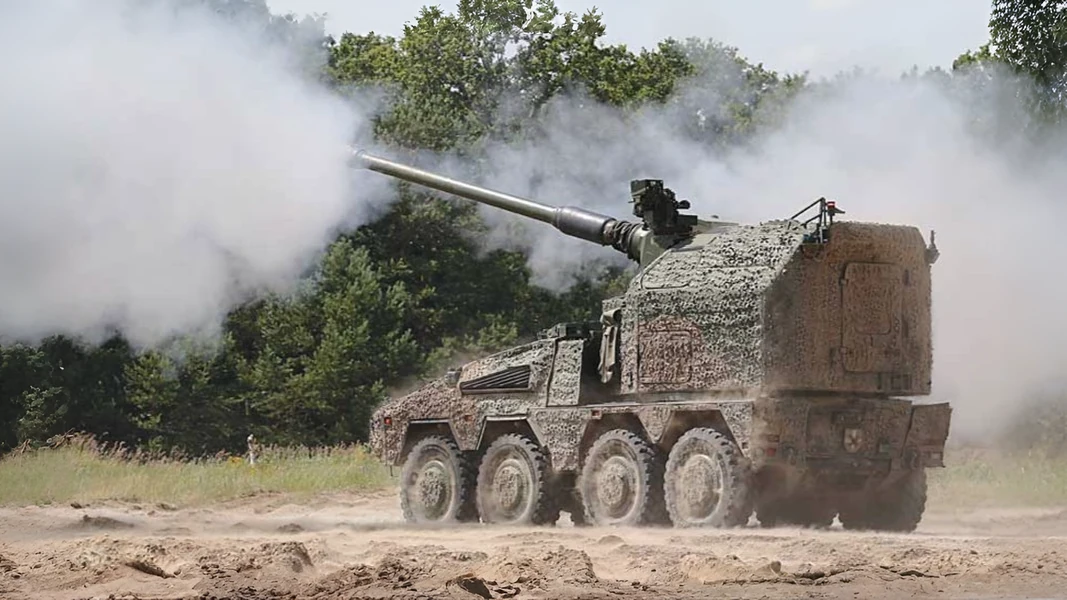
Older artillery systems are devastating, sure, but they’re also increasingly vulnerable once they stop moving. The RCH 155 was engineered around the opposite philosophy. Keep moving. Keep firing. Never become an easy target.
Its name actually tells the story. “RCH” stands for Remote Controlled Howitzer, while “155” refers to the NATO-standard 155mm cannon mounted on the system. The weapon itself uses a 52-caliber gun derived from the famous PzH 2000, widely considered one of the most capable artillery guns ever fielded.
Read also: Why the PzH 2000 Howitzer Is the Most Feared Artillery System
But the RCH 155 takes that firepower and places it onto the highly mobile Boxer 8×8 chassis. That decision changes everything.
Tracked artillery systems often dominate rough terrain, yet they’re expensive to maintain and slower over long distances. Wheeled systems like the RCH 155 Howitzer can redeploy rapidly across highways without needing heavy transport equipment. For NATO countries preparing for fast-moving European conflicts, that mobility is becoming incredibly valuable.
The system is also heavily automated. Ammunition loading, targeting, and firing processes require minimal human input, allowing a crew of just two soldiers to operate the vehicle. That’s unusually small for artillery, and deliberately so.
Less crew exposure means lower battlefield risk.
Perhaps the most talked-about feature, though, is its ability to fire while moving. Not pause-and-fire. Actually fire in motion. That capability pushes the RCH 155 into a category few artillery systems currently occupy, somewhere between traditional howitzers and mobile precision strike platforms.
Numbers alone don’t usually explain why a weapon system matters. But in the case of the RCH 155 Howitzer, the specifications reveal just how radically different this artillery platform really is.
At its core sits a NATO-standard 155mm L52 cannon capable of striking targets at ranges exceeding 50 kilometers with advanced ammunition. That already places it among the most capable wheeled artillery systems in service today. Yet range is only part of the equation.
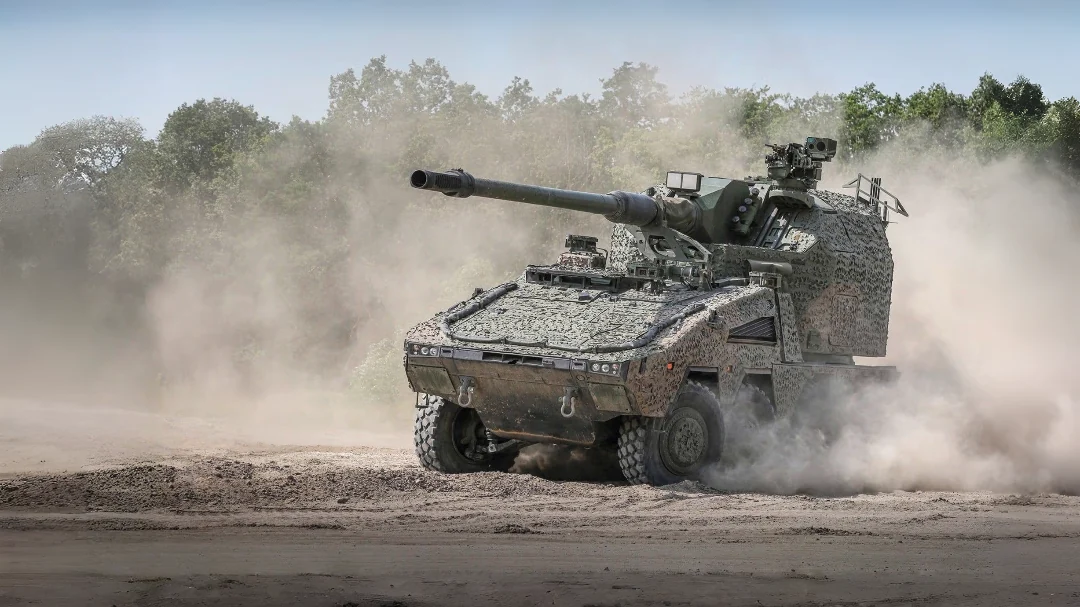
The bigger story is automation.
Unlike conventional self-propelled guns that require larger crews handling ammunition manually under pressure, the RCH 155 uses a fully automated loading and fire-control system. The crew, just two operators, can remain protected inside the armored cabin while the system handles targeting, loading, and firing almost independently.
That’s not merely convenient. It dramatically reduces reaction time during combat.
Here’s a closer look at the main technical specifications of the RCH 155 Howitzer:
| Specification | Details |
| Main Armament | 155mm L52 Howitzer |
| Platform | Boxer 8×8 |
| Crew | 2 |
| Maximum Speed | 100+ km/h |
| Operational Range | Approx. 700 km |
| Firing Rate | Up to 9 rounds per minute |
| Fire Range | 40–54+ km |
| Turret Type | Fully automated remote-controlled module |
| Firing Capability | Fire while moving |
| Protection | Armored NBC-protected cabin |
One subtle but important advantage often gets overlooked: logistics.
Tracked artillery systems consume enormous amounts of fuel and maintenance resources.
Read also: France’s Caesar Howitzer: A Game-Changer in Ukraine War?
The wheeled Boxer chassis lowers operational costs while improving strategic mobility across roads and urban terrain. Armies can transport the RCH 155 Howitzer faster and over longer distances without relying heavily on rail systems or tank transporters.
In modern warfare, mobility isn’t just useful anymore. It’s becoming a form of protection all by itself.
A lot of modern artillery systems promise longer range or faster firing speeds. The RCH 155 Howitzer does something more unusual, it changes the rhythm of artillery warfare itself.
Traditionally, self-propelled guns operate in stages. Move into position. Stop. Stabilize. Fire. Relocate before enemy radar tracks the launch point. That process has worked for decades, but modern surveillance technology is shrinking the safe window dramatically. Counter-battery strikes can now arrive in minutes… sometimes less.
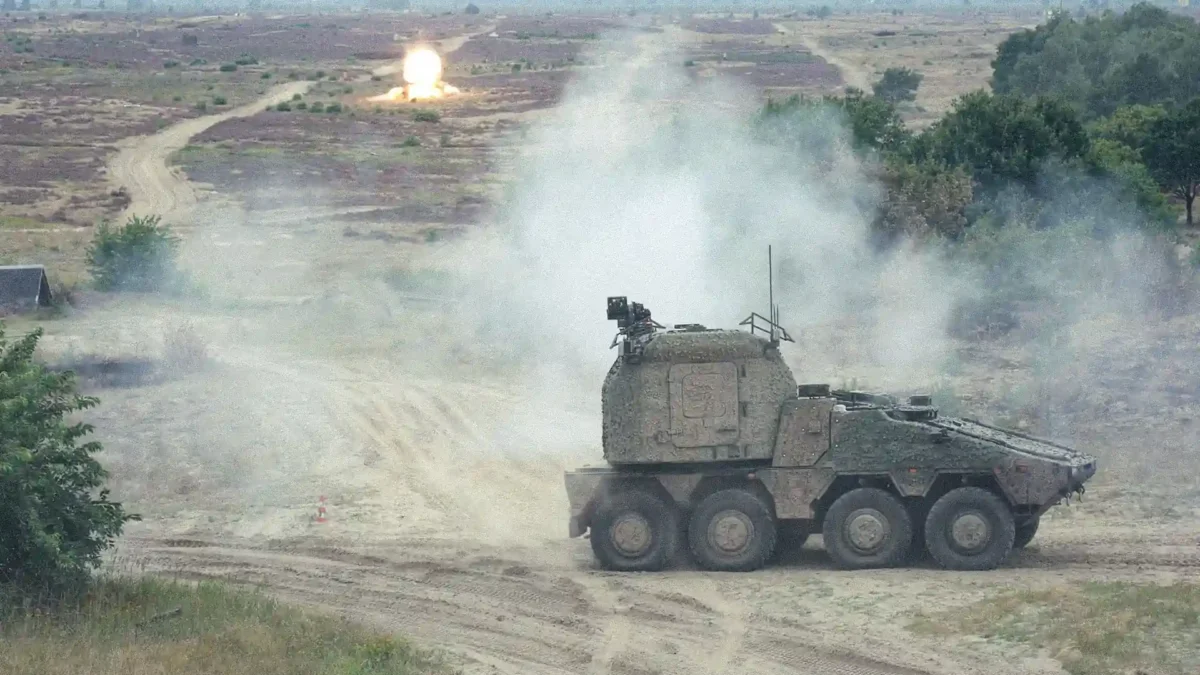
The RCH 155 was designed around avoiding that trap entirely.
Its most talked-about feature is the ability to fire while moving. Not slowly creeping forward either, actual mobile firing operations. This reduces the amount of time the vehicle remains exposed and makes targeting it far more difficult. In battlefield terms, it behaves less like static artillery and more like a roaming precision shooter.
That’s a huge shift.
Another standout feature is the fully automated turret system. Ammunition handling, loading, aiming, and firing are largely computerized, reducing physical strain on the crew and improving firing consistency under pressure. The vehicle only requires two operators, which is remarkably small for a 155mm artillery platform.
Then there’s survivability.
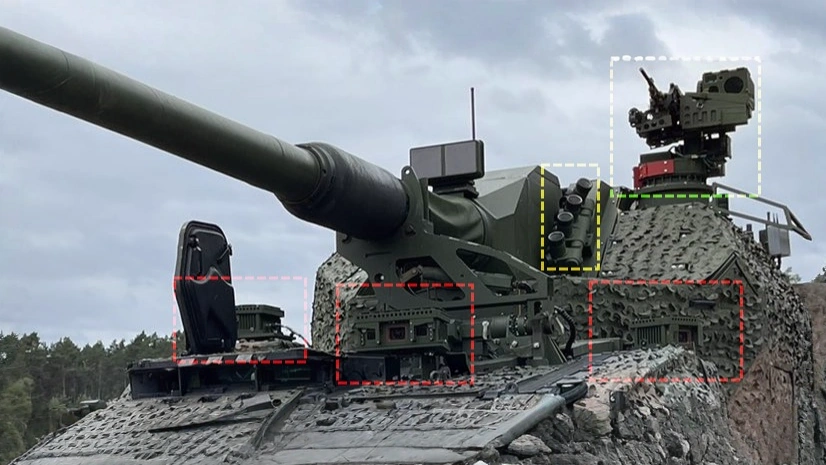
The Boxer chassis provides armored protection against shrapnel, small arms fire, and NBC threats, nuclear, biological, and chemical hazards. Combined with rapid “shoot-and-scoot” mobility, the RCH 155 Howitzer becomes much harder to neutralize than traditional tracked artillery.
Its 360-degree firing capability adds another tactical advantage. The system can engage threats from virtually any direction without needing to reposition the entire vehicle first. That flexibility matters in urban combat zones and fast-moving frontline environments where seconds count.
Honestly, the RCH 155 feels less like an upgraded howitzer and more like artillery redesigned from scratch for drone-era warfare.
The gun gets most of the headlines, but the real backbone of the RCH 155 Howitzer is the Boxer 8×8 platform underneath it.
And that choice wasn’t accidental.
For years, heavy tracked artillery dominated military thinking because tracks offered better off-road performance and stability. The downside? Tracked vehicles are maintenance-hungry beasts.
They burn fuel aggressively, wear down roads, require transport support over long distances, and generally move with all the elegance of a bulldozer dragging a refrigerator uphill.
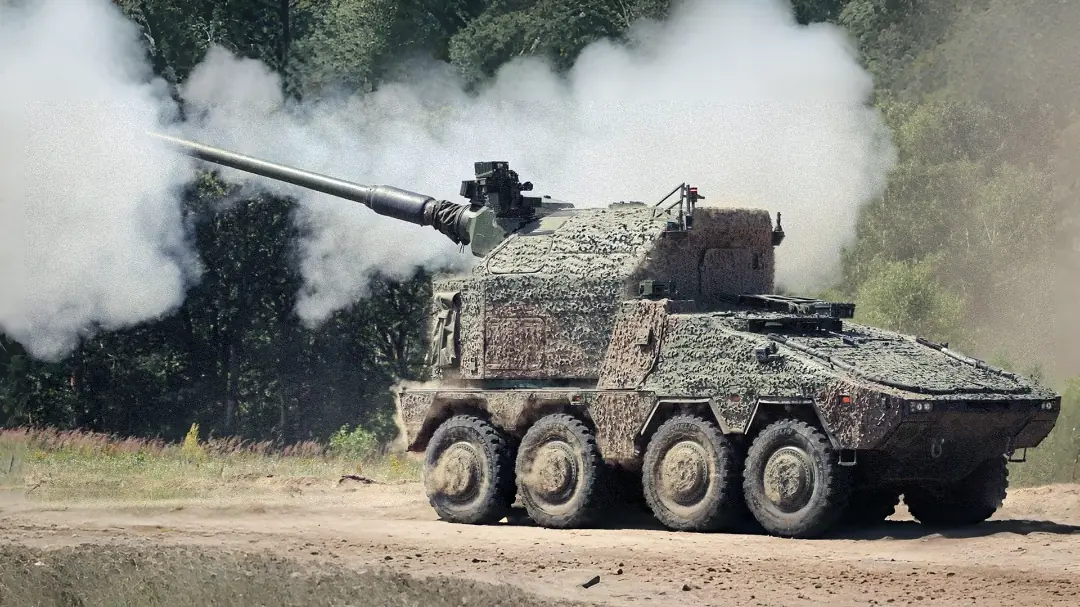
The Boxer changes that equation.
Built through the ARTEC defense consortium, the Boxer 8×8 is a modular armored vehicle already used by several NATO countries. By mounting the RCH 155’s automated artillery module onto this wheeled chassis, engineers created a system that combines long-range firepower with rapid strategic mobility.
In practical terms, the RCH 155 Howitzer can travel faster and farther than many traditional self-propelled guns without needing heavy transport assistance. It reaches road speeds above 100 km/h and can reportedly operate across distances nearing 700 kilometers before refueling.
That’s enormous for artillery logistics.
Read also: Archer Artillery System: How Sweden Redefined Modern Firepower
Modern wars increasingly reward units that can reposition quickly across wide areas. A wheeled artillery system can redeploy through highways, towns, bridges, and civilian infrastructure far more efficiently than tracked systems. This is especially relevant in Europe, where road networks become part of operational planning.
There’s another advantage people rarely mention: maintenance fatigue.
Tracked vehicles require constant servicing under harsh operational conditions. Wheeled platforms generally reduce downtime and simplify repairs. Over months of sustained combat, that difference becomes painfully important.
The Boxer platform also improves crew survivability with advanced armor protection and modular design flexibility. So while the cannon grabs attention, it’s really the mobility package underneath that helps transform the RCH 155 Howitzer into one of the most adaptable artillery systems currently entering service.
The battlefield role of the RCH 155 Howitzer goes far beyond simply launching shells at distant targets. In many ways, it represents a new style of artillery warfare built around speed, survivability, and constant movement rather than static firepower.
That distinction matters more now than it did ten years ago.
Modern battlefields are crowded with surveillance drones, thermal imaging systems, satellite tracking, and counter-battery radar capable of detecting artillery positions within seconds. Traditional self-propelled guns can become vulnerable almost immediately after firing. The longer they remain stationary, the greater the risk of retaliation.
The RCH 155 was designed specifically to break that pattern.
Military analysts often describe it as a “shoot-and-scoot” platform, but honestly, even that phrase feels outdated here because the system barely needs to stop in the first place. Its ability to fire while moving allows crews to maintain momentum while engaging targets, making enemy targeting calculations significantly harder.
That mobility gives commanders tactical flexibility.
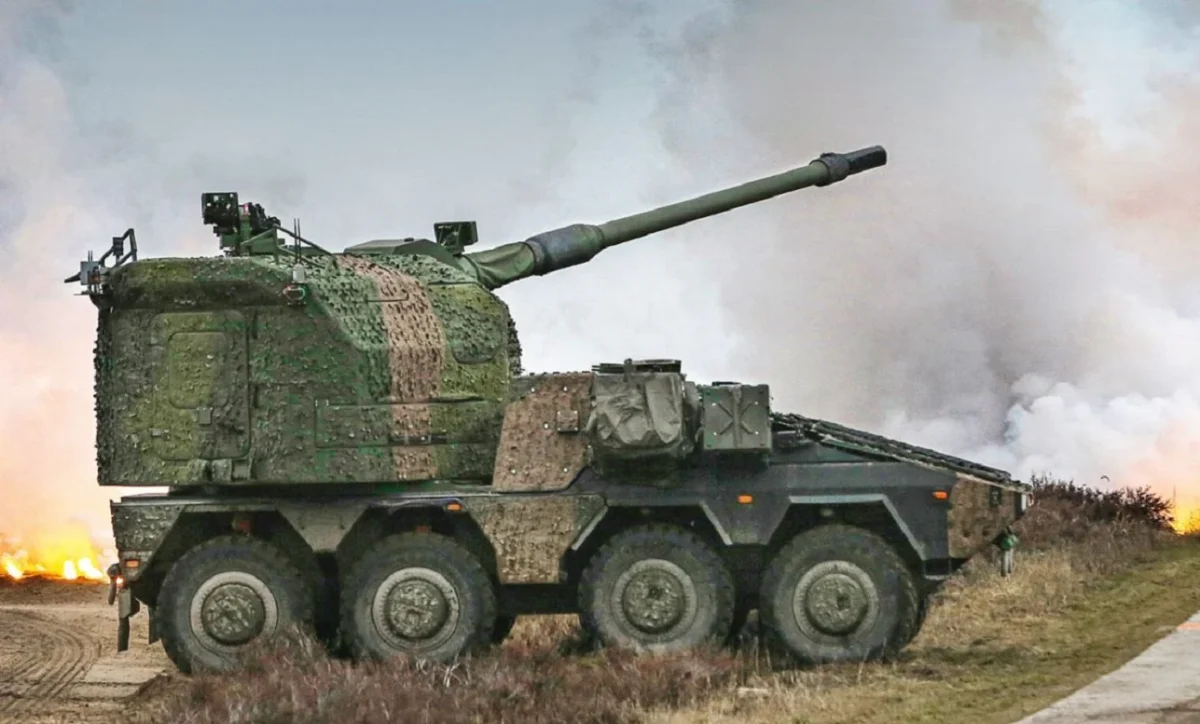
The RCH 155 Howitzer can support frontline troops, conduct deep precision strikes, suppress enemy artillery positions, and rapidly reposition before counterattacks arrive. Its long-range 155mm gun also integrates smoothly with NATO-standard ammunition and digital targeting networks, allowing it to operate alongside allied forces without major compatibility issues.
Another important role is psychological pressure.
Fast-moving artillery creates uncertainty for opposing forces because firing locations constantly shift. Enemy units may struggle to predict where the next strike originates, complicating counter-battery operations and slowing battlefield decision-making.
And then there’s manpower efficiency.
With only two crew members operating the system, armies can field powerful artillery units while reducing personnel exposure. In conflicts where casualty reduction increasingly shapes military planning, that’s not a small advantage, it’s a strategic one.
The result is an artillery platform optimized less for static bombardment and more for dynamic, high-survival modern combat environments.
Comparisons between the RCH 155 Howitzer and the PzH 2000 are inevitable. Both systems come from German engineering roots. Both use powerful 155mm L52 guns. Both are considered among the most advanced artillery platforms NATO has fielded.
But they were built for very different wars.
The PzH 2000 emerged during an era when armored protection and sustained bombardment dominated military thinking. It’s a heavy tracked beast, extremely capable, highly respected, and devastatingly accurate. Yet it was designed before drones and real-time battlefield surveillance transformed artillery survivability calculations.
The RCH 155 Howitzer feels like a response to that new reality.
Instead of maximizing armor and crew size, the RCH 155 prioritizes mobility, automation, and rapid repositioning. It trades some heavy tracked advantages for operational speed and lower logistical strain.
Here’s how the two systems compare:
| Feature | RCH 155 Howitzer | PzH 2000 |
| Platform | Boxer 8×8 Wheeled | Tracked |
| Crew Size | 2 | 5 |
| Fire While Moving | Yes | No |
| Automation Level | Very High | High |
| Strategic Mobility | Excellent | Moderate |
| Operational Range | Approx. 700 km | Lower road endurance |
| Weight | Lighter | Heavier |
| Maintenance Burden | Lower | Higher |
That doesn’t automatically make one “better.”
Tracked systems like the PzH 2000 still perform exceptionally well in rough terrain and prolonged heavy combat environments. But wheeled systems increasingly appeal to NATO planners because they’re faster to deploy, easier to maintain, and cheaper to operate over long periods.
In many ways, the PzH 2000 represents the peak of traditional artillery doctrine.
The RCH 155 Howitzer represents what comes next.
The RCH 155 Howitzer has earned plenty of attention for its futuristic capabilities, but like every military system ever built, it comes with trade-offs. Some are obvious. Others only become clear when you think about how wars are actually fought, not just how defense brochures describe them.
Its biggest advantage is mobility. That sounds simple, almost boring even, until you realize modern artillery survival often depends on movement more than armor thickness. The RCH 155 can relocate rapidly, fire while moving, and avoid lingering in one position long enough for enemy drones or radar systems to respond.
That alone changes battlefield dynamics.
Automation is another major strength. With only two crew members required, the system reduces personnel exposure while maintaining a high rate of fire. Fewer soldiers operating advanced artillery also lowers long-term manpower demands, something many NATO countries quietly worry about as recruitment challenges grow.
Then there’s logistics.
Because the RCH 155 Howitzer uses a wheeled Boxer platform rather than heavy tracks, maintenance demands are generally lower. It consumes less fuel, travels efficiently on roads, and doesn’t require as much heavy transport support.
Still, there are limitations.
Wheeled systems can struggle in extremely muddy or rugged terrain where tracked vehicles maintain superior traction. In prolonged high-intensity combat zones with destroyed infrastructure, that difference could matter. A lot, actually.
The RCH 155 is also highly dependent on advanced electronics and automation systems. That improves efficiency but creates vulnerability to electronic warfare, cyber disruption, or maintenance complexity under battlefield conditions.
Cost presents another challenge. Advanced automation, digital targeting systems, and cutting-edge engineering rarely come cheap. Countries investing in the RCH 155 Howitzer are betting that mobility and survivability justify the expense.
So far, many defense planners seem convinced they do.