Follow Us:
Follow Us:

The first time you really understand the K9 Thunder, it’s not through a spec sheet; it’s when you picture a 47-ton steel machine rolling into position, firing three rounds before the echo of the first one fades, and then vanishing before enemy radar finishes blinking. That’s not bravado. That’s design philosophy.
The K9 Thunder isn’t just another 155mm self-propelled howitzer parked in a long line of artillery history. It’s a response to how wars actually unfold today, fast, data-driven, and unforgiving to slow movers. Built in South Korea and now fielded across Europe, Asia, and beyond, the K9 has become the quiet standard-bearer for modern tube artillery.
What makes it interesting isn’t just raw firepower (though it has plenty). It’s how the system balances speed, automation, survivability, and logistics in a way that feels… intentional. Almost elegant. Where older howitzers lumbered, the K9 Thunder darts. Where others rely on numbers, the K9 leans on precision and tempo.
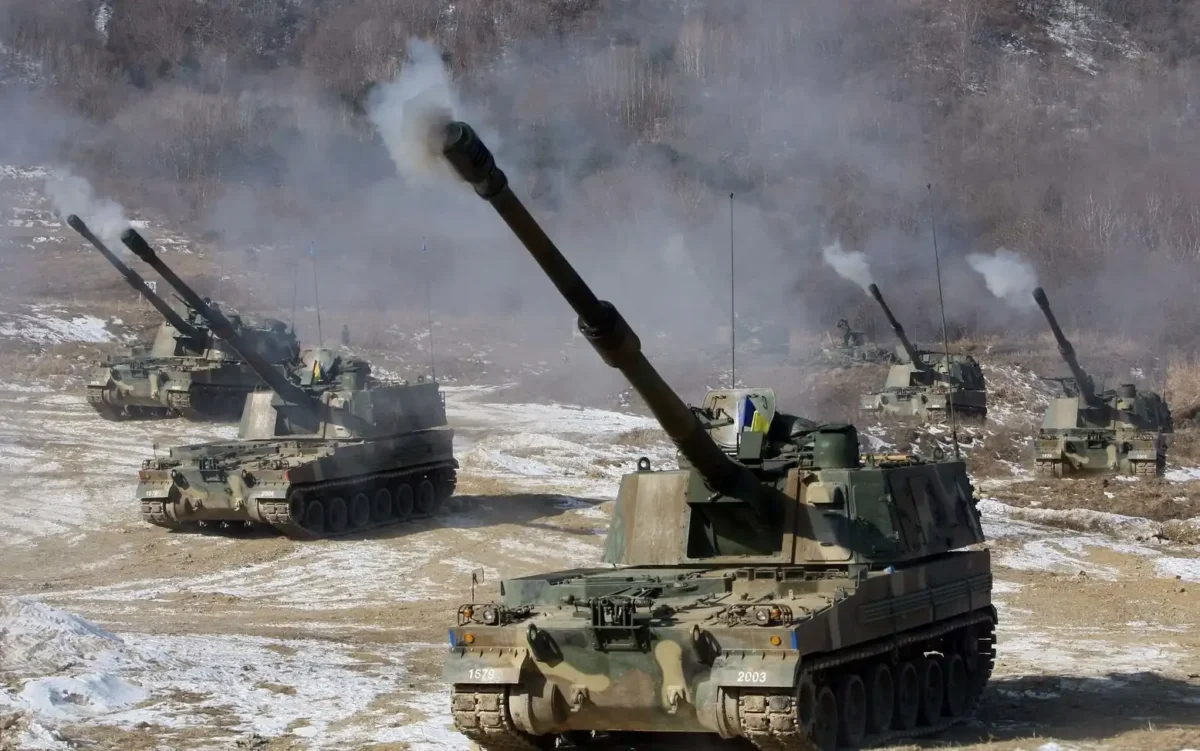
This post isn’t here to recycle the same bullet points you’ve seen elsewhere. Instead, we’ll unpack why the K9 Thunder keeps winning contracts, how its design choices reflect lessons learned from real-world deployments, and what its evolution says about the future of artillery warfare.
Let’s begin at the foundation: what the K9 Thunder actually is, and why it exists in the first place.
At its core, the K9 Thunder howitzer is a 155mm, 52-caliber self-propelled artillery system, but stopping there misses the point. The K9 wasn’t built to win spec comparisons; it was built to survive modern battlefields where counter-battery fire arrives in minutes, not hours.
Developed in the late 1990s and entering service in 1999, the K9 Thunder emerged from a very specific strategic anxiety: South Korea needed artillery that could hit hard, relocate fast, and keep operating under extreme pressure along a heavily militarized border.
Static guns were liabilities. Towed systems took too long. The answer became a fully tracked, armored platform that could shoot, move, and repeat with ruthless efficiency.

Think of the K9 as a mobile fire factory. Inside, a small crew, typically five, sometimes fewer in newer variants, manages loading, firing, navigation, and protection systems that would have required far more manpower a generation ago. Automation doesn’t replace the crew; it amplifies them. Less fatigue, fewer mistakes, faster cycles.
What separates the K9 Thunder from older self-propelled howitzers is its obsession with tempo. It can deploy, fire multiple rounds (including MRSI, multiple rounds, simultaneous impact), and displace before enemy sensors triangulate its position. In artillery terms, that’s the difference between dominance and vulnerability.
The K9 also speaks NATO fluently. Its 155mm ammunition compatibility makes it a plug-and-play solution for allied forces, which explains why it’s been adopted from Scandinavia to South Asia.
In short, the K9 Thunder isn’t just artillery mounted on tracks. It’s a system designed around modern reality: fast wars, smarter enemies, and zero patience for slow steel.
Specs can be dry. But in the case of the K9 Thunder, the numbers read more like a personality profile, each one hinting at why this system behaves the way it does on the battlefield.
Let’s start with the heart of the machine: a 155mm / 52-caliber cannon. That barrel length matters. It allows the K9 Thunder to push standard NATO rounds beyond 30 km, and with extended-range or base-bleed ammunition, distances stretch past 40 km.
In practical terms, that means striking targets well beyond the reach of older self-propelled howitzers, while staying safer in return.
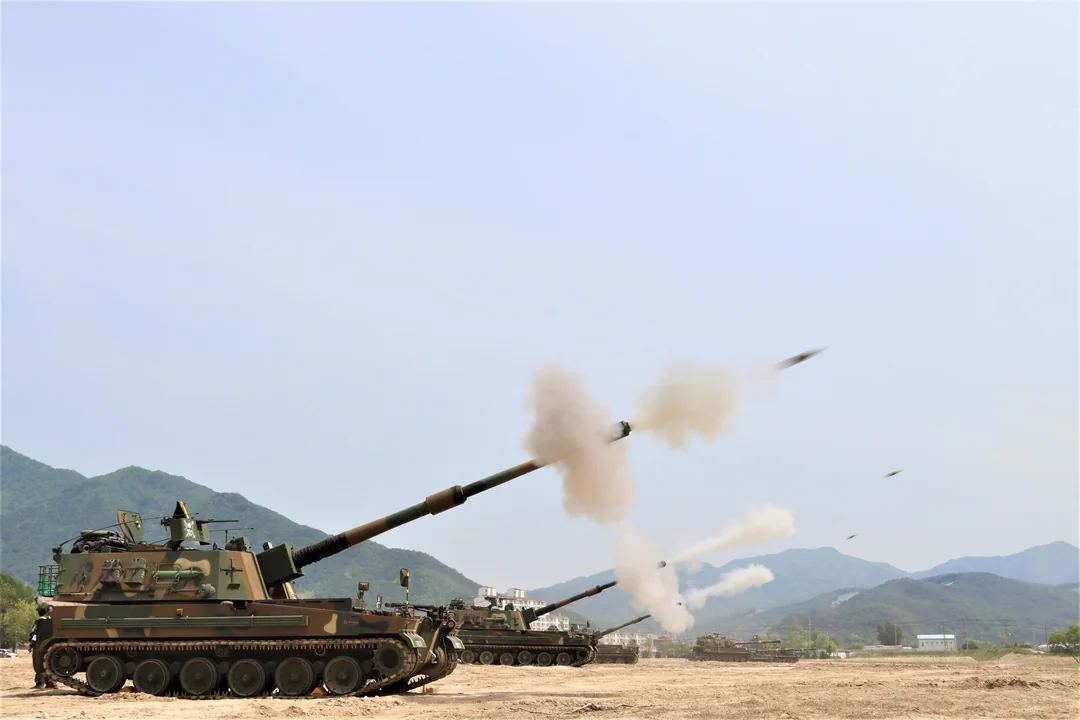
Mobility is where the K9 quietly flexes. Powered by a 1,000-horsepower diesel engine, this 47-ton vehicle can reach roughly 67 km/h on roads and handle rugged terrain without drama. It’s not a tank, but it moves like one when it needs to. Suspension systems are tuned for firing stability, so accuracy doesn’t suffer just because the platform is fast.
Fire rate tells another story. The K9 Thunder can unleash three rounds in about 15 seconds, then sustain 6–8 rounds per minute. More importantly, it supports MRSI (Multiple Rounds, Simultaneous Impact), firing shells on different trajectories so they land together. To the target, it feels like one massive strike.
Here’s a quick snapshot:
| Specification | K9 Thunder |
| Main Gun | 155mm / 52-cal |
| Max Range | 40+ km (ER ammo) |
| Top Speed | ~67 km/h |
| Crew | 5 (fewer in newer variants) |
| Combat Weight | ~47 tons |
Armor protection covers small arms and shell fragments, enough to survive counter-battery threats without turning the vehicle into a slow bunker.
On paper, these specs impress. In practice, they explain why the K9 Thunder keeps outrunning danger while delivering punishment. Up next: how these foundations evolved into multiple K9 variants, and why that evolution matters.
The original K9 Thunder was never meant to stay frozen in time. From day one, its designers treated it like a platform, something meant to evolve as sensors, software, and battlefield expectations changed. That mindset explains why the K9 family tree has grown in such deliberate, almost surgical ways.
The first major leap came with the K9A1. On the surface, it looked familiar. Under the hood, it wasn’t. This variant introduced improved digital fire control, better navigation systems, and enhanced crew ergonomics. Translation: faster targeting, fewer manual steps, and less cognitive overload for the people inside. In artillery, shaving seconds off a fire mission isn’t a convenience; it’s survival.
Then came the K9A2, where things get more interesting. This upgrade pushed automation much further, especially in ammunition handling. The goal? Reduce crew size without reducing output. Some configurations drop to three operators, relying on automated loading systems to maintain firing tempo. Fewer crew means smaller training pipelines, lower long-term costs, and, quietly, a new way to think about artillery manpower.
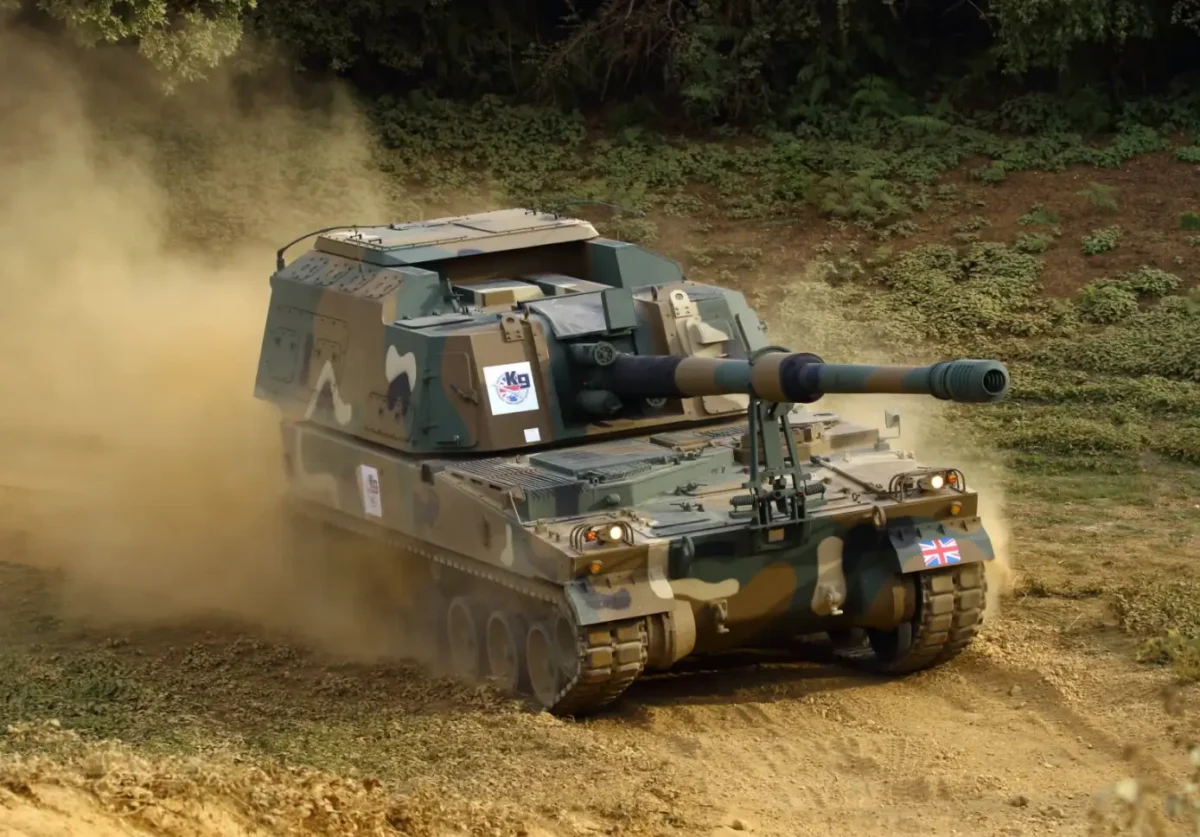
But the real signal of where the K9 Thunder is headed lies in the K9A3 concept. This isn’t just an upgrade; it’s a philosophical shift. The A3 explores remote and autonomous operation, extended range (approaching 60 km with future ammunition), and heavier reliance on networked battlefield data. Think less “gun on tracks” and more “node in a firepower web.”
There’s even discussion of wheeled derivatives for faster strategic mobility, an acknowledgment that not every battlefield needs tracks, but every commander wants speed.
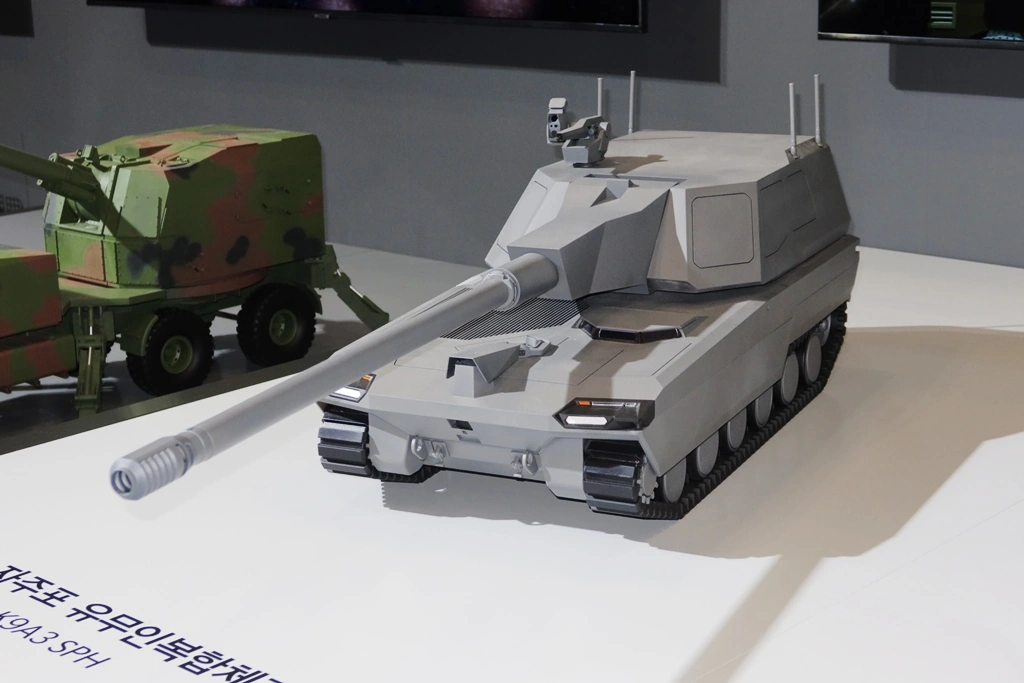
What makes these variants compelling isn’t the tech itself. It’s the restraint. Each upgrade solves a specific problem rather than chasing flashy features. The K9 Thunder evolves the way good tools do: quietly, purposefully, and always with the operator in mind.
Here’s where the K9 Thunder story gets quietly remarkable. Militaries don’t agree on much, doctrine, procurement philosophy, or even camouflage patterns. Yet when it comes to modern self-propelled artillery, wildly different countries keep landing on the same answer.
The K9 Thunder is now operated (or locally produced) by South Korea, Poland, India, Finland, Norway, Estonia, Australia, Egypt, and Türkiye, among others. That list matters because these nations don’t share terrain, threat profiles, or budgets. Snow-heavy Nordic regions. Himalayan high altitude. Eastern Europe’s flat, exposed plains. And yet, the K9 works in all of them.
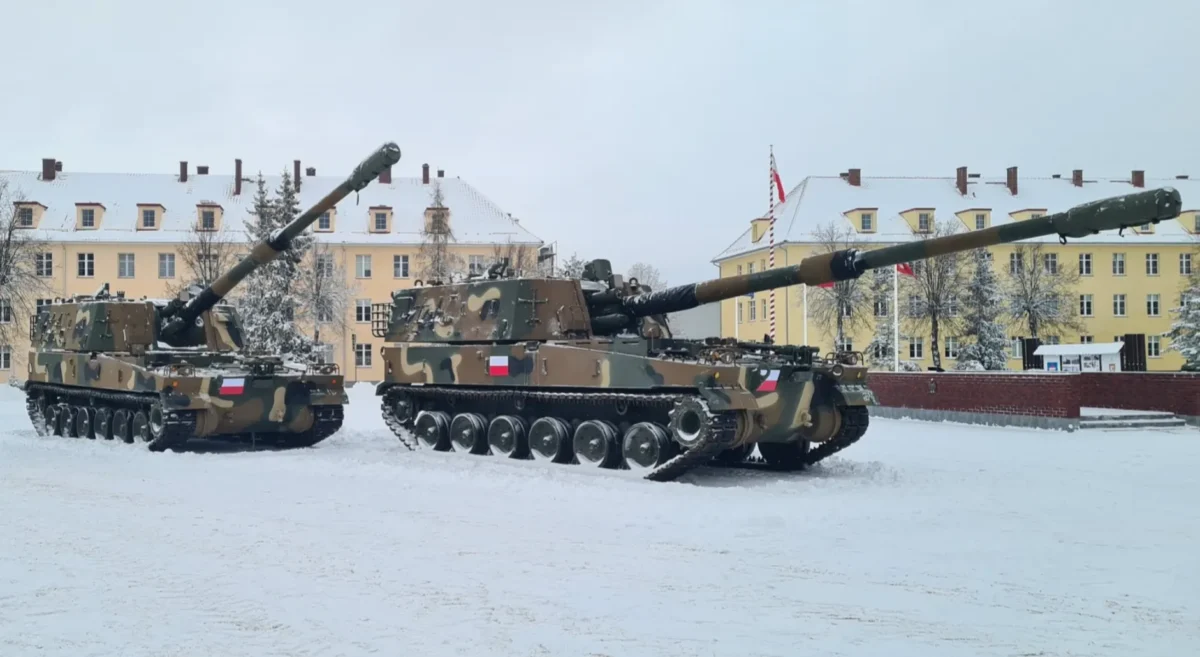
Take Poland, for example. Facing a very real artillery-centric threat environment, Poland didn’t just buy the K9, they integrated it at scale, fielding hundreds and pairing it with local command systems. The result is one of Europe’s most modern tube-artillery forces, built fast, not over decades.
India’s K9 Vajra, a locally adapted variant, tells a different story. Trials were brutal: desert heat, high altitude, punishing logistics. The K9 didn’t just survive; it outperformed expectations, firing accurately in conditions where crews themselves struggled. That performance tipped the scales.
Here’s a snapshot of adoption logic:
| Country | Why K9 Thunder Fit |
| Poland | Rapid rearmament, NATO interoperability |
| India | Extreme terrain reliability |
| Norway/Finland | Cold-weather mobility |
| Australia | Long-range, expeditionary reach |
The secret sauce isn’t just capability, it’s transferability. Hanwha Aerospace allows local production, customization, and industrial participation. For governments, that’s political gold.
In a world where procurement is slow and compromises are everywhere, the K9 Thunder keeps winning because it’s adaptable without being fragile.
Brochures are polite. Combat isn’t. The real credibility of the K9 Thunder comes from how it behaves once training ends and pressure begins.
While detailed combat reports are understandably sparse, operational deployments and large-scale exercises paint a consistent picture: the K9 excels in counter-battery warfare. Its speed, both in firing and relocating, allows crews to execute what artillery units call “shoot-and-scoot” with near-muscle memory. Fire mission in. Rounds out. Gone. Often, before opposing radar completes its firing solution.
In multinational NATO exercises, K9-equipped units have repeatedly demonstrated faster response cycles than legacy systems like older M109 variants. Not because the crews are better, but because the system demands less from them. Digital fire control reduces human lag. Integrated navigation cuts setup time. Automation absorbs stress.
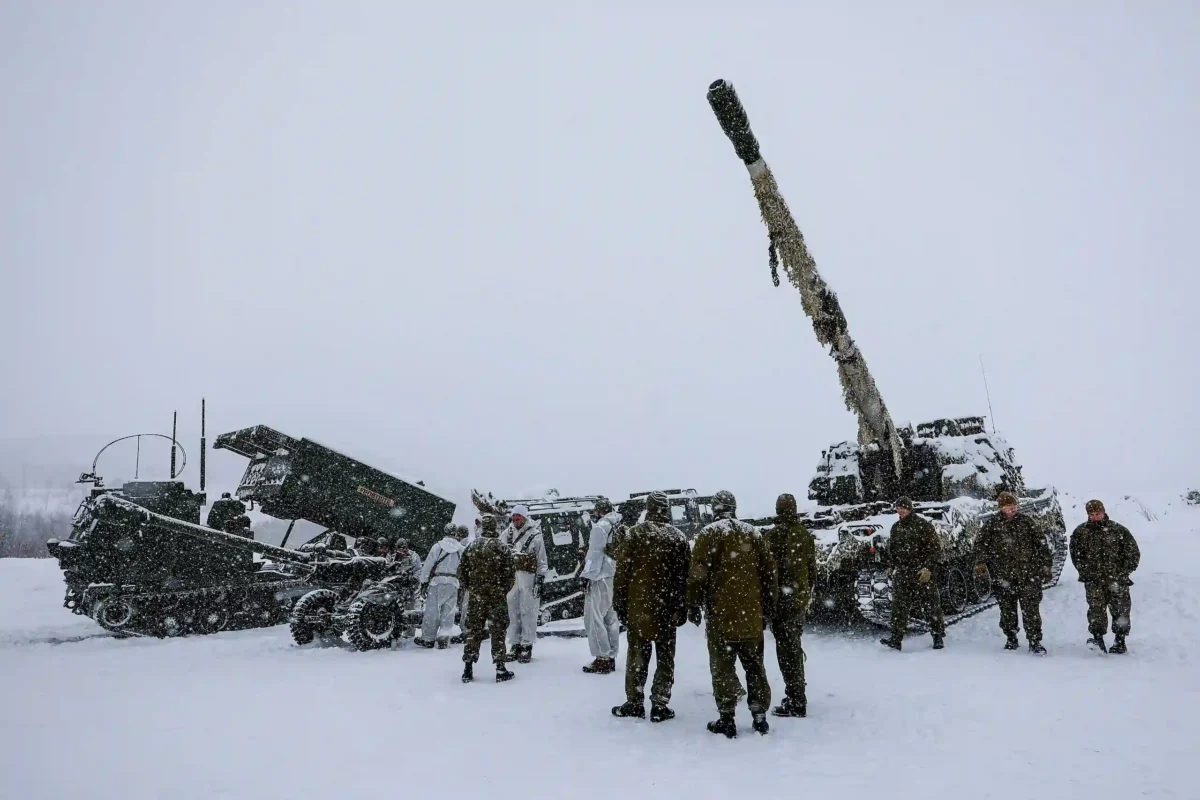
Cold weather operations are another quiet proving ground. Nordic armies reported that the K9 Thunder maintained mobility and firing accuracy in deep snow and sub-zero temperatures, where older platforms struggled with hydraulics and electronics. That matters more than it sounds. Artillery that can’t move is just expensive cover.
The K9’s survivability isn’t about heavy armor; it’s about not being there when retaliation arrives. With a firing position occupation time measured in minutes (sometimes less), the platform trades brute protection for tactical elusiveness. It’s a modern survival strategy.
Interoperability also shows up in real operations. Using NATO-standard 155mm ammunition means K9 units can draw from allied stockpiles in joint operations, reducing logistical friction during sustained campaigns.
No system is invincible. But the K9 Thunder’s operational record suggests a design that understands how artillery actually dies, and deliberately avoids those scenarios.
Comparisons are uncomfortable, but necessary. Stack the K9 Thunder against other well-known self-propelled howitzers, like the M109 family or wheeled systems such as CAESAR, and patterns start to emerge that aren’t obvious at first glance.
The M109 Paladin, for instance, is reliable and widely used. But many variants still rely on shorter barrels and older automation concepts. That means shorter range, slower setup, and more crew fatigue over time. The K9’s 52-caliber gun alone pushes it into a different performance bracket, especially when extended-range ammunition enters the picture.
Then there’s CAESAR, a wheeled system celebrated for strategic mobility. It’s fast on roads and cheaper to maintain, but it trades protection and sustained fire capability for that speed.
In high-threat environments where counter-battery fire is constant, tracked systems like the K9 Thunder retain a survivability edge. Different tools, different jobs.
What really tilts the scale is upgrade headroom. The K9 platform was designed with growth in mind. Automation upgrades, autonomous concepts, new ammunition types—these slide in without breaking the ecosystem. Some older systems feel like they’re being patched forward. The K9 feels like it’s being expanded.
Here’s a simplified contrast:
| System | Strength | Limitation |
| K9 Thunder | Range, automation, survivability | Heavier logistics |
| M109 (legacy) | Proven, widespread | Shorter range |
| CAESAR | Strategic mobility | Lower protection |
The takeaway isn’t that the K9 Thunder is “best” in all cases. It’s when sustained, high-intensity artillery matters, when time, survivability, and volume intersect, the K9 consistently lands in the sweet spot.
The K9 Thunder isn’t famous in the way fighter jets or main battle tanks are. It doesn’t dominate headlines or airshows.
And yet, when countries quietly prepare for worst-case scenarios, the kind no one wants but everyone plans for, the K9 keeps ending up on the shortlist.
That’s not an accident.
What makes the K9 Thunder stand out isn’t a single breakthrough feature. It’s the balance. Range without fragility. Automation without overcomplication. Firepower that scales up without dragging logistics down. It feels designed by people who assumed the system would be used hard, often, and under stress.
There’s also something refreshingly pragmatic about its success. The K9 doesn’t demand a new doctrine or exotic infrastructure. It fits into existing artillery frameworks, speaks NATO standards fluently, and then quietly raises the performance ceiling once it’s there. That kind of adaptability is rare.
Perhaps the most telling detail is this: armies don’t just buy the K9 Thunder, they invest in it long-term. Upgrades, local production, and expanded fleets. Those decisions suggest trust, not marketing.
In a future where warfare becomes faster, more automated, and more unforgiving, the K9 Thunder feels less like a weapon and more like a philosophy: move fast, hit hard, disappear, repeat.
And sometimes, that’s exactly what wins.