Follow Us:
Follow Us:

The term “sixth-generation fighter” gets thrown around a lot these days, but even experts can’t quite agree on what it really means. It’s supposed to mark a new leap in air combat, beyond stealth, beyond speed, into an era where aircraft might think, sense, and fight almost autonomously.
The fact is that “sixth generation” isn’t officially defined. Some say it means a seamless blend of manned and unmanned operations, in which pilots work with drone “wingmen.” Others believe it’s about integrating artificial intelligence so deeply that the jet becomes a kind of flying computer. A few even imagine energy weapons or adaptive camouflage that changes mid-flight.
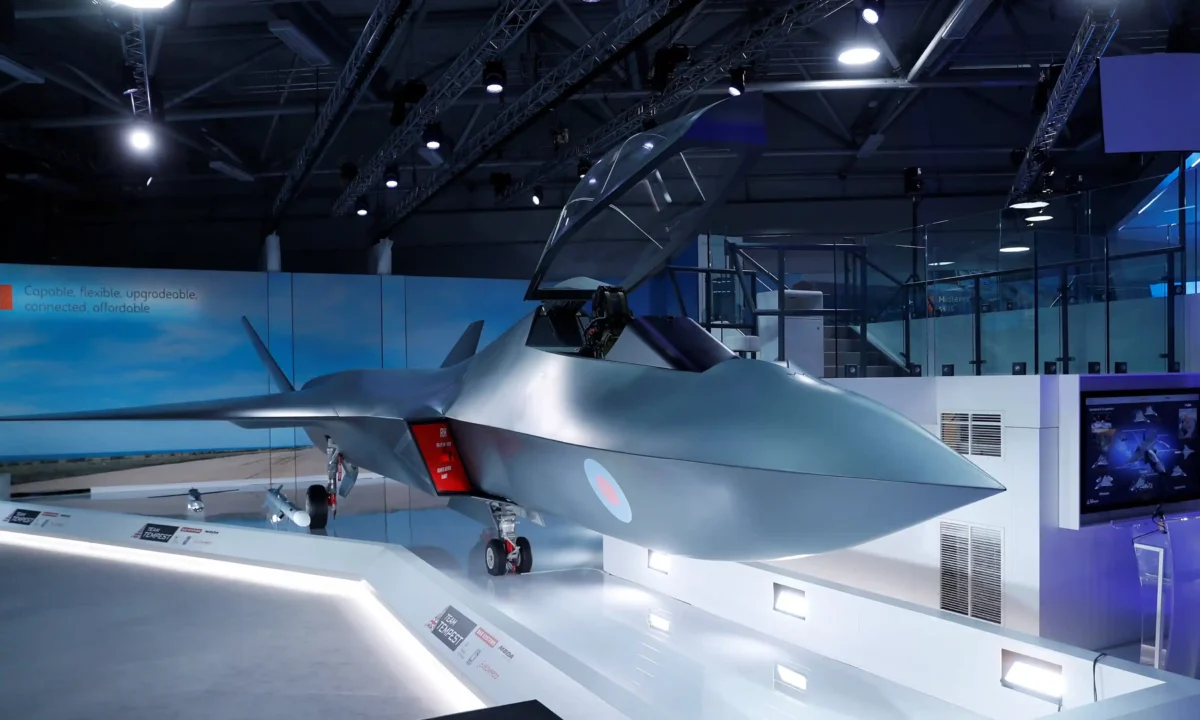
Within that uncertain definition, the Tempest fighter jet has emerged as Britain’s vision of what the next era of air combat could look like. It is part of a wider push known as the Future Combat Air System, led by BAE Systems and backed by major partners across Europe and Japan. It’s meant to replace the Typhoon sometime in the 2030s, though that timeline could still shift.

What sets Tempest apart, at least in concept, is the mix of features being promised: cleaner stealth lines, smarter AI systems, and the option to work alongside autonomous “loyal wingman” drones.
Questions remain about how much of this vision can actually be delivered, and on what timeline. For now, Tempest exists largely as a developing project, with many of its promised systems still being tested or modeled digitally. The ambition behind it is clear enough, but so too are the challenges in making it all work.
Some observers wonder whether the UK, even with partners like Italy and Japan, can deliver a true “sixth-gen” fighter on time, or if the Tempest might end up as a more evolutionary step, a “5.5-generation” jet rather than a revolution.
At its simplest, the Tempest program is an attempt to keep Britain’s air power relevant as the rules of warfare change. It’s meant to be stealthy and highly connected, feeding pilots streams of information they can act on instantly.
In theory, it could even coordinate with drone partners mid-mission. How much of that vision will survive real-world testing is anyone’s guess, but the message seems clear enough, that the future air dominance may depend less on sheer speed and more on who can think faster.
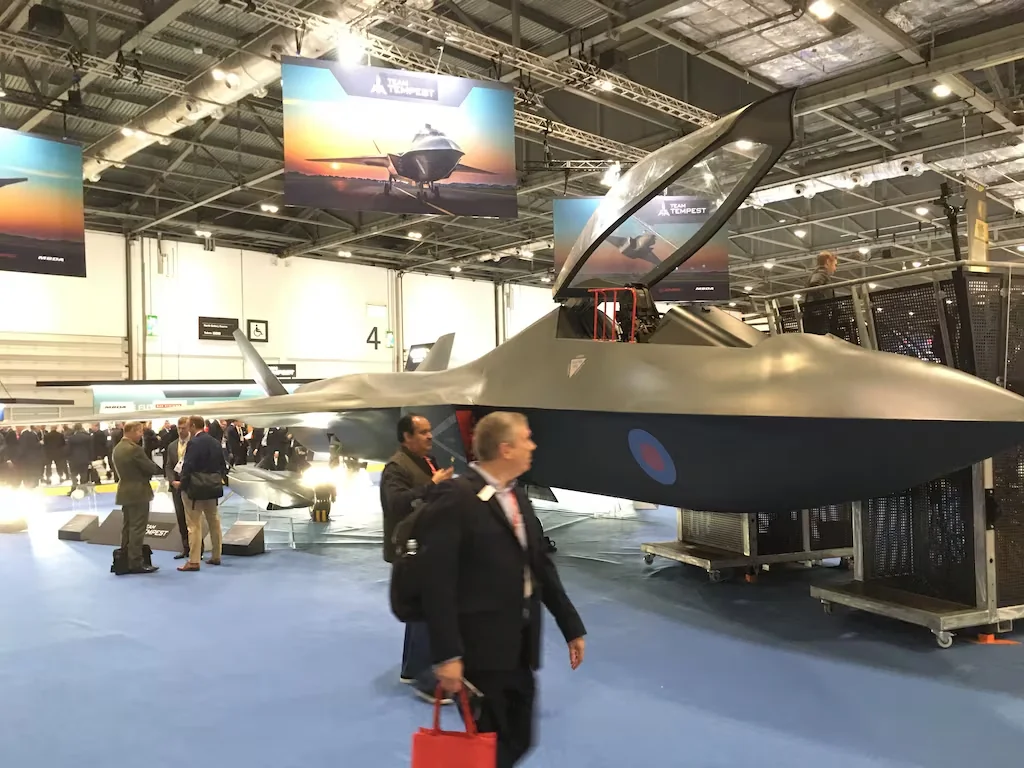
The project’s lead contractor is BAE Systems, but Tempest is very much a team effort. Rolls-Royce is said to be working on engines that could adjust performance on the fly, while Leonardo focuses on the radar and sensor systems. MBDA is working on the weapons side. Together they make up what’s now known as Team Tempest, a partnership built as much to share costs as to share knowledge.
So far, Tempest has advanced at a cautious, almost methodical pace. What began in 2021 as a concept has now edged into testing; the prototype seems to be under way.
The plan, at least for now, is to have Tempest ready around 2035 to replace the Eurofighter Typhoon, though that depends on many things — money, politics, and a fair amount of luck with the new tech. None of that comes easy in a program this complex.
When people talk about the Tempest fighter jet, the phrase that comes up most often is “sixth-generation.” It sounds impressive, futuristic, even, but what does it actually mean? The truth is, there’s still no formal definition. The term is used more as a benchmark of ambition than a fixed standard, and its meaning may depend on who you ask.
Maybe, we only start to see what “sixth-generation” might mean when looking at where fighters came from. Back in the ’70s and ’80s, the fourth generation jets like the F-15, F-16, and later the Eurofighter Typhoon were designed for one thing above all else; to fly fast, turn hard, and see the enemy first on radar.
Then came the fifth generation, led by aircraft like the F-22 Raptor and F-35 Lightning II. These introduced low observability, advanced networking, and true “sensor fusion,” meaning the aircraft could pull information from multiple sources and present it as one clear picture to the pilot.
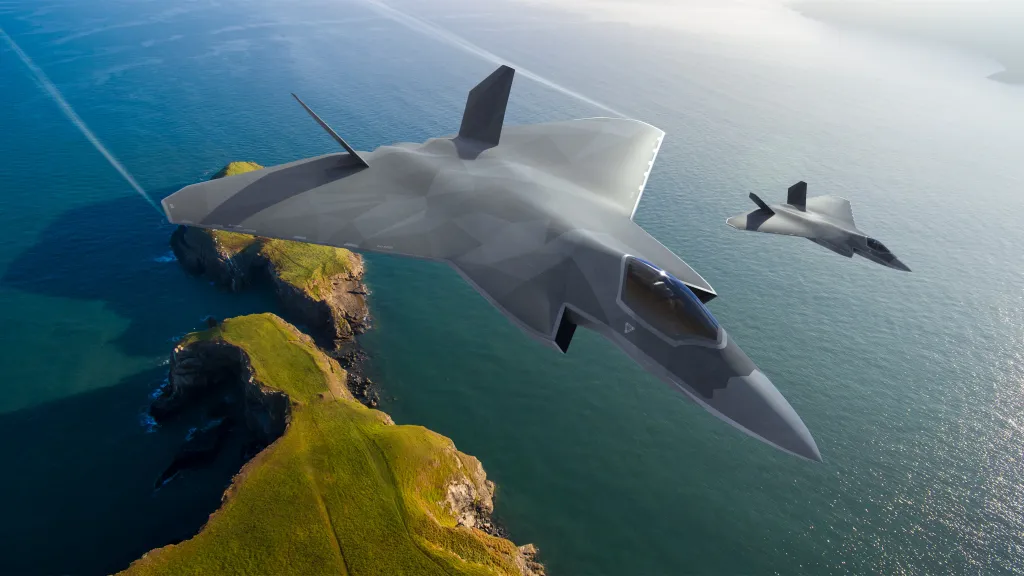
So where does the sixth generation fit in? Broadly speaking, it’s supposed to build on all of that; stealth, speed, networking, but take it several steps further. A sixth-generation aircraft is expected to use artificial intelligence to help pilots manage data and make split-second decisions.
It might also serve as a command hub for unmanned “loyal wingman” drones, coordinating multiple systems in real time. Some designs even appear to include adaptive engines, advanced electronic warfare tools, or stealth coatings that can change properties depending on the mission.
But to this day, there’s no international body or standard that certifies a jet as “sixth-generation.” The term seems to be more of a marketing shorthand. Or it could be seen as a way for manufacturers and governments to signal that their aircraft will outperform today’s fifth-gen models.
Some analysts even argue that what we’re seeing now might better be called “fifth-and-a-half generation” technology, since many of the promised features are still experimental. In that sense, calling the BAE Systems Tempest a “sixth-gen fighter” may be more about setting expectations than describing a finished capability.
If the Tempest fighter jet truly aims to define the next generation of air combat, then its technology suite is where that ambition either takes flight or runs into reality.
The program’s developers have outlined a mix of cutting-edge ideas that, at least in theory, could push the limits of what a manned aircraft can do. But as always in military aviation, what looks revolutionary on paper may prove far harder to translate into a working system.
The Tempest is supposed to lean heavily on AI, pulling data from all its sensors and sorting it faster than any human could. The idea is that it would help the pilot spot threats, pick targets, maybe even suggest what to do next.
In theory, that sounds like a huge advantage; less mental strain, more time to think. But it’s not a simple win. AI in a jet isn’t just about speed; it’s about reliability. In high-speed combat, milliseconds matter and a system that might misinterpret data or act unpredictably could do more harm than good.
Some analysts suggest that early versions of Tempest’s AI could be more like an intelligent assistant than an autonomous co-pilot (powerful, but still heavily supervised).
Another much-discussed feature is the use of “digital twins”. This is a highly detailed virtual model of the aircraft that could allow engineers to test new upgrades or flight conditions entirely in simulation.
In other words, it lets designers test ideas in a virtual world long before any parts exist, cutting costs and time. This sounds like a big win, but the system’s only as smart as its data.
Getting that right, especially for something as complex as aerodynamics or electronic warfare, isn’t easy. If it works, the payoff could be huge; if it doesn’t, it might just create a false sense of confidence.
The Tempest stealth fighter is believed to feature an evolution of current low-observable technology; smoother surfaces, radar-absorbent materials, and perhaps adaptive coatings that change properties depending on radar frequency or temperature. Combined with advanced sensors and “data fusion,” the aircraft could, in theory, detect and engage threats long before being seen itself.
Yet, the stealth advantage may be narrowing. Radar and infrared detection systems are advancing rapidly, and it’s unclear whether any future jet can remain truly invisible for long. The focus, then, may shift from pure stealth to “smart stealth” managing signatures dynamically and using electronic warfare to stay hidden when it matters most.
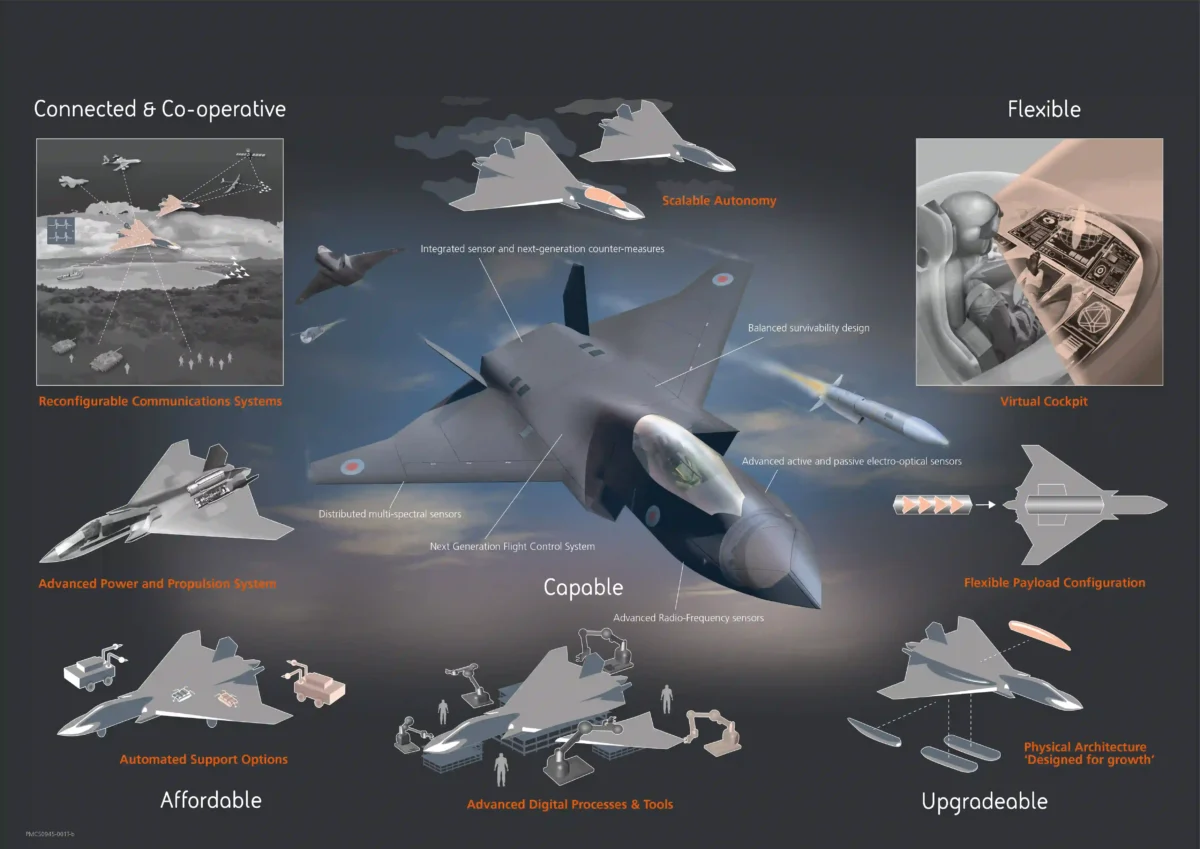
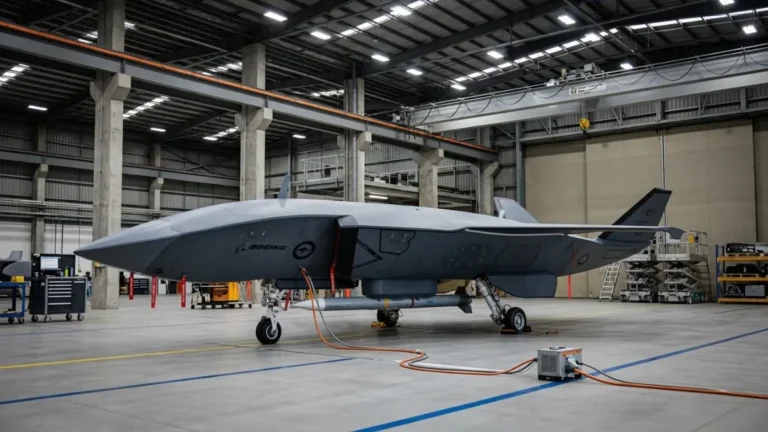
One of the more futuristic ideas tied to the Tempest is that it could fly with its own team of drones, the so-called “loyal wingmen.” These smaller, unmanned aircraft might scout ahead, jam radars, or even carry extra weapons. It’s a bold concept that could change how air battles play out.
Still, it hinges on things that are hard to guarantee: perfect communication, secure links, and machines that can be trusted to make the right call when the fight gets messy.
A single jammed signal or hacked network might undermine the whole formation. For that reason, the first iterations of Tempest’s “team” may be far simpler than the grand vision suggests.
The engines may be where the biggest bets are being placed. Rolls-Royce is working on something called an adaptive engine (a design that changes how it breathes depending on what the jet needs). It means the jet could adjust airflow and fuel burn while flying, trading efficiency for speed as needed.
Some proposals even mention generating electrical power straight from the engine to feed next-gen sensors or directed-energy weapons.
It’s clever stuff, but also a long shot. Adaptive engines are still largely experimental and have a tricky history. Fitting one into a stealth airframe could be a real engineering headache. It could change everything or run into the same problems that have tripped up past projects.
Whenever the Tempest fighter jet is discussed, comparisons with the F-35 and increasingly, America’s Next Generation Air Dominance (NGAD) program, seem inevitable. These projects all aim to define the future of aerial warfare. Yet they differ quite sharply in maturity, ambition, and perhaps philosophy.

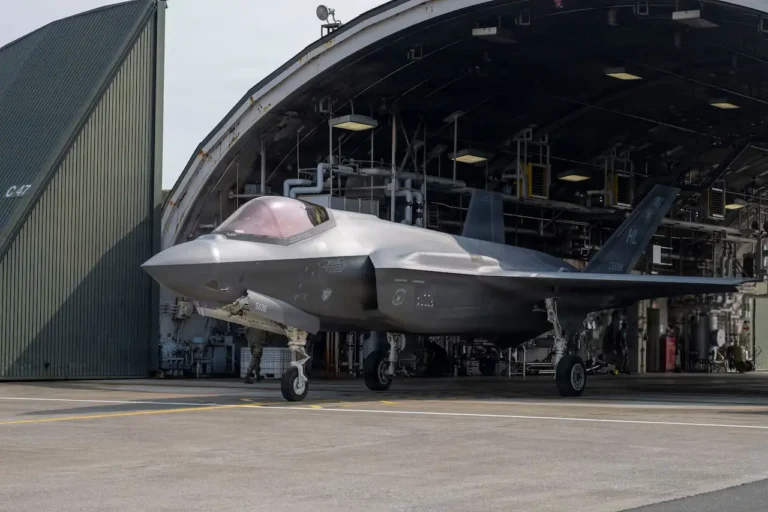
If we really want to understand where the Tempest fighter jet stands today, it’s probably fairer to compare it not to the operational F-35, but to the F-35 twenty years ago, when it was still a drawing-board concept called the Joint Strike Fighter (JSF).
In their early days, the Tempest and the F-35 programs had a lot in common; sprawling partnerships, high expectations, and technology lists that felt a step ahead of what engineers could actually build (or sounded almost too advanced for their time).
The F-35 started out with the same kind of optimism now surrounding Tempest. It was meant to blend stealth, sensors, and flexibility into a single affordable platform. In practice, the project ran into years of technical delays, cost overruns, and criticism over complexity. Many of those problems stemmed from trying to integrate too many new systems at once. This is also a risk the Tempest program now faces in its own way.
The difference between the two is in how each program is managed. The F-35 had one central authority; Lockheed Martin working hand in hand with the U.S. Defense Department.
The Tempest program includes several firms (BAE Systems, Rolls-Royce, Leonardo, and MBDA) and governments, from Britain and Italy to Japan, sharing the work and the bills. It could make the project more flexible and creative. Or, just as easily, it could bog things down in meetings and national politics.
Digital design marks another clear break between the two. The F-35 was born in a time when simulation was more a promise than a practice. With Tempest, nearly everything is digital from the start, a virtual jet built and tested on screens long before the first parts exist.
It’s a clever idea and could prevent some of the F-35’s early headaches. That should, in theory, save time and avoid the integration chaos that haunted the F-35. Or not, depending on whether those models can really mirror the chaos of real flight.
In the past, the F-35’s long list of promises made people wary. People asked whether the F-35 could really do everything it promised, so does Tempest now.
Can one jet really pull together AI, drone teaming, adaptive engines, and stealth—all by the 2030s? The problem isn’t that any of those technologies seem impossible on their own. It’s that trying to fuse them all into one aircraft could stretch time, money, and patience in ways governments might struggle to keep up with.
We’ve seen this movie before. The F-35 was once the cautionary tale, too complicated, too expensive, too risky. But a decade later, it’s the mainstay of NATO’s skies. Tempest could follow that pattern, or it could stumble in new ways.
Compared to America’s more secretive NGAD program, Tempest gives the impression of being more open and cooperative. NGAD remains largely classified, but NGAD is believed to include a manned fighter that operates with autonomous drones, just like Tempest’s “loyal wingman” concept.
Some reports even suggest that NGAD prototypes have already flown. It’s backed by vast U.S. funding, while Tempest is developing in public view, with its partners sharing industrial and political stakes. That openness may slow progress, but it could also make Tempest more sustainable.
So, it’s fair to say that Tempest today seems to be in the same phase the F-35 was about twenty years ago. The question is whether Britain and its allies can actually learn from that experience or whether history might repeat itself in a different form.
Compared to NGAD, both projects share the same generational label, they seem to represent two different interpretations of the future. NGAD could be the cutting edge of performance; expensive, elite, and closely guarded.
Tempest, on the other hand, might evolve into a more adaptable and export-friendly platform that balances innovation with political and industrial pragmatism.
For all its promise, the Tempest fighter jet faces a long list of practical challenges that could shape or limit what it ultimately becomes.
The most immediate concern is funding. Britain and its partners, Italy and Japan, have committed substantial resources. Yet a genuine sixth-generation aircraft could still run into the tens of billions, and history shows that kind of funding can wobble once political attention moves elsewhere.
Tempest aims to stretch what’s technically possible right now. Bringing together AI, autonomous wingmen, and adaptive propulsion in one jet isn’t a small task, and it could easily drag out timelines or inflate costs.
Digital design may speed things up on paper, but history suggests the jump from simulation to combat-ready hardware is rarely straightforward. Some engineers suggest that the first production Tempest may arrive with scaled-back capabilities, with more advanced features added later.
There’s also a political dimension. Labeling the jet as “sixth-generation” may serve as much to attract investment and signal technological leadership as to describe verified performance. The Tempest reflects both sides of that coin: genuine innovation mixed with strategic messaging.
So, is the Tempest is sixth-generation fighter or more of a marketing mirage?
For now, it’s hard to say which side of that balance will define it. Tempest appears to be pushing real boundaries in design and collaboration, yet it remains years away from proving whether those ideas can fly. The dream is bold, but as history often reminds us, ambition in aerospace rarely travels a straight or predictable path.