Follow Us:
Follow Us:

When reports emerged that Germany planned to buy hundreds of Skyranger 30 systems (est. 600) from Rheinmetall, the reaction was cautious but curious.
A €9 billion investment in short-range air defence points to how seriously militaries now view the drone problem. That number alone turned heads. Few modern systems get that level of commitment before proving themselves in large-scale service.
What’s driving this sudden confidence? The Skyranger 30 isn’t a giant missile platform or a radar array stretching across a base. It’s compact, mobile, and designed to take down drones; the small, fast, unpredictable kind that have changed the face of warfare in Ukraine and the Middle East. Using a 30 mm revolver cannon and smart AHEAD airburst ammunition, it claims to create a cloud of tungsten fragments precise enough to destroy a drone mid-flight.
Read also: Skyranger 30 Air Defense Systems to Strengthen Ukraine in 2025
Still, the excitement raises questions. How far can such a small gun really reach? Can it stop a swarm of drones moving from multiple directions? And is this system as revolutionary as its growing reputation suggests or simply the latest hopeful answer in the race to counter an unpredictable threat?
At its core, the Skyranger 30 is a compact, mobile air defence system built to handle one of today’s biggest battlefield headaches “drones”. It isn’t a heavy missile launcher or a fixed battery that stays in one place. Instead, it’s designed to move with frontline units, watching the skies for small, fast targets that larger systems might miss.
In many ways, it sits somewhere between a tank turret and a radar station; small enough to mount on a wheeled vehicle, but smart enough to detect, track, and shoot down aerial threats on its own.

The idea for the Skyranger 30 seems to have taken shape sometime in the mid-2010s, when reports of drone attacks in Syria and Ukraine began to worry Western armies.
The Skyranger 30 isn’t a brand-new idea. It grew from a long line of Rheinmetall designs; the Oerlikon Skyguard first, then the Skyranger 35. Those earlier guns proved reliable and fast but were heavy and not always easy to deploy.
Engineers started working on a smaller model, one that could ride on lighter vehicles without losing firepower. That’s how the 30 mm version took shape. Development appeared to speed up after 2020, as drone swarms became a daily headline rather than a niche threat.
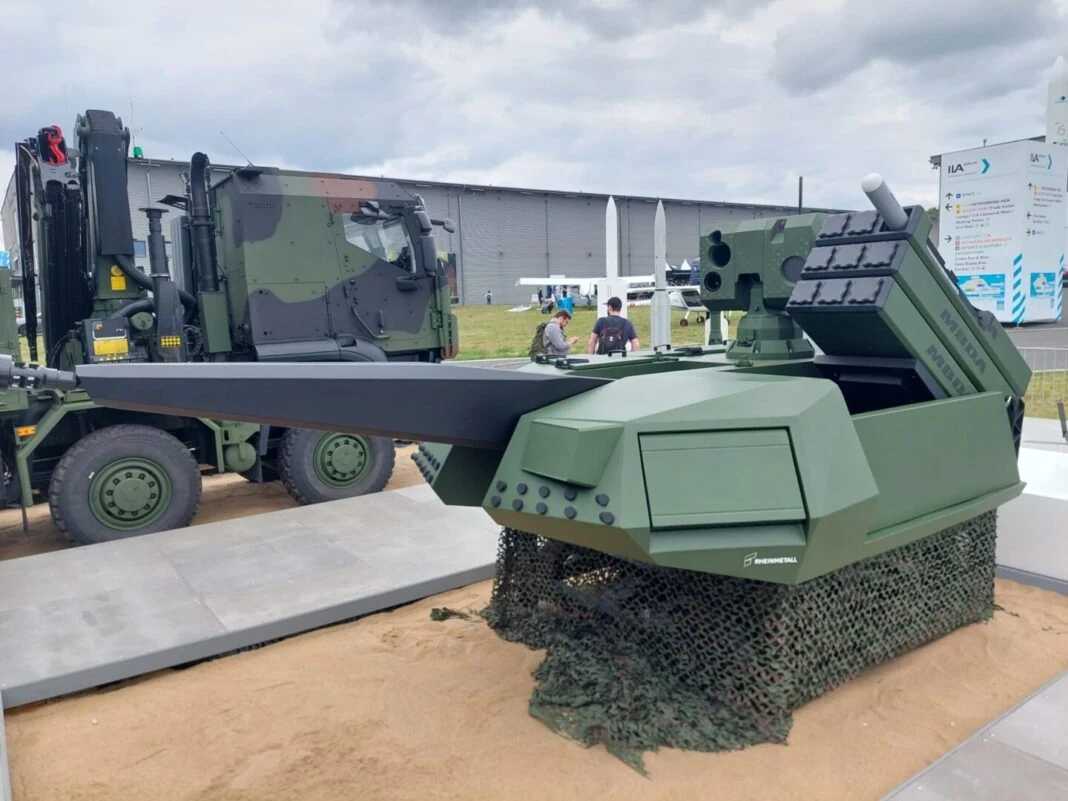
The system’s heart is its turret, which holds a 30 mm revolver cannon capable of extremely high rates of fire. Around it are electro-optical sensors, laser rangefinders, and radar units that constantly scan for movement in the air.
What gives the system its edge is how easily it can be moved. The same module can be installed on several vehicle types, so an army doesn’t have to build a new fleet just to use it.
It’s also meant to work as part of a wider network rather than as a lone defender. Multiple Skyranger 30 units can share targeting data and link with other SHORAD systems or command centers.
Read also: Flakpanzer Gepard in Ukraine: Why This 1970s Tank Still Matters
In theory, that allows them to react faster, passing information from one vehicle to another before a drone even enters range. Whether that networked coordination works as smoothly in the field as in demonstrations is still something many observers are waiting to see.
What makes the Skyranger 30 stand out is how many layers of technology are packed into such a small turret. Rheinmetall often calls it a “miniature air-defence ecosystem,” which sounds ambitious, but it’s not entirely wrong.
What really grabs attention is the 30 mm revolver cannon using AHEAD airburst ammunition. Each shell doesn’t try to hit the drone head-on. Instead it bursts in front, throwing out many tiny fragments to create a zone of damage rather than rely on one perfect shot.
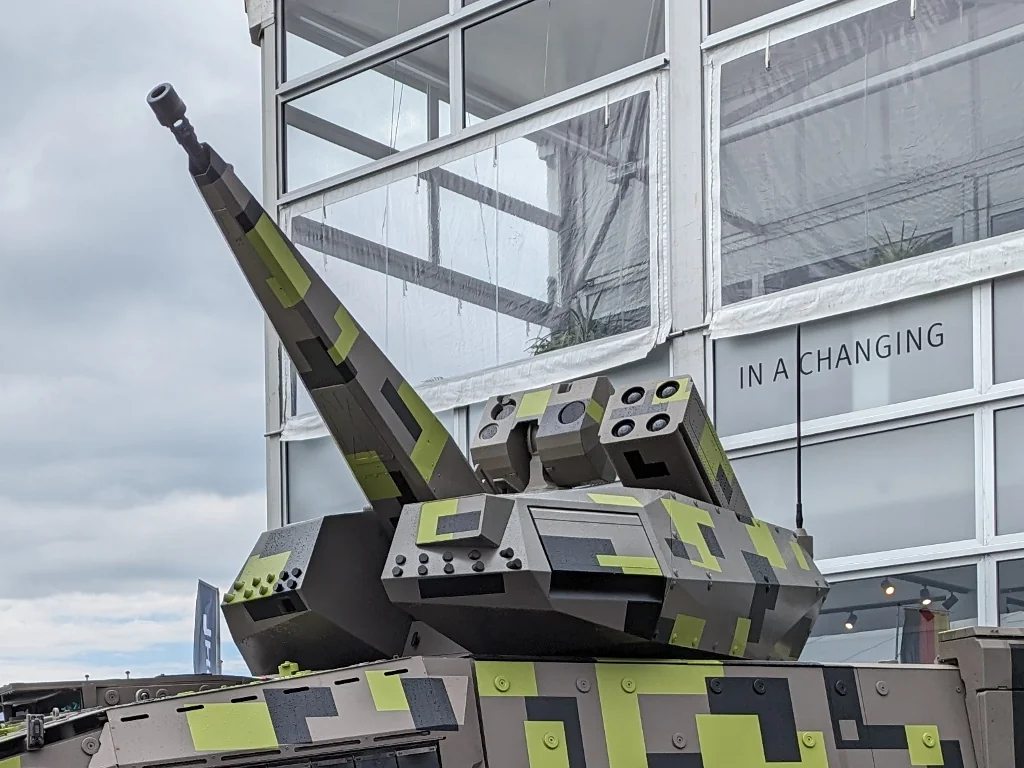
In practice it can work well, though it’s sensitive to timing and how the target moves. A split-second error could mean the fragments burst too early or too late, which might be less effective against erratic targets or drone swarms approaching from odd angles.
Some Skyranger 30 versions can carry short-range missiles as well as the gun. That gives the vehicle extra options: the cannon handles close-in threats, while missiles reach farther or tackle faster, heavier targets. Equipping the turret with short-range missiles gives a useful second option when a gun alone may not suffice.
But it also means more moving parts; literally and organizationally. In a fight where seconds count, switching between missile and cannon modes, or managing both concurrently, could create delays unless the integration is seamless and crews are well-drilled.
The Skyranger 30’s sensors are what really make it feel modern. It uses AESA radar, electro-optical cameras, and data fusion software that turn scattered readings into a single picture. That helps the crew track several drones at once and share what they see with other vehicles. That’s the kind of “shared awareness” older systems never had, but all this depends on how clean the environment is. Too much dust, smoke, or electronic noise, and even the best sensors can start to struggle.
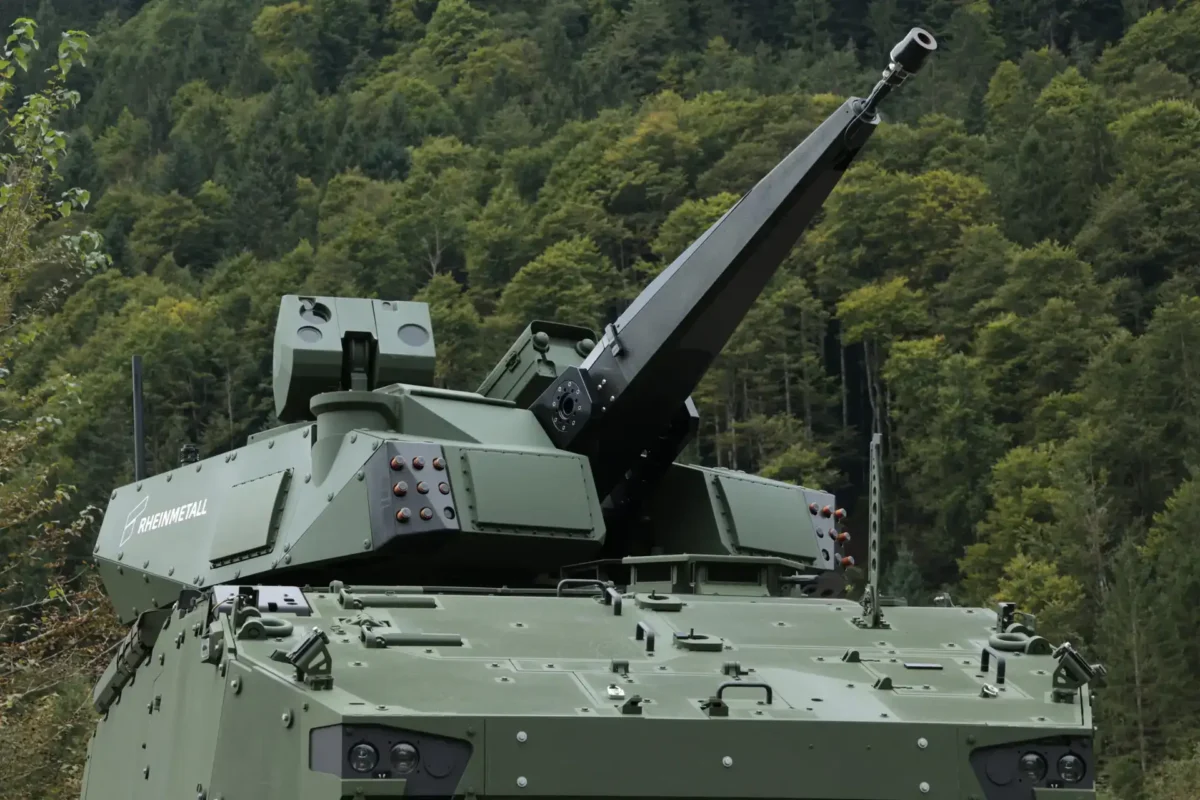
What’s perhaps most futuristic about the Skyranger 30 is its move toward semi-autonomous operation. The system can identify, prioritize, and even prepare to fire at targets with minimal human input. The operator stays in the loop, but much of the detection and decision-making is automated. It’s efficient, but also raises old questions about how much control should be left to algorithms when split-second decisions could mean a launch or a ceasefire.
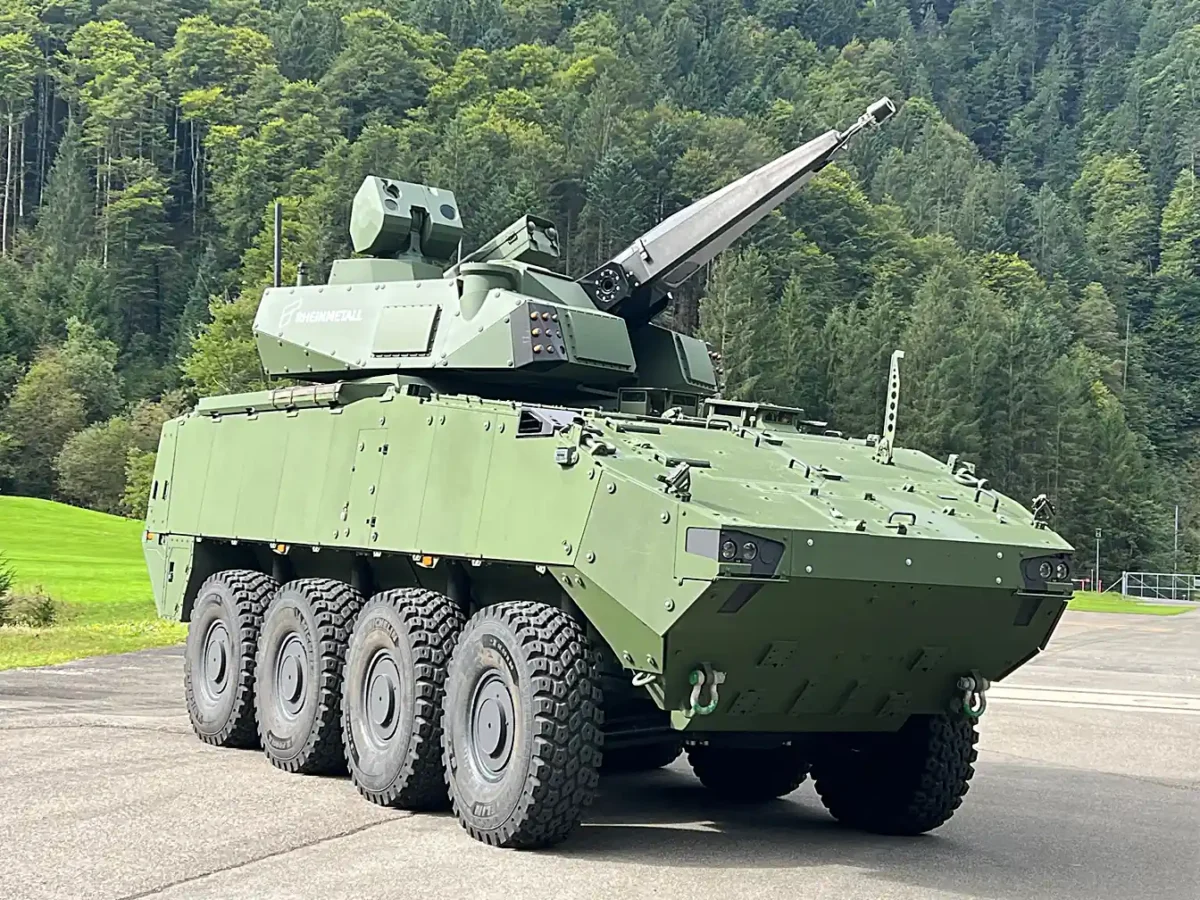
Finally, its mobility and modular design may be its most practical strength. The turret can fit on several platforms, from light 6×6 vehicles to heavier 8×8 carriers, which means it can travel with infantry, guard convoys, or protect static sites. That flexibility could make it easier to deploy compared to traditional air-defence batteries, though its lighter armour also suggests it’s not meant to fight under direct fire for long.
The system isn’t meant to operate in isolation. It’s designed to sit inside a wider air defence web; one with layers stacked over each other. Long-range missiles handle distant aircraft, medium systems take the middle ground, and guns like the Skyranger guard what’s close.
In the lowest tier of the defence setup, systems like the Skyranger 30 usually handle the close-range fight. That includes drones, loitering munitions, and low-altitude helicopters. Their job is fast reaction, not long-range interception.
The medium layer is often filled by systems like the IRIS-T SL, NASAMS, or Patriot’s lower-tier interceptors, targeting cruise missiles and aircraft tens of kilometers away. Above that sit high-altitude, long-range platforms; the SAMP/T, THAAD, or Aegis, designed to take on ballistic and hypersonic threats at much greater distances.
Where the Skyranger 30 seems to make a difference is in the space between reaction speed and cost. Medium- and long-range interceptors are excellent at stopping cruise missiles or aircraft, but their price per launch is extremely high, sometimes in the million-dollar range. Firing one to stop a $1,000 quadcopter is like firing a cannon at a mosquito.
The Skyranger 30 avoids that problem by using low-cost 30 mm airburst rounds and rapid-fire bursts. It’s not a rival to the larger systems but a support layer underneath them. When a networked radar picks up a swarm, longer-range missiles handle the larger, higher targets, while Skyranger units deal with the smaller and faster ones that get closer.
Another advantage is mobility. Medium- and long-range systems often protect fixed infrastructure (e.g., airbases, power plants, command centers), but can’t always move with troops.
The Skyranger 30, mounted on an 8×8 or similar vehicle, can travel with armored formations or guard mobile convoys. This “moving shield” effect helps fill one of the most noticeable gaps in NATO and European defences since the Cold War: short-range protection on the move.
Looking ahead, Rheinmetall has hinted at several future upgrades that could make the Skyranger 30 even more adaptive. One is the integration of directed-energy weapons, essentially compact laser systems for silent, low-cost interception of small drones. Lasers, if they reach practical battlefield power levels, could handle targets continuously without worrying about ammunition.
Another area of development seems to involve electronic warfare (EW) modules, allowing the system to jam or confuse drones rather than destroy them outright. This kind of “soft-kill” capability could reduce the need for constant firing, preserving rounds for more serious threats.
There’s also talk of missile integration beyond short-range add-ons, potentially linking it with larger interceptor networks for shared targeting.
In a best-case scenario, that could mean a future where a Skyranger 30 detects a target, passes tracking data to a nearby missile battery, and then covers the area against anything that slips through.
Not long ago, drones were more of an experiment than a real danger. Now they’re part of daily combat. They’re cheap, quick to make, and easy to tweak for different roles; dropping grenades, and spotting targets for artillery.
The real trouble comes when they fly in groups. A swarm of cheap drones can exhaust even a sophisticated missile battery. And when hundreds fly together, even advanced missile systems can be overwhelmed.
The constant shift in drone technology is forcing defence planners to think differently. Having the most powerful missiles isn’t enough; what counts is how quickly a force can respond and how long it can keep that defence up.
Systems like the Skyranger 30 seem to answer that shift, at least for the lower tier. They offer a middle ground between expensive missile interceptors and traditional anti-air guns, giving commanders something that can respond instantly without draining budgets.
Procurement trends reflect that change. More countries, especially in Europe and the Middle East, are investing in short-range air defence (SHORAD) platforms that can move with their forces instead of guarding fixed sites.
The focus is shifting from static protection to mobile coverage, capable of dealing with drones, loitering munitions, and even low-flying aircraft in the same mission. Rheinmetall’s large contract with Germany could be just the beginning. Other NATO members are already watching closely, and a few are reportedly evaluating similar systems.
So why might the Skyranger 30 be considered a potential game-changer? It’s because it fits the times. Modern conflicts increasingly depend on how quickly forces can react to small, unpredictable threats. A lightweight, networked turret that can move anywhere and shoot down drones on short notice fills a need that’s been growing for years.
Of course, it’s too early to say if the Skyranger 30 will live up to every expectation. New technologies often look flawless in demonstrations but behave differently under battlefield pressure.
Still, its modular design, autonomous functions, and adaptability suggest it’s more than just another air-defence platform. It shows a change in military thinking from heavy, centralized systems to agile, connected ones.