Follow Us:
Follow Us:

Not long ago, the idea of a soldier carrying a weapon that could fly itself toward a tank sounded like science fiction. Yet here we are, by late 2025, the Switchblade 600 has become one of the most talked-about drones in modern warfare.
In late September 2025, the U.S. Army’s 1st Cavalry Division conducted its first live-fire test of the Switchblade 600 loitering munition on an armored training range.
What’s interesting isn’t just that it explodes on impact. It’s how it hunts, it’s how this “drone that becomes a missile” loitering quietly in the sky, waiting for its operator’s command to dive.
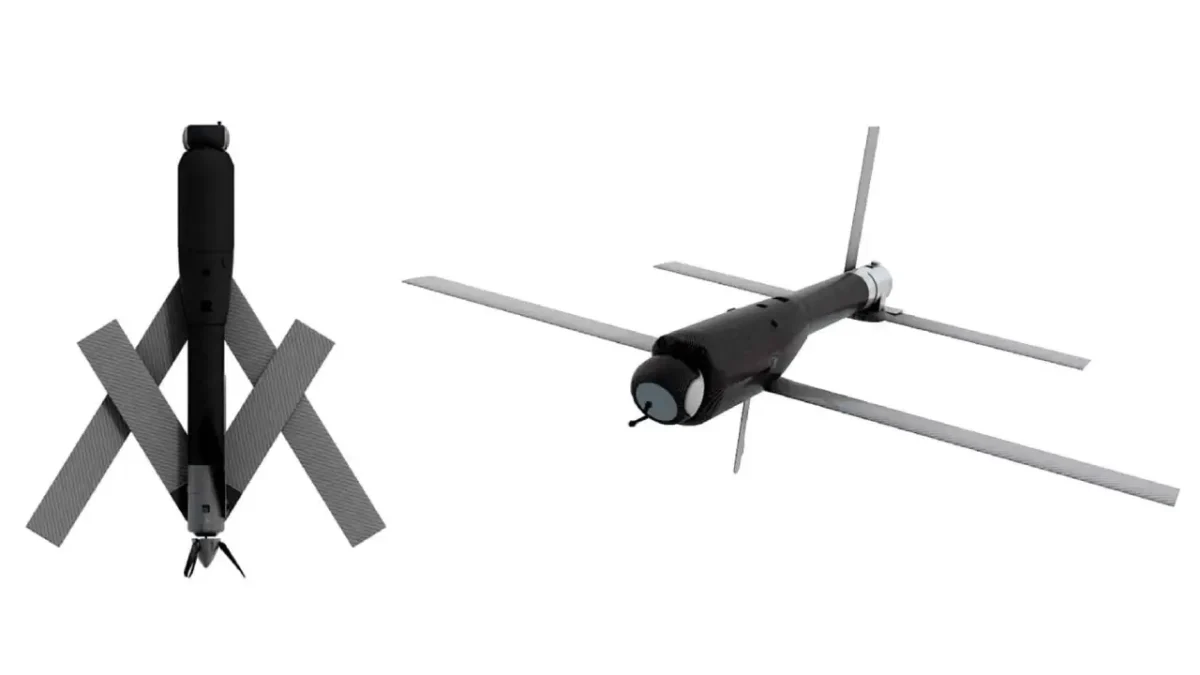
Reports from Ukraine suggest the Switchblade 600 has taken out Russian armored vehicles from miles away, often without the enemy even realizing they were being watched. And now, U.S. tests hint that the drone could soon be launched from other aircraft, expanding its reach even further.
It’s not a huge weapon by any means, barely the size of a small suitcase, but what it represents might be bigger than most realize. Could the Switchblade 600 mark the beginning of a new era, where portable drones replace traditional anti-tank missiles altogether?
Over the next sections, I’ll unpack its specs, range, and warhead, and dig into what’s known (and what isn’t) about it.
Think of the Switchblade 600 kind of like a very small, one-way missile that looks and flies a bit like a drone.
In everyday terms: imagine a toolbox-sized flying camera that can hang around over a battlefield, watch for a target, and then, if the operator decides, dive into that target and detonate. It’s closer to a mix of a guided missile and a reconnaissance drone, with the “one-time use” behavior that people call a kamikaze drone or loitering munition.
Read also: What is a Kamikaze Drone? How It Works
The manufacturer is AeroVironment, a U.S. company that’s been building small unmanned systems for years.
They developed the Switchblade family (the smaller 300 and the larger 600) to give troops something that scouts and strikes without needing a big launcher or lots of logistics. Calling AeroVironment the manufacturer is straightforward; they design, produce, and field these systems.
In terms of role, the Switchblade 600 is usually described as an extended-range loitering munition. That means it’s meant to fly out farther and stay in the air longer than the tiny Switchblade 300, giving operators time to find the best moment to attack.

It can carry an anti-armor warhead and is built to defeat hardened targets like armored vehicles. So it’s more of a “light anti-tank” tool than a simple spotting drone. These capabilities make it useful for units that want a portable, precision strike option without calling in big missiles or artillery, although how it’s used can vary a lot by force and situation.
Lately the system has been pushed into new roles: aside from ground launches, tests show it can be air-launched from larger drones and controlled via satcom links to reach much farther targets.
That suggests it could be used beyond immediate line-of-sight, which might change how commanders think about small, precision strikes. But it’s worth hedging a bit; tests and first deployments look promising, yet real-world results and limits often take time to fully appear.
| Spec (typical / reported) | Value |
| Endurance / loiter time | ~40+ minutes (vendor lists “40+ min”) |
| Typical range / standoff (ground-launched) | ~40+ km (≈24+ miles) operational; some modes/hand-offs extend engagement to 90+ km under certain conditions (vendor/hand-off descriptions). |
| Air-launched / extended reach | Air-launched variants and tests + satcom/forward-pass handoffs have been reported to reach much farther (depends on carrier and comms). |
| All-up round weight (munition only) | ~33 lb (≈15 kg) for the munition; other sources list the full system/all-up round and launcher packages up to ~65 lb / system depending on configuration. |
| System / launcher weight (typical multi-pack or vehicle set) | Launcher + launcher kit can push the deployed package up (vendor lists various combos; multi-pack/vehicle configs heavier). |
| Loiter (cruise) speed | ~70 mph (≈113 km/h) (cruise/loiter) |
| Sprint (dash) speed | ~115 mph (≈185 km/h) (sprint/dash) |
| Warhead type / effect | Anti-armor warhead — described as Javelin-class / shaped-charge/ATGM-grade (designed to defeat armored vehicles). |
| Guidance / control | Electro-optical seeker, manual or autonomous guidance; tablet FCS and encrypted datalinks; optional beyond-line-of-sight links. |
| Cost (reported estimates) | Estimates vary; commonly reported ballpark for Switchblade 600 unit: ~$70k–$90k per round in public price estimates; large government contracts and package deals obviously change effective per-unit cost. |
What do these numbers mean…
Endurance (~40+ minutes). In plain terms, that’s long enough to fly out, look around, and wait for a good shot. Think of it like a small patrol plane that can hang above an area for the better part of an hour.
That amount of time gives an operator a chance to confirm a target visually and pick the exact moment to strike, rather than firing blind. Still, 40 minutes isn’t forever; weather, wind, or long transit times cut into how long it can actually loiter.
Range / standoff (~40+ km typical, further with handoffs or air-launch). About 40 km means a unit can place the launcher well behind the front and still reach targets a fair distance forward. If you want to picture it: that’s roughly the drive from downtown to an outer suburb in a mid-sized city.
Some demonstrations and vendor literature talk about “forward pass” or relay handoffs that can let the system engage at very long distances (90+ km cited in vendor docs), and air-launch from a larger drone or aircraft can expand reach again.
The baseline reach is useful for battalion/company level standoffs, but the real-world reach depends on communications, who’s relaying the signal, and whether the operator has a clear data link.

Weight / all-up round and speeds. The munition itself is commonly listed around 33 lb (15 kg). It’s of course not something soldiers hand-carry across a mountain in one go, but still portable for mounted or vehicle-supported teams.
Some reporting and contract descriptions say the full “all-up round” or packaged system weight can be heavier (figures around ~65 lb or system weights are cited depending on what’s included).
The loiter and sprint speeds (cruise ~70 mph, sprint ~115 mph) mean it can loiter slowly to watch and then close on a target quickly when needed. It’s useful for surprise and for defeating moving vehicles. Weight and speed together shape how you actually move and hide the system and how quickly it can reach targets.
Read also: ZALA Lancet Drone: Russia’s Precision Loitering Munition
Warhead “Javelin-class” (anti-armor). Calling the warhead “Javelin-class” is shorthand: it suggests a shaped charge / tandem shaped charge able to threaten modern armored vehicles (rather than a small fragmentation charge aimed only at troops or soft vehicles).
That doesn’t mean it will defeat the heaviest main battle tanks in every case, especially with modern composite or reactive armor, but it’s intended to seriously threaten light to medium armored vehicles and critical components (tops of tanks are often less armored). In simple words: it’s built to hurt real armored targets, not just scare them.

Cost “why the range matters”. Public price estimates for a single Switchblade 600 round often sit in the tens of thousands of dollars; commonly quoted roughly $70k–$90k each in open sources. That’s cheaper than many heavy anti-tank guided missiles or aircraft strikes, but it’s not “cheap” in absolute terms.
Public figures put a Javelin warhead in the hundreds of thousands per round) and usually far less than calling in an aircraft strike or complex precision artillery mission.
So, the Switchblade 600 sits in a middle ground: pricier than small loitering drones but generally cheaper than heavy ATGMs or air/long-range guided strikes, though procurement contracts, support gear, and loss rates can change the real per-use cost.
Read also: How Effective are Loitering Munitions in Real Combat Scenarios?
Think of the Switchblade 600 like a smart little tool that a soldier can send out to look around and, if needed, strike something, but it isn’t fully on its own. Most commonly, the 600 is launched from a ground kit, which is something a squad or vehicle can carry and fire much like a mortar or rocket.
There have also been demonstrations where it was released from a larger aircraft or an unmanned “mother” drone (called air-launch), and those tests suggest it can get much farther and faster when it starts already high and moving. So, depending on how it’s launched, its reach and how quickly it can get to a place will change.
Once it’s up, the Switchblade 600 uses a mix of cameras and electronics to see. Inside there’s an electro-optical / infrared (EO/IR) sensor on a small gimbal. Its basically a little camera that can point where the operator wants and give day or night images. That sensor does the recon, which people sometimes call RSTA (reconnaissance, surveillance, target acquisition).
The operator on the ground watches a live feed on a tablet or control unit and can steer the drone, zoom in, and pick the exact moment to strike. It’s not fully autonomous in normal use (a person usually makes the final call), though the system can be set to help track targets or follow simple commands.
Operators also have ways to stop things if they change their mind. If the picture looks wrong, or civilians are nearby, or the commander wants to cancel, the operator can abort the mission and send the drone away (or try to recover control) while it still has fuel.
There are limits, of course, if the drone is already diving at high speed into a target, aborting may not be possible. But for much of the loiter time, the human in the loop can pause, retask, or pull the plug. That human control is often emphasized in official descriptions because it reduces the chance of mistakes.
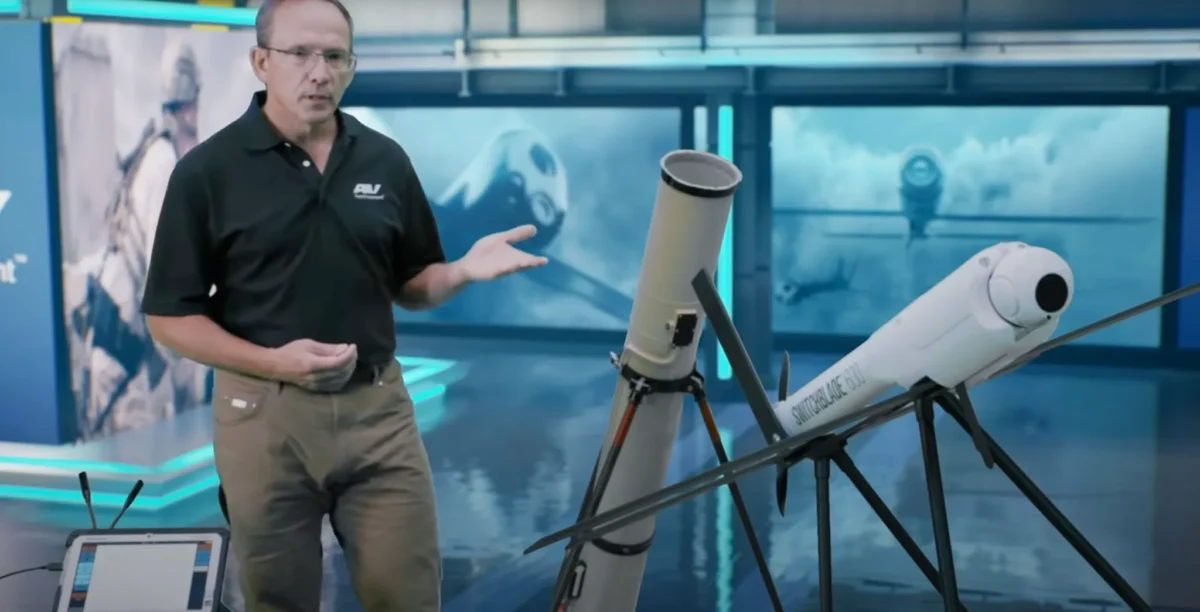
A typical mission looks like a short story: someone spots a possible target or gets a tip, they launch the Switchblade, and it flies toward the general area. Once there, it slows down or circles (that’s the loiter phase) so the operator can look closely and wait for the right moment.
If the operator confirms the target and the timing is right, they send the command to dive; the drone turns into a one-way strike and impacts the target. If they don’t confirm, they can keep watching, reposition, or abort and bring it back (or let it fly off), which makes it a flexible tool for tricky situations where you want a precise hit and good eyes on the scene before firing.
In practice, the Switchblade 600 tends to show up where a unit needs a small, precise punch without calling in artillery or jets. Units commonly use it as a light anti-armor weapon (it’s meant to threaten or disable vehicles), as a precision RSTA tool (that’s reconnaissance, surveillance, and target acquisition—basically “see first, shoot later”), and for close-in support when troops want a fast, visible option to stop a threat nearby.
Because it can loiter and give an operator a live video feed, it’s also useful for close support when troops want to hold fire until they’re sure of what they’re hitting. This can be handy for protecting patrols or hitting high-value targets with fewer people at risk. These roles are reported repeatedly in open sources and vendor descriptions, although how often each role is used can vary by force and mission.
The Switchblade family, and the 600 in particular, has been reported in several real conflicts and in national procurements.
Ukraine used Switchblade systems, and open reporting links some Switchblade 600 strikes to attacks on Russian equipment like air-defense systems; these battlefield reports are consistent but often rely on local reporting and visual confirmation, so they’re best read as plausible, not absolute, accounts.
The U.S. Army has ordered the 600 for company-level use and has included it in broader rapid-fielding programs; other NATO countries and partners (reports name places like Lithuania, Romania, Sweden, the U.K., France, Australia and others in various procurement or contract notices) are also buying or planning to buy versions of the Switchblade. That spread of buyers suggests the system is valued for its portability and precision, even as each country uses it in slightly different ways.
First, the Switchblade 600’s ability to threaten vehicles at stand-off distances changed some small-unit tactics, letting commanders think about precision strikes at lower cost than some alternatives.
Second, real combat use has shown both effectiveness and limits; the drone can be effective against exposed or lightly protected parts of vehicles, but performance against the heaviest, newest main battle tanks is more uncertain.
Third, electronic warfare and jamming remain a real constraint in high-threat environments, so successful use sometimes depends on comms, training, and tactics to reduce interference.
In short: it’s useful, and increasingly adopted, but not a silver bullet.