Follow Us:
Follow Us:

When people talk about tanks, they usually picture hulking steel beasts crawling across muddy battlefields in World War II documentaries. But the Challenger 3 is a very different animal. It’s not just a steel box with a gun strapped on top, it’s a highly digital, sensor-rich machine designed for the messy realities of 21st-century warfare.
At its core, Challenger 3 is the United Kingdom’s answer to a difficult problem: how do you keep a tank force relevant when missiles, drones, and electronic warfare seem to dominate every headline?
Instead of scrapping the fleet entirely, the British Army chose to take its aging Challenger 2 hulls, some already three decades old—and refit them with cutting-edge technology. Rheinmetall BAE Systems Land (RBSL), a joint venture set up specifically for this kind of modernization, leads the program.

And here’s the twist: only 148 tanks are being upgraded. That number feels small, almost modest, compared to Cold War days when Britain fielded hundreds more. Yet it reflects the Army’s shift from mass to capability. The thinking is, a smaller but sharper sword is better than a rusted broadsword gathering dust.
Think of it this way: where Challenger 2 was built for tank-on-tank slugfests, Challenger 3 is designed to survive in a chess game where the enemy might be an unseen quadcopter buzzing overhead, a missile from 10 kilometers away, or even an electronic signal trying to jam its eyes and ears.
It’s not just a tank. It’s Britain’s statement that the age of armor isn’t over—just evolving.
If you’ve ever flipped through an old car magazine just for the spec sheet at the back, you’ll know the thrill of raw numbers. Tanks are no different. The Challenger 3 doesn’t just bring a fresh paint job—it’s packed with stats that explain why defense experts are paying attention.
First, the basics. Challenger 3 tips the scales at 66 tonnes—heavy, yes, but not unmanageable compared to modern NATO armor. It’s crewed by four soldiers: commander, gunner, loader, and driver.
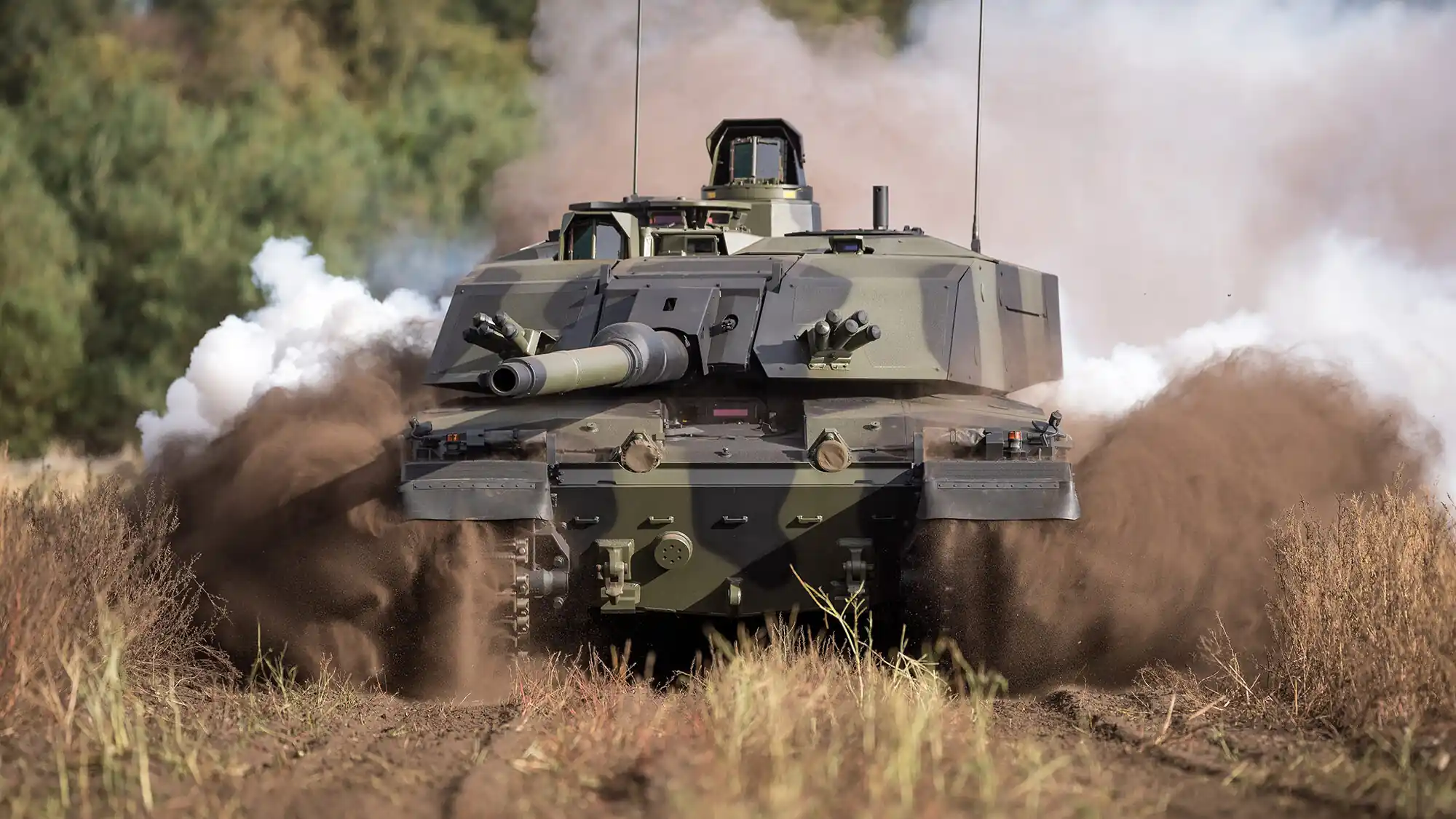
The tank runs on a 1,200 hp Perkins CV12 diesel engine, giving it a top road speed of around 60 km/h (37 mph). That may sound slow in car terms, but remember—this is a steel beast carrying a turret heavier than most SUVs.
The star of the show is the 120mm L55A1 smoothbore gun, a big shift from the rifled gun used on Challenger 2. Why does that matter? Rifled guns were accurate but limited in compatible ammunition.
The new smoothbore aligns Britain with NATO’s common ammo pool, allowing Challenger 3 to fire advanced kinetic rounds and programmable airburst shells—the kind that can turn a drone swarm into confetti.
Protection is where things get interesting. Challenger 3 is designed to carry the Trophy Active Protection System (APS)—a battle-tested shield that detects and destroys incoming anti-tank missiles.
Add to that modular armor packages and digital situational awareness systems, and you’ve got a vehicle that’s more like a rolling fortress with eyes in every direction.
For quick reference, here’s a clean breakdown:
| Specification | Challenger 3 |
| Weight | ~66 tonnes |
| Crew | 4 (Cdr, Gnr, Ldr, Drv) |
| Engine | Perkins CV12, 1,200 hp |
| Top Speed | 60 km/h (road) |
| Main Gun | 120mm L55A1 smoothbore |
| Secondary Armament | 7.62mm coax + optional RWS |
| Protection | Modular armor + Trophy APS |
| Range | ~500 km |
What makes these numbers stand out isn’t just the raw data, but how they fit into today’s battlefield. Challenger 3 isn’t designed to out-speed a Leopard 2 or out-produce an Abrams—it’s built to stay alive, strike hard, and integrate seamlessly into NATO’s high-tech playbook.
If you put a Challenger 2 and a Challenger 3 side by side, the casual observer might think they’re close cousins. Same bulk, same distinctive silhouette. But under the armor, the differences are night and day. Think of it as comparing a flip phone to a smartphone—they’ll both make calls, but only one can stream Netflix, run GPS, and survive in the modern world.
Read also: Challenger 2 Tank: How It Still Competes in 2025
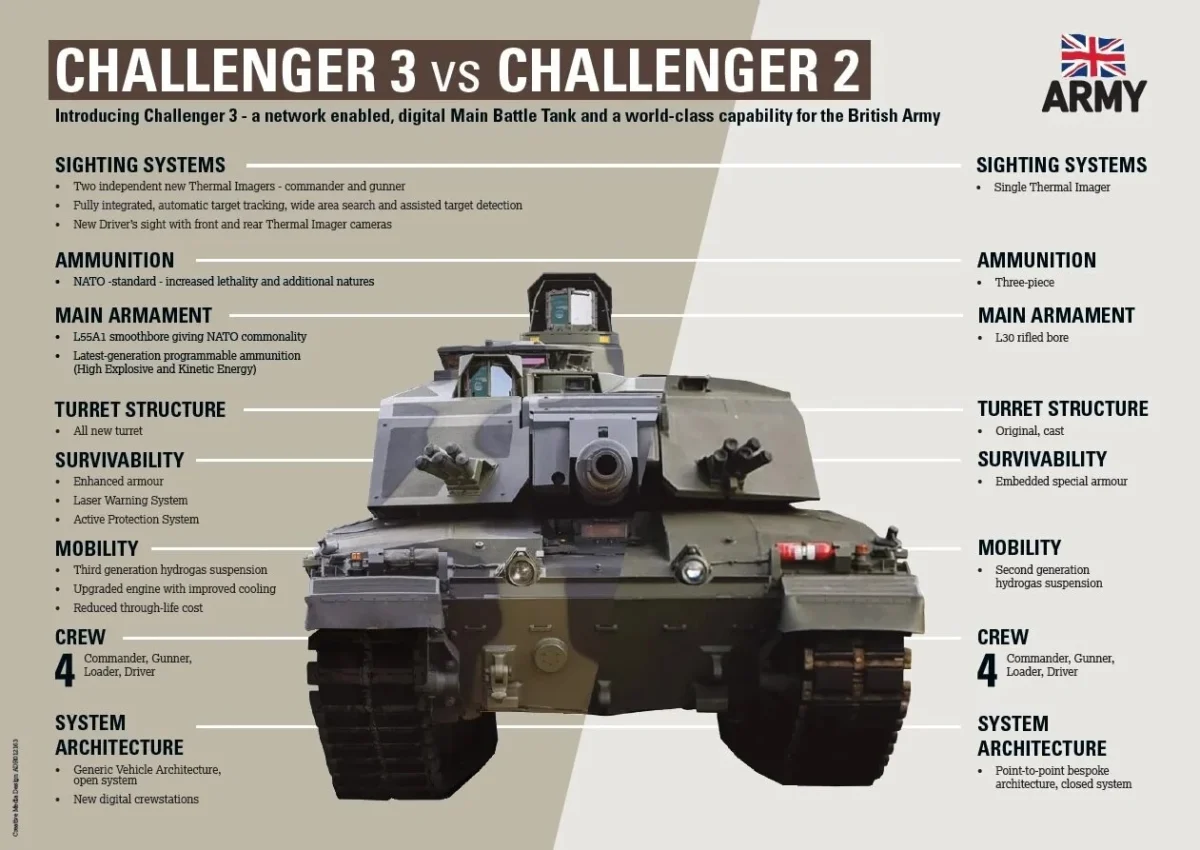
The most obvious leap is the main gun. Challenger 2’s rifled 120mm gun was something of a stubborn British tradition. Accurate, yes—but increasingly isolated, since the rest of NATO adopted smoothbores decades ago.
Challenger 3 breaks from that legacy, swapping in the Rheinmetall 120mm L55A1 smoothbore, the same family used on Leopard 2 tanks. That change isn’t cosmetic. It opens the door to a massive ammunition library—everything from fin-stabilized penetrators to programmable airburst rounds that can shred cover or airborne threats.
Then there’s the turret. Challenger 3 gets a completely new digital turret designed by Rheinmetall. It’s not just tougher—it’s smarter. Inside, the fire-control systems are digital, meaning faster targeting, better integration with drones or satellites, and the ability to share data with allied units in real time.
In a fight, milliseconds matter. Challenger 2 relied on optics and analog systems; Challenger 3 is essentially a sensor fusion hub rolling on tracks.
Protection also saw a generational leap. Challenger 2 had strong Dorchester armor, but it wasn’t designed with modern threats like top-attack missiles or drone swarms in mind. Challenger 3 keeps modular armor but adds the option for Trophy Active Protection, which can detect and neutralize incoming anti-tank weapons before they even touch the vehicle. Imagine carrying a personal bodyguard that swats bullets out of the air.
Finally, mobility. While the engine remains similar—Perkins CV12, 1,200 hp—the suspension and drivetrain have been upgraded for better off-road performance. It won’t suddenly leap like a sports car, but the smoother ride means less crew fatigue and more reliability on rough terrain.
In short, Challenger 2 was built for a different century. Challenger 3 takes the old bones and breathes new life into them, aligning Britain’s armor with NATO’s standards and tomorrow’s wars.
If tanks are judged by their ability to survive a fight and dish out damage, the Challenger 3 is a serious contender. Its combat systems don’t just enhance firepower—they fundamentally change how the crew senses and reacts to the battlefield.
Starting with firepower, the 120mm L55A1 smoothbore gun is a game-changer. Unlike the old rifled Challenger 2 gun, the L55A1 can fire a wide range of NATO-standard ammunition, including advanced kinetic energy penetrators and programmable airburst rounds.
This flexibility allows Challenger 3 to engage everything from traditional armored targets to drones or infantry hiding behind obstacles. Supporting the main gun, a 7.62mm coaxial machine gun and an optional remote weapon station add layered defense against lighter threats.
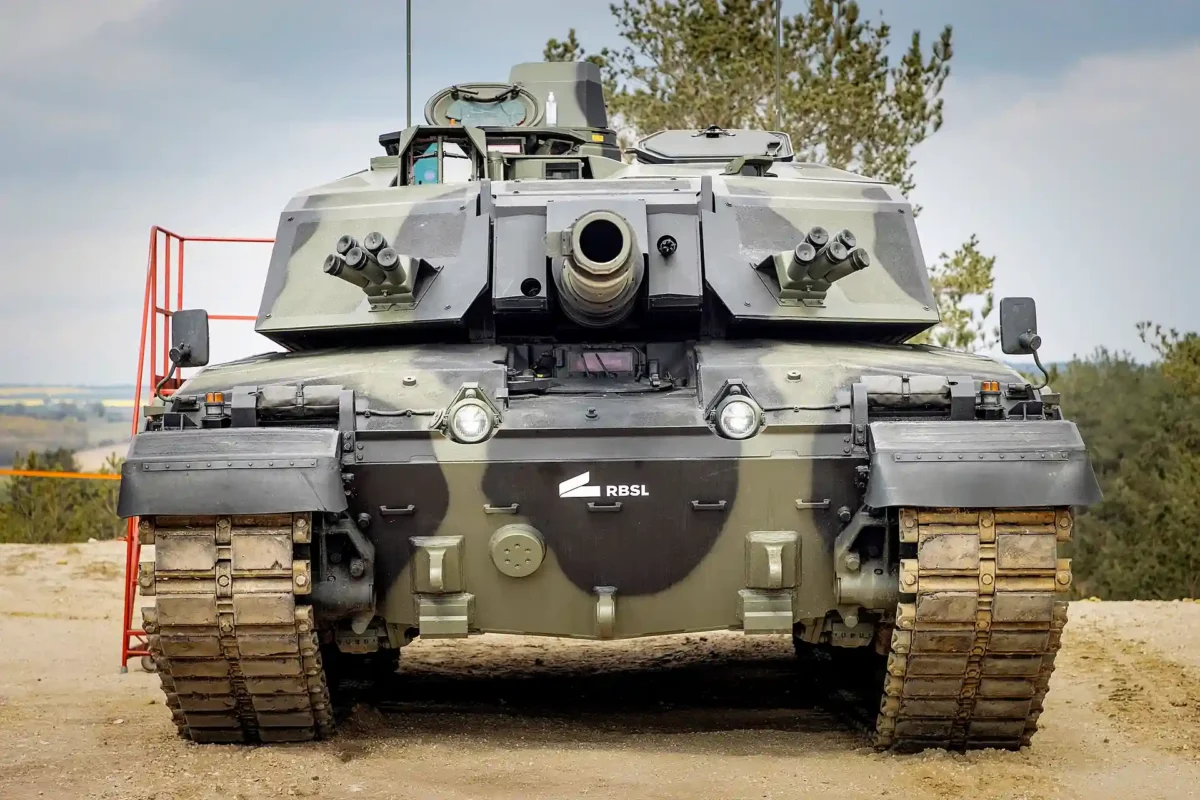
Protection is where Challenger 3 really shows its evolution. Modular armor keeps the tank resilient against high-caliber rounds, while the Trophy Active Protection System (APS) can detect and neutralize incoming anti-tank missiles or rocket-propelled grenades.
Picture an invisible shield that reacts in milliseconds—missiles that would have shredded older tanks are intercepted mid-air, allowing the crew to focus on offense instead of just survival. Add in digital sensors for situational awareness, and the tank becomes a highly networked combat node, not just a hulking metal box.
Speaking of situational awareness, Challenger 3 integrates a suite of sensors, thermal imagers, and digital systems. Commanders can track threats from multiple angles, communicate targeting information across units, and even coordinate with UAVs for aerial reconnaissance. The digital architecture replaces the older analog fire control system, reducing reaction times and enhancing precision.
Put together, these systems make Challenger 3 more than the sum of its parts. It’s a tank designed to survive in an environment where threats aren’t always visible—where a missile can come from above, and a drone can relay targeting data to the enemy. The combination of upgraded firepower, defensive measures, and real-time awareness.
The Challenger 3 isn’t just a pile of metal and electronics—it’s a statement about how Britain plans to fight and defend in the 21st century. But what exactly is its operational role, and what strategic questions does it raise? Let’s dig in.
First, the obvious: Challenger 3 is designed as the UK’s main battle tank, intended to lead armored formations in high-intensity conflicts. Its upgraded firepower, protection, and digital systems make it capable of engaging enemy tanks, fortified positions, and even unmanned threats in contested environments.
But unlike Cold War-era strategies, which focused on overwhelming numbers, Challenger 3 operates in a leaner, smarter force structure. With only 148 tanks being upgraded, each vehicle has to count. That shifts the focus from quantity to quality, coordination, and technological edge.
Strategically, this raises questions about Britain’s NATO commitments. A smaller tank fleet could be seen as a limitation if multiple theaters of operation require heavy armor.
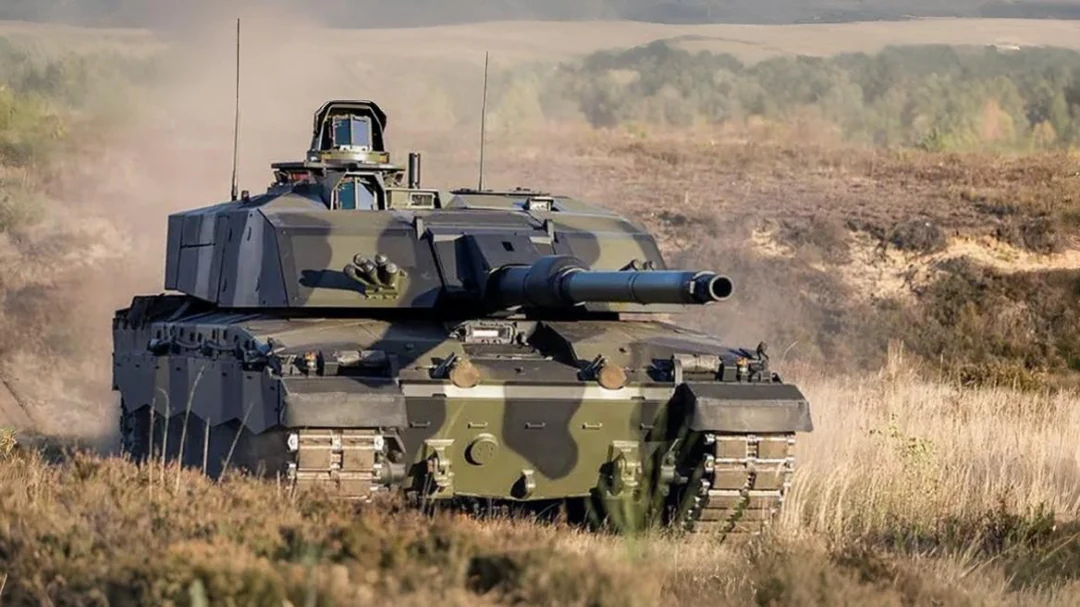
On the other hand, the modernized capabilities mean that Challenger 3 units could be force multipliers—able to hold their own against numerically superior adversaries when paired with air support, drones, and artillery. It’s the classic “few, but elite” approach.
The UK also has to consider deployment logistics. Challenger 3 is 66 tonnes of armor—not easily shipped across oceans or rail lines. Rapid reinforcement in overseas operations could be challenging.
However, within Europe, the tanks’ interoperability with Leopard 2 ammunition and NATO command systems gives them a plug-and-play advantage, simplifying coalition operations.
Analysts often debate: is Challenger 3 a defensive tool, a deterrent, or a punchy offensive platform? The truth is—it’s a bit of all three. Its active protection systems, digital sensors, and firepower make it survivable and lethal, while the number of units ensures the UK doesn’t overcommit.
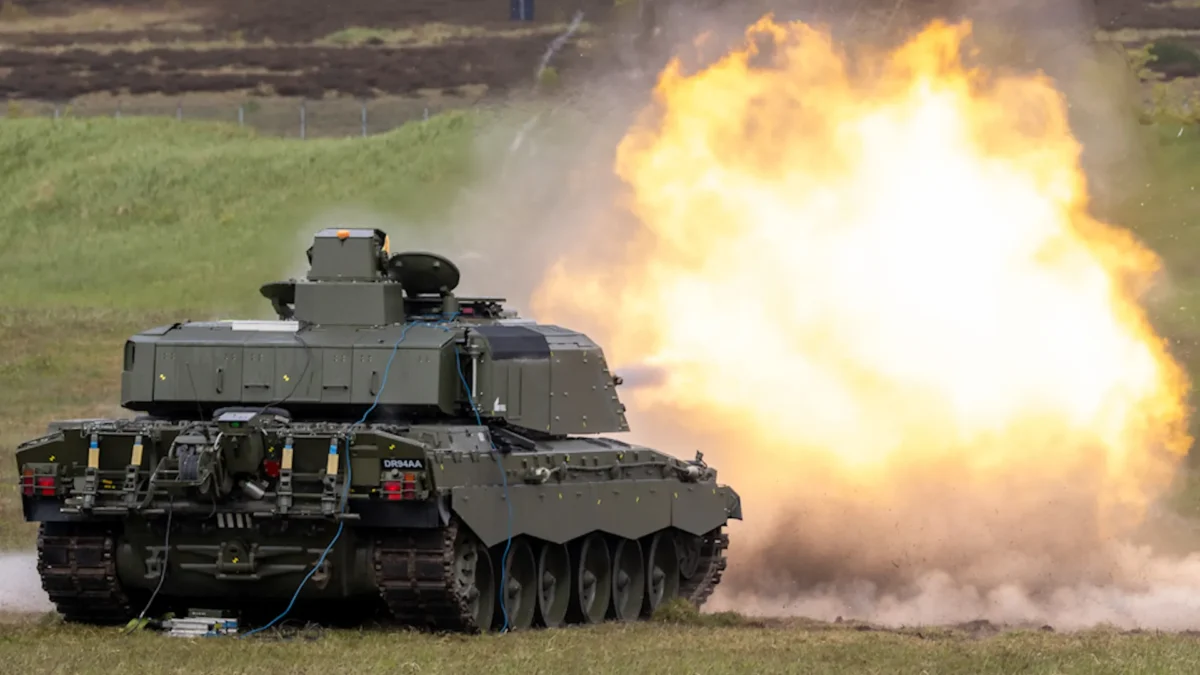
In essence, Challenger 3 is a carefully measured gamble—a blend of survivability, precision, and adaptability designed for modern threats rather than Cold War tank brawls.
The takeaway? Challenger 3 is less about raw numbers and more about strategic relevance—ensuring that when Britain’s armor rolls onto a battlefield, it’s smart, lethal, and networked.
In the world of modern main battle tanks, the Challenger 3 doesn’t exist in a vacuum. It’s constantly measured against other heavy hitters like the Leopard 2A8, M1 Abrams, and even Russia’s T-14 Armata. Understanding these comparisons gives insight into both its strengths and its strategic niche.
Let’s start with firepower. The 120mm L55A1 smoothbore gun brings Challenger 3 in line with NATO standards, similar to the Leopard 2A8. Both can fire advanced kinetic energy rounds and programmable munitions. The M1 Abrams uses a slightly older 120mm gun but benefits from decades of combat upgrades.
The T-14 Armata, on paper, has a 125mm gun with an autoloader, giving it potentially higher firepower per salvo, though its operational record is less proven.
Protection is where Challenger 3 shines in a specific way. Its modular armor and optional Trophy APS give it a real edge against anti-tank missiles and modern guided threats. Leopard 2A8 focuses on advanced passive and reactive armor, while Abrams relies on thick composite layers with optional APS kits.
The T-14 integrates active protection as standard but lacks extensive field testing. Essentially, Challenger 3 prioritizes survivability against guided threats, not just kinetic impacts.
Mobility is a mixed bag. Challenger 3’s 66-tonne frame and 1,200 hp engine make it roughly comparable to Leopard 2 and Abrams in road speed (≈60 km/h), but slightly slower in acceleration and agility than some lighter MBTs.
The T-14, being lighter and with advanced suspension, may have superior cross-country mobility, though this hasn’t been fully demonstrated in real-world exercises.
Here’s a quick comparative snapshot:
| Tank | Gun | Weight | Crew | Protection Highlights |
| Challenger 3 | 120mm L55A1 | 66 t | 4 | Modular armor + Trophy APS |
| Leopard 2A8 | 120mm L55 | 62 t | 4 | Composite armor + ERA |
| M1 Abrams | 120mm M256 | 67 t | 4 | Composite armor + optional APS |
| T-14 Armata | 125mm 2A82-1M | 55 t | 3 | Active protection system |
In sum, Challenger 3 is not necessarily the fastest or the most numerous, but it prioritizes survivability, digital integration, and interoperability, fitting neatly into NATO’s high-tech armored ecosystem. It’s a tank built not to dominate alone, but to excel in a networked, coordinated battlefield.
The Challenger 3 represents more than a tank upgrade—it’s a bold statement about how Britain envisions modern armored warfare.
By taking the proven hull of the Challenger 2 and transforming it with cutting-edge firepower, protection, and digital systems, the UK has created a machine that bridges decades of tank evolution. It’s no longer just about brute force; it’s about intelligent lethality, survivability, and networked combat.
With its 120mm smoothbore gun, modular armor, and optional Trophy APS, Challenger 3 addresses the threats of today—from guided missiles to drones—while remaining interoperable with NATO allies. Its modest fleet size of 148 tanks reflects a strategic shift: fewer units, but each more capable and adaptable.
This approach raises important questions about deployment, strategic impact, and the balance between quantity and quality in modern defense.
What makes Challenger 3 truly compelling is its ability to operate as part of a coordinated, technologically integrated force. It’s not designed to fight in isolation; it thrives when linked with reconnaissance drones, satellite intelligence, and allied units on the battlefield.
For military planners and enthusiasts alike, Challenger 3 offers a glimpse into the future of armored warfare: leaner, smarter, and fiercely capable. It’s proof that even in an age dominated by missiles and cyber threats, heavy armor still has a vital role—evolving, not obsolete.