Follow Us:
Follow Us:

A towed cannon doesn’t sound like the kind of weapon that would matter in a war shaped by drones, satellites, and precision missiles. And yet the M777 Howitzer has become one of the most talked-about systems in Ukraine. Videos have shown its 155mm shells smashing Russian positions at distances that usually belong to heavy, self-propelled guns.
What makes this more surprising is that the M777 isn’t new at all. It was designed back in the 1990s, mainly as a lighter replacement for the aging M198. Its claim to fame was titanium construction, which made it far easier to move. Few expected that this design choice would, decades later, help turn it into a centerpiece of modern artillery warfare.
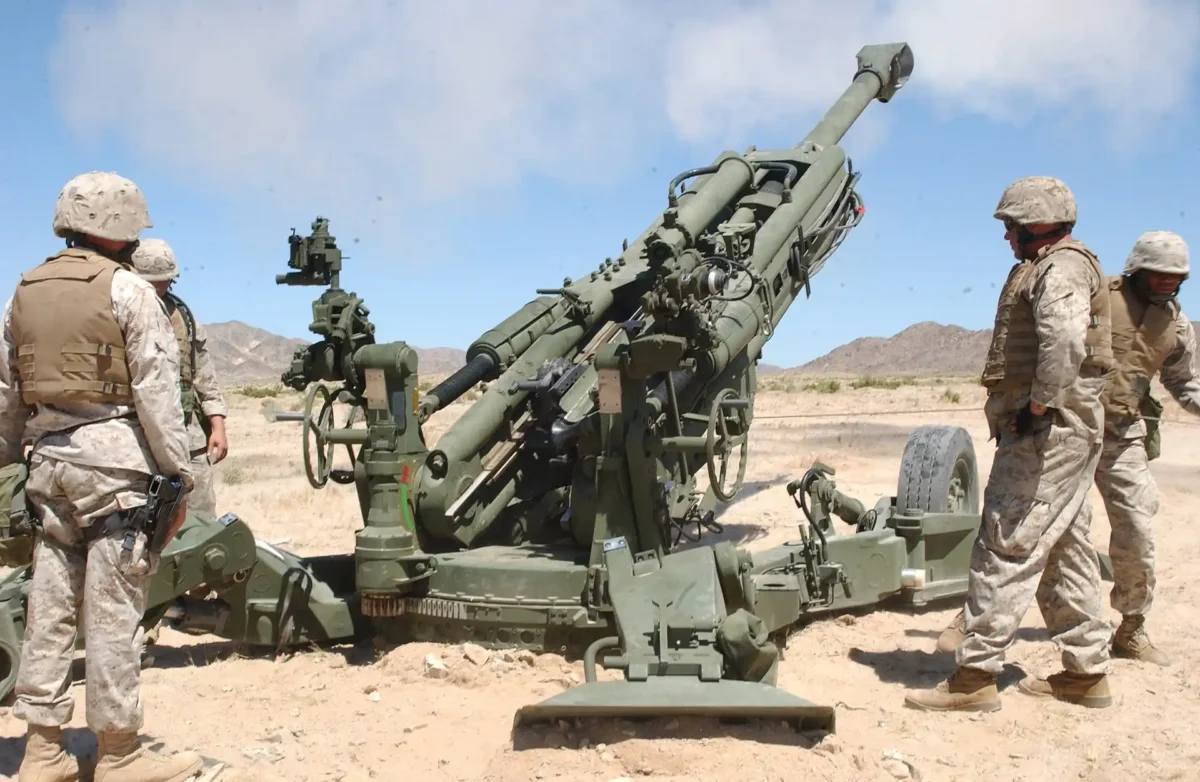
In Afghanistan, U.S. Marines flew the M777 into steep valleys that heavier guns could never have reached. Dropping artillery into that kind of terrain gave troops firepower where none had been before.
Now in Ukraine, the same gun is showing up in a very different role. Crews often pair it with GPS-guided Excalibur rounds. Using it almost like a precision strike system to do the job normally expected from far more expensive missiles.
Yet for all the praise: Can a towed howitzer really survive in a world where drones and radars can spot a firing position within minutes?
The story of the M777 Howitzer really starts with a problem. For decades, heavy artillery carried a built-in contradiction. The guns could deliver devastating firepower, but their size often limited when and where that power could be used.
The M198, the U.S. Army’s workhorse before the M777 Howitzer, weighed close to 7,000 kilograms. Getting it from one place to another required large vehicles, careful planning, and plenty of time. It could be a big problem, especially when deployed on rough terrain.

That gap between potential and reality is what set the stage for the M777’s development. Designers tried to solve this by rethinking the materials. They used titanium and aluminum alloys which dropped the weight to just over 4,000 kilograms.
Then, the gun became light enough to be lifted by helicopters or towed by vehicles that previously wouldn’t have been able to handle such a weapon. And can be deployed in mountain valleys, remote outposts, or down narrow tracks where no big gun had gone before.
Actually, there was nothing revolutionary about the 155mm caliber. NATO had been using it for years. The M777 could roll right into service and fire the same shells armies already had in stock.
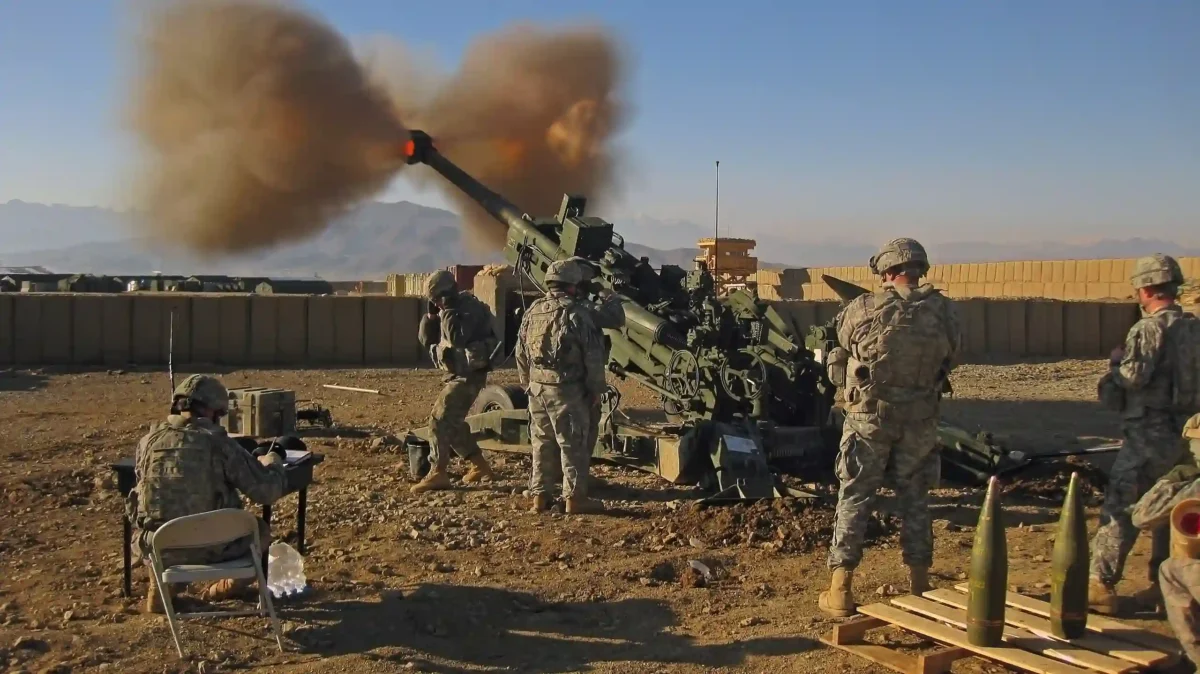
The twist came with what those shells could do. What really turned heads was when soldiers started using GPS-guided ammo. Suddenly, a howitzer that looked fairly ordinary on paper was hitting with near-missile accuracy at more than 30 kilometers.
When people talk about the M777 Howitzer, the word that keeps coming up is mobility. Its predecessor, the M198, was nearly 7,000 kilograms, or around 15,000 pounds. Hauling something that heavy meant lining up a big truck, and if the gun needed to fly, only the largest helicopters, like the CH-53E Super Stallion, could even think about lifting it. Even then, setting it up took time and exposed the crew to risk.
By contrast, the M777 comes in at roughly 4,200 kilograms, due to its titanium construction. That’s almost a 40% weight reduction. On paper, it sounds like just a number, but in practice it opened doors to new tactics. A CH-47 Chinook, which is far more common than a Super Stallion, could now lift the gun.
In Afghanistan, Marines famously used helicopters to “sling load” the M777 into mountain valleys, setting up fire bases in areas where older howitzers simply couldn’t go. These outposts gave ground troops artillery cover in regions that had previously been considered unreachable for heavy guns.
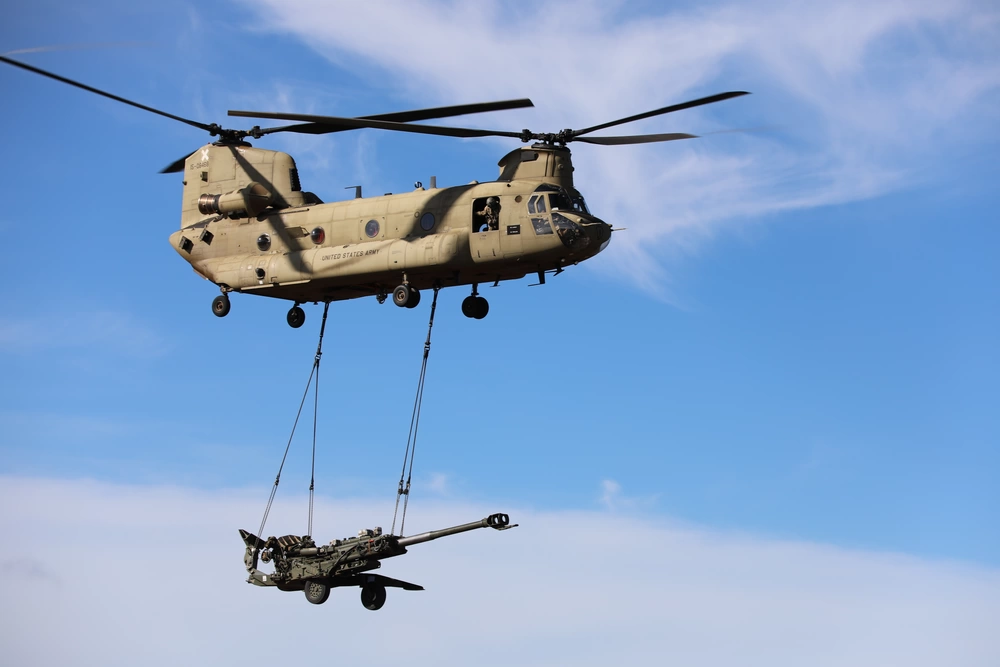
Mobility wasn’t just about airlifting, though. On the ground, lighter weight meant more vehicles could tow the gun, and crews could reposition it faster. With the M198, moving from one firing position to another could take hours.
The M777 cut that down, which mattered in environments where counter-battery fire was a constant threat. For example, during training exercises, U.S. Army artillery units demonstrated that an M777 could be hitched, moved a few kilometers, and set up again within a fraction of the time it would have taken an older howitzer. That ability to “shoot and scoot” gave them a better chance of avoiding detection.
Of course, this improvement didn’t erase all the risks. Even with faster movement, a towed system is still slower to reposition than a self-propelled gun like the German PzH 2000. Some analysts argue that in a high-intensity war, the M777’s mobility might not be enough, especially when radars and drones can detect artillery fire almost instantly.
One of the things soldiers remember most about the M777 is how easy it was to fly around. Big helicopters could hook it up and drop it into spots no truck could ever reach. Afghanistan’s valleys were a clear example, artillery could be positioned close to the fight instead of miles away.
Ukraine tells a different story. Helicopters are much more vulnerable to air defenses, which makes dramatic airlift operations far riskier. So while the M777 gave Western forces mobility in one type of war, it may not offer the same freedom in another.
Another detail that made the M777 stand out was how easily it worked with modern fire-control gear and GPS-guided shells such as the Excalibur. When crews had that setup, they could reach well past 30 kilometers and still land shots where they needed them.
This has real tactical value; fewer shells are needed to achieve the same effect, which reduces strain on logistics and makes resupply easier.
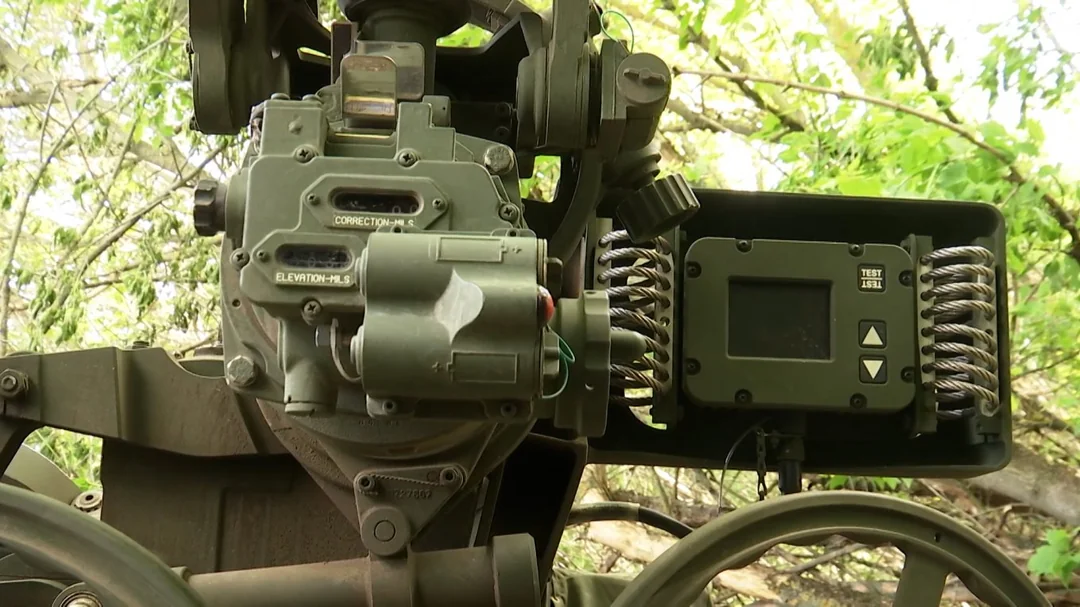
Still, precision raises its own questions. Guided shells are expensive (tens of thousands of dollars per round), and not every battlefield has a steady supply of them. Some analysts have noted that in Ukraine, stocks of Excalibur rounds may already be thinning.
So while precision is a big selling point, the M777’s effectiveness depends heavily on whether armies can keep feeding it the right ammunition.
Read also: How Does Artillery Know Where to Shoot with Precision?
Compared to older systems, the M777 was designed to need fewer people to operate. A smaller crew means less manpower tied down in artillery roles, and in theory, it also lowers the number of soldiers exposed at firing sites. That said, fewer crew members can also mean more work for those who are present.
Artillery is still physically demanding, loading 155mm shells isn’t exactly light labor, and in prolonged campaigns, fatigue can become a factor.
Some soldiers have even suggested that while the gun is efficient, it isn’t necessarily easier to serve on. So the “reduced crew” point is a bit of a double-edged sword: yes, it cuts down numbers, but it also places greater strain on the team that remains.
The introduction of the M777 Howitzer has pushed armies to rethink how they use artillery on the battlefield. Its lighter design and new features didn’t just make it easier to move, they also influenced how commanders plan, position, and even imagine the role of guns in modern wars.
Yet, while the advantages are clear in some situations, it’s worth asking how much of this “revolution” is real change and how much is context.
One of the biggest shifts has been mobility. With the older M198, artillery often felt like an anchor, once a gun was in place, moving it again took hours and heavy equipment.
The M777 changed that equation. Because it can be lifted by helicopters or towed by lighter trucks, it gave forces the option to drop artillery into places that once seemed impossible.
In Afghanistan, U.S. Marines famously airlifted M777s into rugged valleys, allowing troops on the ground to call in fire support where they had previously been left exposed.
This kind of rapid movement meant artillery was no longer confined to predictable fire bases but could appear where the enemy least expected it. That said, in a war with advanced air defenses, like Ukraine, this kind of mobility looks far riskier.
Helicopters can’t fly as freely, and moving guns around under drone surveillance carries its own dangers. So the question remains: is mobility a universal advantage, or one that only works in certain wars?
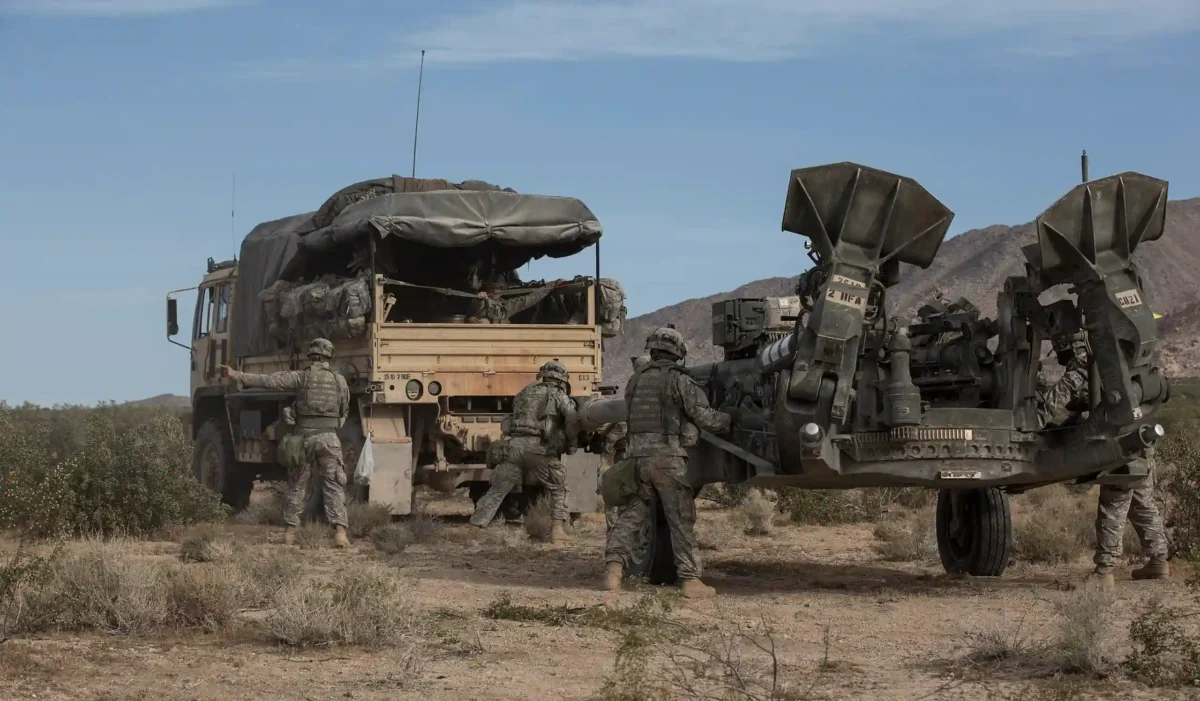
The M777 also shortened response times. Digital fire-control changed the way the M777 was used. Crews no longer had to spend long minutes working out calculations by hand. Targets could be passed to the gun almost instantly, and fire shifted from one place to another in minutes instead of hours.
Of course, that edge isn’t unshakable. Electronic warfare can jam GPS, scramble comms, and suddenly the “instant” gun starts to feel just as slow as the old ones.
Accuracy may be the most celebrated part of the M777 story. When paired with GPS-guided shells, it could strike very specific targets without wasting ammunition. But how sustainable is that model? Precision shells are costly, and armies can’t always count on an endless supply.
Some analysts have even suggested that in Ukraine, the initial wave of precision firepower eventually gave way to more traditional barrages once stockpiles ran low.
The improvements in weight, speed, and accuracy suggest that the M777 marked a step forward. But does that really mean it created a “new kind” of artillery, or just a better version of what already existed?
Each improvement comes with a “but.” Mobility can expose crews to air threats. Faster responses rely on networks that can be jammed. Precision depends on expensive shells that may not always be available.
So, it seems that the M777 didn’t really erase the classic problems of artillery. What it did was shift them around. Armies gained new options, but they also had to think more carefully about how and when to make the most of them.
The true test of any weapon is not in brochures or trials but in how it performs once deployed. The M777 Howitzer has already seen service in several conflicts, and in each case, it has shaped the battlefield in different ways, sometimes living up to the hype, sometimes exposing its limits.
Take Afghanistan, for example. U.S. Marines used the M777 in some of the most remote areas of the country, airlifting the guns into mountain valleys where heavy artillery had never been practical before. In those cases, mobility was the difference between having artillery support and going without it.
Troops on the ground often reported that the presence of a lightweight but powerful gun gave them confidence in firefights, especially against insurgents who relied on hit-and-run tactics.
The story looks different in Ukraine. The M777’s reputation in Ukraine grew quickly after its introduction in 2022. Strikes using Excalibur shells against Russian supply points and command centers showed what precision could achieve, even with limited numbers of guns and shells.
Western accounts suggested this narrowed the gap with Russia’s heavier artillery presence. Yet that success also highlighted a deeper reality: Ukraine’s artillery strategy had to rely on doing more with less.
Yet even here, the picture isn’t entirely straightforward. Reports also emerged that the M777s struggled under the intensity of the war. Crews found that the guns could wear down faster than expected under constant use, and Russian drones often tracked their positions within minutes of firing.
Redeployment was quicker than with older towed systems, but still nowhere near the freedom of self-propelled artillery. From this, we learn that a towed howitzer isn’t truly survivable if real-time surveillance was there.
The contrast between Afghanistan and Ukraine highlights a bigger point. In one war, the M777’s mobility gave Western forces a clear edge, letting them place firepower in hard-to-reach areas. In another, its precision offered an answer to ammunition shortages and Russia’s numerical superiority.
But in both cases, the gun’s strengths also revealed vulnerabilities. It shines when supported by helicopters, drones, and logistics networks that can supply high-tech rounds.
Can a lightweight towed gun like the M777 Howitzer really shape the future of artillery? The answer is complicated. In one war, the M777 was valued for being light enough to reach remote mountains. In another, it became known for firing GPS-guided shells with surprising accuracy.
Those contrasts say a lot about why it’s been so widely discussed. It’s changed tactics, no doubt, but whether it’s the model for artillery’s future or just a stopgap is harder to say.
With drones overhead and radars hunting for every shot, the M777 might not end up as the last word in artillery. What it has done, though, is show how a lighter gun can still matter on modern battlefields. It proved the value of mobility and precision, while also making clear that no design comes without its trade-offs.